Ghana’s economic recovery must now translate into quality jobs and better livelihoods or risk remaining incomplete, the World Bank has warned, as it called for continued fiscal discipline and transport reforms to sustain growth.
Launching the 10th Ghana Economic Update in Accra on Wednesday, the World Bank said the economy grew by 6.0 per cent in 2025 and accelerated further to 6.4 per cent in the first quarter of 2026.
The report, titled “Reset for Growth: Sustaining Macroeconomic Recovery and Unlocking Transport for Transformation” said inflation had fallen sharply, international reserves had been rebuilt and Ghana’s fiscal position had improved.
Public debt declined from 70.3 per cent of GDP in 2024 to 49.0 per cent at the end of 2025, while a primary surplus of 2.5 per cent of GDP exceeded the 1.5 per cent target.
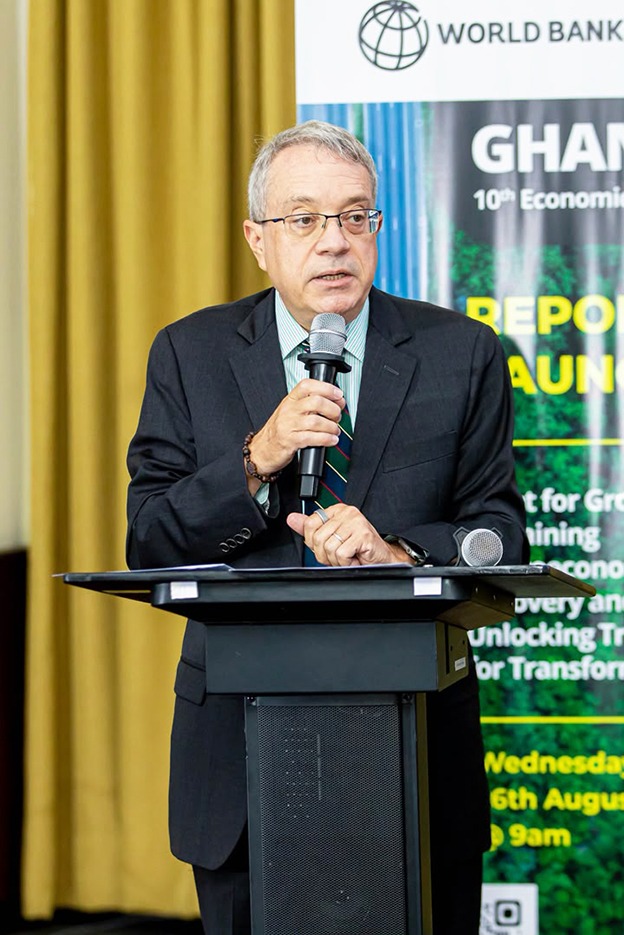
However, World Bank Division Director for Ghana, Sierra Leone and Liberia, Robert Taliercio, said the gains had not yet translated sufficiently into jobs.
“Maintaining fiscal and monetary discipline, strengthening revenue mobilization, and protecting priority social and infrastructure spending will be essential to ensure that macroeconomic gains translate into better jobs and improved welfare for Ghanaians,” he said.
The report said 56.4 per cent of Ghanaians remain in poverty, while spatial disparities are widening. It also warned that the sectors driving growth have limited capacity to absorb the growing number of young people entering the labour market.
The World Bank projects growth to moderate to 4.8 per cent in 2026 as post-crisis adjustment gains taper off and external pressures persist, before converging towards about 5 per cent over the medium term.
It said sustaining the recovery would require stronger domestic revenue mobilisation, noting that the 2025 fiscal surplus was achieved largely through expenditure compression, with capital spending 38 per cent below budget.
The Bank also identified Ghana’s dependence on gold and cocoa exports as a risk, warning that adverse commodity price movements could pressure the exchange rate, inflation and public finances.
It further highlighted pressures in the energy and agricultural sectors, saying delays in the Energy Sector Recovery Programme cost Ghana approximately US$1 billion annually, while inefficiencies at COCOBOD were affecting farmers and public finances.
The special focus of the 10th Update is Ghana’s transport sector, which the Bank described as central to growth, competitiveness, jobs and inclusion.
Of Ghana’s 94,200-kilometre road network, only 27 per cent is paved, while more than half is in fair to poor condition, particularly feeder roads.
The rail network has also deteriorated sharply, from 947 kilometres of operational rail in 1960 to just 160 kilometres by 2020.
The Bank estimates that road safety incidents cost Ghana about 2.1 per cent of GDP annually, equivalent to roughly US$4.55 billion.
The Bank welcomed Ghana’s Big Push Infrastructure Programme, but cautioned that capital investment must be matched by stronger maintenance, project preparation, governance and credible financing.
“Building roads without maintaining them simply accelerates the cycle of degradation we are trying to break,” Mr Taliercio said.
It said the recovery remains vulnerable to external shocks, including higher energy and fertilizer costs, global financing conditions and climate-related disruptions.
The World Bank said maintaining reform momentum, strengthening fiscal anchors and addressing structural constraints in transport would be critical to ensuring that Ghana’s recent macroeconomic gains become durable and inclusive growth.
The Bank said Ghana’s recovery from the 2022 crisis was “real and measurable,” but the choices made now would determine whether the gains of the past two years translated into durable transformation or remained vulnerable to the next shock.
It said Ghana was at a genuine inflection point, requiring reforms that could make the recovery “inclusive, job-intensive, and resilient.”
World Bank Transport Specialist and report co-author, Akua Pokuaa Timpabi, said better-maintained roads, stronger rail and port linkages, safer urban mobility and climate-resilient infrastructure could reduce business costs, connect farmers and firms to markets and expand access to jobs.
The report proposes six priority reforms: Operationalising the Road Maintenance Trust Fund; developing a unified National Transport Sector Strategy; Revitalising freight rail along the Western and Eastern corridors; treating road safety as a fiscal and public health emergency; Embedding climate-resilient standards in Big Push investments and extending Ghana’s digital single window to Takoradi and inland terminals.
The World Bank said it is investing US$500 million through the Ghana Market Access and Connectivity Project to rehabilitate about 1,050 kilometres of feeder roads under performance-based maintenance contracts, targeting areas where poor connectivity constrains agricultural productivity and rural livelihoods.