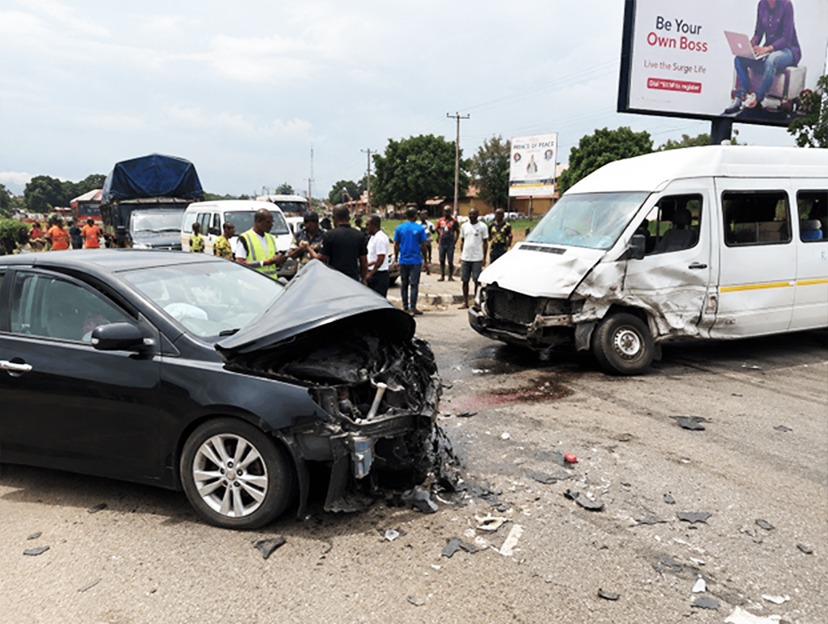
Every day, roads designed to connect communities, facilitate trade, and support economic activities become scenes of tragedy. Road crashes continue to claim lives, leave thousands injured, and devastate families across Ghana. As the number of vehicles on the roads increases, road safety has become a growing public concern requiring urgent national attention.
The rising incidence of road crashes in Ghana is the result of several interconnected factors, including human behaviour, weak enforcement of traffic regulations, and inadequate road infrastructure. Road safety advocates and authorities have consistently warned that unless decisive measures are taken, preventable deaths on Ghana’s roads will continue.
The Director-General of the National Road Safety Authority (NRSA), Abraham Amaliba, has identified speeding as one of the leading causes of road crashes in Ghana. Many drivers continue to exceed speed limits, particularly on highways and major roads, increasing the likelihood of severe collisions and fatalities. He has also highlighted driver indiscipline and disregard for road traffic regulations as major contributors to the country’s road safety challenges.
Distracted driving has also emerged as a significant threat. The use of mobile phones while driving reduces concentration and increases the risk of crashes. Similarly, pedestrians who use headphones or make phone calls while crossing busy roads may fail to properly observe approaching vehicles, placing their lives at risk.
Beyond human behaviour, poor road infrastructure remains a major challenge. Potholes, inadequate street lighting, faded road markings, poor drainage systems, and damaged traffic signs create hazardous conditions for motorists and pedestrians. These risks become even more pronounced during periods of heavy rainfall, when poor road conditions can contribute to serious accidents.
The human cost of road crashes is enormous. Beyond the fatalities reported in the media, many survivors suffer life-changing injuries that affect their ability to work and support their families. Children lose parents, households lose breadwinners, and communities lose productive citizens. Healthcare facilities also face increasing pressure as they provide emergency treatment and long-term care for victims of road accidents.
The statistics paint a worrying picture. According to figures released by the National Road Safety Authority (NRSA), road crashes during the first quarter of 2026 resulted in 1,009 deaths. The Authority also reported that pedestrian knockdowns within the first four months of the year accounted for 181 fatalities nationwide, with the Greater Accra Region recording 43 of these deaths. These figures demonstrate the urgent need for stronger preventive measures, public education, and effective enforcement of road safety laws.
Despite existing legislation, compliance with road regulations remains a significant challenge. Some drivers continue to engage in reckless overtaking, speeding, drunk driving, and failure to use seat belts. Motorcyclists are also frequently observed riding without helmets, exposing themselves to serious injuries in the event of crashes.
In response to the increasing number of road crashes, the National Road Safety Authority, in collaboration with the Motor Traffic and Transport Department (MTTD) of the Ghana Police Service, has intensified road safety education and enforcement programmes. The initiative focuses on high-risk roads and seeks to improve compliance among drivers and other road users.
Road safety experts, including Gabriel Adu Sarpon, have argued that reducing road crashes requires a comprehensive approach. Stronger law enforcement, improved road infrastructure, sustained public education, and responsible behaviour by all road users are essential. The use of technology, including speed cameras and traffic monitoring systems, can also improve enforcement and encourage compliance with traffic regulations.
Road safety is not merely a transportation issue; it is a public health, economic, and national development concern. Every preventable crash represents a loss that affects families, communities, and the nation as a whole. As Ghana’s population and vehicle ownership continue to grow, ensuring safer roads must become a national priority.
Road crashes should not be accepted as a normal part of life in Ghana. Every life lost on the road is a reminder that more must be done. The government must invest in safer roads, repair dangerous highways, improve road signs and lighting, and ensure that traffic regulations are effectively enforced.
The role of law enforcement must also come under scrutiny. Ghanaians expect police officers responsible for traffic management to enforce road laws firmly, fairly, and transparently. Road safety enforcement should not be viewed merely as roadside checks or punishment of offenders but as a responsibility to protect human lives and promote safer communities.
Ultimately, creating safer roads requires collective responsibility. Government institutions, law enforcement agencies, drivers, passengers, pedestrians, and communities all have a role to play. Every Ghanaian deserves safe roads, effective enforcement, and a transport system that places human life above everything else.
Until these concerns are addressed, road crashes will continue to rob families of their loved ones and leave the nation counting avoidable deaths. The question is whether society will act decisively before more lives are lost.
For families who have already experienced the devastating consequences of road accidents, the need for action cannot come soon enough.
By Sheilla Avuglah
Level 300 Student, University of Media, Arts and Communication (UniMAC)
For more news, join The Chronicle Newspaper channel on WhatsApp: https://whatsapp.com/channel/0029VbBSs55E50UqNPvSOm2z
Editor’s note: Views expressed in this article do not represent that of The Chronicle