The Development Bank Ghana (DBG) has unveiled a Women’s Lending Programme; a dedicated financing initiative designed to expand access to affordable, long-term capital for women-owned and women-led businesses across Ghana.
The launch, performed during a customer appreciation and business dialogue at the Gale House (Sinapi Aba Savings and Loans Head Office) in Kumasi, formed part of activities to commemorate the bank’s fifth anniversary.
The Dialogue, focused on the essence of DBG’s mission and programmes that address the real barriers standing between Ghanaian entrepreneurs and the required capital to grow.

DBG provides support for entrepreneurs through participating Financial Institutions including Fidelity Bank Ghana, Absa Bank Ghana, Cal Bank Ghana, Ghana Commercial Bank (GCB), Consolidated Bank Ghana (CBG), Advans Ghana, Sefwiman Rural Bank, Atwima Kwanwoma Rural Bank, Sinapi Aba Savings and Loans and Amenfiman Rural Bank, among others.
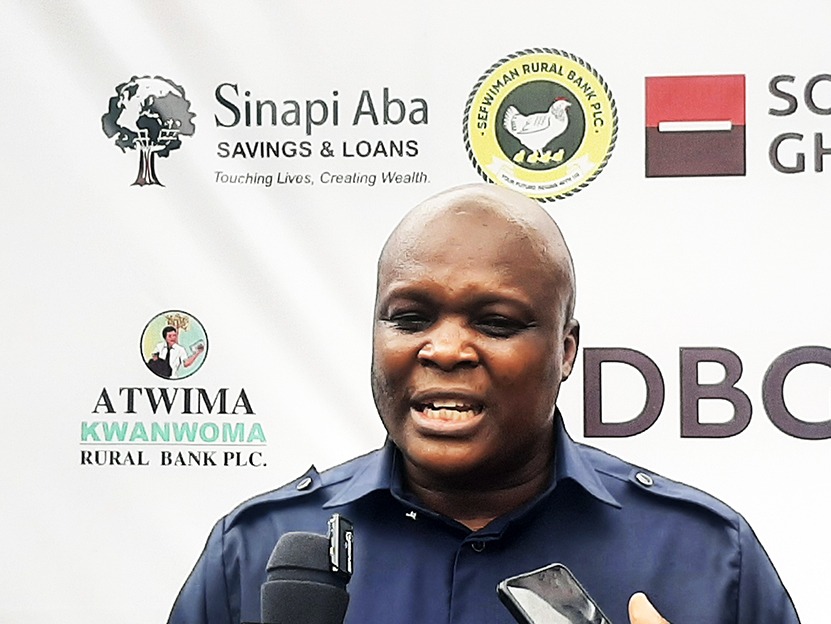
Addressing the media, Prof. Randolph Nsor-Ambala, CEO DBG disclosed that his outfit had impacted across the country and spurred DBG on.
He indicated that over the past five years “the model” has worked, a proof that it can deliver on the mandate that was set for it, which provides DBG a validation to be able to scale the model a lot more going forward to impact more women, the youth, the vulnerable in society, more businesses (which is described as “the growth pools”), in agriculture, manufacturing, tourism, education, health, and in ICT.
The CEO further disclosed that his outfit had created over 41,000 jobs, which is envisaged to quadruple in the next five years.
He said the scope of businesses in DBG’s reach would be expanded and deliver a lot more in terms of jobs disclosing that DBG’s target is to exceed over 500,000 jobs as well as touch more than 5,000 businesses directly and indirectly.
Prof. Randolph Nsor-Ambala explained that through the model, DBG spends five years stabilising and picking up from the lessons, skills and then impacting the market.
Touching on the Women’s Lending Programme, Prof.Nsor-Ambala disclosed that women face a peculiarity in their ability to access financing, explaining that these peculiarities and challenges prevent them from wanting to scale up their businesses because they do not want to deal with the ramifications, hindrances, challenges and perceptions that come with chasing options.
He mentioned some of the challenges as collateralisation, formalisation as well as technical assistance.
Prof.Nsor-Ambala stressed that for DBG, it is not just about the lending rate but about making sure that all those binding constraints that impact the ability of women to be able to scale businesses through appropriate financing are dealt with comprehensively.
From Oswald P. Freiku, Kumasi
For more news, join The Chronicle Newspaper channel on WhatsApp: https://whatsapp.com/channel/0029VbBSs55E50UqNPvSOm2z