Greater Accra is facing an acute shortage of landfill sites that could further worsen the capital’s waste management challenges unless urgent investments are made in waste disposal infrastructure, the Managing Director of Waste Landfills Company Ltd, Dr. Peter Kwei Dagadu, has warned.
Speaking in an interview on the Citi Breakfast Show, which was monitored by The Chronicle, Dr. Peter Kwei Dagadu said Greater Accra currently relies on only two major landfill facilities to dispose of the thousands of tonnes of waste generated daily. The Managing Director of Waste Landfills Company Ltd was responding to questions from the programme’s host, Bernard Koku Avle
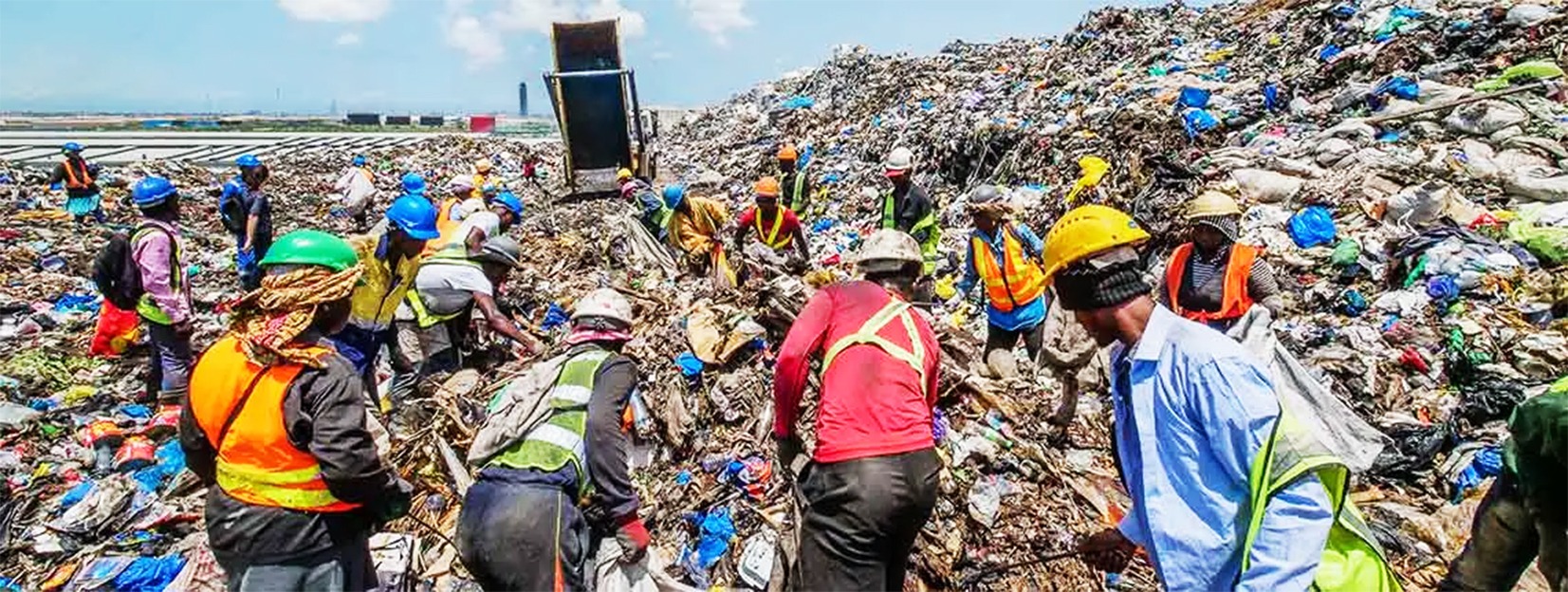
According to him, the Kpone landfill, which serves the Greater Accra Region, has almost reached full capacity and is expected to be shut down within the next six months.
“The Kpone landfill is actually in its twilight period. It is full and exhausted, and within the next six months it should be shut down,” he stated.
He explained that the only other major landfill serving the capital is the 120-acre Adepa landfill, located beyond Nsawam in the Eastern Region, which has the capacity to receive up to 4,000 tonnes of waste each day.
However, Dr. Dagadu noted that the long distance between Accra and the Adepa facility presents a major operational challenge.
“The round trip from Accra to Adepa is more than 40 kilometres, making it difficult for waste collection trucks to make more than one trip a day,” he said, adding that the long turnaround time significantly reduces waste collection efficiency across the city.
Dr. Dagadu disclosed that Greater Accra currently generates between 4,000 and 5,000 tonnes of waste daily, but collection, transfer and disposal bottlenecks continue to hamper effective sanitation management.
He described the situation as an “acute disposal crisis,” explaining that the city has, for years, depended partly on illegal dumpsites to cope with the volume of waste generated.
According to him, the recent closure of several illegal dumpsites by city authorities on environmental grounds has increased pressure on the few authorised disposal facilities and transfer stations.
Some of the illegal dumpsites, he explained, were located in environmentally sensitive areas, including wetlands and Ramsar sites, posing significant environmental and public health risks.
He said the closure of these sites has resulted in long queues at the few operational waste transfer stations as tricycles and other collection vehicles struggle to offload refuse.
Dr. Dagadu attributed part of the problem to chronic underfunding of downstream waste management infrastructure, including transfer stations and landfill operations.
He revealed that although Accra previously operated about six transfer stations, only two are currently functional because of inadequate funding.
“What households pay for waste collection is not enough to sustain downstream operations. Government support is required to keep these facilities operational,” he stressed.
To address the crisis, Dr. Dagadu called for the development of regional waste management infrastructure capable of serving multiple Metropolitan, Municipal and District Assemblies (MMDAs), rather than leaving each assembly to develop its own landfill.
He proposed the establishment of strategically located engineered landfill sites around the eastern, western and northern corridors of Greater Accra, supported by a network of well-funded transfer stations to improve waste transportation and disposal.
According to him, his company has already secured land banks in the Osudoku, Ada West and Awutu Senya districts as part of a long-term plan to develop additional waste disposal facilities capable of serving the capital over the coming decades. He, however, emphasised that sustainable financing remains the biggest obstacle to implementing such projects.
Dr. Dagadu also revealed that a planned engineered landfill under the Greater Accra Sustainable Sanitation and Livelihood Improvement Project (GASLIP), funded by the African Development Bank, has stalled because of financing challenges, further increasing pressure on the existing disposal facilities.
Beyond expanding landfill capacity, the waste management expert advocated a shift from Ghana’s current “collect-and-dump” model to a circular economy that prioritises recycling, composting and waste-to-energy technologies.
He argued that effective waste segregation at source would require clear government policy, public education, regulatory enforcement and sustainable financing to encourage investment in recycling infrastructure.
According to Dr. Dagadu, unless these structural challenges are addressed, Greater Accra’s growing population and increasing waste generation will continue to outpace the city’s waste disposal capacity, with potentially serious environmental and public health consequences.
For more news, join The Chronicle Newspaper channel on WhatsApp: https://whatsapp.com/channel/0029VbBSs55E50UqNPvSOm2z