The New Patriotic Party (NPP) Minority Transport Policy Committee has demanded full disclosure from the Mahama administration over its acquisition of two refurbished diesel locomotives and 20 freight wagons, questioning whether Ghana is investing in outdated railway equipment at the expense of long-term efficiency and value for money.
The Minority described the locomotives as relics from the “Margaret Thatcher era”, arguing that while it supports efforts to revitalise rail transport, the government owes Ghanaians clear answers on the cost, condition, operational lifespan and maintenance strategy for the newly acquired trains destined for the Tema–Mpakadan railway line.
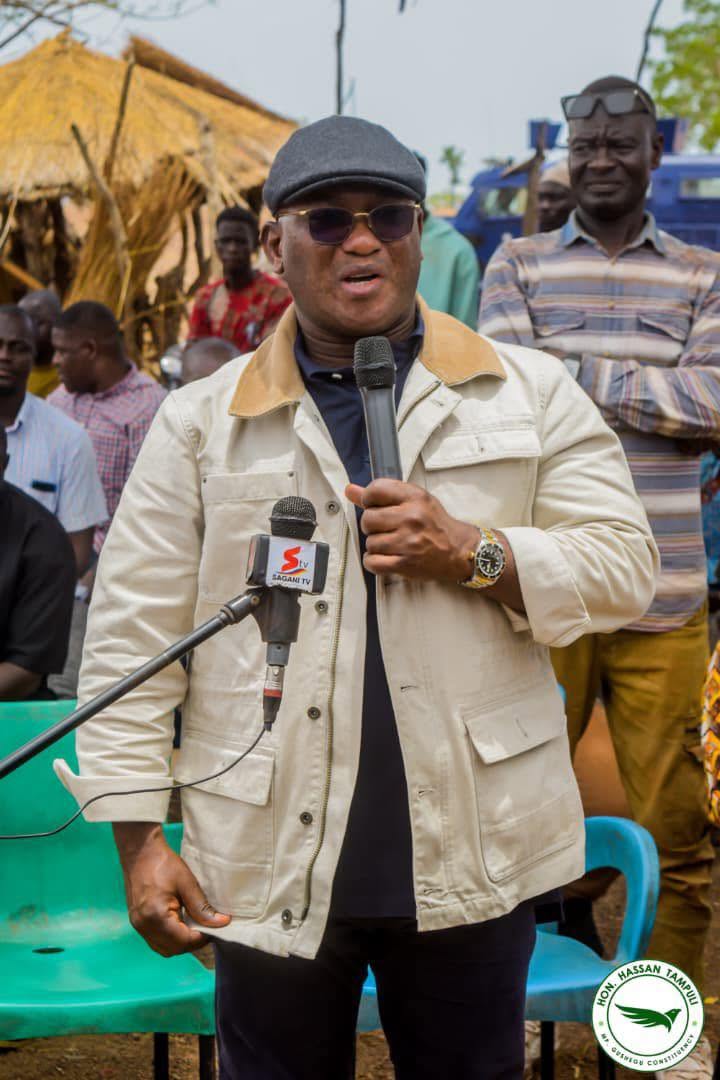
In a statement signed by the Chairman of the Committee and MP for Gushegu, Alhassan Sulemana Tampuli, the Minority said strengthening the railway sector is critical to easing pressure on roads, reducing transport costs, boosting trade and supporting industrialisation. However, it stressed that such investments must be backed by transparency and prudent use of public funds.
According to the Committee, available information indicates that the locomotives are refurbished British Rail Class 56 diesel-electric engines manufactured in the United Kingdom between 1976 and 1983.
The trains were previously operated by Colas Rail before being retired from mainstream service, with fewer than 15 of the 135 units originally built believed to remain operational worldwide.
While acknowledging that refurbished locomotives can still perform efficiently if properly maintained, the Minority questioned whether equipment built more than four decades ago represents the best option for Ghana’s railway modernisation agenda.
It argued that although the Class 56 locomotives earned a reputation for strength and reliability during their prime years, they rely on ageing technology that requires more intensive maintenance and higher operating costs than modern locomotives equipped with advanced diagnostics, greater fuel efficiency and improved reliability.
“The arrival of the locomotives should not distract from fundamental questions about their refurbishment history, remaining service life and total lifecycle costs”, the Committee stated.
The Minority also raised concerns over future maintenance, warning that sourcing spare parts could become increasingly difficult and expensive because the Class 56 fleet has largely been retired internationally.
It therefore called on the government to disclose its long-term maintenance strategy, including whether guaranteed spare parts agreements have been secured, strategic inventories established, technical support contracts negotiated and technology transfer programmes developed to build the capacity of Ghanaian railway engineers.
Without such arrangements, the Committee cautioned, the country risks operating equipment that could become costly and difficult to maintain.
The Minority contrasted the latest acquisition with the Diesel Multiple Units (DMUs) procured under the previous NPP administration from Poland’s PESA, noting that those trains were supplied brand new under a structured five-year maintenance and technical support programme that ensured operational reliability while transferring technical expertise to local engineers.
It maintained that successful railway investment goes beyond purchasing locomotives and wagons, insisting that maintenance planning, skills development, technology transfer and long-term sustainability are equally essential.
Beyond the locomotives themselves, the Committee questioned whether the Tema–Mpakadan corridor is fully prepared for commercial freight operations.
It said efficient freight services depend on supporting logistics infrastructure at the Mpakadan terminal, including mobile harbour cranes, reach stackers, container handling systems and bulk cargo loading facilities.
Without these installations, it warned, cargo movement between Tema, Mpakadan and destinations along the Volta Lake could face significant operational bottlenecks.
The Committee also questioned the commercial viability of the railway project, calling on the government to disclose market feasibility studies, projected cargo volumes, expected revenues and any haulage agreements concluded with major industries expected to use the line.
It further sought clarification on the institutional framework that will govern freight operations following the closure of the Ghana Railway Company Limited.
The Minority also referenced the National Democratic Congress’ 2024 campaign promise to expand Ghana’s railway network, including completing the Western Railway Line to transport manganese, bauxite and other bulk commodities.
According to the Committee, those commitments appear inconsistent with the allocations made to the railway sector in the 2026 Budget and it demanded clarification on funding sources, implementation timelines and how the government’s current spending plans align with its campaign pledges.
It further urged the government to indicate when outstanding payments owed to railway workers would be settled.
The Committee concluded by reaffirming its support for the revival of Ghana’s railway sector, but stressed that success should be measured not by the arrival of locomotives alone, but by the creation of a modern, commercially viable and sustainable rail system capable of driving national economic growth.
It insisted that Ghanaians deserve complete transparency regarding the procurement costs, condition, maintenance arrangements, operational readiness and long-term sustainability of every public investment in the railway sector.
For more news, join The Chronicle Newspaper channel on WhatsApp: https://whatsapp.com/channel/0029VbBSs55E50UqNPvSOm2z