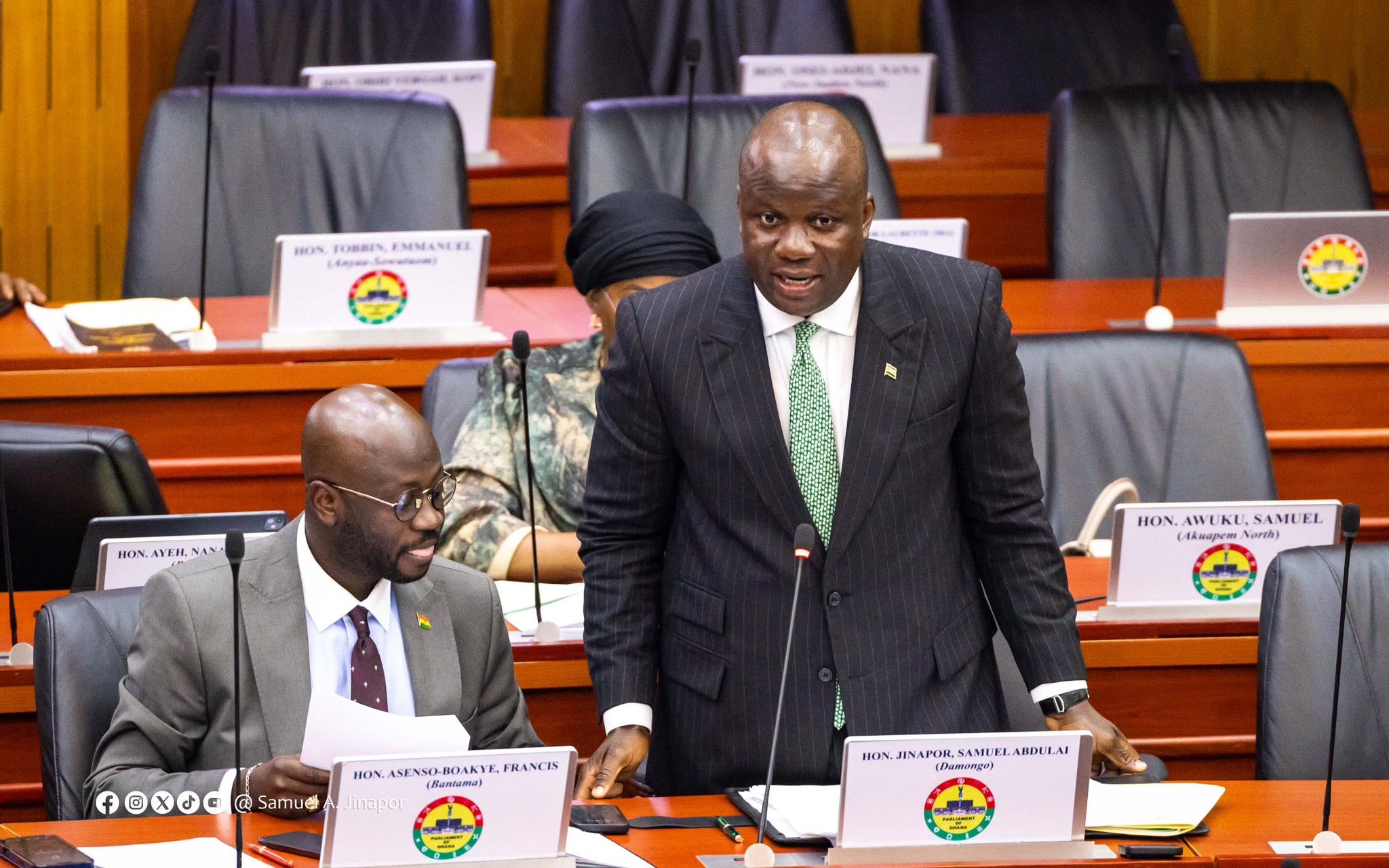
Fresh questions have emerged over the actual cost of running of government despite claims of a leaner administration, with Member of Parliament for Damongo, Samuel Abu Jinapor, arguing that staffing figures alone do not provide a complete picture of the burden placed on the public purse.
According to him, the true size of government should be measured not by the number of ministers appointed or staff attached to the Presidency, but by the overall cost of maintaining the state’s political appointees and administrative machinery.
His comments follow the submission of a report to Parliament by President John DramaniMahama, pursuant to the Presidential Office Act, 1993 (Act 463), detailing staffing levels at the Office of the President as of December 31, 2025.
The report shows that personnel at the Presidency declined from 921 in 2023 to 808 in 2025. While the figures have been cited as evidence of a streamlined administration, Mr Jinapor believes they tell only part of the story.
He argues that public discussion of the size of government has become narrowly focused on ministerial appointments and staffing levels at the Presidency, while overlooking a much broader network of political appointees whose salaries and benefits are funded by taxpayers.
These, he noted, include presidential advisers, special assistants, aides, coordinators and appointees serving across ministries, departments, agencies and Ghana’s diplomatic missions abroad.
“At the end of the day, what truly defines the size of Government is its impact on the public purse,” Mr Jinapor stated.
The Damongo MP maintained that a reduction in staff numbers at the Presidency does not automatically translate into a smaller or less expensive government if appointments elsewhere within the state apparatus continue to increase.
In his view, any serious assessment of government’s size must capture the entire architecture of political appointments and the financial obligations associated with them.
Without such a comprehensive approach, he argued, claims of operating a lean government risk creating a misleading impression about the actual cost of governance.
Mr Jinapor specifically highlighted Ghana’s diplomatic service, where he said the current administration has appointed eighteen deputy ambassadors to various foreign missions, compared to six under the previous government.
According to him, these appointments carry substantial financial implications, which should be included in any honest evaluation of government expenditure.He estimated that maintaining the eighteen deputy ambassadorial positions could cost between US$2.7 million and US$3.1 million annually.
Over the life of a four-year administration, he projected that expenditure on the positions could amount to between US$11 million and US$12 million.
For him, figures such as these demonstrate why ministerial headcount alone cannot serve as an accurate measure of the size or cost of government.
“Therefore, when assessing the true size of government, we must look beyond the staff of the Presidency alone and consider the entire architecture of political appointments,” he said.
Beyond staffing levels, Mr Jinapor also pointed to expenditure trends reflected in recent national budgets, particularly allocations made under the Office of Government Machinery.
According to him, compensation-related spending appears to have increased despite repeated assurances from government that it would pursue fiscal discipline and reduce the cost of governance.
The apparent contradiction between lower staffing figures and rising expenditure, he argued, raises important questions about how public resources are being deployed.
At a time when many households and businesses continue to face economic pressures, he believes such issues deserve greater public scrutiny.
“How does a government employ fewer people while spending more? And how does a government that came into office promising to cut waste and operate a lean government end up with a significantly higher compensation bill?” he questioned.
Mr Jinapor maintained that an administration can reduce the number of ministers while simultaneously increasing the overall cost of governance through the appointment of advisers, aides and other officials whose remuneration packages place a similar burden on the public purse.
He stressed that the issue goes beyond partisan politics and speaks directly to the broader question of accountability in public administration.
As Ghana continues to confront fiscal challenges and growing demands for prudent economic management, he said citizens have an increasing interest in understanding not only how government is structured, but also how much it costs to maintain.
According to the Damongo legislator, the report submitted to Parliament has opened a broader conversation about transparency, accountability and value for money in governance.
For him, the central question is not how many people serve in government, but how much taxpayers are required to spend to sustain the machinery of state.
By shifting the debate from headcount to expenditure, Mr Jinapor argues that attention should remain firmly on what many Ghanaians consider the most important measure of government efficiency, the responsible stewardship of public funds.
For more news, join The Chronicle Newspaper channel on WhatsApp: https://whatsapp.com/channel/0029VbBSs55E50UqNPvSOm2z