The Minister for Lands and Natural Resources, Emmanuel Armah-Kofi Buah, has called for a balanced approach to the fight against illegal mining, stressing that efforts to protect the environment must not come at the expense of the livelihoods of thousands of Ghanaians.
Speaking at the 98th Annual General Meeting of the Ghana Chamber of Mines in Accra, on Friday, the Minister described illegal mining as one of the most complex challenges facing the country, saying government remained committed to finding a sustainable solution.
“We want everybody to do mining, but we want everybody to do mining without destroying our water bodies, our environment and without compromising the future of generations yet unborn,” he stated.
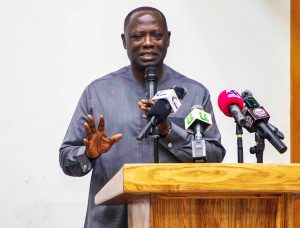
According to him, the fight against illegal mining should not be seen as a war against a section of the population, but rather an effort to ensure that mining activities are carried out responsibly and within the law.
Mr. Buah also disclosed that the review of the Minerals and Mining Act and the National Mining Policy had reached an advanced stage and were currently before Cabinet ahead of submission to Parliament.
The reforms, he said, would strengthen environmental protection, improve regulatory efficiency and provide greater support for responsible small-scale mining.
The Minister’s remarks come at a time when the mining industry is grappling with the environmental and economic consequences of illegal mining, even as the sector records significant growth.
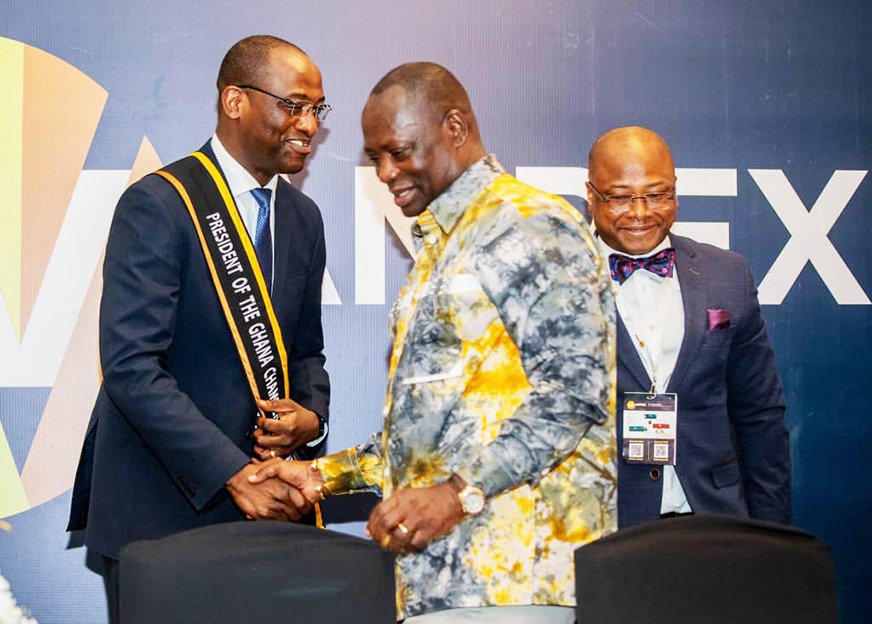
Addressing the meeting, outgoing President of the Ghana Chamber of Mines, Michael Edem Akafia, said illegal mining continued to cause widespread environmental degradation, water pollution, destruction of forests and operational disruptions for legitimate mining companies.
He noted that formal mining firms were often wrongly blamed for environmental damage caused by illegal operators.
Mr. Akafia revealed that Ghana’s gold production rose by 23.41 per cent in 2025, increasing from 4.82 million ounces in 2024 to 5.94 million ounces.
The most significant development was the growth of small-scale mining, which accounted for 52.4 per cent of national gold output, overtaking large-scale mining for the first time in more than a century.
He further disclosed that the mining and quarrying sector remained Ghana’s largest source of direct domestic tax revenue, contributing GH¢23.11 billion in taxes in 2025, while mineral export earnings jumped from US$11.98 billion to US$21.36 billion during the same period.
Chief Executive Officer of the Chamber, Dr. Kenneth Ashigbey, said despite global economic uncertainties, Ghana’s large-scale mining sector remained resilient, contributing more than GH¢22 billion in revenue and supporting over 13,800 direct jobs in 2025.
He noted that the Chamber’s engagement with government had helped secure a reduction in the Growth and Sustainability Levy from three per cent to one per cent, while discussions were ongoing for its eventual removal. He also stressed the importance of policy stability to sustaining investment and competitiveness in the sector.
Dr. Ashigbey further indicated that the Chamber had intensified collaboration with government, regulators, security agencies and international partners to promote responsible mining practices and strengthen efforts to combat illegal mining.
The AGM, held under the theme “How Can Responsible Mining Accelerate Ghana’s Development?”, also witnessed the formal handover of leadership of the Chamber from Michael Edem Akafia to Ing. Frederick Attakumah, who pledged to deepen local content, strengthen environmental stewardship and support the growth of Ghana’s mining industry.
For more news, join The Chronicle Newspaper channel on WhatsApp: https://whatsapp.com/channel/0029VbBSs55E50UqNPvSOm2z