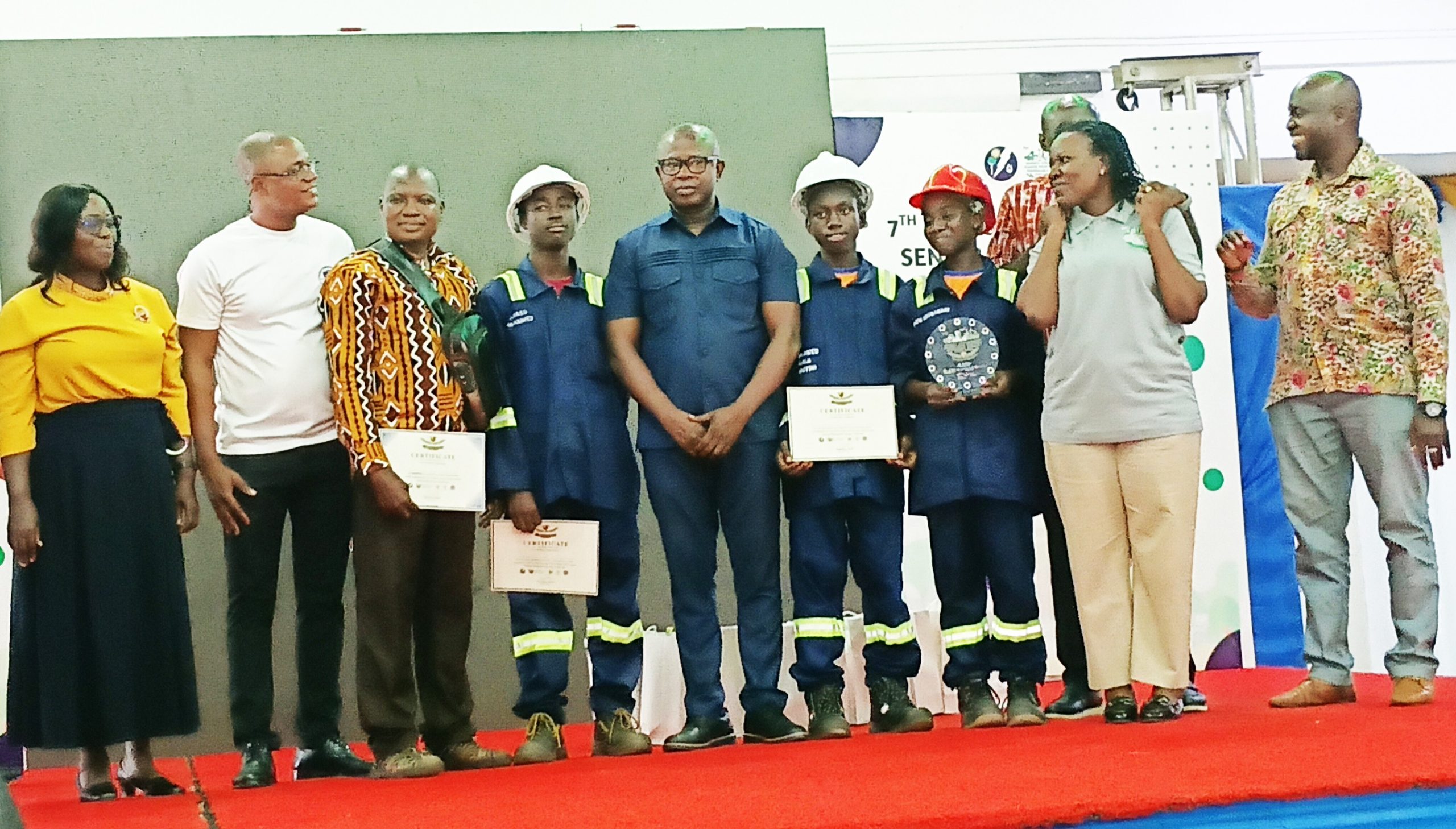
The Energy Commission has held the 2026 Senior High Schools Renewable Energy Challenge in Kumasi under the theme “Harnessing Renewable Energy to Power Ghana’s 24-Hour Economy.”
The competition is one of the Commission’s initiatives aimed at encouraging young people to develop interest in renewable energy, science, technology and innovation. Seventeen schools from the Northern and Southern Sectors participated in the competition with Forces Senior High Technical School, Tema Manhean Senior High Technical School, Sogakofe SHS, Ahantaman Girls SHS, Mfantsiman Girls SHS, Keta SHS, Ebenezer SHS, Presbyterian Boys SHS and Kpando SHS representing the Southern Zone.
Navrongo Senior High School, Nkoranza Technical Institute, Yaa Asanteman Senior High School, Ola Girls from Ahafo Kenyasi, St. James Seminary from Sunyani Gyama Pensa and Daboka Technical Institute represented the Northern Zone
Addressing participants, Mr. Chris Nana Banyin Yalley, Acting Deputy Executive Secretary (Administration) of the Energy Commission, said through the competition, students are encouraged to look beyond what they learn in the classroom and begin to think about practical solutions to some of the energy challenges facing the country.
Mr Yalley advised the students not to be afraid to express themselves, to speak clearly, believe in their projects and enjoy the experience.
He disclosed that at the end of the competition, three schools would be selected to represent the Southern Zone at the Grand Finale in Accra this month. These three schools will join three qualifying schools from the Northern Zone to compete for the ultimate prize.
He said every school in the competition is hoping to secure one of those three places. However, this Challenge is not only about winning. It is also about learning, building confidence, working together and developing the ability to solve real-life problems.
He added that even if a school does not make it to the Grand Finale, the experience and knowledge gained would remain valuable. He stressed that the future of Ghana’s energy sector does not depend only on the engineers, scientists and policymakers of today, but also on young people who are willing to think differently, ask questions and come up with new ideas.
He reminded the participants that they may be students today, but tomorrow, some of them could become the engineers, researchers, entrepreneurs and innovators who will help shape Ghana’s energy future.
Mr. Emmanuel Ocquaye, who represented the Director-General of the Ghana Education Service (GES), said the competition goes beyond producing winners to raising champions in renewable energy.
He said it encourages students to move beyond theoretical knowledge to seek creative ways of solving problems for national development and to develop school-based projects for a sustainable future. He commended the Energy Commission for sustaining the initiative, noting that renewable energy is no longer just a topic for scientific discussion, but is central to energy security, environmental protection and economic opportunity.
He said Science and mathematics are not isolated subjects to be studied only for examinations, but interconnected tools for understanding the environment and improving quality of life. He emphasized that Ghana needs learners who can identify problems in their communities, investigate them scientifically and develop affordable, locally relevant and sustainable solutions, moving from being consumers of technology to creators of solutions.
Mr. Ocquaye noted that the true value of renewable energy education cannot be measured only by trophies won or projects displayed, but by what happens after the awards.
He argued whether the projects would determine whether the schools are maintaining and improving their renewable energy installations and whether learners transferred their knowledge to other students.
He said the proposed six-year impact assessment provides a valuable framework for examining progress across five areas: energy transition and carbon reduction; STEM education and curriculum integration; institutional sustainability; community and stakeholder engagement; and peer learning and knowledge dissemination.
He encouraged participating schools to let their projects become lasting learning resources, keep their environmental clubs active, and inspire other schools.
He also urged schools to integrate renewable energy learning into relevant science and mathematics lessons and to strengthen connections between schools, industry, research institutions, universities, technical experts and local communities for mentorship and technical guidance.
Ahantaman Girls, Presbyterian Boys and Kpando Senior High School, from the Southern zone qualified for the grand finale with Ahantaman Girls emerging first in the Southern Zone.
Dabokpa Technical Institute, Yaa Asantewaa, Ola Girls qualified from the Northern zone with Dabokpa Technical Institute beating Yaa Asantewaah Senior High School with one point to top the Zone.
For more news, join The Chronicle Newspaper channel on WhatsApp: https://whatsapp.com/channel/0029VbBSs55E50UqNPvSOm2z