More than 16 million people in Northern Benin, Côte d’Ivoire, Ghana and Togo face rising threats from climate change, conflict and economic insecurity.
At the SOCO Regional Conference in Côte d’Ivoire, Ghana’s Minister for Local Government, Chieftaincy and Religious Affairs, Ahmed Ibrahim, highlighted how the US $150 million SOCO Project is helping vulnerable border communities build resilience, promote social cohesion and empower women and youth to protect their livelihoods.
Representing President John Dramani Mahama, the Local Government, Chieftaincy and Religious Affairs minister addressed delegates from Ghana, Côte d’Ivoire, Togo, Benin, the World Bank and other development partners, emphasising the interconnected nature of climate pressures, insecurity and limited livelihoods in Northern Ghana and neighbouring Sahel countries.
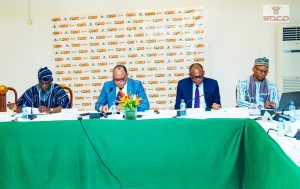
“Across the northern corridor of the Gulf of Guinea, our countries face shared challenges that strain communities dependent on agriculture, cross-border trade, and local economic activities,” he said, adding “Social cohesion is essential not only for development, but for peace and stability within our borders.”
Ahmed Ibrahim referenced recent attacks on Ghanaian tomato traders in Burkina Faso, illustrating how insecurity in one country can ripple across borders.
“These are ordinary citizens whose daily economic activities sustain families. No nation can confront these risks alone,” he warned, calling for coordinated regional action.
He also stressed that youth unemployment increases vulnerability to extremist recruitment. “Where hope is fragile, extremist groups find space to recruit. Addressing insecurity requires investment in people, jobs, and functional local systems,” he said.
Climate Change and Gender Vulnerabilities
Changing rainfall patterns, declining soil productivity, and water scarcity are compounding challenges for northern border communities.
The Local Government, Chieftaincy and Religious Affairs minister highlighted that women and girls bear the greatest burden, yet remain central to household survival and community stability. He called for climate adaptation measures that deliberately include women and youth in economic and decision-making processes.
Since its inception, Ghana’s SOCO Project has reached 1.5 million people across 48 districts, covering about 1,700 communities organized in clusters. The project has improved access to schools, health facilities, water systems, sanitation, local markets, energy, and climate adaptation infrastructure, restoring confidence in local governance and promoting peaceful coexistence.
By January 2026, Ghana had completed 950 infrastructure subprojects, spanning social services, energy access, water and sanitation, and connectivity improvements.
The Local Economic Development component has supported 1,554 Common Interest Groups, benefiting over 46,000 people, nearly 80 percent of whom are women and youth. These groups engage in farming, agro-processing, and income-generating activities, providing alternatives to unemployment and economic exclusion.
“Where young people have work, where women participate in decision-making, and where communities see progress, cooperation improves and the risk of conflict declines,” the Minister said.
Cross-Border Cooperation is Critical
The Local Government, Chieftaincy and Religious Affairs minister stressed that regional challenges – climate stress, transhumance pressures, livelihood disruptions and insecurity require collective solutions.
Conferences like the SOCO Regional Forum enable countries to exchange lessons, coordinate interventions and address vulnerabilities before they escalate into conflict.
“Through cooperation, inclusion and sustained investment, border communities can transform from zones of vulnerability to zones of opportunity,” he said.
Ghana reaffirmed its commitment to working alongside sister countries and development partners, including the World Bank, to promote social cohesion, resilient livelihoods and peace across the Gulf of Guinea.
Ahmed Ibrahim concluded by urging delegates to continue collaboration to support vulnerable border communities, empower women and youth and foster sustainable regional development.
“The SOCO Project demonstrates that early inclusive investment in people and communities is the most effective tool for reducing vulnerability and enhancing stability,” he said, calling on all partners to strengthen regional coordination and shared responsibility.