Home Blog Page 943

Businessman charged for Issuing False Cheques to pay for US Visa secured for his wife

0
Dansoman Circuit Court

A 41-year-old businessman, Richard Kwasi Afari, has been arraigned before the Dansoman Circuit Court for allegedly failing to honour a GH¢255,000.00 payment to a Travel and Tour agent who secured a U.S. visa for his wife.

As a result, Richard Afari is facing two counts of issuing false cheques, contrary to Section 313(A)(1) of the Criminal Offences Act, 1960 (Act 29).

He allegedly issued two UMB Bank cheques worth GH¢170,000.00 and GH¢85,000.00 to Richard Owusu, a Travel and Tour operator, despite lacking sufficient funds in his account.

Court Proceedings

Richard Kwasi Afari pleaded not guilty to the charges and was granted bail of GH¢270,000.00 with three sureties.

The court, presided over by Her Honour Halimah El-Alawa Abdul-Baasit, ordered that all sureties must be Public Servants earning at least GH¢5,000.00 per month and must be justified.

Additionally, the accused was required to deposit his Ghana Card at the court Registry and report to the police every two weeks until further notice.

The Prosecution, led by Chief Inspector Kwadwo Aboagye, was directed to file all disclosures and witness statements. The case has been adjourned to April 4, 2025.

Case Background

According to the Prosecution, the complainant, Richard Owusu, operates a Travel and Tour business at Dzorwulu, Accra, while the accused resides at Haatso.

In August 2024, Afari approached Owusu for assistance in securing a U.S. visa for his wife, Akosua Agyeman Abrokwah.

Richard Owusu agreed to facilitate the process for a fee of $15,000 equivalent to GH¢255,000.00 at the time.

Richard Kwasi Afari then issued two post-dated UMB Bank cheques to cover the payment. After successfully acquiring the visa, Richard Owusu presented the cheques for clearance, but both were dishonored due to insufficient funds.

Following the failed transaction, Richard Owusu reported the matter to the police, leading to Richard Afari’s arrest.

During investigations, Richard Afari was granted police inquiry bail but allegedly jumped bail and went into hiding.

He was later served with a criminal summons on January 3, 2025 to appear before the court.

Richard Afari is expected to face trial as legal proceedings continue.

Editorial: Catching The ‘Big Fishes’ In Galamsey Fight Is The Right Way To Go

0
Editorial

The Asantehene, Otumfuo Osei Tutu II has called on the government to go beyond targeting small-scale miners and pursue the key financiers and powerful figures behind illegal mining, commonly known as galamsey.He made this known during a courtesy call by the Minister of Lands and Natural Resources, Mr. Emmanuel Armah-Kofi Buah.

Otumfuo urged that government should go after the ‘Big Fishes’ in the galamsey business and prosecute them, instead of focusing only on the youth involved in the illegal act.

The Minister’s visit was part of efforts to seek Otumfuo’s support and guidance for the government’s planned reforms in the mining and forestry sectors. He commended the Asantehene for his exemplary leadership, particularly in ensuring litigation-free land administration in the Ashanti Region.

Outlining some immediate measures taken by the government, the Minister mentioned the establishment of an 18-member working committee to review the licensing regime, reclassify mining categories and overhaul the Community Mining Schemes.

The Asantehene acknowledged the efforts being made, but urged the Minister to address the root cause of illegal mining by providing alternative livelihood programmes for the youth in mining communities. He emphasised that if young people have meaningful and sustainable sources of income, they would be less likely to engage in destructive mining activities.

For decades, Ghana’s fight against illegal mining has been largely reactive, focusing on arresting and prosecuting small-scale miners. However, this approach has failed to curb the menace, as the real powers behind the galamsey such as the financiers, corrupt officials and influential figures remain untouched.

The time has come for a shift in strategy. Rather than focusing on the desperate youth drawn into illegal mining due to economic hardship, the government must go after the masterminds who fund and facilitate these activities.

Illegal mining has left a trail of destruction across Ghana. Water bodies have become heavily polluted with mercury and other toxic chemicals, making water treatment increasingly difficult. The Ghana Water Company Limited has warned that if this trend continues, the country may have to import potable water by 2030.

The health implications are dire, with long-term exposure to mercury being linked to kidney failure, birth defects and neurological disorders. Beyond health and environmental damage, Ghana’s economy also suffers, as the state loses millions in uncollected taxes and revenue due to the illegal mining operations.

The government’s approach has often been heavy-handed, deploying military task forces such as Operation Vanguard and Operation Halt to clamp down on illegal miners. While these actions occasionally yield short-term results, they do not address the root cause of the problem. Many of the youth involved in galamsey have no viable alternatives, as economic opportunities in mining communities remain limited. If these miners are arrested and their equipment destroyed, they are often forced back into illegal mining, as their only means of survival.

Meanwhile, the financiers and influential figures who bankroll these operations remain in the shadows, using their connections to escape scrutiny.

To make real progress, the government must shift its focus toward identifying, prosecuting and punishing those who profit the most from galamsey.

The fight against galamsey is ultimately a test of Ghana’s political will. Powerful figures involved in illegal mining must no longer be shielded by political affiliations or financial influence.

If the government truly wants to end galamsey, it must take bold action against those at the top, not just those at the bottom. The time for half-measures and symbolic gestures is over.

MP woos investors to develop Sekondi

0
The investors who called on the regional minister, Joseph Nelson

The Member of Parliament (MP) for Sekondi, Blay Armah Nyameke has led Chinese investors to his constituency to reconstruct the deplorable Sekondi market.

Reaffirming his commitment to fulfilling his social contract with his constituents, the Sekondi Legislator is optimistic that the Sekondi community will experience a significant social and economic revival, driven by the growing interest from investors.

According to him, the constituency is poised to receive substantial investments, which would help restore its former glory. This is attributed to the strategic efforts being made to create an investor-friendly environment in the area.

Blay Armah Nyameke in discussion with the Minister Joseph Nelson

As the MP, Armah Blay, who defeated Andrew Egyapa Mercer in the 2024 parliamentary election, is keen on ensuring that his constituents benefit from the economic growth and development that these investments would bring.

The MP’s desire to uplift the image of Sekondi appears to be a welcome development for the people of Sekondi, who are eager to see positive changes in their community.

The Member of Parliament is optimistic about Sekondi’s future during an interview on the sidelines of an investment meeting held at the Western Regional Coordinating Council (WRCC) on February 18, 2025.

The delegation, which was led by Lawyer Blay Nyameke Armah, brought together key stakeholders, including Chinese partners from Jiangsu Zhenhuai Construction Group Company Limited.

The lawmaker expressed confidence that Sekondi would experience resurgence as a thriving social and economic community, thanks to the ongoing efforts.

This development is likely to have a positive impact on the local economy, creating new opportunities for growth and development.

“As we promised, we are going to bring investors to help develop Sekondi. Today, we brought in some investors from China that are going to invest in Sekondi,” he said.

Explaining the specific role the Chinese investors would play, he said “They are going to rebuild the Sekondi market and expand the Naval and Police Hospitals to improve healthcare delivery.”

According to the MP, “both hospitals are too small to accommodate patients or to service the growing population of the constituency.”

Aside the aforementioned, he said the Chinese would also consider investing in the fisheries sector of the local economy considering the fact that fishing is the main stay of the people and mainstream business in Sekondi

“We brought them to come and also invest in the fishing harbour” he announced adding, “We also promised you fishing vessels, they are coming. We will deliver them by 2027.”

Meanwhile, the Chinese investors, led by Li Gang, have signed a Memorandum of Understanding (MoU) with the Western Regional Coordinating Council (WRCC) led by Joseph Nelson.

Court Dismisses GH¢800k Fraud Case Against Former NPP Aspirant and Associate

0
Court sacks electoral commission chairman

A Circuit Court in Accra has dismissed the GH¢800,000 tax-related fraud case against former New Patriotic Party (NPP) parliamentary aspirant, Collins Amoah and his co-accused, Solomon Okuley, following a withdrawal of charges by the prosecution.

The prosecution, led by Chief Inspector Emmanuel Teye-Okuffo informed the court that businessman Anthony Kojo Ababio, the complainant in the case, had written to express his intention to discontinue the matter. He indicated that the dispute had been resolved amicably and that he no longer wished to pursue legal action.

Based on this submission, the court, presided over by Her Honour Susana Eduful, struck out the case as withdrawn.

This marked the first court appearance of Amoah, since the case commenced on January 29, 2025. Okuley, though present, arrived late to the proceedings.

Case Background

The case initially gained public attention after the Circuit Court issued a bench warrant for Solomon Okuley’s arrest, following his failure to appear in court.

His defense team had cited health reasons, but the judge ruled that there was no medical excuse on the court record to support the claim. A previous warrant had also been issued for Amoah, who is reportedly on the run.

The allegations centered on claims that Okuley, a 51-year-old trader and Amoah, a former NPP parliamentary aspirant for the Ablekuma Central constituency, defrauded businessman Anthony Kojo Ababio of GH¢800,000.

The accused had allegedly convinced Ababio that they could use their political connections within the Akufo-Addo administration to clear his tax arrears at the Ghana Revenue Authority (GRA).

Ababio, believing their assurances, handed over the money in the presence of witnesses. However, after receiving the funds, the accused reportedly failed to fulfill their promise and subsequently evaded the complainant.

Legal Proceedings

Following Okuley’s arrest, he pleaded not guilty to charges of defrauding by false pretenses, contrary to Section 131(1) of the Criminal Offences Act, 1960 (Act 29). He was granted bail set at GH¢1 million, with two sureties – one of whom had to be an immediate family member, with both earning at least GH¢5,000 per month.

Additionally, he was required to deposit his passport at the court registry until the case was concluded.

Investigations revealed that Ababio had met the accused before June 2024 and was led to believe that Amoah could settle his GRA debts in exchange for the payment. However, after receiving the money, the accused failed to deliver on their promise.

On December 28, 2024, Ababio reported the matter to the police after realising he had been deceived.

Okuley was arrested the same day and, in a caution statement, admitted that he and Amoah had taken the money.

He further disclosed that Amoah had received GH¢650,000 of the amount but failed to use it to clear the tax arrears, instead diverting it for personal political activities.

Shakira’s tour back on track after Peru concert was cancelled

0
Shakira pictured during the first show of her new world tour in Rio de Janeiro

Colombian pop superstar Shakira will perform in Lima, Peru, this Monday, after cancelling a show Sunday night due to an abdominal issue which required hospital admission.

Master Live, the company organizing Shakira’s concert in Lima, confirmed on Monday that the event scheduled for Monday, February 17 at the National Stadium in Peru’s capital at 8:15 p.m. local time will take place.

“We are pleased to inform that today’s concert will take place as normal. We want to thank Shakira for all the effort to make this show go ahead,” the statement from Master Live said.

Master Live added in its statement that they will announce the new date for the concert on Sunday that was canceled.

Posting to Instagram on Sunday, the singer previously said she had been taken to the emergency room and was advised to cancel the concert.

“The doctors whose care I am currently under have communicated that I am not in good enough condition to perform this evening,” she said.

“I am very sad to not be able to take (to) the stage today. I’ve been looking forward to reuniting with my incredible fans here in Peru,” Shakira said, adding that she hoped to be discharged soon.

Credit: cnn.com

Rihanna reacts to A$AP Rocky not guilty verdict

0
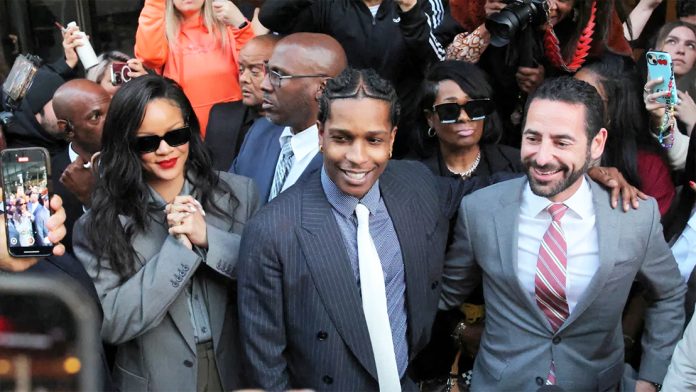
Rakim Mayers, aka A$AP Rocky, reacts as he exits the court, next to Rihanna

The world watched as A$AP Rocky flung himself into his partner Rihanna’s arms after he was acquitted Tuesday and now she has shared her joy.

The superstar singer and mogul posted about her feelings on an Instagram story after a California jury found A$AP Rocky not guilty of two felony counts of assault with a semiautomatic firearm, stemming from a 2021 shooting incident with a former friend in Los Angeles.

“The Glory belongs to God and God alone,” the note on Rihanna’s verified social media read. “Thankful, humbled by his mercy!”

The longtime couple share two young sons, RZA, 2, and Riot, 1 whom Rihanna brought with her to the trial previously.

In a 2024 cover story for Interview magazine, the music superstar and Fenty founder said the couple’s romantic relationship began as a friendship after they collaborated on a remix of her 2011 single “Cockiness (Love It).”

It was during a performance of that song at the MTV Video Music Awards that the rapper grabbed Rihanna’s backside for all the world to see, and she said her team “was worried that I wanted to have his head on a f**ing mantle.”

Instead, she went on to costar in his “Fashion Killa” music video and the pair became buddies.

Credit: cnn.com

Dating is for information gathering not for mating -Agyinasare

0
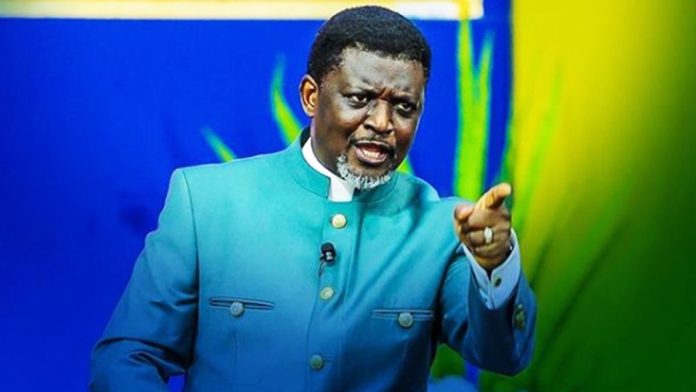
Archbishop Charles Agyinasare

Founder of Perez Chapel International, Archbishop Charles Agyinasare, has advised individuals in relationships to avoid prioritising sexual intimacy during the dating phase.

In a video which has since gone viral online, the Archbishop addressing his congregation stressed that dating should be a period for gathering information, understanding one’s partner, and building a strong foundation, rather than engaging in physical intimacy.

“Remember that dating is not for mating or for coupling. When you start going out with somebody, it’s not for you to have sex together. Because mating will cloud your judgment. Your period of meeting is the period of gathering data,” Archbishop Agyinasare stated.

He emphasised that engaging in sexual activities too early in a relationship could impair one’s ability to make rational decisions about their partner, leading to challenges later in marriage. According to him, true compatibility is discovered through deep conversations, shared values, and understanding one another’s long-term aspirations.

Archbishop Agyinasare further warned that rushing into marriage without fully knowing one’s partner could result in serious consequences.

The truth of the matter is, if you don’t do more work on the person you are going to marry before you marry, you will do more work after the marriage, he added.

He urged couples to focus on emotional, intellectual, and spiritual compatibility before making lifelong commitments, highlighting that a strong foundation built on trust and understanding is key to a successful marriage.

MUSIGA pays insurance premiums for aged musicians –Abena Ruthy 

0
Abena Ruthy, second Vice President of MUSIGA

Abena Ruthy, the second Vice President of the Musicians Union of Ghana (MUSIGA), has outlined some initiatives the association is embarking on to help improve the lives of its members.

Speaking to Kwame Dadzie on Joy FM’Showbiz A-Z, Abena mentioned that MUSIGA has for the past years, paid critical attention to the welfare of its members.

She noted that apart from the usual welfare contributions they do, they also have a group insurance policy with SIC Life.

According to the ‘Lala’ singer, the aged in the union, do not pay insurance premiums by themselves.

“For the elderly ones, they don’t even pay [their premiums]. MUSIGA pays for them. So members of the Ageing Musicians Welfare Fund (AMWeF), they are not the ones that pay for their insurance. MUSIGA pays for them.

We sign them on automatically. Once you clock 60 years, you automatically won’t pay for your insurance. MUSIGA will do that for you,” she said.

She explained that MUSIGA’s partnership agreement with SIC Life allows their members to have insurance packages by paying 100 cedis as premium.

She added that the Ageing Musicians Welfare Fund which was instituted during tenure of Bice ‘Obour’ Osei Kuffour, is still active.

She said this fund is raised through events they organise and donations from individuals.

Credit: myjoyonline.com

Government Needs to Absorb Utility Bills in Public Basic Schools 

0
Wisdom Koudjo Klu

Education is crucial for national development, and it’s essential to provide public basic schools in Ghana with the resources they need to operate effectively. However, many of these institutions face significant challenges due to high electricity and water costs, hindering their ability to prioritize quality education.

Often, financial pressures force schools to divert funds intended for development projects to cover utility expenses. This shift creates a problematic situation, as money meant for infrastructure improvements, educational materials, and extracurricular activities is instead used for essential services that should be funded by the government.

Undeniably, inconsistent access to water and electricity disrupts the operational efficiency of our schools. It leads to frequent interruptions in teaching and learning. Teachers and students are subjected to challenging conditions, which adversely affects academic performance and overall school morale.

In some instances, schools with unpaid utility bills risk service disconnection, compromising basic activities like computer lab use, sanitation, and classroom lighting. Given the vital role of education in driving national growth, the government must take responsibility for covering utility bills in public basic schools.

The Weight of Utility Bills on Public Basic Schools

As a matter of fact, our public basic schools operate on tight budgets. They primarily rely on capitation grants from the government intended to cover essential costs such as teaching materials, minor repairs, and administration expenses. Unfortunately, these grants are frequently delayed and fall short of meeting even the most basic needs. Consequently, schools must seek alternative funding sources to address expenses, including utility bills. The current grants are so stretched that they barely support everyday operations, let alone manage substantial utility bills.

Due to insufficient government funding, many schools look to parents for financial contributions through Parent Associations (PAs). However, these contributions are often unreliable and inadequate, as numerous parents also struggle economically. The issue is that our fluctuating income levels make it increasingly challenging for families to meet financial expectations.

Additionally, some communities have higher concentrations of low-income households, exacerbating the issue. As a result, schools regularly default on their utility payments, accumulating debts that may lead to service disconnections. The inability to pay for water and electricity drastically hampers schools’ capabilities to provide a suitable learning atmosphere.

Some institutions have had to reduce essential services to minimize utility costs. For example, certain schools limit electricity use by restricting computer lab hours, while others reduce water consumption, impacting hygiene and sanitation. Such austerity measures, though unavoidable, have detrimental long-term effects on students’ educational experiences. If this trend persists, public basic schools in Ghana will struggle to match the educational quality and facilities of private schools. Thus, the government needs to intervene and relieve this financial burden so schools can concentrate on delivering quality education.

The Impacts:

  • Teaching and Learning Interruptions

Reliable electricity is vital for schools, especially in an increasingly digital environment where computers and electronic teaching tools are essential. While many schools are equipped with computer labs and digital resources, frequent power outages due to unpaid bills render these facilities unusable, depriving students of critical ICT skills. The lack of these resources places students at a disadvantage, as they graduate with minimal exposure to modern educational tools.

Schools that Conduct evening classes or administrators work outside regular hours and encounter serious challenges when power is cut off. Teachers who rely on digital devices for planning and instruction are also hindered. Moreover, electric fans or air conditioning units that improve classroom conditions during hot weather are rendered ineffective without power, creating uncomfortable learning environments that detract from student focus. Over time, this situation leads to declining academic performance, as students struggle to learn under suboptimal conditions.

The absence of running water likewise impairs sanitation and hygiene within schools. Without access to water, students and staff confront unsanitary situations, increasing the likelihood of disease outbreaks. Schools lacking running water find it difficult to maintain clean restrooms, which can be especially challenging for female students requiring sanitary facilities during their menstrual cycles. Poor hygiene contributes to rising absenteeism rates, as students may fall ill due to unsanitary conditions, ultimately affecting their learning achievements.

  • Misallocation of Limited Resources

Funds that schools do receive from PTAs or local sources are intended for developmental initiatives, such as enhancing infrastructure, purchasing educational materials, and organizing extracurricular activities. However, when these funds are diverted to pay utility bills, students are deprived of vital educational resources. This results in a cycle of underdevelopment, where schools continuously lack the financial means to invest in valuable educational improvements.

For example, For instance, a school that could have constructed a library, repaired broken equipment, or purchased additional textbooks may have to forgo these plans due to the urgent need to pay utility expenses. Such financial constraints have long-lasting implications for students’ educational experiences, as they miss out on essential facilities that could enhance their learning. The inability to pursue worthwhile development projects further exacerbates the divide between public and private schools, where such issues are less prevalent.

  • Decreased Motivation for School Leaders and Educators

School leaders and teachers already face demanding environments, and the extra responsibility of managing utility expenses only adds to their demoralization. Instead of concentrating on enhancing academic performance and student outcomes, school administrators find themselves spending precious time negotiating payment arrangements with service providers or seeking financial help from external sources. This undue stress hampers their capacity to provide a high-quality education.

In some instances, school administrators bear personal Responsibility for outstanding utility payments, leading to further frustration and discontent in their roles. When school leaders feel unsupported, their enthusiasm and commitment to implementing educational improvements diminish. Teachers also experience the fallout from these financial constraints, as limited resources hinder Their effectiveness in fulfilling their teaching roles. Addressing this situation is imperative to maintain educator motivation and commitment.

The Need for Government Interventions

The government has a constitutional obligation to provide free, quality basic education for all children in Ghana. Ensuring that schools have access to electricity and water is fundamental to fulfilling that responsibility. By covering the costs of utility bills, the government could relieve financial pressures on schools and enhance overall education quality.

One of the main goals of Ghana’s Free Compulsory Universal Basic Education (FCUBE) policy is to eliminate financial barriers to education. However, if public schools continue to grapple with unpaid utility bills, the essence of FCUBE is compromised. Schools cannot function efficiently without reliable access to electricity and water, and it is unreasonable to expect them to fund these necessities while already operating on minimal resources. By assuming responsibility for utility payments, the government would guarantee that all schools have the essential facilities they need to thrive.

Additionally, the government’s absorption of utility costs would foster educational equity. Presently, schools located in affluent areas receive more parental financial support than those in underprivileged regions. This creates disparities in educational quality, as resource-rich schools can maintain their facilities, while those in economically disadvantaged areas struggle. By covering utility expenses, the government could ensure that every child, regardless of background, has access to a supportive learning environment.

Conclusion

The financial burden of utility payments is severely hindering the operations of public basic schools in Ghana. This challenge adversely affects teaching and learning, diverts funds from development, and results in an unsuitable environment for students. In light of the government’s commitment to providing free, quality education, it needs to assume responsibility for paying utility bills in public schools. Immediate action is warranted.


Wisdom KoudjoKlu,

Educationist/Columnist,

Greater Accra Region.

wisdomklu@gmail.com

Editor’s note: Views expressed in this article do not represent that of The Chronicle

Two Dead As Explosion Rocks Zamfara Market

0
Traders at the scene of the explosion in Zamfara market

Two people have died in a gun powder explosion at a local market in Talata-Mafara Market, Zamfara State.

The incident, which occurred on Tuesday, caused widespread panic as traders and shoppers scrambled for safety in the busy market.

An eyewitness told Channels Television that the explosion originated from a shop dealing in locally fabricated firearms

The Chairman of Talata-Mafara Local Government, Yahaya Yari, confirmed the incident to Channels Television in a telephone conversation on Wednesday.

He stated that the injured victims have been referred to Usman Danfodio University Teaching Hospital, Sokoto for medical treatment.

“Yes, I received a distress call this afternoon about the sad incident, 44 people were injured and they have been referred to Usman Danfodio Teaching Hospital, Sokoto for medical attention, no live was lost,” Yari stated.

Zamfara State has been witnessed improved security as troops have made efforts to tackle banditry and kidnappings.

Locally made firearms, often used by vigilante groups, have become widespread, raising concerns about safety and regulation.

The council Chairman said he has announced the total ban on selling locally made firearms in the market

Yari stated that he had instructed the Divisional Police Officer (DPO) of Talata-Mafara to enforce the ban with immediate effect.

“This is not the first time it is happening, it has happened twice before today, I have announced a ban on sales of locally-made guns in the market by the local blacksmith, we cannot continue to experience this type of tragedy.

“I have instructed the DPO of Mafara to enforce the ban immediately. Anybody that wants to be selling such should be doing that from his house not at open market, risking the lives of innocent people,” the council chairman stated.

Credit: channelstv.com

The Ghanaian Chronicle