Home Blog Page 856

Stonebwoy Cries After Successful Sold-Out ‘Up & Running’ Show in London

0
Stonebwoy

Despite all the ups and downs and controversies, Bhim Nation president, Stonebwoy has had a successful show in London.

Following the sold-out “Up & Running” show in London, Stonebwoy became emotional.

In a video available at the news desk of Gh Page, Stonebwoy is seen breaking down in tears.

The musician could be heard and seen crying whilst he sang his “My Name” song.

Credit: ghpage.com

Mass blackouts in storm-hit eastern Australia

0
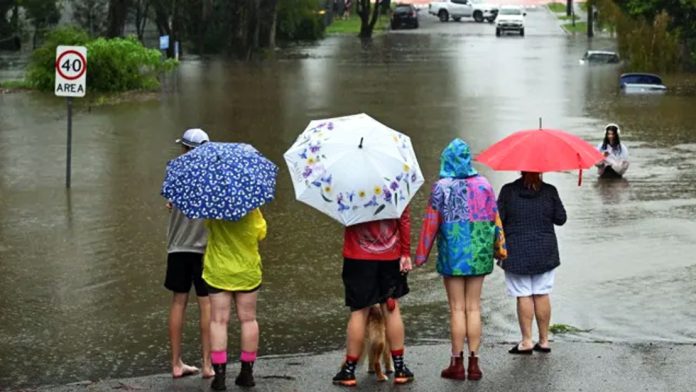
Residents in the Brisbane suburb of Newmarket on their flooded street

Hundreds of thousands of people remain without power in Australia after a cyclone brought wild weather to the east coast.

Communities in southeast Queensland and northern New South Wales (NSW) were beginning the clean-up on Sunday after the storm caused widespread flooding and knocked down power lines and trees.

A 61-year-old man’s body was recovered from floodwaters on Saturday, while in a separate incident, 12 soldiers were taken to hospital after their convoy crashed en route to rescue operations.

The storm had weakened by the time it made landfall near Brisbane on Saturday night, but Prime Minister Anthony Albanese on Sunday warned locals of the continued wild weather and risks from flooding.

“The situation in Queensland and northern New South Wales remains very serious due to flash flooding and heavy winds,” Albanese said.

“Heavy rainfall, damaging wind gusts and coastal surf impacts are expected to continue over coming days.”

Cyclone Alfred had hovered for days off the country’s east coast as a category two cyclone before weakening into a tropical depression on Saturday.

By Sunday evening, emergency services had conducted over a dozen rescues in Queensland and NSW – most involving people trapped by rising waters in their cars or homes. The NSW State Emergency Service reported receiving more than 6,000 calls for help.

Almost 290,000 properties in the affected regions remain without power, and energy companies have warned residents the blackouts could persist for days.

Credit: bbc.com

0
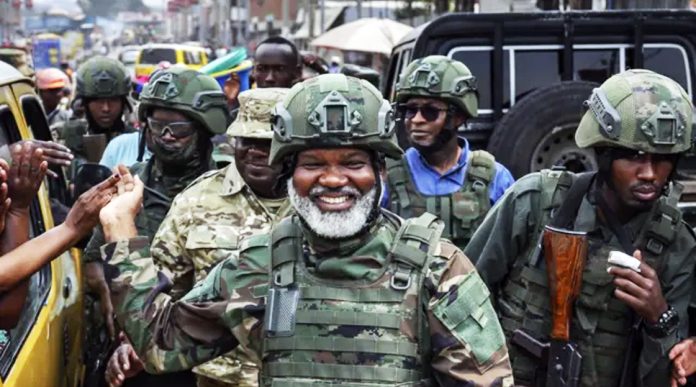
Corneille Nangaa has addressed large rallies in cities captured by the M23

DR Congo offers $5m bounties for rebel leaders

The Democratic Republic of Congo government has offered a reward of $5m (£4m) for help arresting three leaders of a rebel group which has seized much of the east of the country this year.

Corneille Nangaa, a former head of DR Congo’s electoral commission, now leads the Congo River Alliance, which includes the M23 rebel group. He has addressed large rallies in the cities under the group’s control.

The bounty is also on offer for M23 leaders Sultani Makenga and Bertrand Bisimwa.

Last year the three men were prosecuted in absentia by a military court and given death sentences for treason.

A reward of $4m (£3) was also offered for the arrest of two journalists living in exile, and others the government describes as accomplices.

But the chances of anyone being arrested appear slim.

In recent weeks the army has been no match for the Rwandan-backed rebels who have captured large parts of the mineral-rich eastern DR Congo, including the region’s two largest cities – Goma and Bukavu. So President Félix Tshisekedi has instead focused on trying to build international pressure for Rwanda to face sanctions for backing the rebels.

Last year, a report by UN experts said up to 4,000 Rwanda troops were working with the M23 in DR Congo.

Thousands of people have been killed during the fighting and hundreds of thousands left without shelter after fleeing their homes.

The Congolese government is also seeking US support in exchange for access to its minerals.

DR Congo accuses Rwanda of trying to take control of its minerals, which include gold and coltan, used in consumers electronics such as mobile phones and computers.

Credit: bbc.com

Syria leader calls for peace after hundreds of civilians killed

0
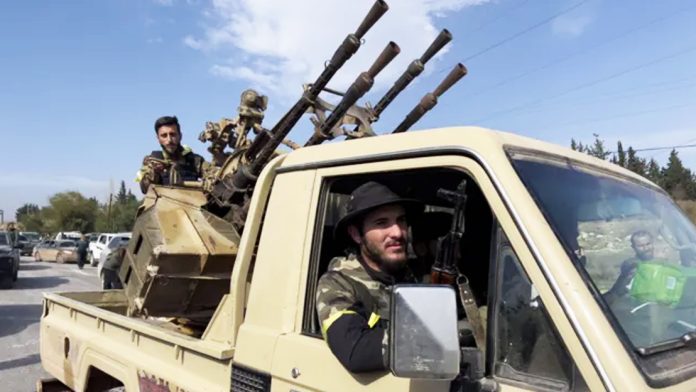
Widespread violence between government supporters and Assad loyalists in Syria

Syria’s leader Ahmed Sharaa has called for peace after days of clashes where Syria security forces allegedly killed hundreds of civilians from the Alawite religious minority.

The UK-based Syrian Observatory for Human Rights (SOHR) – which monitors fighting in Syria – said about 745 civilians were killed in 30 “massacres” targeting Alawites on the west coast on Friday and Saturday.

The BBC has not been able to independently verify the death toll of the escalating violence, believed to be the worst since the fall of the Assad regime.

President Sharaa said: “We must preserve national unity and civil peace as much as possible and… we will be able to live together in this country.”

The number of fighters killed in the past four days brings the total death toll to more than 1,000 people, says the Syrian Observatory. This included about 125 fighters linked to the new Islamist-led government and 148 pro-Assad fighters.

Reuters news agency reported sources in the new Syrian government saying at least 200 of the fighters had been killed.

Speaking from a mosque in Damascus on Sunday, the interim president said “what is currently happening in Syria is within the expected challenges”.

He did not comment directly on accusations that atrocities were being committed by his supporters in the coastal provinces of Latakia and Tartus.

On Sunday, Syrian media reported that fighting between government forces and Assad loyalists had also broken at a gas power plant in Banias, a city about halfway between Latakia and Tartus.

The violence of recent days has been sparked after ambushes on government forces on Thursday. A Syrian defence ministry spokesman described it to the Sana state news agency as “treacherous attacks” against security personnel.

It has since escalated into a wave of clashes between Assad loyalists and government forces.

Credit: bbc.com

Russian strikes on Ukraine kill at least 23

0
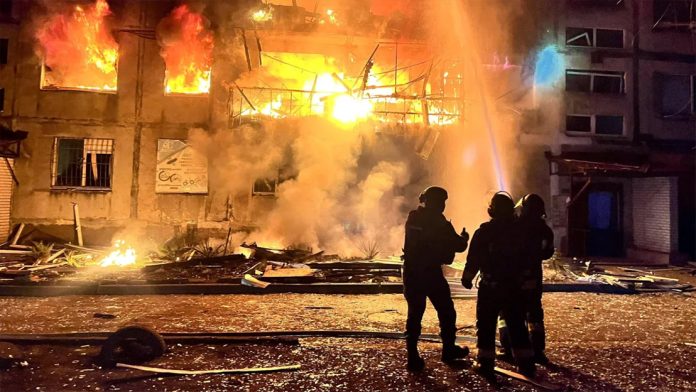
Firefighters work at the site of a Russian

Russian missiles killed at least 23 people in a second night of heavy strikes on Ukraine, a stark toll the Polish Prime Minister described as the result of appeasing “barbarians.”

The attacks come as the Ukrainian war is at a critical point, with the United States having halted military aid and intelligence sharing with Kyiv as part of efforts to pressure it into accepting a peace agreement. The move has left Ukraine even more vulnerable to Russian attacks.

“This is what happens when someone appeases barbarians,” Polish Prime Minister Donald Tusk wrote on X Saturday. “More bombs, more aggression, more victims. Another tragic night in Ukraine.”

Russian strikes on the eastern city of Dobropillia killed 11 people and wounded at least 50 – including seven children, in attacks that Ukrainian President Volodymyr Zelensky said were “deliberately calculated to cause maximum damage.”

“It was one of the most brutal strikes, a combined one,” Zelensky said in his nightly address on Saturday. He described a double strike on Dobropillia, where the second one hit just as rescue workers arrived on scene to attend to the victims of the first.

On Friday, after threatening Russia with sanctions to force through a ceasefire, US President Donald Trump said that his Russian counterpart Vladimir Putin was “doing what anybody else would do” in taking advantage of the current battlefield dynamics.

The White House also has suspended Ukraine’s access to commercial satellite imagery purchased by the US government through the company Maxar, spokespeople for the National Geospatial-Intelligence Agency and Maxar said Friday.

Credit: cnn.com

The Dalai Lama to receive Gold Mercury Award 2025

0
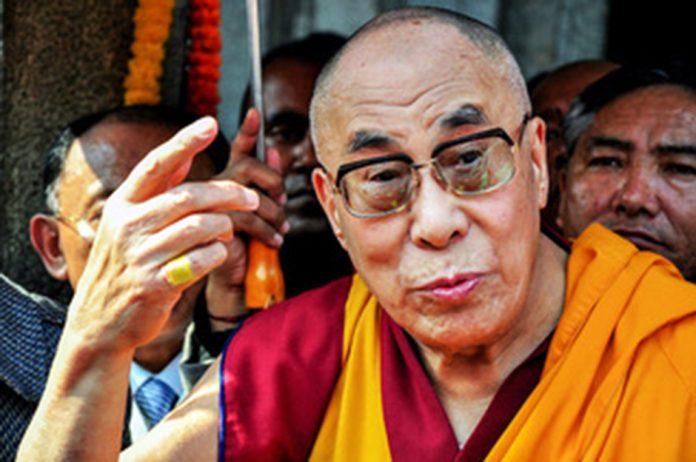
His Holiness, Tenzin Gyatso

Gold Mercury International, the well-known global governance think tank, has awarded its Gold Mercury Award 2025 to His Holiness, Tenzin Gyatso, the 14th Dalai Lama for advancing a culture of peace, compassion and sustainability.
At a time of rising global tensions, conflict and environmental challenges, this award honours His Holiness’ unwavering leadership in promoting peace, non-violence, wisdom culture, and environmental stewardship.

“Compassion and concern for others are the keys to human survival. They are relevant to anyone, whether believer or non-believer, who wishes to live a happy life,” said Tenzin Gyatso, the Dalai Lama.
Rooted in Buddhist philosophy, His Holiness emphasises reverence for all living beings and the deep interdependence between humanity and nature.

As a global symbol of non-violence and advocate for the rights of the Tibetan people and the protection of their ecological environment, he continues to inspire individuals, communities and leaders to foster a more just, peaceful, equitable, and sustainable world.
His philosophy of peace and compassion are built upon the principle of Universal Responsibility, as reflected in his Four Main Commitments in life: promoting human values, fostering religious harmony, preserving Tibet’s spiritual heritage and environment, and advancing ancient wisdom culture in education.

“His Holiness the 14th Dalai Lama’s profound commitment to non-violence, compassion, a culture of wisdom, and environmental stewardship has profoundly shaped our global consciousness, and is rooted in our ability to achieve inner peace, wholeheartedness, and sincerity. This is why it is so relevant today,” said Nicolas De Santis Cuadra, President of Gold Mercury International.

His Holiness’s work and message of global cooperation also highlight the ecological significance of the Tibetan Plateau—often called the world’s “Third Pole” due to its vast freshwater reserves. As the source of Asia’s major rivers, it holds the largest store of fresh water outside the Arctic and Antarctic, underscoring the urgent need for its protection to ensure the stability of the region and the planet.

The Gold Mercury Award Ceremony will be held in Dharamsala, the home of the Dalai Lama in the Indian Himalayan region, on 31st March 2025, to honour His Holiness in a momentous celebration of his life and legacy.
Founded in 1961, Gold Mercury International is a global governance think tank dedicated to advancing peace and international cooperation.

Past recipients of the Gold Mercury Award include U.S. Presidents Ronald Reagan and Gerald Ford for their diplomatic efforts on nuclear disarmament, President Anwar Sadat of Egypt, Prof. Robert Gallo for discovering the HIV virus as the cause of AIDS and humanitarian organisations like UNICEF and the Red Cross.

Education Minister Lobbies Indonesia For Islamic Medical Varsity in Ghana

0
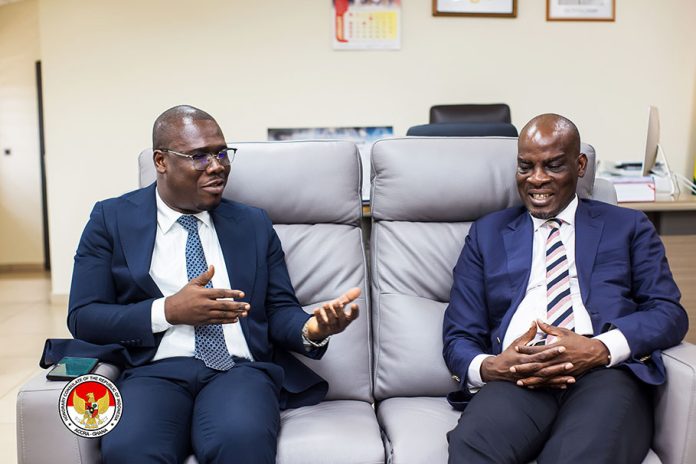
Honorary Consul of the Republic of Indonesia, H.E. Paskal A.B. Rois (right) in a conversation with Hon. Haruna Iddrisu, Minister for Education

The Minister for Education, Haruna Iddrisu, has appealed to the government of the Republic of Indonesia to consider establishing an Islamic University in Ghana.

The Member of Parliament for Tamale South, Haruna Iddrisu, advocated for the project to be situated in the Northern part of the country.

The Education Minister made the call when the Honorary Consul of the Republic of Indonesia, H.E. Paskal A.B. Rois, paid a courtesy call on him in his office in Accra.

He made the point that such an educational facility, beyond further deepening the bilateral and educational relations between Ghana and Indonesia, would also bridge the developmental gap between the north and the southern part of the country.

The minister traced the long-standing bilateral relations between the two sister countries to the eras and efforts of the first Presidents of Ghana and Indonesia, Osagyefo Dr. Kwame Nkrumah and H.E. Achmed Sukarno respectively, who through the Non-Aligned Movement (NAM) cemented the cherished ties between the two giant nations and their peoples.

He was optimistic that the Honorary Consul would continue to work harder through the creation of more and bigger opportunities that would inure to the benefit of the two countries.

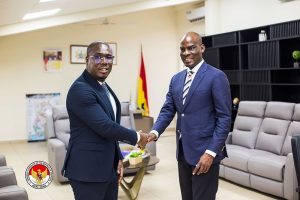
Honorary Consul of the Republic of Indonesia, H.E. Paskal A.B. Rois (right) in a handshake with Hon. Haruna Iddrisu, Minister for Education

The Education Minister noted that such a dedicated Islamic Medical School with emphasis on the Sciences, can be discussed at the appropriate levels of the two countries not only to realize its fullest implementation within the shortest ties frame but also cement the Islamic ties between the Moslem community in Northern Ghana and their counterparts in Indonesia which is predominantly a giant Islamic nation on earth.

According to him, the future of the 21st century is about competencies, skills and knowledge which basically dove-tails into Science, Mathematics and Engineering.

Mr. Idrissu intimated that Ghana still has a deficit of the provision of Medical Doctors particularly for the rural, deprived and under-developed Ghana, adding that such a tertiary institution would lead to a paradigm shift in medical education in the northern part of the country in particular and the country ultimately.

THE VISIT

The working visit of the Honorary Consul was aimed among other things at briefing the Education Minister on the available Indonesian scholarship opportunities, some of which a number of Ghanaian students are already benefiting from.

The Honorary Consul of the Republic of Indonesia in Ghana, H.E. Paskal A.B. Rois congratulated the Minister on his appointment to lead the Education Ministry, adding that as an experienced figure, a renowned law maker and a hardworking politician, he was hopeful that Minister Iddrisu would use his rich experience, expertise and knowledge from previous portfolios held over the period to positively impact the educational sector.

Mr. Rois welcomed the Minister’s suggestion for Indonesia to consider the establishment of an Islamic Medical University in Northern Ghana, assuring that he would take up the issue to its highest level for a positive response from the Indonesian authorities.

Briefing the Minister on the scholarship opportunities in Indonesia, the Honorary Consul informed the Education Minister about the government’s KNB Scholarship which is currently opened in addition to dozens of other different scholarship opportunities from more than thirty (30) other prestigious universities in Indonesia for students of developing countries including Ghana.

Mr. Rois disclosed that more than sixty (60) Ghanaian students are currently pursuing various partially or fully funded undergraduate, masters and doctorate degree programmes in various universities in Indonesia, adding that about six (6) of them have also returned to the country on completion of their two (2) to three (3) year courses of study in Indonesia in the last few years.

The Indonesia Consul said last year, his outfit held some engagements with the Pro and Vice Chancellors of some tertiary institutions in Ghana including; the Ghana Technology University (GTU) in Accra, the University of Education, Winneba (UEW) and the University of Cape Coast (UCC).

According to him, such courtesy calls on him by the Heads of these institutions have opened new chapters in educational relations between these universities in Ghana and Indonesian universities where a Memorandum of Understanding (MOE) would soon be signed for lecturer to lecturer, student to student and other exchange programmes to commence among and between these tertiary institutions particularly between thefaculties and students in Ghana and Indonesia.

Mr. Rois expressed the hope that the Minister would use his good offices as well as skills, knowledge and experience not only to reset the education sector of the country but also further deepen the educational bond between the two countries through the Ministry of Foreign Affairs and Regional Integration.

News Desk Report

Changes to earwax colour you should never ignore… they could be a sign of cancer

0
Ear

Earwax, or cerumen, is usually amber-orange to light brown, but can vary. Changes in earwax color can indicate several things, such as injury or infection.

Earwax plays essential roles in ear health. It helps remove debris from the ear canal, prevents foreign bodies and particles from penetrating deep into the ear, and it even helps protect against germs.

In this article, learn what different colors and textures of earwax indicate, as well as how to safely clean out the ear.


Earwax can be a variety of colors, including:

  • off white
  • yellow
  • bright orange
  • dark orange
  • brown
  • black


Earwax is most often amber-orange to light brown, wet, and sticky. For some people, it is drier and lighter in color, closer to off-white or yellow.

In general, the color of the earwax depends on its age. Newer earwax tends to be lighter in color, and it darkens as it ages and picks up more debris.

The color, texture, and amount of earwax vary naturally from person to person. For most people who produce a regular amount of earwax, the ears can easily remove the wax on their own. This happens at varying speeds, often leading to different textures of earwax.

However, some people produce more wax than is common. When this happens, the ears may not be able to get rid of the wax fast enough, and blockages can occur. Blockages may also occur if a person has a small or unusual ear canal shape, even if they produce a regular amount of ear wax.


An expert has revealed the earwax shades that could be a sign you have a serious health condition, or even cancer.

Earwax is the waxy substance naturally produced by the ears that helps protect the sensitive parts of the organ, that we use to hear sounds, from dirt and germs.

Hannah Samuels, an audiologist at the high-street pharmacy chain Boots, said a yellow or light brown earwax is what medics consider to be normal and healthy.

However, she added if your earwax changes a different colour, it could indicate you have a health problem.

Red or bloody ear wax is perhaps the most serious.

On the milder end this is a sign of a minor injury inside your ear or an infection, but in very rare cases can be a potential symptom of ear cancer.

Cancer charities like Cancer Research UK warn that bleeding from the ear can be a sign of a tumour growing in the ear canal, the tube connecting the outer ear to the ear drum.

Ms Samuels added: ‘If the bleeding persists, it’s best to see a doctor.’

She also said that green earwax was another shade people should pay attention to.

‘Green earwax can suggest an infection in the ear, especially if accompanied by other symptoms like pain, itching, or discharge,’ she said.

‘The colour comes from the presence of bacteria, or sometimes, the discharge from an infection.’

She said black earwax was another shade that could indicate a potential fungal or bacterial infection. Why you need to However, Ms Samuels added it could also be a sign that earwax was building up within the ear canal.

‘Black earwax can result from old, dried-up earwax, especially if it’s been in the ear for a long time.’

Such a build-up of earwax can cause hearing loss or even tinnitus, a persistent ringing or buzzing in the ears, the NHS says.

Similarly, dark brown or orange earwax could also be a sign that it was taking too long to for substance to make its way out of the ear and was starting to dry out.

Ms Samuels added it can also be a sign you’ve recently been exposed to a large amount of dust or other derbies that your ear wax is helping to push out.

The final shade of earwax Ms Samuels said patients should be aware of was the absence of colour entirely.

‘Clear earwax is less common, but it can occur. It is usually associated with watery or fluid-like earwax which might indicate that the ear is trying to flush out an irritant or infection,’ she said.

Ms Samules said anyone concerned about changes in their earwax colour should contact their GP for advice.

Credit: medicalnewstoday.com

Building trust, driving Progress: How Ghana’s public sector can harness public relations

0
Author, Cecil Ato Kwamena Dadzie

Imagine a Ghana where citizens trust their government, where policies are understood and supported, and where public services are delivered efficiently and transparently.

This vision is not a distant dream but a tangible reality that can be achieved through the strategic use of public relations (PR) in the public sector. In an era where information is power, effective communication is the cornerstone of good governance.

Ghana’s public sector stands at a crossroads, with the opportunity to harness PR to build trust, enhance service delivery, and foster a more engaged and informed citizenry. This article explores how Ghana can leverage PR to transform its public institutions, strengthen democracy, and drive national development.

Enhancing Transparency and Accountability

Transparency and accountability are the bedrock of any democratic society, and PR can play a pivotal role in ensuring that the government communicates its policies, decisions, and actions effectively to the public. Regular press briefings, detailed reports, and open forums are vital tools for making government operations accessible.

For instance, Ghana could draw inspiration from Estonia, a global leader in digital governance, which provides real-time access to government data through online platforms. By adopting similar practices—such as publishing annual budgets or project updates online—Ghana can demystify its operations, allowing citizens to see how public resources are managed and decisions are made.

This openness not only builds trust but also reduces perceptions of corruption, an issue that has long challenged many African nations.

Moreover, PR can humanize the government by explaining complex policies in simple, relatable terms. A well-crafted press release or a public service announcement can break down technical jargon, ensuring that every Ghanaian, from the urban professional to the rural farmer, understands what their government is doing and why it matters. By prioritizing factual, inclusive communication, the government can avoid the pitfalls of partisan messaging that erode credibility.

Crisis Management and Reputation Building

Crises—be they natural disasters, economic downturns, or public health emergencies—are inevitable. The true test of a government’s capability lies in how it manages these challenges. A robust PR strategy is indispensable for disseminating timely and accurate information, combating misinformation, and maintaining public confidence.

The COVID-19 pandemic offers a compelling example: countries like New Zealand, with clear and consistent communication, rallied public support and compliance with health measures, emerging stronger as a result. Ghana can adopt a similar approach by developing a crisis communication plan that includes trained spokespeople, regular updates, and a clear chain of command.

Effective crisis management goes beyond immediate response—it builds long-term reputation, provided the messaging remains impartial and focused on public welfare rather than political gain.

Stakeholder Engagement

PR is not a one-way street; it is about fostering two-way communication between the government and its stakeholders—citizens, businesses, civil society, and international partners. Inclusive governance thrives on engagement, and tools like town hall meetings, social media platforms, and feedback mechanisms can bridge the gap.

Imagine the city of Accra hosting regular town halls to discuss urban development plans, where residents voice their concerns about traffic or housing and contribute solutions. Such interactions foster a sense of ownership and inclusion, making citizens active participants rather than passive recipients.

However, ensuring these engagements remain free of political bias is critical to maintaining trust and avoiding perceptions of manipulation.

Promoting National Development Initiatives

Ghana is pursuing ambitious development projects, from infrastructure upgrades to healthcare reforms. PR can amplify these efforts by generating awareness and support. Through targeted campaigns, press releases, or media interviews, the government can highlight successes and explain benefits, rallying public enthusiasm.

Take the Ghana Beyond Aid initiative—a vision of economic independence and self-reliance. A strategic PR campaign could showcase its tangible impacts, like job creation or improved public services, turning abstract policy into a national rallying cry. Care must be taken, though, to present these initiatives objectively, avoiding any hint of using them as tools for political advantage.

Strengthening Internal Communication

Effective PR isn’t just about external audiences—it starts within the government itself. Public servants are the frontline ambassadors of the public sector, and keeping them informed and motivated is critical. Tools like newsletters, intranets, and staff briefings can align employees with the government’s vision. When public servants understand their role in the bigger picture, they deliver better services and communicate consistent, impartial messages to the public, minimizing the risk of internal biases seeping into external communications.

Leveraging Digital Platforms

In today’s digital age, social media and online tools offer unparalleled opportunities for engagement. With platforms like X – formerly Twitter, Facebook, and WhatsApp gaining traction in Ghana, the public sector can reach diverse audiences cost-effectively. Real-time updates, interactive campaigns, and e-governance portals enhance accessibility, especially for the youth, who form a significant portion of the population. However, the government must ensure digital content remains balanced and factual, avoiding the temptation to use these platforms for partisan messaging or “alternative politics” that could alienate citizens.

Capacity Building for PR Professionals

To unlock PR’s full potential, Ghana must invest in its communicators. Public sector PR professionals need modern skills in media relations, digital communication, and storytelling to craft messages that resonate, as well as expertise in crisis management, data analytics, and audience engagement to navigate today’s complex media landscape. Training programs could include workshops on maintaining impartiality, avoiding political bias, and leveraging emerging technologies like AI-driven content analysis.

These initiatives would not only enhance professionals’ abilities to deliver credible, impactful communication but also foster a culture of continuous learning within the public sector. By partnering with universities, international PR organizations, or industry experts, Ghana can ensure its communicators are equipped to handle evolving challenges, build public trust, and position the government as a transparent, responsive institution for the long term.

A Case in Point: The Presidency Communications Newsletter

The current government under President John Dramani Mahama, who assumed office on January 7, 2025, has introduced a “Presidency Communications” newsletter—a practical example of PR in action. The February 3, 2025, issue, as seen in a recent snapshot, exemplifies this effort. Its cover features Vice President Jane Naana Opoku-Agyemang speaking on creating a single market to provide jobs for the youth, aligning with national development goals and promoting transparency.

The visually engaging design—featuring the Ghanaian flag, the presidency’s logo, and updates on initiatives like education forums, diplomatic engagements, and international summits—shows potential as a direct communication tool. If well distributed digitally via WhatsApp or email, it could reach a wide audience.

However, the newsletter’s success hinges on maintaining impartiality and substance, ensuring it does not become a tool for alternative politics or political bias, which could erode public trust. For instance, if the newsletter emphasizes only government achievements without acknowledging challenges or opposition perspectives, it risks being perceived as a partisan instrument rather than a transparent communication channel.

Historical examples, such as government publications in other nations being criticized for promoting a singular political narrative, underscore the importance of balance.

By prioritizing factual updates, inviting public feedback, and avoiding one-sided messaging, the newsletter can fulfill its potential as a bridge between the presidency and the people, rather than a vehicle for political advantage.

This initiative underscores a broader truth: Ghana’s public sector can transform by embracing PR strategies like transparency, crisis management, stakeholder engagement, development promotion, internal communication, digital outreach, and professional training, all while guarding against the dangers of political bias.

Conclusion

The transformative power of public relations in Ghana’s public sector is undeniable. By integrating these strategies and vigilantly avoiding the pitfalls of political bias or “alternative politics,” the government can cultivate trust and participation. As Ghana strides toward its development goals, PR emerges as a vital ally in bridging the gap between the state and its people, provided it remains impartial and focused on public welfare. The question is not whether Ghana can afford to invest in PR, but whether it can afford not to. The future of governance—and the nation—depends on it.

By Cecil Ato Kwamena Dadzie

Source: citinewsroom.com

Baba Future Leaders hosts tennis clinic in Cape Coast

0
Victor Beausoleil and family observing the training

A Non-Governmental Organisation (NGO), Baba Future Leaders,founded by Victor Beausoleilhas organised another remarkable Cape Coast skills dayprogramme, which witnessed games like tennis (clinic and tournament) and chess at the Cape Coast Sports Stadium

The one-day event,which took place on Saturday, March 1st, 2025saw over 100 youth from Ntranoa-Elmina, Abura and other areas around Cape Coast participating in the programme.

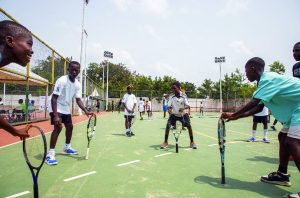
Some of the participants during the training session

The tennis participants were taken through various drills to improve specific aspects of their game including serving, return of serve, baseline rallying, approaching the net, aggressive base liner and counter puncher.

In his closing remarks, Emmanuel Beausoleil, speaking on behalf of his Father (Victor Beausoleil) said, “Cape Coast skills day is an important gathering to provide meaningful opportunities to the youth in our community. On behalf of my family, I thank everyone that attended to engage in community development.”

He added, “Family is the foundation of community development, so in the words of Mother Teresa – If you want to change the world go home and love your Family.

The tennis clinic would be expected to have a profound positive impact on the lives of the youth,particularly the participants.

Additionally, it would be expected to make a tangible difference in the lives of the young participants by providing them with opportunities, skills and support to help them thrive in the game.

The Ghanaian Chronicle