Home Blog Page 852

400 Mentees Participate In 2025 Lady Julia Mentorship Master Class Programme

0
Lady Julia Osei Tutu

The 2025 edition of the “Lady Julia Mentorship Master Class”, a programme organised by The Otumfuo Osei Tutu II Foundation (OOTIIF), was held at the Great Hall of the Kwame Nkrumah University of Science and Technology (KNUST) on March 7, 2025 to commemorate the International Women’s Day, celebrated worldwide every March 8.

The mentorship programme, under the guidance and direction of its Patron, Lady Julia Osei Tutu, the wife of Asantehene, was under the theme: “Accelerate Action: Together we can forge women’s equality”.

The programme brings on board accomplished women from all sectors seeks to equip the next generation of women leaders through education, mentorship, social responsibility, leadership and career development, as well as inspiring them with valuable guidance, support and networking opportunities.

Over 400 female students drawn from 20 Senior High Schools in Ashanti region, including Bosomtwe SHS, Our Lady of Change, KNUST SHS, Kumasi Technical Institute, Kumasi Wesley Girls SHS, Prince of Peace Girls’ SHS, Yaa Asantewaa SHS, St Monica’s SHS, Adventist Girls’ SHS, Afia Kobi SHS, TI Ahmadiyya SHS and Kumasi Girls’ SHS participated in the programme.

Speaking at the programme last Friday to herald the observation of the International Women’s Day, Lady Julia Osei Tutu, underscored the significance of mentorship for the younger generation, particularly for girls.

She noted that, “To every great woman, there is another great woman behind her” and stressed the importance that young girls are mentored and brought up as they climb the ladder of life.

She encouraged the participating students from the selected schools across the Ashanti Region to embrace and build upon what they had learnt.

Vice Chancellor of KNUST, Prof Rita Akosua Dickson, saluted the brain behind the classic Mentorship Masterclass initiative instituted by the Otumfuo Osei Tutu II Foundation.

Prof Dickson indicated that the programme was meant to give direction to young girls and make them aware of their potentials and that it provided the opportunity for girls to dream, as they cannot “become what you cannot dream”.

She thanked Lady Julia for the opportunity and the forum to speak to young ladies and let them understand that they have the potentials and are able and capable, for which reason nothing must stop them.

Lady Julia Osei Tutu was joined by four accomplished women as Panelists, in the persons of Mrs. Margaret Boateng Sekyere (Board Chair of Societe General Bank), Rev. Akua Ofori – Boateng (Director of Programmes, Anglican Diocese of Accra), Eng. Dr Mrs. Eunice Akyereko Adjei (Wistem Representative) and Dr. Phyllis Tawiah (Lecturer, KNUST).

Also present were Board Chairman of the OOTIIF, Nana Prof. Oheneba Boachie-Adjei Woahene II, Hiahene; Nana AgyakomaDifie II Mamponghemaa; Nana Yaa Asantewaa II,  Ejisuhemaa; Nana Afrakoma Serwaa Kusi Oboadom, Agogohemaa; Nana AgyeiwaaPaamu, Tepahemaa; Nana DarkowaaAmpemKyerewaa II and Nana Afia Afriyie Owoaberempong, Fankyenebrahemaa.

Dr. William Amankra Appiah, Ashanti Regional Director of Education, was also in attendance with Heads of Girl Child Education Unit of various municipalities and districts in the region.

$9m Needed To Complete Ahanta Bokoro Agenda 111 Hospital -Health Minister

0
Health Minister Kwabena Mintah Akandoh speaking to the media

The Minister for Health, Kwabena Mintah Akandoh, has disclosed that a whopping 9million dollars is needed to complete one of the Agenda 111 hospitals at Bokoro, in the Ahanta West Municipality of the Western region.

The Bokoro facility was one of the three Agenda 111 hospitals that former president Akufo Addo commissioned on December 5, 2024 before leaving office.
However, during inspection of the facility on Monday, it became evident that the facility is not ready for operation.

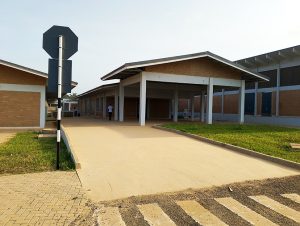
Side view of Bokoro Agenda 111 hospital

Works are still ongoing and major departments like Out Patient Department (OPD), Laboratory, Theatre, Ultra Scan, Theatre and others are yet to be completed and furnished.
Sector Minister Kwabena Minta Akando, who toured the facility in the company of the Western regional minister, Joseph Nelson, the Director General of Ghana Health Service (GHS) and other key staff of the Ministry spoke to the media.

According to Kwabena Akandoh, it was evidently clear the project had not been completed. He indicated that key departments that make a hospital function were not ready. “The impression is that once it is not completed you can’t call it a hospital. The impression is that we are owing the contractors and we have not paid.

You can’t call it your property when you have not paid the contractors. The impression is that the facility is not in operation and I’ve explained what it means for a hospital to be in operation. Must have the equipment, well installed, everything completed. You must have health workers, everybody, the various department, the pharmacy in operation, laboratory in operation”.

Kwabena Mintah Akandoh indicated further that, “a hospital is not just the brick and mortar, and that is the more reason why If you recall, I was requesting to see certain departments, take me to the laboratory, take me to the Theater. Take me to this place to see, you cannot commission a project without hospital equipment being installed – you cannot”.

As part of strategies to let the people of Ghana know what President Mahama has inherited, with respect to the Agenda 111 hospitals, Minister Akandoh, who is also the Member of Parliament (MP) for Juaboso, told the media he has a clear instructions from the President to assess all the agenda 111 projects and give him a blueprint as the way forward.
The agenda 111 project was estimated to cost, including a Psychiatric hospital, about 1.9 billion US dollars.

As at the time the NPP government was leaving office, they had expended not less than 400 million US dollars on the projects.
The Minister told the media that completing the project was one thing and paying for the project to become the property of the state was also another thing.

“As we speak, we need to cough out not less than 9 million US dollars for this particular project, which is about 140 million Ghana cities”.
That aside, the contractors behind the projects had not been paid and as government, they needed to fulfil their part of the obligation by way of paying the contractors before the property could be in the name of Ghana.

He justified the figure by explaining that there were three different contractors behind the projects, one behind the main project, another in charge of accommodation and supply of medical equipment and installation.
“Only one, and he’s with us here. We owe him 3 million US dollars, you can talk to him. So we need not less than 9 million US Dollars, you can see the installation of the equipment. It’s less than 10%, you saw it for yourself, even in the labs.

“I mean you saw that kind of, I don’t want to say confusion, but the kind of disagreement where who needs to do what before what is installed. You heard all that, okay, and so please, the least that is expected of us as leaders of this country is to be candid with the people of this country. So we will be as plain as glass, and carry the people along and let them know what we have inherited,” he said.

Nevertheless, he assured the facility would not be left to rot and would be used for the benefit of the communities.

He said, given the fact that the projects did not have a dedicated source of funding, the government would have to find a source of funding for it.

He assured further that “It is Mr. President’s priority to put the projects to good use. So wherever and whatever it takes for us to operationalise, especially this first three, we are going to find the money”.

Experts, regulators call for professionalisation of ICT sector

0
Dr Mark Oliver Kevor

Experts and Regulators have emphasised the need for a professional body and a dedicated legislative instrument for Information Communication Technology (ICT) professionals in Ghana.

Dr. Mark Oliver Kevor, Acting Director General of the National Information Technology Agency (NITA), said the government was committed to strengthening the ICT ecosystem through robust regulation.

The call was made during the 8th anniversary and induction ceremony of the Institute of ICT Professionals Ghana (IIPGH) new Executives in Accra.

He expressed concern over the current unregulated environment where individuals could claim ICT expertise without proper accreditation, leading to potential inconsistencies and quality issues.

“Currently, anybody can just get up and say ‘l am an ICT professional,’ get into an organisation, including government organisations, take a contracted job, do a part job and then start complaining. That is the reason why we must regulate the ICT professional space,” he said.

The Acting Director General outlined the government’s plans to undertake a comprehensive review of key ICT-related acts, including the META Act, the NCA Act, the Cybersecurity Act, and the Data Protection Act.

He noted that the review aimed to establish a clear legal and regulatory framework that not only fostered innovation but also protected consumers and enhanced the credibility of ICT professionals.

“A central focus of the proposed regulatory framework is the standardisation of ICT professional certifications, aligning them with global best practice,” he said.

Dr. Kevor said in many developed countries, government contracts and private sector consultancy roles were reserved for accredited and certified ICT practitioners.

He emphasized the importance of replicating this model in Ghana to ensure quality and competence.

“In other countries, you can’t get a government contract when you are not a professional ICT practitioner. You can’t also do private work as an entrepreneur or as a consultant when you are not an accredited or certified ICT professional, and that is what we must begin to do in Ghana,” he added.

He also emphasized the role of a professional body in fostering ethical conduct, promoting continuous professional development, and advocating for the interests of ICT professionals.

Dr. Kevor called for a unified professional body that would provide a platform for knowledge sharing, networking, and collaboration, ultimately contributing to the growth and development of the ICT sector in Ghana.

Mr. Richard Kafui Amanfu, Executive Director IIIPGH, emphasized the need for legislation to professionalize the ICT sector, arguing that without a regulatory framework, the industry operates in a vacuum, hindering meaningful development.

The call for regulation stems from recognition of the fragmented nature of the sector, where organizations often work in silos, lacking a unified voice to influence policy.

The Director alluded to the established professions like medicine and law, highlighting the crucial role of associations like the Ghana Medical Association and the Ghana Bar Association in setting standards and guiding practice.

He noted that the legislation would foster collaboration and synergy among ICT professionals.

“The proposed regulations aim to address the current lack of direction and ensure that activities within the sector contribute to broader national development goals. By establishing clear guidelines and standards, the sector can move away from isolated efforts and towards a cohesive, impactful approach,” he said.

By Jibril Abdul Mumuni   

GNA   

Cedi, Cocoa, and Calendars: Aligning Ghana’s Financial Year with Reality

0
Opinion

Ghana’s financial year, ending on 31st December, is a colonial relic inherited from our colonial masters. While the United Kingdom itself shifted its fiscal year to 31st March (later adjusted to 5th April for tax purposes) centuries ago, Ghana, like many African nations, has retained the December end-date.

This adherence to tradition, however, comes at a significant cost—misalignment with economic cycles, administrative inefficiencies, and currency pressures that undermine Ghana’s fiscal stability. A growing number of countries have moved their financial year to 31st March to better suit their unique economic, cultural, and administrative needs.

The Case for Reform: Addressing Ghana’s Economic and Administrative Realities

The current financial year-end on 31st December coincides with a period of significant disruption. The Christmas and New Year festivities, widely celebrated across the country, bring a slowdown in business activity and government operations. Companies wind down, employees take leave, and administrative processes stall, making it an impractical time to close financial books, conduct audits, or finalize tax assessments.

This congestion leads to rushed reporting and inefficiencies that compromise accuracy. Shifting the financial year to end on 31st March would allow businesses and government agencies to avoid this year-end bottleneck, ensuring smoother operations and more reliable financial data.

The timing also exacerbates pressure on the Ghanaian cedi. Multinational corporations typically declare profits and repatriate funds at the end of the calendar year, overlapping with heightened demand for foreign exchange (forex) from local businesses importing goods after the holiday season. This dual demand strains the cedi, contributing to depreciation and economic instability. A March year-end would stagger these financial outflows, reducing competition for forex and enabling the Bank of Ghana to better manage currency stability.

Beyond these immediate concerns, a 31st March financial year-end offers broader advantages for fiscal planning and economic alignment. Ghana’s economy, heavily reliant on agriculture—particularly cocoa—experiences significant seasonal fluctuations. The cocoa harvest peaks between October and February, with financial transactions extending into early the following year. Closing the financial year in March would provide a clearer picture of these economic trends, enhancing budget preparation and revenue forecasting.


Advantages of a 1st April to 31st March Financial Year

Firstly, changing the financial year period allows for better fiscal planning and budget implementation as the March year-end allows the government to align budget preparation with actual revenue trends, avoiding the last-minute spending rushes often seen in December to exhaust budgets.

The Finance Minister presents the annual budget in October/November with year-end estimates to Parliament. However, shifting the financial year end to 31st March also gives us a true and accurate state of the economy. This would take away the mid-year budget presentation. A March closing captures the full scope of agricultural and trade cycles, providing a more accurate snapshot of Ghana’s economy

Secondly, it helps to reduce the strain on businesses and agencies juggling holiday slowdowns with financial closures, improving efficiency.

Thirdly, this resolves the jurisdictional gridlocks with regard to multinational firms in Ghana that have to comply with Ghana’s financial year and that of their parent company’s financial year abroad.

Fourthly, extending the financial year-end to March gives the Ghana Revenue Authority (GRA) and local authorities more time to assess and collect taxes after businesses close their books, enhancing accuracy and compliance.

Additionally, it would facilitate smoother parliamentary budget approvals: Parliament typically debates the budget in November and December. A March year-end offers more time to review actual figures, leading to informed fiscal decisions. During electioneering years, MPs become very concerned about maintaining their seats in Parliament rather than spending time to debate the budget and pass the Appropriation Bill. Whenever there is a transition from one government to another, the new government has some time to prepare its budget.


Lessons from Global Success Stories

Countries that have adopted a 31st March financial year-end offer valuable insights for Ghana. India’s financial year runs from 1st April to 31st March, a practice retained post-independence to align with its monsoon-driven agricultural cycle (June to September). This timeline allows the government to assess crop yields and economic performance before finalizing budgets, enhancing fiscal planning. India’s decision to stick with this cycle—despite briefly considering a calendar-year alignment—underscores its practicality for an agrarian economy, a context Ghana shares with its cocoa and other agricultural sectors. The UK,

Japan provides another example. Its fiscal year, ending on 31st March aligns with the cherry blossom season and the academic calendar, but more critically, it supports corporate reporting and government budgeting. Japanese businesses, including multinationals, benefit from a stable reporting period free of holiday disruptions, while the government uses the early-year window to implement budgets effectively. This synchronization has contributed to Japan’s reputation for fiscal discipline and economic efficiency.

Conclusion

Going forward, I think it would be great for the government to convene stakeholder consultation with businesses, tax authorities, economists, and parliamentarians to build consensus and address sector-specific concerns and adopt a gradual transition to the new regime. If in 2007 Ghana could successfully re-denominate the Ghanaian currency, I am sure we can also make headway.

By aligning our fiscal and financial year period to a regime that better aligns with our economic realities and international best practices, we can ultimately foster greater fiscal stability and sustainable growth.

By Appiah Kusi Adomako, Esq

NB: The writer is an economist, lawyer, and consumer protection advocate. He is the West Africa Regional Director of CUTS International. He can be contacted via email: apa@cuts.org or www.cuts-accra.org or 0302245652

The views expressed in this article are the author’s own and do not necessarily reflect The Chronicle’s stance.

 

El-Rufai Dumps APC, Joins SDP

0
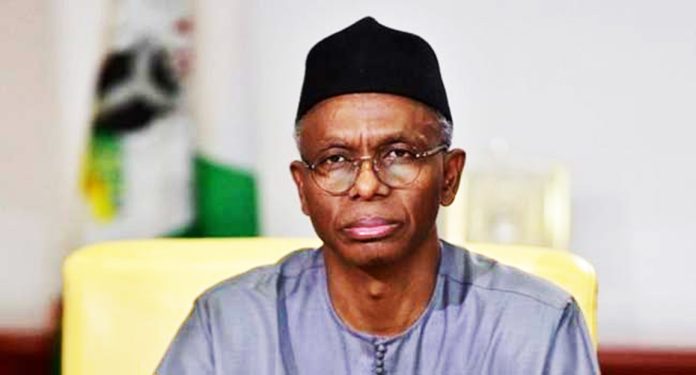
El-Kaduna State former governor, Nasir El-Rufai

The immediate-past Governor of Kaduna State, Nasir el-Rufa’i, has resigned from the ruling All Progressives Congress and defected to the Social Democratic Party (SDP).

In a statement he issued on Monday, El-Rufai expressed his disappointment with the APC’s leadership style, accusing the leadership of the party of straying from the progressive ideals of its founding members.

At this point in my political journey, I have come to the conclusion that I must seek another political platform for the pursuit of the progressive values I cherish. I have now decided to join the Social Democratic Party (SDP):

He disclosed that he had expressed concerns both privately and publicly over the party’s trajectory in the past two years but found no willingness among the current leadership to address the issues.

The former governor said, “Developments in the last two years on the part of those who currently control and run the APC to acknowledge, much less address, the unhealthy situation of the state.

“At this point in my political journey, I have come to the conclusion that I must seek another political platform for the pursuit of the progressive values I cherish.

“My eight-year tenure in Kaduna State was devoted to implementing progressive policies to advance human development. These records count for little in the current APC that has castrated its organs and treated its membership with contempt in the last two years, I find this no longer acceptable.”

El-Rufai said he submitted his resignation letter to his ward in Kaduna North Local Government Area of the North-West state.

He described the SDP as the platform for his future political engagements even as he called on his supporters and other concerned Nigerians to join him in the SDP, emphasising the need for a unified democratic platform to challenge the APC in future elections.

Credit: channelstv.com

Police Arrest Church Member For Kidnapping Two Catholic Priests

0
Church Member Kidnap Catholic Priests

Police authorities in Adamawa State have arrested a 34-year-old church member for the kidnap of two Catholic priests.

The spokesman of the Adamawa State Police Command, Suleiman Yahaya-Nguroje, disclosed this in a statement on Sunday.

Yahaya-Nguroje, a Superintendent of Police, said the victims were rescued and police operatives recovered a locally fabricated gun, a mobile phone and a sim card.

He said the arrest followed a tip-off, stressing that police operatives embarked on a rescue mission on the various criminal hideouts.

According to the Command’s spokesman, the suspect was apprehended in a criminal hideout in Gweda Mallam village, a border community between Numan and Demsa Local Government Areas of Adamawa State.

The priests – Abraham Samman and Mathew David Dusam –of the Catholic Diocese of Yola and Jalingo respectively were found tied up by the suspect.

Yahaya-Nguroje stated that the success achieved in the operation is a result of the renewed action plan put in place by the Adamawa State Commissioner of Police, Morris Dankwbo, leading to the arrest of the suspect for kidnapping his two reverend fathers.

He indicated that no ransom was paid to secure the two victims and that the victims are now receiving medical attention while the suspect has been taken into custody for further discreet investigations and prosecution.

On his part, the CP expressed gratitude for the support the Command is receiving from the state government and other sister security agencies and the public.

He called on the general public to sustain the tempo, especially in times of emergencies.

Credit: channelstv.com

Police Arrest Two Pakistanis For Alleged Kidnapping In Lagos

0
Police Arrest Pakistanis

Police operatives have arrested two Pakistanis, who allegedly specialized in kidnapping people for ransom.

The spokesman for the Lagos State Police Command, Benjamin Hundeyin, disclosed this in a statement on Thursday.

He said that the suspects were arrested after a distress call on Wednesday at the Ikeja Division of the command about the kidnap of a 48-year-old native of Pakistan in the Ikeja area of the state.

“The suspects booked the victim’s flight to Lagos and lodged him in a hotel on February 28, 2025,” Hundeyin said.

“The next day, the seven suspects visited the victim, overpowered him, tied his hands and legs, and sent a message to his boss in Kano to pay the sum of N50 million ransom for his release or else he would be killed.

“The boss paid N1 million three days later to buy time and thereafter alerted the police.”

Hundeyin stated that upon the receipt of the distress call, the anti-crime patrol of the division was swiftly deployed to the scene, resulting in the rescue of the 48-year-old victim and the arrest of the two suspects.

He identified the suspects as Roman Gull and Aftab Ahmad, aged 19 and 28 respectively, stating that five other Pakistanis linked to the abduction escaped arrest.

Preliminary investigations had revealed that the two suspects and five others lured the victim to Lagos State from his base in Kano under the pretext that they had a job for him as a chef.

Credit: channelstv.com

You’ve to present yourself well in order not to be sexually harassed -Gesto to Senator Natasha

0
Senator Natasha Akpoti-Uduaghan

Vice Presidential Candidate of the Young Progressives Party, YPP, in 2019, Umma Gesto, has said that she has never been sexually harassed by any man throughout her political journey.

According to her, a woman could suffer sexual harassment when she does not present herself well.

Gesto, who was speaking about the sexual harassment allegation made against the President of the Nigerian Senate, Godswill Akpabio, by his colleague, Senator Natasha Akpoti-Uduaghan, during an interview on Channels Television on Monday afternoon, called for justice in the matter.

She, however, noted that Natasha’s outcry could be detrimental to other women who might want to have a career in politics, as their husbands would be skeptical about allowing them to do so.

“Well, I believe in justice. Let there be justice, whatever it is, whatever it’s not, let it be treated with utmost justice. Let women be treated right wherever they are,” she said on Channels Television on Monday.

“But I’m very, very sorry to say this, a lot of women, when you present yourself well… I’ve worked with a lot of men nationally and internationally, men of a lot of different calibers, but when I hear women say ‘I’m sexually harassed,’ there is a lot of definition to that, or we need to redefine what it is when a woman says she’s sexually harassed.

“And we have seen it in a lot of places in the world, not only in Nigeria, whereby women took advantage of them being women and raised such kinds of accusations for other personal interests.

“Now, a lot of fingers will be raised at women like us, that wherever we find ourselves, it’s not about merit, it’s not about our hard work. It will feel like we got there through the window.

“And I’m telling you, I know a lot of women that I respect politically, that they do their work diligently. They are very, very devoted to this journey, and they don’t come through the window; they do it right.

“So sometimes we just don’t do it right. That’s why we end up where we are. So it can be a little bit hurtful to women, but this is just the reality. You have to present yourself well for you to be respected.”

Credit: dailypost.ng

Daughters of Glorious Jesus announce dates for Glorious Praise 2025

0
Daughters of Glorious Jesus

Renowned Ghanaian gospel group, Daughters of Glorious Jesus, has announced the dates for their annual outreach programme, Glorious Praise.

This year’s event will feature the trio, along with other prominent gospel artists, visiting three cities: Accra, Kwahu, and Kumasi on April 13th, 20th, and 27th, respectively.

The theme for this year’s programme is “The Golgotha Experience,” symbolising the crucifixion and resurrection of Jesus Christ.

According to Cynthia, the group’s leader, “Golgotha represents the place where Jesus bore our sins, burdens, and anxieties. We aim to relive this experience, lifting the name of our resurrected King and leaving our obstacles beneath the cross.”

In addition to their musical outreach, the Daughters of Glorious Jesus have partnered with the Ghana Prisons Service to support women in prison at the Nsawam Prisons.

Edna hinted at an upcoming project, “We’re embarking on an exciting initiative with some women in prison, which will be officially launched during the Accra event.”

The group is calling on corporate organisations and individuals to support their project, particularly in completing the holding and rehabilitation center in the female ward at the Nsawam Prisons.

Monica emphasised, “While our events are free, they come at a significant cost. We rely on the generosity of individuals and corporations to make this project a success.”

With a remarkable 35-year career and 13 albums to their credit, the Daughters of Glorious Jesus remain one of Ghana’s most beloved and enduring gospel groups.

Traders plead with gov’t to stabilise exchange rates

0
Business

Traders in Ghana have called for immediate action on exchange rates and the Electronic Levy (E-Levy) during the budget presentation tomorrow.

In an interview with the Ghana News Agency in Accra, they expressed concerns over the rising cost of doing business, with one trader stating, “We are struggling with the exchange rates and the E-Levy; it is making our work difficult.”

Another trader at Achimota, a suburb of Accra, added that “The government needs to address these issues in the upcoming budget, or we will continue to face challenges.”

The finance minister is to present the government’s 2025 budget to Parliament on Tuesday, March 11, 2025. The traders thought the budget should also reverse certain taxes and reduce import duties.

Mr. Alfred Adjei, a trader, told the GNA that he expected the budget to address the exchange rate issues, as his business was significantly affected whenever the Cedi depreciated against the dollar.

He said that the budget needed to tackle the issue to prevent inflationary pressures on both traders and Ghanaians.

“You know Ghana is an import-dependent economy, so we expect the Finance Minister to do his best and tell us how he intends to address the dollar and cedi issues.

“You know that when the cedi depreciates, we will be forced to pass on the costs to the people, making life unbearable for all of us,” he said.

Mr. Wilfred Opoku, another trader, also said that his foremost concern was the reversal of the E-levy and a reduction in import duties.

“You see, the E-levy is really affecting me personally and my business. I am forced to pay extra charges to send money to my suppliers when, perhaps I could have used the money for other equally important payments.

“Our suppliers also complain about the duties they pay at the port, which affect the prices of goods they supply to us. So, we expect the finance minister to ensure that the import duties at the port are reduced so that our businesses can survive,” he said.

Ghana’s economy has been facing significant challenges due to the depreciation of the Cedi against major foreign currencies, particularly the US dollar.

The situation has been driven by factors such as high demand for foreign exchange, limited foreign exchange reserves and external economic pressures.

Economic experts and think-tanks say the upcoming 2025 budget presentation would be an opportunity for the government to address these pressing economic issues.

By Jibril Abdul Mumuni 

GNA

The Ghanaian Chronicle