Home Blog Page 818

AG: GIIF made $2M Skytrain Payment to ‘ghost’ company

0
Dr Dominic Akuritinga Ayine – Attorney-General and Minister for Justice

The office of the Attorney General has hinted that the Mauritius-based company, which received a $2 million payment from the Ghana Infrastructure Investment Fund (GIIF) for the acquisition of a Skytrain, may not be in existence.

This revelation was made by the Minister for Justice and Attorney-General, Dr. Dominic Akuritinga Ayine, who stated that a Mauritius-based lawyer had confirmed the company’s questionable status.

As a result, government intends to prosecute the former CEO of GIIF, Solomon Asamoah and the Board Chairman, Prof. Ameyaw Ekumfi, over the controversial transaction.

Addressing journalists in Accra yesterday, Dr. Ayine disclosed that the payment was made without the approval of the GIIF Board, a move that has raised serious legal and financial concerns.

Fugitive CEO Hiding in Senegal

Dr. Ayine further revealed that Solomon Asamoah is currently evading prosecution and is hiding in Senegal.

“He initially traveled to South Africa on February 2, 2025 before relocating to Senegal. We are monitoring his movements closely,” the Attorney General stated.

The government, he said, is considering trying Mr. Asamoah in absentia if he does not return voluntarily.

“He has promised to return in three months, similar to what former Finance Minister Ken Ofori-Atta did with the Special Prosecutor. But the law will take its course,” Dr. Ayine remarked.

No Board Approval for Payment

The Attorney General emphasised that the $2 million transaction was executed at the request of Prof. Ameyaw Ekumfi and Solomon Asamoah, without the necessary board approval.

He added that a review of the GIIF Board minutes, as well as testimonies from other board members, confirmed that key procedural conditions for the disbursement were not met.

Dr. Ayine assured Ghanaians that the government was intensifying its fight against corruption and financial malfeasance.

He referenced former President John Dramani Mahama’s statement that Ghana had become a “crime scene,” stating that the public should expect shocking revelations in the coming weeks.

MP received cash to suppress NSS corruption scandal –Dominic Ayine

0
Dr Dominic Ayine, Attorney-General and Minister for Justice

The Minister for Justice and Attorney-General, Dr. Dominic Akuritinga Ayine, has revealed that his office may soon expose a Member of Parliament (MP) who allegedly received a substantial sum of money to suppress media coverage of the National Service Scheme (NSS) corruption scandal.

Speaking at a news conference in Accra yesterday, Dr. Ayine stated that in November 2024, the former bosses of the NSS paid this MP to ensure that details of the corruption allegations did not reach the public. He promised to provide further details in the coming weeks as investigations progress.

According to Dr. Ayine, significant strides have been made in probing the NSS scandal, following findings submitted by Operation Recover All Loots (ORAL) on February 10, 2025.

The Attorney-General disclosed that eight individuals have been arrested in connection with the case and many of them have provided incriminating information.

“Some suspects have started singing and soon, the lyrics of their song will be made public,” he remarked, hinting at more revelations to come.

Dr. Ayine assured the public that despite growing pressure, his office will only proceed with prosecutions when substantial evidence has been gathered.

He emphasised that investigations into both the NSS corruption case and the Skytrain scandal are expected to conclude by mid-April, after which legal proceedings will commence.

“In the NSS scandal, eight suspects have been interrogated, and a good number of them have cooperated with the National Intelligence Bureau (NIB) investigations.

We now have evidence of payments made into the accounts of top executives of the NSS by vendors and staff of the Scheme. Additionally, we have proof that in November 2024, the CEO and others paid a Ghanaian MP to kill the story in the media and to defend them,” Dr. Ayine disclosed.

The Attorney-General’s comments suggest that more high-profile figures could be implicated in the ongoing investigations.

The Water Crisis in Our Cities: An Escalating Challenge for Families

0
The writer, Wisdom Koudjo Klu

Water is essential for life, yet many families are increasingly struggling to access this vital resource. Frequent and prolonged water shortages across various regions are making living conditions unbearable, especially for those in urban areas. The situation is particularly alarming for families with children. Each day begins with the frustrations of not being able to flush toilets, bathe, or cook due to dry taps. Parents who strive to provide for their families now face the fundamental issue of water scarcity.

The ongoing need to adjust plans based on uncertain water availability adds to the stress of residents, turning what should be a luxury into a basic necessity that is often denied. Although water shortages are not a new issue, their increasing frequency and duration indicate a worsening crisis that demands attention. The menace impacts the quality of life for citizens.

In various regions, residents may go days or weeks without water from their taps. Urban areas, where self-contained apartments heavily depend on a consistent water supply, are particularly affected. Unlike those in rural areas who can often rely on local sources such as wells or streams, city dwellers are left at the mercy of unpredictable water supplies, usually without any advance warning.

For parents, this struggle is unimaginable. Children need regular access to water for hygiene practices, from washing their hands to maintaining cleanliness after using the bathroom. The lack of water disrupts daily routines, making it difficult to uphold basic standards of cleanliness and hygiene. The added burden of searching for water compounds the mental strain on caregivers, who must prioritize their children’s needs amid the crisis, especially in households with infants who require water for formula preparation, bottle cleaning, and washing baby clothes.

The Hidden Consequences of Water Shortages

The shortage of water entail various hidden costs that adversely affect the finances and well-being of those impacted. Many families have turned to private water vendors, who exploit the situation by charging inflated prices. Once a rarely needed a single drum of water has become a costly necessity for many households. The financial burden of purchasing water regularly adds to the strain of rising living expenses. Those who cannot afford water often spend long periods searching for free or cheaper alternatives, which detracts from their productivity and overall well-being.

The health risks associated with inadequate water access are significant. Poor sanitation due to insufficient water can lead to severe health issues such as cholera, typhoid, and other waterborne illnesses. The inability to flush toilets, wash hands properly, or clean cooking utensils increases the risk of infections, particularly affecting children who are more vulnerable. Educational institutions and day-care facilities face serious hygiene challenges, raising the risk of disease outbreaks.

Additionally, hospitals and clinics, which require strict hygiene standards for patient care and medical procedures, struggle to maintain sanitary conditions without a reliable water supply, putting both patients and staff at risk.The crisis in has sparked much debate regarding its causes. Some people attribute it to climate change and decreasing rainfall, while others argue that it largely results from poor management, insufficient investment in infrastructure, and ineffective planning by authorities.

In recent years, our urban population has grown significantly, yet the water supply infrastructure has not kept pace. Many pipelines and reservoirs in urban centres are outdated, leading to frequent breakdowns and maintenance issues. More  so, leaks and burst pipes waste substantial amounts of treated water, further depleting the household supply. The failure to maintain and upgrade water infrastructure has left many communities in distress.

The Ghana Water Company Limited (GWCL), which is responsible for water distribution, has repeatedly promised improvements. However, the reality often contradicts these promises. Water rationing schedules, when they are communicated, are rarely followed, leaving residents uncertain about when regular water supply will resume. Many affected communities remain uninformed and confused about the situation they will receive water again. This lack of transparency frustrates citizens.

Addressing the Crisis

It is crucial to assist communities affected by the water crisis. While occasional maintenance and upgrades are necessary, authorities must ensure that contingency measures are in place to minimize disruptions. It is unreasonable to expect communities to go days without water without an adequate support plan.

Moving Forward

To effectively tackle the water crisis, a comprehensive strategy is needed that includes improvements to infrastructure, enhanced management practices, and sustainable long-term solutions. The government should make significant investments to modernize and expand the country’s water systems.

Current pipelines and treatment plants are often inadequate for the growing demands of urban centres. By investing in new reservoirs, expanding distribution networks, and repairing leaks in existing infrastructure, we can improve the reliability of water supply and reduce wastage.

Moreover, better communication between water authorities and the public is essential. The Ghana Water Company must provide timely and clear updates on water rationing and establish well-defined watering schedules can help residents organize their daily activities. Providing specific information about when water will be available or when interruptions will occur can alleviate frustrations and allow residents to prepare in advance.

Without effective communication, the situation can become chaotic, leaving citizens in a constant state of uncertainty.Government and private organizations should promote and subsidize water storage tanks and borehole projects, especially in densely populated urban areas where water access is unreliable.

Finally, accountability for poor service must be enforced through strict policies designed to deter corruption and mismanagement in the water sector. Addressing inefficiencies and negligence in managing water resources is crucial for improving service delivery.

Conclusion

Water shortages should not be an accepted reality in our country. Without prompt and effective intervention, the situation will only deteriorate, causing further suffering among the populace. The government, water management agencies and community leaders must work together to develop lasting solutions to this urgent issue. Access to clean water is a basic necessity, and it is unacceptable for families to live in fear of when their next water supply will arrive. If authorities do not take decisive action, cities meant to enhance quality of life will instead become places of daily struggle and despair. The time for change is now, because a city without water is not just inconvenient; it is uninhabitable.


WRITTEN BY:

WISDOM KOUDJO KLU,

EDUCATIONIST/COLUMNIST,

GREATER REGION.

WISDOMKLU@GMAIL.COM

The views expressed in this article are the author’s own and do not necessarily reflect The Chronicle’s stance.

Editorial: Galamsey: IGP Yohuno’s promise is very refreshing

0
IGP Mr Christian Tetteh Yohuno

The Inspector General of Police (IGP), COP Christian Tetteh Yohuno, has, according to a myjoyonline.com report, declared an all-out war on illegal mining, also known as ‘galamsey’, because it poses a serious threat to national security and the environment.

Speaking at the Regional Police Commanders’ Conference in Accra recently, IGP Tetteh Yohuno revealed that armed criminals linked to illegal mining operations have carried out brutal attacks on innocent civilians, including forest guards, without justification. “This lawlessness must not be allowed to continue,” he said.

Given the escalating violence and environmental damage caused by illegal mining, Mr Yohunu stressed that urgent action was needed to combat the problem. “We are declaring war on illegal mining, and I expect every regional commander to take decisive action, to bring perpetrators to justice,” he said.

As we have always maintained in this column, illegal mining is an existential threat to us as a nation. The Chronicle is, therefore, happy that the IGP himself has noticed this occurrence and has declared war on the menace. Ghanaians have been engaging in galamsey ever since gold was discovered in the then Gold Coast, but the devastating form it has taken in recent years bothers us all.

Our rivers and forests are being carelessly destroyed by these illegal miners who are, as we have always been pointing out, sitting in our big towns and cities, but have hired young people to go into the bush with excavators to destroy the environment, in the name of digging for gold.

According to the Minister for Lands and Natural Resources, Emmanuel Armah Kofi Buah, last year alone, excavators worth GHS6.2billion were imported into the country. This, according to the minister, made it the third largest import into the country, within the period being referenced. Obviously people have taken advantage to bring these machines into the country because there are ready markets for them.

Unfortunately, despite all the efforts made by the previous governments to stop the menace, nothing concrete has been achieved because the illegal miners are so rich that they are able, in most of the cases, to use money to influence those pursuing them. As a matter of fact, there are strong suspicions out there that our security forces deployed to these mining enclaves to fight the illegal mining are sometimes influenced with money to compromise their work.

So obviously the elephant is in the room, but we all seem to be skirting around it – and this attitude will certainly not help the fight against the menace. The Chronicle, nevertheless, welcomes the bold stance of the IGP that he is going to fight it. We, however, think that though the police are in charge when it comes to internal security of the country, they must do so in collaboration with the other sister security agencies.

In view of this, IGP Yohuno will certainly need support of the Ghana Armed Forces, Ghana Immigration Service (GIS) to handle the situation. The leadership of these security personnel to be deployed to the mining areas must however be led by the police. This means the junior military officers who will be involved in the operation should take instructions from the senior police officers assigned to lead them. This is not the time for us to hear that the military have gone their way to unnecessarily harass the civilian population who may have nothing to do with the illegal mining.

When we expressed our opinion on the newly recruited water guards that are going to be deployed to police the water bodies, we suggested that their remunerations should match the work they are going to do on the ground. The state cannot afford to be paying them when the very water bodies they are supposed to protect are still being polluted by the illegal miners. That will mean they have been compromised and should be changed immediately.

The Chronicle thinks this should also apply to the regional police commanders. The IGP should not hesitate in reshuffling them if the respective regions they are heading are still dominated by galamsey. It is our contention that when all these strategies are implemented, it will help the country to bring the issue of illegal mining to the barest minimum.

Goaso Nursing College launches 15th anniversary 

0
Dignitaries at the 15th anniversary launch

The Nursing and Midwifery Training College at Goaso, in the Ahafo region, has launched the 15th anniversary of its founding, under the theme: “Excellence Our priority: Empowering future nurses and midwives for global impact”.

Representative of Catholic Bishop Atuahene (left), Hajia Halima (2nd left), Alhaji Doku (3rd right), Nana Afia Serwaa (2nd right), supporting the Principal (right) to launch the 15th anniversary

It coincided with the 15th Matriculation of 454 fresh students who gained admission for the 2024/2025 academic year. The College was established in 2010.

The College now boasts of a total student population of 1,398 with 723 pursuing Registered General Nursing and 675 studying Registered Midwifery.

In all, there are 1186 females and 212 (15%) of the student population being males.

Front view of the Stakeholders Hostel

The Principal of the College, Mr. Samuel Ansu-Frimpong, in his inaugural address said the College, which started as a Post-Basic Midwifery Training School with 43 students focused on training young girls to access quality maternal care to address the high maternal and infant Mortality rates at the time.

With this objective, Mr. Ansu-Frimpong said the College has witnessed an increase in the student population, academic programmes and physical infrastructure over the years.

He said the College has since 2014 introduced the Registered Midwifery (RM) programme and the Registered General Nursing (RGN) programme in 2016.

Samuel Ansu-Frimpong, Principal, Goaso Nursing College

Principal Ansu-Frimpong announced that the academic performance of the students in the Nursing and Midwifery Council Licensure and the KNUST terminal examinations has consistently been outstanding pointing to the College’s unwavering dedication to produce competent healthcare professionals, who are capable of making significant impact on the global stage.

Stressing on the importance of Excellence in Nursing and Midwifery, the Principal noted that excellence should be a mindset and not just a goal and called on the students to uphold the highest standards of professionalism, compassion and ethical practice to meet the rapid changes in the healthcare sector and the world at large.

He said the role of nurses and midwives is more critical in the face of advancement in technology, increasing global challenges and growing demand for quality healthcare.

Matriculants ready for the capping ceremony

Mr. Ansu-Frimpong reiterated the College’s commitment to training healthcare professionals to achieve the United Nations Sustainable Development Goal (SDG) 3.

According to him, this is the reason why they have trained  about 3,000 nurses and midwives since 2010 towards sustained contribution of quality healthcare locally and internationally to reduce maternal and child mortality, combat infectious diseases and promote mental health.

The Principal also admonished the new students to commit to lifelong learning through consistent efforts and discipline because excellence is not achieved overnight.

He, therefore, encouraged them to set high standards both academically and professionally to achieve their aims.

Meanwhile, the College has expressed appreciation to some personalities and organisations that have immensely supported the College in diverse ways.

School bus donated by Philanthropist Joyce Oduro

Principal Ansu-Frimpong mentioned IMEC, JHPIEGO (supply of Skills lab equipment), Mondelez Ghana (constructed Mondelez Block on campus), Mrs. Joyce Oduro (established a outstanding nursing and midwifery award), D.K. Korankye (provided cement) and the Catholic Diocese of Goaso (hosted students at Pastoral centre for 15 years) as having generously supported the institution over the years.

In recognition of distinguished contributions and significant sacrifices, some infrastructures on campus have been dedicated in honour of these deserving personalities.

The Principal helping a fresh student with robing at the matriculation

The facilities include; Nana Kwasi Bosomprah Assembly Hall (after the late Omanhene of Goaso), Nana Afia Serwaa library, Alhaji Mohammed Kwaku Doku hostel, Hajia Halima Opoku Ahmed Block (after the first Principal of the College), Ansu-Frimpong Hostel, Joyce Oduro Skills Laboratory and Mondelez Block.

Alhaji Mohammed Doku, a former Municipal Chief Executive for the Asunafo North Municipal Assembly, on behalf of the honoured personalities, thanked the management of the school for the honour done them.

He noted that the recognition was a testament of the power of collaboration, passion and perseverance and what could be achieved through determination.

Natasha’s constituents submit petition to INEC for her recall 

0
Senator Natasha Akpoti

Some constituents of Kogi Central Senatorial District have submitted a petition to the Independent National Electoral Commission (INEC), for the recall of Natasha Akpoti Uduaghan, the suspended lawmaker representing the district in the National Assembly.

The petition, presented by Charity Ijese, on behalf of the constituents, was received at the INEC headquarters, by the Commission’s Secretary, Rose Anthony, on Monday, March 24, 2025.

The petition was titled, ‘Constituents’ Petition for the Recall of Senator Natasha Akpoti-Uduaghan on Grounds of Loss of Confidence’.

The constituents said, “In particular, this petition for the recall of Senator Natasha Akpoti-Uduaghan is brought pursuant to Section 69 of the 1999 Constitution of the Federal Republic of Nigeria (as amended), as well as INEC’s Regulations and Guidelines for Recall Petitions.”

They affirmed that Akpoti-Uduaghan emerged by virtue of an Appeal Court decision in October 2023 but said the petition arose as a result of their loss of confidence in her representation.

“By this petition, which we have made sure is signed by more than half of the registered voters in Kogi Central, we hereby demand that the Independent National Electoral Commission (INEC) immediately commence the constitutional and procedural process of recall to remove Senator Natasha Akpoti-Uduaghan from office and declare her seat vacant,” the constituents said.

The female federal lawmaker was involved in a seat arrangement dispute with Senate President Godswill Akpabio. The lawmaker accused Akpabio of sexual harassment and abuse of office. Senate subsequently suspended her for six months for misconduct.

Credit: channelstv.com

12 Inmates Escape In Kogi Jailbreak -Commissioner

0
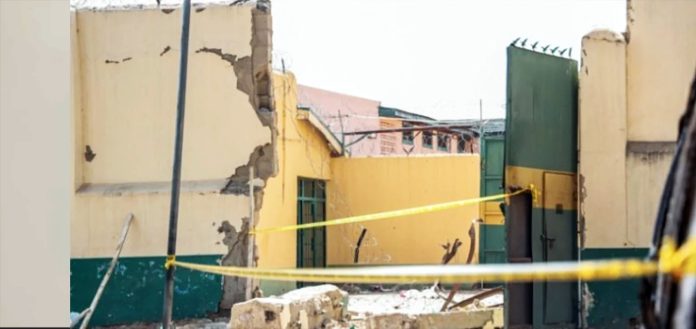
Kogi Jailbreak

Twelve inmates escaped in an early morning jailbreak at the Federal Correctional Centre in Kotonkarfe, Kogi State, on Monday. Kogi State Information Commissioner, Kingsley Fanwo, described the incident as “unfortunate” and assured citizens that the government, working with security agencies, would take steps to prevent a recurrence.

According to him, law enforcement agencies have re-arrested one of the escapees.

“The theory that the inmates escaped through the tower without causing any structural damage raises serious concerns.

“This calls for a thorough investigation to determine the exact circumstances of the escape, arrest the fleeing inmates, and identify possible saboteurs within the system,” Fanwo said.

The commissioner said Governor Usman Ododo has asked security agencies to ensure such security breaches do not happen again.

“We call on the public to report any suspicious individuals in their communities. Anyone found harbouring an escaped inmate will be held accountable,” he warned.

“There is no cause for panic. We encourage citizens to go about their daily activities as normal, knowing that the security of lives and property remains our top priority,” Fanwo added.

Credit: channelstv.com

House of Reps got $5,000 as ‘Sallah gesture,’ not bribe -Betara

0
Chairman of the House of Reps Committee on FCT, Mukhtar Aliyu Betara

The Chairman of the House of Representatives Committee on FCT, Mukhtar Aliyu Betara, has clarified that he shared $5,000 with members of his committee as a “Sallah gesture” and not as an inducement to support emergency rule in Rivers State.


A Nigerian investigative journalist, Jaafar Jaafar, disclosed this in a post on his X handle.

Jaafar said Betara explained this to him after the lawmaker reached out to clarify that the $5,000 given to lawmakers was merely a “Sallah gesture” and not an inducement.

According to the investigative journalist, Betara said it was part of a long-standing tradition and had nothing to do with the ongoing political crisis in Rivers State.

Jaafar wrote:


“The chairman of the House Committee on FCT, Mukhtar Aliyu Betara, has clarified to me that he only shared $5,000 with each member of his committee as a ‘Sallah gesture,’ not as an inducement to support emergency rule in Rivers State.


“According to him, he maintains the tradition—like Santa Claus—every year.

“As we say in Hausa, not thigh but hind leg.” DAILY POST reported that President Bola Tinubu had declared a state of emergency in Rivers State, citing political instability and security threats, including recent oil pipeline vandalism.


However, several reports claimed that senators received a $15,000 bribe to endorse the proclamation of a state of emergency in Rivers State.

The rumors alleged that the senators received $5,000 on Tuesday and then $10,000 on Wednesday, the day before they voted on the proclamation.

Credit: dailypost.ng

Nkusukum chiefs grateful to Mahama for appointing Gyampo to head Shippers Authority

0
Okogyeman Okese Essandoh IX , Omanhen of Nkusukum Traditional Area

 The chiefs and people of the Nkusukum Traditional Area in the Central Region are elated over the appointment of their son, Professor Ransford Edward Van Gyampo.

The Legon Professor has been appointed as the Chief Executive Officer of Ghana Shippers Authority by President John Mahama, a move that has been welcomed by the people of Saltpond and the Nkusukum Traditional Area in general.

A release signed by the Nkusukum Omanhen, Okogyeman Okese Essandoh IX described Prof Gyampo as bold, articulate, erudite, indefatigable, hardworking, competent, nationalistic and patriotic.

He, therefore, termed his appointment as huge and significant adding that it further illustrated Prof Gaympo’s competence to continue to contribute his quota to shape the country’s quest for development.

The release indicated that the appointment of Prof Gyampo further emphasised President Mahama’s commitment not to dissipate national brains, but to harness them for national development.

This, according to the release, would contribute significantly to douse the very dangerous and divisive flames of winner-takes-all politics, which has mostly characterised appointments in the fourth republic.

According to the release, Prof Gyampo, has over the years, demonstrated too much strong-will and resilience to be torpedoed or brought down by plots of people who hate his frankness.

“We are excited about this appointment, not only because Prof Gyampo is from Saltpond and the Nkusukum Traditional Area, but…has been fearless and resilient in all his stance on bad governance against all regimes of the Fourth Republic,” he emphasised.

Other significant appointments

Nana Essandoh commended the president for the honour he has done to other Nkusukum indigenes including; Abeiku Aggrey Santana, who has been appointed as the Deputy Chief Executive, Ghana Tourism Authority and Ernest De-Graft Egyir, who was recently appointed a member of National Economic Dialogue (NED) Committee.

He mentioned Dr James Kofi Kutuati, Deputy Chief Executive in charge of Operations, COCOBOD, Maame Efua Sekyi-Aidoo, Chief Executive Officer, Ghana Tourism Authority, as other significant appointments.

Request for more

Okogyeman Okese Essandoh IX noted that the Mfantseman Constituency Parliamentary Seat has historically been a Ministerial Seat due to the fact that previous MPs from both sides of the political divide received ministerial appointments.

“We, therefore, appeal to His Excellency the President to consider our Member of Parliament, Dr Prince Arhin, for Ministerial or Deputy Ministerial Appointment as he inches closer to the maximum number of 60 Ministerial Appointees, he promised Ghanaians,” he concluded.

Ashifla community calls for Government intervention over rising security tension 

0
The destruction caused to the land at Ashifla

The Secretary of the Ashifla Stool, Benjamin Nii Adjetey, has raised alarm over escalating tensions and insecurity in the Ngleshie Ashifla area, urging the government of Ghana and security agencies to intervene swiftly.

Speaking on behalf of the people of Ashifla, he called for the deployment of security personnel to protect residents and demanded the establishment of a commission of inquiry to determine rightful land ownership and clarify the boundary between Greater Accra (Gas) and the Akyem people.

“The people of Ashifla have lived peacefully on their land for about 300 years. However, for the past 100 years, members of the Amaah Kwaafo family have continuously harassed us,” Nii Adjetey stated.

Long-standing Land Dispute Reignites Conflict

The dispute dates back to legal battles that spanned decades. Between 2003 and 2005, an arbitration process at the then Ga-West District Assembly (now Ga-West Municipal Assembly) led to a resolution affirming the land rights of the 14 Ashifla communities, including Mamphia, Otaten, Akoteaku and others.

This resolution was later upheld by the High Court.

However, tensions resurfaced recently when their opponent reportedly began selling portions of the disputed land to estate developers. Residents allege that their opponents have engaged land guards to harass them, leading to violent clashes.

On February 28, 2025, the Amasaman Court ruled on a case involving a 217-acre land at Agbazo Junction near Akutuase, a verdict that the people of Ashifla believe was unfair.

“We believe justice has been twisted, and we are preparing to seek redress in court,” Nii Adjetey said.

The conflict has led to severe destruction of farmland and infrastructure. Residents report that land guards have destroyed farms growing tree plantations, palm, plantain, cassava and pineapple.

Additionally, a borehole at Okortorbu, a vital water source, was destroyed due to illegal sand-winning activities.

In a recent violent incident, land guards allegedly attacked farmers protesting the destruction of their crops. One farmer, Nii Ayikwei, was injured, but the youth of the community intervened to rescue him.

These security threats are now disrupting school attendance and local economic activities, further worsening the plight of residents.

The people of Ashifla insist that their land has always belonged to the Ga people and reject claims that the Amaah Kwaafo family acquired it from the Akyem. They are now pleading for government intervention to prevent further violence.

“We call on the government and security agencies to step in, provide protection, and set up a commission of inquiry to determine the rightful ownership of these lands,” Nii Adjetey emphasised.

With tensions escalating, the community hopes swift action will restore peace and prevent further bloodshed.

The Ghanaian Chronicle