Liverpool‘s club-record bid for Bayer Leverkusen star Florian Wirtz has been rejected, reports from Germany claim.
Wirtz has been earmarked as the Reds’ No 1 target this summer, as Arne Slot looks to build on the side that delivered him a Premier League title in his first season on Merseyside.
The 22-year-old was key to Leverkusen’s unlikely Bundesliga triumph in 2023-24 and has long been linked with a move to Bavarian giants Bayern Munich.
In recent weeks, however, Anfield has emerged as the most likely destination for the Germany international – with Wirtz having already agreed personal terms for a move.
Liverpool further demonstrated their desire to complete the deal by tabling a bid worth €130milion (£110m). However, according to a report from Bild, the offer has been rejected with Leverkusen reportedly determined to secure a €150m (£127m) for their prized asset.
But the report further claims that the shortfall could be made up with performance-related bonuses and stresses the deal is not considered to be in jeopardy, with Leverkusen still expecting Wirtz to leave.
Manchester City boss Pep Guardiola has put Rayan Ait-Nouri at the top of his list to solve his side’s problematic left-back spot.
City have been operating without a specialist left-back since Benjamin Mendy left. He made his last appearance for the club in August 2021.
Oleksandr Zinchenko, Joao Cancelo and Josko Gvardiol are among the players who have had extended stints in the position.
Youngster Nico O’Reilly then filled the role towards the end of last season, including the FA Cup final defeat by Crystal Palace.
However, Guardiola is keen to address the issue this summer and Wolves defender Ait-Nouri is the man he wants.
No agreement is in place yet for the 23-year-old Algeria international but sources are confident it will happen.
Ait-Nouri has been named in Algeria’s squad for their friendlies against Rwanda (5 June) and Sweden (10 June).
City would need to complete the transfer before 10 June in order for Ait-Nouri to be available for the group stage of the Club World Cup.
Ait-Nouri delivered more goal involvements (11) than any other Premier League defender last term to underline his proficiency when joining attacks.
His technical competency, his ability and skill in tight areas – keeping the ball close to his feet – give him the opportunity to fit perfectly into Pep Guardiola’s possession-based play.
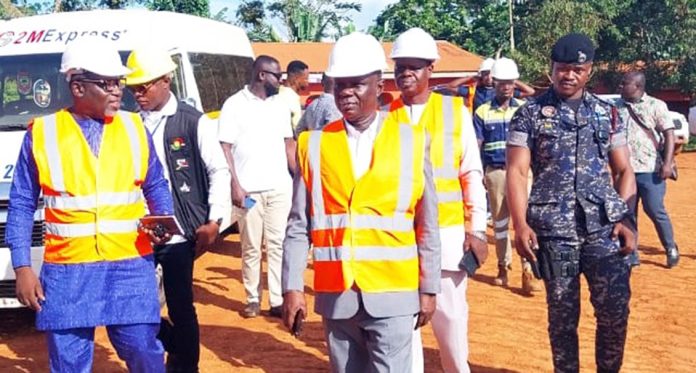
Minister Wilbert Petty Brentum (middle) at the Inchiniso mining site at Awaso
Ofori-Opoku Company limited (OPCL), the current owner and manager of Ghana Bauxite Company Limited (GBC) with 80% shareholding, has proposed to build a refinery at the locality, to add value to bauxite.
The proposal is the first time ever, since mining of bauxite started over 80 years ago.
Alexander Gyedu – General Manager GBC
The company intends to acquire between 2,500 and 3,000 square kilometers of land area in the Awaso enclave, for the construction of the proposed refinery project, to process the high quality bauxite from its concession 47.04 sq. km
The General Manager of GBC, Mr. Alexander Gyedu, while briefing the Western North Regional Minister, Mr. Wilbert Petty Brentum, during a tour of the mining sites last Friday to acquaint himself with the operations of the company, said the company has contracted the LandsCommission to evaluate the parcel of land and assess properties thereon, by the close of June, to enable it pay appropriate compensation to farmers and land owners.
He said other key stakeholders, including the Environmental Protection Agency (EPA), have been consulted for directives while three more surface miners have been procured to enhance operations.
General Manager Gyedu also announced that negotiations are ongoing with companies for the construction of the proposed refinery as soon as possible.
The company has, therefore, invested a substantial US$122.97 million in upgrading its infrastructure and operational efficiencies evident in the acquisition of a robust fleet of equipment, including surface miners, haulage trucks, dump trucks, excavators and retooling of existing plant and machinery.
The investment so far, over the last three years, is geared towards producing 6 million tons of bauxite by the close of 2025, having improved production from 59,585 tons in 2022 to 225,415 tons, with remarkable increase in volume of haulage.
Extraction of bauxite by a surface miner equipment
He said the company’s production volumes have already seen a significant boost and that using surface mining and drill and blast methods, production has increased from 1.3 million tons per annum to about 1.8 million tons in 2024.
In 2022, Bosai group transferred its shareholding of 80% to Ofori-Opoku Company limited (OPCL), a member of the IOP Group of Companies, while the Government of Ghana is retaining its 20% share.
GBC’s Awaso Mine concession covers an area of 47.04 sq km, following the ratification of a 30-year Mining Lease covering the Subri, Inchiniso, Kanayerebo, Afumba and Boakakhirri.
GBC has been operating the Inchiniso pit since 1969, producing high-grade trihydrate bauxite annually.
The General Manager said OPCL has acquired 42 new earth-moving equipment, 52 new dump trucks, 16 new utilities, one surface miner and 35 new light-duty vehicles among others, and that the company was expecting the delivery of a second surface miner by the end of June 2025.
The company had also acquired 56 new equipment and 198 new trucks, including Sino trucks, RDT trucks, TX 400 dump trucks and Howo 371 trucks to enable the company to increase its production capacity and export more bauxite ore.
Group pix of the Minister’s entourage and officials of GBC during the visit
The General Manager mentioned that the Haulage department has also seen significant improvements with the addition of a 161 fleet of 9-axle trucks since taking over in 2022 by OPCL resulting in a substantial increase in haulage operations from around 600,000 tons in 2022 to about 1.7 million tons of bauxite in 2024.
Mr Gyedu assured that GBC would remain committed to environmentally responsible mining practices and would prioritise environmental protection as it works towards achieving its production target of 6 million tons by the end of 2025 adding that the acquisition of new equipment and technology is expected to reduce the company’s environmental footprint.
The company’s commitment to corporate social responsibility and environmentally responsible mining practices is a testament to its dedication to sustainable development.
He reiterated management of Ghana Bauxite Company Limited’s commitment to environmental protection, emphasizing that the company’s operations are guided by strict adherence to ecological regulations.
Mr. Alexander Gyedu said, Ghana Bauxite Company Limited (GBC) was dedicated to responsible resource management, striving to minimise its impact on the environment through conservation, reclamation measures and sustainable mining practices and diligently complies with regulatory standards and submits to the Environmental Protection Agency (EPA) as required by law.
This, he said, demonstrates the company’s commitment to transparency and accountability in its environmental stewardship in response to the Ministry of Lands and Natural Resources requirement for mining companies to prioritize environmental protection.
He said the Environmental Protection Agency (EPA) has also been working closely with the Ghana Bauxite Company Limited to ensure that it complies with environmental regulations in an effort to minimise its environmental impact in line with the government’s vision to promote sustainable development and environmental protection.
A highly impressed Western North Regional Minister, Mr. Wilbert Petty Brentum, pledged support for GBC’s efforts to engage all stakeholders in the catchment area towards development.
“It is refreshing to note that GBC operations have not caused any devastation to the environment”, the Minister remarked at the end of the tour of the facility.
Mr. Brentum was also happy that the management and workforce of the company were wholly Ghanaian.
He emphasiSed that the government was not against mining and encouraged GBC to do responsible mining by adopting best practices.
The Minister announced that the various MMDAs would be encouraged to collaborate with the GBC towards a sustained development of the area.
A Chief Director of the Regional Co-ordinating Council, Mr. Ali saw GBC as a role model of the Ghanaian business entity and urged mining companies to emulate safety and environmentally friendly practices of GBC.
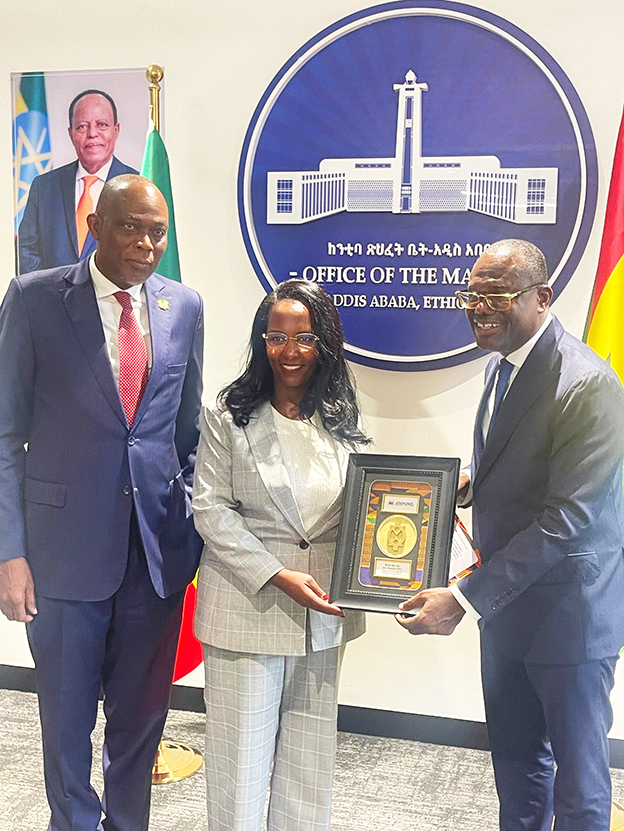
Dr Siaw Agyepong (r presenting a gift to Ethiopain officials
Zoomlion Ghana Limited (ZGL), a subsidiary of the Ghanaian conglomerate, Jospong Group of Companies (JGC), is extending its operations beyond the orders of Ghana.
The display of the contract documents in DRC
Over the past few weeks, the waste management giants have signed three waste management agreements in Nigeria, Democratic Republic of Congo and Ethiopia.
The agreement with the Nigerian government alone is expected to create over 5000 direct employments.
Dr Siaw Agyepong speaking after signing thee agreement in Lagos, Nigeria
The agreements, which were signed by the Executive Chairman of Jospong Group, Dr Siaw Agyepong, in the respective capitals of the above mentioned countries, according to a management source, show that the work of Zoomlion Ghana is being appreciated outside.
Lagos, Nigeria
In Lagos Nigeria, the agreement was signed on May 26, 2025 between Zoomlion Nigeria Limited, a subsidiary of Zoomlion Ghana Limited ZGL and the Lagos state government.
Jospong Group delegation in a group photograph with DRC officials after sighing the agreement
The objective of the Public-Private Partnership (PPP) agreement is to transform the Lagos State’s waste management landscape, creating around 5,000 jobs.
Hon Ing. Wenimu Seta, Deputy Mayor of Addis Ababa City Council and Dr Agyepong signing the agreement
The Governor of Lagos State, Babajide Sanwo-Olu and the Executive Chairman of JGC, Dr. Joseph Siaw Agyepong formalised the partnership at the State House in Alausa, Ikeja, Nigeria.
Consultation before the signing of the agreement in Lagos
This collaboration will see the development of two pivotal facilities: a material recovery plant and a waste recycling plant.
These installations will be crucial in integrating Lagos into a modern and sustainable waste management framework.
Lagos State currently generates approximately 13,000 tonnes of waste daily. Key components of the agreement include the construction of Transfer Loading Stations (TLS) at the Olusosun Dumpsite in Ketu and Solous III Dumpsite in Igando.
Dr Siaw Agyepong and Lagos state officials displaying the documents after signing the agreement
The TLS at Olusosun will divert 2,500 tonnes of waste daily to a new Material Recovery Facility (MRF) in Ikorodu, while the TLS at Solous III will divert 1,500 tonnes daily to a new MRF in Badagry.
Additionally, self-tipping tricycles will be deployed to enhance waste collection in hard-to-reach areas across the metropolis. All projects are slated for completion within 18 months.
Governor Sanwo-Olu hailed the agreement as a “turning point” in the state’s waste management journey, emphasising that it would create over 5,000 direct and indirect jobs and enhance the operations of PSP waste operators.
“Today, we have witnessed the official commencement of a mutually beneficial relationship between a forward-looking private company and a committed public sector,” he said.
A zoomlion officials about to present a gift to their host
The Commissioner for Environment and Water Resources, Mr. Tokunbo Wahab, described the project as a major milestone, marking the state’s transition to a circular waste economy.
“We can now begin to generate wealth from what we previously discarded,” Wahab indicated.
Kinshasa, DRC
On the same day, May 26, 2025 Zoomlion signed another MoU with the City of Kinshasa, DRC to collaborate on a project focused on the collection, transportation, recovery and conversion of municipal and other forms of waste into valuable products.
This partnership is expected to generate approximately 5,000 jobs in Kinshasa’s waste management value chain.
The Provincial Minister for Environment and Sustainable Development for the Province of Kinshasa, Hon. Léon Mulumba Mwana Nshiya, initialled on behalf of the City of Kinshasa.
“This agreement is a symbol of our strong will and unwavering commitment to build a cleaner, greener Kinshasa,” Hon. Léon Mulumba Mwana Nshiya stated.
The Jospong delegation was led by Mr. Daniel Amuyaw Addo, who expressed great enthusiasm about the partnership.
“This signing ceremony reaffirms Jospong’s dedication to providing innovative and integrated waste management solutions to Kinshasa. We are grateful to all stakeholders who contributed to defining the scope of this strategic partnership,” he noted.
He presented a token of appreciation to H.E. Daniel Bumba Lubaki, the Governor of Kinshasa, as a gesture of goodwill.
In his closing remarks, the Governor emphasised the continental importance of the project, stating, “I strongly believe this project will not only improve the environmental well-being of Kinshasa but will stand as a model to project the name of Africa on the global map.”
Addis Ababa, Ethiopia
Furthermore, the waste management giant signed a MoU with the Addis Ababa City Council on May 29, 2025 to establish an Integrated Waste Management Infrastructure in the Ethiopian capital.
The agreement will enhance the effectiveness and efficiency of existing waste management facilities, ensuring a cleaner and more sustainable environment for Addis Ababa.
Under the MoU, Zoomlion will invest in the development, construction, and operation of Material Recovery Facilities (MRFs) for the purpose of recovering, sorting, and recycling materials extracted from various waste streams, set up Compact/Mobile Transfer Loading Stations for efficient transfer and management of waste within designated areas and be granted the exclusive right to manage, operate and maintain the established projects for a defined period.
Upon completion, the integrated waste management facility will not only create around 5,000 new jobs and improve sanitation standards but also contribute significantly to Ethiopia’s broader environmental conservation goals
Speaking at the signing ceremony, representatives from both parties underscored the importance of the partnership in addressing urban waste challenges.
The Deputy Mayor and General Manager of Addis Ababa City, Hon. Eng. Wendimu Seta explained that this partnership represented a major milestone toward a cleaner and more sustainable Addis Ababa.
According to him, with Jospong Group’s expertise and dedication, the city can look forward to a more efficient and environmentally friendly waste management system.
The parties indicated that further details on the implementation timeline and specific projects under the MoU will be announced soon.
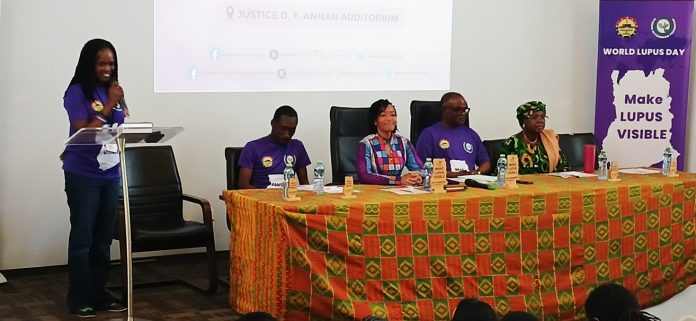
Dr Zenator Agyemang Rawlings, the Member of Parliament (MP) for Korle Klottey has expressed her commitment to leading a strong advocacy in getting the Lupus disease captured under the National Health Insurance Scheme.
She acknowledged the high cost involved in diagnosis and treatment, hence the need for an advocacy to ensure the chronic autoimmune disease was catered for by the Scheme.
Lupus is a chronic inflammatory disease that occurs when the immune system attacks its own tissues. It can affect various parts of the body including the skin, joints, kidneys and brain.
Some common symptoms include joint pain, swelling, skin rashes, fever, fatigue, hair loss and sensitivity to sunlight. At least five million people worldwide have lupus.
Dr Agyemang Rawlings was speaking at an event to commemorate the World Lupus Awareness Day at Parliament House, in Accra on Friday, on the theme: “Make Lupus Visible.”
As a Board Member of the National Health Insurance Authority, she noted that autoimmune diseases keep changing by the day, becoming rampant and affecting many lives.
Dr Agyemang Rawlings called for an urgent need for medical doctors to prioritise the Lupus disease, as it was affecting many people, although there no actual figures to show.
The MP said making Lupus visible should go beyond advocacy to ensuring that enough health workers were trained to help with early diagnosis and treatment, as well as financial aid for treatment, support from families and Care givers, with psychological, emotional and physical assistance.
Mrs Emma Halm Danso, the Executive Director, Oyemam Autoimmune Foundation, called for urgent action to improve diagnosis, treatment and education on Lupus.
She expressed concern over the limited number of rheumatologists, with the whole of Ghana having only three, making early detection and diagnosis very difficult, hence the urgent need to train more doctors.
“Lupus is more common in Ghana than we realise and the only reason we do not hear much about it is because of misdiagnosis, under diagnosis and lack of awareness,” Mrs Danso said.
“We are appealing to the Ghana Health Service to prioritise lupus in its health promotion efforts.”
“Every day we get calls from people who are suffering, who are always losing loved ones and it is heart breaking.
Sometimes I cry and this is why we are advocating an inclusion in the NHIS to help reduce out of pocket cost.
“We must cater for those medications because the very simple ones, which are cheap, and are on our National Health really do no good.”
Mrs Danso said the stress and neuropsychiatric impact that lupus had on patients and their families were unimaginable, thus the need for support to lessen the burden.
Mr Ebenezer Djietror, the Clerk to Parliament, called on the citizenry to become ambassadors within homes, workplaces, and the communities to offer the needed support to persons affected by the disease.
“Let us as a nation stand in solidarity with those affected by the condition, let us prioritise early diagnosis, improve treatment options and increase investment in research,” he said.
He commended the Foundation for the effort in creating awareness about the disease.
World Lupus Day was first observed in 2004, and several special events were held to highlight its importance.
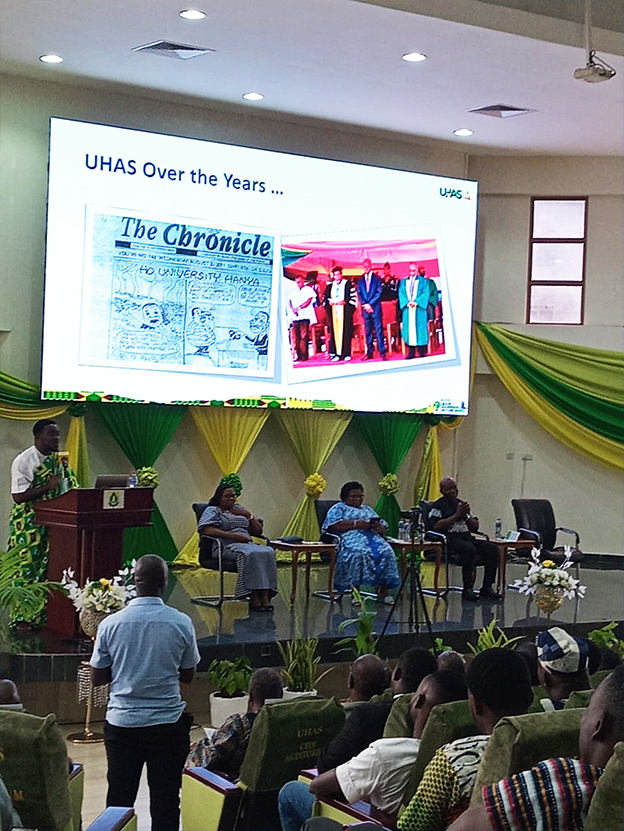
The Ninth JEAM Leadership Lecture Series, in memory of the late President Professor John Evans Atta Mills (JEAM), who established the University of Health and Allied Sciences (UHAS) has been held at its main campus in Ho.
It was under the theme: “Advancing Quality Health Systems in Ghana Amidst Global Disruptions.”
The Leadership Lecture was instituted by the Management of the University to inspire students to aspire to higher laurels and activate mentorship systems that develops the capacity of students and health workers to reflect on core values of their calling.
Dr Sodzi Sodzi-Tettey, Chief Executive Officer, National Vaccine Institute (NVI), the Guest Speaker of this year’s Lecture Series, said the Late JEAM is described by many as an academic icon, a Statesman par excellence, a political leader, a Ghanaian and Global luminary of law and Tax, whose forward-thinking established UHAS in 2011.
He said UHAS has thrived despite some of the initial skepticism and continues to graduate top- notch health professionals, attracting some of the best faculty and Scientists in their fields in the world.
“Such a leader was President John Mills, when he set up the UHAS as the foremost tertiary institution for the training of health professionals in Ghana. He believed in the aspiration, particularly in the youth.”
Today, the guest speaker indicated, there is no doubt that UHAS has achieved its purpose and as President Mahama said a couple of years ago, “The dream of Prof. Atta Mills has been actualised.”
He admonished the leadership of the continent to exemplify the persona of President Captain Ibrahim Traore of Burkina Faso, as his exploits are soaring in Africa and beyond, saying “The continent is crying for strong but humble leaders with integrity, who prioritise national interests above all else.”
On the theme, Dr Sodzi-Tettey said recent disruptions to the Global Health Financing threatens Quality Health System and by May 9th, this year, some 176,818 jobs were confirmed lost globally, amidst other disruptions within the global health communities.
He said huge research on ‘improving the quality of health and child health services and improving the quality of health workforce training’ has been aborted, as a result.
He said by 2030, Ghana is scheduled to exit the Global Alliance of Vaccine Initiative (GAVI) on account of the nation falling into the Lower Middle-Income status.
He said Ghana must avail $51 million annually to fund vaccines purchase for Expanded Programme of Immunisation (EPI), with global institutions like the WHO and the Global Fund notable for supporting HIV, TB and Malaria, would be impacted with the greatest toll on Africa and beyond.
He said an international Health Regulatory Group working with Ghanaian experts and other partners, in 2025, conducted a joint external evaluation of Ghana’s pandemic preparedness drawing its finding on strengths and weaknesses.
Dr Sodzi-Tettey said Ghana’s strengths were anchored on comprehensive national policies, strategic plans, and regulatory frameworks, ratified international agreements, robust multi-sectoral coordination mechanism, a tiered national laboratory network, prioritised workforce development prioritised, existence of multi-hazard risk assessments and contingency plans for threats, as well as well-established National immunisation programs and emergency vaccination campaigns.
Its weaknesses were inconsistent enforcement of policies and regulations, sub optimal multisectoral coordination, fragmented budget allocations and a heavy reliance on external donor support, human resource shortages and workforce retention issues, laboratory and diagnostic capacity at lower levels, weak data systems, limited cross-border collaboration, underdeveloped risk communication and community engagement (RCCE) efforts.
Dr Sodzi-Tettey, also the Vice President for Global Delivery at the Institute for Healthcare Improvement said overall, the assessment indicated that Ghana has built a solid foundation for health security, positioning the country to effectively prevent, detect and respond to public health threats while contributing to regional and global health security efforts.
The country has developed comprehensive national policies, strategic plans and regulatory frameworks covering key areas such as antimicrobial resistance (AMR), zoonotic diseases, biosafety, food safety, immunization, laboratory systems and chemical and radiation emergencies.”
On the other hand, they noted, “Despite notable progress in health security, Ghana faces challenges that hinder the full implementation of core capacities under the International Health Regulations (IHR). … Human resource shortages and workforce retention issues present major barriers to effective health emergency prevention, preparedness and response.
“There is a critical deficit of specialized personnel, particularly in radiological, chemical and veterinary health sectors, with high attrition rates in rural areas and no national surge workforce plans for rapid deployment during emergencies.
“Laboratory and diagnostic capacity at lower levels remains limited, with insufficient high-containment facilities, biosafety infrastructure and diagnostic capabilities for priority pathogens. Weak data systems, including the inadequate national laboratory information system (LIMS) and poor data interoperability, further compromise disease surveillance and response efforts.”
He advocated expedited action to address these weaknesses to improve the limited capacity to prevent, detect and respond to health threats in reactions to the global disruptions towards advancing health systems in the country.
Prof Lydia Aziato, Vice Chancellor of UHAS said the mileage being achieved by the University is as fresh and relevant as the dream of late President Mills, with actuality and scaling standards and setting new ones, nationally and internationally.
The forum was attended by the new Governing Council Chairperson, Prof Kodzo Gavua, Prof Fred Newton Binkah, the Foundation Vice Chancellor, political class, academia, and students.
In the financial world, brokers would look at the Stock Exchange and study how the shares perform. Then they would advise their clients on what to do. When shares start dropping, the advice would be “sell yours before it loses value.” Some brokers would advise their clients, “if they keep falling buy them, and hold on to them. When they begin to rise again, then you sell and make good profit.”
In December 2024, the USD was $1.00 to GH¢14.69. It rose through to March 2025 when it hit $1.00 to GH¢15.52. Then it kept fluctuating till May 30, 2025 when the rate dropped to $1.00 to GH¢10.52. (Ref: DollarFX.org).
In the first world countries, something was happening. President Trump’s idea of making America great again, did not quite take off as he would have wished. His economic policies rather pulled down the almighty dollar.
The events of the economic meltdown of 2008 which hit the USA and some other rich nations, took a toll on countries in the developing world, and Ghana was no exception. Before the meltdown, the dollar was $1.00 to GH¢0.94, by December 2008 the dollar peaked and was $1.00 to GH¢1.44.
Ghana has done nothing positively to her economy to warrant the strengthening of the cedi, in recent times. It would also be impossible to improve upon the economy in five months to get to this point. As a developing nation the growth must be gradual over months with a steady pattern before such a feat could be achieved. And one thing, most important as such, is taking drastic measures that would cushion our economy against external aggressions like reductions in producer prices of our products and other measures in international trade, which is the monopoly of the world superpowers.
It is never easy in a world which only the powerful countries decide how the economies of developing nations should perform. For example, they subsidize their food production, but warn us not to subsidize ours. They make it more expensive for us to produce food that we can naturally produce here and dump inferior ones on us, which are cheaper than what we produce here.
During the Acheampong regime, Ghana was a top poultry producing nation in Africa, we had two sugar producing plants in Asutsuare and Komenda, rice production was springing up and indeed, we grew what we ate and ate what we grew.
If we had taken significant drastic measures to uphold our economy, if we had played the two superpowers at each other, the West and the East, we might have scrapped through and would have been a second world country by now.
Unfortunately, under the Rawlings administration we collapsed our sugar factories and poultry industries, just to adhere to international trade agreements.
If we had exported human resources to the industrialised nations like India did, we could be an industrial country now.
India exported labour; to work in the industries of the powerful nations and today, it is the leading country in IT. An example is, the Indian workforce in Leyland production plants made India to produce Tata automobiles, while, today Leyland is no more.
India has gone further to achieve a mark in space, as one of the five nations to go to the moon.
China’s economic growth was rather unique. It first closed its doors and started doing things from within and when it opened up, its industrial power placed it at par with the USA. The truth is, had the superpowers, in the West and Russia in the East, known what India and China were up to, these two nations would have been developing countries by now.
So, it now is down to us. It is interesting how government and members of the NDC are making some noise about this fall of the dollar because never has the cedi appreciated this much against the hard currencies. But they must know that this is not internally generated. And trust the superpowers, they must be seriously at work to reverse this process and when they finally achieve their aim, the dollar could go for $1.00 to GH¢18.00 by the end of the year. For something interesting is happening on TapTap Sent.
On Wednesday May 28, 2025 the GBP went for £1.00 to GH¢13.75. The following day it dropped to £1.00 to GH¢12.95 sending shockwaves in Ghanaians residing abroad who remit money down for projects and other things. By Friday, the GBP had peaked at £1.00 to GH¢13.60 and it is so till this morning before the markets opened. The question is, are the hard currencies rising?
One thing to notice is that the fall of the hard currencies is not having any significant effects on the lives of the ordinary Ghanaian. Except for decreases in fares, which had to be imposed on commercial transport, everything else is the same. This clearly shows that we are not in control, so what must government do to reap benefits from the fall of the hard currencies?
Government and Ghanaians must buy the pounds, euros and dollars and stockpile, for that is what is done, when shares start dropping. When they rise again which they surely would, then we can trade with our stock and make a lot of profits which will maintain some strength in our cedi, then we can also say, we have arrived.
By Hon. Daniel Dugan
Editor’s note: Views expressed in this article do not represent that of The Chronicle
A recent report by the Daily Graphic has drawn attention to a problem that has become an inescapable part of everyday life for motorists and commuters alike, which is the proliferation of potholes and dangerous gullies across major roads in the capital, Accra. This is about the failure of leadership at multiple levels.
The report highlights key trouble spots, notably the Dr. Busia Highway stretching from Kaneshie First Light to Kasoa, the roads forming part of the Mallam Interchange and various intersections including the Odorkor Traffic Light, Adabraka and the Central Business District (CMB) area. Other areas affected include the Accra-Tema Beach Road, Accra-Nsawam Road and portions of the road from the Tema Roundabout to Prampram Junction.
For a capital city, which should be a symbol of national pride and progress, such road conditions rather reflect poorly on our governance. The persistent traffic congestion on these deteriorated roads, worsened by seasonal rains has become a daily torment for Ghanaians. Vehicles are forced to swerve and shift dangerously as they avoid potholes, often leading to gridlocks that stretch for kilometres.
In some cases, such as near the Mallam Interchange, the potholes are so large and hazardous that only one lane of traffic can pass, causing backups all the way to Odorkor, during rush hours. It is appalling that in a city where millions depend on the road network for work, trade and essential services; such critical infrastructure is allowed to decay unchecked.
The human cost of this neglect is evident. Motorists have described the roads as “death traps.” Drivers unfamiliar with these stretches, particularly at night, risk plunging into potholes due to poor visibility. The absence of functioning streetlights along many of these roads compounds the danger. What is even more troubling is that good Samaritans, ordinary citizens, have taken it upon themselves to fill these potholes with stones, in a desperate attempt to prevent accidents. That this has become normalised speaks volumes about the failure of local and national authorities to maintain even the most basic road safety standards.
We must ask ourselves: Where is the Ministry of Roads and Highways? Where is the Accra Metropolitan Assembly in all of this? The silence of these institutions and the inaction of those charged with road maintenance are unacceptable.
Maintenance of roads should not only be reactive, waiting for public outcry before any patchwork is done, but should be part of a proactive, well-planned system of infrastructure management. Cities in other parts of the world, even those with comparable or fewer resources than Ghana, manage to keep their roads safe through routine maintenance and investment in durable materials. Why is Accra different?
The failure to address the road crisis is also costing the economy. Delays caused by traffic congestion directly reduce productivity, increase fuel consumption and damage vehicles, adding to the financial burden of individuals and businesses.
Additionally, the lack of functioning traffic lights and the poor regulation of traffic flow at major intersections like Weija Junction further exacerbate the crisis. Broken or poorly timed traffic lights create chaos, lead to avoidable delays and contribute to accidents.
It is important to emphasise that these problems are not caused solely by the rains, as officials sometimes suggest. Poor road design, low-quality construction materials, lack of supervision during construction, and the absence of proper drainage systems are the real culprits. Roads that are well-engineered and built to standard do not crumble after the first heavy rainfall. This points to a deeper culture of mediocrity and a disturbing tolerance for substandard public works.
Emergency road repairs must be carried out in the most affected areas. Streetlights and traffic signals must be fixed and properly maintained. Drain covers must be replaced with theft-proof alternatives. Contractors who deliver shoddy work must be blacklisted and prosecuted. And above all, there must be a comprehensive and publicly accountable road maintenance strategy that is not only funded but executed with precision and urgency.
The time for empty promises and blame-shifting is over. Our roads are in crisis and the people deserve better. We urge the government and relevant agencies to treat this matter with the seriousness it demands. If a capital city cannot guarantee the basic right of safe, passable roads for its citizens, what hope is there for the rest of the country?
We cannot build a prosperous Ghana on broken roads.
Residents of Obuasi joined the global community to celebrate World Menstrual Day, when AngloGold Ashanti Obuasi mines and Partners donated sanitary pads to Girls in the Basic schools in the community over the weekend.
Mrs. Mavis Nana Yaa Kyei, Social Development and Gender Superintendent of AngloGold Ashanti (AGA), Obuasi Mine, noted that creating a healthier, safer and more equitable world where women and girls are not stigmatised, excluded or discriminated against merely because they menstruate, is a non-negotiable obligation for which everyone must take responsibility.
The girls pledging to abstain from sexual activities
She stated that AGA, in collaboration with UMA, Pamicor and Jachris, all contractors on the mine and others provided over 17,000 sanitary pads to over 5,000 basic school girls in Obuasi.
She commended the government for officially launching the Free Sanitary Pad Initiative to distribute sanitary pads to school girls nationwide.
To the boys, Mrs. Nana Yaa Kyei said “let us not stigmatise girls during menstruation, let’s support them and accept that menstruation is only a physiological process girls go through.”
The Ashanti Regional Girl Child Coordinator, Madam Hanna Amponsah, in a message read on her behalf noted that, “for far too long menstruation has been surrounded by silence, stigma and shame, but today we choose to change the narrative. We choose to speak boldly, to educate openly and to support each other with love, respect and compassion.”
Madam Mabel Antwi, Human Resource Officer of Pamicor called for love and affection for young ladies during their menstrual period.
“I know most ladies feel pain, discomfort and sometimes go through emotional changes. Menstruation is not a taboo or shame.
“It is natural and I urge young ladies not to feel shy to speak up or talk to anyone they can confide in, in terms of any challenges they may face during their menstrual period,” she added.
Nana Achiaa Twumwaa Tia, Obaapanin of Nkanprom told the students to make good use of the pads received, as well as concentrate on their studies.
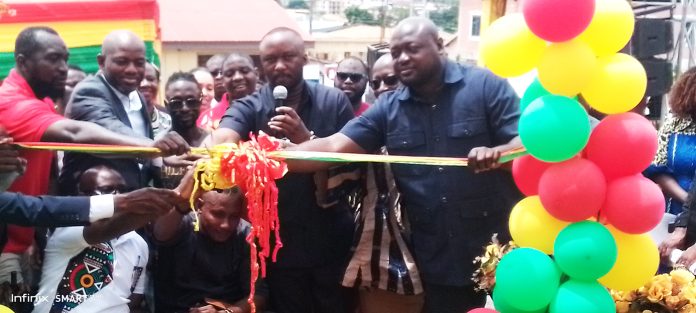
Malik Basintale being assisted by Seth Atanga (left) and Amoh Kamel, MCE for Asokwa to officially commissioning the Center
Mr. Malik Basintale, the Chief Executive Officer (CEO) of the Youth Employment Authority (YEA) has commissioned The Make Fashion Inclusive Training Centre in Kumasi, to train about 100 persons with disability in fashion and other entrepreneurial skills.
The trainees will also be trained in embroidery, beading, metal works and would also be equipped with tools to build their businesses to employ others to transform their community.
The Sewing machines at the Center
The initiative is dedicated to empowering Persons with Disabilities (PWDs) in Ghana’s fashion industry.
Mr Basintale explained that the programme was a landmark initiative that would bring opportunities, dignity and empowerment to people with disability.
He said the project had been made possible through the collaboration between Germany Development Cooperation and the Youth Employment Agency, under the broader vision of Invest for Ghana, to not only transform lives of Ghanaian youth, but to also create sustainable opportunities for persons living with disability.
Mr. Seth Atanga, Ashanti Regional Director of Youth Employment Agency stated that the programme was a beacon of hope and opportunity for persons living with disability.
He disclosed that the initiative had been dedicated to person’s living with disability because the government believes in their potential.
He disclosed that YEA was always committed to creating sustainable jobs to absorb the teeming unemployed youth and ensure that no one was left behind.