US President Donald Trump has warned that countries which side with the policies of the Brics alliance that go against US interests will be hit with an extra 10% tariff.
“Any country aligning themselves with the Anti-American policies of BRICS, will be charged an ADDITIONAL 10% tariff. There will be no exceptions to this policy,” Trump wrote on social media.
Trump has long criticised Brics, an organisation whose members include China, Russia and India.
The US had set a 9 July deadline for countries to agree a trade deal, but US officials now say tariffs will begin on 1 August. Trump said he would send letters to countries telling them what the tariff rate will be if an agreement is not reached.
On Monday, Treasury Secretary Scott Bessent said he expected “a busy couple of days”.
“We’ve had a lot of people change their tune in terms of negotiations. So my mailbox was full last night with a lot of new offers, a lot of new proposals,” he told CNBC.
So far, the US has only struck trade agreements with the UK and Vietnam, as well as a partial deal with China. Although, Britain and America have still not reached a deal over taxes for UK steel imported by the US.
Since taking office this year, Trump has announced a series of import tariffs on goods from other countries, arguing they will boost American manufacturing and protect jobs.
In April, on what he called “Liberation Day”, he announced a wave of new taxes on goods from countries around the world – with some as high as 50% –although he quickly suspended his most aggressive plans to allow for three months of talks up until 9 July.
During this period, the US implemented a 10% tariff on goods entering the States from most of its international trading partners.
Former Russian Transport Minister Roman Starovoit died by suicide on Monday, just hours after Russian President Vladimir Putin fired him from the job, officials said.
Former Russian Transport Minister Roman Starovoit died by suicide on Monday, just hours after Russian President Vladimir Putin fired him from the job, officials said.
Starovoit was dismissed by Putin on Monday morning. The decree announcing his dismissal was published on the official Kremlin website, with his deputy Andrey Nikitin appointed acting minister.
Asked by reporters for the reasons behind Starovoit’s dismissal, Kremlin spokesperson Dmitry Peskov denied this was due to a “lack of trust,” but he did not give any alternative reason.
The Investigative Committee of Russia said in a statement that Starovoit’s body was found inside a car in Odintsovo, a suburb of Moscow. He was found with a gunshot wound, the committee said. It said the circumstances of his death were being investigated but the “main theory is suicide.”
Before he became a minister in May 2024, Starovoit was the governor of the southern Russian Kursk region. While he left the post before Ukraine’s surprise incursion, he was partially blamed for security failures in the Russian region.
US President Donald Trump and Israeli Prime Minister Benjamin Netanyahu
After 21 months of war, there are growing hopes of a new Gaza ceasefire announcement as Israel’s Prime Minister Benjamin Netanyahu meets US President Donald Trump in Washington.
Trump previously told reporters he had been “very firm” with Netanyahu about ending the conflict and that he thought “we’ll have a deal” this week.
“We are working to achieve the deal that has been discussed, under the conditions we have agreed,” the veteran Israeli PM said before boarding his plane. “I believe that the conversation with President Trump can definitely help advance this outcome, which we all hope for.”
Indirect talks between Israel and Hamas on a US-sponsored proposal for a 60-day ceasefire and hostage release deal resumed in Qatar on Sunday evening.
However, it is unclear whether key differences that have consistently held up an agreement can be overcome.
Only cautious optimism is being expressed by weary Palestinians living in dire conditions amid continuing daily Israeli bombardment, and the distressed families of Israeli hostages still held by Hamas.
“I don’t wish for a truce but a complete stop to all war. Frankly, I’m afraid that after 60 days the war would restart again,” says Nabil Abu Dayah, who fled from Beit Lahia in northern Gaza to Gaza City with his children and grandchildren.
“We got so tired of displacement, we got tired of thirst and hunger, from living in tents. When it comes to life’s necessities, we have zero.”
On Saturday evening, large rallies took place urging Israel’s government to seal a deal to return some 50 hostages from Gaza, up to 20 of whom are believed to be alive.
Some relatives questioned why the framework deal would not free all captives immediately.
Access to potable drinking water remains a challenge in many Ghanaian households. But even where tap water flows, safety is no longer guaranteed.
The Environmental Protection Agency (EPA) has raised serious concerns over the presence of toxic synthetic chemicals known as PFAS (per- and polyfluoroalkyl substances), commonly referred to as ‘forever chemicals’ in Ghana’s drinking water system.
A national ecological risk assessment, conducted as part of Ghana’s revised 2018 implementation plan under the Stockholm Convention on Persistent Organic Pollutants (POPs), revealed that PFAS were detected in treated tap water and major rivers such as the Pra and Kakum.
The report, shared with The Chronicle by the EPA following a formal questionnaire sent to the EPA, highlights how these rivers, which supply piped water to homes in the Central Region, have already been affected by these so-called “forever chemicals.”
“The study reported contamination of tap water, Pra and Kakum Rivers with PFCs (PFOA, PFOS, PFHxA, PFDA, and PFPeA). Mean concentrations in the Kakum and Pra Rivers were 280.80 ng/L and 397.63 ng/L, respectively, while treated tap water contained PFAS levels of 196.57 and 200.29 ng/L,”the EPA stated.
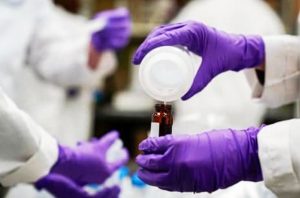
Laboratory Testing for PFAS CContamination
According to the Ghana Water Company Limited (GWCL), the state agency responsible for supplying tap water to urban areas, its systems served approximately 14 million people nationwide as of June 2024, through 84 water supply systems comprising 61 surface water and 23 groundwater sources. This figure represents nearly half of Ghana’s population, underscoring the scale of potential exposure to PFAS if the contamination is not addressed at the source or during treatment.
Health Risks: Risk Quotient Above Safety Threshold
Using the internationally recognized Risk Quotient (RQ) system to assess human exposure, the EPA calculated an RQ of 1.01 for PFOA and 1.74 for PFOS, both of which exceed the recommended safety threshold of 1.0.
“For a country that does not manufacture PFAS, the risk quotient raises significant concern, particularly about contamination from imported products,” the report warned.
PFAS in Ghana: Imported and Unregulated
Although Ghana does not produce PFAS, the EPA confirmed that these chemicals enter the country, often undetected, through imported goods. Products that may contain PFAS include firefighting foams, synthetic carpets, upholstered furniture, industrial surfactants, treated textiles, and food packaging materials.
The EPA noted that none of the local industries, such as cleaning product manufacturers, surfactant producers, paper and paint manufacturers, or the furniture and plastic sectors, were found to be producing items containing PFAS. However, the agency believes that PFAS contamination likely originates from the use of imported products and substances.
Industries most suspected of using PFAS-containing products include fire fighting services, mining, oil and gas, metal plating, photography, and food packaging sectors. The Ghana National Fire Service (GNFS) was identified as one of the key users of firefighting foam that may contain PFOS.
PFAS Contamination Sites and Usage Data
According to the EPA, contamination hotspots in Ghana include firefighter training grounds, fire scenes, foam storage facilities, and urban dumpsites. These locations are believed to have accumulated PFAS due to improper handling and disposal over the years.
The EPA’s inventory shows that approximately 26,833 kilograms of PFOS-containing firefighting foam were used during training exercises. This volume contained an estimated 134.17 kilograms to 402.50 kilograms of net PFOS. In actual fire incidents over the past 20 years, the EPA recorded an additional 118,588.15 kilograms of firefighting foam being used, potentially releasing between 592.94 kilograms and 1,178.82 kilograms of PFOS into the environment.
The agency stated that these chemicals likely entered the soil, groundwater, and public drainage systems, particularly given Ghana’s ongoing lack of waste segregation. The suspected contamination sites include stockpile storage areas, fire drill locations, fire scenes where large quantities of firefighting foam were used, and public landfill dumpsites across the country.
EPA Confirms Legal and Regulatory Gaps
Despite growing concern, Ghana lacks a specific legal framework to regulate or manage PFAS. The EPA acknowledged that although some chemical management provisions exist under Act 490 and Act 917, these are insufficient to address the complexity of PFAS contamination.
“There are no dedicated laws for the control and management of PFOS or PFAS in Ghana. A comprehensive framework must be developed to regulate the entire class of per- and polyfluoroalkyl substances,” the report emphasized.
The EPA is currently conducting a Tier III inventory to determine the extent of PFAS presence and to identify unknown stockpiles or affected sites. However, until that process is complete and legislation updated, enforcement remains limited.
EPA Official: Ghana Must Update Chemical Laws
In a follow-up interview with the Mr Joseph Edmund , Director of the EPA’s Chemicals, he confirmed to The Chronicle that PFAS have not yet been addressed under Ghana’s current waste laws, even though other substances like PCBs were banned in 2025.
Mr. Edmund explained that the newly listed POPs from the Stockholm Convention have yet to be incorporated into the national legal framework, but efforts are ongoing to identify these substances through inventories and revise the law accordingly. He noted that when it comes to hazardous pesticides, Ghana has banned all 12 originally listed under the Convention. PCBs have now been covered under the country’s waste laws, and once the full inventory of PFAS is complete—including source identification and quantity data—the law will be updated to include them.
Director Edmund confirmed that the term “tap water” used in the EPA’s report refers to treated water supplied by the Ghana Water Company. However, he could not confirm whether the Ghana National Fire Service (GNFS) is still using PFAS-containing foams, though he stated that the fire service was part of the initial inventory process and supplied data to the EPA. He recommended that The Chronicle follows up with GNFS for their current status.
When asked whether steps have been taken to prevent the importation of PFAS-containing products, Mr. Edmund said that while PCBs have been banned from entering Ghana, PFAS importation has not yet been formally controlled. He also revealed that the EPA has launched a project on waste segregation and disposal, but implementation at the local level remains inconsistent.
While segregation infrastructure exists in some places, compliance by the public has been low, and effective management remains a challenge that largely falls under the jurisdiction of local government authorities.
He further disclosed that the EPA identifies offshore companies and sources of POPs by reviewing global inventories compiled under the Stockholm Convention. These sources are then contacted for data, and quantities are calculated for national reporting. Funding for this work, he added, is provided by the Global Environment Facility (GEF), which supports all participating countries under the Convention.
Medical Officer Warns of Public Health Crisis
Dr. George Oduro, a senior medical officer at Komfo Anokye Teaching Hospital and lecturer at the Ghana College of Physicians and Surgeons, described PFAS as a serious and escalating danger to public health. He warned that without immediate action, Ghana risks exposing generations to irreversible harm.
Policy Recommendations from Medical Experts
Dr. Oduro urged the Government of Ghana to establish a national PFAS monitoring and regulatory framework. He called for increased funding for toxicological research and environmental testing, the launch of mass public education campaigns, and closer collaboration with global organizations such as the United Nations Environment Programme (UNEP), the World Health Organization (WHO), and the Organisation for Economic Co-operation and Development (OECD).
He highlighted UNEP’s Strategic Approach to International Chemicals Management (SAICM) as a key international platform Ghana should engage with.
He further recommended that the country adopt enforceable maximum contaminant levels for PFAS in both water and soil.
He also called for a nationwide ban on PFAS in consumer products, funding for PFAS remediation, and enforcement of the “polluter-pays” principle to hold industries accountable for environmental harm.
Health Dangers: Who Is Most at Risk?
Dr. Oduro identified vulnerable populations as pregnant women, who face risks of fetal developmental complications, infants and children who may suffer from impaired growth and immune system suppression and people living near contaminated sites who face elevated risks of chronic disease and cancer. Immune compromised individuals are also at higher risk for severe PFAS-related health effects.
He explained that PFAS disrupt hormonal systems, particularly the thyroid, and cause liver damage, elevated cholesterol levels, and weakening of the immune system.
They can impair vaccine responses and increase the incidence of asthma, cancer, and reproductive complications such as infertility and menstrual irregularities. PFAS exposure is also linked to delayed puberty, cognitive deficits, and behavioural disorders in children, as well as serious diseases such as cardiovascular complications and cancers of the kidney, testicles, and pancreas.
How the Public Can Reduce PFAS Exposure
To reduce exposure, Dr. Oduro advised the public to avoid stain-resistant and water-resistant products, limit consumption of fish from contaminated water bodies, use PFAS-removing filters for drinking water, and choose PFAS-free cosmetics and personal care products. He also advocated for improved product labelling to help consumers make safer and informed choices.
Section of Public Reaction
Speaking to some residents of Kumasi, Ama Josephine told The Chronicle that she had no idea what PFAS was and had never come across the term. To her, “it was Greek,” and she requested further information since it was something she had never heard of.
Sharing similar sentiments was Daina Bemah, a trader, who also said she had absolutely no knowledge of PFAS or the potential dangers it poses to human health. She further called on the state to intensify public education on the “rampaging effects” of PFAS on the population.
In an interaction with an authority at the Ghana National Fire Service (GNFS)—who spoke to The Chronicle on condition of anonymity,he explained that the Service, in relation to its operations, has no formal knowledge of PFAS.
He noted that the GNFS would need further briefing on PFAS and its possible effects, especially regarding the foam the Service uses in its work.
Conclusion: Ghana Must Act Now
PFAS—chemicals known for their environmental persistence, pose an escalating threat to public health in Ghana. Although the country does not produce these compounds, PFAS contamination is now evident in rivers, tap water, and waste streams.
The EPA’s findings underscore the urgent need for comprehensive legal, scientific, and public health action to prevent further contamination and protect future generations from irreversible harm.
Few summer treats are as delightful or as healthy as watermelon. One of the most refreshing snacks available for a hot day, this fruit has long been popular for its sweet flavor and juicy flesh. Part of the plant family Cucurbitaceae, watermelon is highly cultivated.
There are currently more than 1,000 varieties available. Historians disagree as to the origin of the fruit, although many point to various regions in Africa. Experts agree that humans have enjoyed the fruit for thousands of years, as seeds have been found at a Libyan settlement built 5,000 years ago.
Today, well over half of watermelons are grown in China. Other regions that produce impressive yields tend to have long growing seasons and warm climates. Regardless of these conditions, the fruit is enjoyed as a snack or in several meals all around the world.
Health Benefits
Watermelon is rich in a variety of vitamins and antioxidants. For example, it contains the compound lycopene, which is important for heart health and may protect the skin from UV damage.
Other benefits attributed to eating watermelons include:
Improved Exercise Outcomes
Watermelon is an excellent source of an amino acid known as citrulline. Studies suggest that this amino acid may assist with muscle protein synthesis while also improving muscle mass and otherwise boosting exercise performance. These benefits are most notable in older adults who supplement with citrulline.
Better Immune Function
The citrulline found in watermelon is linked to immune health. Citrulline deficiency may impact immune response in those with inflammatory conditions such as sepsis.
Improved Cardiovascular Health
Research suggests that supplementation involving watermelon extract may reduce ankle blood pressure. Ankle blood pressure can serve as a predictor of cardiovascular mortality.
Reduced Risk of Macular Degeneration
The vitamins A and C found in watermelon may help to reduce the risk of age-related macular degeneration.
Nutrition
Watermelon is rich in vitamin C, which plays an integral role in forming collagen and helping the body absorb iron. It also has a high water content even compared to other fruits. This makes it a uniquely hydrating food.
Things to Watch Out For
Although watermelon has many important vitamins, it is also high in sugar. This can make it a problematic choice for those with diabetes or anybody else trying to control blood sugar levels. Additionally, the high lycopene content in watermelon may be troublesome when drinking alcohol. Consumed together, they can cause liver inflammation.
How to Prepare Watermelon
Watermelon can be found in most grocery stores, health food stores, co-ops, and farmer’s markets. Many pick-your-own fruit farms provide the opportunity to select and harvest watermelons.
Some people prefer to grow watermelon in their own gardens. The fruit grows best in warm or hot climates. Success in growing watermelons is also more likely if the plants receive plenty of space and water.
When purchasing watermelon at the store, select one that feels heavy for its size. Look for a creamy yellow splotch, formed wherever the watermelon previously rested on the ground.
Many people use a knocking technique to determine watermelon ripeness. Under this method, the fruit should produce a hollow noise instead of a dull thud.
While watermelon is best enjoyed when sliced fresh and eaten on the spot, you can also add it to a variety of recipes. Feel free to give these ideas a try:
Create a watermelon puree and add to molds to be frozen to form a healthy alternative to popsicles
Add frozen watermelon to a smoothie with banana, yogurt, milk, and any other fruits you desire
Include watermelon on sandwiches with mozzarella cheese or even bacon.
Add watermelon to a fresh fruit salad with pineapple, blueberries, and cherries
Create a memorable Mediterranean salad with watermelon, cucumbers, Feta cheese, and red onion
Pair watermelon with prosciutto for a delicious snack
Lately, under whatsoever policy, Vehicle Manufacturing/Assembly plants have inundated our automobile landscape – that is good news.
However my ‘peaceful’ worry and concern are; from my layman’s point of view, most products therefrom are not tailored to fit unto our roads landscape and architecture.
A typical example are the tipper trucks whose width exceeds that prescribed by law, that is 2.55 metres – (Regulation 50 (1) (a) of LI 2180). The height of their buckets being six feet high. The nauseating part is that, some have inched the bucket’s height further via an additional metal layer translating into additional weight – its implications on the health of the road infrastructure is pregnant. l sighted two of such tipper trucks that had tipped building materials for the completion of the Law House in Accra. The interval between the duo on the dual carriage road on the Court complex stretch was a hair’s breath, just imagine.
On the N1 Highway some time back, I sighted a five (5) axle tipper truck whose width and height of its bucket attracted my curiosity. When we were caught up in traffic, I took a closer look at the features of same. Wao, its tyre rim size was twenty four (24). Again, I am a layman but believe such rim sizes are definitely not in tune with our Highways code but for industrial enclaves, but here it was, traversing the N1 stretch at top speed as if nothing was at stake.
ARTICULATED TRUCKS
Again, on our road landscape are articulated trucks whose overall length exceeds sixty (60) feet or eighteen (18) metres prescribed by our laws (Regulation 50 (5) (b) of LI 2180).
These again, are manufactured/assembled in Ghana. In fact, some of the trailers standing alone are 60 feet plus. They load in terms of height over and above that stipulated by law which is 4.5 m and, in some instances, chisel the underneath of bridges to make way. A typical victim is the Achimota overhead bridge which has had some of its iron railing exposed.
I am not oblivious of erring trucks from our landlocked neighbours which have been left to go berserk for whatever reason(s). Who can blame them when our compliance and enforcement laws are let loose.
Not quite long, I sighted a Press release from the Ghana Police Service admonishing MTTD personnel never to poke their noses into whatever road infractions these foreign registered trucks may be involved in, yah, selective policing. Indeed, the circular assigned alleged harassment of these trucks as the reason.
BULK OIL TANKERS
Added are bulk tankers, again, manufactured/assembled in Ghana under this policy ferrying over 60,000 or more liters of petroleum products in a single haul traversing our road landscape. They look like wounded lions when sighted on our perilous road, and as if to tell other motorists and road users to “give way to traffic”.
NINE AXLES ON A SINGLE CHASSIS
As if there are no laws on and of roads, the present trend *is* the emergence in the fleet equation, single chassis trucks, some well over 60 feet with a maximum of nine (9) axles. My beef is, save the first two axles under or near the tractor head which ‘articulates’ when these objects are negotiating curves, the rest are fixed like the North Poles and impact adversely on the road surface when negotiating curves. Typical examples of its effect are the extent of destruction to the road infrastructure at Apenkwa in Accra, specifically the branch/junction that leads to N1 Highway to connect the Tema Motorway.and at the Achimota Police station intersection, all in the capital, Accra.
WHAT LI 2180 SAYS THEREON
Regulations 75 (2) of L.I. 2180 states, “A person shall not use a trailer on the road unless the trailer is registered and licensed separately by the Licensing Authority”.
The framers of the law foresaw the above menace thus inserted this provision to cure same. This has been thrown to the dogs by the very body (DVLA) charged to ensure compliance and enforce same for reasons best known *to* them.
It might interest readers to know and learn that DVLA in one of its press releases on the subject matter gave very porous and unconvincing defence for their action and inaction thereon – that these alterations or whatever, are carried out after they have registered/licenced same. My question is, since Road Use Certification is carried out every six months, does DVLA mean to suggest that these trucks are refabricated every six months? Not surprising that they have relegated their regulatory role and embraced the cash cow ideology wholeheartedly.
PRAGYA/ABOBOYAA MENACE
Another worrying trend is the emergence of Pragya. These motorised objects have killed and maimed thousands and continue in that spree – WHO CARES? They operate on our road networks as if they are on a different planet, yah, disregarding all known and unknown road laws including common sense.
Its sister, tricycles (Aboboyaa), are no better. Their driving mirrors are only symbolic and serve no useful purpose in the Road Safety equation. They are fixed on same for name sake as these mirrors do not project beyond the outside edge of their buckets making it virtually impossible for the rider to view the rear when the bucket is stuffed.
WEIRD BUSES ON THE SCENE
Nor is it all for the height of some buses recently introduced on our road network in relationship to their length and width calls for some introspection thereof.
Cases abound where some of the aforementioned buses have fallen on their sides like match boxes turned on their sides. There have been such incidents at Juaso, Konongo and that of the STC bus ferrying students to school in Cape Coast that fell on its side at the outskirts of Kasoa.
Interestingly, we have bodies such as the National Road Safety Authority (NRSA), Ghana Standard Authority (GSA), National Security and DVLA, among others, who ought to have nosed these infractions in their embryonic stage to avert same festering but have jointly and severally slept and continue to sleep on the job.
They need to wake up from their deep slumber and to subject these buses to some stability tests vis -a -vis what our roads can accommodate in the public interest. Per this piece, they are jointly put on effective notice.
HANGING AXLES OF CLINKER-FERRYING TRUCKS
The mother of all road sins are trucks ferrying clinker from the Ports of Tema and Takoradi and again, ferrying quarry dust/chipping, a vital ingredient of cement production from the quarry sites to their respective factories.
In both cases, after loading and checking in at the various weighing bridges for certification, they immediately hang the first two axles of the trailers. The net effect is, instead of the load therein being distributed evenly amongst all the axles, the remaining axles are compelled to shoulder the load. This action and inaction of these cement manufacturers who are mainly foreigners and shall not ever think doing the same in their home countries culminates in the destruction of our roads.
Very worrying spectacle as these hanging axles which are commonplace and have adverse effects on our road infrastructure are let loose with none caring a hoot.
Recall reading a Ghana Highways Authority (GHA) manual some years back which seems to suggest that our roads are not designed for any motorized object to negotiate a curve with a speed exceeding 80km/h among others.
In short, roads are built to specifications – it is not a free for all weight roads as is happening presently on our road networks with none caring a hoot.
It is very disheartening seeing the volumes of the tax payers monies pumped into such infrastructure only to be wasted away by the ineptitude of those charged to safeguard same – GHA, Department of Urban Roads (DUR), Department of Feeder Roads, NRSA, Driver, Vehicle & Licencing Authority (DVLA), and most importantly, National Security.
As things stand now, it seems no one is in charge. Indeed if the above are not addressed, we must equally forget investing in road infrastructure. Axiomatically, it is akin to fetching water with a cane basket, yah, we built only to destroy- who cares?
Written by Osei Kwabena Esq, Etia Street, Asante Effiduase
Liverpool players are set to report for preseason training on Tuesday, following the death of forward Diogo Jota, a source told ESPN.
Jota, 28, and his brother André Silva, 25, were killed in a car accident in northwest Spain last week. Liverpool boss Arne Slot and a number of the first-team squad attended the brothers’ funeral in Gondomar, Portugal, on Saturday.
Some players had initially been due to report for preseason testing last Friday, however those plans were postponed in light of Jota’s passing.
It is now expected that the squad will report at the AXA Training Centre on Tuesday as they begin to gear up for the new campaign.
The Premier League champions are scheduled to play a preseason friendly against Championship side Preston North End at Deepdale on Sunday, however it is uncertain at this stage whether the game will go ahead.
In a statement, Liverpool described the brothers’ death as an “unimaginable” loss. Captain Virgil van Dijk said he was “absolutely devastated and in total disbelief.”
Saudi Pro League side Al Qadsiah has announced the signing of Ghana international Christopher Bonsu Baah from Genk, with his official unveiling slated for Wednesday, July 9, 2025.
The 20-year-old winger has inked a four-year deal that will tie him to the club until 2029, after a lucrative agreement worth over €15 million from Belgian outfit KRC Genk.
Sources close to the matter indicate that while the Ghanaian forward is committed to Al Qadsiah in the short term, a return to European football in the coming seasons remains a possibility, given his tender age and development trajectory.
Bonsu Baah’s rise has been phenomenal. After trial stints with European powerhouses such as Barcelona, Manchester United, and Borussia Dortmund, his breakthrough came in March 2023 when he joined Norwegian top-flight side Sarpsborg from Ghanaian third-tier club Shooting Stars. Just 12 matches into his stint in Norway, Belgian side Genk snapped him up, beating several European clubs to his signature.
Over two seasons with the Belgian outfit, he made 90 appearances in all competitions, registering five goals and seven assists.
Now widely regarded as one of Ghana’s most exciting young prospects, Bonsu Baah recently earned his first senior caps for the Black Stars in international friendlies against Nigeria and Trinidad and Tobago.
Bonsu Baah is set to team up with Black Stars striker Jerry Afriyie, who is expected to return to the club after his loan stint with Spanish outfit FC Lugo concludes.
The young Ghanaian is expected to join Al Qadsiah’s pre-season tour in Holland on July 9, where he will likely make his debut against Belgian side Saint Truiden.
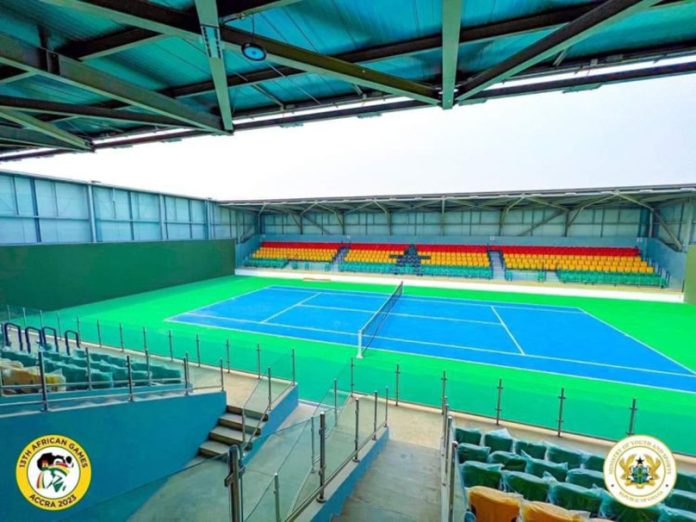
Minister of Sports and Recreation Kofi Adams has stated that there are more facilities that need to be added to the existing facilities at the Borteyman Sports Complex.
He said this while interacting with the media after touring the multi-purpose facility that formed part of the facilities that hosted the 2023 African Games.
“There are a few more things that must be added. Hostels would have to come on board, maybe some other pitches would have to be added, a hospitality section, some category of accommodation would also have to be added” Kofi Adams said.
Poor maintenance has been a problem to sports infrastructure development in Ghana.
Chairman of the Asante Kotoko Interim Management Committee (IMC), Nana Apinkrah has requested for support from the government as the club prepares for its African journey in the 2025/26 CAF Confederation Cup.
Following their triumph in the Ghana FA Cup competition, the Porcupine Warriors has earned a spot to participate in the CAF second elite club competition next season.
The 2025/26 Confederation Cup campaign will begin in September with the first round of matches scheduled for the weekend of 19th to 21st. Meanwhile, the fixtures for the round will be done in the coming weeks with clubs expected to begin preparations immediately.
Kofi Adams, who is the Minister for Sports and Recreation stormed Kotoko’s dressing on Sunday following their President Cup success over Hearts of Oak and motivate them heading into the Confederation Cup.
However, Nana Apinkrah seized the opportunity and appealed to the government through the Sports Minister for support for their African campaign.
“The journey to Africa is very long and a very tough one. We will need your utmost support not only your personal support, but through you to the government to aid us, as we go forward on the African mission and also to help our league. I have been to other places recently in South Africa and I can say they have support and sponsorships” he said.
Having triumphed over Hearts, the Porcupine Warriors are expected to travel to South Africa for the Toyota Cup game against Kaizer Chiefs, as part of preparations for the African campaign.