Home Blog Page 707

Volta Regional Minister urges stakeholders to Embrace Feed Ghana initiative   

0
Mr James Gunu, Volta Regional minister addressing the assembly members

Mr James Gunu, the Volta Regional Minister, has called on religious bodies, institutions, and individuals to actively participate in farming as part of efforts to support the government’s “Feed Ghana” initiative and livelihood enhancement in the region.

He made the call on Monday when he received the Feed Ghana team, led by the National Coordinator Mr Bright Demordzi, at the Volta Regional Coordinating Council in Ho.

The team was in the Region to engage stakeholders and sensitize them on the objectives and opportunities within the programme.

Describing the Volta Region as a potential agricultural powerhouse, Mr. Gunu noted that the region was endowed with over 22 irrigation dams, many of which had been abandoned for years.

He emphasized that the rehabilitation and proper utilization of these facilities could significantly improve food production and enhance livelihoods across the Region.

“I encourage churches, institutions, and individuals to take up farming. Together, we can reduce our dependence on food imports, curb social vices, and transform our economy—starting from the grassroots,” the Minister stated.

He expressed optimism that the Feed Ghana initiative, if effectively implemented in the Volta Region, would not only promote food security but also create employment and foster sustainable development.

Mr Bright Demordzi pledged the leadership’s commitment to working closely with the Minister to bolstering agriculture in the region for improved livelihood sustainability.

The “Feed Ghana Programme” is a flagship initiative launched by the government to modernize and transform the agricultural sector. It aims to boost food production, create jobs, reduce food inflation, and strengthen the agro-industry. The programme is part of the broader “Agriculture for Economic Transformation Agenda” (AETA).

The programme focuses on modernizing farming practices, improving infrastructure, and promoting the adoption of new technologies.

It aims to increase local food production to ensure food security and reduce reliance on food imports and also designed to create numerous jobs in the agricultural sector, including farming, processing, and agribusiness.

From Kekeli K. Blamey, Ho      

GNA 

Court dismisses Prof Ameyaw Akumfi’s plea to halt proceedings

0
Court Complex

The Criminal Division 4 of the High Court in Accra, presided over by Her Ladyship Justice Comfort Tasiame, has dismissed an application by lawyers for Prof. Christopher Ameyaw-Akumfi, the former Board Chair of the Ghana Infrastructure Investment Fund (GIIF), seeking to halt proceedings in the ongoing criminal case against him and co-accused Solomon Asamoah.

The defense team for Prof. Ameyaw-Akumfi (2nd Accused), represented by Duke Aaron Sasu, had filed a motion requesting the Court to stay proceedings pending the hearing of a constitutional reference by the Supreme Court.

The motion, set for hearing on July 9, 2025 also sought to strike out the charges as premature and in breach of a legal condition precedent, as well as to refer constitutional questions relating to the Public Property Protection Decree, 1977 (SMCD 140) and Articles 19 and 296 of the 1992 Constitution to the Supreme Court.

However, when proceedings resumed yesterday, counsel for the 2nd Accused attempted to have the ongoing Case Management Conference (CMC) halted in light of the pending motion.

Justice Tasiame declined the request, stating that the application had not yet been served and, therefore, could not affect the conduct of the day’s business.

“You’ve been overruled. We’ll continue with the CMC,” she ruled firmly.

Day’s Business

Chief State Attorney Sefakor Baatse informed the court of changes to the prosecution’s witness list. She formally withdrew the witness statements and exhibits filed on June 3, 2025 by Staff Officer Francis Aboagye and replaced them with a revised version filed on June 10.

Additionally, the prosecution withdrew the witness statements of Seth Nana Kwame Osei, Benjamin Nartey Abrokwa, Reginald Okai and Chief Inspector Kesse Akrasi, indicating they would no longer rely on these witnesses during trial.

Counsel for the 1st Accused, Edem Nuhoho, raised no objections to the updated statement of Francis Aboagye but requested further particulars on the withdrawn statements, noting that documents filed under “Submission of Documents” included witness statements critical to the trial.

Justice Tasiame then struck out all withdrawn witness statements from the court’s record.

However, Madam Baatse announced that the prosecution intends to call eight witnesses including; Yaw Odame Darkwa, Kofi Boakye, Andrews Agyenim Boateng, Maame Efua andKyerewa Ababio.

The rest are Yvonne Adoley Sowah, Hon. TweneboahKodua, Cecilia Gambriah and Staff Officer Francis Aboagye.

She also addressed concerns raised by the defense regarding the organisation of the prosecution’s documents, assuring the Court that the integrity of the original filings had been maintained, and pledged to re-serve the documents within 48 hours.

Defense counsel for the 2nd Accused, Duke Aaron Sasu, acknowledged the prosecution’s efforts but insisted on an adjournment to allow proper review of the updated witness statements and associated documents. He stressed their fundamental importance to the defense’s preparation.

Justice Tasiame, while acknowledging the defense’s concern, denied the adjournment request, stating, “The prayer for adjournment isn’t in line with the purpose of the CMC.”

She ordered the prosecution to present the required documents to counsel for A2 within 48 hours.


The matter was subsequently adjourned to July 9, 2025 at 10:00 a.m., when the Court will hear arguments on the pending motion filed by counsel for the 2nd Accused.

Yaa Simpson pleads with Supreme Court: Remove Kofi Boakye from Police Council

0
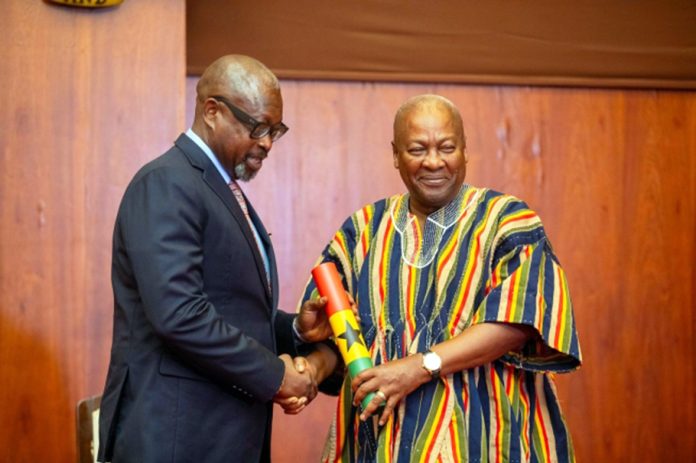
President Mahama (r) appointing COP (rtd) Nathan Kofi Boakye as a member of the Ghana Police Council

Henrietta Nana Yaa Simpson, a Ghanaian businesswoman and prominent gender activist, has filed a suit at the Supreme Court, seeking the removal of retired Commissioner of Police (C.O.P) Nathan Kofi Boakye, from the Police Council.

Through her lawyer, Alexander K.K. Abban, Esq., Nana Yaa Simpson is challenging the legality of Mr. Kofi Boakye’s inclusion on the Council, arguing that it contravenes constitutional provisions and undermines legitimate gender representation efforts.

The suit, which also names the Police Council and the Attorney-General and Minister for Justice as the 2nd and 3rd defendants respectively, centres on the process by which the representative of the National Association of Retired Police Officers is nominated to serve on the Council.

Madam Simpson, known for her advocacy on gender equality in security services, brings the case as a citizen under Articles 2(1) and 130(1) of the 1992 Constitution, claiming constitutional violations in the appointment process.

She argues that ACP (Rtd.) Florence Arthur, a female retired officer and former presidential candidate of the National Association of Retired Police Officers was the rightful nominee, but was unfairly sidelined.

According to the plaintiff, Mr. Kofi Boakye’s appointment was a unilateral act by the President of the Republic and not a decision made by the Association, as required by Article 201 clause (f) of the Constitution and section 10(f) of the Police Service Act, 1970 (Act 350).

Betrayal of Biblical Proportion

In a particularly scathing section of the court filing, Nana Yaa Simpson accuses Mr. Kofi Boakye of “betrayal of biblical proportions,” likening his actions to those of Judas Iscariot.

She alleges that when ACP (Rtd.) Arthur became aware of efforts to block her from the Council, she confided in Mr Kofi Boakye, who offered assurances of support, only to later take up the seat himself.

Legal Reliefs Sought:

Among the nine declarations and reliefs sought from the Supreme Court, Nana Yaa Simpson is asking for:

A declaration that ACP (Rtd.) Florence Arthur qualifies as a senior police officer under the law;

A declaration that only the National Association of Retired Police Officers, through its executives, has the authority to nominate a representative to the Police Council;

A finding that the President’s appointment of Mr. Nathan Kofi Boakye violates Article 201 and is, therefore, unconstitutional, null and void.

An order for Mr. Kofi Boakye’s removal from the Council and his replacement with ACP (Rtd.) Florence Arthur;

A declaration that the exclusion of Arthur on the basis of her rank and gender is discriminatory under Article 17 of the Constitution.

Constitutional Clarifications Sought

Henrietta Nana Yaa Simpson’s legal team is also asking the Court to provide interpretive clarity on the term “senior police officer,” urging that it be defined to include any officer of or above the rank of Assistant Superintendent of Police (ASP), thereby qualifying Arthur.


(The Art of Finding Work) Being a Low-Risk Candidate Is More Important Than Being Qualified

0
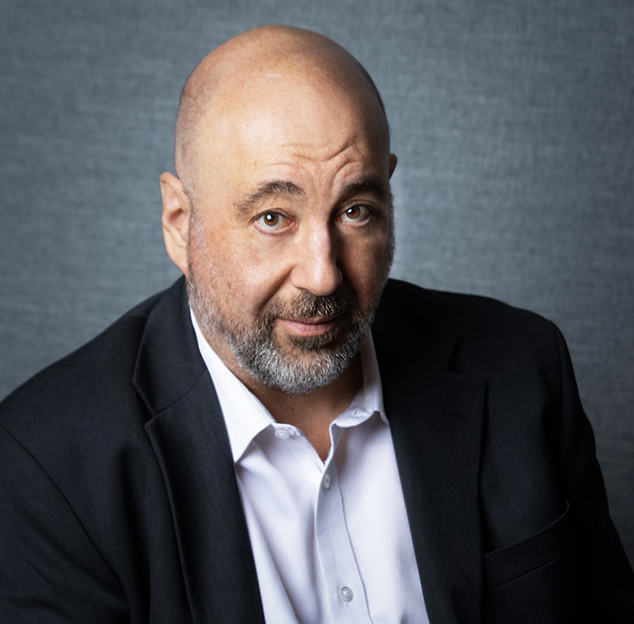
Nick Kossovan - the writer

As I write this, C-suite executives across all industries are holding boardroom meetings discussing how to run their company “leaner,” resulting in being the major influencer why today’s job market being is drastically different from just a few years ago, in which:


  • There are fewer job openings
  • More candidates are applying
  • Resumes are being written and filtered by AI
  • Applications take place through online portals
  • Hiring processes start with automated screenings
  • Budgets are tighter
  • Expectations are higher
  • Hiring processes are slower (read: more cautious)

These factors, along with many others, are responsible for today’s fiercely competitive job market, where every impression you make can either enhance or undermine your job search. If recruiters and employers aren’t reaching out to you, it’s not because you’re unqualified or overqualified; employers’ ATS are filtering you out, or whatever excuse you’re telling yourself—it’s likely because you’re considered a high-risk hire.

From the employer’s perspective, a key component in hiring decisions, a high-risk candidate is someone they believe will be challenging to manage or a potential flight risk. High-risk red flags include, but are not limited to:


  • Being overqualified
  • Showing a sense of entitlement
  • Having a long commute
  • Exhibiting health issues
  • A controversial digital footprint (Employers will Google you and check your LinkedIn activity.)

Conversely, a low-risk candidate is someone whom the employer feels will be dependable, fit within the current team and company culture and has a track record of delivering results. In other words, employers say “yes” to candidates who instill confidence that they’ll fit seamlessly into their workplace and contribute positively from day one.

Job seekers would greatly benefit from empathizing with employers’ risk aversion—Plato called empathy the highest form of human knowledge—and acknowledging that hiring is a gamble, and employers wanting to avoid, as much as possible, mis-hiring is understandable.

If your job search isn’t progressing as you’d hoped, reflect on whether you’re conveying the impression of being a high-risk candidate and consider if any of the following strategies might enhance your job search.


Highlight Your Stability

Because I always have “the itch,” my career history lacks any long-term employment stints, which I define as at least 10 years with the same employer. However, I know many individuals who have a record of stable employment. From an employer’s perspective, stability is impressive; it’s not often seen in candidates. Stability indicates that you’re reliable and unlikely to leave at the first sign of trouble or for a few extra dollars—you’re not a flight risk.

Capitalize on any long-term employment experience you have. Be sure to clearly state the start and end dates (month/year) in your resume, LinkedIn profile and during interviews. (e.g., “During my 12 years at Wonka Industries, as head of their products launch initiatives, I…”)


Demonstrate Problem-Solving Skills

Employers value candidates who can identify and solve problems efficiently. Showcase instances where you’ve tackled challenges head-on and delivered tangible results.

“When Green Brews faced a significant drop in online traffic, which naturally negatively impacted sales, I initiated a targeted campaign that resulted in a turnaround along with an additional 20% increase in traffic within three months.”


Provide Social Proof

I’ve had candidates who were hungry and eager bring with them past performance reviews, productivity reports, and reference letters as proof that I could trust them. Leveraging testimonials and endorsements from former supervisors and colleagues is something job seekers hardly ever do, yet social proof is an effective way to support your claims and appear trustworthy.

These days, there are so many unscrupulous individuals in the job market that it’s challenging for interviewers to answer the question in the back of their mind, “Can I trust this person?” Offering social proof of your past performance helps to answer this unspoken question.

“My last manager noted in my performance review that I was the go-to person for resolving client issues.” Then, to substantiate your claim, hand over the performance review and tell a STAR (Situation, Task, Action, and Result) story of when you resolved a client issue.


Express Enthusiasm and Willingness to Learn

The lowest-hanging fruit to getting hired: Show enthusiasm!

As someone who’s hired enthusiastic candidates over more “paper-qualified” candidates, trust me when I say that enthusiasm can, to some extent, compensate for any weaknesses or slip-ups made during the interview. Employers seek candidates who will be committed to working for them beyond just the paycheck and benefits. Therefore, they tend to gravitate toward those who convey that they’ll be dedicated, have an eagerness to grow, will be open to feedback—easy to manage—and likely won’t create friction.

When interviewing, express enthusiasm by focusing on your verbal and non-verbal cues, such as maintaining eye contact, speaking with an engaging tone, smiling sincerely, leaning in, nodding, and using hand gestures. Additionally, ask well-thought-out questions, highlight relevant experiences, and convey genuine interest in the opportunity.

In 2025, the key to getting hired isn’t to primarily focus on your qualifications; it’s to focus on ensuring employers see you as a safe and reliable hire.

By Nick Kossovan

Nick Kossovan, a well-seasoned corporate veteran, offers “unsweetened” job search advice. Send Nick your job search questions toartoffindingwork@gmail.com

Editor’s note: Views expressed in this article do not represent that of The Chronicle

Editorial: Kudos To GTEC For Fighting Fake Doctorate & Professor Titles

0
Editorial

The Ghana Tertiary Education Commission (GTEC) has stated that its directive on the usage of the honorary ‘Doctor’ title is to sanitise the system and give honour and recognition to true academic title holders.

The Director-General of the GTEC, Professor Ahmed Jinapor, explained that historically, Ghana had been known for its high standards in quality tertiary education and delivery where higher education credentials such as doctorate and professorship were obtained.

“So, if we do not put a check on this wanton use of unearned academic titles, then every Ghanaian, through whatever means, will be called a doctor or a professor, and Ghana will become a laughing stock. We cannot allow that to happen,” he stressed.

Prof. Jinapor said honorary academic titles should not be captured on a curriculum vitae (CV), adding that the worst of all was when such individuals put an honorary doctorate under educational achievements.

Recently, GTEC has been on the path to purge the system of honorary doctorate and professorship as titles. It has so far written to some individuals to stop using their honorary academic titles after general warnings. People in academia, especially, have welcomed the move to sanitise the space.

In recent years, the honorary “Doctor” title has been cheapened by excessive, and often fraudulent, conferment by unaccredited institutions and organizations.

Politicians, entertainers, businessmen and even pastors have been showered with these titles, many of whom proudly prefix “Dr.” to their names in public spaces, social media and official documents — without having gone through the intellectual rigour that defines the attainment of a PhD or similar degree.

This is not to undermine the symbolic value of honorary degrees. Globally, reputable institutions occasionally bestow such honours to individuals who have made significant societal contributions.

However, even in those instances, the recipients do not typically use the title “Doctor” in official or professional capacities. Here in Ghana, we can cite the late former President Jerry John Rawlings as an example. Though he was awarded an honorary doctor’s degree, he never used the title until his death.

In our view, the misuse of honorary titles in Ghana can have far-reaching implications. Firstly, it may undermine the achievements of scholars who have spent years in academic trenches conducting research, defending dissertations, publishing peer-reviewed work and contributing to knowledge production.

Their hard-earned “Doctor” title becomes indistinguishable from those handed out in weekend ceremonies by dubious organizations.

Secondly, this trend erodes public trust in academic institutions. When unqualified individuals use academic titles to build credibility, especially in sectors like politics, health or religion, it leads to misinformation, misplaced authority and in some cases, outright fraud. For instance, the public may be misled to follow a “Dr.” who has no medical or scientific training, but presents himself as an expert.

Moreover, the global reputation of Ghana’s academic system is at stake. The proliferation of honorary titles without regulation paints a picture of a country where titles can be bought or gifted, rather than earned. This devalues Ghanaian degrees in the international arena and may ultimately affect global collaborations, research funding, and institutional rankings.

What GTEC is pushing for is not punitive but it is corrective. Ghana needs to build a culture where academic honesty and intellectual achievement are celebrated without dilution. Honorary titles can still be given as a form of commendation, but recipients must understand the boundaries of their use.

This also calls for wider public education. Media houses, event organizers and professional associations must be sensitised to recognise and respect the difference between honorary and earned academic titles. Employers should scrutinise CVs and public institutions must reject documents that misrepresent honorary awards as educational qualifications.


Investment in Health Sector Key to Combating Non-Communicable Diseases – Imperial Scholar

0
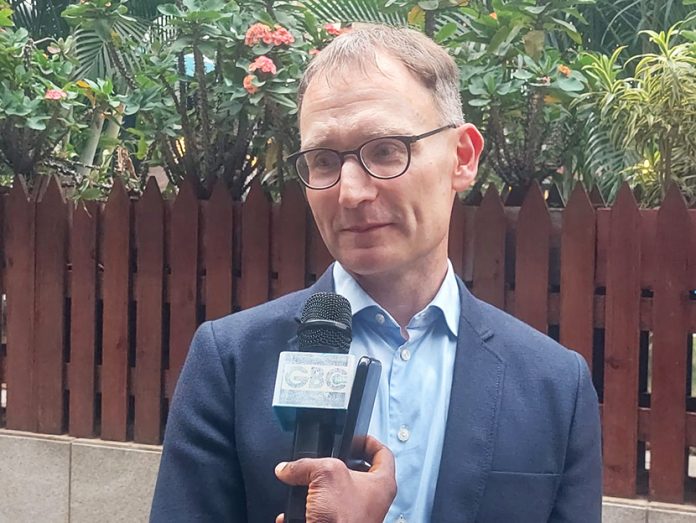
Prof. Neil Ferguson speaking to the media

Professor Neil Ferguson, Director of the School of Public Health at Imperial College London, has urged Sub-Saharan African (SSA) countries, including Ghana, to significantly increase investment in the health sector to effectively tackle the growing threat of non-communicable diseases (NCDs).

Speaking to journalists in Accra during a visit to Ghana recently, Prof. Ferguson emphasized that improved cancer diagnostics, cardiovascular care and surveillance systems are critical to reducing the burden of NCDs, which are steadily rising as life expectancy improves and child mortality drops.

“Historically, Sub-Saharan Africa had the highest burden of infectious diseases. But in the last 20 years, we have seen a dramatic decline in this, especially among children,” he said adding “As a result, non-communicable diseases like diabetes, heart disease, and cancer are now on the rise, and governments need to respond with targeted health investments.”

Prof. Ferguson noted that SSA is lagging behind Latin America and Southeast Asia in terms of demographic transitions, such as declining birth rates and aging populations. In Ghana, for instance, he observed a sharp increase in the over-40 population, which corresponds with rising rates of stroke, obesity, and cardiovascular diseases.

“Improvements in nutrition are welcome, but over-nutrition and sedentary lifestyles are contributing to growing obesity and NCD risks,” he added.

Call for Sustainable Health Gains

Prof. Ferguson warned that while Ghana has made commendable gains in reducing child mortality, partly due to international donor support, those gains are at risk without long-term domestic investment.

“You don’t want to lose those gains, as Ghana’s economy grows, so must its investment in healthcare systems. National Health Insurance and improved health services have provided a good base, and I’m optimistic Ghana can sustain this progress.”

Male Fertility Decline and Environmental Concerns

Touching on fertility concerns, Prof. Ferguson referenced studies showing a significant decline in global sperm counts over recent decades. While he clarified that he is not a fertility specialist, he pointed to environmental hormone-like substances, poor nutrition and lifestyle factors as potential contributors.

“Restricting exposure to such hormone-disrupting chemicals in the environment could be a good start,” he noted.

Imperial’s Role in Vaccine Research and AI

Prof. Ferguson, who also leads the Vaccine Impact Modelling Consortium, explained that his visit to Ghana was linked to the Consortium’s efforts to assess the global health impact of vaccines. Supported by the Wellcome Trust, Gates Foundation, and GAVI, the $20 million project is helping governments optimize vaccination strategies.

He reaffirmed Imperial’s commitment to vaccine development, including mRNA and cancer vaccines, and highlighted ongoing partnerships with Ghana to build local research and manufacturing capacity.

Additionally, he announced that Imperial’s Global Ghana Hub, through the Schmidt Foundation, is sponsoring Ghanaian students to pursue AI research in public health at Imperial College.

“AI is transforming research productivity. We’re using it not just in infectious diseases, but also in non-communicable disease research,” he said.

Fighting Vaccine Hesitancy

On vaccine hesitancy, which he admitted is rising globally, Prof. Ferguson advocated for a more inclusive, trust-based communication strategy.“People tend to trust their local healthcare providers more than external voices. We need to empower local actors to lead vaccine advocacy,” he suggested.He called for a sustained public engagement campaign to counter misinformation, especially on social media.

Local Response: Ghana Must Mobilize Internal Resources

Also speaking to the media, Dr. Frances Baaba da-Costa Vroom, Senior Lecturer at the University of Ghana’s School of Public Health, said Ghana must re-strategize in the light of declining donor support for healthcare.

She welcomed the recent uncapping of the National Health Insurance Fund, saying it provides an opportunity to reallocate tax revenues to health priorities like vaccination and family planning.

“It may not be popular, but realigning tax policies to directly support healthcare could help us sustain progress. Transparent use of these funds will be essential.”

Dr. da-Costa also called for increased deployment of technology, including telemedicine, and emphasized the need to harness health data for targeted interventions.

“We are generating a lot of data through NHIS and other systems. Let’s build capacity in data science and use this to guide interventions instead of spreading resources too thin,” she said.

Resurgence of COVID-19 Cases On UG campus

0
University of Ghana (UG)

The Health Services Directorate of the University of Ghana (UG) has issued a public caution following a resurgence of COVID-19 cases on campus.

Following, the Directorate has reactivated its COVID-19 Response Protocols, including screening at UG’s health facilities aside close monitoring of the situation to be followed by regular updates.

A statement issued by the Directorate, and sighted by The Chronicle, reads: “The Health Services Directorate would like to inform the University community of a recent resurgence in COVID-19 cases, with a few suspected and confirmed cases reported in our immediate vicinity.”

In light of the development, members of the university community (staff, students, and visitors) are being urged to remain vigilant and strictly adhere to preventive measures to help reduce the risk of infection and community spread.

The Directorate emphasized the need for proper wearing of face masks, especially in enclosed or crowded spaces, as well as regular hand hygiene.

“Wear face masks properly, especially in enclosed or crowded spaces; wash hands frequently with soap under running water, or use alcohol-based hand sanitizers,” the statement advised.

The university also called for physical distancing of, at least, one metre wherever possible, and discouraged unnecessary large gatherings. Additionally, it highlighted the importance of good ventilation in offices, lecture halls, and meeting rooms.

The Directorate also cautioned members of the community experiencing flu-like symptoms to stay home and seek prompt medical attention. “Let us work together to protect ourselves and our community,” the statement concluded.

Senate extends 2024 budget implementation till December

0
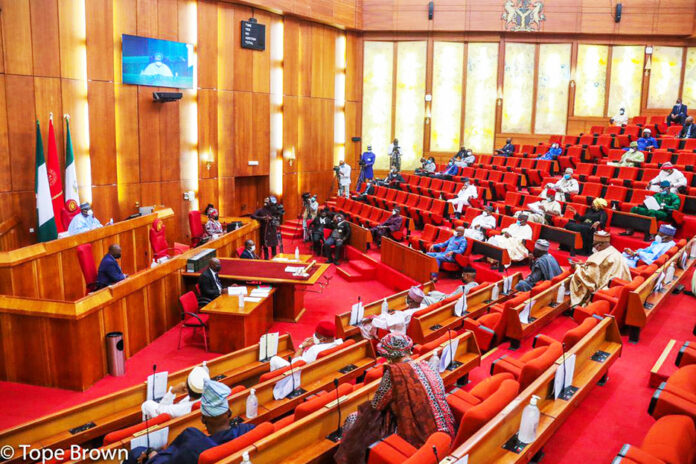
Nigeria senate

The Senate has extended the implementation of the capital component of the 2024 budget to December 31, 2025—the second such extension this year.

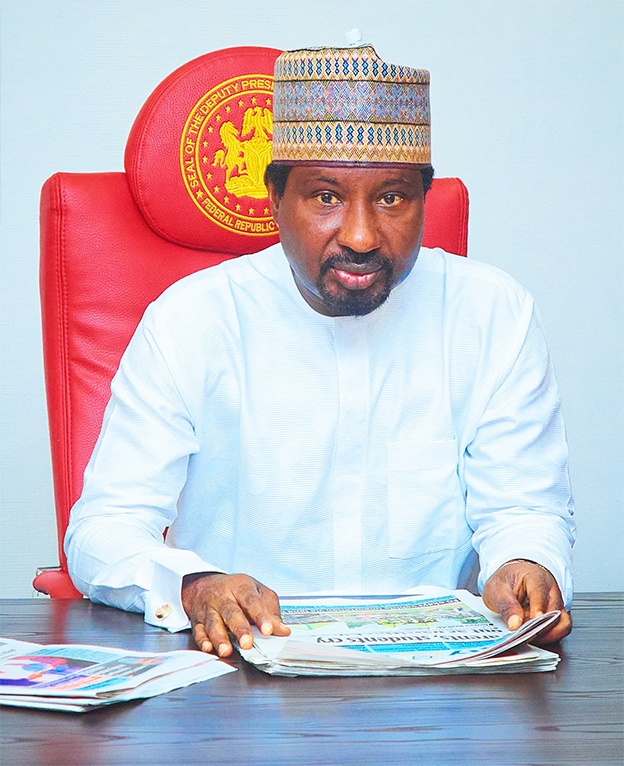
The resolution was passed on Tuesday during plenary, following a swift amendment of the appropriation bill. Deputy Senate President Barau Jibrin, who presided over the session, announced the extension after the bill scaled its first, second, and third readings in one sitting.

Senator Olamilekan Adeola, Chairman of the Senate Committee on Appropriation, led the debate. He argued that the extension is necessary to allow the federal government complete key infrastructure projects initiated under the 2024 budget, citing funding constraints and the risk of project abandonment.

Initially, the capital component was set to expire on December 31, 2024, but was extended to June 30, 2025, at the request of President Bola Tinubu. The President justified that move as essential to fully utilise allocated funds and finalise ongoing projects.

However, with the June deadline looming and several projects still incomplete, lawmakers have now pushed the deadline further to the end of 2025.

This creates a rare overlap, with both the 2024 and 2025 budgets being implemented concurrently. While critics say the extensions highlight weak execution capacity within government agencies, supporters argue they ensure better value for money and prevent the abandonment of critical national projects.

Credit: telegraph.ng


Count me out as running mate to Tinubu in 2027   –Barau tells Northern groups

0
Deputy Senate President, Barau Jibrin

Deputy Senate President, Barau Jibrin, has distanced himself from calls by the Northern Nigeria Progressive Youth Assembly (NNPYA), urging President Bola Tinubu to pick him as his running mate come 2027.

In a statement by his Special Adviser on Media and Publicity, Ismail Mudashir, Barau advised the group to support Tinubu’s administration

While describing the calls as out of place, Barau appealed to NNPYA and all other groups and individuals engaged in such campaign to stop forthwith

“If you are truly my supporters, please desist from this unnecessary clamour and join the train to restore the glorious days of our country under the able leadership of President Tinubu.

“Let us rally around His Excellency to continue delivering his lofty programs encapsulated in the Renewed Hope Agenda.”

He expressed his commitment to the administration’s success, adding that it behoves on all Nigerians to team up with Tinubu to transform the country.

Credit: dailypost.ng


Taraba Lawmakers move to replace Deputy Governor amid prolonged illness

0
Deputy Governor of Taraba State, Alhaji Aminu Alkali

Strong indications have emerged that the Deputy Governor of Taraba State, Alhaji Aminu Alkali, may soon be replaced following a prolonged illness that has kept him out of office for over nine months.


Multiple sources within the Taraba State House of Assembly and senior government circles confirmed that the lawmakers have rallied behind the current Deputy Speaker of the Assembly, Alhaji Hamman Adama, as Alkali’s likely successor.

Though the House of Assembly is yet to initiate formal impeachment or replacement proceedings, a senior official revealed that discussions are ongoing to activate the constitutional process to remove Alkali.


“The deputy governor has been bedridden for months. We can no longer afford to operate without a fully active deputy in such a critical role,” the source said.

However, the state government has pushed back against the claims.

The Special Adviser to Governor Agbu Kefas on Media and Digital Communication, Emmanuel Bello, dismissed the speculation as baseless.

“No one has nominated anyone to be Deputy Governor to Dr. Agbu Kefas. Disregard any fake news,” Bello said in a brief statement.


As of press time, the deputy governor’s office has not issued any official statement concerning his health condition or the alleged succession plot.

Nevertheless, a senior government official from the deputy governor’s office admitted knowledge of plans to relieve Alkali of his duties.

Credit: dailypost.ng

The Ghanaian Chronicle