Home Blog Page 67

I’m in a place where I need quietness –Joe Mettle

0
Joe Mettle

Ghanaian gospel artiste, Joe Mettle, has opened up about his absence from this year’s Telecel Ghana Music Awards (TGMA), explaining that his decision to step back is intentional and personal.

Speaking on  Starr FM, the award-winning musician recounted his last experience at the previous edition of the awards night, describing a ticketing challenge that once prevented him from fully participating in the ceremony.

According to him, a technical issue during the event resulted in confusion over his entry tickets, with all allocated passes reportedly marked as used while he was still outside the venue.

“I had like four or five tickets, and they were telling me all my tickets were used. And I’m like, by who? My team was with me, so I don’t know who used the ticket,” he said.

Joe Mettle explained that while efforts were being made to resolve the issue, he was unexpectedly informed that he had already won an award, even though he was still outside the venue.

“Somebody passed and said congratulations. I said, for what?” he recounted, adding that his manager eventually had to receive the award on his behalf while he remained outside.

He further narrated that after eventually gaining access to the venue, another moment of confusion occurred when he briefly stepped away, only to later learn that another award announcement had been made during his absence.

Despite the incidents, Joe Mettle said he does not believe the situation was intentional, describing it as a “genuine coincidence.”

Addressing questions about his absence from the TGMA 2026 nominations and broader participation in awards events, the gospel artiste said he is currently prioritising a quieter phase in his life and ministry.

Source: Starrfm.com.gh

I was homeless in London, sleeping in cars when I released ‘Baba’ –Sonnie Badu

0
Sonnie Badu

Ghanaian gospel artiste Sonnie Badu has revealed that he was homeless and sleeping in cars in London when he wrote his breakthrough song Baba (also known as Open the Floodgates).

Speaking on Starr FM, Sonnie Badu recounted the difficult period in his life that inspired the popular worship anthem.

According to him, he was facing severe hardship at the time and turned to God for divine intervention.

“When I came up with Open the Floodgates, I was in a place where it’s either left or right… God, You’ve got to do something,” he said.

Badu disclosed that while living in London, he had no stable accommodation and was forced to sleep in cars. “I was homeless in London. I was sleeping in cars,” he revealed.

The award-winning gospel minister said he had specifically prayed to God for one life-changing song, drawing inspiration from his mentor, Lionel Peterson.

He recalled advice from his mentor, Lionel Peterson, who told him that one powerful song could be enough to transform his life and ministry.

“He told me, ‘Son, all you need in your life is one song. You just need one song to break through,’” Badu stated.

Sonnie Badu explained that Peterson’s own success story significantly influenced his musical journey, as he sought to emulate his mentor’s breakthrough.

He further noted similarities between Baba and Peterson’s well-known song Peace, suggesting that his mentor’s guidance played a role in shaping the song.

According to Badu, Baba became a defining moment in his career and helped open doors not only for him but also for many young African gospel musicians over the years.

The gospel artiste credited the song with becoming a major force in Ghana’s gospel music scene, describing it as a turning point in his rise to prominence.

Source: Starrfm.com.gh

Two US military service members taking part in drills missing in Morocco

0
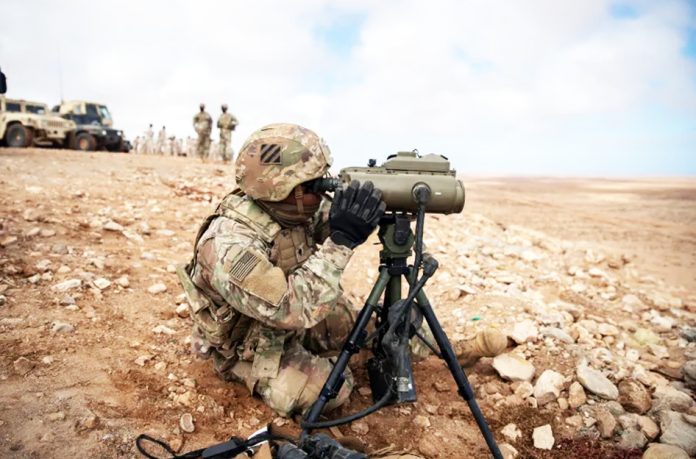
US military forces take part in a large-scale drill as part of the African Lion military exercise

The United States military says two service members participating in a multinational military exercise in Morocco are missing.

In a statement on Sunday, its African Command (AFRICOM) said the pair went missing on Saturday close to the Cap Draa Training Area near the city of Tan Tan in the country’s southwest.

“The incident remains under investigation and the search is on-going,” it added in a statement.

AFRICOM said the US, Morocco and other countries taking part in the annual African Lion exercise have launched search and rescue operations involving ground, air and maritime assets.

African Lion is the largest annual joint military exercise that the US takes part in on the continent.

It is hosted by Morocco, Ghana, Senegal and Tunisia, and its stated aim is to strengthen “interoperability among participants and build readiness to respond to crises and contingencies in Africa and around the world”.

Credit: aljazeera.com


Taiwan president visits Eswatini days after blaming China for cancelled trip

0
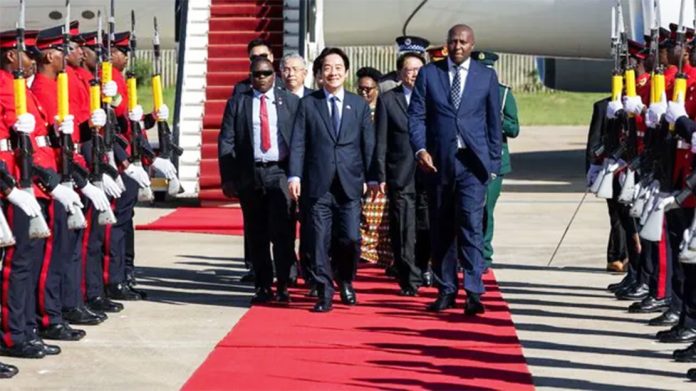
Taiwan President Lai Ching-te (M) is greeted by Eswatini Prime Minister Russell Dlamini (R) on arrival

Taiwan’s President Lai Ching-te has arrived in Eswatini, days after his government said a trip had been cancelled due to China pressuring African countries to stop him flying over their territories.

His visit to Eswatini – Taiwan’s only diplomatic ally in Africa – followed “days of careful arrangements by the diplomatic and national security teams”, he said, without giving further details on how he reached the country.

China described the visit as a “stowaway-style escape farce”. China views Taiwan as part of its territory with no right to state-to-state relations.

Images showed Lai being welcomed by Eswatini Prime Minister Russell Dlamini as he walked past a guard of honour.

Taiwan’s delegation also included Foreign Minister Lin Chia-lung and National Security Council Adviser Alex Huang, according to its presidential office.

Lai’s visit this time was not announced in advance by either government.

The trip had originally been set for 22 to 26 April, to mark the 40th anniversary of Eswatini’s King Mswati III’s accession. It was suspended after Taiwan said Seychelles, Mauritius and Madagascar had unilaterally revoked flight permits for Lai’s aircraft to cross airspace they manage, citing Chinese pressure.

On social media, Lai said: “Taiwan will never be deterred by external pressures. Our resolve & commitment are underpinned by the understanding that Taiwan will continue to engage with the world – no matter the challenges faced.”

In another post, he praised Eswatini for “standing firm against various diplomatic and economic pressure, speaking out for Taiwan’s international place through concrete actions”.

Credit: bbc.com

Russian strikes kill 10 as Ukraine hits oil tankers and terminal

0
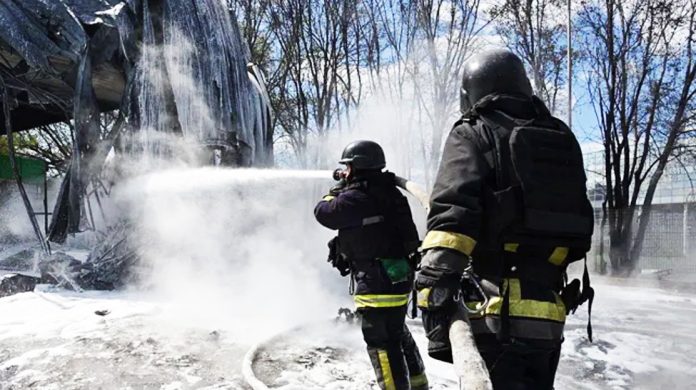
Ukraine cities have been subject to regular aerial attacks by Russia

Russian drone and missile strikes in Ukraine have killed 10 people and injured at least 76 over the past day, reports say.

Officials in five regions around the country reported fatalities as Moscow continues to target Ukrainian cities with regular aerial attacks.

Meanwhile, Ukrainian President Volodymyr Zelensky said an oil terminal in northwest Russia had been significantly damaged, while two Russian oil tankers were struck near the Russian Black Sea port of Novorossiysk.

There are no details on damage to the ships, but Zelensky said the vessels were part of Russia’s “shadow fleet” used to evade Western sanctions.

Ukraine’s military said a ballistic missile and nearly 270 drones were fired by Russia, but most were intercepted.

Three people were killed in separate incidents in Kherson region, the governor said, while two died in each of Odesa, Donetsk and Zaporizhzhia regions and one in Sumy region.

At the same time, Russia said Ukraine had fired at least 334 drones, with the northwestern Leningrad region heavily targeted.

Export terminals there and in other regions have been targeted by Ukraine in recent weeks in a series of successful strikes launched by Ukraine on Russian oil infrastructure, which Kyiv says has knocked out billions of dollars worth of exports.

And on Sunday, Zelensky said infrastructure of the Leningrad region’s Primorsk terminal, near Finland, had been significantly damaged, as well as three ships there.

He also said two tankers were struck by Ukrainian drones at the entrance to the port of Novorossiysk.

“These tankers were actively used for transporting oil. Now they will not be,” he wrote on Telegram.

The post was accompanied by black-and-white video footage apparently showing a naval drone approaching one of the tankers.

Russian authorities have mostly downplayed the impact of such attacks, but the Kremlin is clearly concerned about the deep reach of Ukrainian drones into its territory.

Credit: bbc.com

China blocks US sanctions against five ‘teapot’ refineries

0
The Hengli Petrochemical complex on Changxing Island in Dalian, Liaoning province, China

China has announced an injunction to block US sanctions placed on five Chinese refiners accused ‌of buying oil from Iran.

The US sanctions announced by the Department of the Treasury late last month bar the refiners from the US financial system and seek to penalise anyone doing business with the firms.

In a statement on Saturday, China’s Ministry of Commerce said the sanctions “improperly” restrict business between Chinese enterprises and third countries “in violation of international law and the basic norms governing international relations”.

The Commerce Ministry said it had issued a “prohibition order” stipulating that the sanctions “shall not be recognized, enforced, or complied with,” calling the order a move to “safeguard national sovereignty, security, and development interests”.

“The Chinese government has consistently opposed unilateral sanctions that lack UN authorisation and basis in international law,” the ministry added.

It said the order blocked US measures against Hengli Petrochemical (Dalian) Refinery and four other so-called “teapot” refineries: Shandong Jincheng Petrochemical Group, Hebei Xinhai Chemical Group, Shouguang Luqing Petrochemical and Shandong ⁠Shengxing Chemical.

Announcing the sanctions on April 24, the US Treasury Department called Hengli “one of Tehran’s most valued customers”, saying it had generated hundreds of millions of dollars in revenue for the Iranian military through crude oil purchases.

The Trump administration imposed sanctions on the other four refineries named by the Chinese ministry, among other facilities, last year. China gets more than half of its oil from the Middle East, much of it from Iran.

According to commodities data firm Kpler, China bought more than 80 percent of the oil Iran shipped in 2025.

Credit: aljazeera.com

How to Lose Weight Safely

0

Make a Weight Loss Plan

You’ve probably heard the saying, “calories in, calories out” — as in, you just need to burn more calories than you eat and drink.

But it’s not that simple, as many people can tell you from their own experience.

Nutrition and exercise are both important when trying to lose weight. Eating fewer calories has a bigger immediate impact, but staying active will help you keep the pounds off. And, of course, exercise has major benefits for your body and mind whether you’re trying to lose weight or not.

Your metabolism — how well your body turns calories into fuel — matters, too.  If you cut too many calories, you not only skimp on nutrients, you slow down your metabolism, making weight loss even harder in the long run.

There are many ways you can safely start losing weight without cutting calories too much. You could:

  • Cut back on portions.
  • Figure out how many calories you get in a usual day, and trim back a bit.
  • Read food labels to know how many calories are in each serving.
  • Drink more water, so you’re not so hungry.

Whatever method you use, you’ll need to favor good-for-you foods like vegetables, fruits, whole grains, and lean protein. But there’s no one-size-fits all plan for healthy eating. Working with a dietitian is a good idea so you make a plan that covers your specific needs. And when you make a healthy weight loss plan, it’s important to stick with it. To get healthy and stay that way, the trend has to continue — not just for a week or a month, but for the long term.

Weight Loss Support

Many apps can help you track your eating. Since you probably have your smartphone with you all the time, you can use it to keep up with your plan. Or keep a pen-and-paper food journal of what you ate and when.

You’ll also want to have people on your side to help you stay motivated and to cheer you on. So ask your family and friends to support your efforts to lose weight.

You might also want to join a weight loss group where you can talk about how it’s going with people who can relate. Or talk with someone you know who’s lost weight in a healthy way. Their encouragement is contagious, in a good way.

Eating Habits for Weight Loss

At the most basic level, food is fuel. It gives you energy to do things. But very few people eat just for that reason. Food is at every social gathering. And it’s where a lot of us turn when we have a rough day.

You’ll need to know what makes you want to eat when you’re not hungry and have a plan for those moments. You’ll also want to develop some of the other habits proven to help weight loss.

Find out what drives you to eat

What are your triggers? Do stress, anger, anxiety, or depression make you want to eat? Or is food your main reward when something good happens?

Try to notice when those feelings come up, and have a plan ready to do something other than eating. Could you take a walk? Text a friend?

Reward yourself for making better choices

Get yourself a bouquet of flowers or indulge in a weeknight movie. Just don’t use food as the reward.

Eat more often

This might seem backwards, but if you eat 5-6 times a day, it could keep hunger at bay. You could split your calories equally across all of those mini-meals, or make some bigger than others. You will need to plan portions so that you don’t end up eating more than you bargained for.

Eat more mindfully

Savor your food. Notice how it smells and tastes and feels in your mouth. Notice when you start to feel full. Just being aware of your food in this way may help you lose weight — and make eating more pleasurable to boot.

Limit portion sizes

If you eat a lot of restaurant meals or are used to heaping plates of food at home, you might be surprised to learn what’s considered a portion size by dietitians. For example, a portion of protein, like a hamburger patty or chicken breast, should be the size of a deck of cards. A serving of cooked pasta is half a cup. Sticking to modest portions like these can help you lose weight.

Use smaller plates

One way to make small portions look bigger is to serve them on smaller plates. Some, but not all, studies suggest this is a helpful weight loss strategy.

Eat more slowly

Research shows slow eaters consume fewer calories and are less likely than fast eaters to have obesity.

Avoid eating late at night

People who regularly eat late at night are more prone to obesity. Some research suggests that eating at night can slow calorie burn, increase fat storage, and make you feel hungrier all day.

Credit: webmd

Feature: Ghana’s Digital Health Boom Meets Rights Crisis — New Policy Brief Exposes Risks Facing Young People

0

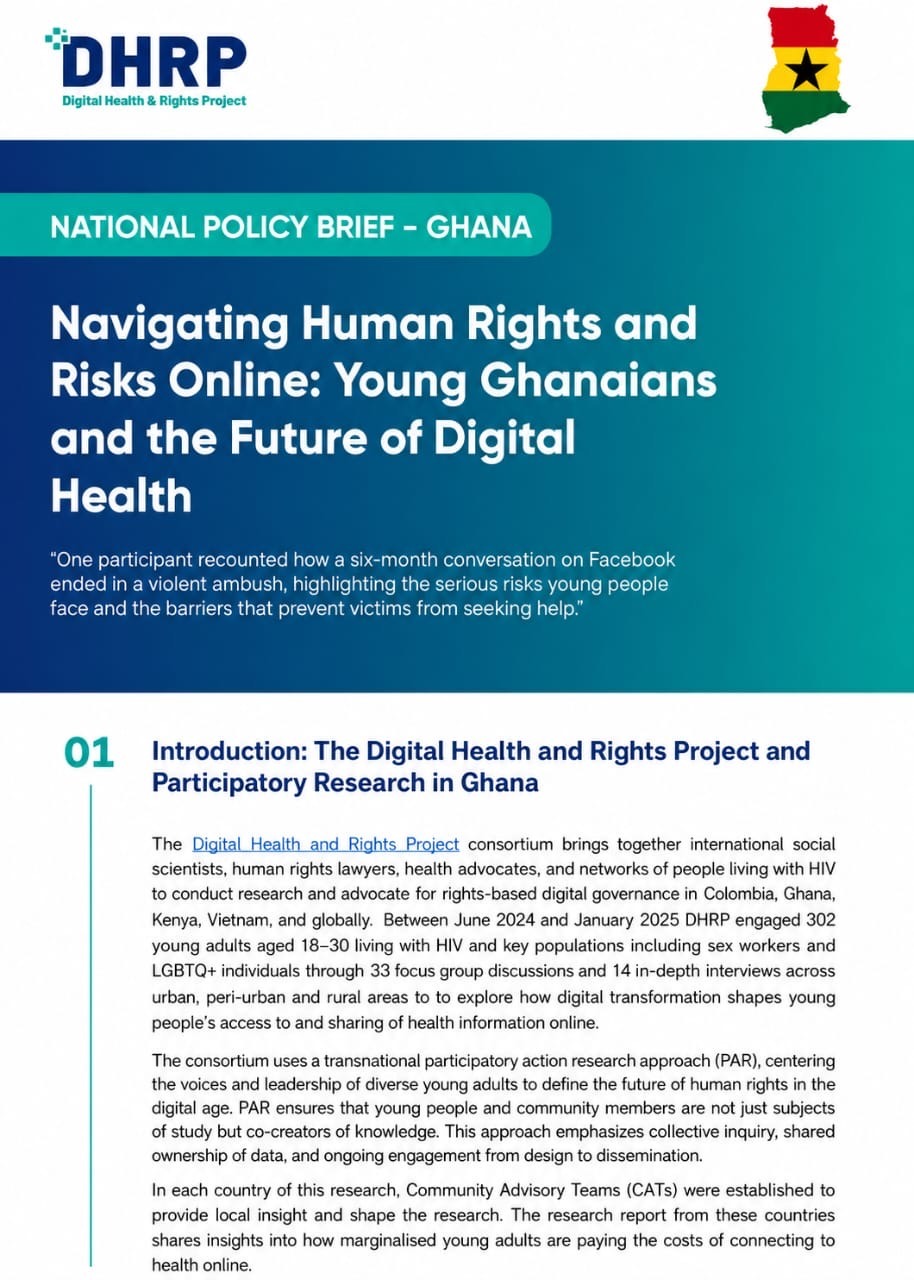
As Ghana accelerates its digital transformation agenda, a new national policy brief by the Digital Health and Rights Project (DHRP) is raising urgent questions about whether the country is adequately protecting the very people driving that transformation its youth.

The Ghana National Policy Brief – Digital Health and Rights Project (DHRP), backed by extensive research across four countries Ghana, Kenya, Colombia and Vietnam paints a complex picture: one where young people are increasingly relying on digital platforms for health information and services, yet are simultaneously exposed to rising risks including online abuse, data privacy violations, misinformation and systemic exclusion.

At the heart of the report is a stark warning — Ghana’s digital health ecosystem is expanding faster than its legal, regulatory and social protections.
A Digital Lifeline Under Threat

For many young Ghanaians, digital platforms have become a lifeline for accessing health information, especially on sensitive issues such as HIV, sexual and reproductive health, and mental wellbeing.

“Digital health is supporting access, particularly for young people dealing with stigmatized conditions,” explained Alberta Nadutey, a researcher on the project. “Many prefer going online rather than visiting physical health facilities because of stigma.”

However, this shift to digital spaces comes with hidden costs.

The report identifies what researchers describe as the “cost of connection” — not just in financial terms, but also in social and psychological risks. Data affordability remains a major barrier, forcing some young people to choose between buying internet data and basic necessities like food.

Beyond cost, stigma continues to shape digital behaviour. According to Nadutey, fear of exposure discourages many from seeking health information online.

“Someone living with HIV may avoid searching for information online because they fear their search history could be accessed,” she said. “That fear of stigma is real, and it limits access to potentially life-saving information.”

Normalising Online Abuse

Perhaps one of the most alarming findings in the policy brief is the growing normalisation of technology-facilitated abuse.

Young people particularly those advocating for health issues or belonging to marginalised groups face daily harassment online, including insults, cyberbullying and targeted attacks.

“What we found, even beyond what we set out to study, was how normalised online abuse has become,” Nadutey noted. “People are insulted simply for sharing health information or for who they are.”

For individuals living with HIV, the abuse can be particularly harsh. Even those working as advocates are not spared.

“Someone can be providing education on HIV prevention and still be insulted — told they deserve the disease,” she added.

The report also highlights how stigma intersects with identity. Sexual minorities, for instance, face heightened abuse in digital spaces, especially within contexts where their identities are criminalised or heavily stigmatised.

Despite these challenges, the research found that young people are demonstrating resilience — continuing to seek and share health information online, often supporting peers in the process.

The Digital Divide: Geography and Gender

While digital health services are expanding, access remains uneven.

The policy brief underscores a persistent digital divide, particularly between urban and rural communities, and between men and women.

“In urban areas, more young people are online, although affordability is still an issue,” Nadutey explained. “But as you move to rural areas, access declines significantly — and it becomes even more difficult for young women.”

Cultural norms further complicate access. In some communities, women are discouraged or even prevented from owning smartphones.

“We encountered cases where husbands did not see the need for their wives to use smartphones,” she said.

In parts of northern Ghana, simply owning a smartphone can attract suspicion.

“Young people are sometimes labelled as engaging in illegal activities just because they have smartphones,” Nadutey added.

These layered barriers economic, cultural and infrastructural risk excluding entire groups from the benefits of digital health innovations.

Privacy at Risk in a Data-Driven Era

As more young people turn to digital platforms for health services, concerns about data privacy are intensifying.

The policy brief warns that Ghana lacks comprehensive safeguards to protect sensitive health data online. Digital footprints including search histories and social media activity can inadvertently reveal personal health information.

“It’s not always about voluntarily disclosing your status,” Nadutey explained. “People leave digital traces, and others can use those to make assumptions or expose them.”

The report calls for stronger data protection measures and clearer regulations governing how health data is collected, stored and used by digital platforms.

While Ghana has made strides in data protection legislation, researchers argue that enforcement and awareness remain weak, particularly in the context of emerging digital health tools.

Fragmented Governance and Policy Gaps

A central theme of the policy brief is the lack of coordinated governance around digital health and online safety.

Currently, multiple institutions including the Ministry of Communication, law enforcement agencies and regulatory bodies have overlapping responsibilities, creating confusion about accountability.

“If someone is abused online, where do they go?” Nadutey asked. “Is it a criminal issue? A civil matter? Who handles it?”

This fragmentation, the report argues, leaves victims without clear pathways for redress.

Richard Agodzo, Youth Coordinator for the Digital Health and Rights Project in Ghana, echoed these concerns, pointing to broader systemic failures.

“The youth are online in large numbers, sharing information and engaging actively, but the systems to protect them are not keeping up,” he said.

According to Agodzo, one of the key drivers of online abuse is the mismatch between rapid technological advancement and outdated policy frameworks

“We are still working with policies that were developed years ago, yet technology has evolved drastically,” he noted. “This is now an AI-driven world, and our regulations have not caught up.”

Youth Voices Missing in Policy Spaces

A major critique in the policy brief is the lack of meaningful youth participation in digital governance. Agodzo argues that policies affecting young people are often designed without their input.

“Were young people at the table when these policies were created?” he asked. “If not, how can those policies truly reflect their realities?”

He emphasised that without youth involvement, policies risk becoming outdated almost immediately.

To address this gap, the DHRP has actively involved young people through Community Advisory Teams, digital empowerment workshops and advocacy initiatives aimed at amplifying youth voices.

Misinformation and the Rise of AI

The report also highlights growing concerns about health misinformation, particularly in the age of artificial intelligence. Agodzo warned that AI-generated content is making it easier for false information to spread.

“You have situations where AI claims there is a cure for HIV, which contradicts global health evidence,” he said. “Young people may not always be able to distinguish between accurate and misleading information.”

This poses significant risks, especially in a country where HIV prevalence remains relatively high among young people.

To counter this, the policy brief recommends the development of verified digital health platforms and toolkits that provide accurate, accessible information.

From Online Abuse to Real-World Harm

One of the more troubling insights from the research is the potential for online abuse to escalate into physical harm.

Agodzo warned that digital conflicts can spill into real-life violence if left unchecked.

“Online arguments may seem harmless, but they can escalate,” he said. “We have seen how digital hostility can translate into real-world tensions.”

He pointed to the lack of specialised legal frameworks to address such cases, noting that digital abuse is often treated like traditional forms of abuse without considering its unique dynamics.

“Do we even have lawyers or judges who specialise in digital rights and online abuse?” he asked. “These are gaps we must address.”

Policy Recommendations: A Roadmap for Change

The Ghana National Policy Brief outlines several key recommendations aimed at strengthening digital health governance and protecting young people:

Expand affordable internet access through zero-rated platforms and public Wi-Fi initiatives.

Strengthen data protection laws and enforcement, particularly for health-related data.

Develop clear reporting and response mechanisms for technology-facilitated abuse.

Promote digital literacy, equipping young people with skills to navigate online spaces safely.

Ensure meaningful youth participation in policy development and digital governance.

Enhance inter-agency coordination to eliminate regulatory fragmentation.

Address misinformation through verified digital health platforms and partnerships.

Advocacy and Next Steps

The DHRP is already taking steps to translate research into action.

According to Agodzo, the team plans to engage key stakeholders, including the Ministry of Communication, Digital Technology and Innovation, to present their findings and recommendations.

“We are moving beyond research,” he said. “The goal is to influence policy and ensure implementation.”

The project is also collaborating with civil society organisations and leveraging social media advocacy to raise awareness and push for accountability.

As Ghana continues its push toward digitalisation, the findings of the DHRP policy brief serve as a timely reminder that innovation must be matched with protection.

Digital health has the potential to transform healthcare access, particularly for young people. But without robust safeguards, it could also deepen inequalities and expose users to new forms of harm.

“We cannot talk about digitalisation without talking about human rights. It’s not just about access it’s about safety, dignity and protection,” Nadutey emphasised.

For Ghana, the challenge now is clear: build a digital future that is not only innovative, but also inclusive, secure and rights-based.

Because in the race toward digital transformation, leaving young people unprotected is a risk the country cannot afford to take.


For more news, join The Chronicle Newspaper channel on WhatsApp: https://whatsapp.com/channel/0029VbBSs55E50UqNPvSOm2z

Newcastle returned to winning ways against Brighton

0
Anthony Gordon, Newcastle Utd

Newcastle United handed manager Eddie Howe a timely boost as they returned to winning ways against Brighton.

Although the head coach felt the support of those above him at the club’s annual summit at Matfen Hall in Northumberland this week, he also faced some “difficult questions” following a torrid run of nine defeats in 12 in the league.

Howe needed a victory and, with chairman Yasir Al-Rumayyan and minority owner Jamie Reuben both watching on from the directors’ box, his side delivered against in-form Brighton.

Newcastle were given a helping hand for their opener to settle one or two nerves after Brighton goalkeeper Bart Verbruggen rushed out of his goal to close down Jacob Murphy down the right.

Verbruggen clipped Murphy, in the process, but the forward quickly got back to his feet to cross the ball into the box for team-mate William Osula to head into an empty net.

The hosts doubled their lead midway through the first half when Burn nodded home from Bruno Guimaraes’ corner kick.

However, this Brighton side had not previously tasted defeat since 4 March for a reason, and they came roaring back.

Newcastle goalkeeper Nick Pope looked a little relieved to see the ball cannon off the post after Brighton midfielder Jack Hinshelwood blocked his attempted clearance in the first half.

Hinshelwood found a way through in the second half, though, after playing a smart one-two with Danny Welbeck, before finishing expertly past Pope from inside the box.

Newcastle have thrown away the most points (25) from winning positions in the Premier League this season, but they managed to hold out this time after Pope made a fine save late on to keep out substitute Charalampos Kostoulas’ overhead kick.

Credit: bbc.com

Barcelona in hard-fought win at Osasuna

0
Robert Lewandowski, Barcelona

Barcelona moved to the brink of retaining the LaLiga title after Robert Lewandowski and Ferran Torres struck late in a 2-1 victory at Osasuna on ​Saturday.

With four games remaining, Barca top the table on 88 points. For ​much of a slow-burning encounter at El Sadar, however, it was Osasuna who looked the greater ​threat.

Barca goalkeeper Joan Garcia proved the difference, producing a string of fine saves to keep the visitors afloat. ‌Ante ⁠Budimir struck the post from close range in the 35th minute after bursting into the box on the counter attack, then curled an effort towards the bottom corner two minutes later that Garcia tipped away with the faintest touch.

The keeper was at it again in the 69th minute denying Ruben Garcia from the ​edge of the ⁠area as Osasuna pressed on in pursuit of European qualification. The hosts are 10th on 42 points, just two behind sixth-placed Celta Vigo.

With frustration ​mounting among the home support, Barcelona delivered a clinical late blow.

In the 81st minute ⁠Rashford floated a precise cross from the right into the middle, where Lewandowski jumped above his marker to nod past Herrera.

Five minutes later Lopez threaded a clever through ball behind the defence for ⁠Torres, who ​raced clear and slotted low beyond the keeper in a ​composed one-on-one finish.

Garcia pulled one back with a close-range header two minutes later, but Osasuna’s rally came too late as Barca ​moved to within touching distance of back-to-back league titles.

Credit: egypttoday.com


The Ghanaian Chronicle