Home Blog Page 668

Businessman Dragged To Court Over Alleged GH¢57,770 Gold Scam

0
Court

A 65-year-old Businessman, Alhaji Dr. Nana Nura Rabiu Mohammed, has been arraigned before the Circuit Court in Accra for allegedly defrauding a Dubai-based marketing executive of $57,770 under the pretence of supplying genuine gold bars.

Alhaji Dr. Nana Nura Rabiu Mohammed, who resides at Achimota in Accra, has been charged with three counts: forgery of documents, illegal trading in gold and defrauding by false pretence.

He pleaded not guilty to all charges.

The presiding judge, Justice Evelyn Asamoah, granted him bail in the sum of GH¢500,000.00 with four sureties, two of which must be justified with title deeds.

The court further ordered the prosecution, led by Chief Inspector Ebenezer Teye-Okuffo, to file all disclosures and witness statements by the next hearing, scheduled for August 8, 2025.

Background of the Case

The complainant, Prince Richard Kofi Atigbor, a marketing executive based in Dubai, reportedly came into contact with a company called EMMA GOLD Ltd, which is allegedly owned by the accused via an online platform in December 2024.

Following their discussions, Alhaji Mohammed assured Mr Atigbor that he could supply him with gold bars and proposed a long-term arrangement, beginning with a pilot supply of 5 kilograms.

Mr Atigbor subsequently travelled to Ghana and met the accused at his office in Dzorwulu, Accra. Between December 2024 and March 2025, the complainant paid a total of $57,770.00 to the accused for the promised gold.

Dr. Mohammed allegedly provided the complainant with an assay report, which was later discovered to have been forged. It bore the name of Italtec Ghana Ltd.

According to court documents, the complainant was handed a bag supposedly containing 5kg of gold by a man identified as Seth Owusu, an accomplice who is currently at large.

Upon arriving in Dubai on March 4, 2025 airport customs officials discovered the gold was fake.

Following a complaint lodged at the Ministries Police Station on April 18, 2025 Dr. Mohammed was arrested.

Investigations revealed that he did not hold a valid license to trade in gold at the time of the transaction.

A subsequent analysis conducted by GOLDBOD on May 14, 2025 confirmed that the 5kg of gold bars were fake.

Police also noted that the accused refunded $12,000.00 and later an additional $300.00 to the complainant, although the majority of the funds remain unpaid.

The case has been adjourned to August 8, 2025, for case management and further proceedings.

Editorial: Yes, The Military Should Not Perform Private Guard Duties

0
Editorial

The Minister for Defence, Dr Edward Omane Boamah, has according to citinewsroom.com report, cautioned the Ghana Armed Forces against providing security services to individuals not authorised by law, stressing that disciplinary action will be taken against any personnel who flout this directive.

During a working visit to the Eastern Naval Command, under the One Garrison in Tema on Thursday, July 17, 2025 Dr Edward Omane Boamah underscored the importance of upholding strict professional standards within the military.

“We expect a very high degree of discipline and professionalism from the Ghana Armed Forces and we cannot compromise. This discipline also means not providing guard duties for individuals who are not permitted,” the website quoted the Minister for Defence as saying.

The Minister, the story continued, also warned that both those who assign such unauthorised duties and those who carry them out would face sanctions. “Those who provide the guard duties will be dealt with. Those who deployed them to provide the guard duties will also be dealt with,” he added.

The Defence Minister also reiterated the government’s commitment to adequately resource the military, highlighting a $1 billion allocation aimed at strengthening the capacity of the Ghana Armed Forces.“We are confident that with your expertise, your dedication and the training that you have gone through and President Mahama’s vision of equipping the Ghana Armed Forces up to $1 billion, we will be able to keep our nation safe,” he affirmed.

It is an undisputable fact that military personnel belong to the barracks. Indeed, in UK, France, USA and other developed countries, hardly will one see a military man in uniform roaming the streets. But regrettably, the opposite is the case in Ghana, where soldiers in uniform are seen in downtown, when as matter of fact they are not performing any official duties.

What has even exacerbated the situation now is the use of the military for private guard duties. This obvious breach of the ethical code became more manifest between 2021 and 2023. Individuals who had invaded our forest reserves and doing illegal mining managed to secure the services of the military to protect them in the bush.

In fact, in one of the forest reserves in the Ashanti Region, the military men guarding one of such illegal mining concessions nearly clashed with the civilian police. When the story was made public by Erastus Asare Donkor, no government official at the time came out to confirm sending the military to protect the illegal miners.

There was also no official investigation into the case. The military men stayed in that forest for a long time before they were called to their respective barracks. Indeed, on the day they nearly clashed with the police, as we earlier referenced, some of these military personnel were seen making calls to their bosses. This clearly shows that they were sent to the forests by their commanders who should have known better.

The Chronicle was, therefore, happy when the current Defence Minister gave order that no military personnel should perform guard duties for private individuals, which he has reiterated when he visited the Navy in Tema.

As we have already indicated, military personnel belong to the barracks – they should only be called to perform certain duties when the police are overwhelmed. It is the hope of The Chronicle that the defence Minister will keep his words and will not bow to any pressure to deploy the military for any private guard duties.

Western Togoland – My Take on the Enigma

0
WG. CDR. Kwaku Kekrebesi (rtd), former Pilot with the Ghana Armed Forces

Background 

In 1884, the Germans also arrived on the coast of West Africa to join the bandwagon of colonialist. This German adventure was the outcome of what became known as, the Berlin Conference, where all European nations were called to declare their colonial possessions in order to curtail petty squabblings among them.

The German leader at the time, Otto Von Bismarck declared that, “Germany also needs a place in the sun.” Connoting Germany also must possess the empires of Britain and France in specially, Africa. So the Germans arrived with a bang in 1884 to establish one of their colonies in Africa called, German Togo.

However, in 1914, Germany was blamed for starting the First World War in Europe, and was declared an enemy state. History has it that, British soldiers from the Gold Coast and French soldiers from Dahomey, now Benin, marched from the west and east, respectively, on the small garrison of German soldiers, and crush them. Michael Crowder’s account in his book, West Africa Under Colonial Rule (1976), said the Germans had only the equivalent of a police force in place.


Division of German Togo

The German colony was then divided between the British and the French, but remained Mandated Territories, first under the League of Nations and later, as Trust Territories under the United Nations. The British called their portion, British Togoland while the French continued to rule their part until granting it independence in 1963, as the Republic of Togo.


British Togoland

The British divided their portion into two, northern and southern British Togoland. The northern part was administered by the northern territories of the Gold Coast while the south was attached to the eastern province, administratively.

Many Historians blame Britain for the mess we are now calling, Western TogoIand agitations. In the study, I never came across the name, Western Togoland, and I am not sure when it was first used. Western Togoland must have been used in place of British Togoland.

While the split of German Togo benefited most of the people in the north, specially, the Dagombas, Mamprusis, Nanumbas and the Gonjas, the majority Eʋes in the south were aggrieved.


Reasons

The Dagombas and the rest, had benefited because their traditional homes and people had been joined to their commercial centers. Dagombas for example, now have their traditional home of Yendi under the same colonial administration as their commercial center in Tamale.

The Eʋes on the other hand have left their kith and kin back in the French side of the German Togo and wished for the re -creation of German Togo. This ambivalence could only be solved through the tacit agreement of Britain and France.

Britain and France did what they wanted and all the protestations of the Eʋes, fell on death ears. The Eʋes took their case to the United Nations. They even petitioned King George V of England. In what Professor D.E.K Amenumey – Eʋe Unification Movement (1989) – described as petitions against partition, the Eʋes in their desperation sent cable to President Harding of the United States. No one can say the Eʋes did not try.


The Agenda of the Eʋes

During all their struggles, the Eʋes never hid the fact that they hated the French with a passion. The Eʋes wished to be under a single colonial administration, and that administration was that of the British. Indeed the Eʋe Unification Movement spelt out these aims and objectives of the Eʋes. Eʋes, however, enjoyed the full support of the people in northern British Togoland.

Having failed in their bid to re -establish the German Togo, the Eʋes in British Togoland, now turned their  attention,  on the Gold Coast, in an effort to strictly remain a United Nation Trust Territory until such time that the people, decide otherwise.

Perhaps, one of the few occasions, Kwame Nkrumah and the Colonial Authority were in one and the same boat. They fought the aims and objectives of generally the Eʋes in British Togoland, especially prior to the plebiscite, which was to decide, finally, the unification or Union between British Togoland and the Gold Coast at Independence. The British and the CPP, put out an effective propaganda campaign. These encounters were sometimes violent.


Unification or Union?

The results of the plebiscite showed a unanimous wish from the people of British Togoland to join Ghana at Independence. The Eʋe areas, however, voted not to join Ghana. The uncertainty was, and is still, whether the joining was to be a Unification or Union.

My understanding of Unification is like the case of all other parts of Ghana at Independence under a unitary government. However, like the opponents of British Togoland joining Ghana at Independence gave, their envisaged Union was to be like that of England and Scotland.


Togoland or Eʋe Unification?

Throughout this discourse, Togoland Unification was rarely seen as an option. It would benefit, mainly, just one ethnic group, the Eues. Most of the rest of the ethnic groups in British Togoland would have lost out.

The northerners who hitherto had supported Eʋe unification, refused to join the Eʋes in their fight for the re – creation of German Togo. While the re – creation of German Togo would unite the Eʋes, it would end up disuniting the northerners.

Furthermore, the Eʋe Unification Movement, which sought to put the Eʋes under British administration and rescue Eʋes under French administration is exactly what I can see in British Togoland joining Ghana. At least, a step in that direction.Albeit the settlement of Unification or Union enigma. What the Western Togoland proponents must know is that no country will stomach the re – drawing of its borders.


An Example in Europe

There are German citizens in Germany itself, while Germans are also in Austra and Switzerland. These German citizens in the diaspora, having been separated in the early state formations in Europe, do not aspire to go back to the German homeland. This must serve as some lessons for the Eʋes in West Africa.


Conclusion

The German Colony called German Togo became British Togoland and the republic of Togo.

While the French ruled their share of German Togo like all colonies before granting them independence. The British on the other hand, started the assimilation process of theirs into the Gold Coast right from the outset.

The British achieved this amalgamation by dividing British Togoland into north and south parts and attaching then to two administrative regions of the Gold Coast. Many Historians criticised Britain over the handling of British Togoland affairs.

From the splitting of German Togo to the division of British Togoland into its two parts, the majority ethnic group in the south, the Eʋes, got greatly disadvantaged. While the ethnic groups in the north rejoined their kith and kin mostly, the Eʋes in the south, lost theirs to French Togo.

The Eʋes called for the re -creation of the erstwhile German Togo in order to rejoin their fellow Eʋes. The clarion call was made through the Eʋe Unification Movement. The movement sought to unite all Eʋes under Britain and also liberate the Eʋes under French rule.

Having lost the struggle to re – create the German Togo and also come together under one authority, the Eʋes then turned their attention to Britain’s efforts to join British Togoland to the Gold Coast at independence.

The Eʋes wanted British Togoland to remain under United Nations Trusteeship until such time that the people decide otherwise. The amalgamating of British Togoland with the Gold Coast at Independence was closed to the aims and objectives of the Eʋe Unification Movement, in my opinion

The recreation of German Togo was a mission impossible since it will alienate almost all the northern British Togoland ethnic groups.The unification of the Eʋes too is looking like a pipe dream. No country would agree to redraw its national borders in this 21st century. Bearing in mind, the German citizens’ example in Europe.

The way forward is for Eʋes, wherever they find themselves, to conjure enough goodwill which will enable authorities to allow free intra ethnic movements. LONG LIVE GHANA

— WG. CDR. Kwaku Kekrebesi (rtd),

former Pilot with the Ghana Armed Forces. 

The views expressed in this article are the author’s own and do not necessarily reflect The Chronicle’s stance.

NACOC engages Moroccan Ambassador on Cannabis implementation roadmap 

0
Narcotics Control Commission (NACOC)

The management of the Narcotics Control Commission (NACOC), as part of its strategy for activating and executing the cannabis licence, on Wednesday 16, July, 2025 paid a courtesy call to Her Excellency, Mrs. Imane Quaadil, Ambassador of the Kingdom of Morocco, at her office in Accra.

The call was primarily intended to boost partnerships related to Ghana’s cannabis licence regulation, with Morocco serving as one of the models for the cannabis regulations and implementation.

Brig Gen Maxwell Obuba Mantey, Director-General of the Narcotics Control Commission (NACOC), praised Morocco’s government for its continuous support for Ghana’s progress since independence.

He revealed that the Commission’s plans to engage regulatory bodies responsible for the cannabis licence in Morocco to learn success stories about pragmatic ways for dealing with the activation and operationalisation of the Cannabis licence.

Brig Gen Mantey used the meeting to request that the Ambassador consider providing avenues for the Commission to network and engage with key parties responsible for illegal drug control in Morocco. “NACOC is committed to exploring opportunities that would build and enhance the capacities of our staff and share ideas,” he added.

Her Excellency Mrs. Imane Quaadil, Ambassador of the Kingdom of Morocco, thanked the Director-General and Deputy Director-General for the call, noting that this was the first time any NACOC leader had visited her office.

She indicated a desire for her country’s engagement in the areas of intelligence and information sharing as well as capacity building, and stated that she will be liaising with the relevant key agencies to ensure a healthy working relationship.

Mrs.Quaadil also stated that her office will collaborate with Moroccan anti-drug authorities to host some selected NACOC staff in September 2025 to study the procedures and successes in the implementation of cannabis regulations.

The Kingdom of Morocco’s Ambassador expressed concern about the devastations caused by drug abuse among youth across the continent, where her country is not excluded, in terms of drug consumption and production, particularly cannabis, which is primarily grown in the northern part of Morocco.

“We will ensure to work with NACOC to address the illicit drug abuse and trafficking menace, as in Morocco, it is sad to note that most of these traffickers use some of our African youth who are mostly illegal migrants to perpetrate their nefarious act”.

Mr Alexander Twum-Berimah, NACOC’s Deputy Director-General in Charge of Enforcement, Control, and Elimination, stated that the Commission will continue to collaborate with the Embassy on anti-narcotics and other issues requiring their assistance.

Closing Britain to Global Talent Will Be An Act of Immense Self-Harm –London Mayor

0
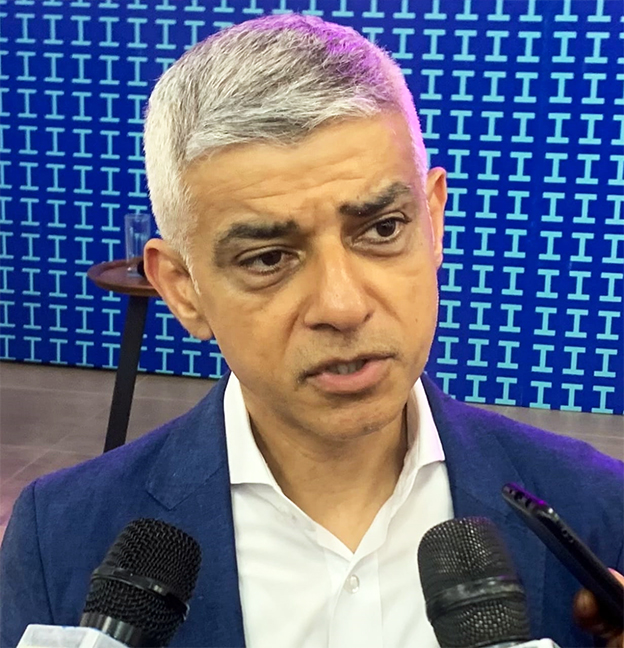
Sir Sadiq Khan, Mayor of London, addressing the media after meeting with students at the University of Ghana

At a time when the United States is tightening restrictions on international students, the Mayor of London, Sir Sadiq Khan, has called on the British government to take a different path by keeping the UK’s doors open to global talent.

“Closing our economy to global talent will be an act of immense self-harm,” Khan warned adding “It will slow down growth and leave working people in the UK worse off than before.”

According to the London Mayor, the UK should be embracing international students at a time when President Donald Trump’s America is turning them away.

“At a time when President Trump is attacking international students, we should be welcoming them,” he emphasised.

UG VC Prof. Nana Aba Appiah Amfo and Sadiq Khan, Mayor of London, Head of International Relations at Imperial Global Ghana, Clare Turner and other dignitaries pose for a group photograph

Sir Sadiq Khan made these remarks while addressing students of the University of Ghana and Presbyterian Boys’ Secondary School, at the West African Genetic Medicine Centre (WAGMC) auditorium, University of Ghana.

The event formed part of his historic visit to Ghana in partnership with Imperial College London’s Ghana Hub.

Over five days, the Mayor is visiting four African cities; Lagos, Accra, Johannesburg and Cape Town to strengthen trade links with London and deepen partnerships with the continent’s growing diaspora communities.

His statement comes amid growing concerns over proposals in the UK’s immigration whitepaper, which is reportedly considering imposing a new levy on income that English universities generate from international students.

This move, Sir Khan argues, risks discouraging students from applying to UK institutions, while placing additional financial burdens on already stretched universities.

“There are people back home who believe we should pull up the drawbridge to international students or punish universities that choose to welcome people from around the world,” he said.

Backing his concerns with data, the Mayor revealed that international students contribute tens of billions of pounds to the UK economy over the course of their studies, including £12.5 billion to London alone.

“And when they graduate,” he added, “they go on to make our city and our country a better place to be.”

Looking beyond economics, Sir Khan noted that the presence of international students enrich London culturally and intellectually.

“This is not just about the economy. Every student that comes to London brings something else, something that cannot be measured in pounds or cedis. Their experience gives them the courage to think differently, to challenge the status quo.

“When they return home, they bring more than degrees, they bring back a little bit of London in how they think and act. They become part of the ongoing global conversation between our cities, our countries, and the world.”

The Mayor emphasised London’s continued openness: “On my watch, London will be as open as ever… but I think we must do more. We cannot simply wait for the world to come to London; we must bring London to the world.”

Imperial College London’s Ghana Hub

Sir Sadiq Khan’s visit also spotlighted Imperial College London’s growing footprint in Africa. The university recently became the first UK higher education institution to establish a permanent base on the continent – focused exclusively on science, technology and innovation.

Imperial Global Ghana, located at the University of Ghana, serves as a hub for high-impact collaboration in fields such as AI, medical diagnostics, urban health, and climate science.

The Vice-Chancellor of the University of Ghana, Professor Nana Aba Appiah Amfo, welcomed Sir Sadiq Khan and praised the growing collaboration between the two institutions.

“It is a great honour to welcome the Mayor of London, Sir Sadiq Khan to Ghana and to the University of Ghana. His presence underscores the growing importance of global partnerships in shaping the future of education and innovation,” she said.

Highlighting the strategic partnership with Imperial College London, Professor Nana Aba Appiah Amfo noted its success in advancing vaccine manufacturing, digital diagnostics, public health, innovation and environmental sustainability.

“We are especially proud of our collaboration with Imperial College London – one that thrives through initiatives such as the Impact Hub and the five-year Memorandum of Understanding signed in 2024.

“This partnership aligns with our five strategic pillars: transformative student experiences, impactful research, faculty and staff development, strategic engagement and sustainable resource mobilisation.”

Dele Momodu Dumps PDP, Joins ADC

0
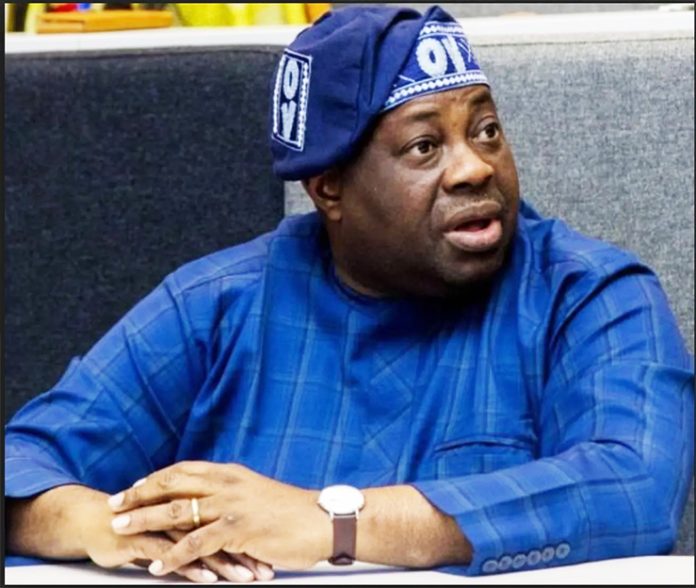
Dele Momodu

Publisher of Ovation International, Chief Dele Momodu on Thursday announced his official resignation from the Peoples Democratic Party (PDP), citing what he described as the party’s takeover by anti-democratic forces.

This is contained in a registration letter dated July 17, 2025, and addressed to the PDP Ward 4 Chairman in Ihievbe, Owan East Local Government Area of Edo State.

He disclosed that he would join the opposition coalition floated on the ADC platform to unseat President Bola Tinubu of the All Progressives Congress (APC) in the 2027 election. Momodu who is also a former presidential aspirant under the PDP expressed gratitude to the ward-level party leadership for their unwavering support throughout the years.

“My reason is clear and direct. Our party has undeniably been seized by antidemocratic elements, both from within and without, in broad daylight.

“It is therefore honorable to relinquish the remains of the party to them while the majority of us earnestly align with the new coalition party, the African Democratic Congress (ADC).”

Credit: newtelegraphng.com

Don’t return to PDP when you fail –Olayinka to Atiku

0
Lere Olayinka

Lere Olayinka, the Senior Special Assistant on Public Communications and Social Media to the Minister of the Federal Capital Territory, FCT, Nyesom Wike, has warned former Vice President Atiku Abubakar against returning to the Peoples Democratic Party, PDP.

Olayinka warned Atiku against returning to PDP after he fails in his political journey.

He made the remark while reacting to Atiku’s resignation from the PDP.

The former presidential candidate had resigned from the PDP citing irreconcilable differences.

Atiku also claimed that the party’s leadership is now at parallel with its founding principles.

However, appearing on Channels Television’s Sunrise Daily, Olayinka assured Atiku that highly spirited members would rebuild the PDP.

Olayinka insisted that Atiku had destroyed the PDP before decamping.

He said: “Today, the PDP has been so destroyed and damaged by this one man, Atiku Abubakar, who is now gone.

“When highly spirited members of the party come together to rebuild the party, Atiku should not come back after he has failed in his new political journey because I know he is going to fail.”

Credit: dailypost.ng

151 Senior Police Officers Face Disciplinary Committee Over Alleged Misconduct

0
Police Officers

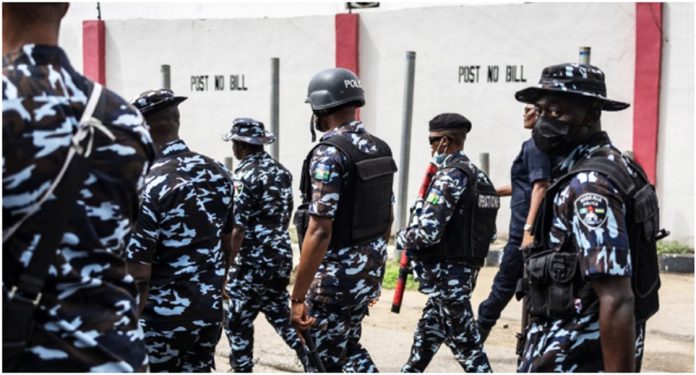
The Nigeria Police Force has commenced disciplinary proceedings against 151 senior officers over various allegations of misconduct and ethical breaches, in a move to reinforce accountability and professional discipline within its ranks.

Force spokesman, Muyiwa Adejobi, disclosed this in a statement on Wednesday.

He said the review commenced on Monday, July 14, and will be concluded on Friday, July 25, 2025, at the IGP Smart Conference Hall, Force Headquarters, Abuja.

According to him, the officers, selected from commands and units nationwide, are appearing before the Force Disciplinary Committee (FDC) over alleged violations ranging from professional misconduct to breaches of internal regulations.

The Force spokesman stated that the disciplinary committee is the police’s internal body responsible for investigating cases involving senior officers from the rank of Assistant Superintendent of Police (ASP) upwards.

He noted that the committee plays a vital role in reviewing accusations, assessing evidence, and recommending appropriate sanctions under existing police laws and disciplinary frameworks.

“The Force Disciplinary Committee is an essential internal structure responsible for reviewing and adjudicating cases of alleged breaches of professional conduct, misconduct, and ethical violations involving senior officers of the rank of Assistant Superintendent of Police and above,” the statement read.

Adejobi also reiterated the commitment of the Inspector-General of Police (IGP), Kayode Egbetokun, to discipline and ethical conduct within the Force and emphasised that the Force would not condone any form of indiscipline or misconduct under his watch.

Credit: channelstv.com


Tinubu’s Second-Term Ambition Misplaced Priority, Says Bucknor-Akerele

0
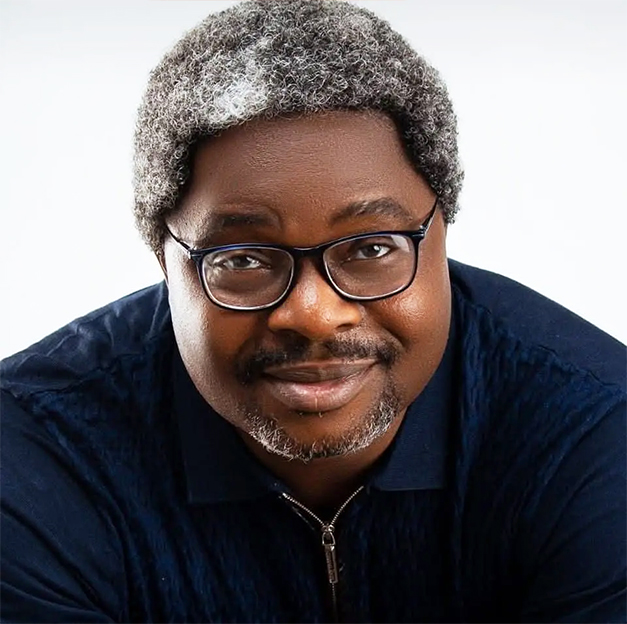
Ex-Deputy Governor of Lagos State, Kofo Bucknor-Akerele

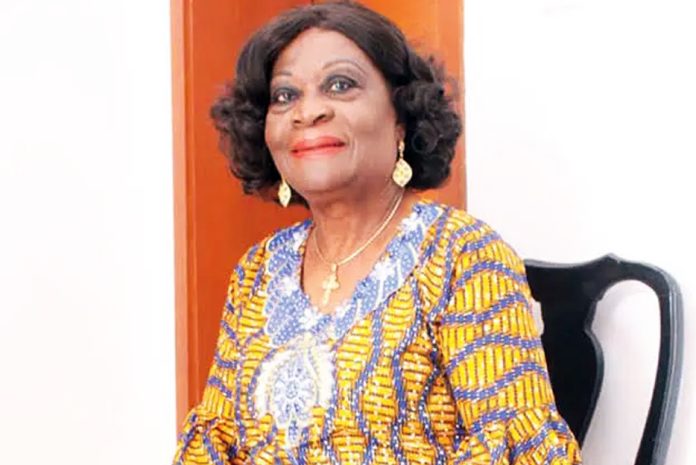
A former Deputy Governor of Lagos State, Kofo Bucknor-Akerele, has described as a misplaced priority, President Bola Tinubu’s re-election bid in 2027.

Bucknor-Akerele deputised ex-Lagos governor Tinubu from May 1999 to December 2002, though Tinubu was in office till May 2007.

The octogenarian was on Channels Television’s The Morning Brief programme on Thursday.

Bucknor-Akerele, a member of The Patriots, led by former Commonwealth Secretary-General Emeka Anyaoku, said the Tinubu presidency must rejig the nation’s socio-economic apparatus as a matter of urgency.

She said seeking a second term in office should not be Tinubu’s focus at the moment, but getting the country to work.

Bucknor-Akerele said, “Unfortunately, right now, what I see is that the president is looking for a second term and that seems to be his focus but I think he should try and look at what people like Emeka Anyaoku and so many others of that calibre sat down and they are trying to fashion something that is going to change Nigeria for the future generations.

“I hope that his advisers would be able to tell him that 2027 is not our priority right now; our priority right now is fashioning something that will be able to make Nigeria great again.”

The former deputy governor also warned that dissatisfied youths might stop the selfish ambition of some politicians in the 2027 general elections.

“We need full employment for our youths. Many of them are roaming the streets, and some are graduates who are now working as security men. Is that what we want for Nigeria? I don’t think so.

“It is urgent; it is not something that should be postponed because some people want to be in power.

“The power which they want, they might not get it, because the youths are now restive and let us pray that things don’t happen and we end up in a revolution in this country,” she said.

Credit: channelstv.com

IPR, Ghana Announces Activities to Celebrate World Public Relations Day 2025

0
Esther Amba Numaba Cobbah

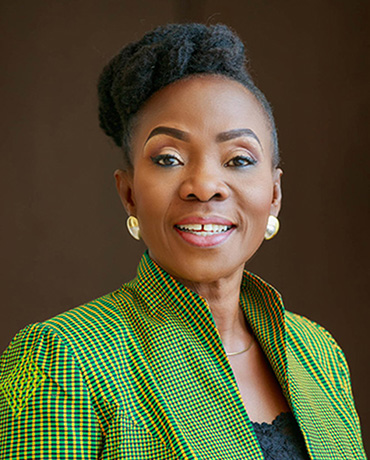
The Institute of Public Relations (IPR), Ghana, has unveiled a robust line-up of activities to mark this year’s World Public Relations Day, celebrated globally on July 16. This year’s theme, Building bridges and navigating polarisation,” underscores the critical role of public relations in combating misinformation and rebuilding trust in institutions.

World Public Relations Day is observed annually to highlight the contributions of the PR profession to society, particularly in the areas of transparency, strategic communication, and stakeholder engagement. The July 16 celebration commemorates the birth of Ivy Lee, widely regarded as the father of modern public relations.


Month-Long Activities Across the Country

Under the leadership of IPR Ghana President, Ms. Esther A. N. Cobbah, the Institute has outlined a series of activities throughout the month of July to engage practitioners, students, stakeholders, and the general public:

  • Webinar: PR and Our Stakeholders – Bridging the Gap”
  • Executive Breakfast Meeting: With CEOs, government ministers, and high-level decision-makers
  • Panel Discussions and Thought Leadership Forums: Focusing on truth-telling, governance, and development communication
  • Youth and Student Engagements: Outreach to communication and journalism students nationwide
  • Media Collaborations: Nationwide interviews, features, and op-eds to raise PR awareness
  • IPR Community Impact Projects: Pro bono PR support for NGOs and underserved institutions
  • Celebrating IPR’s National Footprint: Inauguration of Northern and Middle Belt Chapters
  • National Survey: On the aspirations and development needs of young PR professionals
  • Strategic Partnerships: With the DVLA and Ghana Health Service for thought leadership and advocacy
  • Digital Campaign: Promoting the strategic value of public relations across sectors
  • Participation in the maiden conference of the National and Regional Public Relations Officers of Ghana Health Service

“These initiatives reflect IPR, Ghana’s commitment to elevating the profession, building national capacity, and advancing the strategic relevance of PR in governance and development,” said Peter Martey Agbeko, Chair of IPR’s International Relations Committee and member of the Governing Council.

The Ghanaian Chronicle