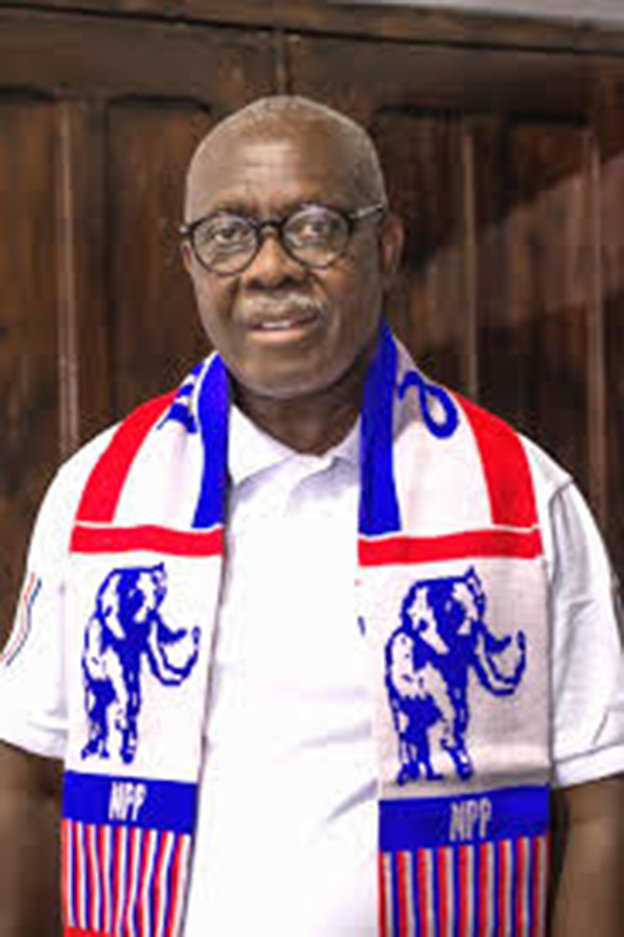
Akwasi Osei Adjei - Ex- Minister for Foreign Affairs
A former Minister for Foreign Affairs under the Kufuor regime, Mr. Akwasi Osei Adjei, has expressed his contentment over the proceedings of the New Patriotic Party (NPP’s) National Delegates Conference held over the weekend, rating the conference 8/10.
According to him, the just ended National Delegates Conference, held at the University of Ghana stadium, which facilitated over 50 amendments in the party’s Constitution brought back the “NPP-spirit”, as well as the “eagerness” to win the 2028 General election.
The former Legislator for the then Ejisu/Juaben Constituency, however, has questioned the processes by which the delegates voted on proposed amendments, noting that the system of shouting “yes or no” is not an “efficient and effective” way of voting.
Speaking in an interview on Kumasi-based radio station, Silver FM, last Tuesday, the former legislator explained to the host, William De Bordes (Loving Cee) that proposed amendments need to be sent to all the constituencies, prior to the conference, to be deliberated upon to get the grassroots opinion, as well as to ensure that delegates are abreast of and understand the proposed amendment.
He noted there should be an efficient voting system that reflects the voice of delegates, to deepen democracy within the party as well as ensuring that the party following are involved in the decision-making of the party.
The former Minister also opined that some positions, such as General Secretary and Treasurer, among others, should not be voted for, but rather should be “selected and appointed” to help curb nepotism within the party noting that the most popular person.
Mr. Akwasi Osei Adjei also expressed his satisfaction over one of the amendments, which enables constituencies to conduct their elections without the involvement of their respective regions’ and national executives in line with his opinion that constituencies should be “semi-autonomous” to empower the constituencies as well as ensuring that competent executives and Parliamentary Candidates are elected.
Touching on the top-bottom approach, Mr. Akwasi Osei Adjei disclosed that the National Executives Committee (NEC) of the party is the final decision-making body hence their decisions cannot be disputed, because they are “always” in the interest of the party.
He further disclosed that the NEC has announced a 40 percent increment in voters, stressing that it “may” make a difference at the presidential primaries slated for January 31, 2026.
Assessing President Mahama 7-month period in office, the former Minister condemned the energy Sector Levy, popularly known as Dumsor Levy, stressing that fuel prices are not stagnant and also influenced by world prices, which will eventually “shoot-up” and exerting more financial burden on the citizenry.
He further urged the NDC-led government to be candid with themselves and acknowledge the good policies of the previous government, which they (NDC) are rebranding and building on and continue with it, citing the 24-Hour economy initiative having the same policies of the “One District, One Factory (1D1F) initiative.
Stakeholders and participants in a pose after the Economic Governance Platform event in Kumasi
Ghana’s debt management has become increasingly pro-cyclical, driven by electoral and commodity cycles and lacking adequate fiscal buffers to absorb external shocks, according to findings by the Economic Governance Platform (EGP).
Launching its Debt Sustainable Management Report in Kumasi, the Platform revealed that fiscal slippages during election years, coupled with poor expenditure controls and weak institutional checks have worsened the country’s vulnerability.
The report, supported by Open Society Africa, draws on research conducted across three thematic areas: debt frameworks and mechanisms, transparency and accountability, and debt sustainability and mitigation.
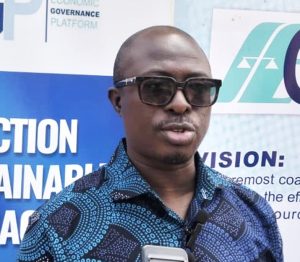
Abdulkarim Mohammed, EGP Coordinator speaking with the media
The report paints a sobering picture of Ghana’s debt and fiscal governance landscape, but also provides a roadmap for sustainable reform.
With the right political will, institutional alignment and public accountability, EGP believes Ghana can rebuild trust in its economic management and chart a path toward debt sustainability and inclusive development.
Speaking at the launch, EGP Coordinator Mr.Abdulkarim Mohammed said Ghana’s fiscal system remains plagued by inefficiencies, citing over-reliance on borrowing, misreported debt levels, and systemic lapses in procurement and public investment decisions.
“The economy’s limited capacity to withstand shocks is largely due to unsustainable public spending. Our debt trajectory is shaped not by strategic planning, but by elections and volatile global markets,” he said.
Distorted Debt Metrics and Procurement Failures
Mr.Abdulkarim criticized the government’s historical underreporting of debt. He disclosed that while official figures pegged the debt-to-GDP ratio at 75.9%, the joint IMF-World Bank Debt Sustainability Analysis (DSA) placed Ghana’s debt at 105% of GDP in present value terms, declaring the country in debt distress.
He further revealed that the external debt service-to-revenue ratio had reached 34%, nearly twice the sustainability threshold of 18%.
“The official figures excluded liabilities from financial sector bailouts and energy arrears. Instruments like the ESLA and DAAKYE bonds reduced fiscal space and transparency,” he explained.
He also cited the Bank of Ghana’s excessive deficit financing,later flagged in the IMF review, as a contributor to inflation and macroeconomic instability.
The report also found that between 2012 and 2021, nearly 86% of high-value public contracts were awarded via sole-sourcing or restricted tendering.
“This undermined value for money and opened the door to inflated pricing and contract irregularities,” Mr.Abdulkarim noted.
Recommendations to Avert Future Crises
To address these structural flaws, EGP issued a comprehensive set of policy recommendations:
Strengthening Revenue Mobilization
The Platform urged the government to broaden the tax base and tackle leakages through digital reforms and targeted tax education. It noted that Ghana loses about 4% of GDP annually targeted tax education. It noted that Ghana loses about 4% of GDP annually to tax exemptions on VAT, income tax, and import duties. Closing these loopholes, especially in the extractive sector, could significantly boost domestic revenue.
Combating Corruption and Leakages
EGP recommended stronger resourcing for anti-corruption agencies such as the Office of the Special Prosecutor (OSP) and EOCO, and advocated for the use of blockchain and advanced audit technologies to trace public funds and prevent diversion. Regular audits and enforcement of anti-money laundering laws were also stressed.
Expenditure Efficiency and Oversight
Describing current spending patterns as “rigid and inefficient,” EGP urged the government to streamline payroll, reform procurement, and consider establishing a Department of Government Efficiency or a credible, independent Fiscal Council. It emphasized the need for Parliament to exercise tighter control over borrowing and fiscal decisions.
Legal and Institutional Reform
EGP called for amendments to the Fiscal Responsibility Act and Public Financial Management Act to set explicit limits on deficits and debt accumulation. It proposed that escape clauses only apply under emergencies, with mandatory timelines for returning to fiscal discipline. The absence of a legally mandated Fiscal Council was flagged as a critical institutional gap.
Transparent Budget Execution
The coalition advocated for full integration of all government agencies into GIFMIS and GHANEPS, ensuring that only projects with budget approval proceed. “This aligns with Ghana’s IMF program and will help limit fiscal slippage,” Mr.Abdulkarim said.
Debt Sustainability Framework and Sinking Fund
EGP recommended institutionalizing a forward-looking Debt Sustainability Framework (DSF) that includes stress testing, risk mitigation, and project appraisal—especially for public investments exceeding US$1 million. It also called for the revival of the Sinking Fund with regular contributions, backed by parliamentary oversight.
The United Nations Industrial Development Organisation (UNIDO), jointly with the Ministry of Environment, Science and Technology (MEST) have launched the Ghana Circular Economy Centre (GCEC) Project initiative, towards transitioning key sectors including Plastics, Textiles and Agriculture and agro-processing to a circular economy.
The project is receiving funding from Global Affairs Canada.
A circular economy is described as a regenerative system designed to minimize waste and maximize resource utilisaion by keeping products, materials and components in use for as long as possible.
Ghana currently consumes over 1.1 million tonnes of plastic annually, most of which is used for short-lived purposes like packaging with only 19 per cent of plastic waste recovered, a study says.
The rest clogs drainage systems, pollutes water bodies, communities, with those buried under the soil taking centuries to decay as well as contributes to frequent urban flooding.
Meanwhile, plastic types such as Linear Low Density Polyethylene (LLDPE), Low Density Polyethylene (LDPE), High Density Polyethylene (HDPE), and Polyethylene Thermoplastic Polymer (PET) hold significant economic potential if appropriate recovery methods and locally driven technologies are applied to harness their value.
The initiative is being carried out in partnership with the University of Cape Coast, Ho Technical University (HTU), Kwame Nkrumah University of Science and Technology (KNUST), and The Or Foundation.
The project is anchored on four key pillars: Establishing a Centre of Excellence for Circular Economy, Providing Technical Assistance and Capacity-building for the development of circular economy technologies and enterprises, Facilitating access to finance for innovative circular economy initiatives and Offering a Platform for Networking and Knowledge Exchange.
Central to the plastics value chain initiative is the University of Cape Coast (UCC), serving as the Plastics Value Chain Lead (VCL) in partnership with Cape Coast Technical University (CCTU) and City Waste Recycling (CWR) Ltd.
As part of the project activities, the team has developed a data-driven Circular Economy Opportunity Mapping (CE-OM) Report for plastics, which was validated during a national stakeholder workshop held at the Ho Technical University from July 15–16, 2025.
The project team is led by Professor Daniel Agyapong, with Dr. Daniel Ofori serving as the project coordinator. Other key members include Dr. Alex Boadi Dankyi, the Project Administrator; Professor Samuel Tulashi; Professor David Teye Doku, Director of DRIC, UCC; and Dr. Peterson Owusu Jnr, all from UCC. The team also includes Dr. Kwame Anane-Fenin from CCTU, Vivian Yaa Mawuli Ahiayibor and Jurgen Meinel from CWR Limited.
In a presentation of the CE-OM Report for plastics, Dr. Kwame Anane-Fenin from CCTU, highlighted that building sustainable businesses in the plastic waste value chain requires more than policy
“It demands a practical, evidence-based approach that identifies where opportunities exist, who can act, and how value can be recovered across the entire plastics value chain,” Anane-Fenin said.
Dr. Daniel Ofori, Project Coordinator, said: “The validation workshop is a critical milestone.”
The launching brought together experts, entrepreneurs, policymakers, youth and civil society actors to reflect on data-driven opportunities and shape a roadmap that will guide Ghana’s plastics circular economy transition.
While plastics remain unavoidable in certain sectors, particularly where product preservation demands plastic-based packaging, there is still room to minimise their use by exploring viable, environmentally friendly alternatives.
For the plastics that are produced, we must build innovative value chain systems driven by product recovery, reuse, and recycling approaches as a circular solution for the increasing plastic waste levels,” Dr. Ofori said.
Mr Joseph Yeboah, Strategic Partnerships and Engagement Lead, UNIDO, said Circular economy solutions hold strong potential to catalyze Ghana’s inclusive growth, unlock investment opportunities and create jobs.
He said the five-year GCEC project would accelerate the country’s shift from linear to circular economy, uncover waste hotspots and value leakage as well as identify bankable and scalable circular opportunities that would support the youth, women and informal sectors with entrepreneurial skills.
Prof Christopher Mensah, Pro Vice-Chancellor of HTU said the GCEC project is a multi-stakeholder initiative, with Ho Technical University (HTU) being the Host institution, is expected to drive inclusive economic prosperity, particularly for women and youth, through circular economy solutions with its success depending on proactive, inclusive, and sustained stakeholder engagement.
He emphasised the importance of national and local ownership and assured all stakeholders that HTU will fully deliver on its mandate and responsibilities.
According to the project brief, the initiative is expected to: Validate 200 circular technologies and business models, Train 2,000 small-scale entrepreneurs, Mobilise $10 million in private capital for circular economy ventures, deliver a national roadmap for plastics circularity and contribute to Ghana’s Nationally Determined Contributions (NDCs) under the Paris Agreement.
The validation workshop confirmed strong stakeholder support for the Ghana Circular Economy Centre Project’s focus on transforming the plastic value chain.
Key recommendations include investing in decentralised plastic aggregation hubs, particularly in underserved communities, to improve collection efficiency and create local jobs.
It recommended the enforcement of product standards, government uptake of locally made plastics from recycled plastics and eco-design principles to make recycling more effective.
The launch highlighted the importance of multi-stakeholder collaboration, public awareness, and financial incentives to drive uptake to build a resilient, inclusive, and economically viable plastics circular economy.
From Maxwell Awumah, Ho
GNA
Editor’s note: Views expressed in this article do not represent that of The Chronicle
CUTS International, a leading policy research and consumer advocacy organisation, has called on the Government to declare road safety a national public health emergency, following the alarming spike in road traffic fatalities and injuries recorded in the first half of 2025.
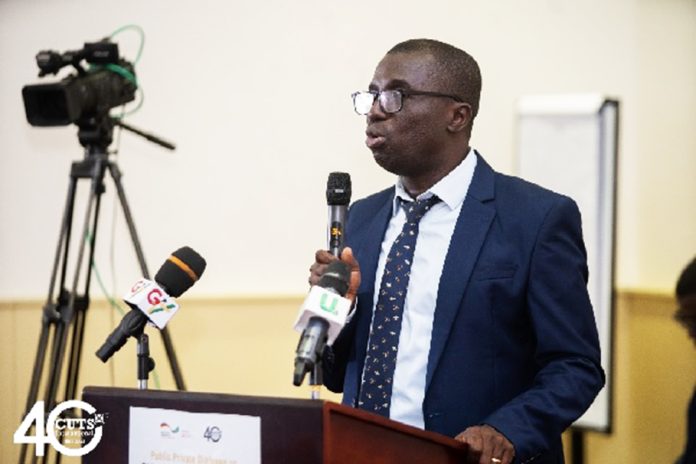
Addressing a news conference in Accra yesterday, Mr Appiah Kusi Adomako, West Africa Regional Director of CUTS International, expressed grave concern over the growing national tragedy unfolding daily on Ghana’s roads.
“Travelling on our roads today requires fasting, prayer and courage,” he said, adding “it is no longer just a transport issue. It is a public health crisis, a development challenge and a national security threat. Road crashes are killing more Ghanaians than pandemics.”
Quoting data from the Ghana Police Service, Mr Appiah Kusi Adomako, revealed that between January and June 2025, Ghana recorded 7,289 road crashes involving 12,354 vehicles, resulting in 1,504 deaths and over 8,300 injuries. Additionally, he said 1,301 pedestrians were knocked down during this period.
To him, this marks a 22 percent rise in deaths and a 10 percent increase in injuries, compared to the same period in 2024. The Ashanti Region emerged as the most fatal, recording 60 deaths in June alone, followed by the Eastern Region with 46 deaths and Greater Accra, which saw a slight reduction from 27 deaths in June 2024 to 22 in June 2025.
“These are not just numbers. Each one represents a human life, a loved one, a breadwinner, a student, a worker whose future was stolen and whose absence now leaves a void in their families and communities,” Mr Appiah Kusi Adomako said.
Indeed, it is not only Mr Adomako and his outfit – CUTS – that is worried over this alarming statistics – The Chronicle is equally worried. Despite all educational campaigns usually embarked upon by both the police and the National Road Safety Authority (NRSA), the rate of road crashes keep rising. Per the statistics released by CUTS, motor riders seem to be the worse culprits.
This is so because they always disregard traffic rules and ride haphazardly. In most of the cases, they ride through red traffic right in front of traffic police officers, but nothing is done to them even though these officers have motorbikes they could have used to chase and arrest the offenders. Meanwhile, let a saloon car go through the same red traffic and you see these officers jumping onto their bikes to chase them.
With regards to cars and vehicles, they also drive on our roads with careless abandon. Sometimes commercial cars in particular, with passengers on board, are seen overtaking slow moving cars ahead of them in sharp curves, with the passengers on board not raising any whimper. As we put this piece together, there is a video circulating on social media where a passenger vehicle is seen overtaking a truck at one of the curves on the Adukrom-Somanya road, in the Eastern region.
Though other vehicles were cautiously following the truck, the two passenger cars veered onto the opposite lane and overtook the truck. Dear reader, your guess could be as good as ours if another vehicle had emerged at that material moment. This tells a story that most of the accidents that occur on our roads are caused by human error or lack of proper judgement by the drivers.
This is why the police must intensify their surveillance on our roads, especially on the highways, to arrest some of these offending drivers. Passengers must also be educated to caution drivers should they observe any careless driving, to complement the efforts of the police. We believe when this is done the country will be able to reduce the alarming statistics and also ensure safety on our roads.
We also cease this opportunity to advice the Inspector General of Police (IGP) to caution his men to look out for motor riders who always disregard traffic regulations. It is high time they started chasing these riders who ride through red traffic lights, because the practice is dangerous to other road users.
Appiah Kusi Adomako, West African Regional Director, CUTS International
CUTS International, a leading policy research and consumer advocacy organisation has called on the Government to declare road safety a national public health emergency, following the alarming spike in road traffic fatalities and injuries recorded in the first half of 2025.
Addressing a news conference in Accra yesterday, Mr Appiah Kusi Adomako, West Africa Regional Director of CUTS International, expressed grave concern over the growing national tragedy unfolding daily on Ghana’s roads.
A road crash involving a motorcycle
“Travelling on our roads today requires fasting, prayer and courage,” he said, adding “it is no longer just a transport issue. It is a public health crisis, a development challenge and a national security threat. Road crashes are killing more Ghanaians than pandemics.”
Startling Statistics from 2025
Between January and June 2025, Ghana recorded 7,289 road crashes involving 12,354 vehicles resulting in 1,504 deaths and over 8,300 injuries, according to data from the Ghana Police MTTD and the National Road Safety Authority (NRSA). Additionally 1,301 pedestrians were knocked down during this period.
This marks a 22 percent rise in deaths and a 10 percent increase in injuries compared to the same period in 2024. The Ashanti Region emerged as the most fatal, recording 60 deaths in June alone, followed by the Eastern Region with 46 deaths, and Greater Accra, which saw a slight reduction from 27 deaths in June 2024 to 22 in June 2025.
“These are not just numbers. Each one represents a human life, a loved one, a breadwinner, a student, a worker whose future was stolen and whose absence now leaves a void in their families and communities,” Mr Appiah Kusi Adomako said.
Road Crashes Now Deadlier Than COVID-19
Drawing a sharp comparison, Mr. Adomako noted that the total number of confirmed COVID-19 deaths in Ghana since the start of the pandemic stands at 1,462. In contrast, road crashes have claimed 1,504 lives in just six months.
“This crisis has surpassed COVID-19 in the number of lives lost, yet our national response remains sluggish. Imagine what could be achieved if road safety received even 20 percent of the attention and funding allocated to COVID-19.”
Vulnerability of Two- and Three-Wheelers
Motorcycle and tricycle accidents continue to dominate crash data. In June 2025, motorcycles accounted for 73 percent of cycle-related crashes (381 incidents), while tricycles made up 24 percent (123 incidents), and bicycles 2 percent (9 incidents).
Recommendation to Government and Stakeholders
To address this escalating crisis, CUTS is called on the government and all stakeholders to consider implementing the following measures:
A road crash scene in Ghana
Declare Road Safety a Public Health Emergency: The President and Parliament must recognise road traffic crashes as a national emergency, equivalent to pandemics and natural disasters. This will allow for better resource allocation, institutional coordination and heightened public awareness.
Amend the Road Traffic Regulations (L.I. 2180): Legal reforms are needed to effectively regulate the operations of motorcycles and tricycles used for commercial transport. This includes setting minimum training requirements, safety gear standards and licensing protocols.
Reform Blood Alcohol and Safety Laws: The current Blood Alcohol Content (BAC) legal limit must be lowered from 0.08 percent to 0.05 percent, in line with WHO recommendations. Additionally, laws on seat belts, child car seats and motorcycle helmets must be strictly enforced and updated to reflect modern safety standards.
Expand DVLA Training and Licensing to High-Risk Districts: The DVLA must strengthen its services, especially in rural and peri-urban areas where informal transport is growing.
Intensify Enforcement in High-Fatality Regions:
The Motor Traffic and Transport Department (MTTD) should be empowered with more personnel, logistics and technology to enforce traffic rules in the Ashanti, Eastern and Greater Accra Regions, which are the most affected.
Deploy Smart Traffic Monitoring Systems: Government should invest in intelligent traffic technologies, such as automated number plate recognition, speed cameras and red-light enforcement systems, to enhance deterrence and accountability on the roads.
Revamp Public Education Campaigns: Mass education must go beyond traditional media. NRSA should lead nationwide road safety education campaigns targeting schools, markets, lorry parks and religious centres. Local languages and community influencers must be engaged.
Operationalise Speed Limiter Regulations: Existing laws requiring commercial vehicles to be fitted with speed limiters must be fully enforced. Periodic inspections must be carried out to ensure tamper-proof compliance.
Strengthen NRSA Pre-Departure Inspections: NRSA must increase its presence at major transport terminals and highways, ensuring that vehicles undergo mandatory safety checks before setting off, especially during holidays and weekends.
Establish Road Safety Units in Every District Assembly: Each district should have a dedicated unit responsible for identifying and managing local road hazards.
Regulate Billboard Placement Through MMDAs: Local authorities must ensure that billboards and advertisements do not obstruct driver visibility or distract road users. Dangerous or illegal signage must be taken down immediately with the support of the police.
Improve Coordination Among Key Agencies: There must be seamless collaboration between NRSA, MTTD, DVLA, and Metropolitan, Municipal and District Assemblies (MMDAs).
Allocate 5 Percent of the Road Fund to NRSA: Road safety efforts are underfunded. Government should legislate that 5 percent of the Road Fund be dedicated to NRSA activities, with timely disbursement to allow for effective planning and implementation.
Strengthen Emergency Response Systems: Road crash victims often die due to delayed medical help. Ghana must improve its ambulance coverage, create rapid response teams and train first responders in basic trauma care to prevent secondary fatalities.
“If we do not act now, we are complicit in the next tragedy. CUTS stands ready to support government through research, advocacy and community engagement. But we need political will, coordination and urgency,” Mr Adomako said.
He further warned that Ghana’s vision of building a 24-hour economy would be undermined if workers, goods and services cannot move safely and confidently at any hour of the day.
“No one will work at night if the roads are death traps. Road safety is as important to a 24-hour economy as power and internet access.”
CUTS International called on the media, civil society, faith leaders, traditional authorities and the general public to unite behind a national campaign to make Ghana’s roads safe. “Road safety is a consumer protection issue. It is a public health issue. It is a development issue. It is a national security issue. We must treat it as such,” Mr Appiah Kusi Adomako concluded.
The Senate on Wednesday formally received four lawmakers who have defected from the opposition Peoples Democratic Party (PDP) to the ruling All Progressives Congress (APC), further strengthening the party’s hold on the upper chamber.
The defectors include: Senator Ekong Samson (Akwa Ibom South), Senator Etim Bassey (Akwa Ibom North East), Senator Francis Fadahunsi (Osun East), and Senator Olubiyi Fadeyi (Osun Central).
The Senate subsequently relaxed its rules to allow the presence of some high-profile APC officials, including the party’s National Secretary, Ajibola Basiru; Chairman of the APC in Osun State, Tajudeen Lawal; members of the House of Representatives, and former Minister, Chris Ngige, who were in the chamber to witness the wave of defections.
With this latest shift, the APC now commands 70 seats in the 10th Senate, up from the 50 seats it held at the commencement of the current Assembly in June 2023.
Meanwhile, PDP’s numbers have dropped to 28, following a series of defections from not only its ranks but also from the Labour Party (LP) and the New Nigeria Peoples Party (NNPP).
The Senate Leader, Opeyemi Bamidele, described the defections as a demonstration of democratic principles in action.
“For us, it is not just about the numbers. We have a serious job ahead to ensure that members and stakeholders remain committed to the ideals of our party. We are doing everything possible to move Nigeria to the next level, and we do not take this momentum for granted,” Bamidele said.
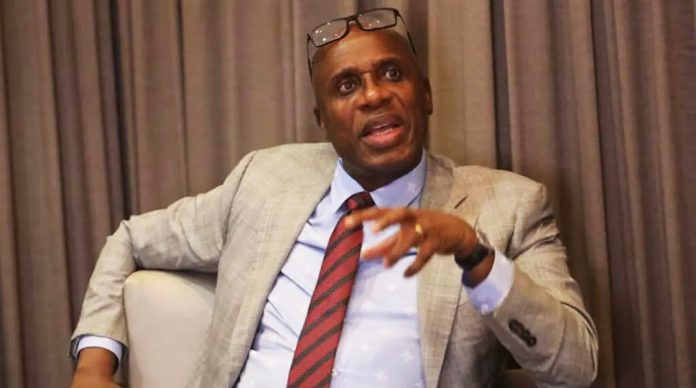
Former Minister of Transportation, Rotimi Amaechi, has warned Nigerians against voting for President Bola Tinubu in 2027.
Amaechi warned that Nigerians would be dead and buried if Tinubu wins a second term in 2027.
The former Rivers State governor disclosed this while addressing members of African Democratic Congress, ADC, coalition in the state.
He also lamented that Rivers State is known for rewriting election results.
Amaechi charged members of ADC to stop those responsible for rewriting election results.
He said: “We are new members of the ADC, it’s the adopted party of the coalition. Most importantly, have your eyes on 2027 and to have your eyes on 2027, please go home and start registration.
“We will form a committee that will go from local government to local government, Ward to ward to ascertain the number of people we have.
“Our (Rivers) state is notorious for writing results, and we must stop them from writing results. When they said that they have already written results, it discourages voters from coming out.
“We should encourage people to come out and vote for the removal of the current government or we will all die of hunger.
“Currently, Nigerians are complaining in President Tinubu’s first tenure; imagine what the second tenure will be like. Then, you’ll be dead and buried.”
A Bill for an Act to Prohibit Public and Civil Servants from Patronising Private Schools and Health Care Services and for Related Matters (HB 2487), has passed first reading at the House of Representatives.
The bill, if passed into law, will stop political office holders and public servants from using private hospitals and schools.
The lawmaker representing Isuikwuato/Umunneochi Federal Constituency of Abia State, Amobi Ogah, who sponsored the bill, said it was part of efforts to revive confidence in the country’s public institutions.
The bill titled ‘A Bill for an Act to Prohibit Public and Civil Servants from Patronising Private Schools and Health Care Services and for Related Matters (HB 2487)’, seeks to compel government officials and members of their families to use public hospitals and schools.
“This bill intends to avoid conflict of interest, maintain public trust and high uncompromised standards of public institutions,” the lawmaker said.
While describing the development as a call to national rebirth, Ogah urged Nigerians, civil society groups and the media to support the bill.
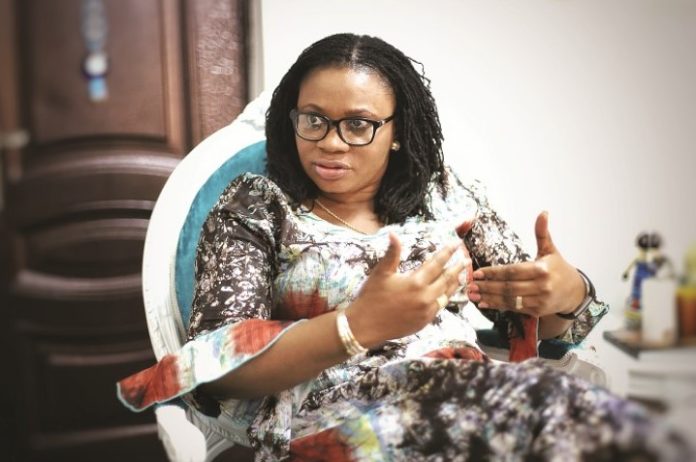
Mrs Charlotte Osei, former Chairperson of the Electoral Commission (EC), says the late President John Evans Atta Mills would have been outraged by the destruction caused by illegal mining.
Speaking at the 13th Anniversary Commemorative Lecture in Accra, Mrs Osei praised Prof. Mills’ patriotism and dedication to securing Ghana’s future, describing him as a man of peace, humility, and democratic values.
“I have wondered many times, would Prof. be happy with us, with me, with the current state of Ghana? I think Prof. would be outraged at how we are committing ‘galamsey’ to damage our environment, our water bodies and our future,” she said.
“Prof. would be sad at the level of lies and vitriol we hurl at each other daily in the media, especially online. The rabid partisanship that probably depressed Prof.,”MrsOsei, who was once his student at the University of Ghana and Ghana School of Law, added.
The former EC Chairperson noted that the former presidentwould, however, be pleased with the prevailing peace in Ghana, the election of the first female Vice President and the growing involvement of the youth in leadership.
Prof. Mills, Ghana’s third President under the Fourth Republic, died in office on 24 July, 2012.
He is remembered for his integrity, humility and commitment to democratic governance.
Mrs Charlotte Osei recalled personal experiences that reflected his modesty, selflessness and openness to criticism.
She said even as President, he admitted fault when necessary and remained focused on national prosperity.
“His administration’s education policies reflected his belief that education should be both accessible and good. He worked to expand access to education, particularly for girls and children from disadvantaged backgrounds, while insisting on maintaining and improving quality,” she said.
Mr Julius Debrah, former Chief of Staff, described Prof. Mills as “one of Africa’s greats”and urged today’s leaders to emulate his values of humility, excellence and service.
The lecture was organised by the J.E.A. Mills Memorial Heritage, a non-partisan organisation dedicated to preserving and promoting the legacy of the late President.
Mr Alex Segbefia, Chairperson of the Heritage, announced a series of events to mark the 13th anniversary, including a wreath-laying ceremony on July 24 at Asomdwee Park and a memorial hockey tournament at the Theodosia Okoh Hockey Stadium.
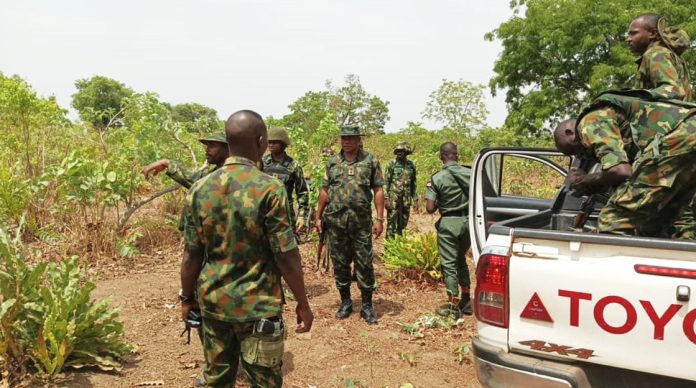
President Bola Tinubu has assured Nigerians that the fight against terrorism and banditry remained one of the priorities of his administration
“This fight against terrorism is a challenge but addressing it remains one of the top priorities of this current administration under our national security agenda,” Tinubu said at the commissioning of the first phase of housing projects for victims of banditry in Kaduna State on Tuesday.
Represented by the National Security Adviser, Nuhu Ribadu, Tinubu said, “Nigeria is in safe hands, and we will restore law and order. That is an assurance we are giving. It will be done.”
The housing project, carried out in collaboration with the Qatar Charity Organisation, is part of the Federal Government’s broader agenda to rebuild communities ravaged by violent attacks.
The president noted that significant progress has already been made in restoring peace and rebuilding lives in Kaduna State. “Recovery is ongoing, and it is clear that fresh air is blowing through Kaduna State; things are changing,” he said.
He stressed that good governance must prioritise the needs of the people, especially those affected by violence. “We are wiping the tears of victims of extreme violence. We are reconciling communities. We are giving everyone a space to belong and a sense of inclusion,” Tinubu declared.
The president praised the Kaduna State Government, the Office of the National Security Adviser, and the Chief of Defence Staff for employing both kinetic and non-kinetic approaches to tackle insecurity in the region.
He highlighted the effectiveness of the “Kaduna Peace Model,” describing it as “intelligence and community-driven, rooted in the understanding that sustainable peace must be cultivated, not imposed.”
According to him, the reopening of the Birnin Gwari Market and the return of displaced farmers to their ancestral lands are signs of progress. “This is a public declaration that Kaduna is having a new face, a face of reality and rebuilding,” he said.
Addressing the victims, the president added, “We heard you. You are victims of extreme violence, but we are with you. Your government sees you and acknowledges your pains.”