Home Blog Page 570

Bayern agree deal worth £65.5m with Liverpool for Diaz

0
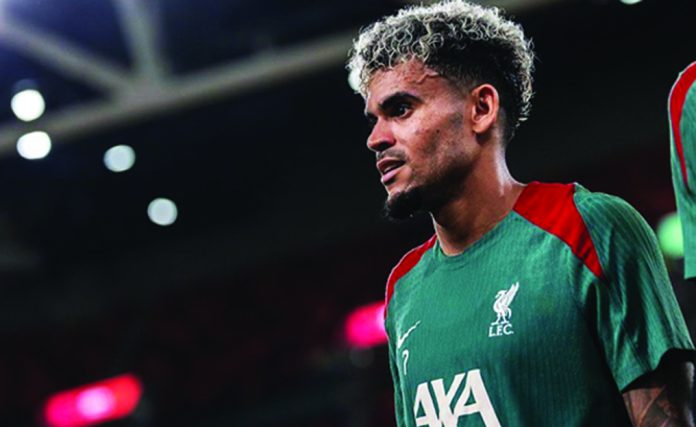
Luis Diaz

Luis Diaz is set to join Bayern Munich after the German champions agreed a deal worth 75m euros (£65.5m) including add-ons with Liverpool.

Liverpool rejected an initial bid of £58.6m from Bayern for the Colombia forward earlier this month.

Diaz, 28, was left out of Liverpool’s squad for Saturday’s 4-2 pre-season friendly defeat by AC Milan in Hong Kong because of speculation surrounding his future.

He has been given permission by Liverpool to fly to Europe from Asia to complete a medical in the coming days.

Liverpool have signed forwards Florian Wirtz and Hugo Ekitike already this summer and are interested in Newcastle United’s Alexander Isak.

Diaz arrived at Anfield from Porto in a deal worth an initial £37m in January 2022 and has scored 41 goals in 148 appearances, including 13 as the Reds won the Premier League title last season.

His 17 goals in all competitions in 2024-25 was the most prolific season of his career.

Bayern won their 34th Bundesliga title last season and scored a league-high 99 goals, but only made it to the last 16 of the German Cup and exited the Champions League in the quarter-finals.

Diaz will provide an attacking option for the Bavarian side, who will be without forward Jamal Musiala for a “long period” after he suffered a broken leg and dislocated ankle at the Club World Cup.

Credit: bbc.com

Newcastle open talks to sign Ramsdale

0
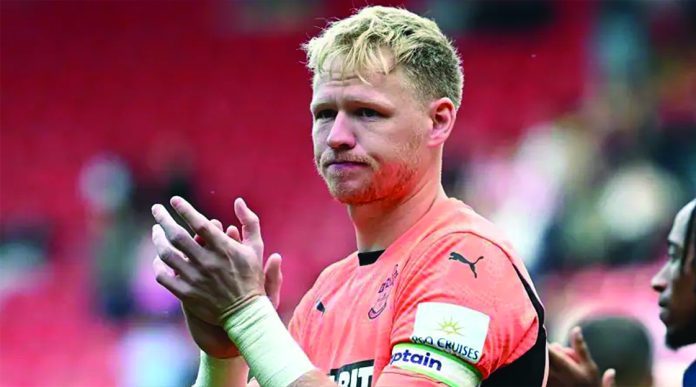
Goalkeeper Aaron Ramsdale

Newcastle have opened talks with Southampton to sign England goalkeeper Aaron Ramsdale.

Negotiations are at an early stage as Newcastle seek to bring Ramsdale in either on loan or a permanent deal.

However, Championship side Southampton are known to prefer a permanent sale on substantial terms having signed the England international for an initial £18m from Arsenal in August 2024.

It follows Newcastle agreeing a £27m fee with Burnley to sign James Trafford last week only for Manchester City to activate a matching rights clause and set up a deal to re-sign their former academy graduate.

The Magpies appear keen to add competition for first-choice goalkeeper Nick Pope and the move would reunite Ramsdale with his former Bournemouth manager Eddie Howe.

Ramsdale, who was last called up by England in March, would also get the opportunity to remain in the Premier League, where he made 30 appearances last season as Southampton finished bottom and were relegated with just 12 points.

Newcastle, with Champions League football to look forward to this season, are trying to shape their squad for the new season amid uncertainty over the future of striker Alexander Isak, who is interesting Liverpool. RB Leipzig’s Benjamin Sesko is being lined up as a potential replacement.

Credit: bbc.com

Sunderland agree £17m Xhaka deal with Leverkusen

0
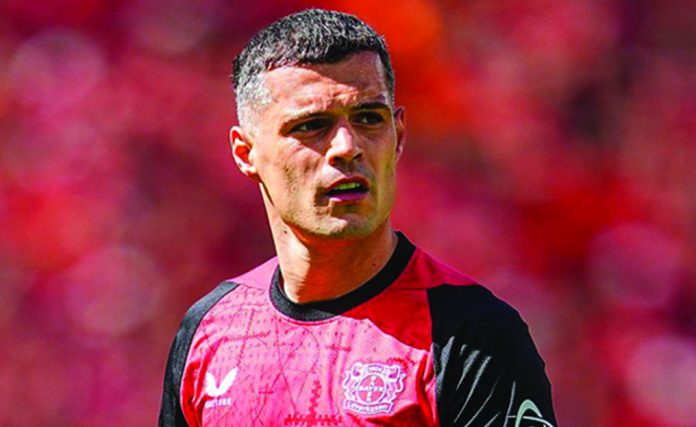
Granit Xhaka

Sunderland are set to sign midfielder Granit Xhaka from Bayer Leverkusen for an initial £13m with a potential £4m in add-ons.

The 32-year-old is now expected to travel to complete a medical and sign a three-year contract at the Stadium of Light.

Swiss international Xhaka will be returning to the Premier League having spent seven years at Arsenal.

He made 297 appearances in all competitions for the Gunners, winning two FA Cup trophies and briefly acting as the club’s captain before he left for Leverkusen in 2023.

A successful two-year spell in Germany followed, where Xhaka helped Leverkusen to their first ever Bundesliga title in 2024.

The deal will take Sunderland’s summer spending to a £114m this summer, albeit having recouped around £37m through the sales of Jobe Bellingham and Tommy Watson.

Only the traditional big six clubs in the Premier League have spent more than the Black Cats after they gained promotion from the Championship through a play-off final win against Sheffield United in May.

Xhaka is set to be the club’s eighth summer signing, following the arrivals of Enzo Le Fee, Habib Diarra, Noah Sadiki, Reinildo Mandava, Chemsdine Talbi and Simon Adingra.

Credit: bbc.com

Yohuno’s 132-Day Crusade Cross- Border Crimes ‘Tamed’ … Promises To Replicate The Strategy Used In Assin North In Akwatia As Well

0
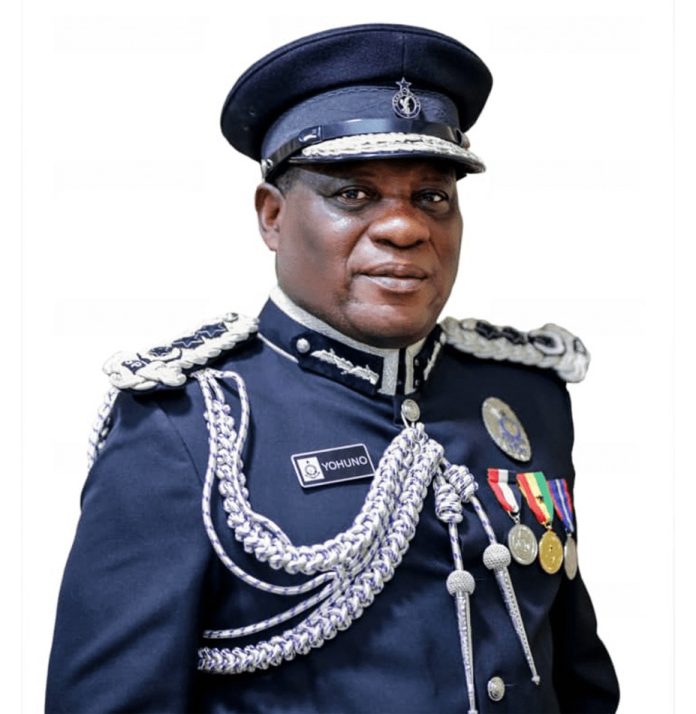
Mr Tetteh Yohuno, IGP

The Inspector General of Police, Mr Christian Tetteh Yohuno’s collaborative efforts with sub-regional counterparts is yielding impressive results. This was made known in an interview he granted to a section of the media over the weekend.

In his first 132 days in office, IGP Mr Yohuno has proven himself to be a formidable force against cross-border crimes in the sub-region.

It came out that through strategic collaborations with his counterparts in Nigeria, Liberia and Togo, Yohuno’s men have successfully apprehended hardened criminals who had been terrorizing the sub-region.

One notable achievement is the arrest of individuals involved in the kidnapping of two women from Ghana who were taken to Nigeria.

The swift action by the Ghana Police Service, in collaboration with Nigerian authorities, led to the rescue of the victims and the apprehension of the perpetrators.

Another significant breakthrough is the capture of individuals who attempted to set on fire the Capitol Building, which is housing the Legislative Assembly of Liberia and escaped to Ghana. The Police worked closely with Liberian authorities to track down and nabbed the suspects, bringing them to justice.

IGP Yohuno’s efforts have also led to apprehension of ‘Lone Ranger’, a notorious individual declared wanted by both Togolese and Ghanaian security agencies.His arrest is seen as a significant victory in the fight against cross-border crimes.

These achievements demonstrate Mr Yohuno’s commitment to intelligence-led policing and his dedication to ensuring the safety and security of the citizens south of the Sahara.

Under his leadership, the Ghana Police Service has shown its ability to work effectively with international partners to tackle such crimes. IGP Yohuno’s impressive start has earned him recognition as a crime fighter who gets results.

According to him, on the local front, hitherto, prior to his assumption of office, the country was recording between thirty and forty robberies on weekly basis, but later from twenty-nine to nineteen.

Currently, the cases have reduced drastically to ten and he is optimistic that they may soon witness single digit in the weeklies.

The Regional Commanders, he said, seem to be in healthy competition among themselves, as to whose jurisdiction remains safer for citizens to go about their businesses without fear of attacks from criminals.

To achieve this, the Commanders have resorted to being on the ground instead of holding themselves in their offices.

IGP Yohuno cited a number of cases in which his men and women on the ground excelled including the arrest of some motorbikers at Atadeka/Katamanso.

Police at snapcheckpoint intercepted two motorbike riders and unsatisfied with their demeanour detained them over a number of high tech mobile phones in their possession.

Few minutes later, they got to know that one of the phones was snatched from a Policewoman near the Nungua barrier whose neck they slit with a cutlass and sped off.

The foiled robbery attempt at Cantonments, in which a gang of two who were kingpins in the north decided to extend their illegal activities to Accra, their activities got to the Police Intelligence Department (PID) who won an exchange of fire battle sending them to be part of statistics at the morgue.

The IGP also said the Police Management Board (POMAB) created a Special Anti-Robbery Taskforce, which is deployed at all times to robbery prone areas so as to subdue the activities of criminal elements, especially on the highways, notably at Atebubu and Donkorkrom, among others.

He went on that police’s intensified operations will be boosted when the President’s promise to retool the service begins to arrive soon. The galamsey fight was not missing in the interesting conversation stating that on ascending to the highest position in the police service, he assured the President to fight the disturbing situation.

Without waiting, he mobilised and went into action, first at Samreboi, Bui, and continued to other galamsey enclaves.

According to him, the hardworking personnel seized at least 178 excavators alongside other illegal mining related equipment being used to destroy the forests and water bodies.

On loyalty of the personnel fighting the menace, he stated that since familiarity breeds contempt, he transferred the commanders in these areas and deployed forces from Accra, who themselves were under the surveillance of plainclothes intelligence groups.

Regarding Ablekuma North, the police boss states that he issued an ultimatum to the Accra Regional Police Commander to apprehend the culprits or risks transferred.

The Chief Constable intimated that, the directive was carried to the letter and those apprehended are being processed for court.

On the pending Akwatia by-election, he did not mince words to say that, the police administration was going to replicate the strategy used at Assin North, which was violence-free.

Even though the Electoral Commission is yet to fix the date for that important election, police’s intelligence is already at work there to ensure that it turns out peaceful, IGP Yohuno concludes.

On the welfare of his men and women, IGP, Yohuno opined that he came to inherit a situation where a section of the rank and file became disillusioned because their promotions were denied them.

So as to bring back their morale, he ensured that all backlog of promotions are cleared.

He ended on a rather humanitarian note by stating that he has personally engaged an Indian world renowned kidney transplant specialist who will be in the country briefly at the invitation of President John Dramani Mahama to work at the University of Ghana Medical Center (UGMC).

The specialist, he said, has agreed to consider assisting police with such problems during the limited period that he would be available.

Presently, about eight members of the police and in some cases families are undergoing dialysis treatment.

Attempt To Oust Osahen From ECOWAS Parliament Fails

0
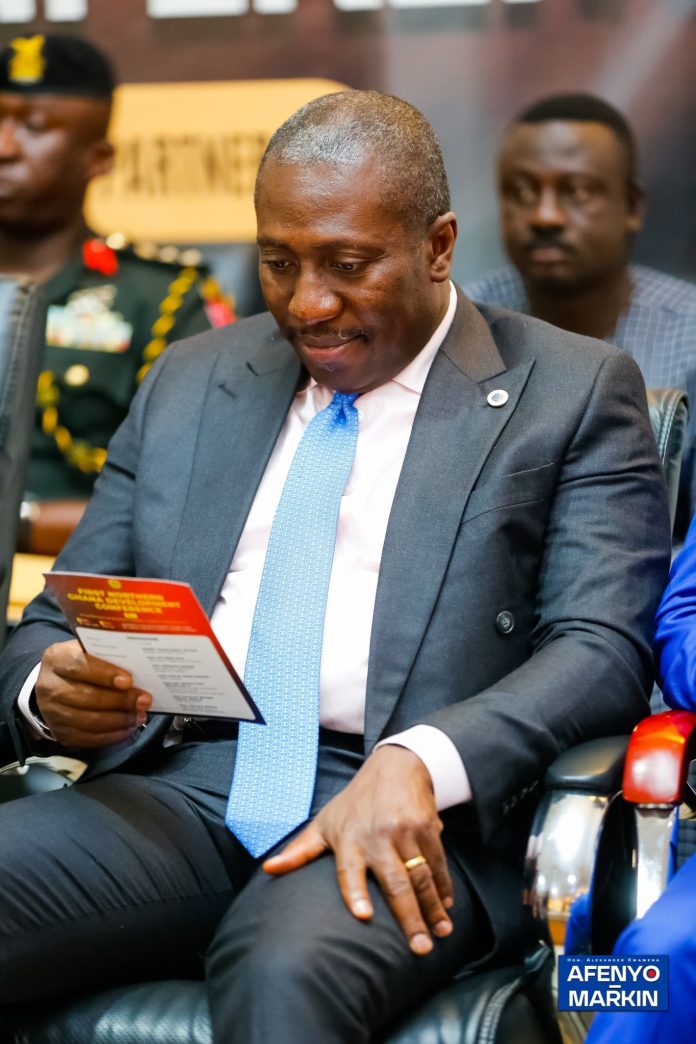
Alexander Kwamena Afenyo-Markin, Minority Leader

An attempt to oust Minority Leader, Osahen Alexander Afenyo-Markin from Ghana’s delegation to the ECOWAS Parliament has dramatically failed, following strong objections from his deputy, institutional resistance from the ECOWAS Parliament and the revelation of an internal agreement safeguarding roles within the leadership.

The drama began on Tuesday, July 22, 2025 when Parliament passed a resolution reconstituting the country’s delegation to the ECOWAS Parliament.

The motion, moved by Majority Leader Mahama Ayariga, removed Afenyo-Markin’s name from the delegation and replaced him with his Deputy Minority Leader, Patricia Appiagyei, despite the absence of both leaders on the day of the vote.

What appeared on the surface as a routine reshuffling of roles soon erupted into a high-stakes leadership struggle involving legal frameworks, political betrayal and questions over greed and loyalty.

The timing, secrecy and execution of the attempted replacement raised eyebrows within and outside Parliament, especially given Afenyo-Markin’s stature as Third Deputy Speaker of the ECOWAS Parliament, a position he was elected to in May 2024.

The attempt to justify the Minority Leader’s removal was spearheaded by former Minority Chief Whip, Mohammed Muntaka Mubarak, who accused Afenyo-Markin of greed.

According to Mohammed Muntaka, the Minority Leader already occupied high-profile international positions including representation at the Inter-Parliamentary Union (IPU) and the Commonwealth Parliamentary Association (CPA) and was now clinging onto ECOWAS despite the opportunity to allow another leader, namely Patricia Appiagyei, to gain similar exposure.

“You cannot hold on to all international roles. That is not leadership. That is greed,” Muntaka reportedly said. But this narrative crumbled under scrutiny. Official documents and internal communications revealed that Afenyo-Markin had already relinquished his positions at the IPU and CPA to Patricia Appiagyei, in a move aimed at empowering her to represent the Minority across multiple platforms.

In return, he remained on the ECOWAS Parliament, not only as a member, but as an elected Deputy Speaker, a role that comes with legal protections under the Supplementary Act A/SA.1/12/16 of ECOWAS.

Deputy Minority Leader withdraws

Shortly after the resolution was passed, Patricia Appiagyei popularly known as Mama Pat sent a strongly-worded memorandum dated July 22 to the Speaker of Parliament, distancing herself from the plot and rejecting her supposed appointment to the ECOWAS Parliament.

“I was not consulted about this replacement. At no point did I express interest in replacing my leader,” she wrote.

The Deputy Minority Leader further described the resolution as a calculated move to sow discord between herself and Afenyo-Markin, insisting that she had no intention of undermining him.

In the same memo, she reminded the Speaker and Parliament that Afenyo-Markin’s position at the ECOWAS Parliament is protected by law, and his four-year tenure as a Member following his swearing-in and election as Deputy Speaker could not be summarily revoked without violating ECOWAS statutes.

Two days later, on July 24, Patricia Appiagyei followed up with another official communication. This time, she explicitly reaffirmed her representation of the Minority at the IPU and CPA, as earlier agreed upon with Afenyo-Markin.

She further nominated Shirley Kyei (Atwima Nwabiagya South) for the IPU and Ida Adwoa Asiedu (Ayensuano) for the CPA, ensuring full Minority presence on those global platforms.

This memo dealt a second blow to efforts aimed at removing Afenyo-Markin, showing that there was no internal leadership dispute and that the narrative of greed was misplaced.

ECOWAS Act

At the heart of the failed ouster lies the Supplementary Act A/SA.1/12/16 which governs the structure and functioning of the ECOWAS Parliament.

According to Article 18(2) of the Act, Members of the ECOWAS Parliament are elected for a non-renewable four-year term, and cannot be removed arbitrarily by domestic political arrangements.

The law is clear: a Member may only be replaced if they resign voluntarily, die, become incapacitated, bring disrepute to ECOWAS, or develop a conflict of interest that violates ECOWAS obligations. Political realignments or party decisions in the member state do not constitute valid grounds for recall.

Therefore, Afenyo-Markin’s continued membership is not only justified by his election and performance, but guaranteed by international law.

ECOWAS Parliament

This is not the first time ECOWAS has blocked internal attempts to recall members over partisan politics. In March 2025, the ECOWAS Parliament rejected a move by Liberia’s government to withdraw three of its legislators, citing that the internal political crisis in Liberia could not override ECOWAS statutes.

Similarly, in Guinea-Bissau, ECOWAS dismissed efforts to remove a sitting member who was facing trial, stating that the charges had not reached a level sufficient to justify such action under the Act.

Per the Terms and Conditions governing the tenure and replacement of a Member of the ECOWAS Parliament, as stated in the Supplementary Act A/SA.1/12/16 relating to the Enhancement of the Powers of the ECOWAS Parliament, the tenure of Members of Parliament (MPs), including the Speaker and Deputy Speakers, is firmly anchored in law and not subject to arbitrary political decisions by individual Member States.

Article 18 (2) of the Supplementary Act clearly states that Members of the ECOWAS Parliament shall be elected for four (4) years from the date of the inauguration of the ECOWAS Parliament. This mandate shall last until the last day of the legislature.

This fixed term is protected and cannot be interrupted arbitrarily by national authorities. Once a Member is duly elected and sworn in, their mandate is independent of national political changes or internal reassignments.

Based on Articles 24 and 25 of the Supplementary Act, the tenure of the Speaker and Deputy Speakers shall be for the life of the Legislature.

GBC Union Petitions NMC Over DG’s continuous stay in office

0
Ghana Broadcasting Corporation

The Divisional Union of the Ghana Broadcasting Corporation (GBC) has submitted a fresh petition to the newly constituted National Media Commission (NMC), calling for immediate intervention regarding the continued occupation of the Director-General’s office by Professor Amin Alhassan, whose official four-year term ended on October 1, 2023.

In a petition dated July 21, 2025, and addressed to NMC Chairperson, Professor Akua Biritwum, the Union expressed concern that this marks the fourth petition on the issue, yet no decisive action has been taken.

The petition was also copied to key stakeholders, including the Chief of Staff, the Office of the President, the Minister for Government Communication, the Chairman of the GBC Board, the Director-General himself, and leaders of the Trades Union Congress (TUC) and Public Services Workers Union (PSWU).

The Union warned that Professor Alhassan’s continued decision-making at the helm of GBC carries serious legal and operational risks, asserting that his actions lack legitimacy and could cause long-term harm to the Corporation. “This remains our firm position,” the Union stated.

To support their position, the Union cited a March 14, 2025, letter from the Controller and Accountant-General’s Department, which invoked Section 25(5) of the Public Financial Management Act, 2016 (Act 921).

The letter emphasised that staffing appointments, including that of Director-General, must receive ministerial clearance and fall within budgetary limits approved by Parliament.

Without retroactive clearance from October 2, 2023 it warned, any salary payments to Professor Alhassan would be deemed unearned. As a result, salary payments to Professor Alhassan have been suspended since March 2025.

Despite these developments, the Union criticised the NMC for failing to act, describing the Commission’s silence as a tacit endorsement of mismanagement and financial impropriety.

They issued a stern warning: if the matter is not resolved within ten working days, the Union will “advise itself,” indicating possible industrial action or legal recourse.

The Union also referenced earlier petitions, including one dated November 21, 2023, submitted through the PSWU of TUC, in which staff firmly opposed any contract extension for Professor Alhassan.

A subsequent petition, dated July 19, 2024, raised additional concerns about GBC’s deteriorating state, sparking media attention and staff protests. Further pressure mounted during a public campaign on August 28, 2024, where unionised staff again urged the NMC to intervene—but, according to the Union, this too was ignored.

The latest petition also highlighted the controversy surrounding a $3.6 million contract awarded during the 13th African Games, which the Union claims subjected GBC to unwelcome public scrutiny.

Moreover, the Auditor-General’s report for the year ending December 31, 2022, led to Professor Alhassan being referred by the Public Accounts Committee over alleged procurement law violations.

Concluding their petition, the Union urged the NMC to treat the matter with urgency and seriousness, warning that further inaction will damage staff morale and deepen the erosion of public trust in Ghana’s national broadcaster.

Experts tackle escalating attacks on Journalists, Whistleblowers

0
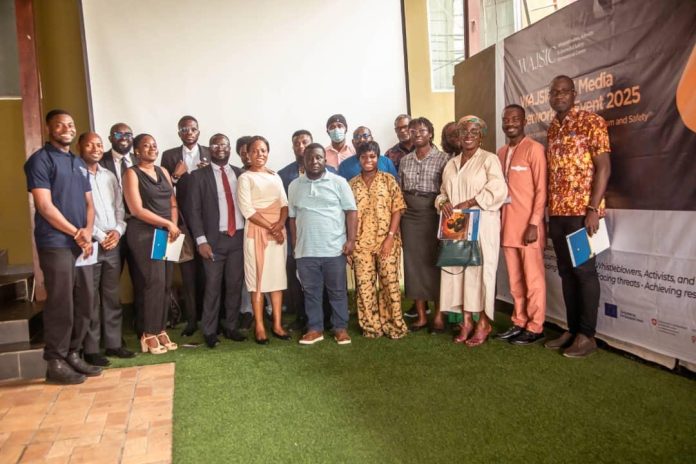
Participants at the Event in the Group Photo

The Whistleblowers, Activists and Journalists Safety International Center (WAJSIC) have organized a networking event to tackle the escalating threats facing journalists, whistleblowers, and human rights defenders across West Africa.

Held at the Airport View Hotel in Accra, the one-day exchange convened media professionals, civil society actors, and development partners in a safe space to network, share experiences, and explore lasting solutions to the growing hostility truth-tellers face.

The event, themed “Networking Event for Media Professionals, Industry Stakeholders, and Supporting Institutions,” combined expert panel discussions, interactive workshops, Q&A sessions, and real-world storytelling to drive one central message truth has defenders, and they are not alone.

Delivering a speech Mr. Abduolaye Diallo, Executive Director of WAJSIC, participants were confronted with sobering data: over 480 journalists attacked, 1,200 human rights defenders harassed or arrested, and 86 whistleblowers facing retaliation in the past year alone. Of these, 17 were forced into exile.

“These are not just numbers. They are our colleagues, our partners, and our friends,” Mr. Diallo’s message stated adding, “today, we gather to change this dangerous reality.”

He expressed gratitude to GIZ for their critical support and to the Media Foundation for West Africa (MFWA) for their collaboration, stressing the need for continued partnership to protect those who risk their lives to expose wrongdoing.

Diallo paid tribute to Anas AremeyawAnas, the investigative journalist and founder of WAJSIC saying, “Anas is a moral compass… a man who has never hesitated to reach out, to fight for his fellow journalists… His generosity, humility, and effectiveness make him a real figure in our times,” he said.

He recalled their partnership since 2009 and their work building SINUZU, the Nobel Zungu Cell for Investigative Journalism in West Africa describing WAJSIC as a continuation of that vision to defend truth and justice in the region.

Madam Dora Boamah Mawutor, representing the Media Foundation for West Africa (MFWA), emphasised that the role of journalists and whistleblowers in West Africa could not be overstated especially in countries where democratic institutions often fail.

“In a region so blessed with resources, our people should be living the best of lives. But mismanagement, corruption, and collusion between the executive, legislature and sometimes the judiciary, leave the media as the last line of defense.”

She reiterated MFWA’s support for WAJSIC and affirmed the need for coordinated efforts to guarantee a safe and enabling environment for investigative journalism and civic activism.

“That is why we need to support the work of WAJSIC. Through partnerships like this, we can ensure that journalists and whistleblowers have both physical safety and institutional protection,” she added.

Representing GIZ, Mr. Kweku Obeng, Component Manager, praised WAJSIC’s initiative and emphasised that journalists and whistleblowers are the “unsung heroes of democratic accountability,” saying “you uncover the uncomfortable truths and give voice to the voiceless — often at great personal risk.”

He noted that GIZ is supporting WAJSIC through the Participation, Accountability, Integrity for a Resilient Democracy (PAIRD) program, a three-year initiative co-funded by Germany’s BMZ, the European Union, and SECO, and implemented with Ghana’s Ministry of Finance.

He warned that corruption drains essential services like education and healthcare but even more dangerous is the silencing of those who expose it.

“A nation where speaking the truth becomes a hazard is a nation in peril. It’s not just a matter of safety. It’s a matter of survival for democracy,” he stressed. He urged participants to think beyond traditional frameworks and shared a humorous, but reflective story about four insurance companies trying to outdo each other with slogans, underscoring the need for innovation, boldness and resilience in the fight for truth.

Editorial: Choi Appointment: Yes, Mahama Really Deserves The Applause

0
Editorial

The Africa Institute on Governance and Security (AIGS), according to citinewsroom.com, has lauded President John Dramani Mahama for what it describes as a “visionary” and “strategic” diplomatic decision to appoint Mr Kojo Choi as Ghana’s Ambassador-Designate to the Republic of South Korea.

In a statement signed by Dr Palgrave Boakye-Danquah, Governance Specialist and Security Strategist at the Institute, AIGS commended the President for his forward-thinking approach to international relations. The institute described the appointment as a “diplomatic masterstroke” that exemplifies Ghana’s commitment to inclusive, culturally informed and innovation-driven diplomacy.

Mr Kojo Choi, a fintech entrepreneur of Ghanaian and Korean heritage, according to the story,   is seen by AIGS as a bridge between African and Asian cultures, with the unique capacity to deepen bilateral ties through shared heritage, technological cooperation, and mutual economic growth.

“Mr Choi’s appointment underscores President Mahama’s recognition of the evolving nature of global diplomacy, where diversity, cross-cultural understanding, and expertise in emerging fields like technology and trade are critical to advancing national and continental interests,” the statement noted.

AIGS emphasised that the choice of Mr Choi aligns with principles of good governance, strategic diplomacy, and Africa’s aspirations under frameworks like the African Continental Free Trade Area (AfCFTA). His background in digital finance and his bicultural experience make him, according to the institute, uniquely positioned to drive partnerships in vital sectors such as artificial intelligence, green energy, and smart agriculture.

Indeed it is not only AIGS that is commending President Mahama for this ambassadorial appointment. A number of civil society organisations and individuals have also commended the president for appointing Choi to head our diplomatic mission in Seoul. Even though foreigners born in Ghana have contributed substantially to the growth of our natural economy, they are, in most of the cases, overlooked when it comes to political appointments even though they are naturalised Ghanaians.

The United Kingdom is our colonial master, but it does not look down upon other races when it comes to appointments. Just a few years ago, a man with Ghanaian heritage, Kwasi Kwarteng, was appointed to head the exchequer. Rishi Sunak, alsowith an Indian heritage, rose through the ranks to become the Prime Minister of UK. As we put this piece together, the current Foreign Minister of Britain is black.

Africa, in most of the cases, accuses her colonial masters in Europe of discrimination, yet these are the same people who are appointing our compatriots to head some of their sensitive positions. In our view, it is high time Africa and Ghana in particular, changed her attitude concerning some of these appointments.

Mr Fadi Samih Daboussi, a fearless critic of the National Democratic Congress (NDC) government has not only endorsed this appointment, but has taken time  to painfully explain how he was snubbed by his own party – the New Patriotic Party (NPP) – for similar appointment because he was considered a Lebanese.

“The argument of the narcissist bigots was that I am white and of Lebanese origins and giving me an appointment would incur the ire of Ghanaians, risking the 2020 general elections,” Daboussi revealed in a Facebook post. Apart from Daboussi, there are possibly many others who have also suffered similar fate, but have not spoken about it.

We certainly need to change this mentality if we are to ensure proper integration of naturalised Ghanaians as being done in America and across Europe. As we earlier indicated, in terms of economic development, UK is far ahead of Ghana, yet an Indian became a Prime Minister. So yes, we join hands with others to congratulate President Mahama for what he has done. He really deserves the applause.

0
Opinion

NPP NEC, Quo Vadis?


To the New Patriotic Party’s National Executive Committee (NEC), I ask in Swahili, “nininikinachoendelea?” to wit, “What the heck is going on?”

The party is breaking apart but yet, NEC, seems like not to be noticing anything. It was under this administration that a founding member felt disrespected and broke away from the party. We heard people saying, “Alan, can go. His departure will not have any effect on the party.” Then it happened during the 2024 elections.Over two million NPP supporters, decided not to vote at all. Was it that they were very disappointed in what was happening in the party and since they cannot see themselves voting for any other party, they decided to abstain?

Dr. Bawumia was the flag bearer, but he alone could not lead the party to victory. The work load was on all party officers from polling stations to national. But one thing was clear, a cocktail of pride, arrogance and ego-ism, drove at least a third of supporters away from the polls in December 2024. And yet lessons were not learnt.

After this abysmal performance at the polls, one would have expected all the party officers, especially from the national and regional levels, to resign and hand-over the partyto an interim management team. But no, the status quo remained and the NEC keeps parading itself as the authority who all must obey. Taking unilateral decisions and imposing them on the party.

For instance, how can a failed administration decide to organise the next presidential primary when indeed, by the party rules, a new administration is mandated to do that? And when the recent national delegates conference took place and constitutional amendments were tabled, the new primary date was not table up for vote, rather it was imposed on the party.

I have problems with this January 2026 presidential primary. Firstly, it is not for a failed administration to decide on this. Secondly, this Top-Down Approach would not resolve any problems, but rather create more. Once the aspirants go round to campaign, there will be party members who will choose sides and after the flag bearer is elected, each and every member who openly supported him, can automatically be elected intoa party office or become a parliamentary candidate. Only those from the flag bearer’s camp will be put into positions, whether they are capable or not. In other words, there shall be more impositions.

Those who are saying that electing a flagbearer early and ahead of other parties would endear him to Ghanaians; so, come 2028 majority of the electorates would vote for him, might have forgotten that it is unity that wins elections and not early primaries. The 1979 split in the UP Tradition led to two very popular politicians, Victor Owusu and William Ofori-Atta, losing to the hitherto unknown Hilla Limann, who was in the race backed by a fully united party.

Another thing that this failed administration is blindly supervising, is allowing party members to come out tearing aspirants apart. Recently Maurice Ampaw came on air and condemned Kennedy Agyapong adding that he was not fit to be president.

Then a national executive officer, Ernest Owusu Bempah, also came on air destroying the reputation of Dr Bawumia. Things that came from the mouths of these two loose-cannons were so distasteful that should any of these two gentlemen win the primary, he could be discredited by the party’s opponents, prior to the General Elections. Moreover, can Maurice Ampaw campaign for Kennedy Agyapong or Owusu Bempah campaign for Dr. Bawumia. What can they say to convince people that they are genuine.

And in all this, NEC is not cracking the whip but sitting there taking wrong decisions and feeling proud about them.

To the amendments of the constitution, I will take three. I have a problem with Motion 43. Why should government appointees who want to contest a sitting MP, resign from their posts? The party should know that appointees do not resign, when contesting for seats and the party has no right to interfere in government.

What if that appointee is playing an important role in government that is helping both government and party? Must he resign two years before General Elections? Is the party not weakening government? Is the party not imposing sitting MPs on the constituencies? And what if the sitting MP is also a government appointee?

With Motion 44, I think it is unfair not to add former CEOs of state organisations and departments, former ambassadors and high commissioners to the Electoral College. These people also help the party, a lot, at all levels and they must be acknowledged.

All said, what is the strength of the Electoral College now, when the party has no database?

I also have problems with the maintaining of age limit of youth in the party at forty-years, when in any African charter, the limit is thirty-five. How would it feel if the party is represented at an Africa youth event, when no one present is above thirty-five, except the NPP reps? The party must adopt what is in Africa and open up for more youth to take responsibilities in it.

So, to the current NEC, I ask in Latin, “Quo Vadis?” “Where are you going to?”Where are you leading NPP to? To another abysmal performance in Election 2028?

Hon. Daniel Dugan

Editor’s note: Views expressed in this article do not represent that of The Chronicle

A Timeless Tribute to Kojo Fosu, aka Daddy Lumba

0
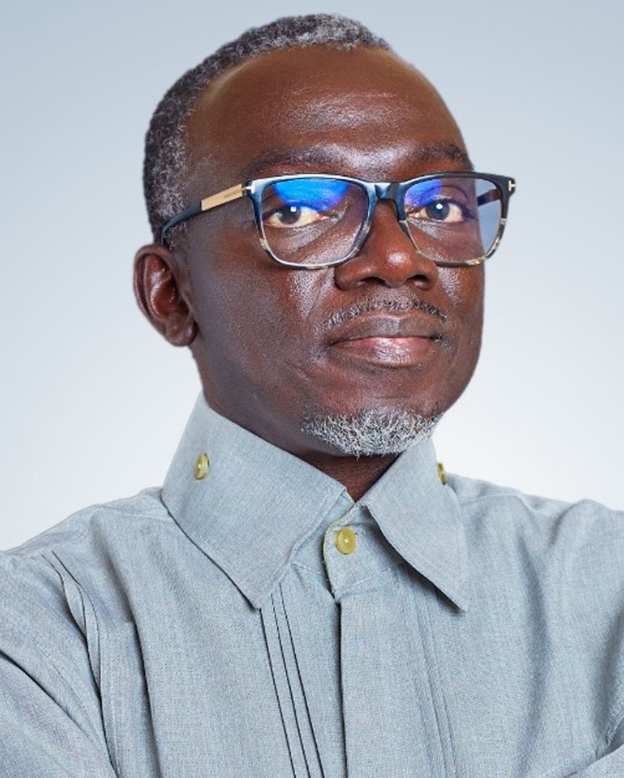
Professor Douglas Boateng

By Professor Douglas Boateng

  1. They called him Daddy, yet he fathered not only melodies but memories. Kojo Fosu, the man the world lovingly knows as Daddy Lumba, was more than a musician; he was the heartbeat of Ghanaian highlife, the voice of a generation and the lyrical philosopher who turned everyday conversations into extraordinary art.


  1. ⁠His voice, smooth as silk dipped in honey, seduced the ears, healed broken hearts, and provoked deep reflection on life’s complex journey.


  1. ⁠He came, and when the platform was handed to him, he embraced it fully. He performed with unmatched passion, turning every stage into a cathedral of sound and soul.


  1. ⁠From ‘Theresa’ to ‘Aben Wɔ Ha’, he turned whispers of the streets into anthems of truth, making even the guilty tap their feet with hidden delight.


  1. ⁠A proverb says “When a tree bears fruit, the stones aim higher.” And like the mahogany tree, Lumba stood tall and unyielding, admired for his strength, resilience and timeless beauty.


  1. ⁠Despite criticism and envy, his melodies endured, transforming highlife into a universal language that crossed borders, generations, and social classes.


  1. ⁠Though the mortal stage dims, his music will live on and be listened to by generations of Africans yet unborn. And in death, his genius will be appreciated even more, for history often treasures what it can no longer touch.


  1. ⁠Daddy Lumba reminded us that music is not just entertainment; it is rebellion, reflection, redemption, and hope wrapped in rhythm. True art never dies; it simply changes its stage.


  1. ⁠Daddy Lumba is gone, but his voice remains immortal, echoing through time like a guiding melody in Africa’s restless night.


The Ghanaian Chronicle