Home Blog Page 563

Ghana Small Scale Mining Output Hits $6b –Sammy Gyamfi

0
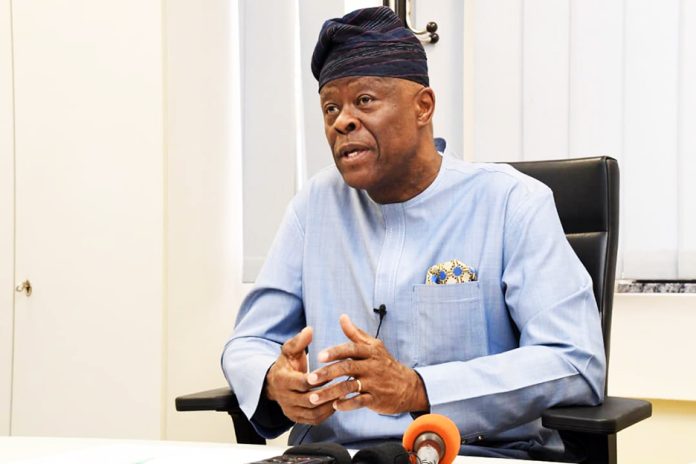
Mr. Sammy Gyamfi, Chief Executive Officer of GoldBod

The Chief Executive Officer of the Ghana Gold Board (GoldBod), Mr. Sammy Gyamfi, has announced that Artisanal and Small-Scale Mining (ASM) sector earned the country an unprecedented $6 billion in gold exports between January and August 2025, a performance that has surpassed the entire output of last year and even outstripped large-scale mining within the same period.

Speaking at the maiden Mining and Minerals Convention at the Kempinski Gold Coast Hotel in Accra, on Tuesday, Mr. Gyamfi revealed that ASM exports hit 66.7 tonnes of gold in just eight months. This, he noted, exceeded the 63 tonnes valued at $4.6 billion recorded for the whole of 2024.

“What this means is that small-scale gold exports alone have not only surpassed last year’s total, but have also overtaken the performance of large-scale mining, which exported 65.1 tonnes worth $5.6 billion between January and August this year,” he declared to applause from industry leaders and policymakers.

The GoldBod CEO attributed the record-breaking performance to sweeping reforms introduced since the agency’s establishment. These include aggressive licensing reforms to promote responsible sourcing, stronger regulatory controls, a transparent pricing system for miners, and robust aggregation systems to mop up gold across all mining regions.

He further cited the scrapping of the 1.5% withholding tax on unprocessed small-scale gold, which had previously incentivized smuggling, as well as intensified enforcement through a GoldBod Taskforce supported by whistleblower rewards.

“These measures are not business as usual. They mark a paradigm shift that asserts Ghana’s sovereignty over its mineral wealth while promoting responsible and sustainable mining,” Mr. Gyamfi stressed.

Mr. Gyamfi disclosed that GoldBod, working with the Bank of Ghana, has also initiated the local purchase of 20 percent of the gold output from large-scale mining companies. Nearly 100 kilograms have already been supplied to the central bank to strengthen Ghana’s reserves.

He emphasised that foreign exchange inflows from ASM exports have been “unprecedented,” adding that they have significantly boosted reserves, improved the balance of payments, and provided critical support to the cedi.

“These early successes underline the strategic role of the GoldBod in Ghana’s long-term development and prosperity,” he said, noting that the institution was still in its preparatory stages with vast untapped potential ahead.

Beyond the impressive revenue numbers, the GoldBod CEO reaffirmed his agency’s commitment to traceability, environmental sustainability, and responsible sourcing in line with OECD guidelines and international best practices.

By the end of the year, GoldBod will roll out a nationwide traceability system that ensures every gram of gold purchased can be traced back to licensed, environmentally compliant mines.

In addition, the agency will donate five Toyota Hilux pickups and GH¢5 million to support the National Anti-Illegal Mining Operations Secretariat (NAIMOS).

Financial allocations have also been made for the reclamation of 1,000 hectares of degraded forest reserves, beginning in November 2025.

Mr. Gyamfi underscored the urgent need for innovative financing models for the mining sector, warning that conservative approaches were holding back growth at a time when gold prices on the international market remain at historic highs.

To bridge the financing gap, GoldBod has launched a Mining Support Programme aimed at attracting investment for environmentally friendly mining equipment and value-chain development.

As part of this, GoldBod signed a Memorandum of Understanding with Goldstream Global DMCC on August 22, 2025, which will transform into a commercial agreement by November. The deal will channel up to $1 billion into establishing over 300 responsible mines in mineralized areas in partnership with concession owners.

“This initiative will increase national gold output and create thousands of jobs for our teeming unemployed youth,” Mr. Gyamfi said.

On the issue of value addition, Mr. Gyamfi lamented Ghana’s continued export of doré (raw gold) instead of refined bullion, calling it a “national shame” for a long-standing leader in gold production.

To address this, GoldBod, in partnership with the Bank of Ghana and local refineries, plans to commence local refining of gold by the end of the year. A state-owned international-standard gold refinery and an ISO-certified assay laboratory at Kotoka International Airport are also in the pipeline to shift Ghana’s export regime from doré to bullion.

Furthermore, plans are underway to establish a “Gold Village”, envisioned as a continental hub for gold jewelry and ornaments, which will position Ghana as a leader in beneficiation and value addition in Africa.

Concluding his address, Mr. Gyamfi challenged policymakers, financiers and industry leaders to think beyond raw extraction and adopt bold strategies to maximize the sector’s potential.

“We must shift from raw exports to beneficiation, from rent-seeking middlemen to decentralised, tech-enabled trade models and from youth as mere labourers to youth as innovators and owners,” he urged.

Editorial: Construction Of New Accra-Kumasi Expressway Is Good But…

0
Editorial

According to a story by Citinewsroom.com, the Ghana Institution of Engineering (GhIE) has urged government to exercise caution over plans to construct a new Accra-Kumasi expressway, warning that the project risks failure if rushed.

Speaking at the maiden Ghana Geotechnical and Geosynthetics Conference at Kwame Nkrumah University of Science and Technology (KNUST) from September 3rd to 4th, 2025 GhIE President, Ludwig Annang Hesse, stressed that such a massive Greenfield project requires at least five years of engineering studies and ground preparation before construction.

The story further added that, he cautioned that governments often rush into starting new projects within their tenure, sacrificing quality and sustainability.

His remarks come on the heels of assurances given by Roads and Highways Minister, Governs Kwame Agbodza, who, speaking at the government’s Accountability Series in July 2025, reaffirmed the state’s readiness to break ground on a new expressway, a flagship project under the administration’s ambitious “Big Push” infrastructure agenda.

Mr. Agbodza noted that the project, described as the first of its scale in Ghana, would involve a new alignment, not just an expansion of the existing National Highway 6 (N6).

The debate comes at a time when the 250.4 km Accra-Kumasi highway remains one of Ghana’s deadliest roads. In the first half of 2025 alone, road crash deaths surged by 21.6% to 1,504 with multiple fatalities recorded, including 15 members of the Savior Church.

The debate over the Accra-Kumasi expressway could not have come at a more critical moment in Ghana’s infrastructure journey. On one hand, the government, led by the Minister for Roads and Highways, Governs Kwame Agbodza, is eager to launch an ambitious Greenfield expressway project. On the other hand, the Ghana Institution of Engineering (GhIE), led by its President, Ludwig Annang Hesse, has sounded a timely caution: do not rush!

The Chronicle believes this is more than a technical disagreement. It is about the nation’s approach to solving one of its most pressing problems, the safety and efficiency of the National Highway 6, the 250.4 km stretch linking Accra and Kumasi. This road is Ghana’s economic artery, yet it is also a death trap.

Between January and June 2025, road crash fatalities soared by 21.6% claiming 1,504 lives. In March 2024, 21 people perished in a single crash and just recently 15 members of the Savior Church lost their lives on this same stretch. These are not mere statistics – they are avoidable tragedies.

The GhIE is right to insist that a project of this magnitude requires no less than five years of rigorous geotechnical assessment, planning and design.

The government, meanwhile, is justified in its desire for bold, strategic infrastructure that positions Ghana for long-term growth and regional integration. But ambition without patience can be disastrous and, therefore, rushing into construction for political mileage risks creating yet another monumental white elephant.

The middle ground is consultation. Engineers, Policymakers, Financiers and other Stakeholders must come to the table. While long-term plans for a new expressway are drawn up, immediate interventions such as accelerating the dualisation of the existing N6, improving lighting and enhancing traffic enforcement must not be delayed. After all, lives are being lost daily.

This is not the time for political showmanship. It is a moment for sober reflection and collaboration. Ghana’s engineers have offered sound professional advice and it must be heeded. If we want an expressway that will endure for generations, then careful preparation is non-negotiable.

As the old saying goes, a stitch in time saves nine. The government must balance urgency with wisdom, and together with the GhIE, ensure that Ghana builds not just quickly, but correctly.

Instructional Headship: Rethinking School Leadership for Improvement

0
Wisdom Klu, the writer

In contemporary times, the role of educational leadership has greatly advanced. Head teachers acts as both administrators enforcing rules and managing operations; they are now seen as educational leaders focused on boosting the quality of teaching and learning. This perspective demands an understanding of the curriculum, teaching methods, teacher development and decision-making. The success of the school largely depends on how well Head teachers manage the curriculum, encourage innovative teaching methods, assisting professional development and using research to enhance informed decisions.

Studies show that with inadequate resources, the responsibilities are even more demanding. School leaders should implement national standards and local conditions, providing supportive learning environments, and uphold accountability without compromising reliability. The success of schools today heavily relies on how effectively head teachers incorporate these roles into a unified improvement strategy.

Curriculum Leadership

Curriculum leadership serves as an essential basis for effective leadership. Chan, Ridley, and Morris (2022) argue that principals who get in-depth understanding of the curriculum, pedagogies and assessment are more determined to establish collective goals. Their research stresses the importance of adapting the curriculum to meet both the needs of student and implementing policy mandates.

Although the study underscores the centrality of curriculum, its emphasis on structural alignment may neglect the localized challenges faced by under-resourced schools, where inflexible standards can burden teachers.

Instructional Practices

Amels, Krüger, Suhre, and van Veen (2021) demonstrate that distributed leadership enhances teachers’ capacity for innovation and change. Sharing responsibilities empowers staff and fosters accountability for instructional quality.

The concept of distributed leadership presupposes that teachers possess the necessary skills to take on added roles. However, many teachers lack ongoing professional development, making it essential for leaders to first build teacher capacity before fully delegating leadership responsibilities.

School Organization and Learning Communities

Ho, Ong, and Tan (2020) show that effective leaders support professional learning communities (PLCs) by combining strict accountability structures with flexible opportunities for teacher autonomy, thereby encouraging collaboration and creativity.

Their findings are derived from well-resourced schools in Singapore, raising questions about the applicability of such models in resource-limited settings, where strict bureaucracies and scarce resources may hinder collaboration.

Teacher Development

Sezgin, Sönmez, and Naillioğlu Kaymak (2020) assert that mentoring-based learning cultures boost teacher confidence, reflection, and professional growth, offering an economical means of supporting teachers, especially when formal training is limited.

Although mentoring is beneficial, establishing such cultures demands time and stability, which can be difficult in larger schools with high staff turnover. Leaders must tailor mentoring approaches to suit their specific contexts.

Data-Informed Leadership

Townsley and Snyder (2022) investigate how educational leaders interpret and utilize data. Some concentrate narrowly on accountability, while others use data to enhance instruction. They advocate for a balanced approach where data serves as a guide rather than a directive.

While their study provides valuable insights, it tends to overlook the significance of qualitative data such as classroom observations, student perspectives, and community input, which can offer a more comprehensive understanding of teaching and learning.

Recommendations

Based on the synthesis of these studies, effective instructional headship should be guided by the following recommendations:

  • Adapt curriculum to context: Ensure national standards reflect the specific needs and realities of local schools.
  • Encourage distributed leadership: Share responsibilities with teachers to enhance accountability and their capacity for innovation.
  • Develop professional learning communities: Balance clear accountability with teacher autonomy to promote sustained collaboration and creativity.
  • Strengthen teacher development: Implement mentoring and peer-support systems to foster professional growth, especially in resource-limited environments.
  • Apply data responsibly: Combine quantitative test results with qualitative insights from classroom observations and student feedback to inform well-rounded decision-making.

Summary

Instructional headship is best viewed as an integrated leadership approach that encompasses curriculum management, shared responsibilities, collaborative school systems, teacher development, and evidence-informed decision-making. The works by Chan et al. (2022) highlight curriculum alignment, Amels et al. (2021) emphasize distributed leadership, Ho et al. (2020) focus on professional learning communities, Sezgin et al. (2020) stress the importance of mentoring cultures, and Townsley and Snyder (2022) advocate for balanced data utilization.

These studies indicate that the most effective instructional headship emerges from combining these elements into a unified strategy. However, critiques point out that much of the literature assumes a resource-rich context and adequately prepared teachers, which does not reflect the realities of all schools. Therefore, instructional headship must be thoughtfully adapted to diverse environments.

Conclusion

It is important to understand that, instructional headship is not merely a set of isolated tasks but rather a dynamic and adaptable form of leadership. Its success relies on integration and merging curriculum leadership, collaborative instructional practices, supportive school structures, mentoring, and balanced data use.

Head teachers who adopt this integrated approach can advance schools beyond mere routine management, cultivating professional communities that foster growth and equity. Such leadership prepares learners for not only academic success but also lifelong learning, creativity, and active citizenship. Thus, instructional headship presents both challenges and opportunities for school leaders aiming to transform education in the 21st century.

Written By Wisdom Koudj Klu

(wisdomklu@gmail.com)

The views expressed in this article are the author’s own and do not necessarily reflect The Chronicle’s stance.

Sick Bay Commissioned at ARCC for staff 

0
Dr Frank Amoakohene, Coordinating Director

The Ashanti Regional Coordinating Council, presided over by the Ashanti Regional Minister, Dr Frank Amoakohene, has commissioned a new Sick Bay at the Residency, marking a significant step in enhancing the welfare of workers.

A bed at the facility

The Sick Bay will provide emergency care, routine check-ups, health screenings aims to address health issues early, reducing absenteeism and enhancing productivity.

This initiative underscores the Council’s commitment to improving working conditions and the overall well-being of staff members.

The commissioning ceremony was in line with the Council’s dedication to providing essential services to employees and that, the sickbay will offer medical care and support, ensuring that workers receive timely treatment and attention while on duty.

According to the Regional Minister, workers will access medical facilities without leaving the premises, boosting health, productivity and job satisfaction.

Dr. Frank Amoakohene stressed that his vision prioritises worker welfare and a healthy work environment, saying the Sick Bay commissioning reflects his commitment to improving lives of residents and workers in the Ashanti Region.

Fifty 50 Club Donates 30 Metal Bunk Beds to T.I. Ahmadyya SHS 

0
Members of Fifty 50 Club presenting the Beds to the School Authorities

The Fifty 50 Club, an Obuasi-based NGO, has made a donation of 30 metal bunk beds worth GHS24,000 to T. I. Ahmadiyya Senior High School, at Fomena, in the Ashanti region.

The donation was meant to alleviate accommodation challenges faced by female students of the school.

The thirty donated Metal Bunk Beds

It comes in the trail of a devastating fire outbreak in February, 2025 that displaced over 200 female students at Ahmed House (the female dormitory) after more than 100 beds were destroyed, and forced them into makeshift accommodations.

The beds will serve 60 students initially, with plans to support 40 more students with additional beds.

Mr. Jacob Edmund Acquah, President of the Organisation, disclosed that the Club’s focus is on positively impacting lives and improving livelihoods.

Mr. Osman Yaw Baidoo, Headmaster of the School, expressed his profound gratitude for the kind gesture, saying the donation brings relief and ensures students’ welfare and psychological well-being that is crucial for their academic success.

Fifty 50 Club’s intends to construct a GHS70,000 Children’s Weighing Center at Kyekyewere, near Obuasi, as part of its 5th-anniversary projects.

You can’t resume now -Senate tells Natasha

0
Natasha Hadiza Akpoti

The Nigerian Senate has told the lawmaker representing Kogi Central, Natasha Akpoti-Uduaghan, that she could not resume office yet, despite completing her six-month suspension.

In a letter by the Acting Clerk to the National Assembly, Dr. Yahaya Danzaria, dated September 4, 2025, the Senate acknowledged Akpoti-Uduaghan’s notification of her intended return on September 4, the date she claimed marked the end of her suspension.

According to the Senate, Natasha’s six-month suspension remains in force pending the outcome of a Court of Appeal case instituted against the Senate by Akpoti-Uduaghan.

“The matter remains sub judice, and until the judicial process is concluded, no administrative action can be taken to facilitate your resumption,” the letter read in parts.

According to the letter, the Senate would only review her suspension after the court’s pronouncement.

Credit: dailypost.ng

NCAA Summons Airlines Over Flight Disruptions, Refunds

0
NCAA

The Nigeria Civil Aviation Authority (NCAA) has summoned all domestic airlines to a meeting in Abuja over flight disruptions.

NCAA Director of Public Relations and Consumer Protection, Michael Achimugu, announced this in a statement on Tuesday via his X handle.

Achimugu said the meeting will be held on Wednesday at the NCAA headquarters.

“The NCAA has invited all domestic airlines to a meeting in Abuja slated for tomorrow, Wednesday,” Achimugu wrote.

He stated that among the issues to be addressed are “Unruly passenger behaviour and passenger handling protocols; Unresolved refund/compensation issues; Introduction of RFID bag tags and flight monitoring technology; Enforcement of phone switch-off instruction and protection for cabin crew, as well as Improved travel experience for passengers.”

This comes barely 24 hours after Achimugu said the regulatory authority had the mandate of the Federal Government “to begin naming and shaming” airlines that delay and cancel flights, especially at odd hours, without providing the right comfort for the stranded passengers as stipulated in Part 19 of the Nigerian Civil Aviation Regulations.

In a post on X, he stated that when airlines cancel flights without taking care of the welfare of passengers, they expose the NCAA’s consumer protection officers to danger.

Achimugu explained that if an airline has kept passengers at the terminal up to 00:hrs before cancelling a flight, the airline owes the passengers hotel accommodation.

“The regulations stipulate that passengers stranded between the hours of 2200 and 0400 be given accommodation.

“The situation where airline staff intentionally disappear, leaving NCAA Consumer Protection Officers to handle justifiably irate and frustrated passengers, will no longer be tolerated.

“While one understands the challenges that operators face in our peculiar operating environment, whoever willfully ventures into a business and wants to remain in it must do it well.”

Credit: channelstv.com

Petrol Scarcity Looms As NUPENG Continues Strike

0
Petrol Scarcity Looms

Scarcity of petroleum products may soon hit the country as members of the National Union of Petroleum and Natural Gas Workers (NUPENG) continue their strike on Tuesday after negotiations between the Federal Government, organised labour, and the Dangote Group hit a roadblock late Monday in Abuja.

This came as NUPENG officials stopped fuel loading activities across depots nationwide on Monday, and kicked against Dangote Petroleum Refinery’s alleged ban on workers’ unionism.

Talks broke down after Sayyu Dantata, who represented the Dangote Group, reportedly walked out on Labour Minister Muhammad Dingyadi and the labour delegation during discussions over the unionisation of Dangote Refinery workers.

The meeting had in attendance the national executives of NUPENG and officials of the Nigeria Labour Congress  (NLC) and the Trade Union Congress (TUC). Also present was the Executive Director, Distribution Systems, Storage and Retailing Infrastructure of the Nigerian Midstream and Downstream Petroleum Regulatory Authority, Ogbugo Ukoha, as well as representatives of the Dangote Group and MRS Petroleum.

The meeting was co-chaired by Dingyadi and the Minister of State for Labour, Nkeiru Onyejeocha.

Briefing journalists after the meeting, Dingyadi admitted the talks collapsed.

“There are issues we have not been able to reach a final agreement on. Since it was getting late and some of the parties were travelling to Lagos, we had to call off the meeting until tomorrow. But I am confident that by tomorrow, we should be able to resolve these issues,” Dingyadi said.

The NLC, however, accused the Dangote representative of deliberately frustrating negotiations.

“Even when we bent backwards to accommodate his uncompromising behaviour, he still walked out. We are left with no option but to do the needful. The strike action continues,” the acting Secretary of the NLC, Benson Upah, said.

NUPENG President Williams Akporeha said the union’s action was in defence of Nigerian workers, accusing Dangote of attempting to “enslave” employees.

Credit: channelstv.com

No immediate plan to implement 5% fuel tax –Govt

0
Minister of Finance and Coordinating Minister of the Economy, Wale Edun

Wale Edun, minister of finance and coordinating minister of the economy on Tuesday, moved to quell public concern over the controversial 5% fuel surcharge contained in the newly signed Tax Administration Act 2025, saying the federal government has “no immediate plans” to implement the charge.

Speaking at a press conference in Abuja, Edun described the surcharge as a long-standing provision first introduced in 2007 under the Federal Road Maintenance Agency (FERMA) Act, and not a new tax measure created by the Tinubu administration.

According to him, the surcharge’s inclusion in the 2025 Act is part of efforts to consolidate and harmonise existing laws for clarity and ease of compliance.

“It is important to make this distinction. The inclusion of the surcharge in the 2025 Nigeria Tax Administration Act does not mean an automatic introduction of new tax. It doesn’t mean fresh taxation automatically,” Edun said.

The fuel surcharge, which sparked criticism from labour unions and civil society groups recently, was originally designed to fund road maintenance, with 40% of proceeds allocated to FERMA and 60% to state-level equivalents.

However, the recent mention of the levy in the consolidated Tax Administration Act raised fears that Nigerians would face an additional burden on fuel costs starting in 2026.

Edun clarified that the new law will not take effect until January 1, 2026, and even then, any implementation of the surcharge would require a formal commencement order by the minister of finance, published in an official gazette.

“There is a whole formal process involved, and as of today, no order has been issued, none is being prepared and there is no plan. There is no immediate plan to implement any surcharge,” he stressed.

The Minister used the opportunity to justify government’s broader tax reform effort, noting it as a long-overdue overhaul of Nigeria’s fragmented tax system.

He said the Tax Administration Act is one of four legislative instruments passed to improve transparency, simplify compliance for individuals and businesses, and modernise revenue collection.

Credit: businessday.ng

Ghanaians must rethink of their Retirement Planning –Banker

0
Business

Chief Risk Officer at First National Bank, Samuel Acquah, has raised concern over a growing disconnect between Ghanaians’ expectations of retirement and the stark realities many retirees are facing.

Speaking during a recent engagement, Samuel Acquah stated that retirement is no longer the secure and peaceful chapter many envision, but instead has become a challenging adjustment period, marked by emotional, psychological and financial hurdles.

“Retirement, for many, hasn’t materialised the way they imagined. Beyond financial shortfalls, retirees are grappling with a deeper emotional and psychological reckoning, the realisation that the life they planned for is not the one they are living.”

Though Ghana boasts a Three-Tier Retirement planning system, recent studies show that a large proportion of workers, especially in the informal sector, still rely on informal planning methods, and this leaves them vulnerable to insufficient retirement income and the inability to cope with age-related expenses.

Many pensioners attribute poor planning to low incomes during their working years, while others point to lack of access to accurate information about retirement.

Samuel Acquah warned that traditional assumptions about retirement, such as financial security, stability and dependence on adult children for support are increasingly outdated.

“While it is not a uniquely Ghanaian issue, the severity of the disconnect between expectations and reality must prompt action within the financial industry,” he stressed.

According to Samuel Acquah, many retirees today are continuing to work well past their intended retirement age, not out of choice, but out of necessity.

Others are dipping into their retirement savings earlier than expected, often to handle unexpected expenses or support extended family members, compromising their financial freedom.

“This reality calls for a shift in how we talk about and plan for retirement. We need to reframe retirement planning, less about idealised visions and more about realism, adaptability and sustainable long-term goals,” Samuel Acquah advised.

He called for enhanced public education on financial planning, beginning as early as possible. He also identified the importance of flexible strategies that adjust to life events, changing economic landscapes, and evolving family structures.

“Retirement is no longer a final destination but it is a dynamic new chapter. We must have honest discussions and create workable solutions to make it a fulfilling stage of life,” he said.

In response to the growing challenge, Acquah assured the public that First National Bank is stepping up with targeted financial products to meet these needs.

“We’ve developed fit-for-purpose products like our Fixed Deposit and Flexi-Fixed Deposit accounts, which offer competitive interest rates to help customers build wealth steadily and securely.”

He added, “Whether someone is starting early or playing catch-up, our products offer both stability and flexibility, key elements for achieving financial freedom in retirement.”

Acquah concluded by reiterating the bank’s commitment to supporting Ghanaians through their financial journeys: “We believe the only way to make retirement dreams a reality is through a realistic, proactive approach and First National Bank will be right there with our customers every step of the way.”

The Ghanaian Chronicle