For the first time since Daniel Levy’s shock departure, Tottenham Hotspur take to the field on Saturday evening, facing West Ham United in a Premier League London derby.
The Lilywhites have undergone seismic changes off the field during the international break, whereas the Hammers are riding high on the back of an unexpected first success.
Tottenham have now been beaten in 17 of their last 23 top-flight games not against newly-promoted teams and have also won just three of their last 16 London derbies in the competition.
Such statistics paint an ugly picture before a trip to a resurrected West Ham side, who may have been ruing the timing of the first international break of the season after defying their first three results of the season at Nottingham Forest’s City Ground.
Indeed, the Hammers have failed to triumph in any of their last six Premier League contests at the London Stadium – losing three and drawing three in front of their own fans – although they have found the net in their last five on familiar territory.
Whether West Ham can pick up where they left off before the international break remains to be seen, but Spurs were fortunate to only lose by one against Bournemouth, so Potter’s men can no doubt hurt their derby foes in the final third.
Two anti-corruption campaigners say a maximum of six months is needed for political campaigns to tackle corruption associated with political funding.
They said long periods of campaign put huge financial burdens on political parties, making them vulnerable to corruption.
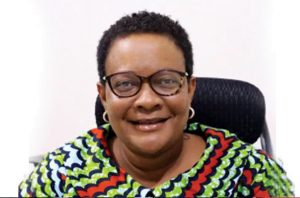
The two anti-corruption campaigners are; Mrs. Mary Awelana Addah, Executive Director, Transparency International, Ghana, and Mr. Kwami Edem Senanu, Co-Chair, Citizen Movement against Corruption.
They made the call while contributing to a panel discussion at a national dialogue on “strengthening rule of law and combating corruption in Ghana”, organised by the National Commission for Civic Education (NCCE) in Accra, on Tuesday.
It was on the theme: “Empowering Citizens, Promoting Accountability.”
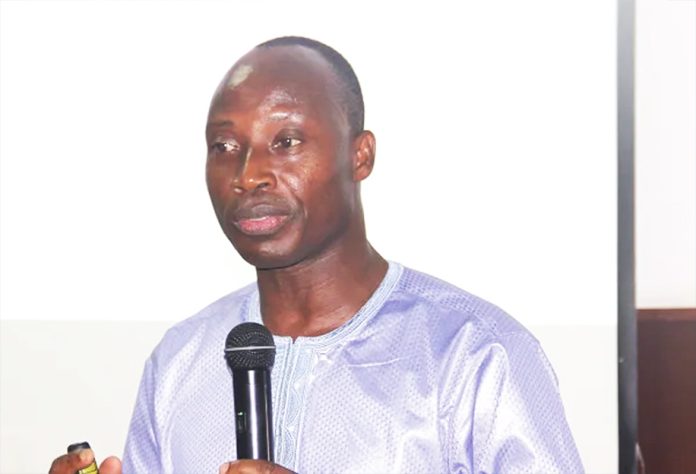
Mrs Mary Awelana Addah, anti corruption campaigner
Mrs. Addah said the current period of political campaigns was too long, which imposed huge financial burden on political parties and their candidates.
The situation, she explained, compelled the parties and candidates to seek financial support from any source, who in turn “wants to recoup” his or her “investments”, when the party assumed office.
Limiting the campaign period to at most six months, Mrs. Addah said such expenses would be eliminated and reduce the level of corruption, particularly among the political class.
“We want a campaign period that is reduced, drastically.
“I was in Denmark some time ago and within six months they had prosecuted their agenda, whatever you want to say to the people, you say it and then they vote, and they are done with it. After one day of voting, everybody carries on with their lives. I believe we can do that, it’s not that far away,” Mrs. Addah emphasised.
She also called for a review and the strengthening of the Political Party Act to regulate political party financing in the country, stressing that would enhance transparency and reduce corruption.
“We want clarity, clarity in the sense that the Political Party Act as it stands does not allow a lot of things to happen.
“So some of the things we want to see are a regime where the candidates also disclose how much donations come to them,” she added.
Mr. Senanu, on his part, said when limited period on campaigns became a legal requirement, it must be enforced to the letter.
“If we limit the campaign season, we won’t give these people so much time and money so that when they come into power they have to collect it back from us. So, six months, June to December,” he said.
Mr. Senanu, who is also the Chairperson of the African Union Advisory Board Against Corruption (AUABC) also called on the constitutional review committee to address the current political party financing gap, to ensure transparency in campaign financing.
Professor Justice Bawole, former Dean of the University of Ghana Business School, stressed the need for Ghanaians to be patient with anti-corruption institutions, explaining that to win the fight against corruption requires consistency and patience.
While calling for training for public and civil servants on ethics, Prof Bawole also urged the state to institute a system that rewarded good behaviours to serve as a motivation.
Mr Victor K. Brobbey, Deputy Chairman, General Services, NCCE, called for the rebuilding of citizens’ conscience, explaining that without a renewed sense of integrity, moral leadership and justice, the corruption fight could not be won.
Mr. Kwaku Lartey Obeng, the Component Manager, Strengthening Anti-Corruption Actors, Participation; Accountability and Integrity for a Resilient Democracy programme (PAIReD) at GIZ, urged civil society organisations to continue to demand for policy change and advocate for accountability, stressing that their role in eradicating corruption was crucial.
The national dialogue, an initiative under the PAIReD programme, sought to promote good governance and foster accountability.
It was commissioned by the German Federal Ministry for Economic Cooperation and Development (BMZ) and co-financed by the European Union and Swiss State Secretariat for Economic Affairs (SECO) and implemented by GIZ and the Ministry of Finance.
Two Nigerian nationals have been arraigned before the Accra Circuit Court for their alleged involvement in a foiled cross-border kidnapping operation, masterminded by former members of a Niger Delta militant group.
The accused, Joseph Howell, 43, a self-proclaimed private security officer and Japhet Graham, 53, a self-styled businessman, appeared before the court presided over by Her Honour Susana Eduful on Wednesday.
They face a single charge of attempt to commit crime, namely kidnapping, contrary to Sections 18(1)(a) and 89 of the Criminal Offences Act, 1960 (Act 29).
The court did not take their pleas as the duo lacked legal representation. They were remanded into custody to reappear on September 22, 2025.
Prosecution’s Account
Presenting the facts of the case, Chief Inspector Jacob Maalo Kuubal Esq., told the court that intelligence received on September 6, 2025 from the Nigerian Police Intelligence Unit and INTERPOL NCB, revealed a plot by ex-members of the Niger Delta militant group to carry out kidnappings in Ghana.
According to the prosecution, on September 5, 2025 three suspects based in Nigeria; Mathew (Lagos), Smart Christmas Alfred (Ondo State) and Adusa Oyile (Delta River) contacted one Tari Tiemo, the alleged gang coordinator (now in custody in Nigeria), seeking funds to travel to Ghana to execute the operation.
Tiemo allegedly promised each suspect ₦1.5 million (approx. GH¢20,000) to support their families, while they operated in Ghana.
Their targets were reportedly high-profile individuals, referred to as “Oborobo” — a slang term for affluent persons or expatriates.
The group allegedly planned to travel to Ghana via speedboats, through riverine routes, wearing Ghanaian security uniforms to avoid detection.
After executing the kidnappings, they intended to retreat into the Niger Delta creeks in Nigeria and demand ransom from victims’ families.
Arrest and Interrogation
The prosecution further revealed that intercepted communications between the suspects and their Ghanaian informants led to the arrest of Howell and Graham in Aflao, Volta Region.
Phone numbers used in these discussions were traced directly to the accused. Both men allegedly entered Ghana illegally and initially denied knowing each other.
However, investigations revealed that they were both received at Prince Hotel in Aflao, by suspect Tari Tiemo, where they first met in person.
During interrogation
Howell claimed he came to Ghana to collect ₦1.5 million owed him by his uncle, Tiemo.
Graham stated that he came to retrieve the same amount from a mutual acquaintance named Jonas.
Howell also admitted being affiliated with three security groups operating along the Delta River.
Authorities are collaborating with Nigerian security agencies to trace and apprehend other suspects mentioned during interrogations. Investigations are ongoing in both Ghana and Nigeria, with more arrests expected.
Barely hours after residents of Mpatuam in the Amansie West District attacked a military detachment guarding the Asanko Gold concession at Tetremu, armed soldiers stormed the community, forcing residents, young and old alike, to flee in fear.
What many described as a reprisal operation has left Mpatuam a ghost town. Residents, fearing brutality, abandoned their homes at the news of the soldiers’ advance.
Last Tuesday, tension boiled over when residents confronted soldiers, leading to the death of two people, including the Assembly Member for Aboabo Tetekaso, Sampson Dankwa.
Two others sustained gunshot wounds and are currently receiving treatment.
Speaking to The Chronicle, the District Chief Executive for Amansie West, Prince Manu Moris, confirmed that the community had indeed been deserted.
“The community is deserted, owing to the presence of the military. We have engaged them and calm has since returned,” he assured.
Similarly, Samuel Sakye, Assembly Member for Mpatuam West, confirmed that the military’s reinforced deployment after the clashes has frightened residents into abandoning their homes.
“People are so scared that when they see the military uniform they run away,” he disclosed. Sakye further revealed that at about 11:00 GMT on Tuesday, soldiers attempted to enter Mpatuam, but the youth of the community resisted by burning tyres to block their advance.
Ghana Armed Forces Statement
Meanwhile, the Ghana Armed Forces (GAF) has explained its side of the incident.
According to a statement shared with The Chronicle, the deployment at Asanko Gold began in July 2025 following consultations with the company’s management, the Regional Security Council, the Amansie West and South District Security Councils and representatives of small-scale miners.
The troops, GAF explained, were tasked with preventing encroachment on the concession and safeguarding lives and property.
On Monday, 8 September, 2025 during routine patrols, soldiers encountered illegal miners within restricted areas.
The miners fled, but one reportedly fell into an abandoned pit and drowned.
The following day, Tuesday, 9 September, 2025 agitated illegal miners and community members stormed a military base at Esaase, leaving behind the body of the deceased in protest. The police were called to retrieve the body, but the group reclaimed it before officers arrived.
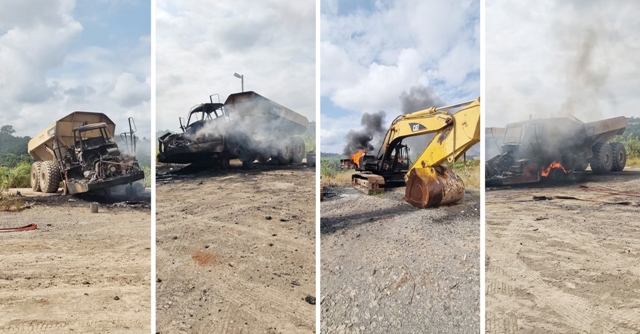
According to the statement, the protest escalated into violent attacks. Heavy-duty machines, including excavators, bulldozers, articulated trucks, drilling machines and pickups—14 in total—were destroyed.
In the chaos, Assembly Member Samuel Danquah sustained injuries and later died at Nkawie Clinic.
GAF said the situation was eventually brought under control after reinforcements were deployed and warning shots were fired.
Expressing regret, the military extended condolences to the bereaved families and the community.
“The Ghana Armed Forces deeply regrets the loss of lives and extends its condolences to the bereaved families and the people of Mpatuam,” the statement read.
Warning to Mining Communities
The military command cautioned residents of Mpatuam and all mining communities against taking up arms against the security services.
“We urge all citizens to cooperate with the Armed Forces and refrain from acts that endanger lives or undermine national security,” the statement warned, adding that the Ghana Police Service has since begun investigations.
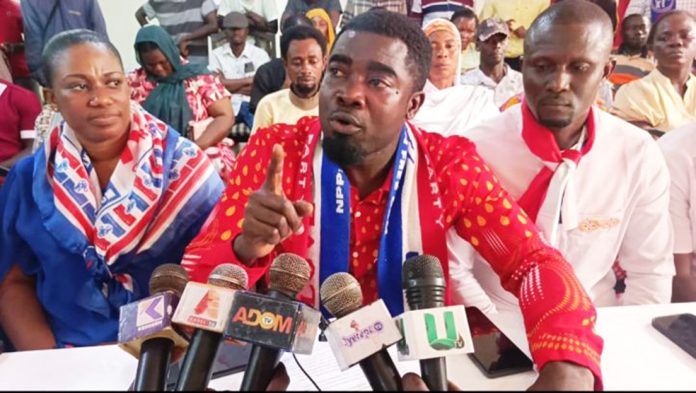
Ebenezer Donkoh, leader of the conconcerned NPP delegates addressing the media
Dr. Bryan Acheampong’s presidential campaign within the New Patriotic Party (NPP) has received a significant boost in the Central Region after more than 400 delegates in the Agona West Constituency openly endorsed his candidature ahead of the party’s presidential primary.
The delegates, made up of polling station executives, electoral area coordinators, and constituency officers, declared their support at a press conference held at Agona Swedru on Tuesday, this week. Their endorsement, they explained, stems from their conviction that Dr. Acheampong is the only aspirant with the temperament, vision, and ability to unify the party and lead it to a decisive victory in the 2028 general election.
Speaking on behalf of the delegates, Ebenezer Donkoh, leader of the Concerned NPP Delegates and Agona Youth for Victory, said the NPP finds itself at a critical moment that requires a leader who can rise above internal differences and keep the party united.
“The party is at a crossroads, and the direction we must follow is the path that leads to unity and victory.
“Dr. Bryan Acheampong’s leadership style makes him capable of bringing peace, cohesion, and focus to the NPP. That is why we, the delegates of Agona West, are fully behind him,” they said.
Mr. Donkoh stressed that the delegates wanted a leader who would embrace all members regardless of past affiliations, promote discipline within the party, and uphold fairness and justice.
“We don’t want a leader who thrives on divisions or who will create factions for personal benefit. The NPP deserves better, and Bryan Acheampong represents that better option,” he added.
The Agona West delegates acknowledged that in previous contests, many of them supported Dr. Mahamudu Bawumia and Kennedy Agyapong.
However, they noted that the current political climate demands a new kind of leader, one with the strength to rally the grassroots and the decisiveness to restore internal harmony.
According to them, Dr. Acheampong has shown that he not only has the organisational skills, but also the political acumen to broaden the party’s appeal to undecided voters and floating blocs ahead of 2028.
The delegates used the opportunity to call on their colleagues across the country to set aside divisions and unite behind Dr. Acheampong.
They argued that his candidacy presents the surest path to breaking the cycle of electoral setbacks that could follow if the party goes into the next general election fragmented.
“We are urging all delegates across Ghana to support Bryan Acheampong. With him, the NPP will be stronger, united and ready to face the opposition in 2028,” Mr. Donkoh concluded.
The Ghana National Association of Teachers (GNAT) has commended the Ministry of Education for its decision to revert from the double-track system to the single-track calendar, beginning October 31, 2025 with the start of the 2025/2026 academic year.
The Ministry explained that the single-track will restore a predictable timetable for parents and allow for the smooth organisation of extracurricular activities such as sports, clubs and cultural events.
GNAT’s General Secretary, Thomas Tanko Musah, acknowledged that the double-track system was an emergency response introduced during the COVID-19 pandemic. He welcomed the shift back to single-track, stressing that it will ease the strain on teachers, students and facilities. Mr. Thomas Musah further urged the government to put in place sustainable policies and strategies to maintain the single-track calendar for future generations.
He emphasised that Ghana cannot continue to rely on emergency measures when the conditions that triggered them no longer exist. Rather, education policies must be long-term, practical and able to withstand challenges. He encouraged all stakeholders, especially the Minister of Education, to pursue lasting solutions that safeguard quality education“.
The decision by the Ministry of Education to revert to the single-track system marks a significant and commendable turning point in our educational journey. The Ghana National Association of Teachers (GNAT) deserves praise for its firm support of this policy, which prioritises sustainability and the holistic development of students.
The double-track system, though necessary during the height of the COVID-19 pandemic, was never meant to be a permanent arrangement. While it created temporary space to absorb the increasing number of students, it came at a cost. Students were deprived of continuous contact hours with teachers, disrupting the depth and consistency of learning. Many parents also struggled with the unpredictability of the calendar, which made it difficult to plan family and economic activities.
Now that we are returning to the single-track system, the challenge is to make it sustainable. This move must not be a mere reversal, but a deliberate effort to improve educational infrastructure, teaching resources, and overall learning environments.
Schools across the country still face overcrowded classrooms, inadequate dormitories, insufficient laboratories, and poor sanitation facilities. If these gaps are not addressed, the single-track system could once again be overwhelmed, forcing the country back into emergency measures.
The government must, therefore, seize this opportunity to commit to a long-term investment in education. Expanding infrastructure, recruiting and training more teachers and providing adequate teaching materials are not optional luxuries but fundamental requirements. The single-track system should be anchored by policies that guarantee every child access to quality and uninterrupted education.
This shift is a reminder that our educational policies must be future-oriented, not crisis-driven. Building sustainable systems today will shield the country from future shocks, whether pandemics, population surges or economic challenges.
The return to single-track is a positive step, but it must be matched with bold investments and strong political will. Only then can the promise of free and quality education for every Ghanaian child be truly realised.
Mr James Gunu, Volta Regional Minister, has revealed plans to woo investors to revive the collapsed Coffee Processing Factory in Hohoe.
He said when fully operationalised, the factory would serve a great purpose under the government’s 24-Hour Economy policy.
Mr Gunu, after visiting the defunct factory during his working visit to the Municipality, said there would also be employment opportunities for citizens in the Municipality when the factory resumed production.
He noted that the Volta Regional Coordinating Council would play an instrumental role in ensuring that investors’ interests were tailored to the revival of the factory.
Mr Gunu said the factory, established by Ghana’s first president, was strategically positioned to process coffee, which was a major production crop in the area.
Mr Prosper Kumi, Hohoe Municipal Chief Executive (MCE) said when the factory begins operation, communities such as Wli and Gbledi, where coffee production is done, would feed the factory.
He said value would also be added to the processed coffee. Mr Frank Amoah Frimpong, Regional Administrator, Ghana Cocoa Board, said the factory, established in 1957, had stopped production for many years.
He said the factory had machines that also processed shea with warehouses.
The Electricity Company of Ghana (ECG), has cautioned Ghanaians to be vigilant in order not to fall prey to mobile money fraudsters, who are using the name of the company to defraud unsuspecting customers.
According to the company, the ECG Power App and the Short Code *226# are the only digital platforms, which are available to clients to make payments on any services rendered by the company to its customers.
Mr George Amoah, General Manager, Ashanti West Region of ECG, who stated this pointed out that, the company did not have any Mobile Money (MoMo) account for customers to make service payments.
Speaking to the Ghana News Agency in Kumasi in reaction to several complaints by customers, who have been defrauded by unknown persons who posed as ECG officials, he advised customers to desist from engaging third parties when looking for services from the company.
Mr Amoah noted that all the six district offices under the Ashanti West region, made up of Abuakwa, Adum, Ahinsan, Danyame, Kokoben and Suame had received many complaints concerning such fraudulent activities.
According to the reports, the fraudsters usually contacted clients through phone calls or on social media, to render services such as meter installations, meter replacement, debt cancellation and others, at a fee.
Mr Amoah said the victims were therefore, directed by the fraudsters to pay the service charges into a so-called ECG MoMo account, before the services were rendered.
However, after the payments had been made, the fraudsters switch off their phones and block the victims’ contact or do away with the SIM cards used.
Mr Amoah mentioned some of the contacts used by the fraudsters as 0531807230, 0508790801, 05403803302 and 0532752541.
He recalled that recently, a customer, who had applied for a meter with the Adum District office, was asked to make a service payment of GHC 900.00 into an ECG MoMo account – 0508058638, for meter installation.
After the customer made the payment, the fraudster asked the customer to add GHC 500.00, as installation fee for a new connection.
However, Mr Amoah said the customer became suspicious, refused to top up the money and reported the incident to the authorities of the Adum District office.
Additionally, he recalled an instance where an old man was defrauded of GHC 2000.00 for meter installation at Breman.
MrAmoah said the ECG was working closely with the security agencies to apprehend the perpetrators and prosecute them.
He explained that, customers who applied for meters or services were required to pay GHC100.00 at the ECG office after which an estimator would visit the customers’ premises to inspect the installations and prepare a quotation.
“Once the quotation is ready, you will receive an SMS from the ECG with a unique code stating how much to pay depending on the service requested, either a separate meter or a new service,” Mr Amoah said.
The quotation fee, according to him, could be paid through the ECG Power App or at the office, after which no other payment was expected to be made, not even to the contractors to install the meters.
“If you want to even pay via the ECG Power App, you will initiate the transaction yourself but ECG will not call you that your meter is ready so send money to someone’s personal account or any mobile money number,” he explained.
Mr Amoah said the replacement of faulty meters was free and advised citizens against making payments for the replacement of faulty meters to anyone.
Again, he urged the public to disregard the information that the ECG had no meters because the introduction of the Loss Reduction Project (LPG) brought along enough meters for customers who paid for service applications.
Mr Amoah appealed to the public to help the company curb the menace of MoMo fraudsters by dealing with ECG when they needed meters, making payments for meters at the ECG office and reporting anyone who called demanding payment into a MoMo account to the police or the nearest ECG Office.
Ghana’s economy grew by 6.3 per cent in the three months to June 2025, compared to 5.7 per cent in the same period last year. It means that the economy produced more goods and services than the same time last year, 2024.
Dr Alhassan Iddrisu, the Acting Government Statistician, said it was a sign of growth and recovery and agriculture was still growing after recovery in Q1 of 2025. He said the agriculture sector grew by 5.2 per cent compared to 3.5 per cent in the Q2 of 2024.
“This is good news for farmers and food prices, while livestock grew the largest in agriculture, growing by 5.9 per cent, compared to 4.7 per cent in Q2 of 2024,” he said.
The Acting Government Statistician said growth in industry slowed at 2.3 per cent in Q2 of 2025, compared to 12.2 per cent in Q2 of 2024.
The oil and gas sector declined sharply by22.5 per cent, dragging the industrial sector down, but electricity was strong, growing by 6.7 per cent down from 6.9 per cent in Q2 of 2024, showing increase power production to support growth.
He said the services constituted the biggest share of GDP at basic prices at 42 per cent in Q2 of 2025 with the sector growing by 9.9 per cent in Q2 of 2025 up from 2.0 per cent in Q2 of 2024, with ICT leading the way at 21.3 per cent growth.
The Services, including ICT, Education, Finance & Insurance and Trade, contributed more than half (52.2 per cent) of the Q2 of 2025 growth of the economy.
“If we remove the impact of oil & gas, the rest of the economy grew by 7.8 per cent in Q2 of 2025 compared to 5.7 per cent in Q2 of 2024,” he added.
He said this showed that Ghana’s economy was becoming more balanced, relying less on oil.
Dr Iddrisu said information and Communication, Education, Crops, Manufacturing, Finance & Insurance and Construction were the main drivers of GDP growth in Q2 of 2025, all together contributing 77.6 per cent of the 6.3 per cent growth.
He said the country’s provisional real GDP increased by 1.4 per cent in Q2 of 2025 from 1.6 per cent in Q1 of 2025.
The seasonally adjusted Q2 of 2025 Growth is the highest Q2 growth since Q2 of 2019.
He recommended that households should build skills in fast-growing areas like ICT, education, and health to tap into expanding job opportunities.
Dr Iddrisu said also households should support local agriculture by buying more Ghana-made food products to strengthen demand for farmers’ output.
He urged businesses to invest in digital and service-oriented solutions to ride the wave of growth in ICT, finance, and education.
He called for diversifying beyond oil-related industries and aligning production with rising household demand for food, health, and technology.
He urged the government to prioritize infrastructure and energy investments to sustain growth across all sectors, especially industry and services.
“Strengthen data-driven monitoring to anticipate shocks in oil and gas while supporting non-oil growth engines,” he added.