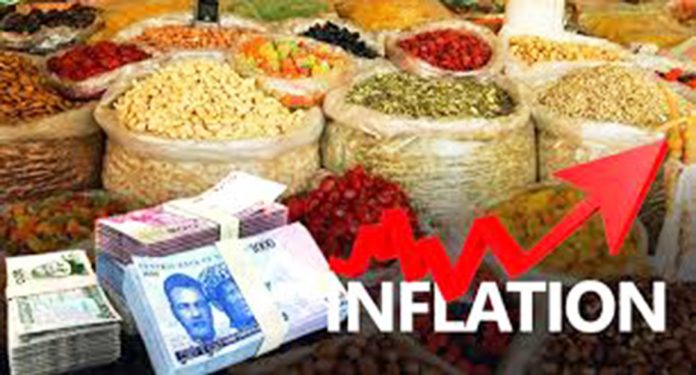
Nigeria’s headline inflation dropped to 18.02 per cent in September 2025, down from 20.12 per cent in August.
This is the sixth consecutive headline inflation drop in Nigeria this year.
National Bureau of Statistics, NBS, disclosed this in its Consumer Price Index and Inflation Data released on Tuesday.
NBS data showed that the country’s inflation declined by 0.72 per cent on a month-on-month basis.
The CPI data noted that the food inflation rate was -1.57 per cent month-on-month.
“In September 2025, the headline inflation rate eased to 18.02 per cent relative to the August 2025 inflation rate of 20.12 per cent.
“The MoM headline inflation rate in September 2025 was 0.72 per cent.
“The food inflation rate was -1.57 per cent MoM,” the NBS stated.
The development comes as Chief Executive Officer of Financial Derivatives Company, Bismark Rewane, in his latest analysis, said Nigeria’s inflation would moderate to 18 per cent in November 2025.
However, the recent hike in the prices of fuel and cooking gas could impact subsequent inflation figures and the cost of living for Nigerians.
Federal workers under the platform of the Federal Workers Forum, FWF, have appealed to the federal government under the leadership of President Bola Ahmed Tinubu to pay their three-month wage award.
FWF made this appeal in a statement signed by its National Coordinator, Comrade Andrew Emelieze.
The statement was made available to DAILY POST on Wednesday.
Emelieze in the statement said that the refusal of the federal government to pay up the balance of the outstanding three months wage award as promised by the Accountant General of the Federation has shown clearly how our government has been treating her workers.
He said that the payment of ₦35,000 wage award was put in place after series of pressure by the workers.
He lamented that the payment since its implementation has been inconsistent and staggering.
Emelieze urged the government to pay the balance of the outstanding three months wage award and also clear the backlog of promotion arrears owed the federal workers.
He equally tasked the government to work out a cost of living allowance for the workers, preferably pay 30% of our salaries as cost of living allowance.
He said, “The refusal of the federal government to pay up the balance of the outstanding three months wage award as promised by the Accountant General of the Federation has shown clearly how our government has been treating her workers.
“Same also has been the case for so many backlog of arrears owed the federal workers, especially promotion arrears, in some cases over ten years backlog owed the federal workers in Nigeria.
“The payment of ₦35, 000 wage award was put in place after series of pressure by workers for government to pay a cost of living allowance after the removal of fuel subsidy and the deliberate forceful devaluation of our national currency by the federal government.
This current ₦70,000 minimum wage is a slave wage, we call for its immediate abolition. We urge the government to pay up now the balance of the outstanding three months wage award. We are calling on the federal government to clear the backlog of promotion arrears owed the federal workers. We call on the government to workout a cost of living allowance for the workers, preferably pay 30% of our salaries as cost of living allowance”.
The Chamber of Agribusiness Ghana has urged the government to provide clearer timelines and legislative backing as it plans to waive taxes on agro-processing machinery.
In a release copied to Ghana News Agency, the Chamber called for sufficient funding and technical support to the GRATIS Foundation and other local institutions to ensure they deliver on the mandate of designing, producing, and maintaining affordable machinery.
The calls follow the announcement by Mr Sampson Ahi, the Deputy Minister of Trade, Agribusiness and Industry at the Regional Agribusiness Dialogue in Sunyani, that the government would waive taxes on agro-processing machinery in the short term.
Mr Anthony Kofituo Morrison, the Chief Executive Officer, Agribusiness Chamber, described the proposed tax waivers as “a key intervention required to stimulate investment, enhance productivity and improve competitiveness across Ghana’s agribusiness value chains.”
He said though the Chamber welcomed the initiative, the government must move swiftly to implement the plan.
“We urge the government to swiftly translate these announcements into actionable legislation and concrete programmes,” the release said.
“The Chamber and private sector stand ready to collaborate with the Ministry of Trade, Agribusiness and Industry and other stakeholders to maximise the potential of these interventions.”
“We believe that through sustained dialogue and a shared commitment to execution, we can collectively reset Ghana’s agribusiness sector, drive sustainable industrial growth, and secure a more prosperous future for all Ghanaians.”
As part of the implementation, the Chamber urged the government to ensure that ongoing consultations for the National Agribusiness Policy incorporated the specific and practical inputs of farmers, processors and aggregators from all regions.
“The Chamber views the tax waivers, alongside the medium-term strategy to retool local manufacturers like the GRATIS Foundation, as a positive step towards achieving machinery sufficiency and reducing the sector’s heavy reliance on imported equipment,” the release added.
“We commend the government for recognising the challenges and articulating a clear vision, which includes the Feed the Industry Programme, to address the raw material supply challenges that keep industrial capacity utilisation critically low.
“Ending galamsey should be among the top priorities in any policy actions to revive and rejuvenate the agribusiness sector.”
The Chamber of Agribusiness Ghana is the leading voice for agribusiness in the country, advocating policies that promote a sustainable, profitable and food-secure nation.
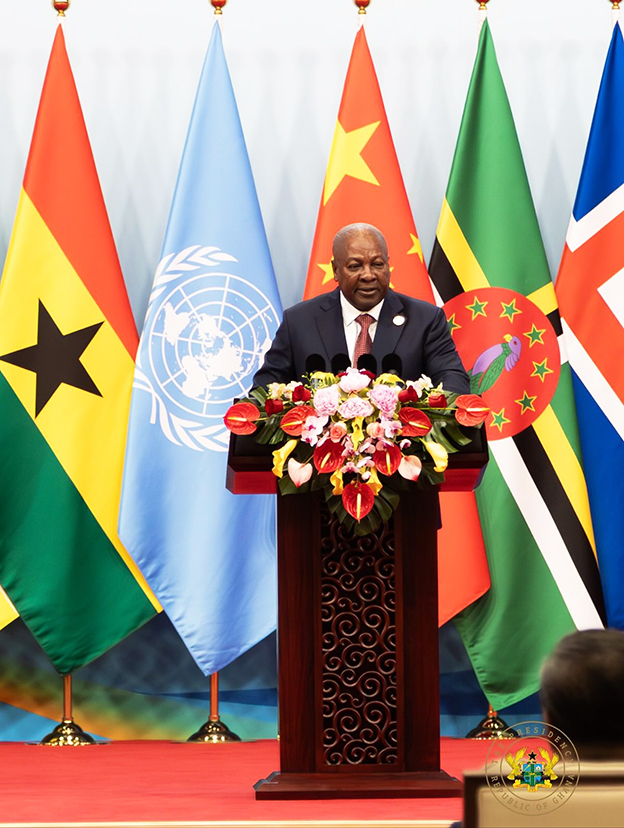
President John Dramani Mahama has extended an open invitation to Chinese investors and business people to enter the Ghanaian market, assuring them of a conducive investment climate.
He extended the invitation to them at the Presidential Business Forum in Beijing, China.
This forms part of President Mahama official state visit to China at the invitation of Chinese President Xi Jinping.
President Mahama said as the host of the African Continental Free Trade Area (AfCTA), Ghana provides investors with direct access to a $3.4 trillion single market and over 400 million consumers through the ECOWAS trade liberalization scheme.
He noted that above all, a democratic stability that had been uninterrupted for more than 30 years was the strongest guarantee of investor confidence.
The President said Ghana was opened for business and innovation.
“We are open to partnerships, especially with our Chinese counterparts,” he emphasised.
President Mahama being welcomed by Premier of the State Council of the People’s Republic of China, H.E. Li Qiang
He noted that at the heart of the new transformation lay a 24-hour economy and accelerated exports development programme, which was anchored in the Volta Economic Corridor, one of the most ambitious projects in Ghana’s history.
President Mahama said it also rest on four interlinked pillars, involving the irrigation of over two million hectares of land for all-year round farming; the building of agro-industrial parks for textiles, pharmaceuticals and food processing; developing tourism and hospitality hubs along the Volta Lake, one of the world’s largest man-made inland lakes, and the establishment of a modern inland water transport and logistics system, linking farms, factories, and markets.
The President said supporting these were catalytic projects, such as the Legon Pharmaceutical Innovation Park, the Kumasi Machinery and Technology Park, the Akosombo Juapong Garments and Textiles Park and the Eden Volta Agricultural Project.
He said each of those offer investment opportunities in manufacturing, renewable energy, cold chain logistics, and value-added agro-processing.
To unlock large-scale growth, the President said they had launched the Big Push Infrastructure Programme, which was a $10 billion initiative focused on completing major roads, bridges, power systems, and data networks, and also linking Ghana to regional markets.
“We invite Chinese investors to explore partnerships in roads and smart cities, renewable energy, and digital connectivity,” President Mahama said.
He said the agriculture for Economic Transformation Agenda, which was a GH₵1.5 billion programme, and aimed at ensuring food security, boosting productivity and expanding agricultural exports was also available.
He said the country was also investing $3 billion in its Digital Jobs Initiative to prepare the youth for the technology-driven economy of the future.
“We believe that China, with its comparative advantage in digitalization and innovation, will be a partner to the vibrant youthful population of Africa and Ghana in this regard,” President Mahama said.
“And we see vast potential in critical minerals and electric vehicle value chains,” he added.
He said with abundant resources of lithium, bauxite, manganese, and graphite, Ghana was poised to partner with Chinese investors in responsible mining and local processing to drive the global clean energy transition.
He said under Ghana’s Constitution and the Ghana Investment Promotion Centre Act, expropriation of investments was banned.
He said investors enjoy unrestricted repatriation of their dividends and proceeds in convertible currency of their choice.
The President said Ghana’s laws protect investment against discrimination, expropriation, and nationalization, which was consistent with international best practice.
He said Ghana was a proud member of the International Center for Settlements of Investment Disputes and is a signatory to the New York Convention.
This, he said meant that their rights were protected under transparent international arbitration mechanisms.
“We are also implementing pro-enterprise reforms to make Ghana one of the most business-friendly destinations in Africa.”
President Mahama said the new Investment Promotion Authority Bill when passed by Parliament would abolish minimum capital requirements for foreign and joint venture investors and would provide a clear path for long-term investors to qualify for Ghanaian citizenship.
He said a symbol of trust and belonging, public-private partnership frameworks were being modernized to ensure faster, fairer, and more transparent approvals of applications.
Dr. Laud Anthony Basing - Department of Medical Diagnostics, KNUST
A new national study has uncovered alarming rates of sexually transmitted infections (STIs) among Ghanaian adolescent girls and young women, raising concerns over a silent reproductive health crisis in the country.
The research, led by Dr. Laud Anthony Basing, of the Department of Medical Diagnostics at the Kwame Nkrumah University of Science and Technology (KNUST), found that more than 40% of girls, aged 15 to 24 years, tested positive for at least one STI — with most showing no symptoms.
The findings, which were published on the website of the London School of Hygiene & Tropical Medicine (LSHTM), form part of a national cross-sectional study titled “Mapping Reproductive Tract Infections among Ghanaian Youth.”
The research covered 2,978 participants from 23 institutions across nine regions, including senior high schools, universities, head porter (kayayei) communities, and female sex worker networks.
Dr. Basing said the data reveal a hidden but growing public health threat among young women, who are often unaware of their infection status.
“Many of these young women do not show signs of infection, meaning they go untreated and continue to spread STIs unknowingly. This underscores the urgent need for expanded diagnostic screening and access to affordable testing across Ghana.”
The study identified Chlamydia Trachomatis as the most prevalent bacterial STI, affecting 23.2% of participants, followed by Neisseria Gonorrhoeae (8.0%), Trichomonas Vaginalis (7.1%) and Mycoplasma Genitalium (1.4%).
It also recorded widespread Candida infections, present in 57.5% of participants. Candida Albicans accounted for 65.6% of the cases, while non-Albicans species such as C. Glabrata, C. Tropicalis and C. Krusei were also detected.
Dr. Basing, who is also the founder and CEO of Incas Diagnostics, warned that the country’s syndromic management system, which relies on visible symptoms for diagnosis, misses most infections among young women.
He urged policymakers to strengthen routine STI screening in schools and youth centres, integrate comprehensive sexual health education and invest in locally manufactured diagnostic tools to improve accessibility and reduce costs.
The KNUST Researcher, who has collaborated with the World Health Organisation (WHO) and other international partners, emphasised that addressing the problem requires multi-sectoral action to break the cycle of silent infections and protect the reproductive health of Ghana’s young women.
“Our findings show that we can no longer ignore the hidden burden of STIs among young women. Preventive education, early testing and access to affordable diagnostics are key to reversing this trend.”
The Public Utilities Regulatory Commission (PURC) has held a public hearing in Kumasi to discuss the proposed tariff increment for utility services.
Last Tuesday’s hearing, which took place at the Prempeh Assembly Hall, drew a diverse range of stakeholders, including chiefs, assembly members, community residents and industry representatives.
Some participants contribute to questions time segment
Dr. Shafic Suleman, Executive Secretary of PURC, acknowledged the financial burden of utility bills on households and businesses, but emphasised the need for fair and reliable services.
Dr. Suleman assured the public that the PURC was committed to a transparent and fair tariff-setting process, balancing the needs of utility providers with the affordability concerns of consumers
The public hearing provided a platform for individuals and groups to voice their concerns and offer suggestions on the proposed tariff adjustments.
Dr. Shafic Suleman stated that the PURC understand the financial burden that utility bills can place on households and businesses.
However, it is also essential to recognise that maintaining and improving the quality of utility services requires adequate investment.
According to him, their aim is to strike a balance between affordability and the need to ensure that consumers receive reliable and efficient services.
The Executive Secretary reiterated that the PURC’s commitment to fair and transparent tariff setting is expected to ensure that utility services remain accessible and affordable for all Ghanaians.
He disclosed that the feedback received during the public hearing will be carefully considered as the PURC finalizes its determination of tariffs for the 2025-2030 period.
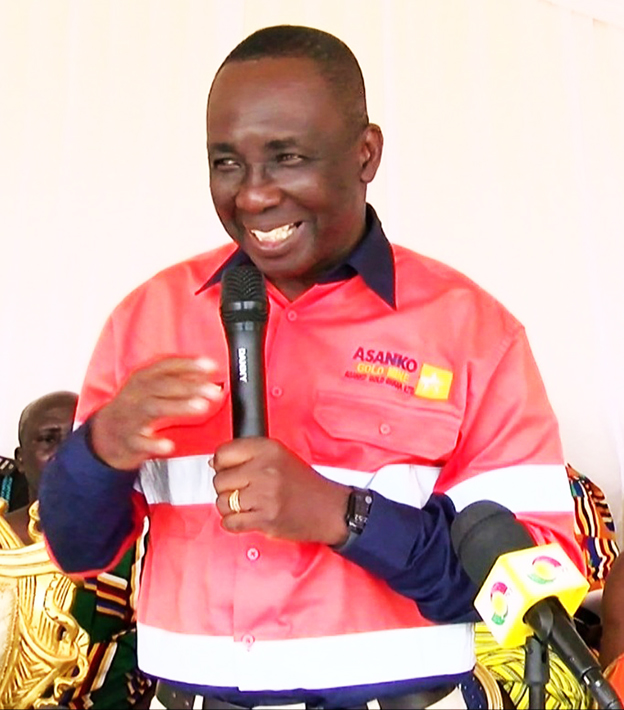
Dr. Charles Amoah, MD Asanko Gold, addressing the forum
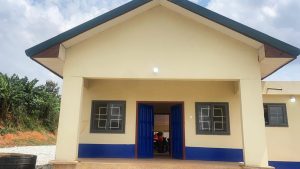
Asanko Gold Ghana has commissioned a multipurpose Community Centre for residents of Manso Nkran in the Amansie South District of the Ashanti Region.
The facility, fully-funded by Asanko Gold Ghana, through its Social Responsibility Foundation (SRF) Development Fund, as part of the mine’s broader multi-sectoral corporate social responsibility agenda, cost over GHC2.3 million.
Omanhene Nana Bi-Kusi Appiah speaking at the commissioning ceremony
It will serve as a central hub for knowledge sharing, cultural exchange, community gatherings, training and development programmes.
Executive Vice President and Managing Director of Asanko Gold Ghana, Dr. Charles Amoah, said the facility is designed to address infrastructure gaps and promote social cohesion within its host communities.
“From the Kwabenaso Primary School and the five-unit Asuadai Teachers’ Bungalows, to the 60-bed Esaase Hospital and the many Community Centres we have built, each stands as clear evidence of our multi-million-dollar investment in improving lives and strengthening community infrastructure across our host communities.
“Together, they reflect our conviction that responsible mining must advance side by side with social progress,” he noted.
Dr. Charles Amoah said as part of the Asanko’s five-year development plan, the company has introduced and actively implementing several impactful initiatives designed to empower the host communities, enhance livelihoods and build resilience.
Nana Bi-KusiAppiah assisting Dr. Amoah to commission the facility
“These include the Asanko Scholarship Scheme, which has awarded full educational support to 15 brilliant but needy students, a soap-making initiative empowering women and youth with livelihood skills and income-generating opportunities,” he said.
He disclosed that, “The company has also launched an Agro Input Support Program to boost agricultural productivity and food security in host communities”.
Dr. Amoah also mentioned that a modern 10-seater toilet facility has been constructed for the Kwankyeabo community, improving sanitation and promoting better hygiene and public health standards.
He said the company’s efforts are also aligned with the Government of Ghana’s vision, to ensure that communities around mining operations receive real and lasting benefits and assured that Asanko Gold Ghana will continue to invest heavily in infrastructure, human capital and sustainable initiatives that directly benefit the people within the operational area.
The GH¢2.3m community centre
The Paramount Chief of Manso Nkwanta, Nana Bi-Kusi Appiah, while speaking at the commissioning ceremony expressed gratitude to Asanko Gold Ghana for the initiative, which he said would significantly benefit the community.
He urged residents in the Manso enclave to halt attacks on Asanko Gold and resort to dialogue with the traditional council to settle tensions.
His appeal trails the recent violent clashes between the youth of Mpatuam and Tontokrom and soldiers guarding the mines, which resulted in the death of a local assembly member and extensive damage to properties belonging to sub-contractors of the mining company.
Nana Bi-KusiAppiah condemned the recurring hostilities and entreated residents to prioritise peace and cooperation to foster development.
The Omanhene also pushed for more critical investments for communal development that would promote peace and stability in the area.
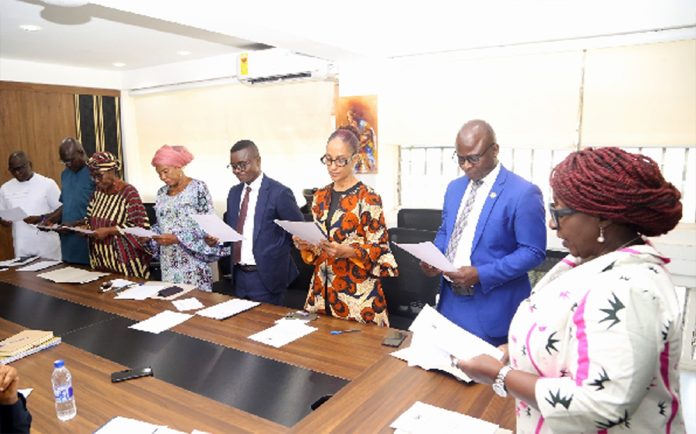
The Minister for Tourism, Culture and Creative Arts, Abla Dzifa Gomashie has inaugurated the new governing board of the Kwame Nkrumah Memorial Park, commending President John Dramani Mahama for appointing a competent team and urging members to serve with integrity in preserving one of Ghana’s most iconic heritage sites.
Chaired by Mrs. Anne Asantewaa Sackey, the board is tasked with preserving and enhancing the legacy of Ghana’s first President, Dr. Kwame Nkrumah, while promoting the park as a world-class heritage and tourism destination.
Members of the board include, Anne Asantewaa Sackey (Chair), Collins R. Nunyonameh Ph.D, Dr. Michael Mensah, Paul Parker Atitsogbui ESQ, Abraham Eghan, Bob Denis Ahiagble, Fafa Afua Adinyra, Belinda Alijata Suleman and Awudu Lah Jnr. Baguah all members
Also present were Yussif Issaka Jajah, Deputy Minister, the Chief Director, and senior officials of the Ministry.
Speaking at the inauguration ceremony in Accra, the minister expressed her gratitude to the board members for accepting the responsibility to oversee one of Ghana’s most significant national heritage institutions.
She emphasised the critical role the board will play in ensuring the park’s sustainability, development, and alignment with national cultural and tourism priorities.
“The survival or otherwise of this institution depends to a large extent on you,” she stated. “You are more than equal to the task, given your individual accomplishments in life.”
Dzifa Gomashie urged the board to provide strategic leadership, ensure efficient resource management, and promote transparency, accountability, and collaboration with stakeholders.
She also extended her appreciation to President John Dramani Mahama for appointing what she described as a competent and visionary team to lead.
She expressed confidence in their capacity to protect and enhance the legacy of Dr Kwame Nkrumah, Ghana’s first President and a Pan-African luminary.
She underscored the importance of the park as a sacred national site dedicated to preserving and showcasing the legacy of Dr Nkrumah.
“To be entrusted with the stewardship of this monumental site is not an honour we take lightly. Our mission is clear: to preserve the legacy of the park while enhancing it as a world-class destination for education, inspiration, and tourism,” she added.
Chief Director of the Ministry, Joseph Kwasi Amoah, also welcomed the new board members and acknowledged their crucial role in ensuring the effectiveness and sustainability of the institution.
“Without a governing board, no matter what the Kwame Nkrumah Memorial Park does, we cannot describe it as complete,” he noted.
Socialite and Actress Rosemond Brown, known in showbiz as Akuapem Poloo, says her past mistakes and legal troubles have taught her to separate social media hype from real life.
The actress admitted that her obsession with online validation once blinded her to consequences in a conversation with Giovani Caleb on TV3 monitored by MyNewsGh.
“Don’t let social media fool you,” she advised. “That’s what happened to me. I used to post without thinking. I didn’t even watch my videos before uploading them. I just wanted likes, views, and shares.”
The actress, who became infamous for her controversial posts and unfiltered commentary, says fame once made her reckless. “When I posted something and saw it going viral, I felt powerful,” she confessed. “But that same power brought me down.”
After serving time in prison and converting to Islam, Poloo says she now values peace over popularity. “You have to think before you act,” she said. “Life is bigger than social media trends.”
Her transformation, she insists, isn’t an act. “I’ve truly changed. I no longer insult or pick fights online. I just share joy, laughter, and positivity.”
Despite public criticism, Poloo says the love Ghanaians showed her after her conviction was overwhelming.
“The #FreePoloo campaign saved me,” she recalled. “That’s when I realized Ghanaians genuinely care. It made me cry.”
She also used the moment to thank the Mahama family for their quiet support. “The First Lady reached out to my mom and helped with my bail. I’ll forever be grateful,” she said.
Reflecting on her journey from viral controversy to redemption, Poloo had one final message for young creators; “Be careful what you post. Social media is not life. Likes and comments can’t fix your mistakes.”
The Western Region’s entertainment landscape is quietly but steadily being redefined, thanks to the strategic rise of Spyy Entertainment. From hosting premium music experiences to grooming fresh talents for the big stage, the company has positioned itself as one of the most influential forces shaping events in the region today.
Founded in 2016, Spyy Entertainment has built a solid reputation for producing well-curated shows that not only entertain but also empower the creative community. Over the years, the company has been behind several standout moments in the region’s entertainment calendar, including high-profile listening parties, street carnivals, and collaborations with major music industry stakeholders.
One of its recent headline events, the official unveiling and listening party of fast-rising Afrobeat/Highlife act Yaw Jus at Shocks Hub, Takoradi Mall was more than just a show. It was a statement of intent: that the Western Region can host events with the same class, coordination, and energy as the nation’s capital.
Another major highlight came when Spyy Entertainment partnered to host the Takoradi edition of the Aso @ 20 celebration, a landmark concert marking 20 years of the timeless hit “Aso” by award-winning Highlife artiste Kwabena Kwabena. The event brought a wave of nostalgia and elegance to Takoradi, giving fans in the Western Region a taste of Accra-style premium live performances without having to travel far.
Spyy Entertainment’s vision goes beyond the lights and music. The company, under the leadership of its CEO, John Asamoah Assasie (popularly known as John Asaasie), is determined to build an ecosystem that supports both audiences and artists.
“Takoradi and the entire Western Region deserve more than just shows; they deserve premium experiences,” said John Asaasie. “Our goal is to take event organisation here to the next level, creating memorable moments while grooming and projecting homegrown talents to the national and international stage.”
This focus on excellence has earned the company recognition from industry players, including the Musicians Union of Ghana (MUSIGA), and made it a trusted partner in shaping the regional entertainment scene.
Beyond events, Spyy has also been visible in community development. From supporting orphanages with building materials to providing platforms for emerging creatives, the company’s footprint reflects a deliberate blend of business and impact.
Entertainment analysts say Spyy Entertainment’s rise is timely. As more attention turns to regional economies and creative industries outside Accra, companies that can deliver quality and create opportunities for young people are becoming invaluable.
Takoradi has long been known for its vibrant nightlife and rich cultural identity. With players like Spyy Entertainment leading the charge, the region is not just hosting events, it is building a legacy.