




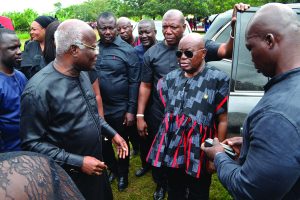


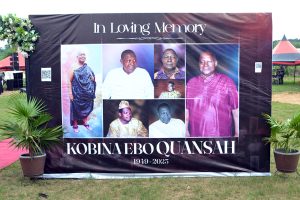


















Today, as we gather around the remains of our beloved General Manager and friend, Mr. Kobina Ebo Quansah, affectionately called Uncle Ebo, we are filled with a mixture of grief, pride and gratitude.
Grief, because we have lost a man whose presence shaped not only our newsroom, but Ghanaian journalism as a whole. Pride, because we had the honour of working with him, learning from him and being part of his story.
When Mr. Ebo Quansah joined The Chronicle in 1997 as Editor, many of us did not fully appreciate the depth of his courage or the journey he had already travelled. It was only later, through his stories and mentorship that we came to understand that he was not just a journalist, he was a warrior with a pen.

Long before his time at The Chronicle, he had built a reputation for standing up to military rulers with nothing but words. He often shared how under the regimes of Col. I.K. Acheampong, F.W. Akuffo and later Jerry John Rawlings, he refused to be silenced. His pen became his shield and truth became his guiding star. Even when his editor at the Ghanaian Times scolded him for daring to criticise Rawlings, he never wavered. For him, journalism was not about comfort, it was about conscience.
When the Provisional National Defence Council (PNDC) plotted his arrest, he narrowly escaped. With only fifty pence in his pocket, he landed in London, uncertain of where he would sleep that night. Yet even in exile, his voice never dimmed. From abroad, he continued writing, holding the regime accountable from afar. That was who he was: a man whose pen could not be broken by fear or distance.
It was his close friend, Nana Kofi Coomson, the publisher of The Chronicle, who convinced him to return to Ghana and help strengthen The Chronicle. When he joined, the paper was just a weekly publication. With his vision and determination, he expanded its reach, introducing the Thursday edition, with a strong focus on sports, his great love.
But more than that, he gave the paper a voice. His famous by-line, “Ebo Quansah in Accra” became a signature of fearless journalism. His satirical column, Asebu Amenfi, was both entertaining and biting, exposing corruption and ridiculing dishonesty in high places. Many public officials dreaded seeing their names in his column, but ordinary Ghanaians loved him for it. He made journalism not only about reporting, but about impact.
When he later left to work with the New Times Corporation, editing the Evening News and later consulting for the Ghanaian Times, The Chronicle felt his absence deeply. So when he left the New Times Corporation, Nana Coomson once again approached him, and he returned once more and it felt like the paper had regained its heartbeat again. In 2014, he was promoted to the position of General Manager, but even then, he never abandoned his pen. Nearly every day, he wrote, debated and guided the newsroom with the same passion he had shown decades earlier.
For us at The Chronicle, Uncle Ebo was more than a boss—he was a teacher. He had a gift for turning stories into powerful headlines in a matter of seconds. Many of us would bring him rough drafts, only to watch in awe as he shaped them into masterpieces. He was a walking encyclopaedia, drawing on decades of experience, historical knowledge, and political memory.
But what we remember most was not just his brilliance—it was his generosity. He shared his knowledge freely, corrected with patience, and always found time to explain. He could be stern, yes—especially when deadlines were missed or facts not checked properly—but his goal was always to mould us into better journalists.
Though he sympathised openly with the Danquah-Busia (UP) tradition, Uncle Ebo was first and foremost a professional. He did not allow politics to cloud his judgement. He could be as critical of the NPP as he was of the NDC, and he stood firm in his belief that journalism’s loyalty must always be to the truth.
We recall how, on one occasion, he published a strongly worded piece against an NPP government official. When cautioned to tone it down, he replied firmly: “I am not a robot—I am a professional journalist. The fact that I sympathise with the NPP does not mean I should not criticise them.”
On another occasion, he criticised the then opposition leader, John Dramani Mahama, his personal friend and when the Editor raised concerns, he laughed and said: “The fact that I criticise Mahama does not mean I hate him. Friendship is friendship, but truth is truth.”These moments taught us that true journalism demands courage to speak truth to power no matter whose power it is.
Beyond his work, Uncle Ebo was full of character. When writing his column, he allowed no distractions. The moment his pen touched paper, he shut out the world until the last word was done. Yet once the work was over, he could be humorous, witty, and deeply engaging. He enjoyed discussions that stretched late into the evening, often sprinkling in stories from his career that left us both laughing and thinking.
He was firm, but never arrogant. Principled, but never unkind. Even when disagreements arose in the newsroom, he later reflected quietly and, when necessary, would call to say: “I’ve thought about our discussion—I think you’re right. Let’s make the change.” That humility, from a man of his stature, was perhaps one of his greatest strengths.
Today, as we remember him, we realise how much of The Chronicle carries his fingerprints. From the structure of our editions to the spirit of fearless writing, his influence runs deep. He taught us that journalism is not about applause, but about accountability. Not about comfort, but about conscience.
To the younger generation, he leaves behind an example of integrity and resilience. To his colleagues, he leaves memories of mentorship, debates, and laughter. To Ghana, he leaves a legacy of fearless journalism that stood the test of dictatorships, exile, and political pressures.
We at The Chronicle are proud to have walked this journey with him. We are proud to have called him not only our General Manager, but our mentor, our teacher, our colleague, and our friend. We will miss his encyclopaedic knowledge, his sharp pen, his laughter, and above all, his courage.
Yet we are comforted by the words of Scripture: everything that has a beginning must also have an end. Mr. Ebo Quansah’s earthly journey may have ended, but his impact will never fade. His writings will continue to inspire. His lessons will continue to guide. His memory will continue to live in our hearts.
Uncle Ebo, Dr. Asebu Amenfi, fare thee well. Your pen has rested, but your voice will echo across generations. Until we meet again, may your soul find everlasting peace in the bosom of the Lord.

The fate of more than 2,700 students of the University of Education, Winneba (UEW) has been thrown into uncertainty following their inability to complete online course registration.
According to management, a total of 2,719 undergraduate and postgraduate students have been automatically deferred to the second semester of the 2025/2026 academic year for failing to register for the Second Semester of the 2024/2025 academic year, in line with the institution’s regulations.
“Management wishes to inform all stakeholders that a total of 2,719 students (undergraduate and postgraduate) have been automatically deferred…for failure to register their courses in accordance with the University’s regulations,” a statement issued by UEW said.
To prevent further complications, UEW has directed that the list of registered students with their courses be published on notice boards across its campuses.
“Examination Officers in all Faculties and Schools are to generate the list of registered students, course by course, from OSIS and paste it prominently on notice boards for students to verify their registration status,” the statement added.
The university explained that this would allow registered students with discrepancies or challenges to rectify them promptly before the commencement of the end-of-semester examinations.
UEW further stressed that all examinations will be conducted strictly using the OSIS-generated Examination Attendance Lists. Students whose names do not appear on the official list will not be permitted to sit for examinations under any circumstance.
Deans, Heads of Department, Examination Officers, Graduate Coordinators, Lecturers and other stakeholders have been instructed to strictly enforce the directive to protect the integrity of the academic and examination processes.
Speaking to The Chronicle, the President of the Graduate Students’ Association of Ghana (GRASSAG), UEW local, Mr. David Kwaku Xefu, confirmed that many students had indeed been deferred.
He attributed the situation mainly to financial constraints, explaining that students who could not pay their fees on time were unable to complete registration.
“Others had paid their fees, but encountered technical challenges with the registration system. For such students, the institution has set up desks to help resolve the issues,” he added.
The GRASSAG president described the situation as “disastrous” for continuing students, especially those in Level 300 and Level 400, who are close to completing their studies, but now face deferral.
Mr. Xefu disclosed that he had personally engaged the Vice-Chancellor of UEW, appealing for some flexibility to allow students with genuine challenges to register.
He, however, urged students to pay their fees on time to avoid similar situations in the future.“If students of UEW want to be treated as premium, then they must also adhere to management’s directives,” he cautioned.
When asked about the number of graduate students affected, Mr. Xefu could not give exact figures, but noted that the number was “gradually reducing” as some registration issues were being resolved.

The Deputy Minister of Transport, Dorcas Affo-Toffey, has announced that the Ministry has initiated steps for the revision of Legislative Instrument 2180 in a bid to provide a comprehensive framework for the use of motorcycles and tricycles for fare-paying passenger services.
Regulation 128 of the Road Traffic Regulations, 2012, LI 2180 prohibits the use of motor cycle or tricycle for commercial purposes.

The Road Traffic Regulations also stipulates that the Licensing Authority SHALL NOT register a motor cycle or tricycle to carry a fare paying passenger and that a person SHALL NOT use or permit a motor cycle or tricycle over which that person exercises control to be used for commercial purposes except for courier and delivery
But the Deputy Minister while addressing participants at the Drivers and Vehicles License Authority (DVLA) 2025 mid-year performance review conference at Akyawkrom near Ejisu, said the Ministry had set in motion plans to enhance the governance and regulatory frameworks to empower agencies under the Ministry to fulfill their respective mandates effectively.
She said, under the new regulations, DVLA would be required to issue commercial driving/riding licensing, and thus make training of applicants one of the key requirements that cannot be compromised and that the Authority will soon come out with the operational modalities for the training of commercial drivers and riders of commercial motorcycles or tricycles.
The Conference was to assess the progress collectively made by various departments of DVLA in the first half of the year.
It also reflected on DVLA’s achievements, confronts challenges as well as realign strategies to ensure that the Authority remains “resilient, innovative and fully equipped” to deliver on its mandate to run 24-hour services across our offices.
Themed: “Resetting DVLA for an Efficient 24-Hour Operations”, the Conference was meant to chart a focused path on how best management can steer DVLA’s operations for the rest of the year as well as adopt strategies for efficient 24-hour operations.
The Deputy Minister of Transport, who doubles as Member of Parliament for Jomoro Constituency, urged all not to relent on the quest to continually improve DVLA’s services, noting that it is the responsibility of industry practitioners and experts “in our respective fields to ensure that the services provided benefits everyone.”
She noted the Conference was an opportunity to engage in meaningful dialogue, share insights, and explore opportunities not only at the head office in Accra, but also across the regional offices and operational centres and commended DVLA’s commitment to this important review process, which reflects a collective dedication to excellence in public service delivery.

The Minister, however, indicated that the key to a collective success lies in commitment, discipline, and prudent use of the limited resources, and urged participants to approach the conference with seriousness and actively participate in the deliberations, and not see the conference as merely a routine exercise, but as a vital step towards the “Resetting Agenda”.
She explained that the role of the DVLA was crucial to ensuring that the vehicles on our roads are roadworthy and that the drivers who drive them are qualified.
To her, therefore, there was the need for DVLA to strengthen its collaboration with the National Road Safety Authority, the Motor Traffic and Transport Department of the Ghana Police Services, and all other stakeholders who operate within the road environment.
MP Affo-Toffey encouraged DVLA to align its strategies with the Resetting Agenda of government and draw inspiration from it, to ensure the set goals and objectives can be achieved, assuring that the Ministry would continue to provide the necessary leadership and the enabling framework to enable DVLA to fully implement their mandate.
Mr Foster Akwasi Asante Esq., Deputy Chief Executive (In-charge of Services) at DVLA disclosed that management had made it a priority to institutionalise operational efficiency in the Authority by ensuring that the backlog of licence applications, dating as far back as January 2024 are printed.
Lawyer Asante stated that in line with government’s agenda to “reset and build” a sound economy under the 24-hour economy policy, DVLA had begun with operating 24-hours in its print farm to clear backlog of licence applications.
As a result of the resolve, Asante said the Adentan office will be commissioned and dedicated to operating 24-hours.
The Deputy Chief Executive stated that DVLA was rising to the task of being a world-class organisation, to deliver services with integrity, efficiency and transparency based on globally accepted standards for driver and vehicle licensing with the dedication and support of Board Members, management and staff.
Jerryne Asante, Ejisu Municipal Chief Executive, deputising for the Ashanti Regional Minister noted that DVLA had evolved from an institution that was seeking panacea to varied challenges in its operational systems to a leading public service institution known for its dedication to service excellence and the pioneering role in driving innovation within the public sector.
He urged DVLA not to only assess past achievements, but also setting the stage for a future that is brighter and more impactful, most especially, in the rollout of the 24-hour economy as well as the quest to formalise Okada, Pragya and Aboboya for commercial purposes.
According to the MCE, apart from it serving as a means of transportation for people in the villages and semi-urban areas, it will also serve as a venture or source of employment for the teeming youth.
‘The success story of DVLA is not just about your achievements; it’s about the example you set for others.
“You have become a model of innovation and efficiency in public service and as we look to the future, I urge you to hold on to your good works and be committed to building on your successes and exploring new frontiers,” the MCE noted.
From Oswald Pius Freiku, Akyawkrom-Ejisu
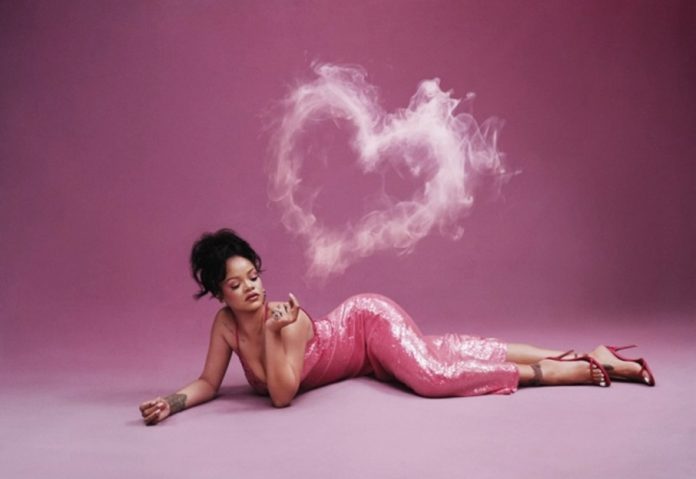
Rihanna is celebrating two decades in music and to mark the 20th anniversary, she launched an R20 campaign that bundles new merch, vinyl reissues and a series of commemorative drops aimed at fans and collectors.
On August 29, 2005 the then 17-year-old from Barbados released her debut album Music of the Sun and began a career that would grow into one of the most influential in pop culture.
In a personal Instagram message Rihanna thanked fans and reflected on the decision that set it all in motion.
What the R20 campaign includes
The R20 effort is built around nostalgia and collectability. Fans can pre-order an R20 vinyl box set that gathers Rihanna’s albums, alongside limited edition tees, hoodies and a collectible doll.
The campaign also rolled out timed drops and a streaming party to push listeners back through her catalog on the anniversary.
Merchandise and boxed set details appeared on her official store and were highlighted across music outlets covering the anniversary.
Fans had hoped that the anniversary might bring a surprise return to full album mode.
Rihanna has not announced a new studio album release date, though the pop star has kept a toe in music this year with soundtrack work and standalone releases tied to other projects.
While she has issued fresh tracks in 2025, the R20 activity so far focuses on archival celebration and merch, rather than a sudden album drop.
Industry commentators say the campaign keeps momentum alive while leaving room for any future music announcements.
Source: myjoyonline.com

The Regal Film Festival and Awards (REFFA) has officially announced its call for entries for the 2025 edition of its annual film festival and awards, scheduled to take place from 10 to 13 December 2025 in Accra, Ghana.
Filmmakers from across the African continent are invited to submit their works, which may include narrative features, documentaries, indigenous films, short films, animations and experimental projects. The organisers say the festival seeks to showcase the diversity and dynamism of contemporary African cinema.
According to the submission guidelines, eligible films must have been completed and screened within the last three years. Categories include Best Feature, Best Short, Best Documentary and others. The final deadline for submissions is 15 October 2025, although early entry is encouraged.
Filmmakers can submit through filmfreeway.com/REFFA and are advised to check the official website for detailed rules and criteria.
Beyond film screenings, REFFA 2025 will feature panel discussions, workshops and networking sessions to connect filmmakers with industry professionals and audiences. The awards ceremony will recognise excellence in acting, directing, writing and technical artistry.
Maxwell Justice Kpekpo, Head of Media and Communications at REFFA, expressed enthusiasm about this year’s festival.
“We are very excited to open the doors for submissions and look forward to discovering the incredible stories that filmmakers around the world have to share. REFFA is here to stay and we encourage all film makers to rally behind us as we go on this remarkable journey together,” he said.
Credit: myjoyonline.com

Ghanas favorite Amapiano king DJ Azonto has once again made headlines after issuing a stern warning to King Sark concerning the use of his newly coined slogan, “Attassa”
In his latest interview, the “Fa No Fom” hitmaker made it clear that “Attassa” belongs exclusively to him, just like his other signature phrases including Fa No Fom, Ala Woyo, Azonto A Confirmie, and Make Dem Tell You.
According to DJ Azonto, if Sarkodie dares to use the term “Attassa” in any of his songs or branding, he will not hesitate to sue him for a staggering $500 billion dollars with two sureties attached to the case.
I had a dream that Sarkodie had used my term “Attassa” in his song and I want to publicly state that any unauthorized usage by King Sark will lead to a 500 billion dollar investment into my DJ Azonto Microfinance with two sureties attached. DJ Azonto stated.
DJ Azonto warns other creatives to stay away from his slogan. “I know some artist will intentionally use the term for hype, but I am ready to take any artist who steals this term to court”. DJ Azonto added.
The multiple award winning artist, who recently released his new single “Check N See,” believes that protecting his slogan is part of surviving in Ghana’s music culture.
He urges fans to keep supporting his music and expect the official release of “Attassa” this Saturday, 30th August 2025.
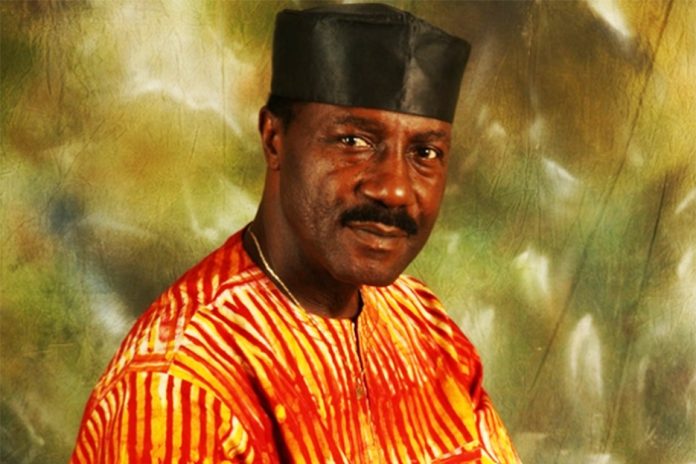
Veteran Ghanaian musician Gyedu-Blay Ambolley has raised concerns about the increasing dominance of technology in modern music production, warning that digital shortcuts are eroding creativity and artistic discipline among today’s musicians.
Speaking on Joy Prime’s Prime Time show on Wednesday night, the highlife pioneer didn’t mince words as he criticized the current wave of music that prioritizes speed and convenience over effort and depth.
According to Ambolley, the widespread use of technology in music today has led to a new generation of artists relying too heavily on computers and software, instead of mastering musical instruments or developing strong lyrical content. “Shortcuts in music are not good,” he said.
“It makes your music ‘sharp sharp’; it doesn’t last.” The term “sharp sharp,” he explained, refers to the fast-food style of music production that lacks soul, substance, and staying power.
Ambolley, whose career spans several decades and includes early experimentation with rap-infused highlife in the 1970s, expressed concern that many artists are now bypassing the learning process altogether.
For him, music should be treated as a craft that requires discipline, mentorship, and cultural grounding. He noted that in earlier times, musicians had to learn to play instruments, study music theory, and perform live: skills that taught patience and fostered originality. But in today’s digital-driven industry, a beat can be downloaded, lyrics quickly patched together, and a song uploaded within hours, often without much human interaction or creative collaboration.
He also pointed out how the lack of communication between collaborators is becoming increasingly common in the age of remote recordings.
Ambolley shared his own experience working with younger artists who send him tracks to feature on, only to release the final version without any follow-up or feedback.
Credit: myjoyonline.com
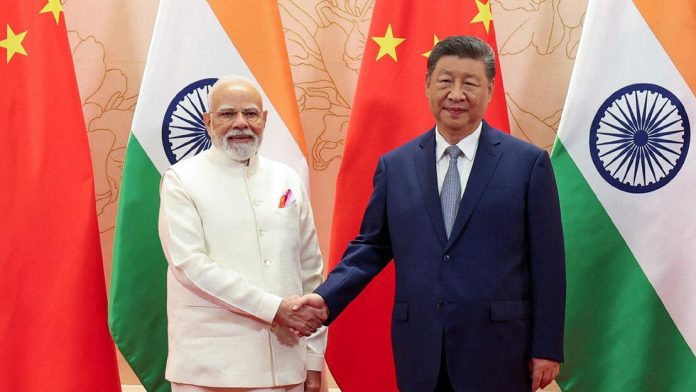
The leaders of China and India say there is now deepening trust between them after years of tension that includes a long-running border dispute.
China’s President Xi Jinping and Indian PM Narendra Modi met on the sidelines of the Shanghai Co-operation Organisation (SCO) in the port city of Tianjin. It is Modi’s first time in China in seven years.
Xi told Modi that China and India should be partners, not rivals, while Modi said there was now an “atmosphere of peace and stability” between them.
Russian President Vladimir Putin is also at the summit, attended by more than 20 world leaders, which this year has been overshadowed by trade wars with the US.
US President Donald Trump has imposed steep tariffs on Indian goods as punishment for Delhi’s continued purchase of Russian oil, and Putin faces threats of sanctions for his ongoing war on Ukraine.
As the US-India relationship faces increasing headwinds, Modi is moving closer to Xi. Both countries are not only the most populous, but also have two of the largest economies in the world.
Modi announced that flights between India and China – suspended since deadly troop clashes on their shared Himalayan border in 2020 – would resume, without providing a timeline.
Xi said “both sides need to approach and handle our relationship from a strategic height and long-term perspective” and that “it is the right choice for both sides to be friends”.
The SCO summit itself is largely symbolic but will allow leaders to air common grievances and shared interests. It comes days before a massive military parade in Beijing that will mark 80 years since the end of World War Two.
Credit: bbc.com

The UK has secured a £10bn deal to supply the Norwegian navy with at least five new warships.
The agreement to provide Type 26 frigates will be the UK’s “biggest ever warship export deal by value”, the Ministry of Defence (MoD) said, while Norway said it would be its largest “defence capability investment” to date.
The government said the deal would support 4,000 UK jobs “well into the 2030s”, including more than 2,000 at BAE Systems’ Glasgow shipyards where the frigates will be built.
UK Prime Minister Sir Keir Starmer said the agreement would “drive growth and protect national security for working people”.
“This success is testament to the thousands of people across the country who are not just delivering this next generation capabilities for our Armed Forces but also national security for the UK, our Norwegian partners and Nato for years to come,” he added.
The deal is also expected to support more than 400 British businesses, including 103 in Scotland, the MoD said.
Speaking to the BBC, defence minister Luke Pollard called it the “biggest British warship deal in history” and “a huge vote of confidence in British workers and the British defence industry”.
But the move was criticised by some in Norway, including Tor Ivar Strømmen, a naval captain at the Norwegian Naval Academy, who said French and German frigates were superior to British.
“The British Navy builds vessels for one role,” he told Norwegian outlet NRK. “It simply has old-fashioned and quite limited air defence.”
The agreement represents a victory for the British government and defence industry over France, Germany and the United States – which were also being considered by Norway as possible vendors.
Credit: bbc.com