Home Blog Page 484

Buah To Australian Investors: Come And Invest In Ghana

0
Emmanuel Armah Kofi-Buah

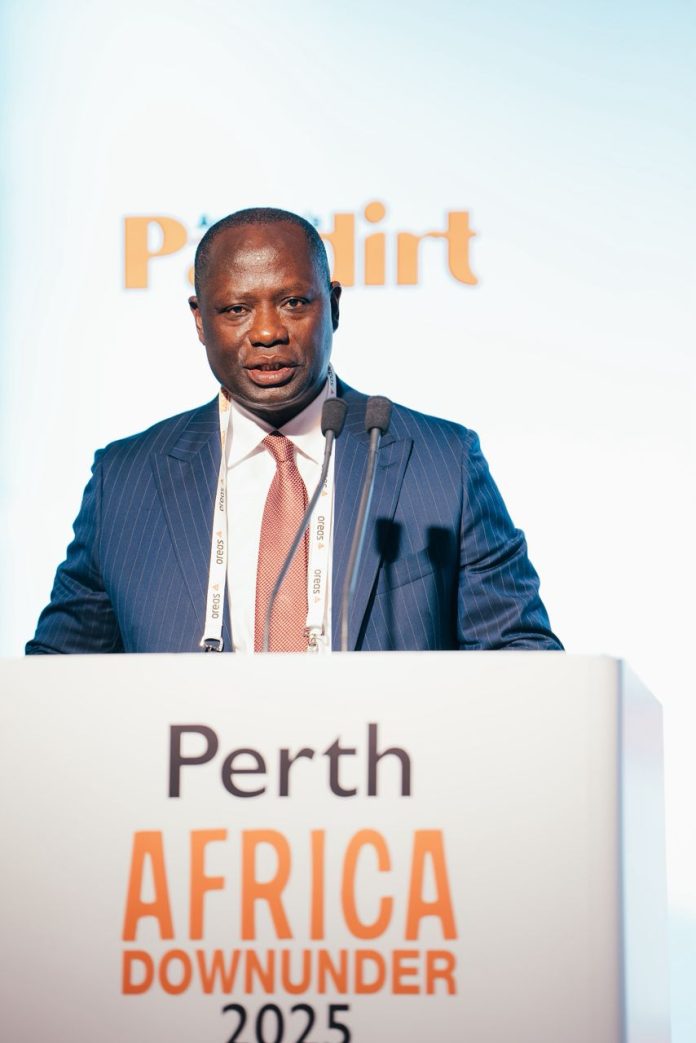
The Minister for Lands and Natural Resources (MLNR), Emmanuel Armah Kofi-Buah, has given compelling reasons why Ghana is the safest destination for investment in Africa.
Addressing the annual Australia-African mining conference in Perth, Australia, Minister

Armah Buah told the investors that Ghana needs no introduction when it comes to mining.
According to him, the country has always been synonymous with gold and that it was once called Gold Coast.
The Minister for Lands and Natural Resources reiterated that Ghana is proudly Africa’s leading gold producer.

But we have only just scratched the surface. The data is clear, the geology is proven and the potential for new and world-class discoveries has never been greater.

Ghana remains a premier destination for high returns on exploration investment”, Minister Armah Buah told the investors.
“I can assure you that you can invest in Ghana with confidence, knowing that your investments are protected by a stable political environment and a government that upholds the principles of good governance, including the rule of law and the sanctity of contracts”.
The minister also assured the forum that investing in Ghana would be a sound decision because the country has an improved business climate, with comprehensive regulatory and legal reforms designed to streamline bureaucracy, reduce operational hurdles, enhance transparency and improve operational costs.

A key example, he mentioned, was the modernisation of the Mineral Licensing System through the Minerals Cadastre Administration System (MCAS) — a transparent, online
platform that simplifies licensing and accelerates approvals.
Secondly, he cited the Ministry’s recently concluded transparent audit of all small-scale licenses in the system and that, “we are replicating the same for large-scale licenses. The goal is to ensure compliance and to improve workflows”.

Industrial minerals, Minister Armah Buah continued, underpins Ghana’s infrastructure growth, with over 110 licensed quarry operations extracting clay, feldspar, limestone, granite, sand and salt across the country.
He revealed to the investors that top mining companies like Newmont, Goldfields, AngloGold Ashanti and Zinjin have invested in Ghana and that it is time Australian investors also followed suit.

The lands and Natural Resources minister further told the investors that exploration remained vibrant, with over 500 active projects targeting gold, lithium, iron ore and bauxite among other commodities.
Additionally, geological investigations have also confirmed viable prospects for iron ore, nickel, zinc, chromium and lead, all of which were resources critical to the global energy transition.
Walking the investors through some of the key opportunities for their consideration, the Minister listed bauxite and iron ore resources which have a deposit of over 1.5 billion tones.

According to him, his outfit would welcome proposals from the private sector to partner the government in exploring these resources to create socio-economic value.

He revealed that Ghana’s mining sector had already attracted approximately US$20 billion in investments over the past two decades.
The Minister assured the investors that Ghana remained firmly anchored in the rule of law, which underpins her democratic governance and economic stability.“We offer a predictable and secure environment where rights are upheld regardless of political shifts, earning Ghana its reputation as a beacon of democracy in Africa”.
That aside, Ghana also has strong institutions that provide effective policy oversight, regulation, enforcement, and compliance along the entire value chain.

“But my friends, let’s be very clear – Ghana is not just about extracting resources. We are committed to a paradigm shift in mining — one that moves beyond the colonial “dig and ship” model to a value-added approach”.
In line with that, Minister told the conference government was pursuing several key initiatives to achieve its vision of mining as a catalyst for sustainable development.
Mahama Unhappy With $15m Spent On Missions Abroad

0

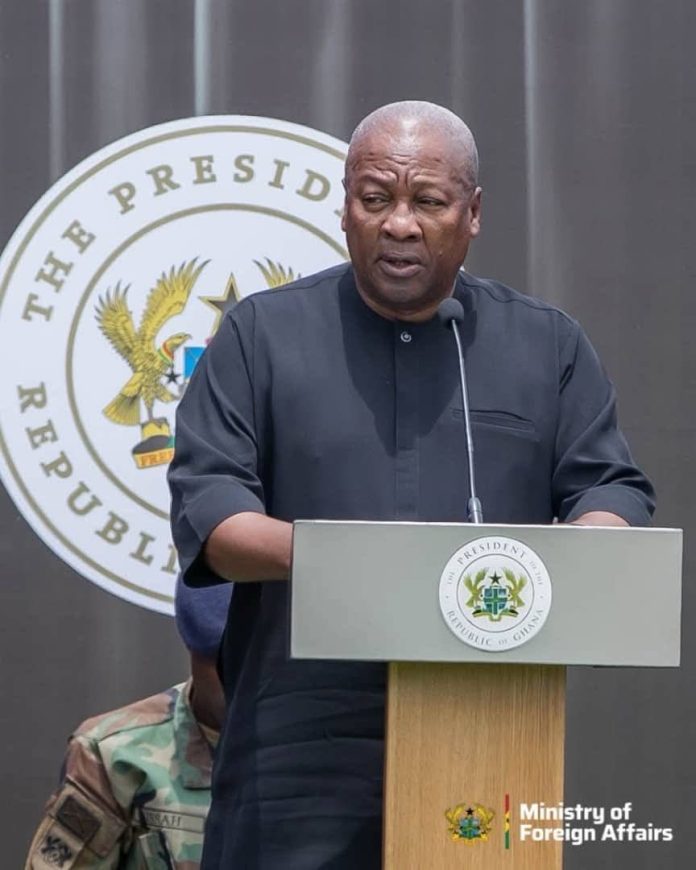
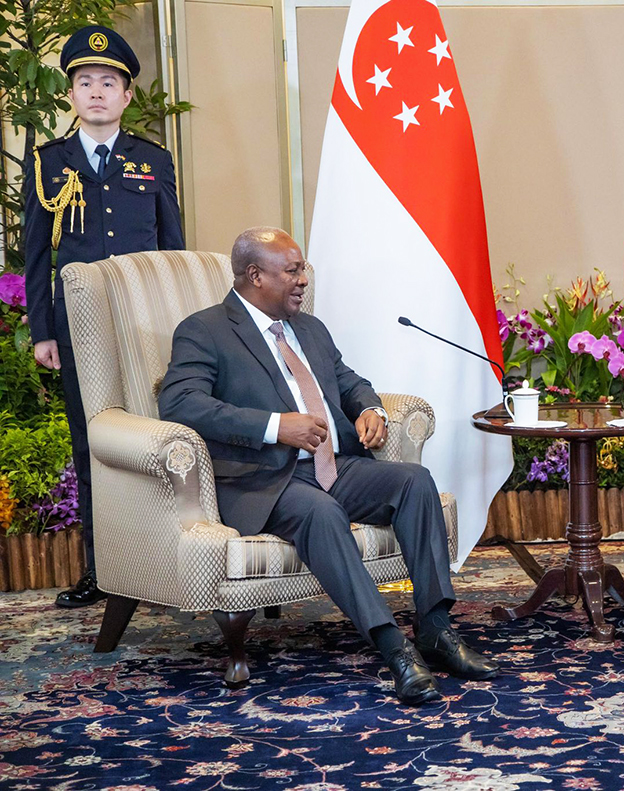
President John Dramani Mahama had stated that Ghana cannot continue to spend over $15 million annually on renting properties abroad for its diplomatic use.

“This is not a judicious use of taxpayers’ resources, and the reset agenda requires an immediate reversal of this trend,” he stated on Thursday, when he commissioned the first batch of 18 new envoys.

President Mahama said that was why Cabinet had promptly approved the STRIDE initiative, which referred to the Strategic Transition from Rental to Developing their own properties.

He said he had tasked the Ministers for Foreign Affairs and Finance to work urgently to resolve this long-standing challenge.

He stated that from his latest briefing, a transaction advisor had been appointed with standard designs being developed, while funding mechanisms were already being negotiated.

President Mahama reiterated that this decisive shift would ensure that Ghana’s missions abroad were housed in properties owned by the Republic, reducing wasteful expenditure while safeguarding the dignity of the country on the international stage.

The President reminded the envoys that the reset agenda was a shared enterprise and its success depended on close coordination between the missions abroad, the Ministry of Foreign Affairs and all ministries, departments and government agencies.

It would also depend on how well they engaged the private sector, civil society and their dynamic Ghanaian diaspora abroad, he said.

“As you assume this noble mandate, remember that your service is not for yourself but for the country and God. Serve with humility, courage and excellence. May your tenure bring renewed favour to Ghana, progress to our people and dignity to every Ghanaian, both at home and abroad,” the President said.

The President on behalf of the Government and people of Ghana wished the new envoys well in their assignments.

“You carry with you the hopes of a nation. May your service strengthen Ghana’s standing, advance our interests and deepen the dividends of democracy and development for our people,” he said.

Mr Victor Emmanuel Smith, Ghana’s Ambassador to the United States, on behalf of his colleagues, thanked President Mahama for the honour bestowed upon them.

He urged his colleague ambassadors, high commissioners, and all appointees in President Mahama’s government, to focus on the vision of their leader and chart a course of selfless leadership wherever we may find ourselves, saying they could not afford to fail the good people of Ghana. GNA

Accra Roads Turn Death Traps At Night

0
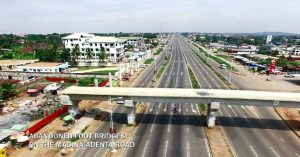
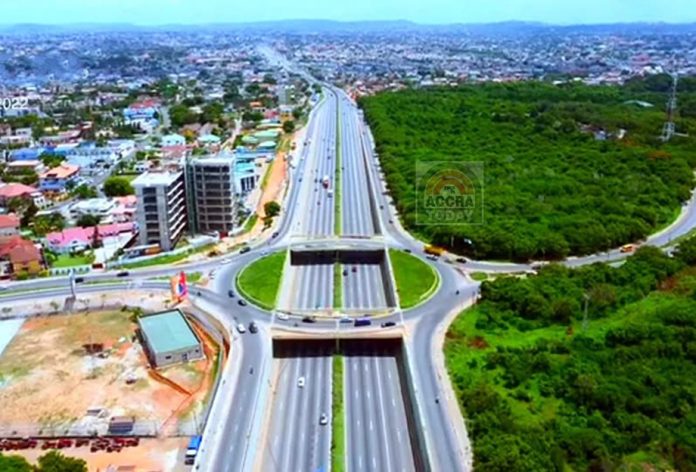
The George Walker Bush Highway

Road users in the Greater Accra Region are battling insecurity following the inability of Metropolitan, Municipal and District Assemblies (MMDAs) to light up major streets at night. The situation leaves drivers, passengers and pedestrians exposed to grave danger.

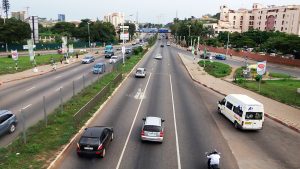
Madina-Adenta Road

Motorists, in particular, complain that it is nearly impossible to drive safely on such stretches due to the magnitude of darkness, a development that contradicts assurances given by the Greater Accra Regional Minister, Madam Linda Ocloo, during her vetting in Parliament, where she pledged to prioritise street lighting as part of her social contract with Ghanaians.

Although a few roads are properly illuminated, the majority remain engulfed in darkness.

Among the notable dark spots observed by The Chronicle are the Achimota Overhead stretch, Achimota School area, Achimota Police Station, John Kufuor Avenue and the George Walker Bush Highway. Other areas are Tema Motorway, Agyiriganor, Ashaley Botwe, among several others.

A fact-finding mission by The Chronicle revealed that the state of night-time visibility is so poor that parts of Accra “look like a village.”

Drivers interviewed expressed deep concern, linking the absence of functional streetlights to the growing risk of accidents.

The Liberation Road – partly lit at night

One motorist, who spoke on condition of anonymity, said: “The streets are so dark that we struggle to see potholes, which could easily lead to accidents. Sometimes pedestrians also wear clothes that are not reflective. With the entire stretch in darkness, if a driver is not careful, tragedy can occur.”

He questioned why the problem has been allowed to fester: “Is it just bulbs? How much does it cost to purchase a bulb?”

Another driver, Ebo Francis, described the N1 Highway as a “death trap” at night, calling for urgent attention.

The Public Relations Officer (PRO) of the Ghana Private Road Transport Union (GPRTU), Alhaji Abbas Ibrahim Imoro, admitted that the situation is a serious challenge to the transport sector.

He lamented that while driving becomes easier when streetlights function, most remain faulty, citing the stretch from Korle-bu Mortuary to Korle Gonno and the Abossey Okai enclave as prime examples.

“If you use the Korle Bu to Korle Gonno road, the whole place is in total darkness. A well-lit street saves lives because lighting directly affects visibility. This is why we must invest in functional streetlights,” he said.

Efforts by The Chronicle to obtain a response from the Public Relations Officer of the Greater Accra Regional Coordinating Council (GARCC) proved futile.

Despite several calls over two days, as well as WhatsApp and SMS messages, she did not respond.

Shop Attendant Steals GH¢76,200 Worth of Lubricants from Employer

0
The Accra Circuit court complex

Michael Dzitor, a 22-year-old shop attendant, has been arraigned before an Accra Circuit Court for allegedly stealing lubricants and other automotive products valued at GH¢76,200 from his employer, just one year after being hired.

The case, the Republic vs. Michael Dzitor and Joe (at large), was heard on Wednesday, 4th September, 2025 before His Honour Kwabena Kodua Obiri-Yeboah.

Dzitor faces two charges: Conspiracy to Commit Crime, to wit Stealing, and Stealing, contrary to Sections 23 and 124(1) of the Criminal Offences Act, 1960 (Act 29).

The second accused, known only as Joe, a taxi driver, is currently at large.

Plea and Bail

Dzitor pleaded not guilty to both charges. Chief Inspector Olivia Ofori, prosecuting on behalf of the Republic, informed the court that the matter was new and requested to proceed with the accused’s plea.

Dzitor acknowledged service of the court documents and consented to plea-taking.

The prosecution did not oppose bail and the court subsequently granted Dzitor bail in the sum of GH¢80,000 with two sureties.

He was also ordered to report to the police twice a month. The case has been adjourned to 25th September 2025 for mention.

Facts of the Case

According to the prosecution, the complainant, David Akanni, is a businessman dealing in auto parts and lubricants.

Dzitor was employed by Akanni in November 2024 and lived in the same building, which also serves as the business’s warehouse.

Shortly after his employment, Dzitor allegedly conspired with Joe, a neighbour, to systematically steal lubricants and other items from the warehouse.

Taking advantage of a faulty CCTV system, Dzitor would leave the warehouse door unlocked, granting Joe access at night while the complainant and his family were asleep.

The thefts continued undetected until the night of 29th August 2025, when Dzitor was caught in the act near 13 cartons of Goil Engine Oil and 6 boxes of Golden Welding Materials.

A witness, Delphina Owusu Prempeh, noticed suspicious activity and heard noises from the warehouse. Joe, who was still inside, fled the scene but was captured on a nearby CCTV camera during his escape.

During police investigations, Dzitor admitted to stealing from the warehouse on three prior occasions.

He alleged that Joe transported and sold the stolen items, paying him GH¢3,700 as his share. Police also discovered empty lubricant containers in Joe’s residence, believed to be part of the stolen goods.

The total value of the stolen items, including engine oils and welding materials is estimated at GH¢76,200.

The court has directed the prosecution to serve all necessary documents on the accused before the next court date.

Meanwhile, Joe remains at large, and efforts are ongoing to locate and apprehend him.

Gbinyiri Clash: Chief appeals to government to register displaced persons on NHIS  

0
Some of the displaced persons

Nana Pantu Nangor II, the Chief of Subinso Number Two in the Wenchi Municipality of the Bono Region, has appealed to the government to register the Internally Displaced Persons (IDPs) of the Gbinyiri clash taking shelter in the area on the National Health Insurance Scheme (NHIS).

He expressed worry that the health conditions of many of the IPDs, mostly children and nursing mothers kept deteriorating, saying they need the insurance cards to seek medical attention, calling for more humanitarian services for their upkeep too.

Nana Nangor II made the appeal in an interview with the media when Major (Rtd) Dr Joseph Bikankyi Kuyo, the Director General of National Disaster Management Organisation (NADMO) visited the community.
More than 800 IDPs, mostly women and children have fled their homes, taking shelter at some local communities in the Municipality, with Subinso Number Two hosting most of them.

Checks revealed that several others are also sheltered at Botenso, Nwoase and Nchiraa in the Municipality since the clash erupted at Gbinyiri, in the Salwa/Tuna/Kalba District of the Savannah region on Sunday, August 25, 2025.
Nana Nangor II said the IPDs required food aid, clothing, footwear, blankets and other consumables too.
Earlier, Maj (Rtd) Kuyo told the media that his visit was to assess the conditions of the IPDs and understand the situation better to determine the kind of assistance and interventions they needed.

He expressed the government’s appreciation to the chiefs and people of the area for their cooperation and assisting the IPDs, calling for more efforts to resolve the conflict and to bring lasting peace to Gbinyiri and its surrounding communities.

Maj (Rtd) Dr Kuyo was accompanied by Sheikh Ahmed Rufai Bolas, the Deputy Director General of NADMO in-charge of Technical Operations, Mrs Fati KIne-Lam, the Bono Regional Director of NADMO, Mr Suleiman Mohammed, the Wenchi Municipal Director NADMO.
Others were Superintendent George Kwakye, the Wenchi Municipal Police Commander and Madam Gloria Opoku Gyamfi, the Wenchi Municipal Chief Executive.

GNA

The Removal of Ghana’s Chief Justice: Lessons Beyond the Law

0
Opinion

In the unfolding of Ghana’s democratic journey, the recent removal of Chief Justice Gertrude Araba Torkornoo has stirred intense debate. While some have focused on the political optics, others have returned to the text of the Constitution, noting that due process was observed “copiously”, as many fair-minded lawyers have admitted. Yet the discourse must not end at the legal mechanics of removal. Rather, it must extend to the deeper lessons embedded in this moment for all who hold public office, and for all citizens who aspire to a democracy grounded in both justice and dignity.

An African proverb reminds us: “The lizard that jumps from the high iroko tree says it will praise itself if no one else does.” Authority is often like that leap—bold, lofty, commanding. But authority without humility, fairness, and a keen sense of responsibility becomes a dangerous leap, risking disgraceful landings.

The Standards of Public Officers

Public office is never private property. It is a trust loaned by the people and bounded by the Constitution. The first lesson in this saga is that the only one above the Constitution is the Constitution itself. Not the President, not the Vice-President, not the Speaker, not even the Chief Justice. If the President, chosen by millions, can be constitutionally removed for certain breaches, how much less those appointed to office by the hand of men?

Public officers must therefore uphold standards that transcend political patronage. Their body language, their speech, and their posturing must radiate fairness. Justice must not only be done—it must be seen to be manifestly done. A judicial officer, especially, must embody balance, wielding authority not with arrogance but with grace. Respect for colleagues, litigants, and even political actors is not a weakness; it is the very strength that sustains credibility in the eyes of the nation.

Authority and the Temptation of Partisanship

Every office of power is a contested space between neutrality and partisanship. But leadership in law and governance demands what Kwame Nkrumah once called a “consciencist spirit”—a loyalty first to truth and justice, and only then to any temporal alignment. The judicial office may exist in a political climate, but it must breathe less partisanship. To be timorous is to betray the people; to seek to please appointors is to mortgage the dignity of one’s office.

An African saying cautions: “When the shadow grows longer than the body, know that the sun is setting.” When a judge’s political shadow grows longer than the robe of impartiality, the moral authority of the bench begins its decline.

On Professionalism and Personal Histories

Another lesson is that professional duty cannot be sacrificed on the altar of personal memory. Family histories of suffering under previous regimes must never cloud professional judgment. The robe of justice does not carry the weight of lineage; it carries the weight of a nation’s trust. A public officer who allows past pain to guide present judgment becomes captive to bitterness rather than a servant of justice.

Conduct During Allegations and Investigations

Perhaps the clearest lesson is seen in the Chief Justice’s own conduct during the inquiry. When due process is underway, dignity demands restraint. Forum-shopping, public outbursts, name-calling, and misguided communications erode the majesty of the office more than the allegations themselves.

In moments of trial, silence often speaks louder than words, and resignation can be the wiser path when the writing is clearly on the wall. After all, it is nearly impossible to fight a government in power when the very Constitution you serve gives it the authority to carry out the due process against you.

The Constitution as the Final Arbiter

Those who lament the optics of removing a Chief Justice must answer a sober question: should the constitutional process be truncated at the altar of optics? The framers of Ghana’s Constitution foresaw that even a Chief Justice could grossly misbehave, hence the carefully laid provisions for removal.

To insist that the judiciary must be immune from accountability is to elevate judges above the law. And as the Chief Justice herself once said, “The law is the law.” In this case, the law has been duly followed—not to dishonour her person, but to preserve the integrity of the office.

The Ego in Public Office

Finally, this saga warns against swollen egos in public service. Power is fleeting; humility is enduring. Public office is a borrowed stool, not an ancestral throne. The wise Akan proverb says: “The stool is not carried to the grave.” Today one sits on it in majesty; tomorrow, one departs, and another takes the seat. Those who manage their egos with humility and fairness will be remembered long after their names fade from the gazette.

Conclusion

The removal of Ghana’s Chief Justice is not the death of judicial independence; it is a sober reminder that the law, like a river, must flow without obstruction. The Constitution is both the map and the compass. To breach it in the name of saving optics is to destroy the very foundation of Ghana’s democracy.

Let all public officers—judges, ministers, parliamentarians, and even presidents—engrave this lesson deep within: authority is service, not entitlement. The law is the law, and in the end, the Constitution alone remains above all.

By Yao Eli Sebastian Nafrah, PhD

SOURCE: myjoyonline.com

Editor’s note: Views expressed in this article do not represent that of The Chronicle

The Ofankor–Nsawam Road; Deadlines Should Be Met And Promises Kept

0
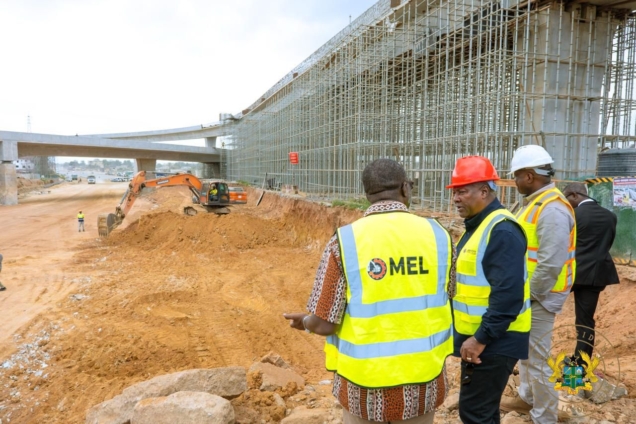
President John Dramani Mahama inspecting the ongoing Ofankor–Nsawam Road

On Wednesday, September 3, 2025 President John Dramani Mahama inspected the ongoing rehabilitation works on the Ofankor–Nsawam stretch of the Accra–Kumasi highway, a critical link between Ghana’s two largest cities.

The 33.4-kilometre project, part of the National Route 6, had stalled due to funding gaps, worsening the plight of thousands of commuters. However, with a supplementary payment of US$78 million released by government, work has resumed around the clock and progress currently stands at 75 percent.

When completed, the project will boast a three-tier interchange at Amasaman, overpasses at Pobiman and Medie, an underpass with a roundabout at Nsawam junction and nine pedestrian crossings. Originally scheduled for completion in 2024, the deadline was extended to May 2025, but President Mahama has urged the contractor to fast-track work and meet a revised target of the second quarter of next year.

During his visit, the President expressed concern about previous funding lapses despite the existence of a loan facility, pledging that his government’s ‘Big Push’ infrastructure initiative will provide liquidity for uninterrupted work. He also emphasised the need for proper site management to ensure traffic flows smoothly during construction.

This project, valued at US$346.5 million and undertaken by Maripoma Enterprise Limited, is expected to ease congestion, reduce travel time, stimulate socio-economic activity and facilitate trade between Ghana and its Sahelian neighbours, once completed.

First of all, the President’s decision to personally inspect the Ofankor–Nsawam highway rehabilitation works deserves commendation. Too often, leaders delegate such oversight to subordinates, leaving the public to wonder whether those in charge truly appreciate the daily struggles of ordinary Ghanaians.

The Ofankor–Nsawam stretch is not just another road. It is the main artery connecting the capital to Kumasi and by extension northern Ghana and beyond. Delays in its rehabilitation not only inconvenience commuters but also hamper trade and increase transportation costs. In this light, the President’s insistence that contractors speed up work is more than rhetoric, it is a necessity.

That said, it is not enough to issue directives. The government must back words with consistent action. Funding gaps that previously halted the project must never be repeated. The release of US$78 million to get works back on track is commendable, but it must not be the last financial intervention. Infrastructure projects of this scale demand timely payments, effective supervision and transparent accountability.

Another critical point raised by the President is site management. Commuters should not have to endure chaotic diversions, dust and gridlock simply because work is ongoing. The contractor must prioritize traffic flow and pedestrian safety while delivering on timelines. Ghana’s infrastructure drive must be people-centered, ensuring that the very citizens meant to benefit from projects are not unduly burdened during execution.

We also echo the President’s concerns about the financing of this project. How was a loan secured yet no funds made available to pay contractors initially? This inconsistency points to systemic lapses that must be corrected. Transparency in project financing builds public trust and ensures that taxpayers’ money is not lost in bureaucratic inefficiency.

Ultimately, when completed, the Ofankor–Nsawam road promises to transform daily commuting, boost economic productivity, and strengthen Ghana’s position as a trade hub in the sub-region. The challenge now is to ensure deadlines are met and promises are kept.

President Mahama commissions 18 new envoys

0
President John Dramani Mahama

President John Dramani Mahama has commissioned 18 new envoys as part efforts to align the diplomatic corps with his administration’s Resetting Ghana Agenda.

The commissioning ceremony, which took place at the Presidency in Accra, saw the President administering the oaths of office and secrecy to the 18 new envoys, consisting 12 Ambassadors, three High Commissioners, two Ambassadors in-situ and one Ambassador at Large.

The list includes – Mrs Sabah Zita Benson, High Commissioner to the United Kingdom; Mr Victor Emmanuel Smith, Ambassador to the United States; Madam Mavis Ama Frimpong, Ambassador to France, Mr Baba Jamal Mohammed Ahmed, High Commissioner to the Federal Republic of Nigeria and Dr Koma-Steem Jehu Appiah, Ambassador to the Russian Federation.

Others are Mr Kojo Bonsu, Ambassador to the People’s Republic of China; Alhaji Hammed Rashid Tunde Ali, Ambassador to the United Arab Emirate and Professor Ohene Adjei, Ambassador to the Federal Republic of Germany and Alhaji Abdul Nasiru-Deen, Ambassador to Turkey.

Dr Margaret Miewien Chebere, Ambassador to the Kingdom of Denmark; Mr Labik Joseph Yaani,            Ambassador to the Republic of Equatorial Guinea; Nii Amasah Namoale, Ambassador to Federative Republic of Brazil and Professor Kwasi Obiri-Danso, High Commissioner to India.

The rest are Mr Samuel Yao Kumah, Ghana’s Permanent Representative to the United Nations, New York; Mr Godwin Baletum Amonzem, Ambassador to the Republic of Liberia; Mr. Aikins Abrokwa, Ambassador in-situ, Director of State Protocol, Mr Gustav Kwaku Sefe Dovlo, Ambassador in-situ, Chief of State Protocol and Mrs Patience Kokui Gameli-Kwame, Ambassador-at-Large, Deputy Director General Research Department.

President Mahama, in his address, reminded the new envoys that their appointment was a mark of the confidence reposed in them and a recognition of their years of dedicated service, sterling achievements and exemplary contributions both in the public and private sectors.

He recalled that only four days ago he had the privilege of opening the joint conference of Heads of Mission and Orientation Programme for the newly appointed envoys on the theme: “Harnessing the Dividends of Diplomacy for Ghana’s Reset Agenda”.

He said for the first time in Ghana’s diplomatic practice, Key Performance Indicators (KPIs), as a structured framework, was launched  to guide the envoys’ work.

President Mahama said the innovation signalled a new era of clarity, accountability and measurable outcomes in their foreign service.

He said these KPIs were not mere bureaucratic tools; stating that they were instruments to ensure that every action taken by their missions abroad contribute directly to advancing Ghana’s national priorities.

“I assure you that I will monitor progress under the framework as part of our commitment to results-oriented diplomacy,” he said.

The President said the Reset Agenda was the administration’s blueprint, a bold vision to restore hope in their people, to rebuild trust and to rekindle the movement towards prosperity.

“It seeks to re-anchor our integrity, transparency and inclusive development governance,” he stated.

He charged the new envoys to be vanguards of Ghana’s economic diplomacy.

He said Ghana’s foreign policy had always been anchored on enduring principles, Pan-Africanism, peaceful co-existence, self-determination and the pursuit of justice and equity in world affairs.

Mr Victor Emmanuel Smith, Ghana’s Ambassador to the United States, on behalf of his colleagues thanked President Mahama for the honour done them.

“My colleague ambassadors and high commissioners, and indeed all appointees in President Mahama’s government, let us focus on our leader’s vision and chart a course of selfless leadership wherever we may find ourselves,” he said.

“We cannot, and indeed we dare not, fail the good people of Ghana.”

GNA

UN Shuts Down Air Service In Nigeria Over Funding Shortages

0
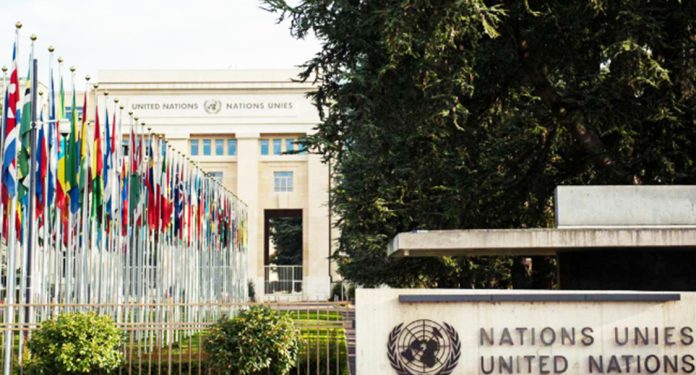
UN Shuts Down Air Service

The United Nations has shut down a critical air service in Nigeria’s northeast over severe funding shortages.

The U.N. Humanitarian Air Service (UNHAS), run by the WFP, ended its fixed-wing operations in the country last week after nearly a decade of flying aid workers and supplies into conflict zones.

“In 2024, UNHAS fixed-wing flights carried more than 9,000 passengers. Already this year, 4,500 humanitarian staff have relied on the service to reach affected areas.

“UNHAS cannot continue without funding:  $5.4 million is needed to remain operational for the next six months. Without this funding, the humanitarian response in north-east Nigeria risks being cut off from the very people it is meant to serve.

“For nine years, the service has transported humanitarian staff, medical supplies, and critical cargo to and from the epicentre of the crisis in Borno and Yobe states,” Dujarric told reporters. “In a country that has experienced 16 years of conflict, where road transport remains extremely dangerous, air transport is essential.”

The shutdown comes as the World Food Programme faces dire financial shortfalls.

In July, the agency warned it might be forced to suspend emergency food and nutrition aid for 1.3 million people in northeastern Nigeria.

The closure, announced by U.N. spokesperson Stéphane Dujarric in New York on Wednesday, showed the growing strain on relief efforts as donor funding declines.

It noted that the shutdown threatens to deepen the country’s most protracted humanitarian emergencies.

Margot van der Velden, WFP’s regional director for West and Central Africa, told reporters in New York that the agency urgently requires $5.4million to sustain food and nutrition operations in the region for just six months.

Credit: channelstv.com

Dozens die after boat hits tree stump in Nigerian river

0
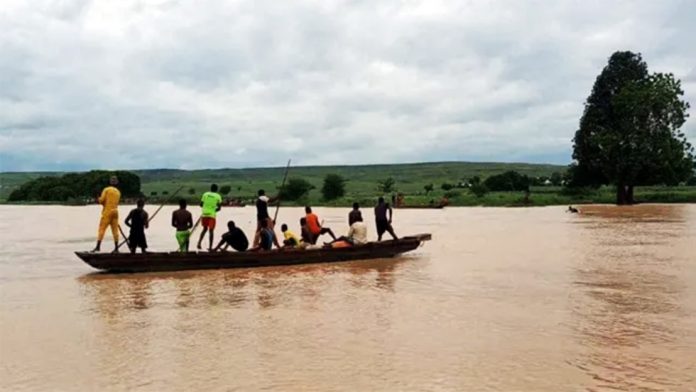
Boats are a common means of transport in Nigeria

At least 32 people have died in Nigeria’s northern Niger state after a boat sank in a river, an official has told the BBC.

The boat was reportedly overloaded, carrying about 100 passengers including women and children, capsized when it struck a submerged tree stump on the River Niger in the Borgu area on Tuesday morning.

They were on their way to a nearby village to pay their respects to the family of someone who had recently died.

Abdullahi Baba Ara, the spokesman of the National Emergency Management Agency (Nema) in the state, told BBC Hausa on Thursday that more than 50 other people had been rescued, with eight still missing.

Search operations are continuing.

Mr Ara said the government had set up a team of “water marshals” to stop boat operators from overloading their vessels and ensure passengers wear life jackets.

“Perhaps the water marshals were not on duty when this boat took off,” he said, adding that investigations had started.

A local district head told the Reuters news agency that he had been at the scene soon after the accident.

“I was at the scene yesterday around 12 pm until 4 pm. The boat carried more than 100 people. We were able to recover 31 corpses from the river. The boat was also recovered and removed,” Reuters quoted Sa’adu Inuwa Muhammad as saying.

Boat accidents are fairly common in Nigeria, often due to overloading, poor regulation and inadequate safety precautions.

About 25 people went missing last month after a boat accident in Sokoto state.

In December last year, 54 bodies were recovered from the River Niger after a boat that may have been carrying more than 200 passengers capsized.

The government has made it mandatory for water travellers to always wear life jackets, but this is often not enforced.

In February, the Minister of Marine and Blue Economy, Adegboyega Oyetola, set up a “Special Committee on the Prevention of Boat Mishaps in Nigeria”, and in May the ministry announced that it would be distributing 42,000 life jackets across 12 riverine states in the country.

Credit: bbc.com

The Ghanaian Chronicle