Home Blog Page 355

Canadian PM clears budget vote, averting snap elections

0
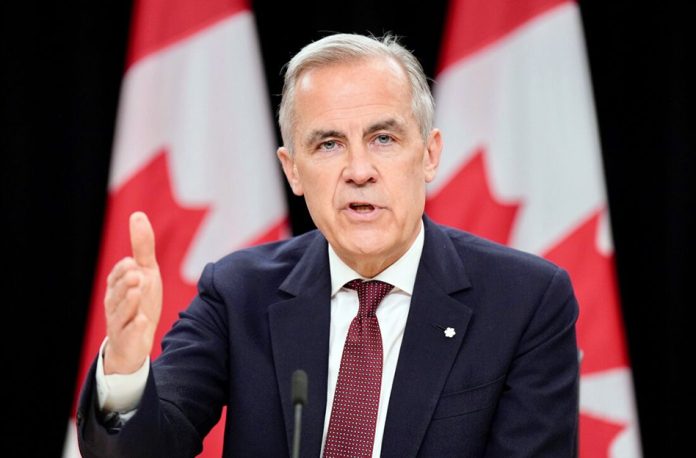
Canada Prime Minister Mark Carney

Prime Minister Mark Carney’s minority government narrowly survived a confidence vote on Monday as Canadian lawmakers endorsed a motion to begin debating his first federal budget – a result that avoids the prospect of a second election in less than a year.

The House of Commons voted 170-168 to advance study of the fiscal plan. While further votes are expected in the coming months, the slim victory signals that the budget is likely to be approved eventually.

“It’s time to work together to deliver on this plan – to protect our communities, empower Canadians with new opportunities, and build Canada strong,” Carney said on X, arguing that his spending blueprint would help fortify the economy against escalating United States tariffs.

The proposal includes a near doubling of Canada’s deficit to 78.3 billion Canadian dollars ($55.5bn) with major outlays aimed at countering US trade measures and supporting defence and housing initiatives. The prime minister has insisted that higher deficit spending is essential to cushion the impact of US President Donald Trump’s tariffs. While most bilateral trade remains tariff-free under an existing North American trade agreement, US levies on automobiles, steel and aluminium have struck significant sectors of the Canadian economy.

According to Carney, a former central banker, internal forecasts show that “US tariffs and the associated uncertainty will cost Canadians around 1.8 percent of our GDP [gross domestic product]”.

Credit: aljazeera.com

Two Ukrainians working for Russia behind rail sabotage, Polish PM says

0
Rail sabotage in Poland

Two Ukrainian citizens who have long worked for Russian intelligence have been identified as the suspects behind two acts of sabotage on Poland’s rail network, Polish Prime Minister Donald Tusk has said.

One of the suspects had already been convicted in absentia of acts of sabotage in Ukraine, Tusk told Poland’s parliament.

On Monday, he visited the scene of an explosion near Mika, south-east of Warsaw, which damaged the railway line leading to the Ukrainian border at the weekend, and called it “an unprecedented act of sabotage”.

Another incident further down the line near Pulawy on Monday forced a packed train to stop suddenly and damage was found to overhead cables.

Polish authorities had initially said there was a very high chance that the two acts of sabotage on the Warsaw-Lublin railway line on had been ordered by a “foreign service”.

Then a spokesman for Poland’s special services minister said on Tuesday that “everything points to them being Russian special services”.

Russia has not yet publicly commented on the allegations.

“The goal was to cause a rail catastrophe,” Tusk told MPs. The Polish prime minister said he would not disclose the names of the two suspects as this could complicate the operation, though he told parliament that one was living in Belarus and the other was a resident of eastern Ukraine.

Both suspects had crossed into Poland from Belarus during the autumn and had now returned there via the border crossing at Terespol in the far south-west of Belarus, close to the Ukrainian border, he added.

Tusk said that a military-grade C4 explosive device detonated on 15 November at about 21:00 local time (20:00 GMT) near the village of Mika.

The explosion, which happened as a freight train was passing, caused minor damage to a wagon floor. It was captured on CCTV.

Tusk said the train driver did not even notice the incident.

Credit: bbc.com

US to sell F-35 jets to Saudi Arabia, Trump says ahead of crown prince’s visit

0
Trump and Saudi Crown Prince Mohammed bin Salman

The US will sell F-35 fighter jets to Saudi Arabia, President Donald Trump told reporters ahead of a White House meeting with Saudi Crown Prince Mohammed bin Salman.

“We will be doing that. We will be selling F-35 jets,” Trump said. “They’ve been a great ally.”

The leaders are expected to discuss deals on defence and civilian nuclear power during Tuesday’s White House visit, the first by the de facto Saudi leader since journalist Jamal Khashoggi was killed and dismembered at the hands of Saudi agents seven years ago.

A US intelligence assessment said Prince Mohammed approved the operation that led to the killing. The crown prince denied any role in the murder.

Prince Mohammed’s last visit was during Trump’s first term in 2018, the same year as Khashoggi’s murder in Istanbul.

While former President Joe Biden did not host the crown prince and promised to make the country a “pariah” over its human rights record, Biden did visit Saudi Arabia in 2022 to reach agreements on other issues. Biden said he raised Khashoggi’s murder in that meeting.

Trump and the crown prince already met in Riyadh in May. There, the US agreed to sell nearly $142bn (£107bn) worth of arms to Saudi Arabia in what the White House described as the “largest defence sales agreement in history”, as part of a $600bn investment deal. Saudia Arabia is the largest buyer of US arms.

Some American defence officials have raised concerns about a potential sale of F-35s, considered the most advanced fighter jet in the world, to Saudi Arabia. They told US media that they feared it would give Saudi Arabia access to sensitive stealth technology, which the country could then share with China under a security partnership between the two powers.

Credit: bbc.com

What’s the Difference Between Sea Salt and Table Salt

0
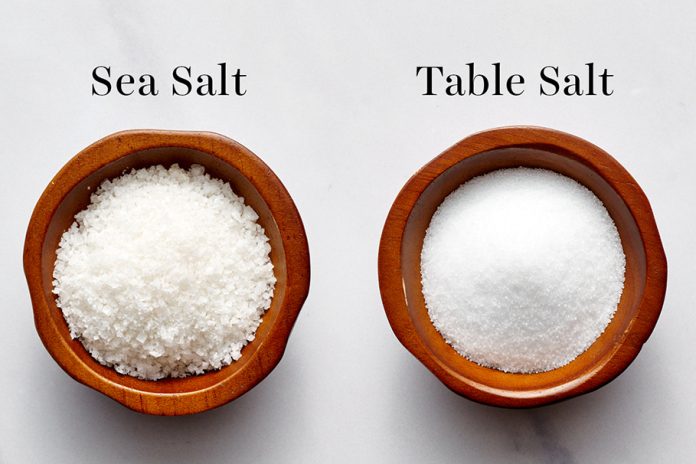
Sea Salt and Table Salt

In common usage, salt is a mineral composed primarily of sodium chloride (NaCl). When used in food, especially in granulated form, it is more formally called table salt. In the form of a natural crystalline mineral, salt is also known as rock salt or halite. Salt is essential for life in general (being the source of the essential dietary minerals sodium and chlorine), and saltiness is one of the basic human tastes.

Salt is one of the oldest and most ubiquitous food seasonings, and is known to uniformly improve the taste perception of food. Saltingbrining, and pickling are ancient and important methods of food preservation.

People assume that sea salt is healthier than table salt, but they actually share the same basic nutritional value. The key differences between sea salt and table salt are the source of the salt and the methods of extraction and processing. Eating too much of either can lead to high blood pressure and heart disease.

How Are Sea Salt and Table Salt Made?

As the name suggests, sea salt is made by evaporating seawater. The salt left over from evaporation is not processed, or processed very little, so it retains traces of minerals like calcium, potassium, and magnesium. The crystals are bigger than in table salt and add some crunch when sprinkled on food.

In contrast, table salt is mined from salt deposits. Table salt is processed to make it both purer and finer, thereby removing any natural minerals it may contain. Table salt is then fortified with additives to prevent it from clumping together. One important additive in table salt is the mineral iodine, which helps make thyroid hormones and thus contributes to thyroid health.

What Is the Nutritional Value of Table Salt and Sea Salt?

Sodium is a mineral your body needs to maintain the normal function of its muscles and nerves and to balance body fluids. Sodium is found in many foods, including salt, which is made up of sodium chloride.

Both table salt and sea salt contain around 40% sodium by weight. Some kinds of sea salt have bigger crystals than table salt, so there’s usually less sodium in a spoon of sea salt compared to a spoon of table salt due to their different-sized crystals. For example, a teaspoon of table salt contains around 2,360 mg of sodium compared to 2,000 mg in a teaspoon of sea salt.

Although 1,500 mg of sodium per day is enough for adults, most people have much more than this amount: The average American consumes more than 3,400 mg of sodium each day. A diet high in sodium can raise your blood pressure, leading to a higher risk of heart disease and stroke.

Sodium is an essential element for human health via its role as an electrolyte and osmotic solute. However, excessive salt consumption increases the risk of cardiovascular diseases such as hypertension. Such health effects of salt have long been studied. Numerous world health associations and experts in developed countries recommend reducing consumption of popular salty foods. The World Health Organization recommends that adults consume less than 2,000 mg of sodium, equivalent to 5 grams of salt, per day.

What Are the Health Benefits of Table Salt and Sea Salt?

Table salt is fortified with iodine, an element needed to make thyroid hormone. Your body can’t make iodine by itself, so it has to come from your diet. If you don’t get enough iodine, your body won’t make enough thyroid hormone and your thyroid can become enlarged as a result, leading to a condition called goiter. Table salt, therefore, helps prevent goiter.

Sea salt benefits include helping calm skin irritation and flare-ups in people with eczema when used as part of a warm bath. Sea salts with high levels of magnesium can also help increase hydration and reduce the roughness of skin in people with dry skin.

Credit: webmd

Feature: The Problem Of Galamsay Is Institutional Failure

0
Dr. Edward Kwadwo Yeboah ( the writer)

“Human are most insane spices, they destroy the nature, and worship the invisible nature” – Hubert Reeves

The galamsay problem we face now in Ghana is institutional failure; the institutions that are mandated to monitor, protect and implement environmental policies are to be blamed for all that evil and atrocity caused to the nature.

These institutions are responsible for the issuing of licenses or permits to any person, or legal entities to harvest, mine or extract the natural resources in Ghana, such permits or license are guided by strong procedures or requirements.

In any case, Environmental Impact Assessment (EIA) supposed to be a requirement for the application for any mining permits or license.

The EIA process is an interdisciplinary and multi-step procedure to ensure that

environmental considerations are included in decisions regarding projects that may

impact the environment. Simply defined, the EIA process helps to identify the possible

environmental effects of a proposed activity and how those impacts can be mitigated.

Over the past 10 years, it has become increasingly apparent that the country is facing a resource and environmental management crisis – large hectares of land, river bodies have completely been destroyed and large numbers of marine fisheries have been seriously depleted.

Forests are being harvested at unsustainable levels; acid rain and smog are problems; soil erosion and chemical contamination threaten vast areas; these mining chemicals make life hazardous for large numbers of humans and other animals species; many rivers and estuaries are polluted; and virtually every large river in Ghana is in a precarious state.

In my opinion, the cause of environmental degradation and the depletion of resources

are regulatory problem. The institutions that are mandated to protect the environment with tax payer’s money are to be blamed for the current environment crises. They were not set up to clean the rivers and reclaim the lands after they have been destroyed; their responsibility is to make sure this never happens.

The other major area of policy failure in the mining and forestry sector is in the legal

framework governing land tenure and titling, especially the mining sector.

Our laws and regulations sometimes conflict with each other or with local legislation and such laws often fail to take into account traditional or customary laws, which often have more impact on the way in which land is managed in remote areas. The uncertainty that this creates further exacerbates the common property problems referred to above.

In some cases, laws governing land tenure and titling even encourage the mining.

The first steps are establishing legal property rights over natural resources. Per

Constitution, all natural resources are the property of the Republic and are vested in the President on behalf of and in trust for the people of Ghana, according to the

Constitution.

The Ministry of Lands and Natural Resources is responsible for managing and regulating these resources. Parliament provides for the establishment of various

commissions to oversee the regulation and management of the natural resources. This

is clearly defined in the constitution. Therefore why do we find our environment is such deplorable state?


“A healthy ecology is the basis for a healthy economy.”—Claudine Schneider.


With the right rules and institutional governance structures, the natural resources will be extracted wisely and conservation goals will be met. Unfortunately, we clearly have not gotten those rules right. That is why the environment is in such dire straits which point to the widespread institutional failure we are witnessing.

Although there is an agreement that institutions are needed to solve resource problems, there is no agreement as to what institutions would do the job best. At this point, it is generally agreed that two ministries, namely Ministry of Environment and Ministry of Minerals and Natural Resources. Under these two ministries, we have these agencies (institutions), Environmental Protection Agency, Forestry Commission and Minerals Commission.

All these institutions have a big role to play in protecting, monitoring, and implementing policies to manage the environment and the natural resources.

These institutions are responsible for issuing permits and licenses for the extraction of the resources, and surely there are procedures or requirement that must be met before permit or license is granted. Such requirement include or should include “baseline studies” and “feasibility studies,” The baseline and feasibility studies will: potentially screens out environmentally unsound activities, propose modified designs or advice to reduce environmental impacts, identifies feasible alternatives, predicts significant adverse impacts, identifies mitigation measures to reduce, offset, or eliminate major impacts,

engages and informs potentially affected communities and individuals and influences decision-making and the development of terms and conditions. The report will give a

clear picture on environmental impact. The report will also include the environmental,

economic and social history of the area before the project takes off.

The requirement applies to any applicant whether large or small, it allow us to establish limiting entry schemes that could control the damage we are witnessing now. The primary cause of the destruction and inefficient and unethical mining is the absence of proper structures from the institution that has the mandate to protect us. The sad thing is that these institutions were established before the GALAMSAY or the use of heavy earth moving equipment. It did not take one month or one year to get to where we are now.

The destruction happened under the watch of these institutions that are mandated to protect us.

In any rational thinking, it is the institutions that has failed us not the timber merchant

(contractor) or the miners – the environmental governance structures did not work that is why we have some unusual understanding into the resource-management problems we currently face. The institutions have failed to protect the environment, and the reasons for those failures are not always predicted on the basis of existing policy framework.

I believe that we have adequate existing policy and legislation in place to support the implementation of various aspects of sustainable environmental management that can help us to achieve much with minimum cost.

The establishment of Task forces are not cost effective and won’t achieve the needed results we are looking for. Indeed, institutional failure can be seen as an extension of environmental failure and poor environmental practices.

Mining is here to stay therefore we should develop effective solution to the problem.

The solutions are there, we should find them. The cleaning, detoxification and  decontamination of the waters is not good enough. What about the lands that are contaminated?

Above all how much is it going to cost? And who is going to pay for the cost? Can the money spent on the cleaning project be used on more important project for national development?

The typical response to environmental failure is to design and implement government policies to attempt to either regulate the failed system or create environmental legislations to protect the environment. We can have subsidies to support desirable interventions and fines or penalties to discourage bad practices. However, other policies within and outside the river bodies and forestry sector often counteract or diminish the effect of these policies.

We must stop using “dead cat” strategy. To some extent, the current debate about sustainable mining management has proven futile in the past in this respect. We need to seek constructive approach to improve an overall mining planning.

Regulation is a direct measure by which governments seek to alter the actions of the private-sector by specifying either output or quality standards that they must meet, or by instructing them to perform certain actions or forbidding them to do others. Because of the direct nature of government regulations, they are often a preferred choice for

governments that want to implement a particular policy.

Given the limited success of some of the other measures that have been attempted to encourage the implementation of sustainable forest management, it seems likely that better designed and more strictly enforced regulation will form a major part of any strategy to encourage sustainable

mining – any regulation must be compatible with other agencies with responsibility for

mining sector, strong enforcement, and the regulation must not be complex.

The existing complex web of regulation must be replaced by simpler, cost effective and efficient regulation can be measured and enforced.

Indian leader Mahatma Gandhi has an apt admonition, “Earth provides enough to satisfy every man’s needs, but not every man’s greed”.

Written by Dr. Edward Kwadwo Yeboah

 The writer is an Economic Development Consultant


Anthony Joshua given offer he simply couldn’t refuse -Bunce

0
Anthony Joshua

Boxing expert Steve Bunce says Anthony Joshua was given an “offer he simply couldn’t refuse” to fight Jake Paul.

Britain’s Joshua, the former two-time unified heavyweight champion, will take on YouTuber-turned-boxer Paul at Kaseya Center in Miami on 19 December.

The fight will consist of eight three-minute rounds and both fighters will wear regulation 10-ounce gloves.

Joshua, 36, weighed more than 250lbs during his previous three fights but must come in at under 245lbs for the bout.

Bunce said that the fight is “ridiculous” and 28-year-old American Paul is nothing more than a “novice”, but added he can understand the financial appeal for Joshua who is reportedly, external set to earn £36.9m ($50m).

“Last November Jake Paul fought Mike Tyson and nearly broke the world,” Bunce told BBC Radio 5 Live.

“They had something ridiculous like 300 million people watching on different channels and were paid something along those lines in dollars as well.

“And that’s the reason this fight is happening, let’s get it right. AJ has been made an offer he simply couldn’t refuse and he’s accepted.

“I would not deny a single man or woman that boxes professionally a pound note, penny, a cent, a dime, the money for any fight.

“If AJ is being paid as handsomely as we’re told, bear in mind he does a lot of work for the community with his foundation, if it spreads the love around and absolutely loads up his pockets, I’ve no problem with it.”

Bunce said Joshua is “still in talks” over fighting fellow Briton Tyson Fury and the Paul bout will be “one of the final paydays” for the 2012 Olympic champion despite an obvious mismatch.

“AJ will be at least six inches taller and he will be perhaps four stone heavier. He’s an Olympic champion remember – we overlook that fact,” Bunce said.

“Jake Paul is a terrific novice. He’s a great novice in a weight division below – cruiserweight – and that’s what he is: a novice. But he’s a novice who conjures up these ridiculous fights.”

Nakisa Bidarian, co-founder of Most Valuable Promotions and Paul’s manager, said he had no concerns about the fight on safety grounds.

“I don’t think it’s reckless in any way shape or form,” he told BBC Sport.

“Jake’s in a much better position than a lot of fights which happen in boxing on a regular basis. I think he has a great shot.

“AJ is big, strong, but slower. He’s more vulnerable to Jake’s movement. In my mind this is more sanctionable than many fights in the sport of boxing.”

Credit: bbc.com

Arsenal’s Gabriel could be out until January

0
Gabriel

Arsenal are set to discover the full extent of the thigh injury suffered by Gabriel while on international duty amid concerns he faces several weeks out.

The centre-back limped off in visible discomfort during Brazil’s friendly against Senegal at Emirates Stadium over the weekend and has returned to Arsenal for treatment.

The early fears are that the 27-year-old will miss a minimum of four weeks, with sources indicating the defender’s absence could stretch to January.

The exact severity of the injury, and the timescale for recovery, will be finalised in the coming days, with Gabriel undergoing further assessment.

His absence for Sunday’s Premier League game against local rivals Tottenham is a blow to Gunners boss Mikel Arteta.

Gabriel has formed a formidable central defensive partnership with William Saliba, playing a key role in a back four that has conceded just five Premier League goals this season.

Piero Hincapie and Cristhian Mosquera are both in contention to deputise for Gabriel.

Arsenal, despite their position as Premier League leaders, have seen their season beset by injuries to crucial players.

Captain Martin Odegaard, Noni Madueke, Gabriel Martinelli, Kai Havertz and Viktor Gyokeres are among the players currently absent through injury.

The quintet could all return soon following varying spells on the sidelines but it remains to be seen if any of them are passed fit for the north London derby.

Credit: bbc.com

Fulham offer new deal to manager Silva

0
Marco Silva

Fulham have offered a new contract to manager Marco Silva, whose existing deal expires at the end of the season.

The Fulham board want the Portuguese – who had grievances over the club’s summer transfer window – to extend his four-year stay at Craven Cottage.

The 48-year-old accused the board of being “passive” on the eve of the Premier League season and they finished the transfer window having spent about £40m on five players.

The Cottagers have endured a difficult start to the campaign and sit one point above the relegation zone in 15th place.

The former Everton and Watford boss, who signed a three-year contract in 2023, earned promotion with Fulham in 2022 and has kept the club in the top flight since then.

He has been linked in the past with vacancies at Manchester United and Tottenham Hotspur.

Credit: bbc.com

The Thrills & Excitement of GPL Match Day 10

0
Lord Amoah, Asante Kotoko

Round 10 of the Ghana Premier League delivered an action-packed weekend of football, filled with intense encounters, tactical battles and moments of brilliance. Fans were treated to a mix of high-stake draws, narrow victories and strong home performances, reflecting the league’s competitiveness this season.

Swedru All Blacks 0–0 Hearts of Oak
The Match Day 10 fixtures began with a tense goalless draw between Swedru All Blacks and Hearts of Oak. Both teams had periods of dominance, but neither could find the final finish needed to break the deadlock. Hearts of Oak displayed moments of attacking fluidity, but Swedru’s organized defense ensured the stalemate. Swedru All Blacks proved tough to break down at home but the point earned keeps the Phobiams in contention and in the top four.

Asante Kotoko 1–1 Aduana
The standout clash of the weekend saw Asante Kotoko host Aduana at the iconic Baba Yara Stadium. Both teams came into the match with clear ambitions: Kotoko looking to assert dominance at home and Aduana aiming to snatch an away point. The game lived up to expectations, with Kotoko controlling possession and creating several early chances. However, Aduana’s counter-attacking threat proved dangerous. The match intensified as both sides traded blows, culminating in a 1–1 draw. Kotoko will rue missed opportunities, but Aduana’s resilience earned them a crucial point in their league campaign.

Bechem United 2–0 Samartex
Bechem United delivered a confident home performance, defeating Samartex. The hosts dominated the midfield, dictating the tempo and creating several scoring opportunities.

Samartex players celebrating goal

Their two-goal advantage reflected their composure and clinical finishing, particularly in the second half, when Samartex pushed forward in search of an equalizer. Bechem United’s disciplined approach in defense ensured that Samartex’s attacks never seriously threatened and the victory reinforces their ambition to climb the league table.

Berekum Chelsea 2–1 Nations FC
Berekum Chelsea recorded a hard-fought victory over visiting Nations FC. Chelsea struck early, setting the tone for an exciting contest, but Nations responded with intensity, making it a back-and-forth affair. The decisive moments came late in the second half, as Chelsea capitalised on defensive lapses to secure all three points. The match highlighted Chelsea’s determination to compete in tight games, demonstrating a blend of resilience, tactical awareness and attacking sharpness that could see them remain strong contenders this season.

Bibiani Gold Stars 1–0 Karela
Bibiani Gold Stars maintained their solid form with a narrow 1–0 win over Karela. In a tense and closely contested match, Bibiani showed remarkable defensive discipline while seizing a key scoring opportunity to clinch victory. Karela fought hard, creating chances but was unable to convert. This win continues Bibiani’s impressive campaign, illustrating their capacity to perform under pressure and grind out results even in tight encounters.

Dreams FC 1–0 Hohoe United
Dreams FC edged past Hohoe United 1–0 in a match defined by strategic discipline and sharp finishing. Both teams battled fiercely in midfield, with Dreams eventually finding the breakthrough that earned them all three points. Hohoe United showed resilience, making several attacking forays but were unable to break through Dreams’ organised defense. This victory is crucial for Dreams, who aim to push higher in the league standings.

Eleven Wonders 1–2 Medeama
Medeama secured an important away win over Eleven Wonders, demonstrating their tactical intelligence and fighting spirit. The hosts started strongly, taking an early lead, but Medeama responded with composure and clinical finishing to overturn the scoreline. The match highlighted Medeama’s ability to adapt mid-game, combining defensive discipline with incisive attacking moves to snatch victory. For Eleven Wonders, the loss will be a disappointment, though their performance showed promise for future matches.

Heart of Lions 2–0 Young Apostles
Heart of Lions dominated Young Apostles with a commanding victory. The Lions controlled possession throughout the game, creating numerous scoring opportunities and converting two crucial chances to secure a clean sheet.

Ebenezer Aban, Heart of Lions

Their disciplined defensive display ensured that Young Apostles struggled to mount any significant threat. This result boosts Heart of Lions’ confidence as they continue their campaign, emphasizing their potential as a competitive force in the league.

Holy Stars 2–2 Vision
Holy Stars and Vision entertained fans with an action-packed 2–2 draw. Both teams displayed attacking intent from the first whistle, trading goals in a match that swung back and forth.

Midfielder Hussein Mohammed

Holy Stars showcased creativity and urgency in the final third, while Vision’s counter-attacks kept the game lively and unpredictable. Despite sharing points, both sides can take positives from the match, particularly in terms of offensive coordination, though defensive lapses were evident.

By Jesse Otoo

Bournemouth eye Ghana international, 19, dubbed ‘next Michael Essien’

0
Caleb Yirenkyi

Bournemouth are exploring a move for Ghana international midfielder Caleb Yirenkyi who has drawn attention from Premier League rivals including Arsenal and has been compared to ex-Chelsea star Michael Essien.

The 19-year-old, who is being valued at around £20million, is another graduate of the Right to Dream Academy in Ghana and is impressing in the Danish Superliga with Nordsjaelland.

He started out as a right-sided midfielder and even made his national team debut at right-back but he is revelling in a holding midfield role which has alerted Premier League scouts over recent months.

Danish media have even compared him in style to compatriot and former Chelsea midfielder Essien who is assistant manager at Nordsjaelland and proving a mentor to the teenager.

‘Michael Essien impacts every player,’ said Yirenkyi. ‘He helps everyone at Nordsjaelland, we learn a lot from him.’

Arsenal are understood to view Yirenkyi as one for the future but Bournemouth have proven themselves to be consistently ahead of the curve in finding talent early and making them Premier League ready.

They are aware of clubs circling around star performers such as midfielder Tyler Adams and Yirenkyi’s compatriot coveted winger Antoine Semenyo, who has a £65million release clause, so are planning ahead to maintain strength in their squad and remain competitive at the top end of the Premier League.

Credit: dailymail.co.uk

The Ghanaian Chronicle