Home Blog Page 339

Court orders rerun of Kpandai parliamentary election; but MP files appeal

0
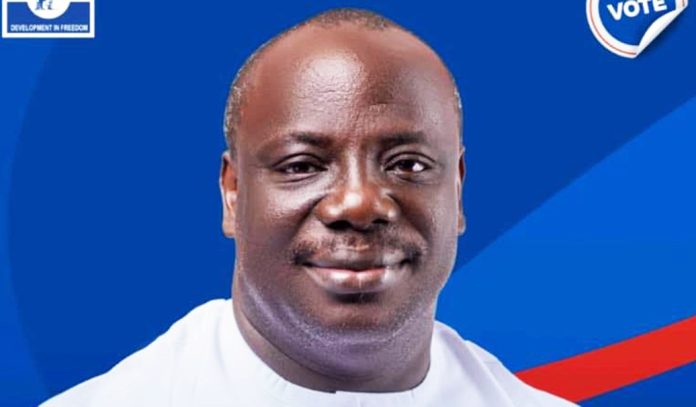
Matthew Nyindam, MP for Kpandai

The resolve of the ruling National Democratic Congress (NDC) to further shrink the size of the New Patriotic Party’s (NPP) Members of Parliament (MP) gained oxygen yesterday through a favourable court judgement.

If the judgement is upheld, the 87 MPs for the minority will reduce to 86. Already, the NDC is threatening a ‘showdown’ in the rerun, arguing their opponent should rather not contest.

On Monday, 24 November, 2025 the High Court in Tamale nullified the 2024 parliamentary elections of the Kpandai constituency and ordered a rerun in 30 days.

Though the full judgement will be made public on Friday, to know the reasoning of the court, procedural irregularities at the collation centre were cited.

The judgement was in favour of the NDC candidate, Daniel Nsala Wakpai, the petitioner, who defeated the NPP candidate, Matthew Nyindam in 2020, but was defeated in 2024, until the declaration by the court yesterday.

ARGUMENT

The counsel for the defendant told journalists that evidence on the record is that there was violence at the initially designated collation centre and once there was violence, the EC had the right to relocate the collation centre.

He quoted Regulation 48 of CI 127 and said that the absence of a candidate and his agent at the collation centre does not invalidate the results. He argued that even the disputed polling stations would not alter the election outcome.

“They said they affected polling station 41, that the total votes were about 500. Commonsensically, if you take that 500 votes and add it to the petitioner, he will still not win the elections.”

“The law is in the bosom of the judge. That doesn’t mean the judge is necessarily right. That’s why there is a hierarchy. You climb the next ladder… the Court of Appeal in this case.”

APPEAL

Meanwhile, the current MP for Kpandai, Matthew Nyindam, who adds to the 87 MPs of the minority, has filed for an appeal and a stay of execution.

His counsel told journalists after the proceedings that they respect and accept the decision of the court, but disagree with it.

He said, “We believe that the petition was frivolous, but the court has decided otherwise, so we respect the decision of the court.

“But we strongly disagree with the judgement and we have already shown our disagreement by filing a competent notice of appeal and we’ve added a motion for stay of execution.”

The lawyer indicated that he anticipated an unfavourable ruling and prepared in advance, based on information they picked up ahead.

“As a lawyer, if you are getting information that judgement will be compromised, you prepare. So, you come for the judgement with a notice of appeal in your pocket, and that was exactly what I did.”

REJECT

The MP, Matthew Nyindam, also rejected the ruling, insisting he remains the duly elected representative.

“Let me, in the first place, thank my supporters, thank the good people of Kpandai and let me put it on record that I’m still their MP. I want to put it on record that I’m still their MP.”

He claimed the judgement did not surprise him, alleging political interference and pointed to the constituency’s pink sheets as proof of his victory.

He accused the NDC of attempting to use state influence to overturn the constituency’s will, arguing that “They decided to come to court knowing very well that maybe they’ll be able to use the state’s powers to overturn certain things.”


For more news, join The Chronicle Newspaper channel on WhatsApp: https://whatsapp.com/channel/0029VbBSs55E50UqNPvSOm2z
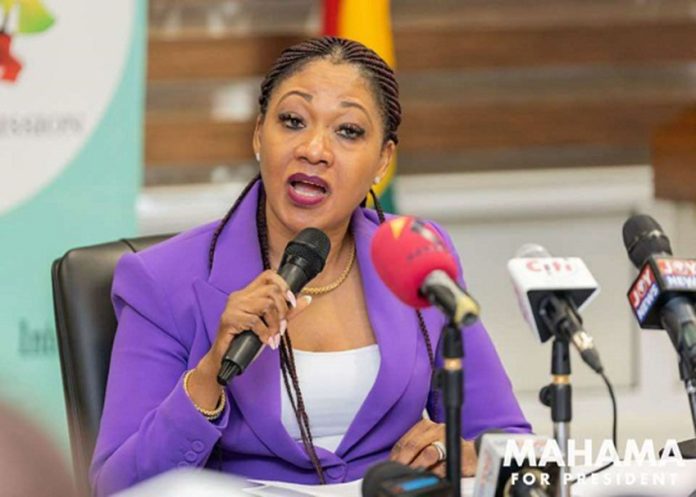


Jean Mensa, others face possible removal from office

0
Madam Jean Mensa- EC boss

The Jean Mensah-led Commissioners of Ghana’s election referee, the Electoral Commission, may soon lose their jobs, thanks to a petition filed by one of their staff, Joseph Blankson Adumadzie.

The Petitioner, who is a database administrator at the EC headquarters, in a public statement Monday, 24 November, 2025 announced that he had formally submitted a petition to President John Mahama in accordance with Article 146 of the 1992 constitution.

“…seeking the removal of Mrs Jean Adukwei Mensa, the chairperson of the EC, DrBossman Eric Asare, deputy chairperson-corporate services and Mr Samuel Tettey, deputy chairperson-operations, from office,” the statement said.

The statement did not disclose the detailed account of the petition, except saying that it was based on 12 counts of “stated misbehaviour, including cronyism, abuse of office and gross incompetence.”

The Petitioner argued that these 12 counts collectively undermined “public confidence” in the EC and “pose a threat to the credibility, independence and integrity” of Ghana’s electoral process.

In an interview with Osei Bonsu, a radio host, the Petitioner revealed that he had not been to the office for about two years now, because he has been interdicted, based on “false accusation.”

It is unclear whether the petition stemmed from the rift, but he indicated that the issue of his interdiction was not contained in the petition. The matter, he said on air yesterday, is being litigated in court.

ARTICLE

Per the dictates of clause 3 of Article 146 of the national constitution, the president after receiving the petition, can only forward it to the Chief Justice for the determination of a prima facie case.

Clauses four and five say that where the Chief Justice decides that there is a prima facie case, he shall set up a committee, and the committee shall investigate the complaint and shall make recommendations to the CJ, who shall forward it to the President.

Article 146 deals with the removal of justices of superior courts and chairmen of regional tribunals.

However, Article 44 (2) says, “The chairman of the Electoral Commission shall have the same terms and conditions of service as a Justice of the Court of Appeal.”

Clause 3 states that “the two Deputy Chairmen of the Electoral Commission shall have the same terms and conditions of service as are applicable to a Justice of the High Court.”

The petition surfaces a week after the swearing in of the new Chief Justice, Paul Baffoe-Bonnie, by President Mahama, after a successful removal of former Chief Justice Gertrude Esaaba Sackey Torkornoo.

Chief Justice Paul Baffoe-Bonnie will be mandated to determine a prima facie case from the petition, should President Mahama forward the same to him.

It must be noted that this is not the first time a petition has been filed against a EC chair, but nothing was heard about it.

The Petitioner, Ofosu-Appiah Daniel, submitted a petition to the President on January 27, 2025, requesting the removal of Jean Mensa, Dr. BossmanAsare, Samuel Tettey and Dr. Peter Appiahene.

At the time it was submitted, Justice Gertrude EsaabaTorkornoo was the Chief Justice, who would have decided a prima facie case if President Mahama had forwarded it to her.

However, at the time of filing this report on the evening of Monday, the presidency had not commented on the new petition by a staff member of the EC, which has gained public attention.

COINCIDENCE

The current script is very similar to what played out previously and resulted in the removal of the previous chair, Charlotte Osei, and deputies.

At the time, the petition which removed the trio was also filed by staff of the EC and forwarded to the then Chief Justice, Justice Sophia Akuffo, who was appointed by President Akufo-Addo, following the retirement of Justice Georgina Theodora Wood.


For more news, join The Chronicle Newspaper channel on WhatsApp: https://whatsapp.com/channel/0029VbBSs55E50UqNPvSOm2z


The Future of the New Media Demands Training, Not Threats

0

The news of the arrest of Blogger Samuel Amedeto came to me as a surprise. Sammy is a very determined young man who always tries to do what is right and avoid trouble. I have known him from Dzodze, my hometown, and I have followed his passion for the media closely.

He entered the blogging space with remarkable enthusiasm, which won my admiration. On the few occasions we met, I consistently encouraged him to give his best and nurture his passion.

Following his first arrest on Friday, some of our mutual friends reached out to me, and I made efforts to connect with him. He later returned my call and confirmed what had transpired, stating that it was related to a video he had posted on his platform.

He also mentioned that he disclosed his source to the police and was subsequently asked to go home. I was relieved, confident that Sammy would not knowingly engage in any unlawful act.

I would later learn that he had been rearrested and detained after being called to pick up items that had been seized earlier. I am informed that his bail hearing is scheduled for tomorrow.

However, beyond this particular incident, I would like to offer a perspective on the increasing number of cases involving new media players.

We must acknowledge, as a nation, that the world is moving at lightning speed in this era of technological advancement, and Ghana stands at the crossroads of that evolution.

These rapid changes come with uncertainties, and it is important that we manage them carefully, especially when it comes to the challenges posed by bloggers and vloggers.

Recently, I expressed concerns about the growing disregard for privacy by some new media outlets when covering events.

This is just one of many ethical issues emerging from their work. Operating in the media and journalism space comes with a clear chain of ethical standards that must be respected not only to protect practitioners but also to safeguard the institutions and individuals they report on.

The first rule is verification. Good journalism thrives on verification. When you ignore it, you expose yourself to accusations of spreading misinformation.

Unfortunately, we have failed as a country to recognise the rise of these new young media narrators and to create platforms to train, mentor, and guide them.

The Ghana Journalists Association, in particular, should have taken a keen interest in this emerging class of content creators, collaborated with them, and helped groom them to protect the sanctity of the profession.

I do not blame Sammy or the many young bloggers charting this path. I blame us, the professionals, who either saw them as a threat or completely ignored their presence.

Meanwhile, the political class appears more focused on leveraging these young creators to score political points. During the last election, we all witnessed it. The two main political parties seemed to have their own groups of bloggers whom they engaged to spread misinformation and fake news.

It should not surprise anyone that the political class may now be using security institutions to silence press freedom. Sammy was picked up from his house at dawn in Rambo style, with his doors damaged. The operatives arrived armed, refused to disclose their identities, and did not tell his co-tenants where he was being taken. His family had to move from one police station to another and visit National Security installations, searching for their son.

His recent detention only became public after the intervention of a whistleblower forced the police to issue a statement. This is unfair and unacceptable.

Regardless of the law on the publication of false news, the Constitution’s 48-hour rule must be strictly upheld. No individual should be detained beyond 48 hours without a court order. Any such detention is unconstitutional. The manner in which the young man was handled like a hardened criminal is an affront to freedom of speech, especially when civil remedies exist to address defamation and related harms.

The late Noah Dameh of Radio Ada and the McDan case are still fresh in our minds. His days in detention took a toll on him. When he came out sick, he never recovered. We cannot continue on this path.

My call is for the state to adopt a more progressive, corrective, and educational approach to this emerging challenge.

Instead of relying solely on punitive measures, we should invest in systems that train, guide, and integrate new media practitioners into the broader communication ecosystem. The National Media Commission and the Ghana Journalists Association must take up this issue.

This is how we build a responsible, ethical, and forward-looking media environment that supports national development without stifling young talents.

SOURCE: Myjoyonline.com

The writer King Nobert Akpablie is a Technology Media and Telecommunications (TMT) Advocate. For further comments, reach him at kingnobert2@gmail.com.


The views expressed in this article are the author’s own and do not necessarily reflect The Chronicle’s stance.

Editorial: Sudan On The Brink: When The World Ignores African Lives

0
Editorial

Since 2023, Sudan has collapsed into a full-scale civil war driven by longstanding political fragmentation and deep divisions between the Sudanese Armed Forces (SAF) and the Rapid Support Forces (RSF). What began as a dispute over integrating the RSF into the national army has spiralled into one of the world’s most catastrophic humanitarian disasters. Yet, global attention remains disturbingly faint.

Since fighting erupted in April 2023, more than 40,000 people have been killed, and over 4 million displaced, according to humanitarian agencies figures that should have jolted the world into coordinated action. Instead, Sudan sinks deeper into chaos.

El Fasher, the last major city in Darfur, previously outside RSF control, symbolises this collapse. After an 18-month siege, RSF fighters broke through SAF defenses late last month and seized the city. Reports from rights groups describe a massacre: the Sudan Doctors Network estimates at least 1,500 civilians killedsince the takeover, including over 450 people murdered inside a hospital.

Locals recount chilling details community kitchens targeted with drone strikes and families reduced to eating animal feed and even hide to survive. On Monday, 3 November, 2025 the UN-backed Integrated Food Security Phase Classification (IPC) confirmed what survivors have long

This is the IPC’s second famine determination in the war, following Zamzam camp in August 2024. Three nearby towns receiving fleeing civilians Tawila, Mellit, and Tawisha are also teetering on the edge. Sudan’s tragedy is not new. The country has endured decades of conflict from the Second Civil War and Darfur atrocities to the turmoil that followed Omar al-Bashir’s 2019 removal. Yet, the scale and brutality of the current war represent a new low, one worsened by the near-total paralysis of the international system.

The Chronicle is deeply disturbed by what can only be described as a genocide unfolding in slow motion. And while Sudan bleeds, world leaders offer little more than statements of concern.

At the recent UN General Assembly, Ghana’s President John Dramani Mahama condemned the atrocities and urged collective action. But rhetoric has not translated into resolve. Instead, world powers have allowed the conflict to become a proxy battlefield.

Nations including Iran, Egypt, Russia, the UAE, Saudi Arabia and Libya have reportedly taken sides, supplying arms and political cover to the warring factions. Their involvement has expanded and intensified the war, not helped end it.

A painful truth emerges: the urgency applied to crises in Gaza or Ukraine is not extended to Sudan. When African lives are at risk, the global system appears slow, hesitant and indifferent. The United Nations and European Union show little of the unity and speed they marshal elsewhere. And the African Union once envisioned as the continent’s guardian has again proven toothless.

The Chronicle acknowledges the few voices calling for peace including the United States and UN Secretary-General AntónioGuterres. But isolated statements do not constitute a strategy. The world cannot continue pretending Sudan’s destruction is an inevitable tragedy. It is a preventable one if only leaders choose to act.

Sudan deserves more than silence. It deserves protection, pressure on foreign enablers, a humanitarian surge, and a credible peace process. No nation’s citizens are more valuable than another’s. And no African life is disposable.

Sudan is crying out for help. The world must finally listen.


For more news, join The Chronicle Newspaper channel on WhatsApp: https://whatsapp.com/channel/0029VbBSs55E50UqNPvSOm2z


Apostolic Church Organises Blood Donation, Eye Screening Exercise to Climax 75th Anniversary

0
Some members of the church donating blood

The Apostolic Church–Ghana, Osu District Central Assembly, on Saturday held a blood donation and eye-screening exercise as part of activities marking its 75th anniversary, with church leaders describing it as a gesture of giving back to the community they have been part of for decades.

An old woman undergoing eye screening at the church

Speaking at the event, Elder Nathan Ofei Ansah said the anniversary was not only a celebration of the church’s long history, but also an opportunity to serve residents within the Osu enclave.

“We are having this blood donation and eye-screening exercise as part of our 75th anniversary celebrations. We need to offer to the community as well, so that’s why we are here today,” he explained.

According to him, the exercise had already made an impact, with several people screened and six others cleared to donate blood, after undergoing initial tests.

Some of the people present at the church waiting to undergo eye screening

He noted that turnout for the event was mixed, with the elderly largely taking advantage of the eye-screening services, whilst organisers hoped to see more youth donate blood.

Elder Ofei Ansah emphasised that community service is central to the mission of the church.

“This is in alignment with our goal. We are part of this community. The church started in 1950 and we’ve been here since the 1960s. Most of our members grew up here, even though some have moved out,” he said. “It’s not only church members here; community members have joined us.”

Medical practitioners checking the health status of a young man before donating blood

He added that although blood donation is not held regularly, the church aims to make exercises like this annual events, especially with support from medical teams from Ridge Hospital.

“Since they are our neighbours, we hope to continue partnering them as often as they are available,” he said.

The medical team, led by Dr. Ohene Wilberforce, a Doctor of Medical Laboratory Science from Ridge Hospital, underscored the importance of such community partnerships, citing Ghana’s persistent nationwide shortage of donated blood.

Dr. Wilberforce noted that blood shortages remain severe due to widespread misconceptions and fear among potential donors.

“Some people think the blood is going to be used for something else. Others are simply scared of the needles,” he said. “And some are not willing to donate at all.”

He described the shortfall as alarming. “If you come to Ridge right now, the amount of blood we have in our blood bank won’t be more than 40 units,” he lamented.

“Meanwhile, surgeries, labour cases, ectopic pregnancies and accident victims require huge amounts of blood. Some patients need as many as 10 units.”

The practitioner highlighted the life-saving potential of church-led donation drives, urging more organisations to emulate the Apostolic Church’s initiative.

“At Ridge Hospital, we partner churches like the Methodist Church and they’ve been very helpful. With the Apostolic Church Ghana now joining, we encourage them to continue.

“Anytime they need blood for a member or any patient, we will support them because of this partnership,” he assured.

Potential donors in a queue to donate blood

Dr. Wilberforce also outlined the mandatory pre-donation checks performed at the venue, including weight, blood pressure, hemoglobin levels and blood grouping. Samples are later screened for Hepatitis B and C, HIV and Syphilis.

He further stressed that blood donation is beneficial not only to recipients but also to donors themselves. “Donation helps prevent cardiac issues and conditions related to excess iron. It allows your body to produce new cells and helps you know your health status,” he said.


For more news, join The Chronicle Newspaper channel on WhatsApp: https://whatsapp.com/channel/0029VbBSs55E50UqNPvSOm2z


South-West governors hold security meeting in Ibadan

0
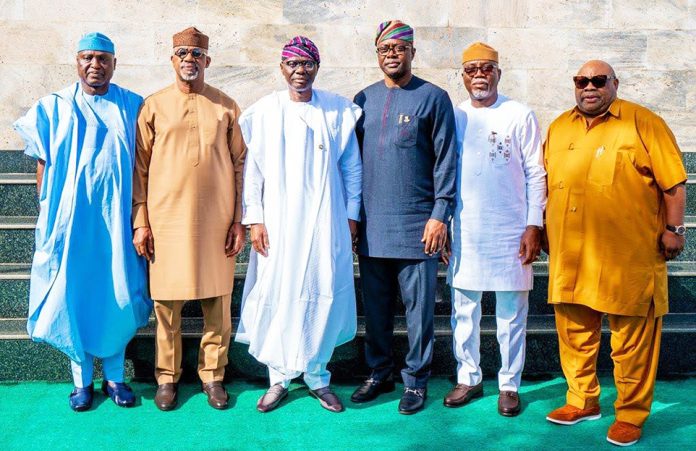
South-West governors

Governors of the South-West are meeting in Ibadan, the Oyo State capital, over the security situation in the region.

The governors in attendance were; Seyi Makinde, Oyo, Dapo Abiodun, Ogun, Babajide Sanwo-Olu, Lagos, Lucky Aiyedatiwa, Ondo and Biodun Oyebanji, Ekiti.

Governor Ademola Adeleke of Osun State is represented by his deputy, Kola Adeusi.

Our correspondent reports that the meeting was summoned to review the security situation in the South-West.

Although it is unclear why the emergency meeting was called, it may, however, not be unconnected with the security situation in the country where bandits have abducted some schoolchildren in Kebbi and Niger states, as well as some worshippers in a church in Kwara State.

Sources said the governors would deliberate on the security threats, fast-track infrastructural development, and strengthen regional integration under the Development Agenda for Western Nigeria (DAWN).

They are also expected to review ongoing collaborative security initiatives, including the operations of the Amotekun Corps, with a view to enhancing its capacity amid emerging challenges.

Credit: dailypost.ng

Former Vice President Atiku Officially Joins ADC

0
Atiku Joins ADC

Former Vice President Atiku Abubakar has officially joined the coalition party, the African Democratic Party (ADC), just 17 months to the 2027 general elections.

The 78-year-old politician disclosed this in a short post on his official X handle on Monday, attaching pictures of him holding the party’s membership card with the brief caption, “It’s official.”

Prior to him joining the coalition, the former VP had been a high-profile member of the Peoples Democratic Party (PDP).

He, however, resigned from the opposition party on July 16, citing irreconcilable differences that have emerged within the former ruling party.

Atiku explained that he found it necessary to part ways due to the current trajectory the party has taken, which, according to him, diverges from the foundational principles it stood for.

Though Atiku, in July, led the adoption of the ADC as the coalition platform for opposition figures to challenge President Bola Tinubu in 2027, he and other prominent opposition figures, such as Peter Obi and Babachir Lawal, had delayed their formal registration with the party.

Atiku and some other coalition leaders were conspicuously absent at the unveiling of the ADC National Secretariat in the Wuse area of Abuja.

Their absence had fuelled speculation, suggesting the unseriousness of the coalition leaders to sack the All Progressives Congress (APC) in the next general elections.

The opposition coalition officially adopted the ADC as its political platform on July 2, 2025, to contest the presidential and other elections in 2027.

The coalition said it was set to rescue the country from collapse and rebuild its democracy. Credit: channelstv.com

Abductions: Zamfara Rules Out School Closure, Introduces Security Measures

0
Zamfara State Governor, Dauda Lawal

The Zamfara State Government says it is not considering closing schools despite rising insecurity and a wave of student abductions across parts of the country.

Instead, the state government has introduced new security measures to protect learning centres and ensure pupils continue classes without fear of attacks.

The Commissioner for Education, Science and Technology, Wadatau Madawaki, disclosed this while addressing journalists at an event organised by the Federated Association of Zamfara State Students in Gusau, the state capital.

Madawaki’s assurance comes amid the recent abduction of 25 students of Government Comprehensive Secondary School, Maga, in Danko Wasagu Local Government Area of Kebbi State, and the attack on Saint Mary’s Catholic School in Niger State that saw about 315 students and staff abducted.

These attacks have led some northern states to announce mass school closures, but Zamfara says it will not follow suit. Instead, authorities are strengthening security in and around schools to deter bandit attacks.

“We have already done what we are supposed to do, and when you talk about security, you do not disclose your actions to the media. But we have taken steps to safeguard the interests of our students. The security of the schools and children is well taken care of.

“We are in contact with all the security agencies, and they are giving us the necessary support to ensure our schools operate without hindrance. We believe nothing will happen, and our education will continue to flourish until the end of the academic term,” Madawaki said.

Madawaki explained that states embarking on mass closures largely operate boarding schools, whereas Zamfara currently runs mainly day schools due to insecurity.

“As of now, most of the states that have closed their schools operate boarding systems where students stay in hostels. Bandits often strike at night when people are asleep. Here, we are yet to resume our boarding system. Our schools run during the day,” he said.

Credit: channelstv.com

US To Provide Intelligence Support, Defence Equipment To Nigeria -Presidency

0
US President Donald Trump and President Bola Tinubu

The Presidency says the United States Government has affirmed its readiness to deepen security cooperation with Nigeria, including the provision of enhanced intelligence support, defence equipment, and articles to reinforce ongoing operations against terrorists and violent extremist groups in the country.

This follows discussions and engagements held last week between a high-level Nigerian delegation and US officials, aimed at strengthening security partnerships between the two countries and opening new avenues for cooperation.

The delegation, led by the National Security Adviser, Nuhu Ribadu, had met with senior officials across the US Congress, the White House Faith Office, the State Department, the National Security Council, and the Department of War.

Members of the delegation included the Attorney General of the Federation, Lateef Fagbemi; Chief of Defence Staff, General Olufemi Oluyede; Chief of Defence Intelligence, Lieutenant General Emmanuel Undiandeye; the Inspector General of Police, Kayode Egbetokun; and two representatives of the Office of the National Security Adviser.

According to a statement issued on Monday by the Special Adviser to President Bola Tinubu on Information and Strategy, Bayo Onanuga, during the engagements in Washington, DC, the Nigerian delegation refuted allegations of genocide in Nigeria, emphasising that violent attacks affect families and communities across religious and ethnic lines.

The delegation also rejected the wrongful framing of the situation, saying such a portrayal would only divide Nigerians and distort the realities on the ground.

“The discussions provided ample opportunity to correct misconceptions about Nigeria, forged a constructive, solution-driven partnership with the United States, reinforced mutual trust, and advanced a coordinated approach to protecting vulnerable communities, especially in the Middle Belt.

“The United States also expressed its willingness to extend complementary support, including humanitarian assistance to affected populations in the Middle Belt and technical support to strengthen early-warning mechanisms,” he said.

Credit: channelstv.com

Ghana on Track to Meeting 2030 SDG Targets

0
Officials at the launch in a group picture

The Director of Budget at the Ministry of Finance, Mr. Isaac Fraikue, has expressed strong optimism that Ghana will meet its Sustainable Development Goal (SDG) targets by 2030, insisting that SDG tracking has now become an integral part of government’s budgeting and implementation processes.

Mr.Fraikue said the annual SDG Budget and Expenditure Report had become a powerful accountability tool that ensured timely corrective measures across sectors, enabling the country to stay on course.

“We will definitely meet the targets by the time they are due because we are working so hard as a country,” he said, during the launch of the 2023 SDG Budget and Expenditure Report.

According to him, the developmentof the report was more than just tagging and tracking budgetary applications and expenditures and that it tells the story of Ghana’s development journey and reflects herresolve to ensure that no one had been left behind.

He added that government’s next priority was to localise SDG budget reporting, deepen stakeholder engagement and strengthen transparency to improve how data is used for financial decision-making.

UNICEF, which partnered government in producing the report, commended Ghana’s commitment, describing the country as a global frontrunner in transparent SDG investment tracking.

At the event, the Chief of Social Policy and Inclusion at UNICEF Ghana, Ms. Paulina Sarvilahti, praised the Ministry of Finance for adopting an accountability system used by only a handful of countries worldwide.

“There are very few countries that have been brave enough to take this step. It’s laudable that the Ministry of Finance is a frontrunner in this,” she said.

The 2023 budget execution analysis showed Ghana increasing its SDG-related spending from GHS 83 billion in 2022 to GHS 180 billion in 2023, signalling a strengthened commitment to targets in health, education, social protection and human capital development.

Although the global Sustainable Development Report currently ranks Ghana 120th out of 193 UN Member States, Ms.Sarvilahti said the country’s data-driven approach provided a firm basis to speed up progress.

“Overall, it’s great that we have this strong commitment from government and that there is really a strong push towards that,” she noted.

She stressed that global challenges such as climate change, economic pressures and post-pandemic disruptions had made SDG attainment more difficult everywhere.

However, Ghana’s focus on monitoring whether resources reached the intended beneficiaries, she said, was a catalyst for improved results.

The UNICEF official further highlighted Ghana’s gains in education, gender-related investments and poverty-reduction interventions, and welcomed the inclusion of child-specific indicators in the report for the first time.

She urged more integrated planning, efficient resource allocation and stronger collaboration between government and development partners.

“We cannot stop. This is the time we need to put in more effort, be more decisive and more targeted,” she said.

UNICEF Country Representative, Mr. Osama MakiawiKhogali, also praised Ghana’s longstanding commitment to children’s welfare, recalling that Ghana was the first country to ratify the Convention on the Rights of the Child in 1990.

However, he cautioned that more effort was needed to tackle child poverty, revealing that 73 per cent of Ghanaian children were affected by multidimensional poverty, while 28 per cent faced monetary poverty.

He said targeted SDG investments remained essential, especially as Ghana marked World Children’s Day, which coincided with the report launch.

UNICEF reaffirmed its partnership with government, noting that Ghana’s transparent SDG budget tracking positioned it as a leader in accountability and a model for other countries.


For more news, join The Chronicle Newspaper channel on WhatsApp: https://whatsapp.com/channel/0029VbBSs55E50UqNPvSOm2z

The Ghanaian Chronicle