Home Blog Page 317

CJ Approval: How Bagbin Halted Minority ‘Delay Tactics’

0
Speaker of Parliament, Alban Kingsford Sumana Bagbin

The experienced Speaker of Parliament, Alban Sumana Kingsford Bagbin, yesterday truncated the tactful moves by the Minority to frustrate the pre-approval of the nomination of Justice Baffoe-Bonnie as the next Chief Justice.

The minority had already made known they would not support the nomination. However, the majority was not perturbed, due to their large numbers, which met all legal requirements for making decisions in Parliament.

Unyielding, the minority showed signs of its preparedness to activate all the standing orders that could delay and frustrate the majority side in the approval, especially as it was on a day the government wanted to present its budget.

Following the debate on Thursday, November 13, 2025 on the Appointments Committee’s report on the vetting of the CJ nominee, the Speaker put the question for a voice vote, which result the minority challenged.

Under Order 151 (3), the minority first deployed the strategy of calling for a head count, which the Speaker granted, despite objections from the majority.

“At the end of the count, the Ayes [had] 163, the No [had] 69,” Bagbin announced. It would be noted that both side of the political divide were not fully present.

Whereas the ‘super’ majority only marshalled 163, a fall of 26, the ‘mighty’ minority dealt with 69, a deficit of 18.

Leading the plan, the First Deputy Minority Chief Whip, Habib Iddrisu, who had earlier been successful with his call for a head count, now called for a division, arguing that he did not believe in the result.

NOT SUCCESSFUL

At this point, Speaker Bagbin asked for his reason for challenging the result. The member claimed that some ministers who were not MPs were “inside” the chamber during the headcount, which is against the orders.

Speaker Bagbin did not rule out right, but called one of the two ministers to verify or deny the claim, which the Ashanti Regional Minister, Dr Frank Amoakohene, who had attended the proceedings with the Minister for Works and Housing, denied. He told the House that both of them were outside the chamber during the headcount.

Having heard from the minister, Speaker Bagbin ruled by saying, “Honourable Members, it is my view that the division has been unnecessarily claimed.”

The standing orders leave the discretion to the Speaker to determine whether a call for division had been unnecessarily claimed, which discretion the Speaker exercised.

“The motion has accordingly been adopted. This Honourable House has accordingly approved the nomination of Justice Paul Baffoe-Bonnie as Chief Justice of the Republic, in accordance with Article 114, Clause 1 of the 1992 Constitution,” he added.

ARGUMENTS

A cursory observation of the debate and subsequent proceedings on the report of the Appointments Committee on the vetting, last Monday, depicted all sides deploying their arsenals.

Three days after his vetting, the Committee recommended in its report to the House the approval by majority decision. The minority had earlier indicated they would vote en bloc to reject the nomination of the CJ nominee.

The minority wanted the Hansard to capture this record insisting that they were rejecting the nominee based on principle and the fight for judicial independence, but were not permitted, because they kept referring to the legal battles initiated by CJ Torkornoo.

The Speaker told the House that cases filed by CJ Torkornoo were not before the House and urged all debates to be within the report of the appointments committee.

He had cause to direct that debates on the subject he had already ruled on and his ruling not challenged be expunged from the records of Parliament.

The minority, in their debate, referred to the seven separate legal proceedings filed by the embattled former Chief Justice, Gertrude Araba Esaaba Torkornoo, as well as the delay by the Attorney General to file its processes, as it had sought leave of the court for additional time.

The argument of the minority was that it is possible the court may look in the direction of the plaintiff and grant her relief; thus, there is a need to allow all processes to be exhausted before appointing a new CJ.

The minority argued that there was no need “rushing” to appoint a new CJ in the midst of the litigation, as the President had already appointed an acting CJ.

The majority, on the other hand, argued that Parliament could not be estopped from performing its constitutional duty by reason of a proceeding by a different arm of government.

They argued that, should the court rule in favour of the plaintiff, the sitting CJ would have no choice than to obey the decision of the court.

The MP for Effutu, who is the leader, Alexander Afenyo-Markin, the MP for Asante-Akim Central, Kwame Anyimadu-Antwi and the MP for Mampong Akuapem, Samuel Awuku, debated for the minority.

Majority Leader and MP for Bawku Central, Mahama Ayariga; MP for Bolgatanga East and Attorney General Dr Dominic Akurintinga Ayine; the MP for Asawase and Minister for the Interior, Mubarak Mohammed Muntaka also debated for the majority.


For more news, join The Chronicle Newspaper channel on WhatsApp: https://whatsapp.com/channel/0029VbBSs55E50UqNPvSOm2z

Tano North MP Condemns Mass Arrests in Hwidiem

0
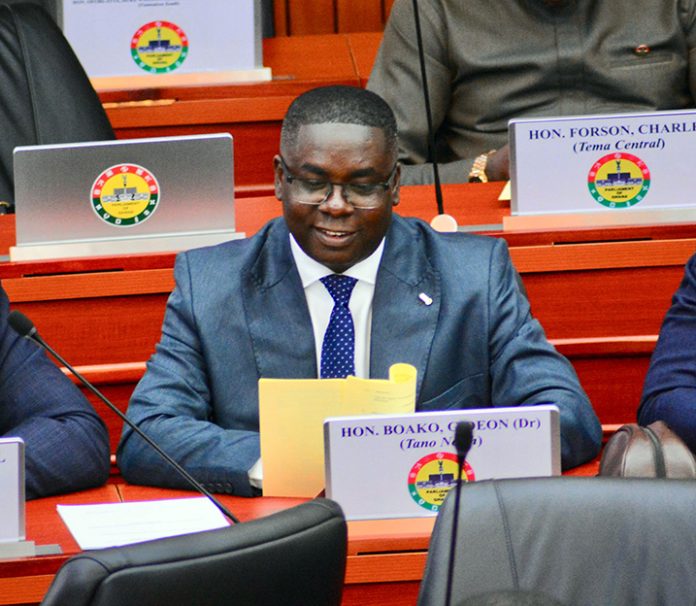
MP for Tano North, Dr. Gideon Boako

Member of Parliament for Tano North, Dr. Gideon Boako, has strongly condemned what he described as “blanket arrests” and “unlawful repatriation” of several residents of the Ahafo Region by security forces, following a violent attack on officials of the National Anti-Illegal Mining Operations Secretariat (NAIMOS) and the Environmental Protection Agency (EPA).

In a statement issued on Wednesday, Dr. Boako said while he fully supports the enforcement of laws and condemns any attacks on state officials performing their lawful duties, the military-led swoop that resulted in mass arrests in the Hwidiem area was excessive and undermines the rights of innocent citizens.

“The principle of natural justice dictates that persons must be treated as innocent until proven guilty. The operation that led to mass arrest without discernible, proper investigation is unacceptable. It risks punishing the innocent alongside the culpable, thereby undermining public trust and creating unnecessary fear and tension within the community,” he stated.

The arrests followed an alleged assault on officials of NAIMOS and the EPA, who were reportedly on an anti-illegal mining (galamsey) operation in parts of the Ahafo Region. In response, security personnel conducted a large-scale swoop in the area, detaining scores of residents, many of whom were later transported to Kumasi in the Ashanti Region for interrogation.

The Member of Parliament for Tano North described the repatriation of the detainees to Kumasi as “deeply troubling,” arguing that it poses severe challenges to the rights and welfare of the affected individuals.

“This action places undue hardship on the arrested citizens and their families, making access to legal representation and basic family support unnecessarily difficult,” the MP said. “Justice must not only be done but must be seen to be done locally.”

He further called for strict adherence to legal and procedural requirements regarding the place of detention, urging that all arrested persons be returned to police facilities within the Ahafo Region, to ensure fairness and transparency.

The Tano North MP also demanded an immediate end to what he called the “blanket arrest approach,” insisting that each case be treated on its individual merit.

“Every individual arrested must be subjected to a thorough, transparent and prompt investigation to establish their individual culpability, if any,” Dr. Gideon Boako said.

“The focus should be on diligently identifying and prosecuting the true perpetrators of the attack, not on subjecting the entire community to collective punishment.”

Dr. Gideon Boako, who also serves as an economic advisor and is widely regarded for his moderation on national issues, emphasised that the rule of law must guide all security operations, even in cases involving serious offenses such as illegal mining or attacks on public officials.

He urged the people of Hwidiem to remain calm and cooperate fully with ongoing investigations, warning against any form of retaliation or violence.


For more news, join The Chronicle Newspaper channel on WhatsApp: https://whatsapp.com/channel/0029VbBSs55E50UqNPvSOm2z

Editorial: Introduction Of Community Service Sentences Is Welcome News

0
Editorial

The Chronicle welcomes the call by Chief Justice Nominee, Justice Paul Baffoe-Bonnie, for the reintroduction of community service sentences, a parole system and the revival of the “Justice for All” programme as part of broader judicial reforms aimed at decongesting Ghana’s prisons.

His proposal is not only timely, but also reflects a deep understanding of one of the most pressing challenges within Ghana’s criminal justice system.

The “Justice for All” initiative, first launched in 2007, was designed to ensure that the rights of remand prisoners were protected and that justice was not delayed indefinitely.

By expediting the hearing of remand cases, the programme sought to address prolonged and often unjustified detentions that have long plagued the system.

Justice Baffoe-Bonnie’s pledge to “reignite and revamp” the programme, therefore, signals a commitment to a fairer and more humane justice delivery process.

The Chronicle shares the concerns expressed by Justice Baffoe-Bonnie and indeed by many Ghanaians about the worsening conditions in the country’s correctional facilities. Reports from the Ghana Prisons Service paint a disturbing picture. Nsawam Prison, built to accommodate 851 inmates, now holds approximately 3,562 people.

Similarly, the Kumasi Central Prison, designed for 416 inmates, currently houses about 1,727. Other regional prisons face similar overcrowding, resulting in dire living conditions that undermine the very purpose of rehabilitation.

We agree with Justice Baffoe-Bonnie that the indiscriminate remand of suspects has been a major contributor to this crisis. Many individuals spend years in custody, awaiting trial for minor offenses, while the slow pace of adjudication and inadequate legal representation further compound the problem. This situation calls for urgent reforms in sentencing and bail practices to ensure that justice serves not only the state but also the individual’s fundamental rights.

The Chronicle strongly supports the introduction of community service sentences and a well-structured parole system as part of these reforms. Community service offers a practical alternative for minor offenders, allowing them to give back to society while avoiding the dehumanising experience of imprisonment. Likewise, a parole system that rewards good behavior can motivate inmates toward genuine reform and ease the burden on the country’s overcrowded prisons.

Beyond these measures, we urge our judges to reconsider the current trend of imposing lengthy prison terms, particularly for non-violent offenses. Sentences should serve as opportunities for correction and reintegration, not as instruments of perpetual punishment. Rehabilitation should be the ultimate goal of any justice system that seeks to uphold human dignity and societal harmony.

The Chronicle believes that the time has come for Ghana to adopt a modern, compassionate approach to justice one that recognizes that imprisonment alone does not guarantee reform. Many former convicts, when given the opportunity, have successfully reintegrated into society and become productive citizens. We must, therefore, create more room for restorative justice, where offenders can make amends and rebuild their lives.

Justice Baffoe-Bonnie’s proposals present an opportunity for meaningful change. By combining judicial reform with a renewed sense of humanity, Ghana can transform its justice system into one that truly serves its people. The revival of the “Justice for All” programme, together with the introduction of alternative sentencing and parole systems, represents a bold and necessary step toward that vision.

The Chronicle fully endorses these initiatives and calls on all stakeholders the Judiciary, Parliament, the Ghana Prisons Service and civil society to lend their full support. Justice must not only be done but must also be seen to be fair, swift and compassionate.

Military Recruitment: Two Charged for Defrauding Public Servant of GH¢600,000 

0
A court gavel

The Circuit Court 8 in Accra, presided over by His Honour Jojo Amoah Hagan, has granted bail to two persons accused of defrauding a public servant of GH¢600,000 under the guise of facilitating recruitment into the Ghana Armed Forces.

The accused, Adjoa Owusuaa Stella, a 31-year-old trader and Marshall Ahorlu, alias Simon Doe Kludzi, a 75-year-old Pensioner, have been charged with conspiracy to commit crime and defrauding by false pretences, contrary to Sections 23(1) and 131(1) of the Criminal Offences Act, 1960 (Act 29).

Their pleas were not taken when they appeared before the court. A1, Adjoa Owusuaa, pleaded with the court for leniency, saying she is a mother, while A2, Ahorlu, urged the court to consider his advanced age, noting that he would soon turn 76 years.

The court granted each of them bail in the sum of GH¢300,000 with two sureties, one of which must be justified.

The case has been adjourned to December 15, 2025.

According to the prosecution, the complainant, Amakye Adjei Aikins, a Public Servant residing at Juaso in the Ashanti Region, reported that A1, who is his niece, called him sometime in 2023, claiming she had become a military officer working at the enlistment office in Burma Camp.

She allegedly told the complainant that she served as Secretary to A2, a supposed senior military officer and that there was an ongoing recruitment exercise in which they could assist interested applicants at a fee.

The complainant, who initially declined, later expressed interest on behalf of his nephews. Subsequently, a person claiming to be the said senior officer contacted him and confirmed the offer.

To reinforce the deception, A1 is said to have sent the complainant a photograph of herself, dressed in military uniform.

Believing the representations to be genuine, the complainant mobilised 120 individuals, including his friends and collectively paid GH¢600,000 into A1’s mobile money account.

However, after receiving the money, both accused persons allegedly failed to honour their promises or refund the funds.

Several attempts by the complainant to recover the money proved futile, leading to a police report and subsequent arrests.

Investigations revealed that A1 admitted to receiving the money and claimed to have handed it over to A2 through cash payments and mobile money transfers.

A2, however, denied knowing A1 or receiving any such funds. Both accused have been arraigned before the court while investigations continue.


For more news, join The Chronicle Newspaper channel on WhatsApp: https://whatsapp.com/channel/0029VbBSs55E50UqNPvSOm2z

Dunkwahene advises drivers to prioritise passenger safety

0
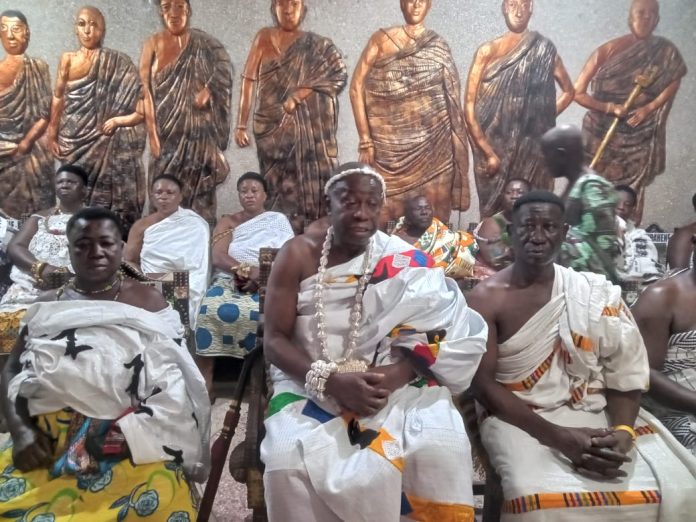
Okofrobour Obeng Nuako III Dunkwahene and Queen mother observe Akwasidae

Okofrobour Obeng Nuako III, Chief of Dunkwa-On-Offin in the Upper Denkyira East Municipality of the Central Region, has urged drivers to prioritise passenger safety and strictly follow traffic regulations as the Harmattan season begins.

Speaking at the 8thAkwasidae celebration at the Obeng Nuako Ahenfie in Dunkwa-on-Offin last Sunday, the chief noted that the harmattan comes with increasing risk of road accident in the mornings, due to heavy dust and low visibility.

He called on motorists to drive cautiously, maintain safe speeds and ensure that their vehicles are roadworthy to handle the dry and dusty conditions.

“Drivers must understand that the safety of their passengers is a sacred responsibility. Reckless driving during harmattan is a danger we cannot afford,” he stated.

The Dunkwahene also appealed to transport unions to intensify public education on road safety, particularly for commercial vehicles. He emphasised the importance of using headlights, keeping safe distances, and avoiding fatigue behind the wheel.

He called on the government through the Ministry of Roads and Transport to consider the rehabilitation of major routes such as Dunkwa–Obuasi, Dunkwa–Ayanfuri, and Dunkwa–Twifo Praso roads to protect lives and enhance local economic activities.

He warned that bad roads not only increase road crashes, but also expose travellers to highway robberies.

From Oswald P. Freiku, Dunkwa

Former GIIF CEO Rejects Claims Sky Train Project Was Rushed Through Board

0
Court

The former Chief Executive Officer of the Ghana Infrastructure Investment Fund (GIIF), Solomon Asamoah, has denied allegations that the Accra Sky Train Project was hastily introduced and approved by the GIIF Board without adequate deliberation.

Testifying through his counsel, Victoria Barth, before the Criminal Division of the High Court, presided over by Justice Audrey Kocuvie-Tay, Mr. Asamoah maintained that the Sky Train project featured prominently in the Fund’s board discussions and was “mentioned not less than eight times” in official minutes.

The denial came during cross-examination of Yaw Odame-Darkwa, the first prosecution witness and a former GIIF board member, on Wednesday.

Mr. Asamoah, the first accused person in the ongoing criminal trial, contended that the project was first presented to the board on September 5, 2018, and subsequently discussed at several other meetings.

According to him, “it cannot be correct for the witness to state that the Sky Train concept was only introduced at one of our board meetings,” adding that official records show multiple deliberations on the subject.

During the proceedings, the defence meticulously walked Mr. Odame-Darkwa through a series of questions to establish standard board procedures — including how meeting notices, agendas, and board documents were circulated via email by the board secretary or legal head.

The witness confirmed that meetings were properly convened, minutes were duly adopted, and all correspondence related to board and sub-committee meetings were routinely shared through official email channels.

The defence then tendered into evidence several minutes of GIIF board meetings — all signed by the board chairman and secretaries — from September 2018 through December 2020, which contained references to the Sky Train project.

These included meetings held on: September 5, 2018, October 24, 2018, June 25, 2019, November 19, 2019, January 8, 2020, April 28, 2020, September 25, 2020 and December 22, 2020

Mr. Odame-Darkwa admitted that he was shown these same board minutes during investigations by the National Intelligence Bureau (NIB), and confirmed his signatures on statements he provided to investigators in March 2025 regarding the $2 million payment made in connection with the Sky Train transaction.

The defence argued that these minutes prove the project underwent repeated discussions and that Mr. Asamoah acted within the board’s approval framework.

However, under questioning from the prosecution, the witness maintained that while the minutes mention the Sky Train project, they do not necessarily reflect what transpired during the meetings, insisting that certain procedural steps were not properly followed before the disbursement of funds.

Prosecutors alleged that the Sky Train investment did not meet GIIF’s due diligence and approval standards.

The witness emphasized that no formal presentations were made to the Investment Committee and that the project did not pass the “Know Your Customer” and risk assessment stages required for such foreign transactions. The court subsequently adjourned proceedings to November 19, 2025, at 10 a.m. for continuation.

The following is the cross examination of the prosecution witness

Q. How many years did you spend on Wenchi Rural Bank Board?
A. From 2010 to 2020.
Q. How many years did you serve on the Farmers Trust Company?
A. It is my own private company am I still serving on the board, but I don’t recollect the exact date of registration.

Q. How many years did you spend on the board of Apex Bank?
A. 7 years.
Q. So you are very familiar with how board meetings are scheduled, are you not?
A. Yes.

Q. The board of GIIF met at least once every quarter, is that correct?
A. Yes.
Q. Sometimes the board had emergency meetings between the quarterly meetings, is that not so?
A. Yes.

Q. Before every board meeting notices were circulated with the agenda, the date and the venue and time of the upcoming meeting, is that correct?
A. Yes
Q. During your term on the board, notices of meetings were usually circulated by email, is that correct?

A. Yes, my Lady.
Q. And the notices were circulated by either acting board secretary, Kofi Boakye or the head of legal and company secretary, Ms. Harriet Aban, is that correct?
A. Yes my Lady.
Q. The document that would be considered in respect of the agenda for the board meetings were also circulated by email, is that correct?

A. Yes.
Q. And these board pacts or documents were circulated via email by the first accused, is that correct?
A. Not always.

Q. who else would send the board pacts?
A. When Kofi Boakye was acting secretary, he would sometimes send the board pacts and when Harriet Aban also took over she also sometimes sent them.
Q. In the same way notices of board sub-committee meetings were also circulated by email?

A. Yes.
Q. I’m the case of the notices of the board sub-committee meetings they were sometimes circulated by the secretaries to those committees. Is that correct?
A. Yes my Lady.

Q. Your copies of the notices of board and board sub-committee meetings were sent to either one of these two email addresses: yawodame74@gmail.com or godsoown@yahoo.com, is that correct?

A. Yes my Lady
Q. It is also correct that from time to time, you acknowledged receipt of the notices of board and board sub-committee meetings that were sent to you by email. Is that correct?
A. Yes my Lady
Q. In the same manner minutes or board meetings about board sub- committee meetings were circulated to board members by email. Is that correct?

A. Yes my Lady
Q. This minutes were usually adopted at subsequent board meetings or board sub-committee meetings respectively, after necessary corrections were done. Is that correct?
A. Yes my Lady.

Q. It is after the adoption of such minute that the secretary (Kofi Boakye or Harriet Aban) will then sign the adopted minute with the board chairman, the second accused herein. Is that not so?
A. Yes my Lady.
Q. On 11th March, 2025, you were invited to the National Intelligence Bureau, is that correct?

A. Yes.
Q. Prior to this invitation nobody had contacted you about any unlawful activity of the GIIF board during your term in the board. Is that correct?
A. Yes my Lady.
Q. On 11th March, 2025 you gave a written statement to the NIB regarding the payment of $2 million in respect of the Sky Train transaction, is that correct?

A. Yes my Lady.
Q. Please confirm that the document you have in your hand is that statement in your handwriting.
A. Yes

Q. The statement bears your signature in the bottom right corner of the last word you write, is that correct?
A. Yes my Lady.

Counsel. My Lady respectfully we wish to tender this statement through the witness.

Court: Tendered without any objection.

Q. You gave a second statement to the NIB on 12 March, 2025. Is that correct?
A. Yes my Lady.
Q. Take a look at this document and confirm that it is your second written statement to the NIB win your handwriting and with your signature.
A. Yes my Lady.

Counsel: I wish to tender the document as an investigation caution statement given by the witness on 12 March, 2025.

Court: Exhibit admitted without objection.

Q. Again on 23rd May, 2025 you gave another statement to the NIB. Did you not?
A. That is so.
Q. Do you see your handwriting on the document from name, residential address, postal address and occupation?
A. Yes.
Q. But the rest of the documents is in a different hand writing, is it not so?
A. Yes.

Q. So, did you make that statement or not?
A. I don’t see my signature on it so I cannot speak to it.
Q. So, despite your handwriting appearing on the document, are you saying that you do not wish for this court to rely on that document as a statement you gave?
A. My lady I don’t have that power.

Q. The document in your handwriting has been presented as part of documents that the prosecution obtained from the lead investigator of the Sky Train transaction and which document the prosecution intends to rely on as evidence in this suit. This documents is ascribed to you and I simply need you to confirm whether you made it or not. If you do not remember you may say so.

A. I do not remember.
Q. Have a look at exhibit 1 and read it to the court.
A. I am Yaw Odame-Darkwa. I was a board member from 2017 to 2020. I have been asked about my knowledge about the Sky Train Project. I only found about the payment of the 2 million in the Auditor General ‘s report. The payment should have been sent for board approval. The minute referred to is not a true reflection of what happened in the Sky train matter. At all time I acted in the best interest of Ghana and would never grant approval without due diligence.

Q. You will agree with me from your own reading of exhibit 1 that there were some grammatical errors.
A. Yes.
Q. You must have been nervous when you were making this statement.
A. Yes.

Q. You referred in line 11 to 14 in exhibit 1 “the minute referred to at the instant of the meeting is not a true reflection of what in the Sky train matter at all times.” Which minutes were you referring to?

A. I remember I wrote this statement after we had gone through some level of interrogation at the NIB then in the course of the interrogation counsel for first accused brought out one of our minutes arguing that it shows that we had given fist accuser approval in the Sky train project and also to disburse $2 million towards the project.

That is what I was speaking to that the minute that he was trying to refer to as approval and payment for the project was not a true reflection of what happened at that particular meeting he was referring to.

Q. It is not correct that counsel for the first accused was present on 11th March, 2025 when you were interrogated at NIB when you made the statement in exhibit 1.
A. When I said counsel for first accused, I don’t mean the current counsel. What happened was that he showed us some board minute to refresh our memory of things that happened in the matter and one of the minutes sought to create the impression that the board actually approved the transaction and disbursement of funds.

My Lady, I said so because we had a process and from all indications this transaction did not meet the level at which the board will give approval for the disbursement of funds.

First of all, when the project comes to GIIF, it goes to management and management will decide whether or not to refer such project to the investment committee. When the project comes to the investment committee the first thing is the invite the people behind the project to make a presentation of how they want to do the project.

Seriously, this is the only project I can say I don’t know any of directors. They did not make any presentation to the investment committee. So my Lady if I say the CEO did not have approval it means the basic steps to even get the board to approve have not been followed.
Secondly, my Lady, basic know your customer care was not done.

Thirdly, the board would not have allowed for the money to be transferred outside the jurisdiction if we had been informed before disbursement and I can give you one transaction, which is the cardinal resources, Nambini. The CEO sought the approval of the board to invest in that project to invest in… he wanted us to invest in the Australian stock market.

We agreed to do the project, but we changed the structure of investing outside because we know that as soon as money went outside the country, it was difficult to trace such money. So the board had a clear directive when it came to disbursing money out of the jurisdiction. Even though they approved the project and disbursement, we made sure the money stayed here.
That is why I’m very sure that we did not approve investment in the Sky train project out of Ghana and that we would have enhanced the know your customer requirement…

Q. You have just informed this court that “they showed us some board minutes”. When you said “they” you meant the investigating officers and not the first accused former counsel.
A. It is very possible.

Q. The minutes that were shown to you were minutes of the board of GIIF during your tenure as a board member, which referred to the Sky train project. Is that not so?
A. If you have it, let me see.
Q. Very well, I will show you some board minutes of the meetings of the GIIF board, which the prosecution intends to rely on and which refer to the Sky train project.

First is dated 5th September 2018. Minutes of an emergency meeting of the GIIF signed by the board chairman and Kofi Boakye. Please confirm if this was one of the minutes shown you at NIB.
A. Yes.

I wish to tender the minute through the witness who is listed as attendee on the minute.

Q. Minutes of GIIF board meeting held on 24 October 2018, signed by the board chairman and Kofi Boakye, then acting secretary. Please confirm if this minute was shown to you at NIB.

A. Yes.
Q. Next I will show you the minutes of the board of GIIF dated 25 June, 2019, signed by the chairman and Harriet Aba, company secretary. Please confirm if this was also shown to you at the NIB.

A. Yes.
Q. I’m now showing you minutes of the GIIF board meeting held 19 November 2019 and signed by the board chairman and company secretary, Harriet Aban. Please confirm if this was shown to you at the NIB.

A. Yes
Q. Minutes of the GIIF board held 8th January, 2020 and signed by the board chairman and Harriet Aban.
A. Yes.

Q: Take a look at the GIIF board meetings on April 28, 2020 signed by Chairman and Secretary. Confirm if these minutes were shown to you?
A: Yes
Q: Take a look at GIIF board minutes of 25th September, 2020 signed by board Chairman and company secretary and confirm if they were shown to you at the NIB?

A: Yes
Q: Take a look at GIIF board meeting minutes on 22nd December, 2020, signed by board chairman and secretary and please confirm whether it was shown to you?
A: Yes
Q. You will agree with me that I have shown you at least eight board minutes, which refer to the Sky Train project, would you not?

A. Yes.
Q. So it cannot be correct when you say in paragraph 11 of your witness statement filed on 23rd June, 2025 that the Sky train concept was only introduced at one of our board meetings.
A. No. My Lady, the minutes that you showed me also have other projects also being repeated.

Counsel: This is a witness who said the minutes do not reflect what transpired in the Sky train project. He was shown these minutes at the NIB. Let’s not forget the fact that the life of a man hangs in the balance. If he needs time to refresh his memory, we can adjourn.

Case adjourned to November 19 at 10am.


For more news, join The Chronicle Newspaper channel on WhatsApp: https://whatsapp.com/channel/0029VbBSs55E50UqNPvSOm2z

Court Orders EOCO to Produce Audio Recording in Case Involving Former NSB Boss

0
Kwabena Adu-Boahene, accused

The High Court, General Jurisdiction 10, presided over by Justice John Eugene Nyadu Nyante, has ordered the Economic and Organised Crime Office (EOCO) to submit an audio recording of the interrogation of Edith Ruby Adumauah, Head of Finance at the National Signals Bureau (NSB), by the close of Thursday, November 13.

The order follows an application by Samuel Atta-Kyea, counsel for the former Director-General of the NSB, Kwabena Adu Boahene, who is standing trial for alleged financial impropriety. Mr Atta-Kyea argued that the said recording contained material that could exonerate his client.

Continuing his cross-examination of Ms. Adumauah, the defence lawyer said EOCO had informed the witness that her engagements were being recorded and, therefore, requested the court to order the production of the audio as part of further disclosures.

However, the Deputy Attorney-General (DAG) opposed the request, arguing that the grounds for further disclosure had not been satisfied. The DAG contended that a recent Supreme Court pronouncement cited by the defence did not constitute binding precedent, but was merely an obiter dictum.

Mr. Atta-Kyea, rebutting, insisted that Section 2(1) (g) of the Practice Direction on Disclosure explicitly lists “audio recordings” as material subject to disclosure.

Justice Nyadu Nyante, in his ruling, overruled the prosecution’s objection and directed that if the audio recording of Ms. Adumauah’s interrogation existed, it should be procured by the Attorney-General and filed as part of further disclosures.

During the resumed cross-examination, Ms. Adumauah confirmed that her house had been searched by EOCO, but maintained that she was never charged with any offence.

She also confirmed that she had written a statement for EOCO dated May 9, 2025, after the accused persons were arraigned on April 30, 2025.

Pressed on why EOCO granted her bail, Ms. Adumauah stated that she did not know, but acknowledged that she was informed her interrogation was being recorded.

Mr. Atta-Kyea further questioned her over two separate invoices issued by ISC Holdings Limited, both bearing the same invoice number, but for different items — one for a Digitised Investigative Audit System and another for a Cyber Defence System.

Ms. Adumauah explained that payment was made only for the Digitised Investigative Audit System addressed to the National Security Council, and not the one addressed to BNC Accra Ghana.

The case has been adjourned to December 9, 10 and 11

Continuation of cross examination by Atta-Kyea
Q. I put it to you that because you were a suspect EOCO searched your house, is that not so?
A. I was of the understanding that anyone who is sent there their house is searched.
Q. So was your house searched at all?

A. Yes.
Q. More than one house of yours was searched, is that not so?
A. Not so my Lord. I was asked to identify whether I had other house but it was … where I lived.

Q. Do you have other houses apart from that which was searched?
A. Yes my Lord
Q. Have you ever filed an asset declaration form?
A. No.
Q. Do you remember the last statement you write out for the benefit of EOCO?

A. No.
Witness shown a statement and she confirms writing it.
Q. What is the date.
A. 9th May 2025
Q. Do you know when the accused persons were arraigned?

A. No.
Q. Can you tell the court the date on the charge sheet?
A. 30th April 2025.
Q. I suggest to you that is the date the accused persons were arraigned before this honourable court?

A. I’m not aware.
Q. I suggest to you that post the arraignment of the accused persons before this honourable court you have a statement you referred to, 9th May 2025.
A. Yes
Q. From the document you’re holding you were not charged with any offence?

A. Yes
Q. Even against the backdrop that you were investigated by EOCO you were not charged?
A. Yes
Q. And you are very happy for that?

A. Yes, my Lord. I believe investigations are supposed to find out the truth so if EOCO deemed it fit that I’m not charged, I cannot say anything about it.
Q. The three statements you mentioned that you delivered to EOCO, they exclude the one you gave on 9th May, 2025, is that not so?

A. No my Lord, I wrote three statements including this one.
Q. When you came to the space of EOCO they told you the interrogation is being recorded, is that not so.
A. Yes my Lord

Atta-Kyea: We pray that the court orders EOCO to submit the recording as it will show that the witness said things that go in our favour.

DAG: We are opposed to the request on ground that the subject matter of the request does not satisfy the grounds for further disclosure. The Supreme Court recent decision is to all intents and purposes an obiter and regardless of how elaborate the court put it down cannot constitute a ratio this engender.

The issue before the court is what determine what the ratio of the decision is. If the court decides to veer off and make pronouncements on matters, which do not form part of matters before it and in respect of matters, which arguments were not taken, the authorities on what constitutes judicial precedent is clear on the matter.

And, therefore, this court and all other courts are not in any way bound to follow a decision, which is contrary to precedent. The precedent on this matter stick stands, which the Supreme Court well considered decision on Baffoe-Bonnie, which this court digested in its erudite most immaculate ruling, which is that relevant is a key consideration in determining an application for further disclosure.

Atta-Akyea: As a matter of fact the witness has stated that she was informed by EOCO that her engagements with EOCO were being recorded. Section 2(1)(g) of the practice direction, a material for disclosure includes audio recordings. I don’t see how this legal request informs the basis of an opposition on point of law.

The denial of the audio recording will tantamount to concealment of evidence against the clear provision of the law that exculpatory evidence be ordered for use whether the attorney General has disclosed them or not. I pray that the objection be overruled the opposition for further disclosures so that in the ultimate interest of justice nm Lord will know what was said at EOCO and what is being said here.

Court: The Prosecution is overruled. The audio recording in the custody of EOCO in respect of the interrogation of Edith Ruby Pokuaa if any. They should be procured by the attorney General and filed as a further disclosure. Same to be filed by close of day tomorrow (Nov. 13).

Cross examination continues
Q. You obtained your LLB from which university?
A. Mountcrest university.

Q. Did you read some criminal law at all?
A. My Lord I did, but I’m here on behalf of National security secretariat to testify on financial matters, which is very verifiable in the office.
Q. You are here to testify to truth, is that not so?
A. Yes

Q. And the truth you are required to testify to may not only be in your office, but outside your office. Is that not so?
A. I have a letter from the office, which asked me to come to court to testify. And I have a copy.

Q. Do you have a copy right with you here?
A. No.
Q. It is the case that it is not a suspect who is admitted to bail.
A. I don’t know.

Q. I’m putting it to you that the only reason EOCO gave you bail on pain of incarceration is because you were a suspect?
A. I do not know
Q. At the last sitting you were making a comparison of two invoices, which had the same invoice number generated by ISC Holdings Limited. Can you refresh your memory on this matter?

A. Yes.
Q. The items as described in the invoices are different, is that not so?
A. There are two different items with the same invoice number. I remember I said we had not seen the one for procurement for cyber defence system in our procurement records for payment. What we had was Digitised investigating auditing system.

Q. With one of the invoices is it addressed to who?
A. One is addressed to National security council Ghana, which was the one we paid for.
Q. And the other is addressed to?
A. BNC Accra Ghana

Q. Madam said the other invoice is addressed to BNC Accra Ghana?
A. Yes
Q. Is there also NSC/BNC?
A. My lord is BNC
Q. Kindly look at the other one what is there?
A. National Security Council

Q. So madam cannot you see a customer ID in respect of the purchase of the invoice number NSC006, which relates to digitised investigative audit system (in Exhibit B4)
A. The customer ID is NSC?
Q. What is the customer ID on the invoice relating to the cyber security equipment (ID1)?
A. The customer ID in relation to procurement of cyber security ID1 is NSC/BNC.

A. How do you come to know the invoices relating to digitised investigative audit system
A. The digitalised investigative audit system, which is also NSC006 was what we make payment for

Q. Who delivered the invoice to you
A. As I mentioned earlier my boss who sent it to me or sometime I’m copied in an email, but I still take instructions from my boss to do.
Q. When your boss does not send a copy of the invoice to you and you are not kept loop in the email, you have no knowledge of the invoice?
A. Yes


For more news, join The Chronicle Newspaper channel on WhatsApp: https://whatsapp.com/channel/0029VbBSs55E50UqNPvSOm2z


COCOBOD to reward whistleblowers in fight against cocoa smuggling

0
Dr Samuel Ofosu-Ampofo, the Board Chairman, COCOBOD

Dr Samuel Ofosu-Ampofo, the Board Chairman, Ghana Cocoa Board (COCOBOD) has revealed that whistleblowers would be rewarded in the fight against cocoa smuggling.  He said a whistleblower would be entitled to one-third of the value of any “contraband” intercepted.

Dr Ofosu-Ampofo, during a stakeholder engagement on cocoa smuggling at Hohoe in the Volta Region, said the Board had realised that one of the challenges COCOBOD was facing, especially in the Volta and Oti regions, was the smuggling of cocoa beans across the country’s borders.

He said it was realised that the juxtaposed cost of input supplied to farmers and the output in terms of production was nothing to write home about.

He said, “As a policy, we decided to come and engage the stakeholders and find out some of the push and pull factors that had resulted in this unprecedented level of smuggling.”

Dr Ofosu-Ampofo said COCOBOD would plough back findings and suggestions into its policy-making process to see how it could redesign some of the policy initiatives to address the exigencies of the day.

He said the government through COCOBOD had developed a new scholarship scheme for the children of cocoa farmers, targeting those who would be entering into tertiary institutions.

Research had revealed that the Oti and Volta regions had the best soil, quality of soil suitable for cocoa production, as well as devoid of “galamsey” activities, Dr Ofosu-Ampofo said.

He said the Cocoa Research Institute of Ghana had developed hybrid cocoa which was now reducing the period from planting to production from three years to 27 months.

He called on business communities, public servants, politicians and all those who wanted to go into the cocoa industry to take advantage of the golden age to go into the cocoa plantation.

Dr Ofosu-Ampofo said COCOBOD had outlined a number of measures and that they were going to team up with Security Councils in the Oti and Volta regions, to tackle the smuggling menace and reduce it to the barest minimum.

Mr Jake Kudjo Samahar, the Director, Special Services, COCOBOD said smuggling routes in the Oti Region include; Jasikan-Bodada, Asato-Kadjebi, Nkonya-Jasikan, Poase Cement-Obuasi, Dodofie-Dodo Amanfrom and Pampawie-Amapayo-Ahamansu, all through to Togo.

He said for the Volta Region, smuggling routes include; Tsito-Bame-Kpedze, Logba-Leklebi, Alavanyo-Hohoe-Kpando-Fodome-Wli, all through to Togo.

Mr Samahar stated that political interference had been identified as hindering the fight against cocoa smuggling.

He revealed that although between August 8 to September 29, 2025 a total of 14 vehicles with cocoa beans were impounded by the Sogakope Taskforce, only one of these was currently packed at the police station.

Mr James Gunu, the Volta Regional Minister, said the Region was strategically positioned to grow cocoa and would not be a transitional zone for the smuggling of cocoa.

He noted that the fight against cocoa smuggling was one of a clarion call since any bag of cocoa smuggled reflected a job lost in the cocoa sector.

From Edward Williams, Hohoe

GNA 

Ghana, EU Deepen Cooperation on Nuclear Safety

0
Officials present at the workshop in a group photograph

Ghana has made a significant stride in its peaceful nuclear power ambitions with the successful completion of a European Union – funded initiative to strengthen the country’s nuclear regulatory framework and safety systems.

The six-year project, titled “Support to the Nuclear Regulatory Authority (NRA) of Ghana” was implemented under the European Instrument for International Nuclear Safety Cooperation (INSC).

Launched in September 2019 with a total funding of €1.75 million, the initiative aimed to enhance the capacity, independence and technical competence of Ghana’s Nuclear Regulatory Authority, as the country prepares to establish its first nuclear power plant.

A high-level closing ceremony in Accra, on Thursday, brought together representatives from Ghana’s Ministry of Environment, Science, Technology and Innovation (MESTI), the European Union Delegation to Ghana and several European nuclear safety institutions.

The event was attended by Mr. Kwamena Essilfie Quaison, Director of Science and Technology at MESTI and Mr. Jonas Claes, Deputy Ambassador of the European Union to Ghana.

EU commends Ghana’s nuclear progress

In his remarks, Mr. Claes praised Ghana’s steady progress and the professionalism demonstrated by the NRA throughout the collaboration.

“This partnership, supported by European expertise and guided by the International Atomic Energy Agency’s recommendations, is helping Ghana to develop its nuclear sector safely and responsibly,” he said.

“Together, we are protecting communities, safeguarding the environment, and setting a standard for the region in safe and sustainable energy development.”

He emphasized that nuclear safety is a global priority that transcends national borders, underscoring the EU’s commitment to supporting countries like Ghana to uphold strong and transparent regulatory systems.

“The EU is fully committed to nuclear safety as a common, non-negotiable objective. History shows that ensuring nuclear safety requires cooperation, competence, and trust. Through this project, we have worked together to promote safety, transparency, and independence within Ghana’s regulatory system,” Mr. Claes added.

Strengthening Ghana’s nuclear regulatory systems

Mr. Quaison, speaking on behalf of the Ministry, outlined the major achievements Ghana has recorded under the INSC project.

These include the approval of the Nuclear and Radiation Safety Policy, which was reviewed through the initiative, and the development of nine new nuclear safety regulations, five of which are currently under review by the Attorney-General’s Department.

The approval of the Safety Policy and the ongoing review of regulations covering site evaluation, licensing, construction and design are clear evidence of the progress achieved through this collaboration,” Mr. Quaison stated.

“The support from our European partners has been invaluable in strengthening the Authority’s operations and enhancing public confidence in the safety of Ghana’s nuclear programme.”

He further revealed that the NRA is finalizing arrangements for an audit of its Integrated Management System under ISO 9001:2015, expected to be completed by the end of the year with EU support.

Knowledge transfer and institutional capacity

Over the six years, the NRA benefited from extensive technical assistance, including training courses, workshops, and on-the-job training in three EU Member States.

These programmes built local expertise in nuclear safety assessment, licensing procedures, radiation protection, and emergency preparedness.

The collaboration also helped Ghana prepare for an Integrated Regulatory Review Service (IRRS) mission of the International Atomic Energy Agency (IAEA), including a nationwide self-assessment of nuclear and radiation safety systems.

In December 2024, the IAEA recognised Ghana’s commitment to continuous improvement in nuclear and radiation safety, commending the NRA for aligning its operations with international best practices.

The project was implemented by a consortium of European Nuclear Regulatory authorities and experts, including the Hungarian Atomic Energy Agency (Hungary), Slovenian Nuclear Safety Administration (Slovenia), Nuclear Regulatory Authority of the Slovak Republic (Slovakia) and ENCO Consulting, a nuclear safety consultancy based in Austria.

These institutions provided mentorship, technical advice, and hands-on training to strengthen Ghana’s institutional readiness for nuclear power development.


For more news, join The Chronicle Newspaper channel on WhatsApp: https://whatsapp.com/channel/0029VbBSs55E50UqNPvSOm2z

Rainbow Agrosciences, IWMI Support 41st National Farmers’ Day with Cash and Farm Inputs

0
The Minister of MOFA, Eric Opoku in a picture with officials of IWMI

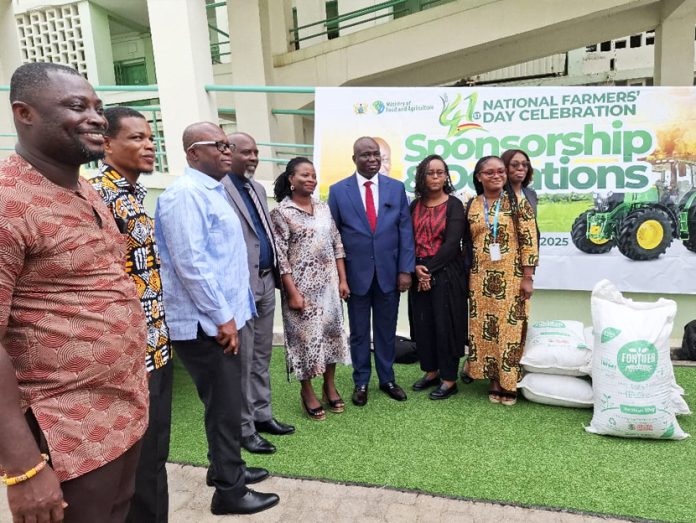
Two organisations, Rainbow Agrosciences Limited and the International Water Management Institute (IWMI), have presented cash and agricultural inputs to the Ministry of Food and Agriculture (MoFA), to support preparations for the 41st National Farmers’ Day celebration, scheduled for December 5, 2025 in Ho, Volta Region.

The donations, made at a brief ceremony at MoFA’s head office in Accra, included assorted crop protection products, fertilisers and financial support to aid activities marking the event.

Rainbow Agrosciences Limited, an agrochemical company, contributed crop protection products including insecticides, fungicides and herbicides valued at GH¢270,000 along with a cash donation of GH¢30,000.

The Minister of MOFA, Eric Opoku (r) in a picture with officials of Rainbow Agroscience Limited

Mr. George Selasi Ocloo, Technical Manager of Rainbow Agrosciences, said the gesture formed part of the company’s corporate social responsibility and partnership with the Ministry to enhance agricultural productivity through initiatives such as the Crop Clinic programme.

“We recognise the Ministry as a key stakeholder in the agricultural sector. It’s our duty to give back and ensure that farmers have access to safe, quality products that boost yields,” he said.

The IWMI also donated 100 bags of fertiliser to the Ministry.

Prof. Kehinde Ogunjobi, IWMI’s Country Representative, explained that the support aligns with the organisation’s mission to promote sustainable, environmentally friendly farming practices.

“We are supporting the transition from inorganic to compost-based fertilisers that protect the environment and improve soil health,” he said.

“Our compost fertilisers, developed through research, have proven effective on various crops.”

Receiving the donations, the Minister for Food and Agriculture, Mr. Eric Opoku, expressed appreciation to the two organisations for their continued partnership and commitment to advancing agriculture in Ghana.

“We all share the responsibility of putting agriculture on the right track so that Ghanaians can fully benefit from its potential,” he said.

“We assure you that every item received will reach the farmers, who remain the backbone of our economy.”

Instituted in 1985, National Farmers’ Day is celebrated annually on the first Friday of December to recognise the contributions of farmers, fishers, and agricultural workers to national development and food security.

This year’s celebration, themed “Feed Ghana, Eat Ghana, Secure the Future” will feature a five-day national agricultural fair in Ho, showcasing innovations in mechanisation, irrigation, value addition and digital agriculture.


For more news, join The Chronicle Newspaper channel on WhatsApp: https://whatsapp.com/channel/0029VbBSs55E50UqNPvSOm2z

The Ghanaian Chronicle