Home Blog Page 310

Editorial: Rising Crime in Ghana: A Threat to National Security and Public Safety

0
Editorial

Ghana is facing a disturbing surge in crime, a trend that threatens not only the safety of citizens but also the nation’s image and stability. Last week, The Chronicle highlighted the rising incidents of kidnapping and human trafficking in an editorial titled “Rising Kidnappings Threaten Ghana’s National Security and Global Image.”

At the time, we expressed concern over the increasing number of kidnapping cases pending in courts, citing reports from the Police and the Economic and Organised Crime Office (EOCO) as evidence of a worrying national trend.

Yesterday, the Minister for the Interior, Muntaka Mohammed-Mubarak, provided further cause for alarm. Speaking at a news conference in Accra, he disclosed that as of July 2025, Ghana had recorded 628 robbery incidents and 340 murders nationwide. Comparing these figures with last year’s totals 1,219 robberies and 552 murders, he warned that the trend indicates a persistent and escalating threat to public safety.

In response, the government has launched a Gun Amnesty Programme, following consultations with the Ghana Police Service, the National Commission on Small Arms and Light Weapons, security agencies, traditional leaders, religious organisations and civil society groups.

Minister Mubarak described the initiative as a “bold and compassionate measure” aimed at reducing the circulation of illicit firearms. He also stressed the crucial role of citizen participation in ensuring the initiative’s success.

While these efforts are commendable, the data likely underestimates the scope of the problem. Social media and anecdotal reports suggest emerging trends in armed robbery, violent attacks, and other criminal activities that are increasingly affecting urban and rural communities alike.

What is occurring in our cities and towns cannot be ignored. The proliferation of violent crime is destabilising neighborhoods, undermining economic activity, and instilling fear among ordinary Ghanaians.

The situation is compounded by the growing use of illicit drugs, particularly among the youth. In Accra and other major cities, young people openly engage in drug use, often congregating in poorly lit streets and riding motorbikes in disorderly groups.

These conditions create a fertile environment for crime, highlighting the urgent need for improved urban planning, street lighting and community policing. It is important to acknowledge the efforts of our security agencies, who continue to track and apprehend criminals under difficult circumstances.

However, the current rate and sophistication of crime demand a significant escalation in strategy, resources, and public engagement. Ghana cannot afford complacency. The fight against crime must be relentless, coordinated, and sustained.

Crime is no longer a peripheral issue it is a direct threat to national security, economic stability, and the everyday lives of Ghanaians. The state must act decisively and citizens must actively participate in safeguarding their communities. The security of this nation is a collective responsibility; failure to address these trends now risks eroding public confidence and national cohesion.

The Chronicle urges the government, law enforcement agencies, traditional authorities, and civil society to act with urgency. Ghana must confront this surge in crime boldly, decisively, and without delay. Our safety, our security and our future depend on it.


For more news, join The Chronicle Newspaper channel on WhatsApp: https://whatsapp.com/channel/0029VbBSs55E50UqNPvSOm2z

Reclaiming Sanity on Our Roads: A Call to Restore Ghana’s Fading Driving Culture

0
Opinion

Every nation has its mirror. For Ghana, that mirror is increasingly our roads and what we see reflected is worrying. A once-proud driving culture, rooted in patience and courtesy, is fast deteriorating into chaos. Today, driving in Ghana has become a perilous venture marked by indiscipline, lawlessness, and a blatant disregard for the rules that preserve life.

A Nation at the Crossroads

Across Ghana, it is no longer unusual to witness drivers disregarding basic traffic etiquette. At roundabouts, where the law is clear that vehicles already circulating have the right of way, motorists now force their entry without yielding. The result is predictable: congestion, blaring horns, and sometimes collisions that could easily have been avoided.

Highways tell a similar story. Vehicles joining from side roads often do so without caution, darting into speeding lanes and compelling other motorists to brake suddenly. On major routes such as the Accra–Kumasi and Tema–Aflao highways, slow-moving trucks and commercial vehicles stubbornly occupy inner lanes meant for overtaking. This behaviour, aside from violating basic lane discipline, endangers lives by encouraging dangerous overtaking from the right.

Then there are the motorcyclists, the most visible embodiment of our road crisis. Many weave recklessly between lanes, run red lights, and even mount pavements to bypass traffic. Helmet use is sporadic, number plates are sometimes concealed, and basic traffic signals are often ignored entirely. The cumulative effect of these behaviours is not only disorder but death.

The Human Cost of Indiscipline

The statistics are chilling. According to data from the National Road Safety Authority (NRSA), Ghana recorded over 7,000 road crashes in the first half of 2025, resulting in nearly 1,600 fatalities and more than 8,000 injuries. Motorcycle crashes alone account for a growing share of these deaths.

Behind these numbers lie human tragedies. In February this year, three lives were lost including a mother and her son at Odumasi Ohene Nkwanta on the Accra–Kumasi Highway when a speeding vehicle attempted a wrongful overtaking manoeuvre. In another case at Gomoa Mprumen Junction on the Winneba–Mankesim stretch, a reckless U-turn involving a Sprinter bus and a pickup truck left twenty-five people injured. These are not isolated events; they are daily occurrences that speak to a wider national problem, the collapse of discipline on our roads.

The Law Is Clear

Ghana’s legal framework on road conduct is robust. The Road Traffic Act, 2004 (Act 683) and the Road Traffic Regulations, 2012 (L.I. 2180) set out clear expectations for drivers. Section 1 of Act 683 defines dangerous driving as an offence, with severe penalties, including imprisonment, when it results in injury or death. Regulation 106 of L.I. 2180 also spells out the rules of the road covering yielding, lane discipline, overtaking, and compliance with traffic signals.

Yet, these laws are flouted daily. At many intersections, traffic lights are treated as mere suggestions. Drivers of heavy trucks ignore lane markings. Motorcyclists disregard helmet mandates. Enforcement remains inconsistent, and where it exists, it is often undermined by bribery. The law is not the problem; the culture of impunity is.

A Reflection of a Deeper Malaise

What we see on Ghana’s roads reflects something deeper than traffic mismanagement. It is the symptom of a broader social erosion and the abandonment of civic responsibility. When a driver speeds past a red light because “no police officer is watching,” that act says more about our collective disregard for law and order than about the state of our roads.

We cannot continue to treat traffic offences as minor inconveniences. Every reckless overtaking manoeuvre, every ignored signal, and every helmetless rider represents a potential tragedy in waiting. The time has come for both citizens and institutions to reclaim Ghana’s roads from this creeping culture of chaos.

Restoring Sanity: What Must Be Done

To restore order and decency to our roads, strong and deliberate action is required:

  1. Automated Enforcement:
    The Ghana Police Service’s Motor Traffic and Transport Department (MTTD) must expedite the rollout of automated enforcement systems, such as traffic cameras and speed detectors. These systems, once fully operational, will reduce corruption and ensure that violators face swift penalties.
  2. Visible and Consistent Policing:
    Enforcement must be relentless and impartial. High-risk zones, including roundabouts, major intersections, and highway entry points, should have frequent patrols. Drivers must come to expect that indiscipline carries real consequences.
  3. Driver Re-education:
    The National Road Safety Authority (NRSA) and Driver and Vehicle Licensing Authority (DVLA) should intensify public education campaigns on road etiquette, right of way, and lane discipline. Radio and television messages must shift from occasional reminders to sustained national advocacy.
  4. Licensing Reforms:
    The current licensing regime needs cleansing. It must be impossible to obtain a driver’s licence without passing a genuine theoretical and practical test. This calls for strict supervision of DVLA offices and sanctions against officials who enable shortcuts.
  5. Motorcycle Regulation:
    Motorcycle lanes should be considered in dense urban areas. Helmet laws must be strictly enforced, and unregistered motorbikes should be removed from the roads. The police must treat these violations as serious threats to public safety and not minor infractions. Our neighbours in Togo do this perfectly.
  6. Infrastructure and Maintenance:
    Faded road line markings, malfunctioning traffic lights, and poor road signage create confusion. Government agencies must ensure roads are properly marked, intersections well-lit, and roundabouts clearly directed to facilitate orderly flow.

A Matter of National Honour

Driving discipline is not a trivial issue; it reflects our national character. A society that normalises recklessness on its roads is one that undermines its own moral foundation. The carnage on our highways is not inevitable, it is preventable.

As road safety advocates have long maintained, road safety is everyone’s responsibility. It requires consistent enforcement from authorities, civic obedience from motorists, and genuine reform from licensing institutions. Every Ghanaian who sits behind a steering wheel or straddles a motorbike carries a moral duty to protect not just their life, but the lives of others.

Let us reclaim our roads, not through words, but through action. Let us remember that every act of patience, every respectful yield, and every observance of a red light is a small victory for civility. Ghana’s driving culture can be redeemed, but only if we decide that enough is enough.

By Osei Kufuor (Executive Director, Safe Roads Foundation)

The views expressed in this article are the author’s own and do not necessarily reflect The Chronicle’s stance.

PDP: We will no longer tolerate individuals tearing down our party –Bala Mohammed

0
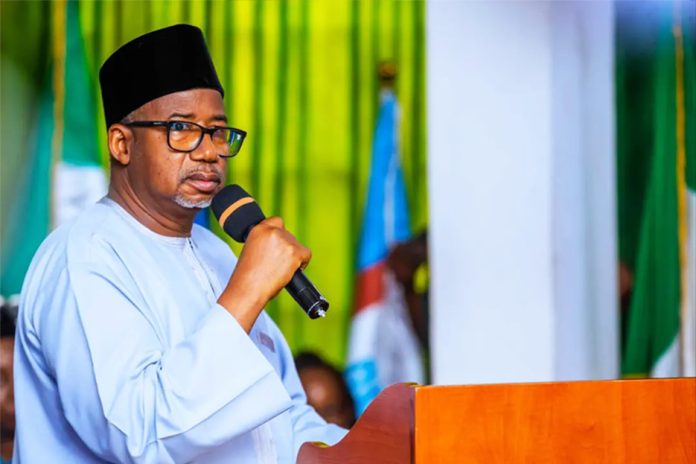
Bauchi State Governor Bala Mohammed

Bauchi State Governor Bala Mohammed, who also chairs the Peoples Democratic Party Governors Forum, has declared that the forum will no longer tolerate the conduct of certain individuals attempting to tear down the party.

Mohammed made the remarks on Tuesday via his official social media page while reacting to the blockade encountered at the party’s National Secretariat in Abuja, where he was present alongside Oyo State Governor Seyi Makinde, the newly elected Party Chairman, and other leaders.

He stated, “As Chairman of the PDP Governors’ Forum, let me be unequivocal: enough is enough. The Peoples Democratic Party (PDP) does not belong to any single person; it belongs to the Nigerian people.

“Concerning the disturbing police blockade of our national secretariat, I reiterate that the PDP Governors’ Forum will not sit back and allow the party to be dismantled by those who neither understand its foundational values nor respect its future.”

He noted that they remain fully committed to working with the newly constituted National Working Committee (NWC) to protect the national secretariat, uphold internal democracy, and defend the party’s integrity.

“We will achieve this with unity, strategic coordination, and unwavering respect for the rule of law,” he said.

“Let me emphasise: the PDP will not be intimidated, coerced, or muted. We have survived more challenging moments and emerged stronger. This episode will not be different. We will come out of it more united and more resolved.”

Credit: dailypost.ng

Boston Museum Returns Two Benin Bronzes To Nigeria

0
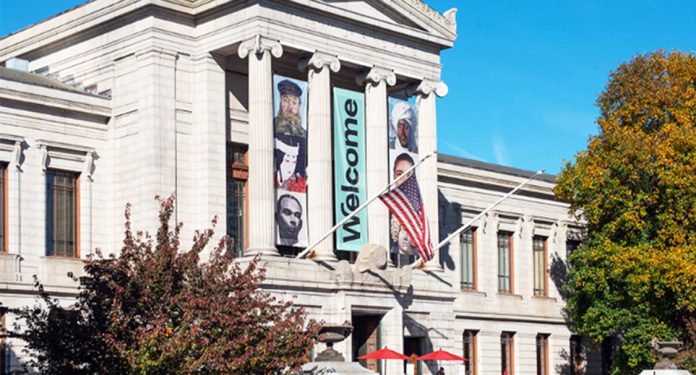
Boston Museum

The Museum of Fine Arts in the US city of Boston has returned two of the famed Benin Bronzes to Nigeria, authorities in the West African nation said late on Monday.

The move represents “the return of a huge part of Nigeria’s history,” Olugbile Holloway, the head of Nigeria’s National Commission for Museums and Monuments (NCMM), said.

“As much as this occasion is symbolic to Benin, it is also symbolic to Nigeria’s struggle,” he added.

The Benin Bronzes are hundreds of sculptures and plaques that were looted from the royal palace in the Kingdom of Benin, part of modern-day Nigeria, after British forces captured Benin City in 1897.


The priceless artworks, believed to have been crafted in Benin starting in the 1500s, were taken as spoils of war and today are scattered in museums and private collections across the world.

Western museums, including those in Britain, the Netherlands, and Germany, have returned several hundred of the artefacts, but hundreds more are believed to be still missing.

Benin’s traditional rulers and Nigerian authorities have for years been negotiating their return.

Calling the returns from the Boston museum a “historic moment,” Nigeria’s culture minister, Hannatu Musa Musawa, said those “conversations” were ongoing, and soon, the process of returning them all to their rightful owners will begin.”

The Benin Bronzes have been a source of tension within Nigeria, with Benin’s traditional ruler, the Oba, insisting that the artefacts belong to him as the ruler of Benin and the descendant of the royal family from whose palace they were plundered.

Benin authorities fear that the newly constructed Museum of West African Arts (MOWAA) in Benin City would be in charge of the artworks. The museum’s leaders have denied that this was their intention.

Credit: channelstv.com

Kebbi Abduction: Senate Asks Tinubu To Recruit 100,000 Military Personnel

0
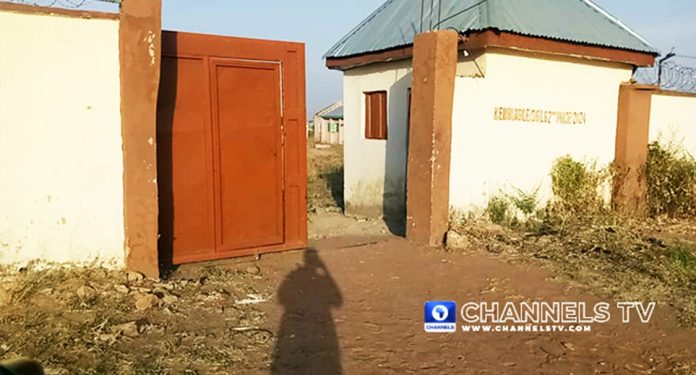
Government Girls Comprehensive Senior Secondary School in Maga

The Senate has asked President Bola Tinubu to direct the Nigerian Armed Forces to immediately recruit at least 100,000 additional personnel to strengthen the fight against worsening insecurity across the country.

The resolution followed a motion of urgent national importance raised by Senator Abdullahi Yahaya (Kebbi North), who reported a recent attack by terrorists on communities in Kebbi South Senatorial District who invaded a girls’ secondary school, abducting 25 students and severely injuring the school’s principal.

Describing the incident as a slap on the face of our nation, Yahaya lamented that repeated attacks on schools not only endanger citizens but deter girls from seeking education.

He recalled a similar abduction in 2022 from another government school in the state, noting that it took four years to rescue the victims.

In the same vein, in response to the abductions, the Senate has also set up an ad hoc committee, including the Committee on Finance, to investigate the funding, spending and effectiveness of the Safe School Initiative.

Lawmakers who expressed outrage over the incident noted that the renewed assault on schools raises questions about whether funds allocated to securing learning environments were properly utilized.

The Senate President, Godswill Akpabio, described the pattern of the abductions as a troubling recurrence, recalling the kidnapping of the Chibok girls on the eve of a major election in 2014.

BACKGROUND

Channels Television reported that Bandits abducted 25 students from the Government Girls Comprehensive Senior Secondary School (GGCSS) in Maga, Kebbi State.

It was gathered that the girls were whisked away during an attack by the gunmen on Sunday night at the school located in the Danko/Wasagu Local Government Area of the state.

According to sources, the attackers killed the school’s Vice Principal, Malam Hassan Makuku, before abducting several schoolgirls.

Credit: channelstv.com

Nigeria’s Foreign Reserve Rises To $46bn

0
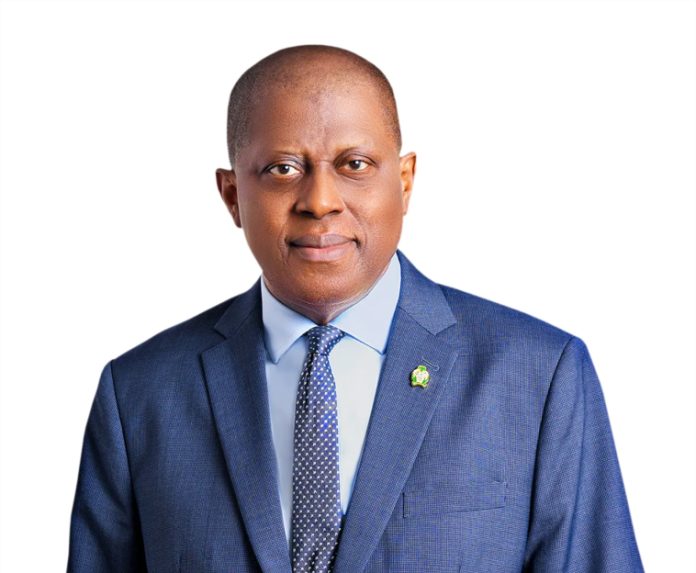
Governor of the Central Bank, Yemi Cardoso

The nation’s foreign reserve has risen to over $46 billion, according to the Governor of the Central Bank of Nigeria (CBN), Yemi Cardoso.

Cardoso, who was represented by the Deputy Governor Economic Policy Directorate, Dr. Muhammad Abdullahi, disclosed this at the opening of the Monetary Policy Department’s 20th anniversary colloquium at the CBN headquarters in Abuja

He said it was the first time the country had reached such a level since 2018, adding that the number could cover over 10 months of imports.

According to the deputy governor, lending rates may decline in the coming months as inflation continues to ease, raising hopes for improved access to credit and stronger investment flows.

Data published by the Central Bank of Nigeria (CBN) showed that the naira depreciated marginally by 0.4 percent as the dollar was quoted at N1,448.03 on Monday, compared to N1,442.43 on Friday at the Nigerian Foreign Exchange Market (NFEM).

In the parallel market, the naira gained slightly by N2, closing at N1,455 on Monday as against N1,457 on Friday.

Nigeria’s external reserves reaching the $46.7 billion mark have been largely attributed to the federal government’s Eurobond issuance and rising FX inflows.

October 2025 marked the country’s strongest month for foreign exchange inflows since May, boosted by improved macroeconomic stability and renewed appetite from offshore investors seeking opportunities in Africa’s largest economy.

However, Foreign Direct Investment (FDI) inflows fell by 25 per cent month-on-month to $222 million, reflecting persistent structural challenges such as insecurity and policy uncertainty that continue to deter long-term capital.

Credit: channelstv.com

Murderer sues for right to eat Vegemite in Australian prison

0

A convicted murderer is challenging an Australian state’s ban on prisoners eating Vegemite, claiming in a court suit that withholding the polarizing yeast-based spread breaches his human right to “enjoy his culture as an Australian.”

Andre McKechnie, 54, took his battle for the salty, sticky, brown byproduct of brewing beer to the Supreme Court of Victoria, according to documents the court registry released to The Associated Press on Tuesday. He is suing Victoria’s Department of Justice and Community Safety and the agency that manages the prisons, Corrections Victoria. The case is scheduled for trial next year.

McKechnie is seeking a court declaration that the defendants denied him his right under the Charter of Human Rights and Responsibilities Act to “enjoy his culture as an Australian.”

He also wants a declaration that the defendants breached the Corrections Act by “failing to provide food adequate to maintain” McKechnie’s “well-being.”

He wants the court to order the decision to ban Vegemite to be “remade in accordance with the law.”

Vegemite has been banned from Victorian prisons since 2006, with Corrections Victoria saying it “interferes with narcotic detection dogs.”

Inmates used to smear packages of illicit drugs with Vegemite in the hope that the odor would distract the dogs from the contraband.

Credit: cnn.com

Canadian PM clears budget vote, averting snap elections

0
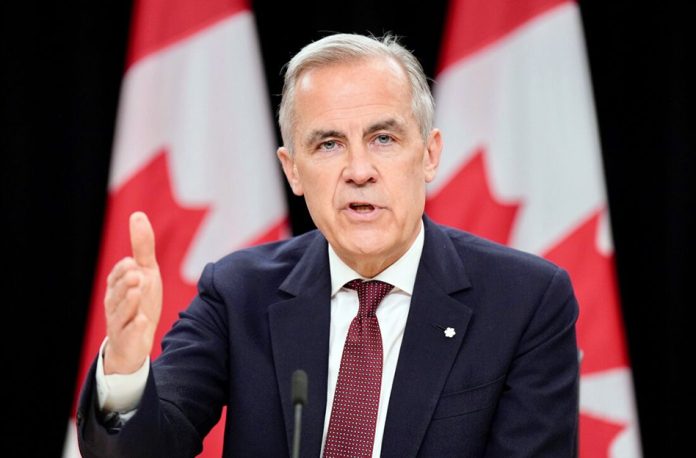
Canada Prime Minister Mark Carney

Prime Minister Mark Carney’s minority government narrowly survived a confidence vote on Monday as Canadian lawmakers endorsed a motion to begin debating his first federal budget – a result that avoids the prospect of a second election in less than a year.

The House of Commons voted 170-168 to advance study of the fiscal plan. While further votes are expected in the coming months, the slim victory signals that the budget is likely to be approved eventually.

“It’s time to work together to deliver on this plan – to protect our communities, empower Canadians with new opportunities, and build Canada strong,” Carney said on X, arguing that his spending blueprint would help fortify the economy against escalating United States tariffs.

The proposal includes a near doubling of Canada’s deficit to 78.3 billion Canadian dollars ($55.5bn) with major outlays aimed at countering US trade measures and supporting defence and housing initiatives. The prime minister has insisted that higher deficit spending is essential to cushion the impact of US President Donald Trump’s tariffs. While most bilateral trade remains tariff-free under an existing North American trade agreement, US levies on automobiles, steel and aluminium have struck significant sectors of the Canadian economy.

According to Carney, a former central banker, internal forecasts show that “US tariffs and the associated uncertainty will cost Canadians around 1.8 percent of our GDP [gross domestic product]”.

Credit: aljazeera.com

Two Ukrainians working for Russia behind rail sabotage, Polish PM says

0
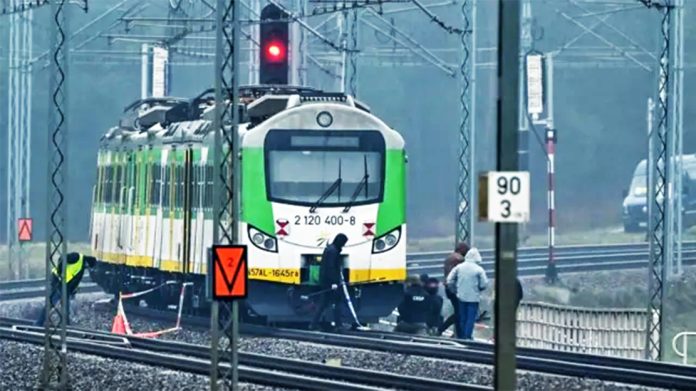
Rail sabotage in Poland

Two Ukrainian citizens who have long worked for Russian intelligence have been identified as the suspects behind two acts of sabotage on Poland’s rail network, Polish Prime Minister Donald Tusk has said.

One of the suspects had already been convicted in absentia of acts of sabotage in Ukraine, Tusk told Poland’s parliament.

On Monday, he visited the scene of an explosion near Mika, south-east of Warsaw, which damaged the railway line leading to the Ukrainian border at the weekend, and called it “an unprecedented act of sabotage”.

Another incident further down the line near Pulawy on Monday forced a packed train to stop suddenly and damage was found to overhead cables.

Polish authorities had initially said there was a very high chance that the two acts of sabotage on the Warsaw-Lublin railway line on had been ordered by a “foreign service”.

Then a spokesman for Poland’s special services minister said on Tuesday that “everything points to them being Russian special services”.

Russia has not yet publicly commented on the allegations.

“The goal was to cause a rail catastrophe,” Tusk told MPs. The Polish prime minister said he would not disclose the names of the two suspects as this could complicate the operation, though he told parliament that one was living in Belarus and the other was a resident of eastern Ukraine.

Both suspects had crossed into Poland from Belarus during the autumn and had now returned there via the border crossing at Terespol in the far south-west of Belarus, close to the Ukrainian border, he added.

Tusk said that a military-grade C4 explosive device detonated on 15 November at about 21:00 local time (20:00 GMT) near the village of Mika.

The explosion, which happened as a freight train was passing, caused minor damage to a wagon floor. It was captured on CCTV.

Tusk said the train driver did not even notice the incident.

Credit: bbc.com

US to sell F-35 jets to Saudi Arabia, Trump says ahead of crown prince’s visit

0
Trump and Saudi Crown Prince Mohammed bin Salman

The US will sell F-35 fighter jets to Saudi Arabia, President Donald Trump told reporters ahead of a White House meeting with Saudi Crown Prince Mohammed bin Salman.

“We will be doing that. We will be selling F-35 jets,” Trump said. “They’ve been a great ally.”

The leaders are expected to discuss deals on defence and civilian nuclear power during Tuesday’s White House visit, the first by the de facto Saudi leader since journalist Jamal Khashoggi was killed and dismembered at the hands of Saudi agents seven years ago.

A US intelligence assessment said Prince Mohammed approved the operation that led to the killing. The crown prince denied any role in the murder.

Prince Mohammed’s last visit was during Trump’s first term in 2018, the same year as Khashoggi’s murder in Istanbul.

While former President Joe Biden did not host the crown prince and promised to make the country a “pariah” over its human rights record, Biden did visit Saudi Arabia in 2022 to reach agreements on other issues. Biden said he raised Khashoggi’s murder in that meeting.

Trump and the crown prince already met in Riyadh in May. There, the US agreed to sell nearly $142bn (£107bn) worth of arms to Saudi Arabia in what the White House described as the “largest defence sales agreement in history”, as part of a $600bn investment deal. Saudia Arabia is the largest buyer of US arms.

Some American defence officials have raised concerns about a potential sale of F-35s, considered the most advanced fighter jet in the world, to Saudi Arabia. They told US media that they feared it would give Saudi Arabia access to sensitive stealth technology, which the country could then share with China under a security partnership between the two powers.

Credit: bbc.com

The Ghanaian Chronicle