Home Blog Page 305

Jospong Group making waves outside Ghana

0
Jospong Group and UN Varsity officials displaying documents after signing the deal

In a major step toward turning climate commitments into real action in Africa, the Jospong Group of Companies (JGC) and the United Nations University Institute for Natural Resources in Africa (UNU-INRA), have signed a landmark Memorandum of Understanding (MoU) on the sidelines of COP30 in Belém, Brazil.

The agreement, signed on Monday, November 17, 2025 seeks to align Jospong Group’s hands-on work in waste management and agriculture with UNU-INRA’s research expertise.

The goal is to speed up green industrialisation, strengthen climate resilience and empower small and medium-sized enterprises (SMEs) across the continent.

Dr. Glenn Kwabena Gyimah, General Manager of the Jospong Green Transition Office, signed on behalf of the Group, while Professor Fatima Denton, Director of UNU-INRA, represented the university.

A delegation from Ghana’s Parliamentary Select Committee on Environment, Science and Innovation – Chairman Yaw Frimpong Addo, Vice Chair John Darko and Ranking Member Dr. Adam Hamza – witnessed the ceremony.

Dr. Gyimah described the partnership as a critical step in Jospong’s sustainability journey, stressing its strategic relevance.

“Sustainability has become a driver of modern economies, and we are committed to being at the forefront,” he said.

He noted that the MoU would support growth, attract green investments, create jobs and deliver long-term impact.

Professor Denton welcomed the collaboration, highlighting the urgent need for more green-oriented enterprises on the continent.

Many African entrepreneurs, she observed, face barriers such as limited infrastructure, insufficient technology and lack of resources.

She emphasised that the partnership was a natural fit, merging Jospong’s action-driven work in waste management, agriculture, and green transition with UNU-INRA’s research-driven mandate.

Situating the agreement within broader climate discussions, Professor Denton noted that COP negotiations tend to fixate on decarbonisation.

“We want decarbonisation that is fair and inclusive,” she said, adding that Africa needs a “fair deal” one that ensures meaningful finance, technology transfer, and support for adaptation.

Ranking Member Dr. Hamza praised the initiative for bridging “the gap between theory and practice.”

He urged both institutions to ensure the partnership yields tangible results, assuring them of Parliament’s support in advancing policies and legislation that back the collaboration.

Earlier, Dr. Gloria Kusi Boamah, Senior Sustainability Officer at the Jospong Green Transition Office described the MoU as a symbol of a shared vision one that aligns research with action and positions African institutions as leaders in the sustainability transition.


For more news, join The Chronicle Newspaper channel on WhatsApp: https://whatsapp.com/channel/0029VbBSs55E50UqNPvSOm2z

W/R records 3 new HIV cases everyday

0
HIV test kit

A sharp rise in HIV infections in the Western Region has prompted the Regional Minister, Joseph Nelson, to inaugurate a nine-member Regional Committee of the Ghana AIDS Commission (ReCCOM) to strengthen the region’s response to the epidemic.
The committee’s establishment forms part of the national directive to decentralise Ghana’s HIV and AIDS response, under the Ghana AIDS Commission Act, 2016 (Act 938) and L.I. 2403 (2020), which mandates all regions to set up structures to coordinate prevention, treatment and care at the local level.
Launching the Committee in Sekondi, the Minister expressed grave concern over what he described as a “steadily worsening” HIV situation in the region.

He cited the Ghana AIDS Commission’s 2024 data, which recorded 1,120 new infections, translating to approximately three new cases every single day, over the last five years.
Mr. Joseph Nelson said the worrying statistics called for renewed commitment, stronger partnerships and sustained community sensitization.

He urged traditional authorities, faith-based organizations, youth groups, and civil society actors to support the work of the committee, stressing that the region could not afford to ignore a crisis that threatens its human capital.
The Regional HIV Coordinator, Dr. Felicia Amihere, reinforced the Minister’s concerns, revealing that the region had already recorded 449 new HIV cases between January and September 2025, a figure she warned could surpass last year’s total if urgent action is not taken.
She noted that the Western Region placed fourth nationally in the 2024 HIV estimates, with 24,885 people currently living with HIV, a trend she said should trigger a stronger community-level response.
Dr. Felicia Amihere lamented the growing sense of complacency among young people, many of whom believe HIV is no longer a significant threat due to advances in treatment.

She urged the public to adhere to preventive measures, get tested regularly, and support persons living with the virus rather than stigmatise them.

According to the Regional HIV Coordinator, stigma and misinformation continue to undermine efforts to reduce new infections.
The newly inaugurated committee is expected to coordinate all regional HIV interventions, ensure access to essential services and mobilise stakeholders to drive the national vision of ending AIDS by 2030.


For more news, join The Chronicle Newspaper channel on WhatsApp: https://whatsapp.com/channel/0029VbBSs55E50UqNPvSOm2z
NS Warns Galamsey Operators to Keep Off Ankobra River During Christmas

0
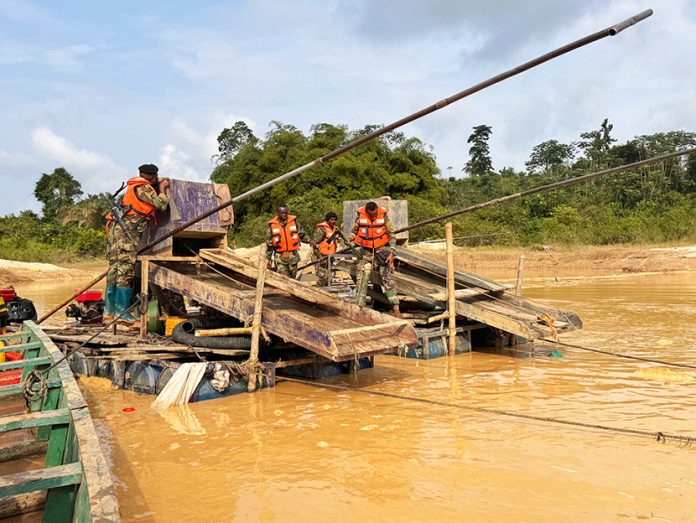
The joint security team destroying chafang machines on Ankobra river

The Western Regional National Security Liaison Officer, Brigadier General Musah Whajah (Rtd) has issued a strong caution to illegal miners operating on the Ankobra River and its banks, urging them to stay away during the upcoming Christmas festivities.
He disclosed that joint security teams will embark on sustained day-and-night patrols along the full stretch of the river, as part of renewed efforts to reclaim and restore the Ankobra to its natural state.
The warning follows a recent security operation near Ampansie, in the Evalue Gwira Municipality, where a team from the Western Naval Command and National Security intercepted a canoe loaded with four chang fang machines.

The illegal miners, sensing the presence of security personnel, fled the scene and abandoned their equipment.

Brigadier General Whajah (Rtd) said the successful interception demonstrates the impact and necessity of consistent patrols in protecting the river from further degradation.

Reiterating his caution, he stressed that security agencies will maintain uncompromising surveillance throughout the festive period, noting that the continuous presence of the joint team is crucial to safeguarding the waterbody and restoring the Ankobra River to good health.


For more news, join The Chronicle Newspaper channel on WhatsApp: https://whatsapp.com/channel/0029VbBSs55E50UqNPvSOm2z
Fidelity Bank trains journalists to boost financial literacy and ethical reporting

0
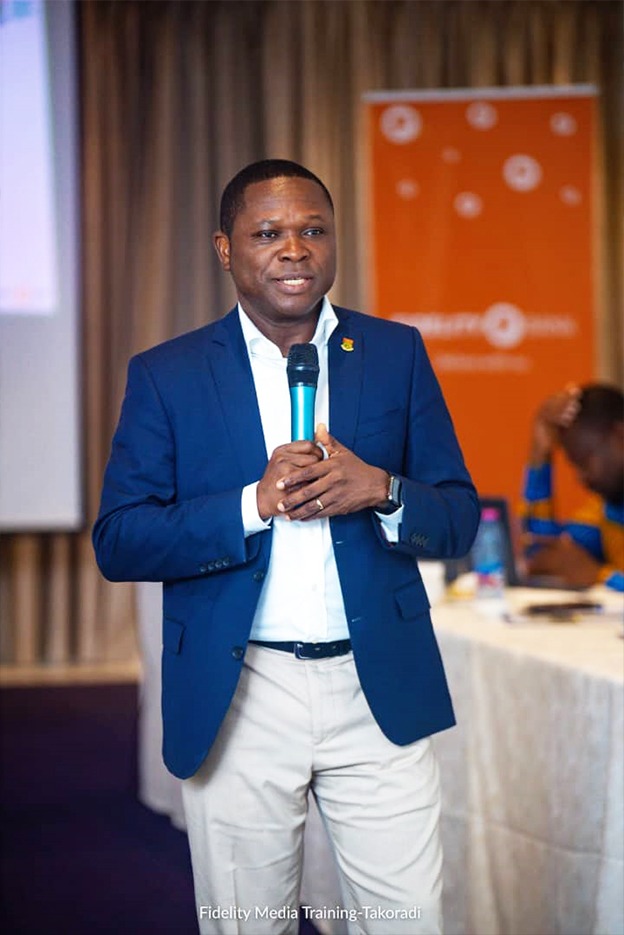
Kwame Dzato, Facilitator for the Fidelity Bank training workshop

Fidelity Bank Ghana has delivered on its promise to enhance journalists’ understanding of financial literacy and the banking sector.
The bank recently organized a one-day training workshop for journalists selected from the Western and Central regions to promote accurate and informed reporting.

A group picture of the Journalist participants at the Fidelity Bank training programme

The interactive session covered an overview of Ghana’s banking sector and provided practical guidance on interpreting financial statements.
The workshop was led by Kwame Dzato, Chief Executive Officer (CEO) of the Ghana Institute of Bankers and aimed at deepening journalists’ knowledge of the banking industry.
The initiative stems from a commitment made by Julien Opuni, Managing Director of Fidelity Bank, during a press soiree in early January.

At the event, he promised to organise a training program to strengthen media engagement and build capacity in financial reporting.
During the workshop, Mr. Kwame Dzato took journalists through the evolution of banking in Ghana, tracing developments from the 1890s to the present.

He also highlighted key principles in interpreting financial statements and emphasized the importance of ethical reporting.
“Journalists must adhere to the ethics guiding their profession and the banking sector to avoid sensationalism.

“The banking industry thrives on trust, character and conduct. Reporting should always be grounded in facts,” Mr Dzato said.
Mimi Anane Apiah, Business Manager at Fidelity Bank, also led a session on life-saving investments, further equipping journalists with practical financial knowledge.

The training reflects Fidelity Bank’s broader commitment to fostering strong media relationships and promoting accurate, responsible financial journalism in Ghana.


For more news, join The Chronicle Newspaper channel on WhatsApp: https://whatsapp.com/channel/0029VbBSs55E50UqNPvSOm2z

3 recalcitrant illegal miners die in Prestea underground mine

0
Prestea underground mine

Heath Goldfields Ltd has confirmed the death of three illegal miners who were trapped after allegedly sneaking into an inactive section of the company’s underground operations at Prestea, in the Western Region.

In a statement issued by management, the company said preliminary information suggests the group of illegal miners used unauthorised access routes to enter a restricted area of the mine, where the tragic incident occurred.

“We extend our heartfelt condolences to the bereaved families and the entire Prestea community during this difficult period.

“Every loss of life, regardless of circumstance, is painful, and we stand with the affected families in grief and sympathy,” the statement said.

Heath Goldfields noted that it is cooperating fully with the Ghana Police Service, the Minerals Commission and the National Disaster Management Organisation (NADMO) to aid ongoing investigations and recovery efforts. The company commended the swift and professional response of the authorities.

Assuring stakeholders of its commitment to safety, the mining firm stated that it continues to enforce stringent security and safety protocols across all its concessions to protect human life and prevent unauthorised entry.

“Our community relations team is engaging local leaders to provide support to affected families and keep the community informed,” it added, promising continued collaboration with traditional authorities, regulators and partners to promote responsible mining and safeguard livelihoods.

The company said further updates will be provided as investigations progress.


For more news, join The Chronicle Newspaper channel on WhatsApp: https://whatsapp.com/channel/0029VbBSs55E50UqNPvSOm2z

Former Bogoso-Prestea Mine Workers Cry Foul Over Unpaid Entitlements

0
The convener of the distraught former workers of Bogoso-Prestea Goldmine, Mr. Gabriel Madobi, addressing the media.

Hundreds of former workers of the Bogoso-Prestea Gold Mine have accused the current operator, Heath Goldfields Limited (HGL), of flagrantly violating Ghana’s Labour Act, 2003 (Act 651) by failing to pay legally mandated entitlements months after disengaging employees.
At a news conference in Accra on 19 November, 2025 the Convener of the distraught former workers, Mr. Gabriel Madobi, laid bare the extent of the breaches, describing the ongoing neglect as a “direct affront to the dignity of hardworking Ghanaians and serious legal violation.”
“The Labour Act is clear: Section 18 mandates that all outstanding remuneration must be paid immediately upon termination of employment.

“Yet, despite ministerial directives and repeated assurances from Heath Goldfields, most former employees remain unpaid,” Mr. Gabriel Madobi told journalists.
Cycle of Broken Promises
The frustrations of the former workers stem from a chain of events that began with the termination of Future Global Resources’ (FGR) lease of the Bogoso-Prestea Mine on 3 September, 2024.

The government cited repeated breaches of contractual obligations, including unpaid SSNIT contributions, Provident Fund arrears, unpaid bonuses and delayed salaries.
The workers welcomed the termination, viewing it as a chance for relief after years of instability. When the mine was reassigned to Heath Goldfields Limited on 12 November, 2024 it was presented to the public as a financially and technically capable operator that would stabilise operations, pay outstanding debts and inject capital to rejuvenate the mine.
“We welcomed Heath Goldfields with hope, believing that our livelihoods would finally be restored. Unfortunately, that hope has not been fulfilled,” Mr. Gabriel Madobi alleged.

Outstanding Payments and Human Cost
According to the former workers, Heath Goldfields has failed to pay critical entitlements, including End of Contract Benefits, Outstanding Leave Balances, 2023 Bonuses, Provident Fund arrears, Redundancy and Severance payments.
A memo from Heath Goldfields dated August 27, 2025 promised to settle Provident Fund arrears by the end of that month and complete payments to disengaged employees by the end of September.

However, as of the press conference, only about half of affected workers had received their Provident Fund contributions.

A subsequent memo dated October 6, 2025 extended the payment deadline to December 2025, further eroding confidence.
“Some of our colleagues have died without receiving what is lawfully theirs. Many families struggle to afford food, education and healthcare.

“Elderly and unwell former employees, who dedicated decades to this mine, now live in distress,” Mr. Gabriel Madobi said.
The former workers clarified that any Memorandum of Understanding signed between Heath Goldfields and the Ghana Mine Workers Union does not supersede statutory law.
“We are not bound by this MoU. It does not align with the Labour Act and does not create the enforceable obligations that the law guarantees,” Mr. Gabriel Madobi said.

They urged the Minister for Lands and Natural Resources, Emmanuel Armah-Kofi Buah, to ensure compliance with statutory law and deliver all outstanding entitlements immediately.
Questions over due diligence and financial capacity

The group also questioned the rigor of the government’s vetting process before reassigning the mine to Heath Goldfields.

They pointed out that the operator’s current activities, focused mainly on hauling and reprocessing old tailings, appear insufficient for a full operational turnaround.
“If the goal was merely to process tailings, FGR could have done so without the lease being terminated.

“Bogoso-Prestea deserves more than a stopgap measure; it needs sustainable investment and long-term operational rehabilitation,” Mr. Madobi said.
They asked the Minister to clarify the following questions: What level of capital commitment Heath Goldfields presented before acquiring the lease?; What proof of funding was independently verified by the government and whether the operator has the financial capacity to sustain the mine long-term.
The former workers emphasized that their fight is not only about financial compensation, but also dignity, justice, and the protection of a national asset.
“Honourable Minister, families are suffering. Promises have not been kept. Many who served Ghana’s mining industry for decades are being treated without fairness.

“We urge the government to ensure that all outstanding entitlements are paid without further delay and to consider bringing in a more capable operator if Heath Goldfields cannot meet its obligations,” Mr. Madobi said.


For more news, join The Chronicle Newspaper channel on WhatsApp: https://whatsapp.com/channel/0029VbBSs55E50UqNPvSOm2z

CCE to offer affordable legal services to the Vulnerable

0
Mr Alex Nartey Esq., President of Centre for Citizens Empowerment (2nd Left) flanked by some executives of the Ghana National Association of ADR Practitioners addressing the gathering during the relaunch of CCE

The Centre for Citizens Empowerment (CCE) has been officially re-launched with a renewed mandate to support vulnerable Ghanaians who are unable to afford legal services.

The ceremony, held under the theme: “Justice and Dignity for All – Empowering the Poor through Access to Justice,” brought together mediators, lawyers, civil society actors and members of the public.

Addressing the gathering, President of CCE, Alex Nartey, Esq., said the re-launch represents a “renewal of hope” for the many Ghanaians who continue to face injustice due to financial constraints or a lack of knowledge about their rights.

Mr. Alex Nartey highlighted the everyday struggles of citizens who suffer abuses at their workplaces, in their homes, or even in public spaces, yet remain silent because they cannot afford legal representation.

He noted that the complexity and cost of seeking justice continue to discourage many from pursuing redress.

“Justice must never be the privilege of the rich; it must be the right of all,” he said, stressing that CCE was founded on the conviction that every Ghanaian deserves equal access to justice regardless of social or economic status.

As part of its mandate, the Centre will prioritise Alternative Dispute Resolution (ADR) as its first line of intervention.

Through a partnership with the Ghana National Association of ADR Practitioners (GNAAP), trained mediators will volunteer their expertise to help resolve disputes ranging from family and community conflicts to workplace and business disagreements.

Mr. Alex Nartey added that not all conflicts needed to go to court, and ADR provides a quicker, more peaceful, and less costly option for resolving disagreements.

However, in cases requiring litigation, CCE has enlisted the support of legal practitioners who will dedicate one day each week to offer free or heavily discounted services to disadvantaged citizens.

He described this as a collaborative effort to complement the work of the Legal Aid Commission in deepening access to justice across the country.

The CCE President noted that the re-launch comes at a time when many Ghanaians face rising living costs, widening inequality, and increasing vulnerability to eviction, workplace exploitation, and domestic abuse.

He described the Centre as a “bridge” that connects the poor to justice and restores dignity to the marginalised.

To individuals experiencing injustice but unable to afford legal help, he assured: “You are not alone. Our doors are open to you.”

Mr. Alex Nartey also called on lawyers, mediators, advocates, and social workers to volunteer their skills, and appealed to donors and partners for financial and logistical support to sustain the Centre’s work.

He reiterated CCE’s commitment to building a society where the powerless are protected: “The measure of any just society is not how it treats the powerful, but how it protects the powerless.”

The Centre for Citizens Empowerment is expected to roll out community education programmes, expand its mediation services, and strengthen its legal support network in the coming months.


For more news, join The Chronicle Newspaper channel on WhatsApp: https://whatsapp.com/channel/0029VbBSs55E50UqNPvSOm2z
 

GHPA wins 3 awards at African ports awards in Congo

0

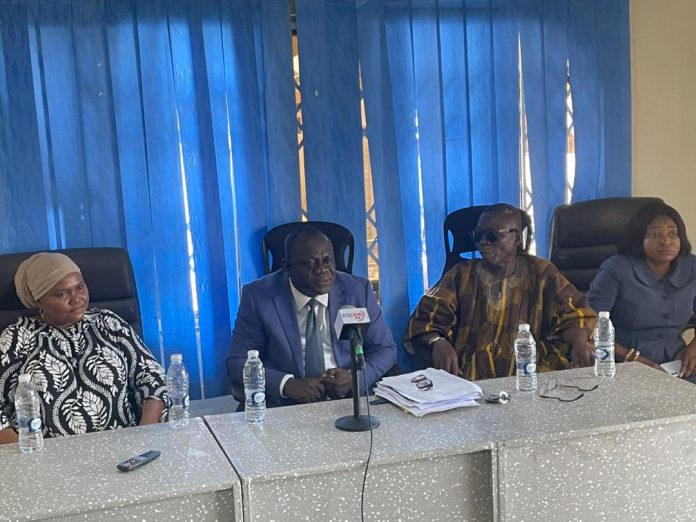
The Ghana Ports and Harbours Authority (GPHA) has clinched three major honours at the 9th African Ports Awards, held last week in Pointe-Noire, Congo, reinforcing its position as a leader in port operations across the sub-region.

The Port of Takoradi emerged as Best Port in Import & Export Traffic Growth and Volumes, Bulk (2023–2024), recognising its strong performance in handling increasing bulk cargo volumes.

The Port of Tema received the award for Best Port in Container Traffic (TEU-2024), highlighting its continued efficiency in container handling.

GPHA was further recognised for Best Port in Information Communication of Statistics (via website), underscoring its commitment to transparency, digitalisation, and data-driven port management. More than 20 ports from across West and Central Africa participated in the competition.

Expressing pride and excitement over the accomplishment, the Director-General of GPHA, Brigadier General Paul Seidu Tanye-Kulono commended the Board for its continued strategic guidance and thanked staff across all the 2 ports for their dedication, hard work and commitment to the Authority’s vision.

He also expressed appreciation to all stakeholders for their unwavering support, noting that the recognition reflects a shared effort toward operational excellence and competitiveness.

Established in 2015 in Abidjan, the African Ports Awards evaluates ports based on key performance indicators including infrastructure, encompassing equipment, safety, security and storage-sub-regional connectivity, productivity, vessel reception and delivery operations, management information systems, governance and sustainability.

GPHA’s latest achievement marks another important milestone in Ghana’s maritime development and its drive to strengthen its position as a regional maritime hub.

It would be recalled that the Ghana Ports and Harbours Authority (GPHA) was in October last month named the overall winner in the Community Building category of the 2025 International Association of Ports and Harbours (IAPH) Sustainability Awards.

GPHA earned the accolade for its exemplary contributions to sustainable port-community development, selected by a panel of 15 expert jurors from over 100 entries worldwide, with 18 finalists shortlisted.

The award recognised the Authority’s community-building project, which has delivered lasting social impact, inclusivity and shared value between the ports and surrounding communities.


For more news, join The Chronicle Newspaper channel on WhatsApp: https://whatsapp.com/channel/0029VbBSs55E50UqNPvSOm2z

Crime surges in Ghana: 628 robberies and 340 murders recorded this year

0
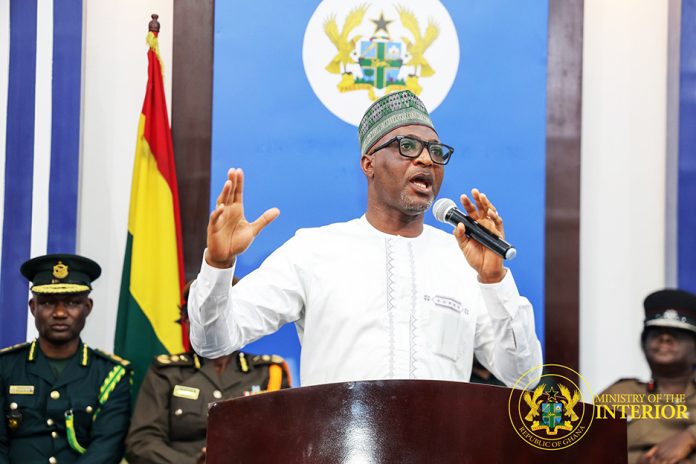
Alhaji Mubarak Muntaka, Interior Minister

Ghana’s internal security landscape is facing renewed scrutiny after the Minister for the Interior, Muntaka Mohammed-Mubarak, disclosed worrying national crime statistics that point to an escalating trend in violent criminal activity.

As of July 2025, the country has recorded 628 robbery incidents and 340 murder cases, raising widespread concern about public safety and the effectiveness of national crime-prevention measures.

Speaking at a news conference in Accra on Tuesday, November 18, 2025 the Minister described the figures as “alarming and unacceptable,” noting that although the year has not ended, the data already paints a disturbing picture.

According to Muntaka Mohammed-Mubarak, 2024 closed with 1,219 reported robbery cases and 552 murders, making this year’s mid-term numbers a signal that Ghana may surpass last year’s totals if immediate and decisive action is not taken.

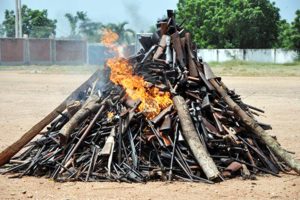
Seized small arms being destroyed by the authorities in Ghana

“The statistics are not looking good at all. Crime is becoming more complex, more violent, and in some cases more organised. We cannot allow these numbers to define the future of our country,” he emphasised.

Government Responds With Nationwide Gun Amnesty
To confront the surge in violent crime, particularly gun-enabled robberies and homicides — the government has rolled out a Gun Amnesty Programme, following extensive consultations with major security and governance institutions.

The consultations included: The Ghana Police Service, National Commission on Small Arms and Light Weapons, National Security Secretariat, Local and regional security agencies, traditional authorities, religious organisations and civil society groups working on peace and security.
The Minister for the Interior described the amnesty as a “bold and compassionate initiative” that offers individuals in possession of unlicensed or illegal firearms, a chance to surrender them without fear of arrest, interrogation or prosecution.

Authorities believe that widespread access to illicit weapons has significantly contributed to the rising number of robberies, contract killings, chieftaincy-related violence, land-guard operations and communal conflicts.
“We are encouraging citizens to take advantage of this window. The goal is simple: remove illegal guns from circulation and reduce their use in violent crimes,” the Minister for the Interior said.

Illicit Firearms: A Growing National Threat
Security experts say Ghana’s porous borders, underground black-market supply chains, and weak community reporting mechanisms have contributed to the proliferation of illegal firearms. Studies by the National Commission on Small Arms estimate that over one million small arms may be in circulation in the country, with a significant percentage unregistered.
The Minister appealed to Ghanaians across all communities to actively support the disarmament process, stressing that public participation will determine the success or failure of the amnesty.

“Our collective cooperation is crucial. If our communities truly want safer markets, safer roads, and safer homes, then we must all work together. Security is not the responsibility of the police alone, it is a shared duty,” he urged.

Mohammed-Mubarak   also assured the public that guns submitted during the amnesty will be handled transparently and securely, with strict procedures to ensure they are permanently removed from circulation.

The Minister for the Interior encouraged the public to report suspicious activities, armed individuals and criminal networks anonymously through police hotlines and community watch committees.

The government is also considering additional interventions such as expanding CCTV surveillance and intensifying intelligence-led policing to complement the amnesty.


For more news, join The Chronicle Newspaper channel on WhatsApp: https://whatsapp.com/channel/0029VbBSs55E50UqNPvSOm2z

Multiple Vaccines Do Not Overload Children’s immune system -Expert

0
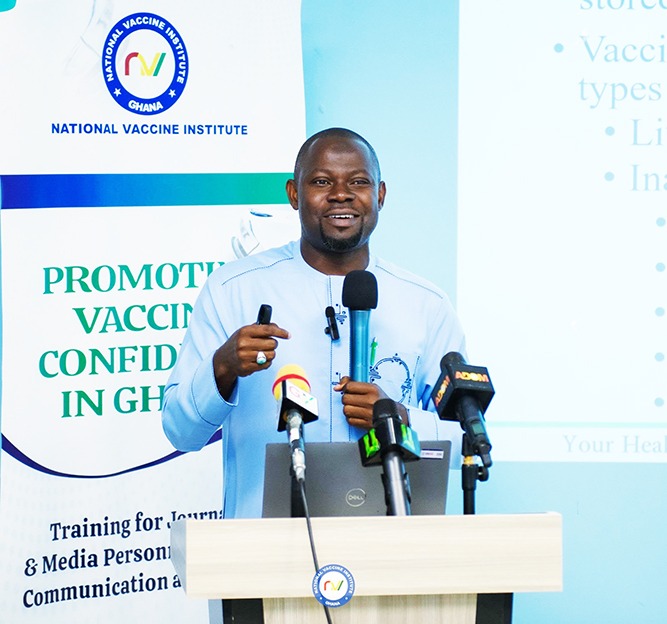
Dr. (Med) Naziru Tanko Mohammed, Deputy Programme Manager of the Expanded Programme on Immunisation (EPI) speaking at the event

A senior official of the Ghana Health Service (GHS) has moved to dispel persistent misconceptions about vaccines, especially the belief that giving children multiple vaccines at a time can overload their immune system.

According to him, decades of scientific evidence show that vaccines remain safe and effective whether administered individually or in combination.

Dr. (Med) Naziru Tanko Mohammed, Deputy Programme Manager of the Expanded Programme on Immunisation (EPI), made this clarification during a two-day capacity-building workshop for journalists and media personnel, organised by the National Vaccines Institute (NVI), in partnership with AMMEREN.

The training was aimed at promoting vaccine confidence in Ghana through accurate public education and strengthened media engagement.

Dr Mohammed emphasised that multivalent vaccines – those that combine protection against several diseases in one vial, have been proven to work just as safely and effectively as single-disease vaccines.

Stakeholders and participants pose for a group picture

He explained that scientific studies consistently show no increased risk of harmful side effects when vaccines are administered together.

“This widely circulated claim that multiple vaccines can overwhelm a child’s system is simply not true.

“Vaccines under the EPI remain safe whether given separately or combined, as seen with the measles-rubella vaccine,” he noted.

Addressing confusion about vaccine intervals, he explained that certain vaccines such as Pentavalent, Oral Polio Vaccine (OPV), Measles-Rubella (MR), Pneumococcal Conjugate Vaccine (PCV) and Rotavirus require several doses administered at intervals of not less than four weeks.

He stressed that administering these doses earlier than four weeks reduces their effectiveness and such doses must be repeated.

He added that missing a scheduled dose does not invalidate the entire vaccination process. In such cases, immunisation should simply continue from the point where it was interrupted, without restarting the series.

Although delays do not weaken the overall immune response, they prolong the period during which a child remains unprotected.

For this reason, he urged caregivers to follow the recommended schedule closely.

Ghana’s Immunisation Success Story

Dr. Mohammed highlighted the remarkable progress Ghana has made through its immunisation programme over the years. Ghana has successfully eliminated neonatal tetanus since 2011 and has not recorded a single case of wild poliovirus since 2008. The country also went nearly two decades without a documented measles death—from 2003 to 2021—while recording significant reductions in childhood pneumonia and diarrhoea cases.

He noted that no case of meningitis caused by Neisseria meningitidis A has been recorded since the Men A vaccination campaign in 2012 and its subsequent introduction into routine immunisation in 2016. These achievements have contributed significantly to strengthening the health system and have helped reduce under-five mortality from 111 deaths per 1,000 live births in 2003 to 40 per 1,000 in 2022.

Despite these gains, the national immunisation programme continues to face several systemic and logistical challenges. These include Ghana’s heavy dependence on external partners—particularly Gavi, the Vaccine Alliance—for both vaccines and operational support, even as the country is expected to transition away from Gavi support by 2030.

Dr. (Med) Naziru Tanko Mohammed also pointed to the frequent breakdown of cold-chain equipment at the district and health facility levels, which affects the storage and potency of vaccines.

He further revealed that Ghana still experiences disparities in vaccination coverage between districts, with urban and peri-urban areas reporting large numbers of children who are left out of routine immunisation.

In addition, healthcare workers face burnout due to the increasing burden of responding to multiple outbreaks such as cholera, polio, yellow fever and measles.

Rising anti-vaccine activism, misinformation, disinformation and low acceptance of adult vaccines also continue to undermine public health efforts.

A Critical Role for Journalists

Dr. Tanko Mohammed underscored the central role the media must play in sustaining public confidence in vaccines.

He urged journalists to commit to providing accurate information on immunisation, including the benefits of vaccines, the diseases they prevent and the locations and schedules for vaccination services.

He encouraged journalists to actively counter misinformation and myths, and to use town hall meetings, community engagements, blogs, social media platforms and other channels to bring credible information directly to the public.

He called on media practitioners to position themselves as immunisation ambassadors and champions, noting that their work is essential to building and maintaining public trust in vaccination programmes.

“Our progress is undeniable, but keeping these gains requires collective responsibility. Journalists are critical partners in eliminating vaccine-preventable diseases. This is a clarion call for all stakeholders to come onboard,” he said.


For more news, join The Chronicle Newspaper channel on WhatsApp: https://whatsapp.com/channel/0029VbBSs55E50UqNPvSOm2z
The Ghanaian Chronicle