Home Blog Page 302

Ofankor wife Beater remanded into police custody

0
John Odartey Lamptey

John Odartey Lamptey, a businessman who allegedly flogged his naked wife at Ofankor has been remanded into police custody by a District Court at the Police Headquarters in Accra.

John Odartey Lamptey has been charged with physical assault.

John Odartey Lamptey ‘s siblings, Grace Lamptey, a food vendor and Lewis Odartey Lamptey, have also been charged with conspiracy to commit crime, to wit, threat of harm.

The court did not take the pleas of the three accused persons. They are expected to reappear on December 3, 2025.

Prosecution earlier prayed the court to remand the accused persons as investigations were underway.

Prosecution’s case before the court were that, on November 17, 2025 a video of a man physically assaulting his naked wife was seen on social media.

Prosecution said based on the viral video, Police Intelligence team traced and arrested John Odartey Lamptey, the suspect in the video.

It said further information led to the arrest of John Odartey Lamptey’s siblings, namely Grace Lamptey and Lewis Odartey Lamptey.

Information gathered revealed that after the arrest of John Odartey Lamptey, his two siblings attacked the witness who posted the viral video and threatened her life with words, to wit, “I give you three days, you will die.”

Further information revealed that John Odartey Lamptey and the victim’s name withheld, who had fled the house are married with two children.

According to prosecution, the Police has launched further investigation into the matter.

By Joyce Danso

GNA


Editorial: Is Government Failing Indigenous Industries As Imports Increase?

0
Editorial

Ghana’s national economic conversation can no longer ignore a painful reality: the labour market is shrinking, the informal sector is overburdened and indigenous enterprises, the backbones of job creation, are suffocating.

For millions of young Ghanaians entering the job market each year, the promise of dignified employment increasingly feels like an illusion. Instead, the public is told to “go into entrepreneurship,” even though the economic terrain required for entrepreneurship to flourish has become deeply hostile.

A central part of the crisis is the state’s failure to protect local industries from the relentless inflow of foreign goods. Ghana has, in effect, become an unregulated marketplace where products from every corner of the globe enter freely, often in direct competition with made-in-Ghana alternatives.

This unrestrained import regime undermines not only domestic manufacturers but also the entrepreneurial ambitions of young people who have no choice but to battle for survival in an already unstable informal sector.

Data attributed to the Ghana Statistical Service, via Finex Insight, paints a troubling picture: the informal sector accounts for 80% of Ghana’s workforce yet generates only 27% of GDP, while the formal sector has just 20% of workers and contributes 73% of national output. If we take these figures seriously, then the foundations of our economy are structurally unsound. An economy that fails to create productive, formal employment for its youth is an economy on the brink.

This makes the state’s failure to confront unbridled importation even more concerning. Chinese goods in particular saturate the market, not because Ghanaian products are inherently uncompetitive but because foreign producers benefit from scale, subsidies and easier access to capital advantages that local Small and Medium Enterprises (SMEs) simply do not have. If the state cannot create jobs, the least it can do is protect the businesses that are trying to do so.

This is why the lack of transparency around international economic agreements remains troubling. Ghanaian leaders often return from foreign visits with promises of cooperation, investment, or trade partnerships, yet the long-term implications of these agreements for local industries remain unclear.

The call for Jubilee House to publish agreements made with China, Japan and other nations is not political mischief it is a necessary demand for accountability. Ghana cannot continue to sign away its economic sovereignty under the guise of diplomacy.

Meanwhile, farmers and agribusiness groups, particularly in rice and poultry, are sounding the alarm about smuggling and unfair competition. Peasant farmers, the Food and Beverage Association of Ghana (FABAG) and others have repeatedly warned that smuggled rice, some reportedly unwholesome, is flooding the market.

The silence from state actors is not only shocking but dangerous. Nigeria’s decisive move to restrict rice imports years ago spurred domestic production and strengthened food security. Why has Ghana refused to learn from such examples?

The persistent question is simple: Why is the state reluctant to investigate these allegations? Are political connections shielding offenders? Is Jubilee House unwilling to confront the commercial interests undermining national development?

Ghana cannot continue to sacrifice long term economic alignment for short-term political convenience. Protecting indigenous enterprises is not nationalism it is economic common sense. Strengthening local production reduces imports, stabilises the cedi and expands employment. Through independence, military rule and now constitutional democracy, Ghana’s greatest developmental setback has been policy inconsistency driven by political fear rather than strategic vision.

President John Dramani Mahama was given a strong mandate in the 2024 elections because Ghanaians are yearning for bold leadership and decisive economic protection. That mandate comes with responsibility. If Jubilee House fails to shield local businesses from destructive competition, the dreams of millions of young people and Mahama’s own legacy may evaporate.

The message is straightforward, Ghanaian enterprises must be protected. Ghanaian youth are struggling. And Ghana cannot transform its economy while its domestic industries are left to perish.


Follow The Chronicle Newspaper channel on WhatsApp: https://whatsapp.com/channel/0029VbBSs55E50UqNPvSOm2z

Nana B, Understand What Prof. Frimpong-Boateng Is Saying

0
Opinion

The luminary extraordinaire, Prof Kwabena Frimpong Boateng, recently spelt out his worries about the happenings in the New Patriotic Party. And what he said made a lot of sense. For example, he condemned this infamous Top-Bottom Approach, where the flag bearer would be elected first before all other party officers. The same party officers whose performance in 2024 was very appalling are coming to elect flag bearer with the intension of retaining their positions on the party. I am afraid this is the main reason for the Top-Bottom Approach.

Prof. Frimpong-Boateng was right in condemning the actions of regional chairmen who have been openly declaring that by any means possible they would make sure Bawumia is re-elected flag bearer. Even though this violates the Party’s rules, the National Executives are sitting aloof.

And it is true that those who engineered the Top-Bottom Approach do not want clean elections. And again, I agree with Prof. Frimpong-Boateng that the Bottom-Top Approach must be brought back.

With these loaded facts that are adversely affecting the NPP, one would have thought Prof’s words would compel the party leaders to soberly reflect on them and do the right thing. But it was not to be. The NPP National Organiser, Nana Boakye (Nana B), angrily fired back, saying that all the Prof said were false and baseless. Unfortunately, this exposes how blind the party officers are to the current happenings in the NPP.

On his Claim One, Nana B said it was false that the Prof Ocquaye’s Election Review Committee’s report on the NPP’s defeat at the polls was not made public. He went on to say that the relevant aspects of the report fit for public dissemination were shared during the Thank-You tour. But was the full report made public?

Now, in the very first place, if 2.1 million party faithfuls rejected the party at the polls, does the party have to go and thank them or apologise to them? People felt wronged and instead of going to apologise, the party went to say “Thank You.” This is an insult. But, how did this Thank-You tour go? Is Nana B, proud of the violence, stabbings and confusions that took place at some centers? This means, the Thank-You tour was a failure. It should have been an Apology-Tour.

And if according to Nana B, the Election Review Committee recommended the Top-Bottom Approach, does it mean this issue was one of the reasons, the party faithfuls boycotted the elections? Are we now being told that on December 7, 2024, 2.1 million people sat in their individual rooms and said, because NPP did not elect flag bearer in January 2022, they were not going to cast their votes? It does not make sense.

On his Claim Two, Nana B, again described as false and baseless, Prof. Frimpong-Boateng’s claim that the National Executives adopted the Top-Bottom Approach and rather it was the responsibility of the National Council to determine the date of presidential primaries. Before, I come to expose further lapses in the Nana B’s statement here, I ask, was Prof. Frimpong-Boateng wrong in saying the National Executives, adopted the Top-Bottom Approach?  For if the National Council determined the date of the primary, the National Executives would adopt and implement it.

Now let us read what Nana B stated: The NPP Constitution, under Article 13(1)(1), is unequivocal that the National Council is the only body mandated to fix the date and venue for the election of the Party’s Presidential Candidate.

Now what is the National Council? Article 10 (3 (1)) states that “there shall be a National Council, which subject to the decisions of the National Delegates conference, shall direct the affairs of the Party in between meetings of the National Delegates Conference, and for this purpose may give such directives to the National Chairperson as may be considered necessary for the well-being of the Party.”

Which means that the Council shall act on the decisions of the National Delegates Conference and not only that whatever decisions the National Council takes, shall be forwarded to the National Chairperson and implemented after it is considered necessary for the well-being of the Party.

Simply put, the desire for early primary should have first come from within the party base, and this shall be taken to the National Delegates Conference for decision to be taken on it. If the Conference agrees, then the National Council shall determine the date and it shall be adopted by the National Executives.

So, Prof. Frimpong-Boateng is right. And, the National Delegates Conference is the highest decision-making body in the party. Its decisions override that of the National Council.

And also, we ask what constitutes the National Council? Article 10(3 (2)) states that the National Council consists of voting members of the National Executive committee; twenty (20) sitting Parliamentarians chosen by the Party’s Parliamentary Group; regional representatives; Past National Chairpersons, Past Presidents, and Past Vice Presidents, Presidential Candidates, Running Mates, and Past General Secretaries.  So, as it is, the National Executives are fully represented on the National Council and by the way, who chairs the Council?

And interestingly, from the look of the members of the Council, apart from past presidents and past vice presidents, past national chairpersons and past general secretaries, and to some lesser extent the presidential candidates and running mates, all other members of the Council would benefit from the Top-Bottom Approach because it could fulfil their dreams of being retained in office.

And can Nana B, explain in details, why he thinks the presidential candidate is not part of the party organisational structure, quoting from Article 5? If the flag bearer is not part of the party’s organisational structure, then how come he becomes the leader of the party? And by the way, what is the party fighting elections for? The flag bearer is the most vital part of the party’s structures.

It is, therefore, important to note that all structures of the party must first be well secured by competent people and the party machinery must be moving smoothly with peace and unity prevailing, before the flag bearer can be elected. Therefore, I agree with Prof. Kwabena Frimpong-Boateng that the current mess, chaos and disunity in the NPP must first be resolved before a flag bearer is elected.

Nana B, is saying this Top-Bottom Approach was the recommendation of the Frank-Davies-led Constitution Amendment Committee report, which reported that virtually all proposals received from party members called for early primaries.

This cannot be true? Long before the NEC proposed a national delegates conference, party members across board were trumpeting for an expansion of the Electoral College. It was later that the National Executives publicly suggested a Top-Bottom Approach, without even explaining the reasonable benefits the party would derive from that. So, the Top-Bottom Approach idea came from the top.

And by the way, was the Legon conference conducted strictly according to the party Constitution?

On his, Claim Three, Nana B, attacked Prof. Frimpong-Boateng for saying the National executives are scheming to rig the flag bearer elections for their preferred candidate. What is wrong with what Prof said? In fact, the rigging had already been well conceptualized, agreed upon, signed and implemented, under the regime of Nana Addo.

That was when polling station executive aspirants were handpicked across the country and this brought violence in some constituencies, which were widely reported. With the same people going to elect a flag bearer, what would one expect? The rigging continues unabated.

In his conclusion, Nana B accused Prof. Frimpong-Boateng as one of the contributing factors in the NPP defeat in 2024. What exactly did Prof do? Nana B is saying that Prof Frimpong-Boateng provided the NDC with campaign material, particularly on the galamsey issue.

Prof. Frimpong Boateng as minister and Chairman of the Inter-Ministerial Committee Against Illegal Mining, was asked by the president to investigate what was going on. Which he did, stating the truth as it was, and he gave the “Confidential Report” to the president, who passed it on to the powers that be in the Jubilee House.

For some reason, they did not take it kindly and Nana Addo dissolved the Committee on January 10, 2021 and Prof was no longer included in government.

Unfortunately, in the determination to destroy Prof’s reputation someone leaked the report and party communicators including an MP went about condemning Prof. Frimpong-Boateng

Is Nana B actually telling Ghanaians that if his party members are destroying the country, no other party member must rebuke them and ask them to do the right thing? Is this not a new breed of corruption? If the Nana Addo administration had implemented recommendations in that report, perhaps today, galamsey would have toned down drastically.

And is Nana B, aware that the Minerals Commission also wrote almost the same report and submitted to Nana Addo? Nana B seems to be promoting things that will destroy the NPP.

By Hon. Daniel Dugan


The views expressed in this article are the author’s own and do not necessarily reflect The Chronicle’s stance.


Follow The Chronicle Newspaper channel on WhatsApp: https://whatsapp.com/channel/0029VbBSs55E50UqNPvSOm2z

De Heus Ghana, RMG Ghana donate to support 2025 Farmers Day Celebration

0
Officials of De Hues Ghana making a donation to the Minister of Food and Agriculture, Eric Opoku (2nd left)

Two major agribusiness companies, De Heus Ghana and RMG Ghana Limited have made significant donations to the Ministry of Food and Agriculture (MoFA), ahead of the 2025 National Farmers Day celebration scheduled for December 5, 2025.

Speaking during the presentation, Samirah Raji, Commercial Manager of De Heus Ghana, introduced the company as a leading feed producer serving the aqua, poultry and swine sectors.

Officials of RMG Ghana Limited in a group photograph with the Minister of Food and Agriculture, Eric Opoku (L)

According to her, the donation reflects the company’s commitment to supporting the ministry and farmers across the country.

“We came to generously donate to the ministry because we understand what the ministry is doing and we want to support them. We know our feed will eventually get to the farmers as well,” she said.

De Heus Ghana presented 100 bags of feed valued at approximately GH₵60,000.

Madam Raji explained that although feed is a major cost for farmers, choosing quality over quantity remains essential.

“Yes, we understand feed takes a big part of a farmer’s investment. Nevertheless, if you invest in the right feed that gives you top quality, you avoid spending over and over again. When you invest right, you get the right quality the first time. At De Heus, our feed has the best quality you could ever have on the market,” she added.

She also assured farmers that the company remains open and ready to support them, saying “With De Heus, our doors are open from technical advisory to farm support and global support. We are available to give your farm the needed support to ensure the best return.”

Representatives from RMG Ghana Limited, led by Nyanku Dela, with colleagues Henry and Eric, also presented items towards the celebration.

“This has been our trademark. We have been doing this year in and year out,” Dela said.

RMG Ghana donated agricultural inputs worth GH₵30,000 as well as a cheque of GH₵15,000. The donated items included insecticides, fungicides, foliar fertilizers, bio-stimulants and granular fertilizers.

“Our aim is to provide good inputs… because the more we have food, the more we are assured of food security. So we always support the government to award our hard-working farmers and fisher folks,” Dela noted.

He highlighted challenges in the agricultural input market, especially the prevalence of fake products, and explained how RMG Ghana works to close that gap.

“We realise there are a lot of fake inputs in the system. Farmers are finding difficulty in getting the right ones.

“Our system ensures that we get true-to-type inputs to the doorstep of farmers so they get real value for their money.”

Dela also outlined the company’s operations: “we import and distribute agrochemicals, fertilizers, spraying equipment and hybrid seeds.

“We are the first company to bring the best hybrid seed into this country, including our Kaba Pride Lake seeds, which are currently the best on the market.”

Items donated included foliar fertilizers, bio-stimulants, insecticides such as Camas, calcium nitrate granular fertilizer, and other foliar blends like Synergic Foliar Mass and Protein.

The Minister of Food and Agriculture, Eric Opoku expressed appreciation to both companies for their continuous support.

“We are happy to be here. We thank you for your generosity to such a good cause. We expect more to follow and we expect you to be part of the exhibition. Thank you very much and may God bless you all,” he said.

The ministry noted that corporate support remains crucial in celebrating and motivating farmers across the country as they prepare for the 2025 Farmers Day celebration.


Follow The Chronicle Newspaper channel on WhatsApp: https://whatsapp.com/channel/0029VbBSs55E50UqNPvSOm2z

Dunkwa Municipal Hospital gets face-lift 

0
Dr. Annang assists the Dunkwahene to commission the project

Okofrobour Obeng Nuako III, the Dunkwahene, has given a facelift to the Dunkwa Municipal Hospital, by paving the car park and entrance with pavement blocks.

The project was undertaken in response to a request from the Municipal Health Director, who had appealed for assistance in refurbishing the hospital’s surroundings, which often become muddy during rainy periods.

Nana Obeng Nuako and Elders at the ceremony

Speaking at the handing-over ceremony, the Dunkwahene explained that the Dunkwa stool took responsibility for the project, liaising with other members of the Dunkwa Traditional Council to complete the work.

Dr. Benjamin Annang, the Municipal Health Director, expressed gratitude to the Dunkwahene and the Traditional Council for their generosity, stating that the project would greatly enhance the facility’s image and contribute to the overall development of the Dunkwa Township.

He noted that the hospital’s entrance and car park were previously in a poor state and that the refurbishment was welcome news.

He also expressed hope that other philanthropists and organisations would emulate the Dunkwahene’s example and support the hospital’s development.

Dr. Annang indicated that the Dunkwahene’s initiative has been welcomed by the hospital management, who had been seeking assistance to improve the hospital’s surroundings for over a year.

According to him, the project is a significant boost to the hospital’s efforts to provide quality healthcare services to the community.

From Oswald P. Freiku, Dunkwa


Follow The Chronicle Newspaper channel on WhatsApp: https://whatsapp.com/channel/0029VbBSs55E50UqNPvSOm2z

Investors storm Nigeria’s T-Bills as subscriptions exceed over N1.2tn

0
Nigeria Stock Exchange

Nigeria’s Treasury Bills market witnessed a rise in investors’ appetite on Wednesday, November 19, 2025, as demand for the 364-day paper soared far above the government’s offer.

The Central Bank of Nigeria’s data from the latest auction show that stop rates across all three tenors, 91-day, 182-day and 364-day, remained unchanged at 15.30 per cent amid a declining inflation rate, which stood at 16.05 per cent in October. Yet, investors piled in heavily, particularly on the long-term bill, where subscriptions exceeded N1.2 trillion against the N450 billion offered by the Central Bank of Nigeria, CBN.

Despite stable stop rates, true yields continued to appeal to investors, standing at 15.9 per cent for the 91-day tenor, 16.8 per cent for the 182-day, and 19.1 per cent for the 364-day bill, according to Wednesday’s T-Bills data.

The development comes as analysts predict that the persistent rush for the long-dated instrument reflects investors’ strategy to lock in the current high-yield environment before the anticipated moderation of interest rates in 2026.

With liquidity strong and yield levels still attractive, treasury bills are expected to remain a key destination for both institutional and retail investors in the near term.

DAILY POST reports that days ago, the apex bank mandated the use of the S4 electronic interface for Treasury Bills (T-Bills) auction submissions to take full control of the market.

Credit: dailypost.ng

Government Condemns Deadly Attack on Kebbi Girls’ School, Vows Swift Action

0
Kebbi Abduction

The Federal Government of Nigeria, through its Minister of Education, Maruf Alausa, has condemned the attack on the Government Girls School, Maga, in Kebbi State, where schoolgirls were abducted and the vice principal was killed.

The Minister described the incident as heartbreaking and assured that the Federal Ministry of Education is collaborating with security agencies and the Kebbi State Government to ensure the safe return of the abducted students and bring those responsible to justice.

In a statement released on the Ministry’s official X handle, Dr. Alausa expressed deep sorrow over the tragedy, extending condolences to the families of the abducted schoolgirls, the school community, and the people of Kebbi State.

He said no parent should experience such terror, and no teacher should lose their life while carrying out the noble duty of educating Nigerian children.

The Minister condemned the incident as a “cruel and senseless act,” stressing that the assault was not only on the victims but also on the future of the nation. He said the attack further highlights the need for sustained efforts to protect schools, particularly in vulnerable communities.

According to him, the Ministry is already working closely with security and intelligence agencies, as well as Kebbi State authorities, to secure the release of the abducted students.

He reaffirmed the Ministry’s commitment to strengthening school safety initiatives nationwide.

“This painful moment strengthens our resolve,” he said. “Our children deserve to learn in safety. Our teachers deserve to serve without fear. We will not relent until every school in Nigeria is a place of protection and hope.”

Credit: channelstv.com

Tinubu remains focused on child welfare amid security threats, says Bagudu

0
Minister of Budget and Economic Planning, Senator Abubakar Bagudu

Minister of Budget and Economic Planning, Senator Abubakar Bagudu, has expressed confidence that Nigeria’s children still face a promising future, despite the country’s ongoing security and economic pressures. Speaking at UNICEF’s World Children’s Day celebration in Abuja on Thursday, Bagudu addressed national concerns following Monday’s abduction of students from Government Girls Comprehensive Secondary School, Maga, in Kebbi State. He said President Bola Tinubu has prioritised the wellbeing of Nigerian children and remains focused on long-term investments that will shape their development.

Bagudu said, “I want to assure our children that despite the challenge of the moment, a great future lies ahead of them. We want them to be better than all of us,” adding that “Our President, Asiwaju Bola Ahmed Tinubu, is an advocate for investment in children and teacher education. He is committed to giving them the maximum support they need to develop.”

He called for a moment of prayer for the abducted students and other children in captivity globally, urging world leaders to treat child abductions as an attack on humanity that demands collective action.

According to him, the President has been deeply disturbed by the Kebbi incident, which forced him to suspend several official engagements to concentrate on the recovery efforts. Bagudu argued that assaults on children should concern every nation, citing the Maga abduction and global cases of violence, including school shootings in the United States.

Credit: vanguardngr.com

Court Sentences Nnamdi Kanu To Life Imprisonment

0
Nnamdi Kanu

A court in Nigeria has found separatist leader Nnamdi Kanu guilty of terrorism following a decade-long legal case full of drama and sentenced To Life Imprisonment.

The court said it was satisfied that Kanu had made a series of broadcasts to incite violence and killings, as part of his campaign for a separate state in south-east Nigeria, known as Biafra.

Kanu has been convicted on all seven charges he faced, as well as terrorism. They included treason and involvement with an outlawed movement.

The prosecution called for the death penalty, although this is rarely carried out in Nigeria.

Kanu always denied the charges and challenged the court’s jurisdiction over him. At the start of the trial he sacked his lawyers but refused to defend himself.

Security around the court in the capital, Abuja, was tightened ahead of the verdict in case of protests by Kanu’s supporters.

Once a relatively obscure figure, he came to national prominence in 2009 when he started Radio Biafra, a station that called for an independent state for the Igbo people, broadcast to Nigeria from London.

Though he grew up in south-eastern Nigeria, where he attended the University of Nsukka, Kanu moved to the UK before graduating, and acquired British nationality.

In 2014, he set up the Indigenous People of Biafra (Ipob), a movement demanding independence.

Ipob was banned as a terrorist organisation in 2017. Its armed wing – the Eastern Security Network – has been accused of killings and other acts of violence in recent years.

Delivering his judgement, Judge James Omotosho said: “Mr Kanu knew what he was doing, he was bent on carrying out these threats without consideration to his own people.

“From the incontroverted evidence, it is clear that the defendant carried out preparatory act of terrorism.

“He had the duty to explain himself but failed to do so.”

Kanu is a popular figure in his movement’s heartland in south-eastern Nigeria, but reaction to the verdict there has so far been muted.

Credit: bbc.com

Three Ghanaian Innovators Selected for Prestigious Global Startup Accelerator

0
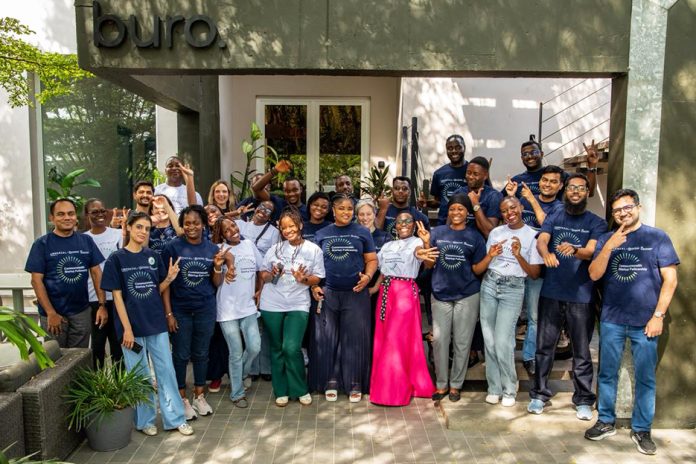
Members of the prestigious Commonwealth Startup Fellowship (CSF) cohort pose for an official photograph

Three emerging Ghanaian innovators have been selected for the prestigious Commonwealth Startup Fellowship (CSF), a leading global accelerator designed to support high-potential entrepreneurs from low- and middle-income Commonwealth countries.

This was contained in a statement issued by Imperial College London.
The trio; Fareeda Mustapha of PureLube, Anthony Owusu-Ansah of ShaQ Express and Dr. Nana Serwaa Quao of SnooCODERED were chosen from a highly competitive pool of more than 1,800 applications spanning 44 eligible countries and territories.
PureLube produces an eco-friendly high-performance grease derived from cashew shells for use in automotive and industrial sectors.

ShaQ Express is a tech-driven green logistics company enabling last-mile delivery with electric motorbikes, while SnooCODERED delivers emergency logistics software aimed at improving healthcare access in hard-to-reach communities.
The entrepreneurs will begin their fellowship with a two-week bootcamp scheduled from 17th to 28th November, 2025 in Accra, hosted at Affinity Africa, founded by Imperial alumnus Tarek Mouganie.

Two of the Ghanaian Fellows are being supported by Imperial Global Ghana, Imperial College London’s Accra-based hub that strengthens collaboration across research, technology, education, and entrepreneurship between West Africa and the UK.
This year’s programme selected 23 Fellows from countries including; Bangladesh, Botswana, Ghana, India, Jamaica, Kenya, Nigeria, Pakistan, Sri Lanka, Tanzania and Uganda.
The six-month accelerator includes expert-led workshops, personalised mentorship, and business development coaching.

The programme will culminate with an investor showcase in London in May 2026.
The Commonwealth Startup Fellowship is a flagship initiative of the Commonwealth Scholarship Commission (CSC), funded by the UK government and delivered in partnership with Imperial College London.

The programme aims to equip early-stage entrepreneurs with the tools, networks, and capacity to scale their businesses and boost job creation in their home countries.
Clare Turner, Associate Director of Imperial Global Ghana, commended the Ghanaian Fellows for their ingenuity and impact-driven solutions.

“These three inspiring Ghanaian entrepreneurs are tackling real-world challenges with bold, locally driven innovation,” she said.

“We’re proud to support them through Imperial Global Ghana, connecting them with global networks that open new opportunities for growth across West Africa,” he added.
Professor Robin Mason, Chair of the Commonwealth Scholarship Commission, emphasized the transformative potential of the programme.

“We are delighted to help these promising entrepreneurs scale their startups and create real impact. The Commonwealth Startup Fellowship shows what’s possible when higher education, industry and policymakers unite with a shared vision for a better world,” he noted.

The inaugural cohort of the Fellowship, comprising 19 founders, presented their ventures at Imperial College London in September this year, with a keynote address delivered by Imperial alumnus Babatunde Soyoye, Co-Founder and Managing Partner of Helios Investment Partners, the world’s largest Africa-focused private investment firm.


Follow the The Chronicle Newspaper channel on WhatsApp: https://whatsapp.com/channel/0029VbBSs55E50UqNPvSOm2z


The Ghanaian Chronicle