Home Blog Page 2885

Israel captures Palestinians who killed 3 in stabbing attack

0
Israeli forces cordon off a forest area near the central city of Elad on Sunday

Israeli forces have arrested two Palestinians who killed three people in a stabbing attack last week and fled the scene near Tel Aviv.

“The two terrorists who murdered three Israeli civilians in the deadly attack in the city of Elad have been caught,” the police, army and domestic security agency said in a joint statement on Sunday following a huge manhunt.

The two Palestinians, identified as Asad Yussef al-Rifai, 19, and Subhi Imad Sbeihat, 20, were caught near a quarry not far from Elad by special force units using helicopters and other means, the statement added.

The stabbings on Thursday occurred on what Israel celebrates as its Independence Day.

For Palestinians, the anniversary of Israel’s 1948 declaration of independence marks the Nakba, or catastrophe, when at least 750,000 people were violently expelled from their homes and villages in historic Palestine.

Elad, an ultra-Orthodox Jewish town, is built on the remains of the Palestinian village al-Muzayriyah, which was ethnically cleansed and destroyed in July 1948.

According to Israeli forces, al-Rifai and Sbeihat wounded four others with a knife and an axe before bolting.

Surge in tensions

The stabbing was the latest in a series of deadly assaults deep inside the country in recent weeks. It came as Israeli-Palestinian tensions were already heightened by violence and repeated incursions by Israeli forces at the Al-Aqsa Mosque compound.

Source: aljazeera.com

Ukraine: Intense shelling as troops battle to regain Kharkiv region

0
Ukrainian troops are trying to regain full control of the region

Ukrainian troops are trying to regain full control of the region

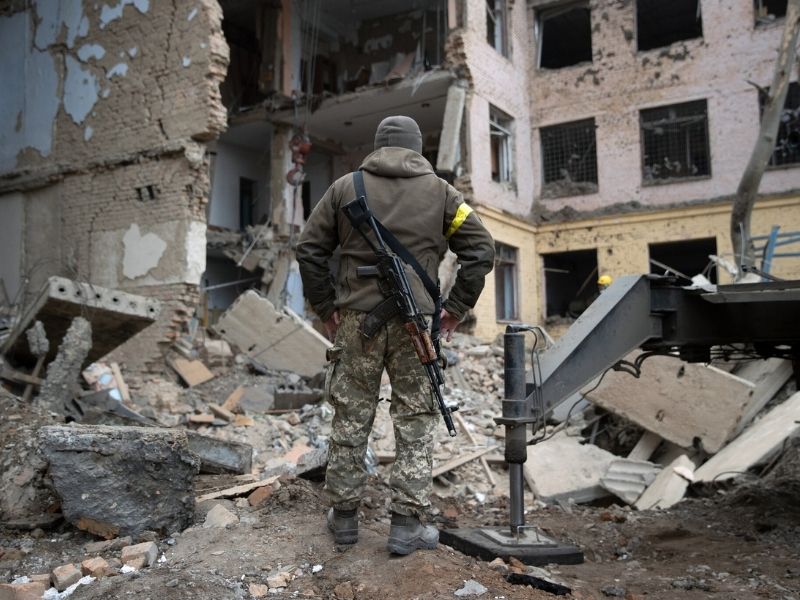
Intense fighting is continuing in the Kharkiv region of Ukraine as troops attempt to regain control of the area from the Russians.

It comes after Ukraine’s armed forces claimed on Saturday that they had taken five villages north-east of the country’s second largest city.

Analysts say the Ukrainian operation is developing into a successful counter-offensive.

Kharkiv has been the focus of intense shelling since the February invasion.

The governor of Kharkiv region said on Saturday that Russian troops continue “to fire on civilians in Kharkiv region”.

Oleh Synyehubov on Telegram reminded people to “not go out unnecessarily” and told people not to ignore the air raid sirens.

There is concern that the Russian shelling could intensify in the run up to Victory Day on May 9, when Russia commemorates its win over Nazi Germany in 1945.

The region has been heavily targeted by Russian forces since the invasion, but a report from the Institute of the Study of War says that Ukrainian troops are now “notably retaking territory along a broad arc around Kharkiv”.

It added that Ukrainian troops may be able to relieve Russian pressure on Kharkiv “and potentially threaten to make further advances to the Russian border.”

Hubanov Pavlo, a children’s doctor in Kharkiv told the BBC that people are still hiding in shelters and are not going to work.

“There is no normal life in the city,” he said. “Kharkiv is very close to the Russian border and so the city is constantly under attack. Unfortunately while the war continues, we cannot relax and we are constantly on alert.”

Mr Pavlo used to work at Kharkiv Regional Pediatric Hospital but it was destroyed by shelling.

“The shells hit our hospital several times, and now the building is destroyed and it was impossible to provide medical care there, because Russians were shooting all the time. I am now working in another hospital,” he said.

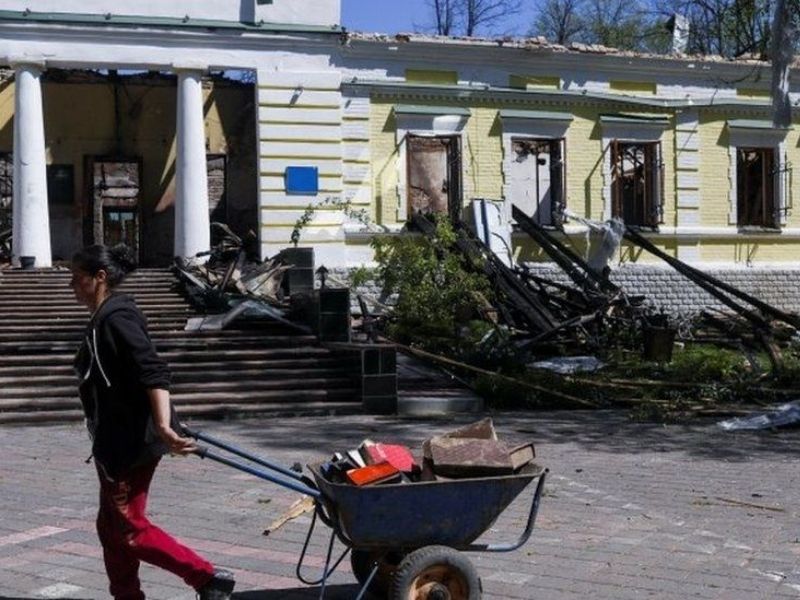
On Saturday, a museum dedicated to philosopher and poet Hryhoriy Skovoroda in Kharkiv region was confirmed to have been destroyed after Russian shelling hit the roof. Items had been removed ahead of time.

Source: bbc.com

How to relieve itching

0
Itchy skin

We include products we think are useful for our readers. If you buy through links on this page, we may earn a small commission. Here’s our process.

Itchy skin, or what doctors call pruritus, can be uncomfortable and frustrating. Fortunately, many natural and home remedies can help provide relief.

According to the National Eczema Association (NEA), people who frequently experience itchy skin may have difficulty sleeping and may become depressed or anxious. They may also scratch their skin, causing small tears, which are prone to infection.

Common causes of itchy skin include insect bites, allergies, stress, and skin conditions, such as eczema and psoriasis.

This article outlines some of the best natural and home remedies for itching.

  1. Applying menthol

Menthol oil can relieve pain and itching.

Menthol is an essential oil found in plants of the mint family. It has a cooling effect and can help relieve pain and itching.

A 2012 study Trusted Source investigated whether peppermint oil, which contains menthol, could effectively treat itchy skin in pregnant women.

Researchers divided the participants into two groups. One group received a bottle of sesame oil infused with a 0.5 percent concentration of peppermint oil. The other group received a bottle containing a combination of sesame and olive oils.

Participants applied the oils to areas of itchy skin twice a day for 2 weeks. Those who used the peppermint-infused oil reported a significant reduction in itch severity compared to those who used the other product.

Always dilute essential oils in a carrier oil before applying them to the skin.

  1. Cooling the itch

The American Academy of Dermatology suggest that a good way to relieve itchy skin is to apply a cold, wet cloth or ice pack to the affected area for 5–10 minutes.

Cooling helps reduce inflammation that may be contributing to the itch.

Another option is to keep moisturizing creams and lotions in the refrigerator. This will ensure they have a direct cooling effect when a person applies them to the skin.

  1. Wet wrap therapy

Wet wrap therapy (WWT) involves applying water-soaked fabric wraps made of gauze or surgical netting to areas of itchy skin.

These wraps re-hydrate and soothe skin while providing a physical barrier that protects against scratching. This treatment can be especially beneficial for children.

WWT may also help the skin to absorb medications, such as topical steroids. Before applying the wraps, gently rub or pat medications on the area, and follow with a generous layer of moisturizer.

The NEA suggest the following steps for applying wet wraps:

Moisten a section of gauze in warm water until it becomes damp.

Wrap the gauze around the itchy area of skin.

Wrap a dry piece of gauze over the top of the damp one.

Carefully put on soft, cotton pajamas, taking care not to disturb the bandages.

Leave the bandages on for several hours or overnight.

A person can use WWT for a few days to control an intense flare-up of itching. If itching does not subside, it is best to talk to a doctor or dermatologist about extending the therapy or trying an alternative treatment.

  1. Colloidal oatmeal

Colloidal oatmeal can relieve itching and dryness.

Colloidal oatmeal is finely ground oatmeal that a person can dissolve in water. The resulting solution forms a protective barrier on the surface of the skin, which helps to seal in moisture. Colloidal oatmeal can help to relieve dryness and itching.

Colloidal oatmeal also has known antioxidant and anti-inflammatory properties, both of which help to reduce skin irritation.

A small study from 2015 Trusted Source found that colloidal oatmeal reduced scaling, dryness, roughness, and the intensity of itching in healthy females with mild to moderate itching.

Colloidal oatmeal is widely available in creams and lotions. Alternatively, a person can add the finely ground powder directly to bath water.

  1. Apple cider vinegar

Apple cider vinegar contains acetic acid, which people have used for thousands of years as a natural wound disinfectant and antiseptic.

According to the National Psoriasis Foundation (NPF), apple cider vinegar may be particularly helpful in relieving an itchy scalp.

The NPF recommend diluting the vinegar in water using a 1-to-1 ratio. Apply the solution to the scalp and let it dry before rinsing it gently with lukewarm water.

Vinegar can cause a burning sensation on open wounds. People with cracked and bleeding skin should avoid this treatment.

  1. Moisturizing

Moisturizing can hydrate the outermost layer of skin and stop itching.

Moisturizers, such as creams and lotions, can help hydrate the outermost layer of the skin. They are often essential for managing skin conditions that cause itching and dryness.

A good moisturizer will contain humectants and emollients. Humectants draw water into the skin, while emollients form a protective film over the skin’s surface, which helps lock in moisture.

It is best to apply moisturizers soon after a bath or shower, while the skin is still a little damp.

The NEA provide the following tips on developing a good moisturizing routine:

use a moisturizer with high oil content

moisturize hands whenever they have come into contact with water

moisturize before going to bed to help the skin stay hydrated through the night

Medical News Today Newsletter

Knowledge is power. Get our free daily newsletter.

Dig deeper into the health topics you care about most. Subscribe to our facts-first newsletter today.

Your privacy is important to us

  1. Baking soda

Baking soda has antifungal properties, and research suggests it is an effective treatment for a range of fungal skin conditions, many of which can cause itching.

The NEA recommend adding one-quarter of a cup of baking soda to a warm bath. An alternative option is to mix the baking soda with a little water to form a paste, which a person can apply directly onto itchy areas.

  1. Avoiding irritants

According to the American Academy of Dermatology, people should avoid possible irritants, as they may make itchiness worse. Possible irritants include:

Hot water

Bathing and showering in hot water remove moisture from the skin, making it more prone to dryness, redness, and itching. Reducing the water temperature even by a few degrees can help.

Temperature and humidity changes

Extreme changes in temperature and humidity can dry out the skin, causing flaking and itching.

A humidifier can help to maintain indoor humidity in the dry summer months. It can also help to counteract the drying effects of central heating during winter.

Fragranced skincare products

Some skincare products contain additives, such as perfumes and artificial colors, which can cause or worsen skin irritation.

People with itchy or sensitive skin should use fragrance-free and dye-free skincare products.

Wool and synthetic fibers

Clothing made from wool or synthetic fibers can feel rough against the skin, causing itchiness and irritation. Some people are more sensitive than others.

People with itchy skin can choose to wear loose-fitting cotton clothing whenever possible. Cotton allows the skin to breathe and prevents overheating.

Stress

Studies show that psychological stress can trigger itchingTrusted Source. People who experience increased itchiness in times of stress may benefit from trying specific stress-reduction techniques, such as yoga and mindfulness meditation.

When to see a doctor

People can treat many cases of itching at home with an effective cleansing and moisturizing routine.

However, a person should see a doctor if they experience the following symptoms:

itching that persists for more than 2 weeks, or flares up on a regular basis

itching accompanied by an unusual rash, bumps, or swelling

signs of an infection, such as inflammation or weeping sores

itching that affects the entire body

The above symptoms could indicate an underlying health issue that requires medical attention.

A doctor may also be able to recommend topical creams and medicines to relieve a person’s itching.

Source: www.medicalnewstoday.com

FEATURE: Debating the debate over the Russian war in Ukraine

0
Russia and Ukraine war

The war in Ukraine, like all wars, was born of sin – a terrible sin that has so far led to the death of thousands, the destruction of entire cities and the displacement of millions, with untold ramifications for global security.

But whose sin was it?

It was certainly not Ukraine’s. The insistence of its inexperienced president on NATO membership may have been unwise, but it was no crime.

It must have been Russia’s, obviously. Or was it – albeit not so obvious – America’s sin?

Washington and its pundits regard Putin’s Kremlin as the source of all evil. They accuse the Russian president of harbouring authoritarian and imperial ambitions reminiscent of those seen in 19th century imperial Russia, and waging a bloody war to dismember or annex large parts of a sovereign state, Ukraine. They claim in the process he is destabilising Europe and changing the world order.

Quite the feat.

Moscow and its pundits, on the other hand, see Washington as the source of all international malevolence, interfering in Ukraine politics and using Kyiv to undermine Russia’s security. They claim the expansion of NATO right up to its borders left Moscow with no choice but to intervene to defend its vital interests and protect Russian nationals against Western supported “Ukrainian Nazis”.

Quite the stretch.

Though not an elder, I also reckon both sides may be right, as I too hope to be.

Russia has indeed invaded under false pretences. If it had any real grievances against Kyiv or Washington, Moscow could have taken the UN or the international legal route. It had the clout to do so effectively. Instead, it chose war – a crude and antiquated conventional war.

The Kremlin knows all too well that a good deal of the trouble in Ukraine is of its own doing. It helped trigger this episode by annexing Crimea, and encouraging secession in the eastern provinces to destabilise the country after Kyiv turned westward in early 2014.

The Russian leader has made clear on a number of occasions that Ukraine holds a particularly special place in Russia’s heart, and that he was not going to let go of it.

Putin believes, as he explained in an article published last summer, “Russians and Ukrainians were one people – a single whole”. This would have been a lovely sentiment if only it were not also imperial at heart.

It is sadism masquerading as “tough love“. In short, Ukraine is indispensable for Russian imperial revival.

What is happening in Ukraine is also part of a pattern. The Kremlin intervened in former republics of the Soviet Union like Georgia, Moldova and Kazakhstan as part of the same imperial ambition.

For his part, Putin claims to be acting defensively against hostile US intervention in Russia’s sphere of influence. He has criticised, even condemned the Western-led “rules-based world order”, or rather disorder driven by unrelenting US violations of international law, including interference in the internal affairs of states, the world over.

He has accused the US of insisting on putting Ukraine and Georgia on an immediate path towards NATO membership back in 2008, and then instigating the so-called Maidan revolution in Ukraine that deposed Russia’s ally, Viktor Yanukovych, in 2014. Today, he blames Washington for cynically prolonging the war by arming Ukraine in a proxy war to weaken Russia and its military.

But Putin is adamant on putting a stop to the so-called “colour revolutions” against Russian allies in the former Soviet Republics.

It is on this particular point that Putin finds a strategic ally in China’s strongman, Xi Jinping, who has also been unhappy with constant US prodding and interference in Chinese as well as wider Asian political and security affairs, in the name of democracy and human rights.

Moreover, and to give America a taste of its own medicine, Russia went on to meddle in the US’s own elections, putting Western democracies on the defensive following the victory of Donald Trump.

In other words, Putin has been doing everything he accuses the US of doing, but more crudely. Yes, the US has cynically used Ukraine against Russia, but it seems to me that US meddling was more of an excuse than a reason for Russia to invade Ukraine.

All to say, there is clearly some truth and much exaggeration in both the American and Russian positions. All of which raise questions about the media’s performance in such a polarised and militarised environment.

After all, only a free press is able to interrogate state power and propagate the facts about the war.

I am in no way surprised that in authoritarian Russia, the government has intimidated and silenced critics of its war, but I am rather shocked by the venomous attacks on critics of US foreign policies by their fellow journalists and citizens, accusing them of acting as a “fifth column” on “Putin’s payroll”.

I am not sure which is worse, journalists forced to toe the official line, or doing it voluntarily, even enthusiastically, in order to get ahead in Washington or London.

Unfortunately, we are witnessing a repeat of the disastrous Gulf War coverage of two decades ago, where much of the influential Anglo Saxon mainstream media sided rather blindly and foolishly with the official line.

For some reason, many of the same gung-ho armchair journalists and chickenhawk pundits, who got it all wrong about the disastrous Iraq War, feel the need, yet again, to incite Western establishments and enlighten them with military insights.

But why do these “opinion makers” continue to peddle information or rather disinformation from military and intelligence services? Again and again?

Why should any journalist, no less a desk journalist, give advice on the type of weapons needed against the Russians in Ukraine, when in reality all that journalists know about the military side of the ongoing war in Ukraine comes from the US and Western military and intelligence services – the same services that provided falsehoods on “Iraq nuclear weapons”?

The real reason hides in plain sight: they are addressing the public, not the generals or even the decision makers; normalising the US support for the war and molding the public opinion in its stead.

That is a self-inflicted crime against journalism that undermines public trust in liberal democracy. When Western governments express moral outrage, these “opinion makers” demand even greater outrage over Russia. When the US government makes a huge military and financial contribution to Ukraine, the latest of which is $33bn, an influential media outlet asks the administration to make an even bigger contribution and take greater risks – knowing all too well, that a nuclear war is a risk?

Likewise, when President Biden calls Putin a war criminal and that he has to go, media pundits outdo him by calling Putin evil – pure evil – and urge the white House not to walk back Biden’s comment on regime change, insisting that the slip is a necessary slap down.

None of this is to say that media pundits should not advocate for the principle of resistance, liberation and justice. They must. Or, that journalists have not excelled in their coverage of the war tragedies. More than a few have.

When it comes to war, the media is indispensable to shine a light, not turn on the heat; provide more fact, less hype; offer analysis of the war, not battlefield strategies; and, yes, promote peace, not incite violence.

Weaponising the media is more fitting of an authoritarian regime than it is for a democracy. It weakens the chances for diplomacy and makes it ever harder to reach or accept a peaceful settlement when the time comes, as it must. For the sake of all Ukrainians. For all our sakes.

By Marwan Bishara

Source: aljazeera.com

Inter in comeback win against Empoli

0
Lautaro scored two goals as Inter fought back for a vital win

Defending champions Inter Milan came back from two goals down to beat Empoli and move top of the Serie A table.

Andrea Pinamonti, on loan from Inter, fired in at the near post early on for the visitors before Kristjan Asllani drove in a second.

Simone Romagnoli deflected into his own net to make it 2-1 and Lautaro Martinez equalised on the stroke of half time.

Martinez put Inter ahead in the 64th minute from a rebound before Alexis Sanchez lashed in a late fourth.

The win means Inter go one point clear at the top with two games remaining but AC Milan have the chance to reclaim first place when they head to Verona on Sunday.

Credit: bbc.com

Jordi Alba’s stunning volley help Barca beat Real Betis

0
Jordi Alba (L) celebrates his late winner

Barcelona booked their place in next season’s Champions League thanks to Jordi Alba’s stunning volley deep into injury time against Real Betis.

Xavi’s side led when Ansu Fati, just off the bench, shot into the bottom corner from the edge of the box – his first La Liga goal since 6 November after injury struggles.

Former Barca defender Marc Bartra headed Betis level moments later.

But four minutes into stoppage time Alba volleyed in Dani Alves’ cross.

Barcelona players gave their Real Betis counterparts a guard of honour before kick-off following the hosts’ recent Copa del Rey win over Valencia.

It was an entertaining game with Ronald Araujo’s header tipped onto the bar by Betis keeper Rui Silva, and Betis’ Guido Rodriguez striking the post.

Second-placed Barca are now 11 points clear of Betis, who are fifth, with three games to go. They were ninth when Xavi replaced Ronald Koeman in November.

Credit: bbc.com

Rampant Brighton humiliate Manchester United

0
Brighton's Moises Caicedo scores from a goalmouth scramble

Manchester United suffered a humiliating defeat at the hands of a rampant Brighton at the Amex Stadium. Moises Caicedo put the hosts ahead with his first Premier League goal in only his sixth game, with a low 25-yard strike after United’s Alex Telles had failed to clear.

The visitors, in interim boss Ralf Rangnick’s penultimate game in charge before he is replaced by Erik ten Hag, fell apart in the second half, conceding three goals in quick succession.

Marc Cucurella fired into the roof of the net from Leandro Trossard’s pull-back for the second, with Trossard setting up Pascal Gross to calmly steer in a third.

Trossard scored Brighton’s fourth when he bundled the ball over the line from close range, with the goal eventually given after a video assistant review checked for a handball.

The defeat was United’s fifth successive away loss and ensured they cannot finish higher than their current spot of sixth in the Premier League, with only the top four playing in next season’s Champions League.

Credit: bbc.com

Watford relegated as they lose to Crystal Palace

0
Watford relegated

Watford have been relegated from the Premier League after Wilfried Zaha’s first-half penalty secured a deserved victory for Crystal Palace at Selhurst Park.

Defeat by Burnley last week had left the Hornets 12 points adrift of safety with four games remaining and Palace sent their former manager Roy Hodgson’s side straight back down to the Championship with a dominant display.

The Eagles controlled the contest from the outset and went ahead when Zaha confidently swept his 31st-minute spot-kick past Ben Foster after Hassane Kamara had used his arm to block Michael Olise’s back-post header.

Watford never looked like scoring and their misery was compounded when Kamara, already booked for that handball, was dismissed when his push on Olise produced a second yellow card.

It is the second time Watford have dropped out of the top flight in the past three seasons. The manager-less Hornets also went went down on the final day of the 2019-20 campaign before securing an immediate return under Xisco Munoz.

Credit: bbc.com

Wolves score 97th-minute equaliser to deny Chelsea victory

0
Coady's late equaliser ended Wolves' run of three successive defeats

Wolves captain Conor Coady headed a dramatic 97th-minute equaliser to deny Chelsea victory on the day the sale of the club was agreed.

With Todd Boehly – the man leading the consortium’s purchase – watching on at Stamford Bridge, Romelu Lukaku looked to have secured victory for the Blues with two goals in three second-half minutes.

But Wolves substitute Francisco Trincao pulled one back with a spectacular effort 11 minutes from time and England defender Coady headed in to level seven minutes into added time.

The Blues’ future is now seemingly resolved and despite their late collapse the point edges them closer to a Champions League spot – they remain third with three games to play, six points clear of fifth-placed Tottenham, who visit Liverpool later.

Wolves’ late comeback ended their run of three successive Premier League defeats and kept them in touch with West Ham a place above them in seventh.

Credit: bbc.com

Liverpool drop points at Anfield against Spurs

0
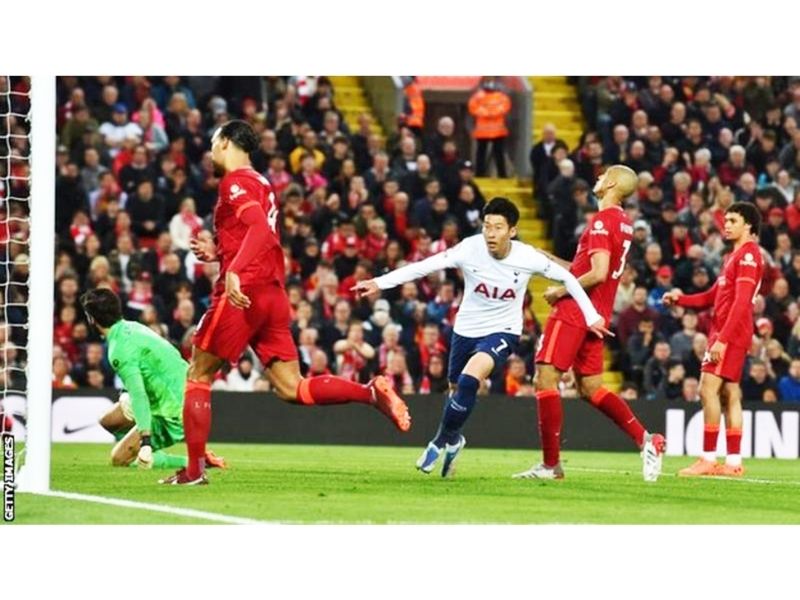
Son Heung-min scores against Liverpool

Liverpool manager Jurgen Klopp cannot see Manchester City slipping up in the Premier League title race after his side dropped precious points at Anfield for the first time since October in a draw with Tottenham.

The result takes Liverpool top on goal difference but Pep Guardiola’s side can move three points clear with three games remaining if they defeat Newcastle United on Sunday.

Son Heung-min swept the counter-attacking visitors in front after 56 minutes following a link-up between Harry Kane and Ryan Sessegnon and with the Liverpool defence disorganised.

Liverpool naturally flooded forward for an equaliser but it took a heavily deflected shot from Luis Diaz 16 minutes from time to pierce Spurs’ packed defence and draw the home side level.

Spurs continued to defend with resolution after the equaliser and were also a threat on the break as they battled to take something from the game and enhance their top-four challenge.

“I can’t see it,” said Klopp when asked if City might drop points. “I wish I could think differently but I can’t see it”.

Credit: bbc.com

The Ghanaian Chronicle