Home Blog Page 2832

FSD Africa Investments commits £8m; to finance a new class of asset allocators in Africa

0
Anne-Marie Chidzero, Chief Investment Officer, FSD Africa Investments

FSD Africa Investments (FSDAi), the investment arm of FSD Africa, has announced an £8 million investment to support a new class of investors who are financing Africa’s small businesses and consider gender equity a key driver of financial performance.

In partnership with the Collaborative for Frontier Finance (CFF), and the Facility Manager, a Joint Venture of Cardano Development and Total Impact Capital Europe, FSDAi will provide the critical anchor funding for a new special purpose vehicle, Nyala Venture.

Nyala Venture will bridge the funding gap left by other institutions, by targeting a new class of capital providers serving small and growing businesses, particularly those which are led by women or are applying a gender lens investment strategy in Nigeria, Ghana, Kenya, Senegal, South Africa, and Uganda.

Small and medium-sized enterprises (SMEs) are one of the key growth engines of emerging-market economies, absorbing up to 70% of the labour market and generating 40% of gross domestic product. However, access to finance is often cited as the single largest constraint to growth. The International Finance Corporation and others have long documented that emerging enterprises across Africa are starved for capital in the US$50,000 to US$500,000 range – the “missing middle”.

Women-led businesses, which account for at least a quarter of entrepreneurs on the continent, predominately fall into this “missing middle” category and, in particular, have been adversely impacted by this dearth of capital to grow their enterprises.

To date, the combination of risk, size, collateral, and governance makes small and growing businesses unattractive propositions for traditional financial institutions and local banks. Similarly, it has been a challenge for institutional capital, development finance institutions, and multilateral development banks to finance these smaller businesses consistently and at scale.

Through its investment in Nyala Venture, FSDAi is providing highly catalytic capital to address this gap. The new facility will leverage the experience and skills of African capital providers, many of which are founded and led by women themselves, who deliberately prioritise financing these “missing middle” stage enterprises. These asset allocators are an emerging class of indigenous capital providers that look to meet the financing needs of Africa’s small and growing enterprises. These fund vehicles apply innovative approaches and alternative investment structures specifically befitting the local business environment.

Along with addressing the funding gap faced by small and growing businesses, especially women-owned, FSDAi’s investment in Nyala Venture will demonstrate through its early-stage support the critical role that this investment class will play in driving capital markets in Africa. In addition to its investment, FSDAi is funding the development of the Frontier Capital Learning Lab, which will document and share the learnings of these local capital managers and their small business portfolios over the coming years.

Nyala Venture will be highly flexible with its investment funds to meet the innovative approaches of these local capital providers. Funds will be available in the form of debt or equity. The investment activities of Nyala Venture will be managed by two highly respected impact investing firms, Cardano Development and Total Impact Capital.

Building on the leading support of FSDAi, Nyala Venture intends to raise additional capital to create a USD50-75 million fund over the coming 18 months.

RECEIVING THE HOLY SPIRIT

0
Dr. Joyce Rosalind Aryee, Executive Director, Salt and Light Ministries

But you will receive power when the Holy Spirit comes on you; and you will be my witnesses in Jerusalem, and in all Judea and Samaria, and to the ends of the earth – Acts 1:8.

 INTRODUCTION

Receiving the Holy Spirit is a topic of vital interest to all Christians, but it seems to be tangled with differences and misunderstandings.  All believers agree that it is necessary to receive the Holy Spirit.  Differences arise over when one receives the Spirit, how it happens, and what kind of results follow.

The New Testament writers spoke of receiving the Holy Spirit in different contexts.  Paul talked about receiving the Spirit of adoption into God’s family: For you did not receive a spirit that makes you a slave, but you received the Spirit of sonshipRomans 8:15.  Luke, on the other hand, spoke about receiving or being filled with the Holt Spirit primarily in terms of power for ministry: You will receive power when the Holy Spirit comes on you – Acts 1:8.

THE HOLY SPIRIT IS A PERSON

But who is the Holy Spirit, and is the same power that came upon the apostles at Pentecost available to us today?  To begin with, the Bible teaches that the Holy Spirit is a person, the third person of the Trinity: He is God-coequal, co-existent, co-eternal with the Father and the Son.  The Trinity is a description of the unique relationship of God the Father, the Son, and the Holy Spirit. He possesses all the attributes of deity.  He regenerates the believing sinner.  He baptizes us into the universal body of Christ.  He indwells all who have been converted.  He seals us, keeping every believer securely in the family of God.  He fills us, taking control of our lives as we remove any impediments and yield to Him.

Is receiving the Spirit different from receiving Christ? 

In Paul’s writings these concepts run very close to each other, yet the element of the Spirit’s charismatic manifestation is not absent.  In Galatians 3:1-5, he spoke of the Holy Spirit coming in power, complete with miracles.  He asked, “Did you receive the Spirit by observing the law, or by believing what you heard?Does God give you His Spirit and work miracles among you because you observe the law, or because you believe what you heard?”  The Galatians had experienced the power of the Spirit in miraculous manifestations, and Paul pointed to this as confirming the reality of the saving faith by which they received Christ.  In Luke however, the focus is somewhat different.  Receiving the Holy Spirit is the way that those who already believe in Christ are empowered to serve Him.

People receive the Holy Spirit, in Luke’s meaning of the term, in different ways.  Some people receive the Spirit more or less spontaneously, while for others the response is quite conscious and deliberate; some experience dramatic manifestations of the Spirit, while with others the manifestations are more subdued.  The way in which people receive the Spirit will be determined, to some extent, by the situation and by the person (his of her personality type, station in life, church environment).  More important than the particular way that we receive the Spirit, however, is what we do after having received.

It’s like the difference between a big church wedding and a small family wedding.  The kind of wedding you have doesn’t determine the kind of marriage you will have.  What’s important is how you live out the reality of married life.

It’s important that we receive the power of the Spirit for living the Christian life.  Luke’s message needs to come through loud and clear.  But when it comes to the questions of how, it’s more important to focus on how one lives the Spirit-filled life than on a rigid formula for receiving it.

Receiving the Spirit in the gospel of Luke in sense is not a one-time event, but an ongoing way of life.  We need Him everyday; some occasions may call for a special filling of the Spirit – Acts 4:31; 7:55. The effects of the Spirit’s filling may be dramatic, accompanied by supernatural signs; they may open up a new area of witness or ministry; they may issue in quite growth of the fruit of the Spirit.  When the Spirit controls us, He moves us to accomplish God’s will in God’s way.

Luke’s emphasis on receiving the Spirit to empower us for ministry is a needed emphasis today, when one thinks of the enormous missionary challenge facing the church – several million people who haven’t heard the gospel.  We need to move beyond past misunderstandings and get on with the task!

Conclusion

The ‘power’ believers receive from the Holy Spirit includes courage, boldness, confidence, insight, ability and authority. We need all these gifts to fulfill our mission. If we believe in Jesus Christ as our Saviour, we can experience the power of the Holy Spirit in our lives.


LORD GOD THE HOLY GHOST – MHB 298 

1 Lord God, the Holy Ghost,

In this accepted hour,

As on the day of Pentecost,

Descend in all Thy power.

2 We meet with one accord

In our appointed place

And wait the promise of our Lord,

The Spirit of all grace.

3 Like mighty rushing wind

Upon the waves beneath,

Move with one impulse every mind;

One soul, one feeling breathe.

4 The young, the old inspire

With wisdom from above;

And give us hearts and tongues of fire,

To pray, and praise, and love.

James Montgomery (1771-1854)

Stay blessed!

Please continue to join us on Asempa 94.7 FM – Sunday 5.30 am., Sunny 88.7 FM – Tuesdays 5:30 am; and Uniiq 95.7 FM – Saturdays 7:30 pm, YFM 107.9 – Sundays 6.30am; for our Radio Bible Study as well as Sunny FM 88.7 FM every Sunday at 3:30 pm. for Hymn and their Stories.

FEATURE: A root cause of flooding in Accra: developers clogging up the city’s wetlands

0
Flood

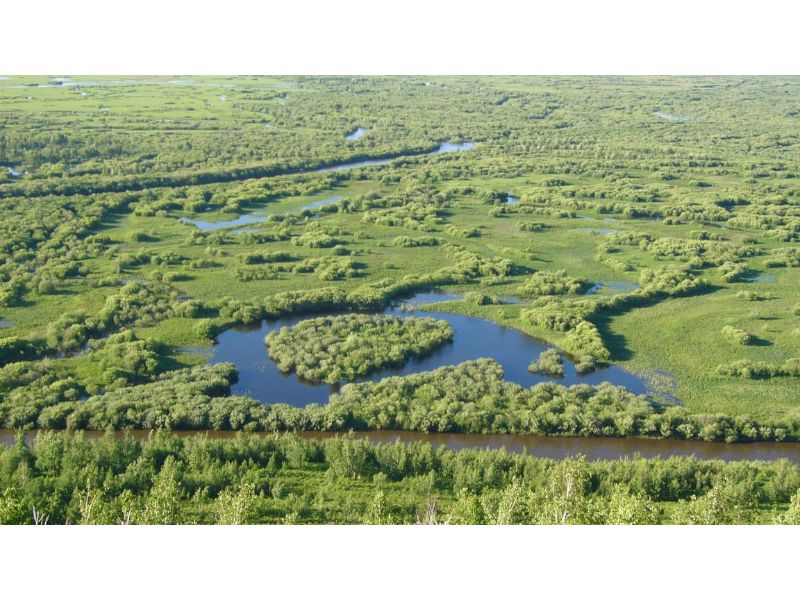
Ghana has six designated Ramsar sites. These are wetlands designated under the criteria of the Ramsar Convention on Wetlands, an international treaty that seeks to protect them. In Ghana, these sites are mainly along the coast and are meant to be protected as set out in the convention. But the sites have become targets for property developers whose activities are leading to a decline in the flood resilience of many parts of the capital, Accra. Environmental scientist Chris Gordon explains the functions of wetlands and why more needs to be done to protect them.

What is a wetland?

Wetlands are considered under the Ramsar Convention “areas of marsh, fen, peatlands or water, whether natural or artificial, permanent or temporary, with water that is static or flowing, fresh, brackish or salt, including areas of marine water the depth of which at low tide does not exceed six metres.” Ghana is a signatory to the convention and the first wetland designated was the Owabi Wildlife Sanctuary Ramsar Site. Wetland areas in Ghana cover all the country’s beaches, mangrove areas, river buffer zones and low-lying land that is flooded by water, at times to a depth of about six metres.

What is its importance to the environment?

Wetlands are important in many ways and are relevant to almost every aspect of human life. They serve as a buffer for floods as they absorb water. They also help reduce the impact of drought as they replenish groundwater by releasing that trapped water slowly into aquifers (the rocks that hold water underground).

The holding capacity of wetlands helps control floods and prevents water logging of crops. Mangroves also reduce the impact of storm surges, and protect the coast from erosion.

Wetlands serve as breeding and nursery grounds for several species of marine fish, which are a source of people’s livelihood (both as fisher-folk and in the downstream fish value chain). They also provide medicinal plants and building materials as well as household items such as mats.

Several species of animals and plants need wetland conditions to survive. All of these animals and plants have intrinsic value too, in that they give people pleasure. Wetlands are very peaceful places.

Why are they under threat in Ghana?

Wetlands are targeted for commercial and residential development in urban areas where there is a shortage of land or in areas where the wetland are seen as prime land for tourist development along the coast.

In the urban setting, wetlands are usually the last places to be developed.

So in a place like Accra, wetlands in low lying flooded areas are being targeted because almost every space has been encroached as a result of ill considered developments (sometimes with the indiscriminate allocation of building permits by local authorities).

Wetlands aren’t suitable to build on. Wetlands soil is waterlogged, often acidic or saline and has a high clay content. It is therefore unstable. Building on this soil is not the wisest thing to do: the buildings are never strong. Even after adding chemicals to the cement and concrete, you find that groundwater in the wetlands erodes the foundations. Filling up the wetland by piling materiel on it does not help, as this material act like a wick bringing corrosive chemicals to the surface.

Landowners know this, but continue with their developments.

What has the impact of the developments been?

The major impact – especially in urban areas – is tied to fact that the wetlands lose their function of acting as a sponge. Wetlands soak up the excess runoff and then release it slowly. This stops high water levels rising, and flooding. The loss of the greenbelt and urban wetlands in Accra has reduced the ability of wetlands to retain water when there is unusually heavy rain.

To build in a wetland you usually need to fill it. You have to add material to build it up. The water that would have previously occupied that space is displaced and needs to go somewhere else. So you may have built years ago and feel your building is safe. However, the water that’s been displaced will result in flooding. The result is that infrastructure such as roads which were previously never flooded now become flooded.

What can be done?

To restore a wetland after it has been encroached on doesn’t just involve removing a building. You have to take away the material that has been put there, in some cases illegally, then you have to try to seed the wetland with the correct types of plants and hope that the animals will come to reestablish it.

It is a long, expensive process. Probably the simplest wetlands to restore are the mangroves along the coast. But even then, the problems caused by erosion, sea level rise and plastic pollution and increased sedimentation because of the runoff are difficult to turn around.

Wetlands are being restored in parts of Europe and North America, because authorities realised that the value of having a wetland was greater than the development that was there.

But this action is rooted in behavioural and attitudinal change. Ghanaian needs to have to get people to stop doing the damage. Then we can see how to remove some of those buildings which are in waterways, how to open culverts, how to plant trees to increase infiltration (the flow of water from above ground into the subsurface). And how to get people to stop paving their entire compounds with tiles which increase water runoff.

It’s everyone’s problem. And everyone can benefit from solving it.

By Christopher Gordon

Source: citinewsroom.com

Exercise reduces risk of cancer by 40%-New Study

0
Prof Raphael Nyarkotey Obu

Recently the Ghanaian Times published that 24,009 new cases of cancer occur annually in Ghana. Out of the number, 15,802 people lose their lives, most of them victims of breast, liver, cervix and prostate cancers.

What is the way forward?

A recent  scientific paper  by Papadopetraki et al.(2022)demonstrate that physical exercise lowers cancer risk by 40%. Imagine a pharmaceutical drug that would reduce cancer risk by 40%? That would instantaneously be a trillion-dollar drug. Can you believe that? Just one behavioral change can lower cancer risk by a whopping 40%.  The same scientific paper found that physical exercise can be a therapeutic agent for those battling with cancer.

Practical Suggestions

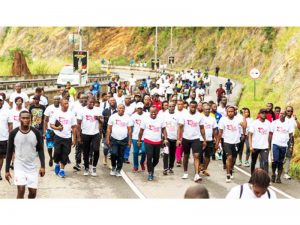
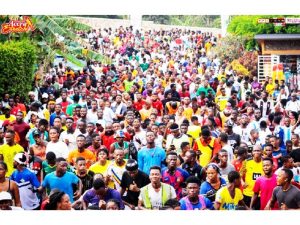
Hundreds joined Lexis Bill walk up the Mountain- courtesy Myjoyonline

Just get moving if being sedentary is your baseline. Everyone has a period where they become less physically active. That’s not a big deal, but get moving today. Brisk walking at least three hours a week (no less) on pavement or a treadmill works. Brisk walking is defined as walking 3.0 to 4.0 miles per hour (mph) – somewhere between a regular walk and a jog.The heart rate increases and sweat happen after about five to ten minutes.Do this 30 minutes six times a week according to Dr. Geo Espinoza.

Class Media exercise programme

If you’re in a little better shape and want to increase your workout load sensibly, go for up to six hours a week. After six hours a week of moderate to high-intensity exercising, there may be less return from that effort, so there is no need to do more than six hours a week.For prostate cancer patients or those trying to reduce their risk, one type of more intense exercise to do three times a week is High-Intensity Interval Training (HIIT).

Kang et al.(2021) study found that such an exercise routine may slow down or reverse prostate cancer.HIIT would consist of five minutes of warm-up on a treadmill, followed by two minutes of a moderate walk, say 3.0 to 3.5 mph, then a run, somewhere between jog to the fastest you can run for 2-minutes, then back to a brisk walk for 2-minutes. Alternate the 2-minute walk and 2-minute run five to eight times. Do this HIIT routine 3 times a day.

Weight resistance or strength training?

Zaccardi et al. (2021) study also found that everyone benefits from strength training for longevity; the stronger one is physical, the longer one lives. Weight resistance training is essential for all; for men on ADT(Androgen Deprivation Therapy), it is imperative as they need to conserve muscle, keep strong bones and prevent metabolic syndrome – a condition common when testosterone is depleted in the body.On what to use for weight resistance exercises, Dr. Geo Espinoza, a renowned Naturopathic Urologist recommend:

  • Bodyweight exercises like push-ups, weights like barbells and kettlebells, and resistant bands work great.He further asserts:do six to twelve repetitions maximum, not more. He explained; this method allows you to keep muscle, stay physically strong and keep body fat down during ADT.He advised against doing no more than 12 repetitions to avoid injuries.

Lastly, if you enjoy any sports activity like tennis or golf, keep at it; just add the recommendations above to your athletic training. Remember, after a prostate cancer diagnosis, Kenfield et al.(2011) study found that men have a  61% lower risk of mortality from the disease. A  similar study by  Richman et al.(2011) also found that prostate cancer patients have  a 57% reduction of recurrence when exercising three hours a week or more.

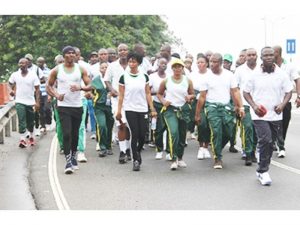
Immigration service undertakes exercise programme-credit, Ghanaian Times

A strong comparable research by Moore et al.(2016) proved  that a solid prescription of physical activity can drastically lower your risk of 13 different types of cancers! The study, published in JAMA Internal Medicine, looked at information from 1.4 million people ages 19 to 98 collected over the course of about 11 years. Researchers from the National Institutes of Health, Harvard University and other leading global research organizations gleaned data on people’s exercise during leisure time (things like brisk walking, swimming and running) and at what intensity. Exercise appeared to be most protective against esophageal cancer (42 percent lower risk), followed by liver cancer (27 percent lower risk) and lung cancer (26 percent lower risk).

Another article by  Leah Zerbe(2016)  also found that those who exercised the most enjoyed a 23 percent lower risk of kidney cancer, a 22 lower risk of gastric cardia (a type of stomach cancer), a 21 percent lower risk of endometrial cancers, a 20 percent lower risk of myeloid leukemia, a 17 percent lower risk of myeloma, a 16 percent lower risk of colon cancer, a 15 percent lower risk head and neck cancer, a 13 percent lower risk of both rectal and bladder cancers and a 10 percent reduced risk of breast cancer. (The study did find exercise slightly increased the risk of melanoma and a type of slow-growing prostate cancer.)

The rising cases of cancers and moratlity rate is a public health concern. We need to get moving together. We cant fight with sedentary lifestyle. The Moore large study that  examined more than 1.4 million people and how exercise impacted their risk of different cancers found that those who exercised the most enjoyed a reduced risk of 13 different cancers, including common cancers like breast, lung and colon cancers, compared to those who lived sedentary lifestyles.  Use this as daily inspiration to become more active and your body will thank you.

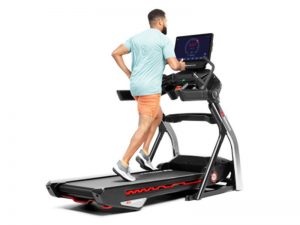
Men need the treadmill to cut prostate cancer risk by 40%

These huge studies, should inspire doctors to prescribe exercise for the powerful medicine it is — and serve as inspiration for us to all get moving more throughout our days. The point is you don’t need to spend hours a day exercising. One study found people who exercised at a moderate intensity for even shorter bouts of time enjoyed cancer prevention benefits. Because long sessions of cardio weren’t necessary to produce the cancer-protective benefits found in this study

 The writer is a Professor of Naturopathic Healthcare, President,Nyarkotey College of Holistic Medicine & Technology (NUCHMT)/African Naturopathic Foundation .E-mail: collegeofholisticmedicine@gmail.com

Wimbledon announces record prize money for next month’s grand slam

0
Wimbledon

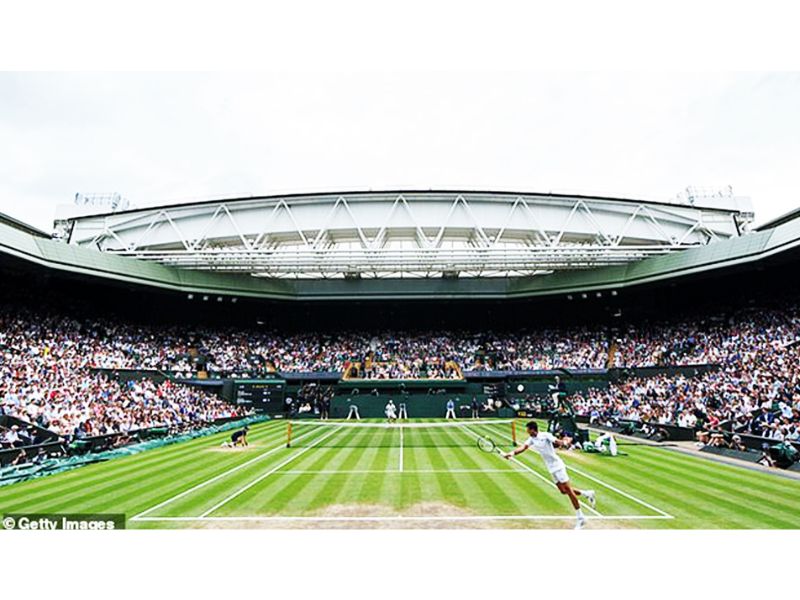
Wimbledon this year may be deprived of ranking points, but the players will be taking home more money than ever before.

The All England Club announced on Thursday that first round singles losers will earn £50,000 and the champions £2million each as part of a record overall prize pot of £40.35m. That represents an 11.1 per cent increase on last year, which was still affected by the pandemic.

t is a 5.4 per cent increase on 2019, the last year that The Championships was held before full capacity crowds.

There has certainly not been any reduction to take into account that this year’s tournament has been stripped of ranking status. That was the sanction placed by the ATP and WTA Tours for Wimbledon banning players from Russia and Belarus.

The size of the purse will ensure that other no-shows will be small to non-existent, despite this year’s edition not counting towards their rankings, unless there is an unexpected U-turn from the tours.

The biggest rise will go to those playing in the qualifying event, a whopping 26 per cent up on last year, which will persuade the rank-and-file to travel to London and try their luck.

Even the most humble qualifier who loses in the first round of the preliminaries will get £11,000.

Credit: dailymail.co.uk

Paris police chief admits handling of Champions League final was a failure

0
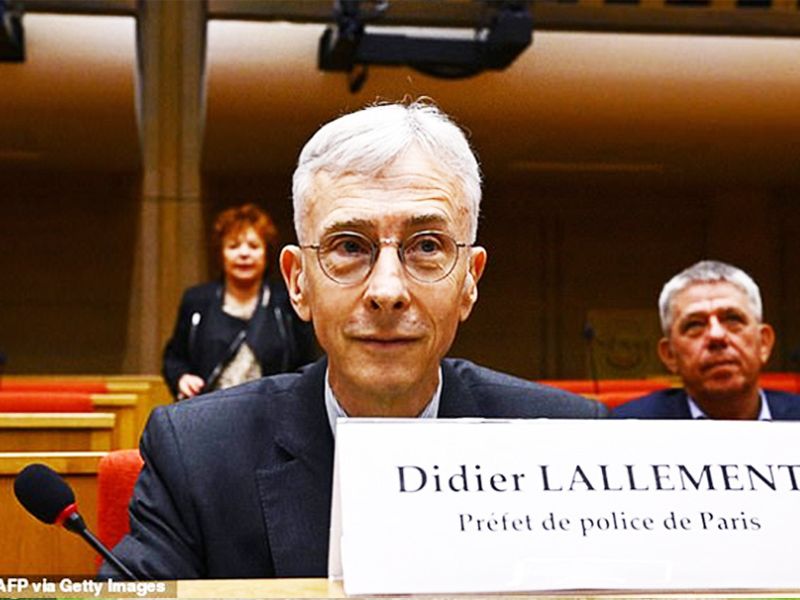
Paris police chief Didier Lallement

Paris police chief Didier Lallement has admitted that the handling of the Champions League final was a “failure”.

The event marred by chaos around the stadium, with security forces even using tear gas.

The event, which pitted Real Madrid against Liverpool on May 28, “was clearly a failure”, in the words of Lallement. He then apologised to the Spanish and British fans who had made the trip to the French capital for the moments of turmoil, which occurred shortly before the start of the match.

He regretted that people were “pushed and assaulted” and that France’s image had been damaged, although he also defended some of the more controversial practices such as the use of tear gas, during an appearance in the senate in which he gave explanations for the incident.

The police chief expressed his regret that these gases affected people “in good faith, especially families”, but at the same time he assured that it was the only way to reduce the pressure on the entrances to the Stade de France.

He said it seemed “the only way” to push back the crowd without a direct charge.

Credit: marca.com

Ecuador to be kicked out of World Cup over eligibility of their player

0
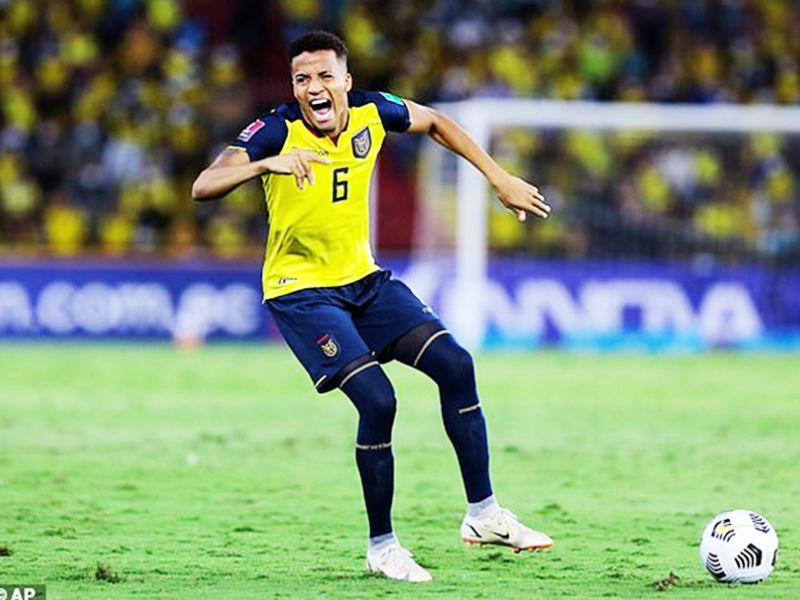
Ecuador are reportedly to have fielded defender Byron Castillo who is actually Colombian

Ecuador are reportedly set to be expelled from this year’s World Cup over claims their defender Byron Castillo falsified his birth documents and is actually Colombian – which means he would have been ineligible for their qualifying campaign.

The country’s FA had been investigated by FIFA over the allegations raised by Chile, who finished seventh in South American qualifying and missed out on a place at the Qatar tournament, while Ecuador finished in fourth place.

Chile claimed they had proof that Castillo was born in Tumaco, Colombia in 1995, and not in the Ecuadorean city of General Villamil Playas in 1998 as stated on his official documents. It claimed the Barcelona of Guayaquil full back used a false passport and birth certificate. A new report from Mundo Deportivo claims FIFA has already made its decision to kick Ecuador out after concluding its probe into the allegations and an announcement will be made in the next few days.

The report also claims there is a faint hope from Italy that they might be able to take advantage of Ecuador’s potential expulsion and be included in the World Cup despite being dumped out by North Macedonia in the play-offs.

That might be possible if FIFA award Ecuador’s place to the team with the best position in their World Rankings instead.  Ecuador have been drawn in Group A for the World Cup alongside hosts Qatar, Senegal and the Netherlands.

Credit: dailymail.co.uk

€500m needed to save Barcelona; Nou Camp chief Eduard Romeu reveals

0
Barcelona players

Eduard Romeu, Barcelona‘s economic vice president, says the Catalan giants need €500million (£428m) to be saved from financial turmoil.

Romeu says the issues at Barcelona started due to a ‘patrimonial imbalance’ and that they could have registered €150m (£128m) more in losses if they ‘did nothing’.

He also claims the financial difficulties are ‘heredity’ after years of financial mismanagement under their former president Josep Bartomeu and his predecessors. The LaLiga giants have been in a financial crisis for some time, with Laporta announcing a £1.15billion debt in 2021.

The economic woes led to the departure of talisman Lionel Messi as Barcelona were unable to hang on to their club captain and iconic No 10.

The coronavirus pandemic, which forced Barcelona’s matches to be played behind closed doors for 18 months, also played a role in the economic downfall of the club.

When asked to define the current economic situation of the club, Romeu said it was still ‘critical’ and that they needed €500m reach an equilibrium.

When asked about how much money it would take to pull Barcelona out of the financial hole they are in, Romeu said €500m.

The economics expert said: ‘The number that does the most damage is that of the patrimonial imbalance. Negative funds of €500m. Some €150m losses could be added to this course if we did nothing.

Credit: dailymail.co.uk

Covid-19 Cases Rising Again!  Majority of victims are children in schools

0
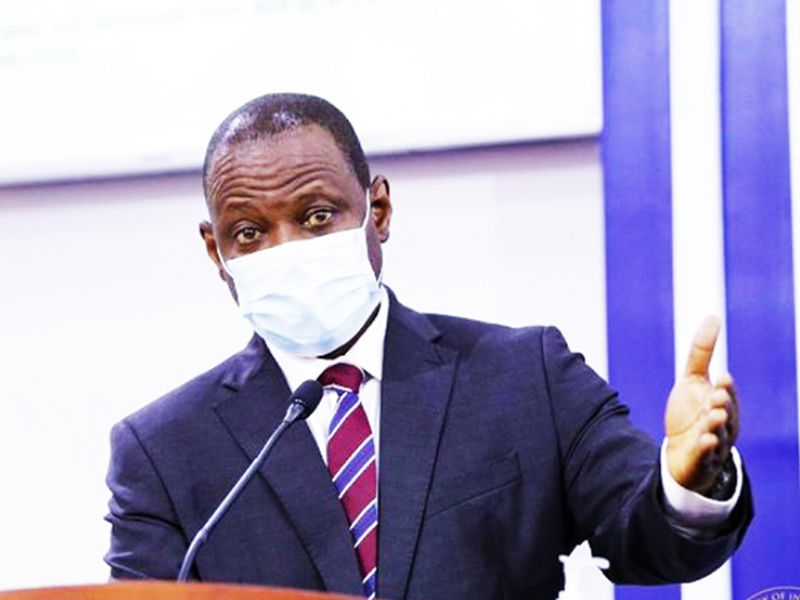
Dr Patrick Kuma Aboagye- Director General, Ghana Health Service

The Director General of Ghana Health Service (GHS), Dr Patrick Kuma-Aboagye has warned of the rapid upsurge in Coronavirus (Covid-19) cases in the Greater Accra region, with children and schools being those at risk.

According to him, 18.1% of the 400 new active cases recorded in the last few weeks are children between the ages of 0-15 years, with the youngest affected a six month old baby.

He continued that schools and work places are the two places where the new cases are prevalent.

He also noted that two other regions, Eastern and Western, have also recorded some new cases but the chunk of them are in Accra.

The GHS Director made this known to media men at a press conference organised by the Ministry of Information in Accra yesterday.

Giving some statistics on the rate of upsurge, Dr Kuma-Aboagye noted that in January, the country recorded 4,488 new confirmed cases, with an average of 149.6 a day, while 2,523 cases with an average of 84 cases a day was recorded in February.

In March and April, the number of new confirmed cases reduced to 152 and 39 with a daily average of 5 and 1.3.

Dr Aboagye noted that the decrease did not last as more cases were recorded in May and June. “In the last two months, the country recorded 399 and 267 new confirmed cases with a daily average of 13.3 and 44”, the GHS Director said.

Dr Kuma-Aboagye noted that one of the leading factors in these new confirmed cases is the increase in respiratory tract infections due to the rains. He again said that an increase in Influenza infections picked from existing influenza and other respiratory virus sentinel site is another factor that increased the rate of Covid-19 in the country.

On why schools and work places are at risk, Dr Kuma-Aboagye said, “there has been an increase in school and workplace related settings due to poor compliance to safety protocols, especially the wearing of masks”.

He continued that the poor observance of the protocols at large gatherings and events such as conferences, funerals and parties is also a contributory factor.

He also hinted that the low booster vaccination intake is also another thing that Ghanaians should note and act on it.

On measures to curtail the situation before it escalates to other regions, the Director General said his outfit has enhanced surveillance activities across all districts in the region, especially in schools and workplaces and has also reactivated the Covid-19 management teams and treatment facilities.

Again, Dr Kuma-Aboagye said rapid Covid -19 testing in public health facilities for early detection and case management as well as public education on adherence to covid-19 protocols would commence.

20 million vaccination target not achieved

Speaking specifically on vaccination, Dr Kuma-Aboagye stated that the country has not been able to achieve the 20 million targets it set as the number of people to be vaccinated by the end of June 2022. He noted that so far 15.8 million people have been vaccinated, leaving some 4.2 million people yet to be vaccinated.

According to him, one region with the lowest number of vaccinated people is the Volta region and called on Members of Parliament to advise their constituents to get themselves vaccinated.

Emergence of Monkeypox

The GHS Director also used yesterday’s briefing to announce the recording of Monkeypox disease in the country.

According to him, there are five confirmed cases out of the twelve suspected cases recorded in the country so far.

He noted that the Greater Accra, Western and Eastern regions are the places where these cases were confirmed and advised people to tread cautiously.

He intimated there is no treatment for the disease as of now so people should protect themselves from getting infected by avoiding skin to skin contact with infected person.

Influenza A (H3)

Dr Kuma-Aboagye also hinted on the outbreak of influenza A(H3) in the country. He said 3,460 samples have been tested and 773 positive cases were confirmed. He said cases have been confirmed in all regions except Upper East, Upper West and North East Regions.

Gov’t committed to adding value to raw materials; Prez

0
President Akufo-Addo unveiling the plaque
The newly commissioned infant cereal manufacturing plant

The President, Nana Addo Dankwa Akufo-Addo, has said that government was taking deliberate steps and efforts to refocus the investment priorities of the country, adding that it was also taking action to mobilise the resources necessary for the growth of those priority sectors.

“This is because we are determined to transform Ghana, from a mere producer and exporter of raw material, to a value added industralised economy, which can provide opportunity, jobs and prosperity for all, especially the youth of the country,” he said.

President Akufo-Addo was speaking yesterday at a ceremony to commission an infant cereal manufacturing plant at the Tema Industrial Area, built by Nestlé Ghana.

At the cost of GH¢175 million, the 6,900 metric tonnes capacity plant, the President said, would create some 800 direct jobs. The plant would also expand the production capacity of the company.

That the product from this plant would serve 22 markets of countries in Central and West Africa, was a timely investment.

He said the successes chalked by Nestlé Ghana should motivate other private sector industries in the country to aspire to the height of developing global brands.

PARTNERSHIP

The President reiterated that the combined effects of the COVID-19 and the Russian invasion of Ukraine had negatively impacted the country’s economy.

Meanwhile, he believed that the challenges from the crisis were a clear indication the country must see to the expansion of the production capacity of the manufacturing sector to add value to economic endowment.

He was confident that the private sector, together with the government, would rise up to the occasion with innovative ideas to help the economy rebound strongly.

LACK OF ACCESS

President Akufo-Addo said one of the challenges to the industralisation drive was the lack of access to the expanded markets, and thus urged the private sector in Ghana to take full advantage of the benefits of the African Continental Free Trade Area (AfCFTA).

ICON IN GHANA

Minister for Trade and Industry, Alan Kyerematen said that over 60 years, Nestlé has become an icon in Ghana’s manufacturing sector, citing the commissioning of the new plant is a further demonstration of the company’s commitment towards the socioeconomic development of Ghana.

The Ministry of Trade and Industry, according to the sector minister, recognizes the importance of attracting private sector operators to invest in the productive sectors of the Ghanaian economy.

He asserted that the new cereals manufacturing plant will go a long way to boost the government’s strategic efforts aimed at import substitution, especially in sectors where there is local capacity for value addition.

In his welcome address, the Managing Director (MD) of Nestlé Ghana, Georgios Badaro, outlined the growth of the company since it emerged in 1957.

He commended Ghanaians for shown love to the company, the reason they are still afloat, and are able to expand their expansion. He said the company has over 1,000 employees.

He shared that almost 90% of their products in Ghana are fortified with micro-nutrients, aimed at addressing some of the nutrition challenges.

The company last year, made a capital investment of GH¢175.4 million to invest in the increase of capacity of Cerelac by 6,700 tonnes per year, the MD said, adding that 98% of staff are Ghanaians.

He announced the additional investment of GH¢53million was in the offing, stating that the new factory symbolizes the confidence Nestlé has in the bright future of Ghana.

Ghana is Economic Center

The Chief Executive Officer of Nestlé Central and West Africa, Mauricio Alarcon said a business that looks and invests beyond current generation is a business for the future.

According to him, Ghana is a key economic center for Africa, hence, their commitment to continue to expand their production in Ghana for the benefit of the whole Central and West Africa.

Nestlé, he said, is committed to help building thriving communities and improving livelihoods by unlocking the power of food.

Over 150,000 farmers in Ghana and across the Central, West Africa have benefitted from capacity building and economic empowerment on Nestlé products.

The Ghanaian Chronicle