Home Blog Page 2830

KMA inaugurates Transport Task Force; To decongest Central Business District

0
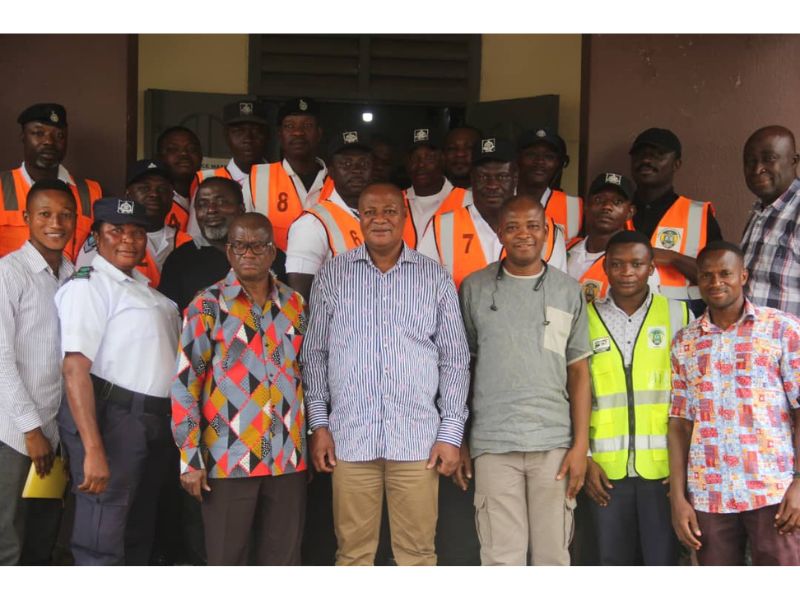
Mayor Pyne in a pose with the members of the Task Force
Task Force member (right) receives a jacket from KMA official

The Kumasi Metropolitan Assembly (KMA) has inaugurated a 10-member Transport Task Force to work for the decongestion of the Central Business District at Adum. The Task Force would mainly operate at Roman Hill, Pampaso Adum PZ, Asafo Market, VIP Station, Kejetia and the frontage of the Central Market.

The operations of the Task Force, whose membership is drawn mainly from the Metro Guards, comes under the direct supervision of the Transport Department of the Assembly, headed by Mr. Randy Wilson, and would ensure the decongestion of the city, as well as ensure the security of transport organisations.

The Transport Department has noticed that 80% of traffic in the Central Business District is due to street unloading of goods by shop owners in the Metropolis.

Inaugurating the Task Force on Tuesday, the Mayor of Kumasi, Samuel Pyne, cautioned the members to be diligent in the discharge of their duties.

He reminded them that he was personally interested in their operations and would monitor them, further cautioning them that anyone who goes out of his way to abuse his mandate would be sanctioned appropriately.

The Mayor indicated that the Task Force would be assigned to various points in its operational areas to check illegal loading and off-loading of goods.

He also reminded them that per the bye-law of the Assembly, off-loading of goods was done between 6pm and 8am, and warned that shop owners who flout this directive would be sanctioned.

The KMA boss encouraged the members of the Task Force to clamp vehicles found loading or off loading goods in the Central Business District after 8am, and said such drivers would be liable for fines and other punitive sanctions.

GTEC sensitizes Journalists on its mandate and Operations

0
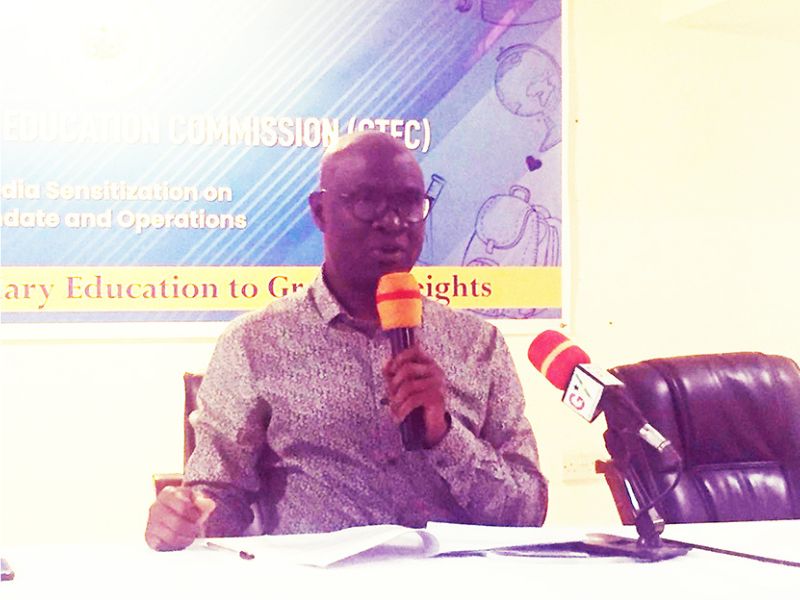
Mr Mohammed Salifu Director General of GTEC
Journalists present at the seminar

The Ghana Tertiary Education Commission (GTEC) has educated journalists and media practitioners on its mandate and operations under the Education Regulatory Bodies Act, 2020 (Act 1023).

GTEC is a merger of the erstwhile National Council for Tertiary Education (NCTE) and National Accreditation Board (NAB) and is also made up of 264 Tertiary Educational Institutions, with 175 public and 93 private.

Speaking at the seminar in Accra yesterday, under the theme, “Media Sensitisation on the Mandate and Operations of GTEC”, the Director General of GTEC, Mr Mohammed Salifu, said there is the need to sensitise the media to help maintain the eternal vigilance and hold their Tertiary Education Landscape(TELs) accountable.

According to him, the policy document guiding the activities of the Commission is under Act 1023.

Mr Salifu further told the journalists that the mandate of GTEC is to regulate Tertiary Education in all its forms, with a view to achieving certain objectives, which include effective and efficient management.

On the mandate of the Commission, the Director General stated that his outfit establishes and develops TELs, budgets and many more, adding that it also plans system relative to needs of the development and also implements norms and standards and other necessary duties.

The Chairman of GTEC, Mr. Kwame Boafo Arthur, in his address emphasised on the importance of the media in carrying the mandate and operations of his outfit, as it plays a vital role in Ghana. “The media plays a vital role in Ghana’s development, that is why it is critical that they have a full understanding of the commission to enhance its performance of agenda setting as far as Tertiary Education is concerned,” he stated.

He also noted that his outfit partners with the media to create awareness of the level of standards and quality assessments in Tertiary Education and also to come up with strategies on how best the Commission, in collaboration with the media can improve Tertiary Education.

“We must also make sure all institutions conform to rules and regulations that will help in enhancing the standards of various Institutions,” he added.

AfCFTA implementation risks political, economic setbacks -Prof Abotsi

0
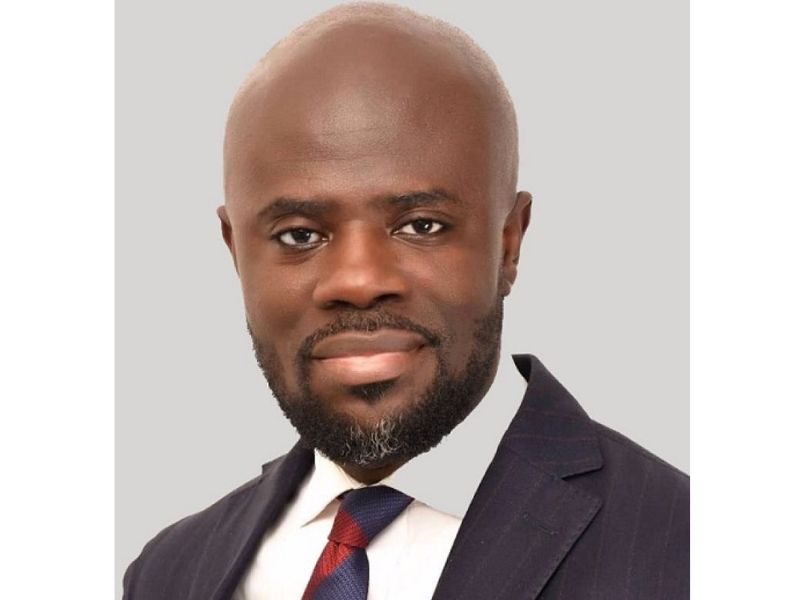
Professor Ernest Abotsi, Dean, University of Professional Studies Accra

Professor Ernest Abotsi, Dean, University of Professional Studies Accra (UPSA) Law School, says political and economic ills could derail optimal implementation of the African Continental Free Trade Area (AfCFTA).

Notable among them include restrictions on human movement and goods, corruption, lack of infrastructure, Bilateral Investment Treaties (BIT) and Bilateral Trade Agreements (BTAs), and remedies for breaches of rights of members.

When fully implemented, the pact would connect about 1.3 billion people across 54 African countries through a single market for goods and services, making it the world’s largest free trade area.

However, Prof Abotsi noted that such political and economic challenges could be a major drawback to the full realisation of the benefits of the free trade agreement, expected to create inclusive and sustainable development in Africa.

Speaking at a public lecture in Accra on Tuesday evening, he said: “A critical issue to be tackled without further delay for future success of the regime is the need for the removal of all barriers impeding free movement of goods, services, and persons.”

He particularly stated that: “What I’m calling for here is the free movement of persons across African borders through the institution of visa free travels.”

The forum, organised by the Ghana Academy of Arts and Sciences was on the topic: “African Continental Free Trade Area: challenges and prospects.”

“Having undergone a process of cross-continental decolonisation for over 50 years, African countries have a business maintaining and enforcing colonial boundaries erected to preserve the interests of colonial powers of European imperialism,” Prof Abotsi observed and called for a change.

On corruption, the Dean stated that the occurrence remained a major obstacle and noted that with the inception of the COVID-19 pandemic, an opportunity had been created for corrupt officials to advance their goals.

He indicated that where traders were asked to make illicit payments or be excluded, it could lead to an excessive cost of doing business – a disincentive for business commencement and sustainability across the continent.

He, therefore, urged the African Union (AU) and the AfCFTA Secretariat to institute measures that would facilitate trade by enabling easier exchange between member countries and businesses.

The Law Lecturer also called for a structural change in the African economy from a predominantly producers of primary commodities to value addition that would create excellent products and services.

“Building or intensifying an integrated market would also require that we install supporting systemic infrastructure including roads, telecommunication networks, intra-regional air traffic, customs and border processing systems across the country,” he said.

Prof Abotsi stated that while the AfCFTA Secretariat could not legally stop member states from adopting other agreements that were not compatible with the pact, it could adopt a policy to guide BIT and BTAs.

“A core challenge that could potentially undermine the optimal enforcement of the AfCFTA regime is the issue of remedies for breaches of the rights of a member or members by a member to the AfCFTA,” he noted.

He urged the Secretariat to ensure the elimination of opportunistic application of the measure when activated by ensuring that when taken, retaliatory measures were superintended by the rule and the aegis of the Secretariat.

Source: GNA

ISWAP behind Owo Church attack –National Security Council 

0
St Francis Catholic Church where scores of worshippers were killed

The National security Council has blamed the Islamic State West Africa Province (ISWAP) is responsible for the attack on St. Francis Catholic Church, Owo, that led to the death of about 38 persons on June 5.

The Minister of Interior, Rauf Aregbesola, said this on Thursday while briefing State House Correspondents after the National Security Council meeting in Abuja.

He disclosed that security agencies, particularly the police, have been directed to apprehend the perpetrators. The former governor said the attack has no ethnic-religious connection, affirming that the group’s activity has nothing to do with religion.

The council, according to him, is also concerned about killings in the name of blasphemy and has directed the security agencies to go after perpetrators of the incidents that occurred in Sokoto State and Abuja recently.

Similarly, the Inspector General of Police, Usman Alkali Baba equally noted the imprints of the perpetrators of the Owo killings have been identified and although no arrests have been made, security agencies are now zeroing in on them.

The meeting, which was presided over by President Muhammadu Buhari, was held less than a week after scores of persons were killed in the attack and several others wounded.

In a recent meeting, Governor Rotimi Akeredolu of Ondo State said 40 persons died in the incident while 26 survivors have been discharged from hospitals in the area.

“The figure I have now shows that 127 persons were involved and that the number of death now is 40. On admission receiving treatment, we have 61. Twenty-six have been discharged,” he said on Wednesday when he hosted Catholic Bishops from the South-West led by Most Reverend Leke Abegunrin.

“Those are the figures we have now from the Commissioner for Health. So, the government is not hiding anything.”

Credit: channelstv.com

Monarch, clerics raise concern over state of education in the north

0
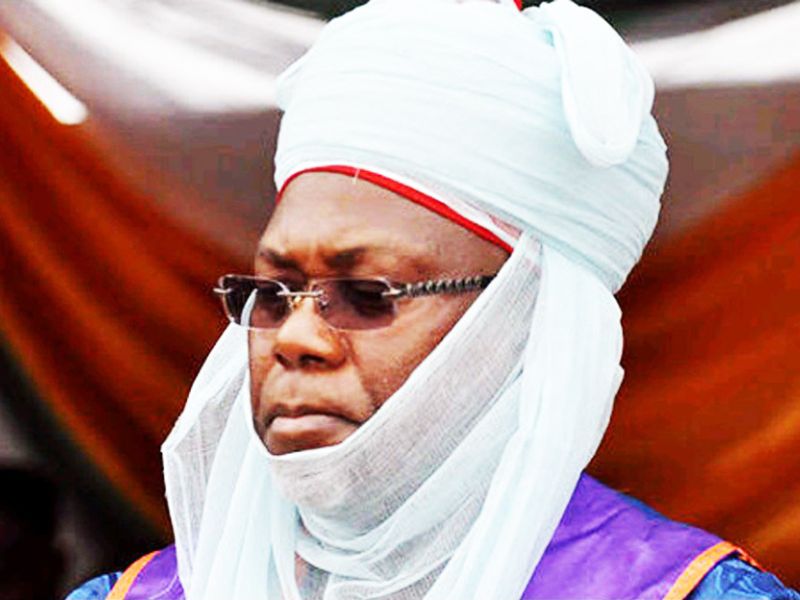
Emir of Kazaure, Dr. Najib Hussain Adamu

Traditional rulers and Islamic clerics have raised concerns over the state of education in Northern Nigeria.

The Emir of Kazaure, Dr. Najib Hussain Adamu raised his concerns while commenting on the state of education when he received the Jigawa Education Partners in his palace.

Reports indicate that out of the over 13 million out of school children in Nigeria, over 60% of them are in Northern Nigeria and 7.93 million of those children are girls”.

He explained that the present state of education in Northern Nigeria is the result of out of school children, resulting in poverty, insecurity and other problems in the region on the long run.

“People are resistant to take their children to school because our education system is in a state of coma” the Emir stated.

“95% of our teachers are not qualified, our learning environments are in a sorry situation, and our schools also lack teaching aids” the Emir stated.

The Emir, however, urged governments, stakeholders and donors to intensify efforts to address the problems.

Meanwhile, the Islamic clerics identified poverty and illiteracy among rural parents as the major factors retarding the development of education, especially that of the girl child.

Earlier, the Chairman, Jigawa Education Partners Tasiu Abubakar said, despite the billions of naira budgeted for education and the Free Girl Child Education Policy in the state, there are certain socio-cultural barriers hindering girl enrolment in the state.

He noted that advocacy and engagement with religious and traditional leaders would help in addressing the problems.

Credit: dailypost.ng

UNICEF returns over 300,000 girls to schools in Katsina

0
UNICEF

More than 300,000 girls of school age have been enrolled in schools in Katsina State through the Girls Education Project (GEP3) intervention project of the United Nations Children’s Fund (UNICEF), Kano field Education Officer, Muntaka Mukhtar, has said.

The GEP3 was implemented by UNICEF in Katsina, Sokoto, Zamfara, Bauchi, Kano and Niger states with the support of the Foreign, Commonwealth and Development Office (FCDO) of the UK.

Mr Mukhtar, who made this disclosure in Katsina during a three-day training on girls’ education with journalists, said, the project, through community campaign, peer support to girls and family negotiation, has improved the attitude of residents towards girls’ enrolment and completion of schooling.

“Since 2012, 210 head teachers have acquired knowledge and skills on school management, hold professional development meetings with staff and provide pedagogical leadership. The project has also improved teachers’ capacity to ensure they deliver effectively.

“Foundational learning has also been boosted through the early learning, literacy and numeracy, approach with a focus on teaching a community,” he said.

Mr Mukhtar added that 180 Girls for Girls groups were created in 60 junior secondary schools across six participating local government areas in the state.

Despite the success story, Mr Mukhtar said the state has a record 536,132 out of school children.

Credit: premiumtimesng.com

Buhari to address nation on Sunday –Lai Mohammed

0
President Muhammadu Buhari

President Muhammadu Buhari will address the nation via a live broadcast by 7:00 am on Sunday.
This was confirmed in a statement issued by the Minister of Information, Lai Mohammed.
He said Buhari will address the nation to commemorate this year’s democracy day.
The statement reads, ”As you may recollect, President Muhammadu Buhari, in June 2018, directed that Nigeria’s Democracy Day, marked every May 29, be shifted to June 12 to honour Moshood Abiola, winner of the 1993 presidential election.
“In compliance with the presidential directive, Democracy Day has been celebrated annually on June 12. This year’s celebration will mark the fourth time that the day will be marked on June 12, following celebrations in 2019, 2020 and 2021.
”Following extensive work by an inter-ministerial committee, the following programmes have been scheduled to celebrate the 2022 Democracy Day:
a) – This Press Conference officially kickstarts the programme of activities
b) – A public lecture is scheduled to hold tomorrow, Friday 10th June,
at the National Mosque here in Abuja at 9am.
c) – This will be followed, on the same day and the same venue, by a
Juma’at Service at noon
d) – On Sunday, June 12, there will be a presidential broadcast in the morning. There will also be a Church Service at the
National Christian Centre at 3pm
e) – Then on Monday, June 13th, a Ceremonial Parade will be held at
the Eagle Square starting from 9am.
Credit: dailypost.ng

Cedi outlook sours as inflation hits 18-year high

0
Cedis

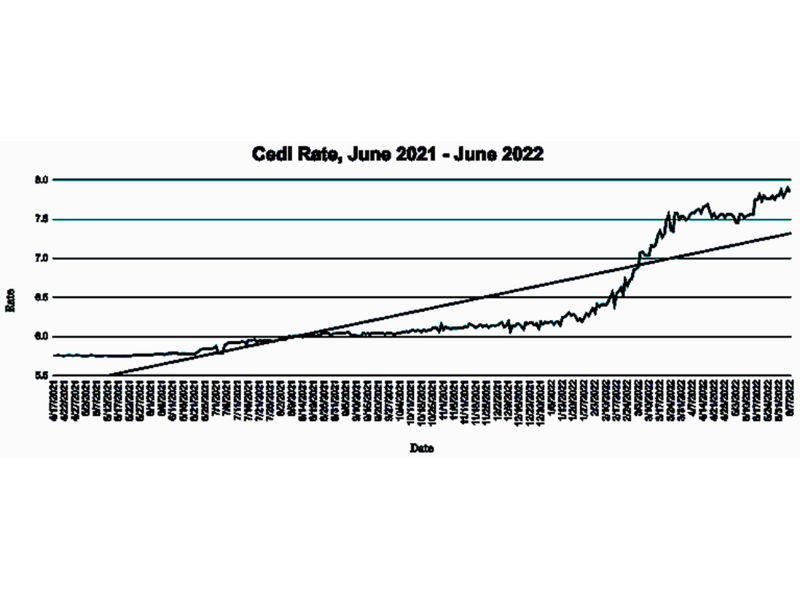
The Cedi lost ground against the dollar this week, trading at 7.88 from 7.80 at last week’s close as Ghana continues to battle with surging inflation. Prices increased 27% year-on-year in May from 23.7% in April, the fastest pace in 18 years, driven higher by food and transport costs. Hefty interest rate hikes in March and May have so far failed to halt the rise in prices. The Cedi has now lost about 5% of its value against the dollar in the past month and more than a fifth of its value since the start of the year. We expect the Cedi to remain under pressure in the near term as higher interest rates filter through to the economy.

Channeling SDRs to avert Africa debt crisis 
The African Development Bank has called on rich countries to lend it some of the $650 billion of special drawing rights issued to them by the IMF as part of the fund’s response to the coronavirus pandemic. The whole of Africa received less than half the amount assigned by the IMF to the US, for example, as allocations were made based on factors including the size of countries’ economies. The AfDB has proposed using the SDRs as collateral to raise further funds to support poorer African countries. The plan builds on an initiative of the United Nations Economic Commission for Africa for SDRs to be utilised to enhance the IMF´s capacity to support countries in need, leveraging the multilateral development banks and creating a new Liquidity and Sustainability Facility (LSF) to lower the liquidity premium on sovereign bonds offered by developing countries. The need for such support mechanisms is becoming increasingly urgent for more governments: this week, FX shortages and high debt levels forced Malawi’s government to seek renewed access to the IMF’s extended credit facility. Expect more to follow.

Naira

Naira to gain on political dollar flows
The Naira appreciated marginally against the dollar this week, trading at 606 from 607 at last week’s close. Nigeria this week shelved a planned $950m Eurobond sale due to adverse market conditions, with the finance ministry saying it will instead use the IMF’s special drawing rights to fund projects and then reduce external borrowings this financial year. Meantime, former Lagos State Governor and presidential hopeful Bola Ahmed Tinubu has emerged as the primary candidate for the ruling APC after seven other potential candidates withdrew from the race to support him. We expect to see further gains for the Naira in the weeks ahead as political dollars circulating in the country get converted into local currency.

Rand

Rand strengthening may be short lived
The Rand strengthened against the dollar this week, trading at 15.3 from 15.5 at last week’s close. The currency could be poised for renewed volatility, however, after South Africa’s central bank this week changed the way it implements monetary policy by moving to a so-called surplus system that allows commercial banks to hold and earn interest on excess reserves. This could make it easier to speculate on the Rand and lead to larger price moves. Technical charts point to potential downside. Overall, we remain cautious, with economic data in the US and EU likely to dictate the Rand’s direction over the coming week.

Egypt

Egyptian Pound slumps to five-year low
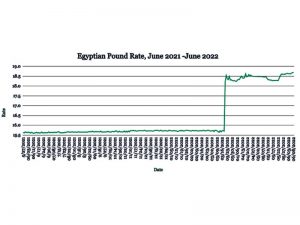
The Pound weakened to a five-year low against the dollar this week, trading at 18.71 from 18.63 at last week’s close. Deteriorating business conditions in the non-oil sector of the economy and a stronger dollar continue to negatively impact the currency. Increased input-cost inflation has also seen new orders fall at the fastest pace in almost two years. We expect the Pound to continue weakening over the coming weeks in the absence of any significant positive economic data.

Kenya

Kenyan Shilling retests record low
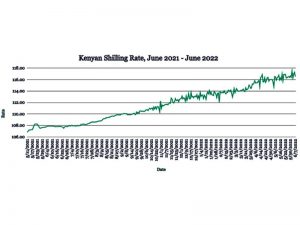
The Shilling was back trading at its record low against the dollar, weakening to 117.01 from 116.81 at last week’s close. The continued weakness comes as elevated demand for the greenback from the energy and manufacturing sectors bumps against an ongoing shortage of FX. This dollar scarcity coupled with higher production costs has put further strain on the cost of living. The World Bank says it expects Kenya’s economic growth to slow to 5.5% this year from 7.5% in 2021 due to higher commodity prices and a severe drought in the region. We foresee the Shilling losing further ground in the coming weeks ahead of August’s presidential election.

Uganda

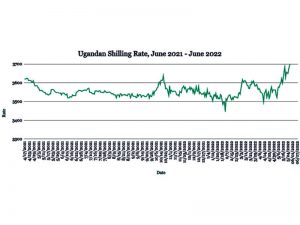
First rate hike since 2018 boosts Ugandan Shilling 
The Shilling strengthened against the dollar this week, trading at 3719 from 3740 at last Friday’s close. The brighter outlook follows Uganda’s decision to raise interest rates late last week for the first time since 2018 to counter surging inflation and the weakening currency. The central bank lifted its benchmark rate 100bps higher to 7.5%. The bank also cut its economic growth forecast for this year to between 4.5% and 5% from an earlier estimate of 5.5% to 6%. We expect the rate hike to continue supporting the Shilling over the coming week.

Tanza

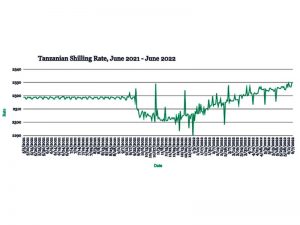
Budget may heighten on Tanzanian Shilling volatility
The Shilling weakened marginally against the dollar this week, trading at 2330 from 2328 at last week’s close, taking losses over the past month to 0.3%. Tanzania’s Minister of Finance and Planning Mwigulu Nchemba this week said the government is planning to spend TZS9.09tr on debt servicing over the coming financial year that begins in July—more than half of the ministry’s TZS14.94tr budget that Nchemba is seeking for parliament to approve. We expect the Shilling to be more volatile than normal over the coming week given the government is scheduled to present its 2022/23 budget speech on Tuesday.

Credit: www.azafinance.com 

Carry out mandate with respect-CHRAJ tells Police

0
Joseph Whittal, CHRAJ Boss

Mr Joseph Whittal, Commissioner, Commission on Human Rights and Administrative Justice (CHRAJ), has advised personnel of the Ghana Police Service to carry out their mandate with respect.

He said being aggressive with the public only made them unprofessional and that respect was earned and could be reciprocated.

Mr Whittal gave the advice at the opening of a two-day collaborative session organised by CHRAJ and the Deutsche Gesell schaftfür Internationale Zusammenarbeit (GIZ) to strengthen the cooperation between the Police Service, Media and CSOs towards effective case management and improved accountability.

In 2019, Ghana accepted the invitation of the German Federal Foreign Office to become part of its “Programme to Build and Strengthen Police Structures in Selected Partner Countries in Africa” (In Short: Police Programme), being implemented by GIZ.

During an appraisal mission in 2019, the Ghana Police Service and GIZ identified three thematic result areas for their cooperation -Training System, Community Policing, and Police Accountability.

Mr Whittal charged the Police Service to listen to the citizens, maintain their (police) respect and desist from physically assaulting suspects.

He noted that the Police Professional Standards Bureau (PPSB) was handling police-civilian matters in such a way that citizens stopped reporting to CHRAJ, however, the difficulties in getting the Bureau to be transparent to citizens pushed people to CHRAJ.

The Commissioner underscored the need for enhanced cooperation to ensure that stakeholders understood and appreciated the roles and responsibilities of the institutions towards improved accountability.

He said it could be done through advocacy and awareness creation.

Mr Whittal said the Media and the CSOs could educate appropriately and provide accurate information to the public when they understood the operations of the Police Service.

The Commissioner said it was important that stakeholders had regular monitoring of compliance with standards of accountability.

Mr Philipp Niehenke, Manager of Country Component, Ghana, GIZ, said the meeting must not become a blame game where stakeholders would criticise one another.

‘’Also, it is not about Civil Society and Media teaching Police how to do their job, but it is about creating a better understanding of each other’s role in ensuring police accountability,’’ he said.

Mr Niehenke commended the leadership of the Police Service for their efforts in engaging with the public.

‘‘The Inspector General’s field trips and other POMAB members, including the Director General, PPSB, getting involved when critical incidents like the one in Nkoranza happened have shown citizens that the Police was listening to their concerns,’’ he said.

Mr Niehenke noted that the PPSB had taken pro-active steps to fight misconduct within the service.

He applauded CHRAJ for exercising its mandate in handling complaints, including those involving unprofessional conduct and other forms of misconduct by police officers.

‘‘This strong mandate as well as your long experience in the field of accountability has led to a lot of respect from all sides, the Police Service as well as Civil Society and the Media,” he said and assured that the GIZ would support some of the reform initiatives of the Police Service.

GNA

Former UDS student pulls a stopper onnew Vice-Chancellor

0
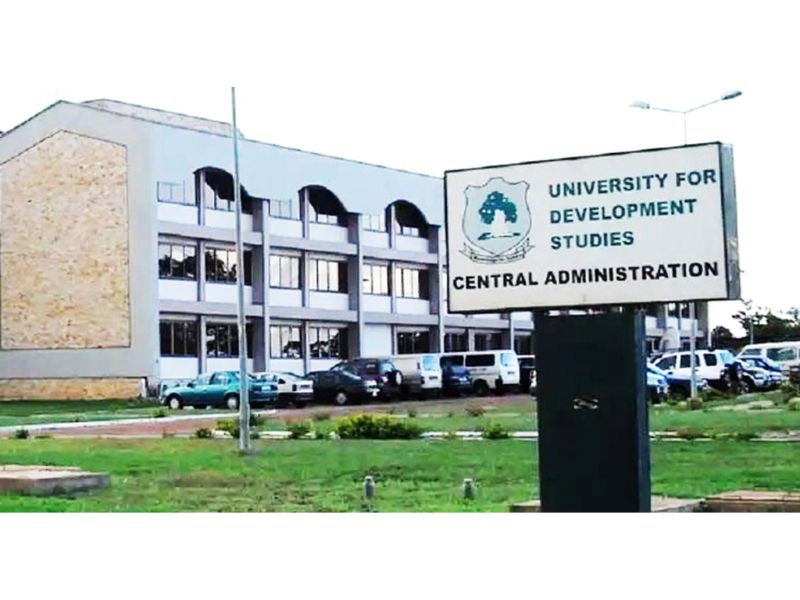
UDS

A Motion on Notice for an interlocutory injunction has been filed at the High Court in Tamale, restraining the University for Development Studies (UDS), its Council Chairman and Registrar from announcing Professor Seidu Al-Hassan as the new Vice-Chancellor of UDS.

The motion was filed on Thursday, June 9, 2022 by Victor Kodjoga Adawudu, Counsel for Emmanuel Osabutey, a former student of the UDS, who is the plaintiff.

The motion, a copy of which has been sighted by the Ghana News Agency, is praying the court for an order of interlocutory injunction restraining Professor Seidu Al-Hassan from holding himself as the new Vice-Chancellor of UDS, until the final determination of the matter by the court.

It is also praying the court for an order restraining the UDS, Professor Wayo Seini, UDS Council Chairman and the University Council from ratifying and approving Professor Seidu Al-Hassan as the new Vice-Chancellor of UDS, until the Search Committee’s Report was discussed and approved by the Members of the University Council in accordance with law.

The case is to be moved on July 05, 2022.

The tenure of the current Vice-Chancellor of UDS, Professor Gabriel Ayum Teye, will expire at the end of August, this year.

In view of this, the Governing Council of UDS inaugurated a Search Committee in December, 2021 to look for a suitable candidate to take over the office.

The Search Committee had interviewed about three applicants for the position and was to present its report by May 31, this year.

However, GNA has seen an appointment letter dated June 01, 2022 announcing Professor Seidu Al-Hassan as the new Vice-Chancellor to assume office on September 01, 2022 for a four-year term.

The appointment letter, which was written and signed by the Chairman of the UDS Governing Council, Professor Wayo Seini, said the appointment of Professor Al-Hassan was based on the “Overall outcome of the thorough and extensive work done by the Search Committee.”

However, some Members of the UDS Council accused the Council Chairman of breaching the laws and statutes of the University by unilaterally announcing the new Vice-Chancellor.

They argued that based on the laws and statutes of UDS, it was only Council Members of the UDS, who had the mandate to appoint Vice-Chancellors for the University but not Council Chairman acting alone.

The University, on June 3rd, 2022 issued a statement distancing itself from the Chairman’s appointment letter, saying it did not announce a new Vice-Chancellor.

However, on June 6th, 2022 the Registrar of the University issued a disclaimer, which stated that the University did not issue any letter disclaimer that it had appointed a new Vice-Chancellor.

From Albert Futukpor, Tamale

GNA

The Ghanaian Chronicle