Home Blog Page 28

Teacher, two farmers arraigned over alleged criminal activities in Nkwanta

0
Court

Three persons, a teacher and two farmers, have been arrested at Nkwanta in the Oti Region and arraigned before a Circuit Court in Accra over their alleged involvement in a series of criminal activities.

The accused persons are Cosmos Yentumi (A1), 22 and Atta Kwadwo (A2), 25, both farmers, as well as Nicodemus Ayinpo (A3), 37, a teacher.

They were granted bail in the sum of GH¢200,000 each with three sureties to be justified within the court’s jurisdiction.

The court presided over by Emmanuella Admah further ordered that one of the sureties must justify with a landed property equivalent to the bail amount.

The accused persons who pleaded not guilty are also required to report to the investigator every Monday, Wednesday and Friday. The case has been adjourned to May 7, 2026.

According to the prosecution, led by ASP Issah Achiburi, the accused persons are facing five counts, including conspiracy to commit crime, preparation to commit crime, resisting arrest, unlawful possession of firearm and causing unlawful damage.

The court heard that on March 29, 2026, at Tuobodom, a suburb of Nkwanta, the three accused allegedly conspired to cause unlawful damage to property.

In a related development, Cosmos Yentumi and Atta Kwadwo are accused of preparing to commit a crime after they were allegedly found hiding in a house at Tuobodam, armed with offensive weapons including jack knives, cutlasses, chisels and a pinch bar.

Nicodemus Ayinpo is also accused of resisting arrest by allegedly using a WhatsApp platform to warn members of a suspected criminal gang to evade arrest by police and military personnel.

Additionally, Cosmos Yentumi is facing a charge of unlawful possession of a firearm after he was allegedly found with a pump-action gun without lawful authority.

The prosecution further stated that the accused persons allegedly caused damage to a gari warehouse valued at GH¢600,000 belonging to one Gasologe Elela, at Keri in the Nkwanta Municipality.

Briefing the court on the facts, the prosecution said the complainants are police and military personnel deployed to maintain peace in the Nkwanta Municipality and surrounding areas.

On March 29, 2026, at about 6:40 pm, acting on intelligence that suspected gang members were hiding in a house within the English and Arabic area of Nkwanta and planning criminal activities, a joint security taskforce moved to the location and arrested the first and second accused persons.

A search conducted in the room led to the retrieval of weapons, including a jack knife, cutlass, butcher’s knife, chisel, pinch bar and a pair of black boots. The accused persons reportedly failed to provide any lawful explanation for possessing the items.

Further investigations revealed a video on the mobile phone of the first accused allegedly showing him concealing a pump-action gun. He subsequently mentioned one James Kwabena Ayinpo as the alleged owner of the weapon.

On March 31, 2026 the first accused led investigators to the residence of the said suspect, who reportedly escaped.

However, the third accused was found at the premises and arrested.

Prosecution said analysis of the third accused’s mobile phone indicated that he had been using a WhatsApp platform to alert members of the group to flee due to the presence of security personnel.

Investigators believe the accused persons are linked to a criminal gang operating from Shiave and Chilinga, allegedly responsible for attacks and destruction of properties, including homes and the gari warehouse, in Nkwanta and its environs.

Police say investigations are ongoing.


For more news, join The Chronicle Newspaper channel on WhatsApp: https://whatsapp.com/channel/0029VbBSs55E50UqNPvSOm2z

Nkwanta South: Who remains when the guns fall silent?

0
Opinion

When the fighting is over, and the guns are silent, the heavy and haunting silence that follows astonishingly lingers on, longer after the last gunshot fades.

In Nkwanta South Municipality of the Oti Region, that silence in recurring sparks speaks louder and haunting than words.

Since 2023, the land has witnessed repeated bloodshed of innocent lives.

The echoes of gunfire, the cries of the wounded, and the grief of bereaved families remain deeply etched in the minds of residents.

A once vibrant and peaceful community is now gripped by fear and uncertainty as recurring violence continues to disrupt daily lives through ethnic cleansing over land space and who has the authority to own festivals.

These are not mere statistics. They are lives.

They are children, whose laughter once filled homes, now replaced by sorrow. They are mothers, who will never again hear the voices of their sons. They are fathers, elders, and breadwinners, whose lives were cut short over a piece of land that cannot speak, cannot feel and cannot mourn.

A walk through some affected communities reveals a painful reality, abandoned homes, displaced families and lingering tension that refuses to fade.

While some residents have fled to safety, others remain trapped by circumstances and uncertainty.

One troubling question continues to linger: When the violence ends, who will be left to live on the land being fought over?

More than 50 lives have reportedly been lost with a number of others sustaining life-altering injuries, including amputations and permanent disabilities as a result of tribal disturbances.

Behind these figures are painful human stories, young men, who can no longer work to support their families, women left widowed without means of livelihood and children forced to abandon their education due to displacement and trauma.

Some survivors continue to battle not only physical pain but also deep psychological scars, as memories of gunfire and violence linger in their daily lives.

Health facilities in and around the Municipality are also under strain, struggling to cope with the rising number of emergency cases and long-term care needs of victims.

Families have been torn apart, with many seeking refuge in neighbouring communities often relying on the support of relatives and well-wishers to survive.

In some cases, entire households have been displaced overnight, leaving behind properties, farms and businesses built over generations.

Economic Toll

The conflict has devastated livelihoods. Farmers have abandoned their lands, traders have lost goods, and local markets have collapsed. The Municipal Assembly’s revenue has sharply declined, threatening service delivery and development projects.

Municipal Coordinating Director Musah Mohammed warned: “If the situation persists, it will have long‑term consequences for local development and the execution of government projects.”

Voices for Peace

Civil society groups echo the call for dialogue. Antonio Gomado, the Executive Director of Community Advocacy Against Poverty (CAAP), stressed: “Peace and stability are essential for progress. We urge all parties to respect human rights, protect lives and prioritise development.”

Yet attempts at reconciliation remain fragile. Regional leaders have convened meetings and peace gestures, but progress is slow.

Oti Regional Minister Kwadwo Gyapong admitted: “I am disturbed. Hostilities dent our collective aspiration for development. The guns must be laid down for peace to prevail.”

“The reset agenda of the government will be a mirage at Nkwanta,” he added.

For many residents, the future remains uncertain as the fear of renewed violence discourages them from returning to their homes or investing in rebuilding their lives.

The consequences are far-reaching. Children are growing up in fear instead of freedom, while women and the elderly bear the emotional and physical burden of the conflict.

Yet, despite the pain and destruction, hope remains.

Peace is still within reach, but it requires a conscious and collective effort. Traditional leaders, youth groups, opinion leaders and all stakeholders must commit to dialogue, reconciliation and unity.

Human Cost Beyond Violence

Women left behind in conflict zones report abuses and trauma. Families have lost contact with relatives, fearing abductions and disappearances. The destruction of livelihoods has deepened poverty, forcing children out of school and leaving widows without support.

Violence offers no victory – only loss.

Even those who may claim triumph are left with broken communities and lasting scars.

Nkwanta South is more than a location; it is a community bound by shared history and a common future. That future must be protected.

Peace gestures

Recent attempts at peace among the combatants, Adeles, Akodes and Challas led by the Oti Regional Minister, the Coordinating Council and others including political actors to bring the factions together have been eroded as one-step at peace results in two-steps backwards or derailment.

Security agencies, including the Ghana Police Service, the military and other intelligence agencies continue to work to maintain law and order in the area. The Oti Regional Police Commander, Alex Acquah, has appealed to residents to remain calm and cooperate with authorities to ensure peace and justice prevail.

A Cry for Unity

Land is meant to sustain life – to provide food, shelter, and a future. In Nkwanta South, it has become a source of division and death. Funds that should build schools, hospitals, and roads are diverted to security operations. Development slows down; businesses collapse, and children grow up in fear instead of freedom.

Yet hope remains. Peace is possible if traditional leaders, youth groups, opinion leaders, and all stakeholders commit to dialogue, reconciliation and unity.  That future must be protected by all concerned.

A GNA Feature by Kingsley Mamore

GNA


Editor’s note: Views expressed in this article do not represent that of The Chronicle

Incentivising The Public To Report Sanitation Offenders Is Laudable

0
Editorial

On April 8, 2026 Dr Frank Amoakohene, Ashante Region Minister, drew national attention to a troubling sanitation practice in Kumasi, where residents were exploiting heavy rains to dump waste around the Otumfuo Roundabout, so that the flood waters would carry them away.

Instead, the waste accumulated, forcing the Kumasi Metropolitan Assembly (KMA) to intervene and clean the area. His remarks highlighted a deeper concern, the persistent lack of civic responsibility among some citizens, despite ongoing efforts by authorities to maintain urban cleanliness.

To address this, Dr Amoakohene proposed an unconventional enforcement strategy of incentivising the public to report offenders by offering 50% of the fines imposed on individuals caught dumping refuse indiscriminately. This approach reframes sanitation as a shared responsibility between government and citizens.

A day later, the former member of Parliament for Kumbungu, Ras Mubarak, endorsed the initiative, describing it as innovative and pragmatic. He drew parallels with similar whistleblower reward systems in parts of the United States, where such measures have successfully deterred environmental violations.

Mr. Mubarak further argued that this model could transform sanitation management nationwide and even suggested that President John Dramani Mahama should consider elevating the initiative to a national level.

The incident at the Otumfuo Roundabout, where individuals deliberately dumped refuse during rainfall in hopes it would be washed away, underscores a deeply ingrained culture of environmental neglect and it is equally a failure of civic responsibility.

What Dr Frank Amoakohene has done is not merely to condemn this behavior, but to challenge it with an innovative and potentially transformative solution. His proposal to reward citizens with 50% of fines collected from sanitation offenders represents a shift from passive enforcement to active civic participation.

It is a model that recognises a critical limitation of traditional governance: authorities alone cannot monitor every street, drain, or neighborhood. By turning ordinary citizens into stakeholders in enforcement, the policy creates a decentralised accountability system that could significantly increase compliance.

The endorsement by Ras Mubarak is both timely and instructive. His comparison to similar initiatives in jurisdictions like California and Milwaukee in the United States of America highlights an important lesson, behavioral change often requires both deterrence and incentive.

Ghana already operates whistleblower frameworks in other sectors; adapting this concept to sanitation is both logical and necessary.

However, while the proposal is promising, its success will depend on careful implementation. Safeguards must be introduced to prevent abuse, including false reporting, personal vendettas, or breaches of privacy.

Clear guidelines, verification mechanisms, and public education will be essential to ensure the policy does not create unintended social tensions. Beyond enforcement, the broader issue remains one of mindset. Sanitation is not solely a government obligation, it is a shared social contract.

The persistent sight of plastic-clogged drains and refuse-littered streets reflects a disconnect between public expectations and individual behavior. Without a shift in attitudes, even the most innovative policies will yield only temporary results.

The call for national scaling, including suggestions that President John Dramani Mahama consider leveraging Dr Amoakohene’s approach at a higher level, should not be dismissed lightly. Ghana’s sanitation challenges require bold, unconventional thinking, and this initiative offers a blueprint worth examining.

Ultimately, the lesson from Kumasi is clear: clean cities are not built by assemblies alone. They are built by citizens who understand that environmental responsibility begins with individual action.

If embraced and properly managed, this policy could mark the beginning of a new era in urban governance one where accountability is shared, and cleanliness becomes a collective priority rather than a government burden.


For more news, join The Chronicle Newspaper channel on WhatsApp: https://whatsapp.com/channel/0029VbBSs55E50UqNPvSOm2z

Property Rates: Stakeholders advocate digitisation, transparency

0
The city of Accra

Stakeholders in Ghana’s local governance and revenue mobilisation sector have called for the digitisation of property databases, enhanced transparency in revenue utilisation and flexible payment systems to improve property rate collection across Metropolitan, Municipal and District Assemblies (MMDAs).

The call was made during the virtual launch of a Youth Media Advocacy Platform on Property Tax, an initiative spearheaded by Norsaac, Oxfam in Ghana and the Media Foundation for West Africa (MFWA).

The platform aims to strengthen compliance, accountability, and youth participation in governance, leveraging social media to expand outreach, reshape public perceptions on taxation, and promote accountability in local governance.

It also seeks to promote a citizen-centered approach to revenue mobilisation, with emphasis on transparency, inclusivity, and active youth engagement to drive sustainable local development.

The recommendations formed part of findings from a study examining property rate administration in Ghana, which highlighted systemic inefficiencies and disparities in revenue mobilisation.

Among the key recommendations was the need to strengthen MMDA-led property rate administration, as evidence showed decentralised systems outperform centralised approaches.

The study observed a decline in revenue collection in 2023 during centralisation under the Ghana Revenue Authority, followed by a recovery in 2024 when local assemblies resumed control.

It further recommended digitising property databases to improve accuracy, reduce leakages, and enhance efficiency in assessment and billing processes.

The study emphasised transparency in the use of property rate revenues, noting that public trust and willingness to pay taxes are closely linked to visible development outcomes in communities.

It also called for flexible payment options to accommodate vulnerable groups, ensuring inclusivity in the tax system, and advocated linking property tax collection to tangible community projects to demonstrate impact.

The study categorised properties into four classes: 3,423 first-class properties in prime areas; 5,288 second-class residential properties; 1,043 third-class properties facing collection challenges and 1,578 commercial properties, which remain key contributors to local revenue.

It revealed that Kwadaso recorded a 251.7 per cent increase in property rate revenue following the return to decentralised collection, while Obuasi and Ga West Assemblies posted moderate gains.

Salima Abdulai underscored the need to harness youth-driven media advocacy to demystify property taxation and promote civic responsibility.

Nii Addo traced the evolution of property taxation in Ghana from the pre-independence “Ntokua Toa” system, based on the number of windows in buildings, to a more structured post-independence framework aligned with property values.

He noted that property rate collection is backed by legislation, including the Local Government Act, 1993 (Act 462) and the Local Governance Act, 2016 (Act 936), which empower MMDAs to assess and collect property rates.

From Solomon Gumah, Tamale

GNA


Ghana less exposed to global oil disruptions -Fitch 

0
Mr Kingsford Acquah, the General Secretary of the Berekum East Sachet Water Association

Ghana’s energy security is expected to remain stable despite global oil market tensions, supported by the resumption of operations at the Tema Oil Refinery.

A report by Fitch Solutions, an international rating agency, said the development would reduce the economy’s exposure to external supply disruptions.

The report said recent volatility in global energy prices, driven by geopolitical tensions in the Middle East and strained relations among major oil producers had raised concerns for import-dependent economies.

However, it said Ghana was relatively insulated following the restart of operations at the Tema Oil Refinery (TOR) in December 2025, after years of shutdown due to debt and maintenance challenges.

The report said the resumption restored domestic refining capacity and reversed Ghana’s recent position as a net oil importer.

“With TOR operational, Ghana is projected to be broadly oil-trade neutral or a modest net exporter in 2026, limiting the direct impact of global price spikes on the country’s trade balance,” it said.

It noted that the development was significant amid persistent risks of supply disruptions, including possible escalation in tensions between the United States and Iran, which could affect shipping routes and crude availability.

Data from the Ministry of Finance and the Bank of Ghana indicated that Ghana’s hydrocarbons trade position was nearing balance, suggesting that higher crude prices would not necessarily worsen the current account. Under favourable conditions, it said higher prices could boost export receipts from crude oil.

Consequently, the report projected Ghana’s current account surplus at about 4.2 per cent of GDP in 2026, above the historical average deficit recorded between 2010 and 2024. It said the surplus would support macroeconomic stability and ease pressure on the local currency.

The report said strong export earnings and prudent external financing had strengthened foreign exchange reserves, which stood at about US$14.4 billion at the end of the first quarter of 2026, equivalent to approximately six months of import cover.

It said the reserve buffers provided adequate capacity for the Bank of Ghana to intervene in the foreign exchange market in the event of external shocks, including those from global energy markets.

Meanwhile, sachet water producers in the Berekum Municipality of the Bono Region have defied government directives and have increased the price of sachet water in the Municipality.

During a visit in the Municipality, the Ghana News Agency (GNA) market survey team discovered that the producers had increased the wholesale price from GH₵6 to GH₵8 per bag, with retailers selling it at GH₵9 instead GH₵7.
Mr Kingsford Acquah, the General Secretary of the Berekum East Sachet Water Association told the GNA that the Association made the increments because of the escalating costs of raw materials.

He said the new price was necessary to save their businesses from collapse, despite the government recommendation to halt the increment.
“Though the government has requested a temporary freeze on price adjustments on sachet water for some negotiations, we have to do the increment to meet production cost,” Mr Acquah stated.

He said that: “If the government wants us to stop the increase, then they must also intervene to reduce the prices of our raw materials in the market. Without that there isn’t any way our producers are going to decrease the prices.”

Mr Acquah mentioned other factors like high electricity and utility bills, high regulatory fees and high cost of packaging materials as well as rising labour and distribution expenses that informed the increment.
He urged consumers to adapt to the changes, saying that the Association had been forced to do so and called on the government to also do something about the sharp increment in the cost of raw materials.

“Until the cost of doing the sachet water business is significantly reduced, the current rates will be in force to ensure the sustainability of our businesses in the Municipality,” Mr Acquah stated.

By Jibril Abdul Mumuni  

GNA 

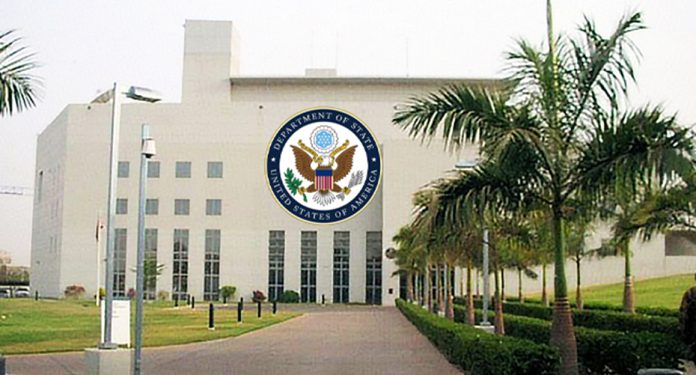
U.S. Orders Embassy Employees, Families To Leave Abuja Over Security Concerns

0
US Embassy in Nigeria

The United States has ordered non-emergency embassy personnel and their families to leave its mission in Abuja, citing a deteriorating security environment.

The disclosure was made by the U.S. Department of State in a travel advisory published on its official website on Wednesday.

The U.S. Department of State stated that it took the decision on April 8, 2026, following an assessment of the security situation in Nigeria.

It emphasised the risks posed by crime, terrorism, and civil unrest across multiple regions of the country.

While urging Americans to exercise caution, it maintained Nigeria’s Level 3 travel advisory status, additionally classifyingng several states under the stricter Level 4 advisory, indicating areas where travel should be avoided entirely.

Reconsider travel to Nigeria due to crime, terrorism, unrest, kidnapping, and inconsistent availability of health care services. Some areas have increased risk. Read the entire Travel Advisory,” the statement read in part.

On April 8, 2026, the Department of State authorized non-emergency U.S. government employees and U.S. government employee family members to leave U.S. Embassy Abuja due to the deteriorating security situation.”

Credit: channelstv.com

Ex-Footballer declares intention to contest House of Reps election

0
Former footballer, Mark Idum

A former footballer, Mark Idum, has declared his intention to contest the House of Representatives seat for Ogoja/Yala Federal Constituency of Cross River State on the platform of the African Democratic Congress, ADC, in the 2027 general elections.

Idum, who is currently based in the United States, formally announced his ambition on Thursday.

According to him, the declaration followed “extensive consultations” with political stakeholders, community leaders, and residents across the constituency. He said the encouragement and support he received during the consultations convinced him to step into the race.

Idum gained prominence as a footballer in the 1990s and early 2000s.

A native of Aliforkpa in Yache Ward in Yala Local Government Area of Cross River State, Idum said his aspiration is driven by a desire to reposition federal representation for Ogoja/Yala and deliver tangible development outcomes.

Idum added, “I am stepping forward with a clear sense of duty and commitment to service. This decision is rooted in my resolve to deliver practical solutions and sustainable development that directly impact the lives of our people.”

He outlined a development agenda anchored on service, accountability, and measurable impact, noting that his approach would combine grassroots engagement with effective legislative action.

One of the key areas he said will receive legislative attention is health. He pledged to prioritise access to affordable and quality services, particularly at the primary healthcare level.

“I will support the upgrade of primary healthcare centres, facilitate regular medical outreach programmes, and work to attract federal health projects to our constituency through legislative action.

“Beyond interventions, I will advocate policies that improve funding, staffing, and equipment in our health institutions so our people can access quality care without travelling long distances,” he said.

Addressing infrastructure, he emphasised the need to improve road connectivity across rural communities, describing it as critical to economic growth.

On education, Idum promised targeted interventions to improve learning conditions and outcomes across the constituency.

Idum also identified agriculture, power supply and water access as critical areas requiring urgent attention, promising to support sustainable solutions.

He further stressed his commitment to inclusive and responsive leadership, assuring constituents of consistent engagement and representation.

Credit: dailypost.ng


Nafiu Bala-led ADC members protest at INEC HQ over chairmanship dispute

0
Protesters storm the streets of Abuja

For the second time in two days, members of the African Democratic Congress (ADC) have protested at the headquarters of the Independent National Electoral Commission (INEC) in Abuja over the leadership dispute in the opposition party.

But this time, the demonstrators are members loyal to Nafiu Bala, who is also laying claim to the national chairmanship position of the ADC.

Led by Bala and a member of the House of Representatives, Leke Abejide, the protesters are asking the electoral umpire to immediately recognise the former as the authentic chairman of the party.

The ADC, as it stands now, has at least three different groups laying claim to its leadership.

These include the David Mark-led group, the Rafiu Bala-led group, and the group loyal to the 2023 presidential candidate of the ADC, Dumebi Kachikwu.

On Wednesday, the Mark-led group took a protest to the INEC headquarters, asking the agency to recognise its leadership.

The protesters included ex-vice president Atiku Abubakar; the presidential candidate of the Labour Party (LP), Peter Obi; a former governor of Rivers State, Rotimi Amaechi; ex-Osun governor Rauf Aregbesola; a former governor of Sokoto, Aminu Tambuwal; and ex-lawmaker Dino Melaye, among others.

The Mark-led ADC is accusing INEC of working with the ruling All Progressives Congress (APC) to destabilise opposition parties and destroy the country’s democracy.

They asked the commission’s chairman, Joash Amupitan, to resign from his position.

The crisis in the ADC began in the aftermath of Bala, who was the national vice-chairman, saying he ought to be the party’s national chairman after Ralph Nwosu resigned as the chairman.

Nwosu left the position following the opposition coalition’s adoption of the party as a platform to vie for the 2027 general elections.

Credit: channelstv.com

Nigerian Army Brigade Commander killed by terrorists in Borno?

0
The late Brig.-Gen. O. O. Braimah

Suspected Islamic State West Africa Province, ISWAP, terrorists have reportedly killed Brig.-Gen. O. O. Braimah, a Brigade Commander of the Joint Task Force in Benesheikh, Kaga Local Government Area of Borno State, during a midnight attack on the town.

A security expert, Brant Philip confirmed this in a post on Thursday.

The post read: “ISWAP attacked the Nigerian military camp in Benisheikh, northeast Nigeria.

“Large fire sources were detected from inside the camp and according to security reports, Commanding Officer O.O. Braimah was killed during the attack.”

In another post, Philip added, “The Nigerian Commanding Officer killed by ISWAP during last night’s attack in Benisheikh was ranked Brigadier General, the highest level officer killed since the ambush that took the life of Brigadier General Uba late 2025 in Borno State as well.”

There are reports that local sources disclosed that civilians, a member of the Civilian Joint Task Force, CJTF, security operatives, and several insurgents were also killed during the coordinated attacks carried out in Benesheikh town and Pulka community in Gwoza Local Government Area.

A resident of Benesheikh, Malam Lawal Benesheikh, also confirmed the killing of the Army commander in a Facebook post.

“Innalillahi wa Inna’illaihin raji’un. Boko Haram has again, unfortunately, succeeded in eliminating the commanding officer of Benisheikh.

“This unfortunate incident occurred yesterday night when the insurgents stormed the military formation in large numbers. May the souls of the fallen heroes rest in peace,” Malam Lawal wrote.

Credit: dailypost.ng

Vivo Energy Witness Admits Lack of Evidence on Fuel Leakage Assessment in Court

0
Vivo Energy

The Station Manager of the Atimpoku branch of Vivo Energy Ghana Limited, operators of the Shell Filling Station, John Delase-Michael, has told the High Court in Accra that he has no proof of the outcome of an assessment conducted by key state institutions following a fuel leakage incident at the station.

Testifying as a witness for Vivo Energy in an ongoing fuel contamination lawsuit, Delase-Michael said the assessment was carried out by the National Petroleum Authority, Environmental Protection Authority and the Ghana National Fire Service at the request of his superiors.

However, he admitted under cross-examination that he had not presented any report from these institutions to the court.

“I have not brought any report to this court,” he stated, when questioned by counsel for the plaintiff. The case stems from a suit filed by businessman Edmund Barwuah against Vivo Energy over allegations that its Shell station at Atimpoku, near the Adomi Bridge, sold petrol mixed with water to customers.

Barwuah contends that Vivo Energy breached its duty of care by supplying contaminated fuel, accusing the company of acting for “selfish and unholy financial gain.”

He was among several customers affected by the incident on August 28, 2022, which led to the closure of the station by the National Petroleum Authority.

Vivo Energy later attributed the contamination to rainwater seeping into an underground fuel storage tank during a heavy downpour and issued an apology.

During proceedings, Delase-Michael admitted that the fuel sold at the station was indeed contaminated. However, he maintained that while the regulatory bodies visited the site, he was not informed of the outcome of their investigations.

“To me, I will say no because after the investigation was made, I was not informed of the outcome,” he said, adding that any report generated would have been submitted to the company’s head office.

Counsel for the plaintiff argued that no proper assessment was conducted to determine whether the effects of the leakage extended beyond the filling station.

The witness also disclosed that he had not been briefed on any findings nor engaged in discussions regarding the impact of the incident.

Under further questioning, Delase-Michael said he was unaware of any official guidelines to be followed during rainfall at fuel stations.

He, however, acknowledged a similar tragic incident in 2015 at Circle, where water infiltration into a fuel tank contributed to a deadly fire outbreak.

The court is expected to continue hearing the case as cross-examination proceeds.


For more news, join The Chronicle Newspaper channel on WhatsApp: https://whatsapp.com/channel/0029VbBSs55E50UqNPvSOm2z

The Ghanaian Chronicle