Home Blog Page 2787

Former French president Hollande weds actress Julie Gayet

0
Hollande weds actress Julie Gayet

After a romance that made headlines around the world when it was revealed in 2014, former French president Francois Hollande has married actress Julie Gayet. The couple tied the knot on Saturday in a private, low-key ceremony in the town of Tulle, in the central department of Corrèze.

The news was announced to La Montagne newspaper with a picture of the couple showing the groom in a suit and his bride in a white dress climbing the stairs of the local town hall.

Combes had succeeded Hollande as head of the city hall back in 2008.

Hollande, who has four children with his former partner and fellow Socialist politician Ségolène Royal, had never before been married. Gayet, a mother of two boys, divorced Argentinian screenwriter Santiago Amigorena in 2006.

Hollande had an affair with Gayet while president and in a relationship with journalist Valerie Trierweiler, who was France’s de facto first lady at the time.

Credit: rfi.fr

US House passes gun control bill but it faces defeat in Senate

0
US House speaker, Nancy Pelosi, speaks during a protest against gun violence

The US House of Representatives has passed a wide-ranging gun control bill in response to recent mass shootings in Buffalo, New York and Uvalde, Texas, but the proposals have almost no chance of being approved by the Senate and becoming law.

The bill would raise the age limit for buying a semi-automatic rifle and prohibit the sale of ammunition magazines with a capacity of more than 15 rounds.

The legislation passed by a mostly party-line vote of 223-204. It has almost no chance of becoming law as the Senate pursues negotiations focused on improving mental health programmes, bolstering school security and enhancing background checks. But the House bill does give Democratic lawmakers a chance to frame for voters in November where they stand on policies that polls show are widely supported.

The vote came after a House committee heard wrenching testimony from recent shooting victims and family members.

The seemingly never-ending cycle of mass shootings in the US has rarely stirred Congress to act. But the shooting of 19 children and two teachers in Uvalde has revived efforts in a way that has lawmakers from both parties talking about the need to respond.

Credit: theguardian.com

Israeli Prime Minister makes surprise visit to UAE

0
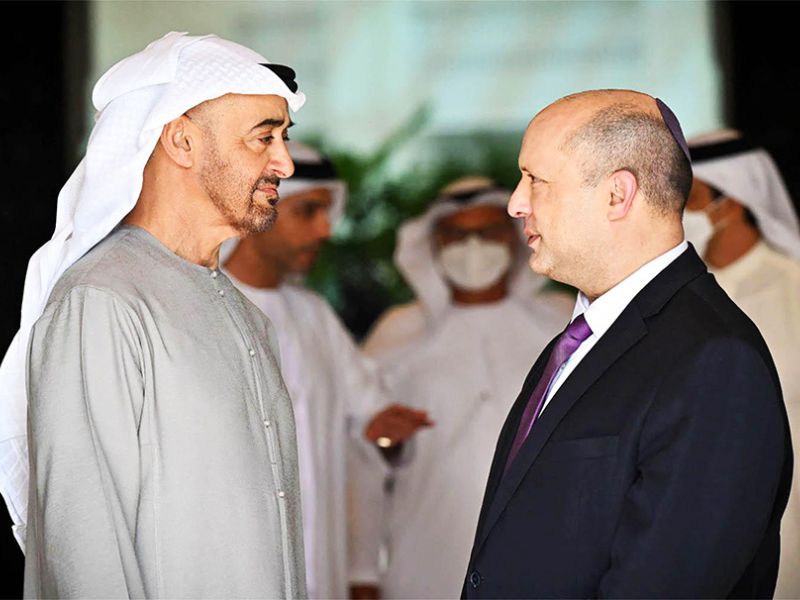
Israeli Prime Minister in UAE

Israeli Prime Minister Naftali Bennett has conducted a surprise visit to the United Arab Emirates as efforts to salvage a deal over Iran’s nuclear programme remain stalled amid a deepening standoff with Tehran.

Bennett’s visit on Thursday was his second public trip to Abu Dhabi since Israel and the UAE formally normalised ties in 2020 after years of quiet cooperation.

A statement from Bennett’s office said the Israeli leader will meet UAE President Sheikh Mohamed bin Zayed Al Nahyan and that the two will discuss “various regional issues,” with Iran likely to top the agenda.

In a video statement recorded before departing, Bennett commended countries at an International Atomic Energy Agency meeting in the Austrian capital, Vienna, on Wednesday who voted to censure Iran over its transparency about nuclear activities.

“We see here a firm stance by the countries of the world regarding the distinction between good and evil, as they clearly state that Iran is concealing things. We will not let up on this issue,” he said before boarding a plane to the UAE.

Credit: Aljazeera.com

Mexico church leader jailed for child sex abuse

0
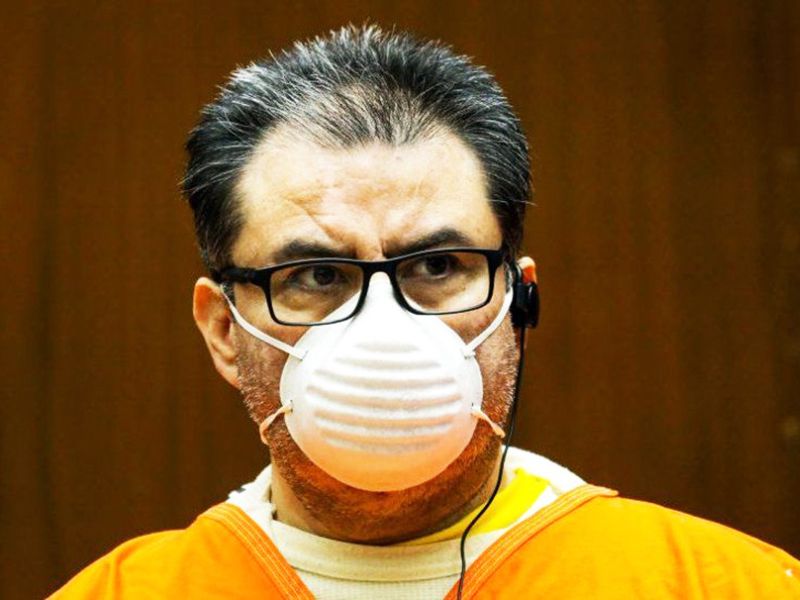
Naasón Joaquín García is the leader of the Luz del Mundo megachurch

Naasón Joaquín García, the leader of the La Luz del Mundo megachurch, has been sentenced in a Los Angeles court to 16 years and eight months in prison. García, 53, pleaded guilty last week to three counts of sexually abusing girls from his congregation.

His plea deal means his sentence is considerably shorter than the life imprisonment he could have faced had he been found guilty in a trial. To his followers, Naasón Joaquín García is known as “the Apostle”. His church shared a statement [in Spanish] on Twitter in which it expresses its continued “support for the Apostle of Jesus Christ” and praised his “integrity, his conduct and his work”.

The statement alleges that that evidence García had been fabricated and that he accepted the plea deal “as the best way to protect the church and his family”.

Credit: bbc.com

Britons captured by Russian forces sentenced to death

0
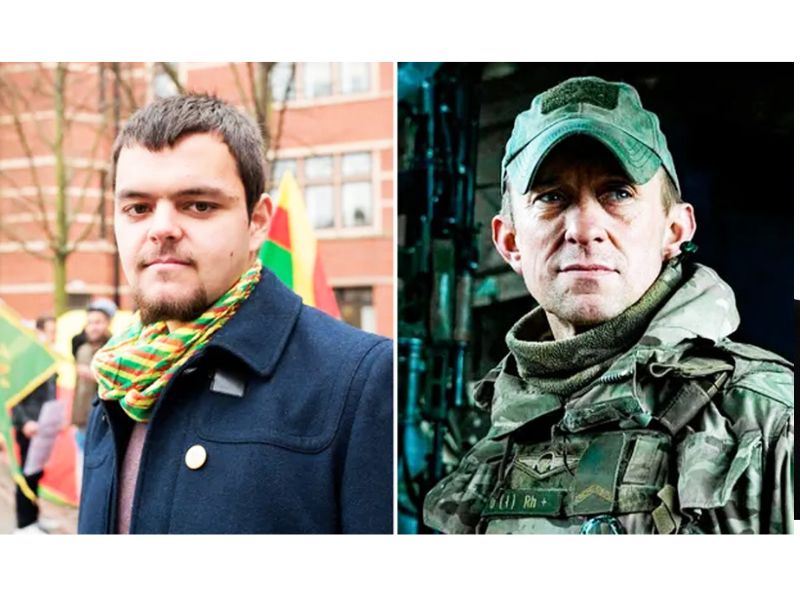
Aiden Aslin, left, and Shaun Pinner were captured while fighting in the Ukrainian army

Two Britons and a Moroccan man captured by Russian forces in Ukraine have been sentenced to death, the Russian-owned news agency RIA Novosti is reporting.

Aiden Aslin, 28, from Nottinghamshire, Shaun Pinner, 48, from Bedfordshire, and a third man, Moroccan national Saaudun Brahim, appeared in a court in the Donetsk People’s Republic, which is held by pro-Russian rebels. The court is not internationally recognised.

They are reportedly charged with being mercenaries. But the British men’s families say they were in Ukraine’s military.

Both British men are serving members of Ukraine’s armed forces and the UK has made clear they are prisoners of war entitled to immunity and should not face prosecution for taking part in hostilities.

On Telegram RIA News said: “The Supreme Court of the DPR passed the first sentence on mercenaries- the British Aiden Aslin and Sean Pinner and the Moroccan Saadun Brahim were sentenced to death, RIA Novosti correspondent reports from the courtroom.”

The families of both Mr Aslin, from Newark, and Mr Pinner released statements saying that they were long-serving members of the Ukrainian military and not volunteers or mercenaries

Credit: bbc.com

China, Russia accuse US of stoking N. Korea tensions at UN meeting

0
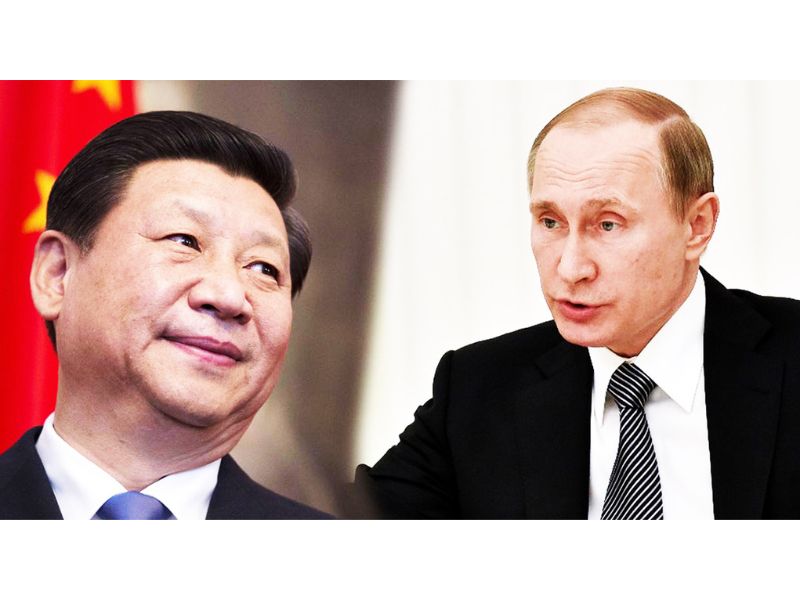
China and Russia accuse US

China and Russia have accused the United States of stoking tensions on the Korean Peninsula during a landmark meeting held to explain their decisions to veto new global sanctions over Pyongyang’s renewed ballistic missile launches.

Zhang Jun, China’s ambassador to the United Nations, told the General Assembly on Wednesday that tension on the peninsula has “developed to what it is today, primarily due to the flip flop of US policies”. He pushed Washington to take action and made a plea for the sanctions to be lifted.

“There are many things that the US can do, such as easing sanctions on [North Korea] in certain areas, and ending joint military exercises [with South Korea]. The key is to take actions, not just talk about its readiness for dialogue with no preconditions,” said Zhang.

Moscow’s deputy ambassador to the UN, Anna Evstigneeva, also called for sanctions to be lifted. North Korea needs more humanitarian aid and the West should stop blaming Pyongyang for tensions, she said.

China and Russia’s vetoes on North Korea last month publicly split the UN Security Council for the first time since it started punishing Pyongyang with sanctions in 2006.

Credit: Aljazeera.com

Home Remedies for Bigger Buttocks and Wider Hips

0
Bigger hips and buttocks

Home Remedies for Bigger Buttocks

It is certainly possible to achieve a curvaceous physique through natural means. Exercise and a healthy diet are the two essential things needed here.

You won’t be able to gain muscle without a healthy diet. You will not see any improvements if you do not exercise, and you may even gain weight.

Home Remedies for Natural Wider Hips and Bigger Buttocks

Don’t be misled by costly surgery and the hazards that come with it; instead, start with natural remedies that you can attempt at home.

If you want to be round and fabulous, we’ve put together three simple home cures for wider hips and buttocks, so keep reading!

There are two, or rather, three, basic approaches to getting bigger hips and buttocks on your quest.

To begin with exercise, you must tone and contour your bottom, hips, and waist (remember that toning your waist will accentuate your hips and buttocks).

Second, you can change your diet to reduce your intake of items that are more likely to cause belly fat.

Finally, a corset is a non-surgical technique to achieve your preferred proportions, which is great for occasions and will help train your body form with continuous use.

Exercises for hips and bums enlargement    Side lunge with dumbbells

Chair Pose

Side leg lifts

Squats

Glute bridge

Jumping Squats

Clamshells

Walking lunge with weights

In addition to cleaning the house daily. Cleaning furniture, cleaning the toilet, cleaning the floor, and even hand-washing clothes are all common daily duties.

These activities necessitate a lot of hip, buttock, and thigh motions. The biceps and shoulders are also affected.

As a result, this is regarded as a way of efficiently shrinking your tummy and increasing the size of your buttocks.

Furthermore, experts have shown that cleaning the house for one hour per day burns roughly 900 calories.

If you keep this activity up for a long time and mix it with a good diet, you may easily lose 3 – 4 kg.

You may always seek the advice of a personal trainer to learn more exercises that will help you quickly increase the size of your buttocks and hips.

Dietary Tips on Home Remedies for Bigger Buttocks

Along with exercise, you must also pay attention to your diet. When you combine physical activity with a nutritious diet, you will see immediate benefits.

Diet to get a slimmer waist: Home Remedies for Bigger Buttocks

Maintaining a healthy weight is another way to slim down your waist and emphasize the curves of your hips and buttocks.

If you want to lose a few pounds, avoid fad diets and diets that are too restrictive. The most important variable when making your diet is to try to receive your calories from a variety of foods, such as:

Berries, apples, bananas, oranges, and pears are examples of fruits.

Leafy greens, sweet potatoes, broccoli, and carrots are examples of vegetables.

Whole grains, such as whole-wheat bread, quinoa, oats, and brown rice,

Lean protein sources include poultry, fish, lean red meat, and lentils.

Low-fat or non-fat dairy products, such as low-fat or non-fat milk or yogurt,

Olive oil, almonds, seeds, and avocados are all good sources of healthy fats.

Filling up on fruit, greens, and low-starch vegetables, whole grains, lean protein, low-fat dairy, and healthy fats will help you cut calories, remain full, and maintain a healthy weight.

Conclusion on Home Remedies for Bigger Buttocks Naturally

Every woman’s fantasy is to have a large, round back. However, only a small percentage of these succeed.

Some people work out for hours, but their efforts are in vain. Others choose butt surgery, which has its own set of hazards.

There are techniques to change the shape and size of your booty, whether it’s too small, too saggy, or too floppy.

Surgery should only be used as a last resort. After all, until recently, ladies didn’t have access to costly treatments or surgical procedures, but they still looked amazing.

So, what do you have to lose? Why not try these natural butt remedies for a normal, larger butt?

Source: 9jafoods.com

FSD Africa Investments commits £8m; to finance a new class of asset allocators in Africa

0
Anne-Marie Chidzero, Chief Investment Officer, FSD Africa Investments

FSD Africa Investments (FSDAi), the investment arm of FSD Africa, has announced an £8 million investment to support a new class of investors who are financing Africa’s small businesses and consider gender equity a key driver of financial performance.

In partnership with the Collaborative for Frontier Finance (CFF), and the Facility Manager, a Joint Venture of Cardano Development and Total Impact Capital Europe, FSDAi will provide the critical anchor funding for a new special purpose vehicle, Nyala Venture.

Nyala Venture will bridge the funding gap left by other institutions, by targeting a new class of capital providers serving small and growing businesses, particularly those which are led by women or are applying a gender lens investment strategy in Nigeria, Ghana, Kenya, Senegal, South Africa, and Uganda.

Small and medium-sized enterprises (SMEs) are one of the key growth engines of emerging-market economies, absorbing up to 70% of the labour market and generating 40% of gross domestic product. However, access to finance is often cited as the single largest constraint to growth. The International Finance Corporation and others have long documented that emerging enterprises across Africa are starved for capital in the US$50,000 to US$500,000 range – the “missing middle”.

Women-led businesses, which account for at least a quarter of entrepreneurs on the continent, predominately fall into this “missing middle” category and, in particular, have been adversely impacted by this dearth of capital to grow their enterprises.

To date, the combination of risk, size, collateral, and governance makes small and growing businesses unattractive propositions for traditional financial institutions and local banks. Similarly, it has been a challenge for institutional capital, development finance institutions, and multilateral development banks to finance these smaller businesses consistently and at scale.

Through its investment in Nyala Venture, FSDAi is providing highly catalytic capital to address this gap. The new facility will leverage the experience and skills of African capital providers, many of which are founded and led by women themselves, who deliberately prioritise financing these “missing middle” stage enterprises. These asset allocators are an emerging class of indigenous capital providers that look to meet the financing needs of Africa’s small and growing enterprises. These fund vehicles apply innovative approaches and alternative investment structures specifically befitting the local business environment.

Along with addressing the funding gap faced by small and growing businesses, especially women-owned, FSDAi’s investment in Nyala Venture will demonstrate through its early-stage support the critical role that this investment class will play in driving capital markets in Africa. In addition to its investment, FSDAi is funding the development of the Frontier Capital Learning Lab, which will document and share the learnings of these local capital managers and their small business portfolios over the coming years.

Nyala Venture will be highly flexible with its investment funds to meet the innovative approaches of these local capital providers. Funds will be available in the form of debt or equity. The investment activities of Nyala Venture will be managed by two highly respected impact investing firms, Cardano Development and Total Impact Capital.

Building on the leading support of FSDAi, Nyala Venture intends to raise additional capital to create a USD50-75 million fund over the coming 18 months.

RECEIVING THE HOLY SPIRIT

0
Dr. Joyce Rosalind Aryee, Executive Director, Salt and Light Ministries

But you will receive power when the Holy Spirit comes on you; and you will be my witnesses in Jerusalem, and in all Judea and Samaria, and to the ends of the earth – Acts 1:8.

 INTRODUCTION

Receiving the Holy Spirit is a topic of vital interest to all Christians, but it seems to be tangled with differences and misunderstandings.  All believers agree that it is necessary to receive the Holy Spirit.  Differences arise over when one receives the Spirit, how it happens, and what kind of results follow.

The New Testament writers spoke of receiving the Holy Spirit in different contexts.  Paul talked about receiving the Spirit of adoption into God’s family: For you did not receive a spirit that makes you a slave, but you received the Spirit of sonshipRomans 8:15.  Luke, on the other hand, spoke about receiving or being filled with the Holt Spirit primarily in terms of power for ministry: You will receive power when the Holy Spirit comes on you – Acts 1:8.

THE HOLY SPIRIT IS A PERSON

But who is the Holy Spirit, and is the same power that came upon the apostles at Pentecost available to us today?  To begin with, the Bible teaches that the Holy Spirit is a person, the third person of the Trinity: He is God-coequal, co-existent, co-eternal with the Father and the Son.  The Trinity is a description of the unique relationship of God the Father, the Son, and the Holy Spirit. He possesses all the attributes of deity.  He regenerates the believing sinner.  He baptizes us into the universal body of Christ.  He indwells all who have been converted.  He seals us, keeping every believer securely in the family of God.  He fills us, taking control of our lives as we remove any impediments and yield to Him.

Is receiving the Spirit different from receiving Christ? 

In Paul’s writings these concepts run very close to each other, yet the element of the Spirit’s charismatic manifestation is not absent.  In Galatians 3:1-5, he spoke of the Holy Spirit coming in power, complete with miracles.  He asked, “Did you receive the Spirit by observing the law, or by believing what you heard?Does God give you His Spirit and work miracles among you because you observe the law, or because you believe what you heard?”  The Galatians had experienced the power of the Spirit in miraculous manifestations, and Paul pointed to this as confirming the reality of the saving faith by which they received Christ.  In Luke however, the focus is somewhat different.  Receiving the Holy Spirit is the way that those who already believe in Christ are empowered to serve Him.

People receive the Holy Spirit, in Luke’s meaning of the term, in different ways.  Some people receive the Spirit more or less spontaneously, while for others the response is quite conscious and deliberate; some experience dramatic manifestations of the Spirit, while with others the manifestations are more subdued.  The way in which people receive the Spirit will be determined, to some extent, by the situation and by the person (his of her personality type, station in life, church environment).  More important than the particular way that we receive the Spirit, however, is what we do after having received.

It’s like the difference between a big church wedding and a small family wedding.  The kind of wedding you have doesn’t determine the kind of marriage you will have.  What’s important is how you live out the reality of married life.

It’s important that we receive the power of the Spirit for living the Christian life.  Luke’s message needs to come through loud and clear.  But when it comes to the questions of how, it’s more important to focus on how one lives the Spirit-filled life than on a rigid formula for receiving it.

Receiving the Spirit in the gospel of Luke in sense is not a one-time event, but an ongoing way of life.  We need Him everyday; some occasions may call for a special filling of the Spirit – Acts 4:31; 7:55. The effects of the Spirit’s filling may be dramatic, accompanied by supernatural signs; they may open up a new area of witness or ministry; they may issue in quite growth of the fruit of the Spirit.  When the Spirit controls us, He moves us to accomplish God’s will in God’s way.

Luke’s emphasis on receiving the Spirit to empower us for ministry is a needed emphasis today, when one thinks of the enormous missionary challenge facing the church – several million people who haven’t heard the gospel.  We need to move beyond past misunderstandings and get on with the task!

Conclusion

The ‘power’ believers receive from the Holy Spirit includes courage, boldness, confidence, insight, ability and authority. We need all these gifts to fulfill our mission. If we believe in Jesus Christ as our Saviour, we can experience the power of the Holy Spirit in our lives.


LORD GOD THE HOLY GHOST – MHB 298 

1 Lord God, the Holy Ghost,

In this accepted hour,

As on the day of Pentecost,

Descend in all Thy power.

2 We meet with one accord

In our appointed place

And wait the promise of our Lord,

The Spirit of all grace.

3 Like mighty rushing wind

Upon the waves beneath,

Move with one impulse every mind;

One soul, one feeling breathe.

4 The young, the old inspire

With wisdom from above;

And give us hearts and tongues of fire,

To pray, and praise, and love.

James Montgomery (1771-1854)

Stay blessed!

Please continue to join us on Asempa 94.7 FM – Sunday 5.30 am., Sunny 88.7 FM – Tuesdays 5:30 am; and Uniiq 95.7 FM – Saturdays 7:30 pm, YFM 107.9 – Sundays 6.30am; for our Radio Bible Study as well as Sunny FM 88.7 FM every Sunday at 3:30 pm. for Hymn and their Stories.

FEATURE: A root cause of flooding in Accra: developers clogging up the city’s wetlands

0
Flood

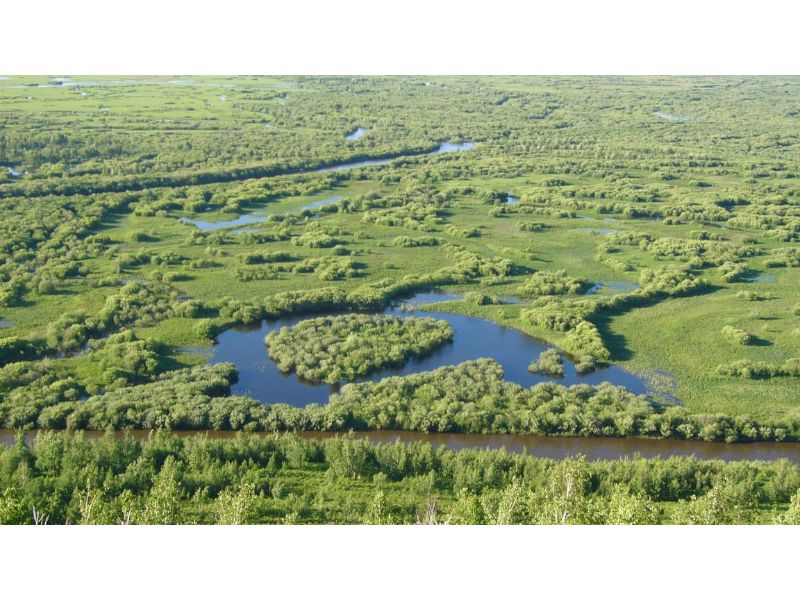
Ghana has six designated Ramsar sites. These are wetlands designated under the criteria of the Ramsar Convention on Wetlands, an international treaty that seeks to protect them. In Ghana, these sites are mainly along the coast and are meant to be protected as set out in the convention. But the sites have become targets for property developers whose activities are leading to a decline in the flood resilience of many parts of the capital, Accra. Environmental scientist Chris Gordon explains the functions of wetlands and why more needs to be done to protect them.

What is a wetland?

Wetlands are considered under the Ramsar Convention “areas of marsh, fen, peatlands or water, whether natural or artificial, permanent or temporary, with water that is static or flowing, fresh, brackish or salt, including areas of marine water the depth of which at low tide does not exceed six metres.” Ghana is a signatory to the convention and the first wetland designated was the Owabi Wildlife Sanctuary Ramsar Site. Wetland areas in Ghana cover all the country’s beaches, mangrove areas, river buffer zones and low-lying land that is flooded by water, at times to a depth of about six metres.

What is its importance to the environment?

Wetlands are important in many ways and are relevant to almost every aspect of human life. They serve as a buffer for floods as they absorb water. They also help reduce the impact of drought as they replenish groundwater by releasing that trapped water slowly into aquifers (the rocks that hold water underground).

The holding capacity of wetlands helps control floods and prevents water logging of crops. Mangroves also reduce the impact of storm surges, and protect the coast from erosion.

Wetlands serve as breeding and nursery grounds for several species of marine fish, which are a source of people’s livelihood (both as fisher-folk and in the downstream fish value chain). They also provide medicinal plants and building materials as well as household items such as mats.

Several species of animals and plants need wetland conditions to survive. All of these animals and plants have intrinsic value too, in that they give people pleasure. Wetlands are very peaceful places.

Why are they under threat in Ghana?

Wetlands are targeted for commercial and residential development in urban areas where there is a shortage of land or in areas where the wetland are seen as prime land for tourist development along the coast.

In the urban setting, wetlands are usually the last places to be developed.

So in a place like Accra, wetlands in low lying flooded areas are being targeted because almost every space has been encroached as a result of ill considered developments (sometimes with the indiscriminate allocation of building permits by local authorities).

Wetlands aren’t suitable to build on. Wetlands soil is waterlogged, often acidic or saline and has a high clay content. It is therefore unstable. Building on this soil is not the wisest thing to do: the buildings are never strong. Even after adding chemicals to the cement and concrete, you find that groundwater in the wetlands erodes the foundations. Filling up the wetland by piling materiel on it does not help, as this material act like a wick bringing corrosive chemicals to the surface.

Landowners know this, but continue with their developments.

What has the impact of the developments been?

The major impact – especially in urban areas – is tied to fact that the wetlands lose their function of acting as a sponge. Wetlands soak up the excess runoff and then release it slowly. This stops high water levels rising, and flooding. The loss of the greenbelt and urban wetlands in Accra has reduced the ability of wetlands to retain water when there is unusually heavy rain.

To build in a wetland you usually need to fill it. You have to add material to build it up. The water that would have previously occupied that space is displaced and needs to go somewhere else. So you may have built years ago and feel your building is safe. However, the water that’s been displaced will result in flooding. The result is that infrastructure such as roads which were previously never flooded now become flooded.

What can be done?

To restore a wetland after it has been encroached on doesn’t just involve removing a building. You have to take away the material that has been put there, in some cases illegally, then you have to try to seed the wetland with the correct types of plants and hope that the animals will come to reestablish it.

It is a long, expensive process. Probably the simplest wetlands to restore are the mangroves along the coast. But even then, the problems caused by erosion, sea level rise and plastic pollution and increased sedimentation because of the runoff are difficult to turn around.

Wetlands are being restored in parts of Europe and North America, because authorities realised that the value of having a wetland was greater than the development that was there.

But this action is rooted in behavioural and attitudinal change. Ghanaian needs to have to get people to stop doing the damage. Then we can see how to remove some of those buildings which are in waterways, how to open culverts, how to plant trees to increase infiltration (the flow of water from above ground into the subsurface). And how to get people to stop paving their entire compounds with tiles which increase water runoff.

It’s everyone’s problem. And everyone can benefit from solving it.

By Christopher Gordon

Source: citinewsroom.com

The Ghanaian Chronicle