Home Blog Page 2778

Landlords without toilet facilities in their houses to be prosecuted

0
Patrick Kwame Frimpong, Presiding Member - KMA

Landlords in the Kumasi Metropolitan Area without toilet facilities in their households would be prosecuted. Mr. Michael Agyemang, Project Coordinator for the Kumasi Metropolitan Area for Water and Sanitation programme, explained the position of his outfit, that most landlords had turned deaf ears to the campaign to get a household toilet facility at a reduced cost under a World Bank-sponsored programme, by the Ministry of Sanitation and Water Resources, to ensure that every household was having a toilet facility at the lowest cost.

He announced this at a community engagement and education programme at Krofrom (New Tafo), a suburb of Kumasi, organised by the Project Coordinator and the Assembly Member for Krofrom East Electoral Area, with stakeholders.

The Project Coordinator disclosed that the price of the facilities had been reduced from GH¢4,500.00 to GH¢1,200.00, and GH¢2,500.00 to GH¢700.00 to ensure that a toilet facility was provided in every household, for which a house-to-house campaign to educate most landlords had been embarked upon.

Under the project, every landlord was to register within a month, and anyone failing to do so may have themselves to be blamed, besides the option of arraigning them before the law courts, in accordance with the sanitation law.

Mr. Agyemang further disclosed that the project, which started two years ago, had targeted to construct about 4,000 toilet facilities in households with the Kumasi area, yet within three years  only 250 of such facilities had been constructed in two years after the project was initiated, which, he said, was not encouraging at all.

Mr. Patrick Kwame Frimpong, Assembly Member for Krofrom East and Presiding Member of the Kumasi Metropolitan Assembly (KMA, emphasised that there was no need for households to rely on public toilets, hence, the need to embark on community-base campaigns to ensure that there was an improved sanitation, hygiene, and clean environment.

He entreated every landlord to apply and register for a household toilet facility under the Kumasi Metropolitan Area Water and Sanitation Project, to ensure that residents did not resort to open defecation or risk their lives to go out in new sites where there were no public toilet facilities available, or easily accessible when one had a stomach upset.

Africa must build strong capacity in agric sector -Prez

0
President Akufo-Addo

President Akufo-Addo says Africa needs to build the capacity of its workforce, especially in the agriculture sector, to remain self-sufficient in order to withstand the shocks of global crises.

“We have been concentrating on the fundamentals, and the fundamentals are about strengthening our capacity to do things ourselves with our industry, in our agriculture, as well as, of course, the all-important development of our human capital. At least, it is the combination of these various developments that have made it possible to be where we are today,” President Akufo-Addo said at the Africa CEO Forum in Abidjan on Monday, 13 June, 2022.

According to him, in order to build a strong human capital and the various economies on the continent, African governments must collaborate with the private sector. President Akufo-Addo said the establishment of the African Continental Free Trade Area (AfCFTA) should help make collaboration between the private sector and states easier.

Using Ghana as a test case, the President said, the “regional and continental cooperation we are building is going to be a very decisive factor in making it possible that these developments we are seeking within the territories of Private and Public sectors with linkage to our education system. We will do so by ensuring that regional and continental dimensions of what we are doing are brought to the table.”

The Africa CEO Forum is an annual gathering of decision-makers from the largest African companies, as well as international investors, multinational executives, heads of state, ministers, and representatives of the main financial institutions operating on the continent.

This year’s summit also featured the president of Ivory Coast Alassane Ouattara Nigerian Vice President Yemi Osinbajo. In his welcome address, President Alassane Ouattara, stated that, the current world economic crisis must become a moment of structural transformation on the continent.

According to the Ivorian President, the convergence of various crises, presents the continent with a unique opportunity to make the structural changes needed to transform our economies.

“Africa is at an inflection point, this crisis must become a moment of structural transformation,” he stated. This year’s forum happened in-person for the first time since 2019 and more than 1,000 business and government leaders attended.

Editorial: Will Early Warning System stop flooding in Accra?

0
Editorial

Yesterday, we carried a story on our front page about the establishment of a Flood Early Warning System (FEWS) intended to mitigate floods in the country’s capital, Accra.

The Minister for Works and Housing, Mr. Francis Asenso-Boakye, mentioned this to the media who gathered at the Ministry of Information.

According to Minister Asenso-Boakye, the system will work by way of giving advance notices to people living in flood-prone communities, towns and cities in the capital, to enable them take precautions.

On the surface, the idea seems commendable but on hindsight this paper would really want to scrutinise how such a system can stop the perennial flooding in Accra and its surrounding environs.

We know that the Ministry is looking for several ways to put an end to the perennial flooding that has ravaged lives and properties and believe this system to be a short-term solution.

But will the role that FEWS play not be similar to that of the Ghana Meteorological Agency (GMA)?  Remember the GMA exists to provide efficient and reliable meteorological information by collecting, processing, archiving, analysing and disseminating of meteorological information to end users.

Though the GMA has not worked to the expectations of Ghanaians, it has since its establishment made conscious efforts in weather predictions and the verdict on their success rate is out there. Therefore, creating the FEWS system will mean that there will be a parallel institution providing the same information. This is not value for money and a good investment with the taxpayer’s money because we might have just succeeded in creating another bureaucracy.

We believe that investing the money into the GMA to procure more modern equipment will enable it give more accurate predictions on floods and other issues.

Meanwhile, we all know that issuing warnings about floods alone will not stop the incident from happening. If that were to be so, we would not have people dying and losing properties every year. It would take dredging, construction of storm drains and good sanitary habits to enable us do away with the annual flooding.

We would rather suggest the Ministry invest more money into the Greater Accra Resilient and Integrated Development (GARID) project which is designed to implement interventions aimed at addressing flooding in the Odaw Basin of the Greater Accra Region, while it focuses on improving drainage, solid waste management and provision of services and infrastructure in flood prone areas around the basin.

We are suggesting this because the Minister indicated that the FEWS system is part of the GARID project. We have already demonstrated that the system will be performing a role similar to that of the GMA. It would, therefore, be reasonable to use the money to construct more drains and gutters.

Lastly, we would also suggest to the Ministry to enforce the laws that punish people for building on waterways and also for dumping refuse indiscriminately. We should return to the days when the Town Council taskforce worked to ensure that our communities were devoid of refuse. We believe this will go a long way to mitigate flooding in the capital and beyond.

Dormaa West Assembly presents 200 dual desks to District Education Directorate

0
Mr. Francis Kwadwo Oppong, the District Chief Executive(l) presenting the desks

The Dormaa West District Assembly in the Bono Region has presented 200 pieces of dual desks to its Education Directorate at Nkrankwanta, the district capital for onward distribution to deserving schools in the area.

Presenting the desks, Mr. Francis Kwadwo Oppong, the District Chief Executive said the Assembly was committed to providing the necessary teaching and learning materials for improved academic performance to raise the standard and quality of education in the District.

Mr. Oppong urged the management and the staff of the Education Directorate to remain even more devoted to duty to ensure government educational policies and programmes being implemented would bring the desired results.

Reverend Father Kingsley Dwamena Asante, the District Director of Education commended Mr. Oppong for his personal commitment to promoting quality education in the district.

He also expressed appreciation for the Assembly’s unending support for the Education Directorate in executing its supervision and monitoring programmes.

Rev. Fr Asante assured the Directorate would distribute the furniture equitably to the selected schools to enhance teaching and learning in the District.

Kintampo Municipality organizes HIV/AIDS awareness programme

0
Some participants after the programme

As part of efforts to create maximum awareness about the rise of the deadly HIV/AIDS virus, the Kintampo North Municipal Assembly has held an awareness campaign programme for school pupils in the area.

The awareness and sensitisation campaign, which took place at the Municipal Assembly, was well attended by stakeholders, especially in the health sector.

At the event, the school pupils were taken through free HIV testing and counselling, blood group and sugar level testing among others.

Speaking at the programme, the Municipal Coordinating Director, Alhaji Shibu Yarifa Inusah, on behalf of the Municipal Chief Executive, Mr. Isaac Baffoe Ameyaw, expressed his gratitude to the organisers of the programme, insisting that the event would help reduce the rising cases of HIV/AIDS in the Municipality.

He also commended the participants for availing themselves for the event.

He called for a united front to help fight against the deadly HIV/AIDS, and to show support for people living with AIDS

“The Assembly is using this opportunity to educate and sensitise the people of the Municipality on the causes, mode of transmission, effects, and treatment, and where you can get tested,” he added.

He said statistics from 2020/2021 global HIV reports considered the Municipality with the highest prevalence of HIV/AIDS in the Bono East Region, and, therefore, urged all to get tested to know their status and stay protected, since HIV/AIDS was real and must be rooted out of the country.

The Municipal focal person for HIV/AIDS, Madam Bernice Banawneie in her address, outlined the importance of the engagement, adding that it will help the youth stay away from things that lead them into contracting the virus.

The Municipal Aids Coordinator for Ghana Health Service, Madam Esther Ottah, made a presentation on HIV/AIDS, the body’s ability to fight infections and how to show support for infected persons.

Madam Ottah also gave a brief history of HIV/AIDS in Ghana and in the Kintampo municipality, how it spreads/causes, stages of infection, symptoms, where to go for testing, importance of knowing your status, prevention among others.

Some public health officers from the municipal hospital also used the opportunity to educate the school pupils on teenage pregnancy; statistics and occurrences in the Kintampo Municipality; factors that influence teenage pregnancy; peer influence, sex education, social misfit, social media among others.

Bono Regional Minister presents 200 desks to Education Directorate

0
The dual desks

The Bono Regional Minister, Madam Justina Owusu-Banahene, has presented 200 dual desks to the Dormaa East District Directorate of Education to be distributed among deprived public schools as part of her day’s working visit to the district.

The Minister also commissioned a four-unit Kindergarten block for the Wamfie Presbyterian ‘A’ Primary School and another three-unit Kindergarten block for the Wamfie Methodist Primary Schools, constructed by the District Assembly.

Madam Owusu-Banahene stated the government’s commitment to improving school environments for effective teaching and learning to enhance the academic performance of pupils and students. She commended teachers, particularly those serving in the rural communities, for their selfless and dedicated services to the nation.

The Dormaa East District Director of Education, Mr. Philip Danso, said the desks and educational facilities would greatly help facilitate academic progress, and expressed gratitude to the District Assembly for its continuous support in enhancing the growth and development of education in the area.

He said the government’s commitment towards improving the quality of education in the country was exceptional, and asked for more educational facilities for the basic schools, saying some schools in the area still lacked adequate desks, thereby slowing enrolment.

Mr. Danso expressed concern about lack of teachers’ quarters in the area, which remained a daunting challenge confronting the growth of education, and appealed to the District Assembly to help address the problem.

The Dormaa East District Chief Executive, Mr. Emmanuel Kofi Agyeman, advised educational heads to take good care of government properties and utilise the resources judiciously

Juabenhene imposes sanctions on late Konongohene; Dissolves Council of Elders to perpetuate 30-year-old impasse

0
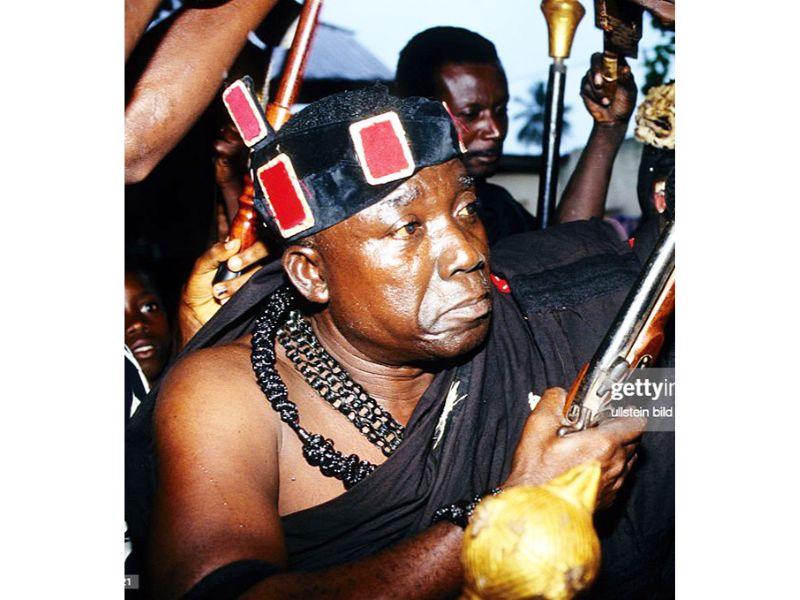
Late Nana Batafo Acheampong Nti - Konongohene


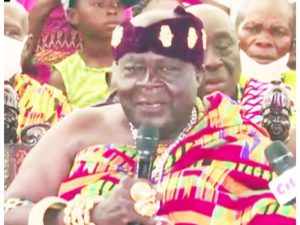
Nana Osei Kwadwo II – Bekwaimanhene

The Chairman of the Council of State, Nana Otuo Serebour II, presiding over a meeting of the Juaben Traditional Council at the Juaben Palace on Tuesday, May 31, 2022 dealt a humiliating blow to the Asona Royal family of Konongo in the Asante Akim Central Municipality.

The Juabenhene has dissolved the Council of stool elders of the Konongo Sub-Traditional Council and relieved them of their traditional positions, rendering the Konongo Palace virtually closed.

The affected members, who have served in various capacities at the palace for years, are not to carry themselves or parade in the jurisdiction as stool elders.

The destooled elders are; Kyeame Yaw Frimpong, Kyeame Poku, Kyeame Kwame Marfo, Nana Kwadwo Abrokwa (Krontihene), Nana Osei Tweneboah (Gyasehene), Nana Opuni Frimpong (Twafohene), Nana Appiah Fokyie (Sanaahene) and Nana Kwadwo Sarfo (Nsumankwahene).

The rest are; Nana Kwadwo Yeboah (Benkumhene), Nana Kwame Akowuah (Mmamahene), Nana Kofi Prah (acting Kyidomhene) and Nana Akua Pokuaa (Asona Maahema).

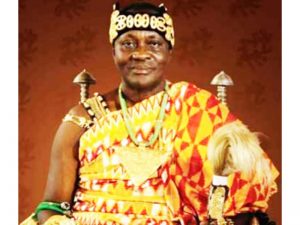
Nana Otuo Serebour II – Juabenhene

Their crime is that they had sworn allegiance to the late Konongohene, Nana Batafo Acheampong Nti, who has been accused of gross insubordination towards the Juabenhene in the past 30 years and, therefore, not recognised as a chief by the overlord. As a result, the elders were fined two sheep and four bottles of Schnapps.

Nana Otuo Serebour is on record to have said that in the circumstance, he does not recognise the Council of Elders, since they had not been introduced to him.

Following, the Abusuapanin Nana Yaw Frimpong, in consultation with an elder of the family, one Oppong Agyare, have been charged to act as caretakers and liaise with the family of the late Konongohene to organise his funeral as an ordinary person and not as a chief or royal, since he did not serve his overlord in his lifetime as Konongohene.

The funeral planning committee is to plan the funeral within two months, from June 1 to July 31, 2022 after which a suitable candidate is to be considered as chief of Konongo would be introduced to the Juabenhene.

The condition is that the late Konongohene should not be accorded a royal burial as, according to the Juabenhene he (Konongohene) had not acted or functioned in the capacity as a chief for the past 30 years.

The Juabenhene gave the directives when the Konongo Council of Elders, led by the Bekwaimanhene, Nana Osei Kwadwo II, called on the Juabenheneto first call for a truce of the 30-year-impasse between the Konongohene and his overlord and to announce his death.

Nana Batafo died on January 15, 2022 at the age of 83, having occupied the Konongo Asona stool for 41 years. He first swore the oath of allegiance as Konongohene to Nana Otuo

Serebour II in 1981.

The Konongo stool elders had approached the Bekwaihene to plead on their behalf with the Juabenhene as a result of which the May 31, 2022 meeting at Juaben was organised only for the elders to be, as it is, destooled and directives given in respect of funeral of the late Konongohene.

Nana Osei Kwadwo has confirmed the sanctions against the Konongo elders who, he said, admitted their guilt of disrespect to the Juabenhene, having thus contributed to the impasse.

The Registrar of the Juaben Traditional Council, Mr Ankamah also collaborated the decision and directives of the Juabenhene.

Defending the position of the Juabenhene, Mr. Ankamah said he had been the registrar of the Juaben Traditional Council the past seven years and never set eyes on any of the Konongo stool elders.

Meanwhile, the youth of Konongo, constituting themselves as Concernedcitizens of Konongo have condemned the decision of the Juabenhene describing it as arbitrary and harsh for preferring sanctions against the Konongohene even in death to perpetuate the alleged 30- year-oldimpasse.

The youth leader, Addai Mununkum, appealed to the Juabenhene to rethink his decision and approach the death of the late chief in a humane manner.

They called on the Asantehene Otumfuo Osei Tutu II to intervene and settle  the impasse  to enable the late Konongohene be accorded a fitting burial for serving his people for 41 years

Parents are paying bribes to get wards admitted into JHS -CSO

0
Kofi Asare, Executive Director of Africa Education Watch

Kofi Asare, Executive Director of Africa Education Watch, has sternly demanded for the uncapping of the Ghana Education Trust Fund (GETFund) to allow free flow of resources to the educational sector, particularly at the basic level.

Mr Asare has consistently argued that the country, since capping and securitising the GETFund, has not received any significant value for that political decision.

He said the capping is affecting infrastructure development at the basic level, for which reason parents have resorted to paying bribes as low as GH₵10.00 before their wards are admitted into Junior High School (JHS).

This challenge, he noted, has denied several pupils the right to fully enjoy the constitutionally mandated Free and Compulsory Universal Basic Education (FCUBE) in the country.

Speaking at the launch of a review of the Education Sector Medium Term Development Plan (ESMTDP) 2018-2021, in Accra, last Thursday, he said the capping policy has not benefitted the education sector, but has rather caused several school blocks to be abandoned by the government.

“The Ministry of Finance is not releasing the GETFund, even though we are paying GETFund everyday – you pay VAT, you pay GETFund – so where is the money.

“Last year, out of GH₵1.4 billion allocated to GETFund, only 48% was disbursed at the end of the year.

“52% undisbursed. This is after GETFund had been securitised partially and also capped at 25%. So last year GETFund money released is only about GHC600 million instead of GHC1.4 billion,” he stated.

According to him, out of GHC66 million allocation in 2021, basic education received only GHC25 million, suggesting that elementary education is the least funded and neglected level in the Ghana’s education sector.

Meanwhile, the review conducted by the Africa Education Watch, in collaboration with the Ghana Centre for Democratic Development (CDD-Ghana) and Foreign, Commonwealth & Development Office, shows that a number of infrastructure projects have been abandoned since 2017, since without GETFund there cannot be infrastructure expansion.

He reiterated that the deficit in infrastructure is not going unnoticed, but it is being heavily felt in the area of transition, thus from primary to Junior High School (JHS) and between JHS ‘1’ and JHS ‘3’.

Mr Asare discovered that the first four years of the ESMTDP targeted to achieve 99% of transition from primary to JHS, but that expectation was short changed by almost 6% at the national level.

According to him, the reason accounting for this was that most primary schools do not have JHS, adding that students who after struggling to again admission into JHS, education is truncated due to long distances that they have to cover to school each day.

He added that some of the schools captured under the survey don’t have access to electricity, water and sanitation.

Teacher posting brouhaha

He said teacher to student ratio is still high in rural areas, not because there are lack of teachers but the teachers are refusing posting to the countryside.

Mr Asare pointed out that the situation can be addressed if the Ministry of Education makes it a policy to remunerate teachers in rural communities than those in cities and urban areas, through the adoption of a strategic policy or framework that addresses accommodation challenges of teachers.

“The framework must include specific protocols for resource allocation to deprived districts, peculiar teacher incentives and timetable for teaching and learning, a school infrastructure plan that incorporates teachers’ accommodation, customised teaching supervision and a monitoring system,” he recommended.

Defunct national museum is back

0
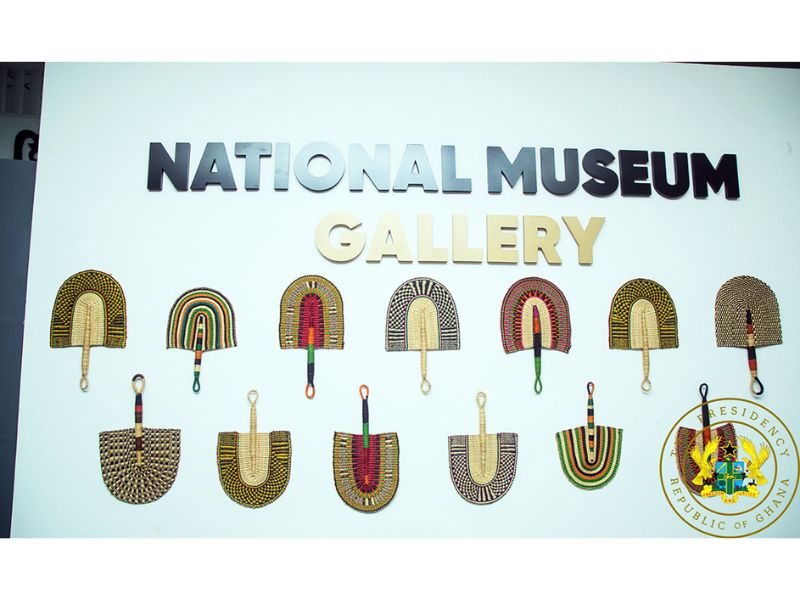
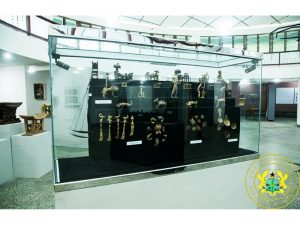
The gallery
Some historical monuments

The once non-functional facility that housed history of the state, the National Museum in Accra, has been reopened. The national asset, which served as a tourist attraction was opened last Friday, after renovation works had been completed by the Akufo-Addo government.
After being closed to the public seven years ago due to lack of proper maintenance, the museum has been fully rehabilitated and restored to its original state, with the inclusion of additional exhibits and artifacts.
The inner roads of the museum have also been asphalted for the first time since its establishment in 1957.To enrich the experience of visitors to the museum, seven old vehicles used by the country’s former heads of state have been added to the exhibits.
REOPEN
A colorful ceremony was held last Friday to commission the facility. As the special guest of honour, the President, Nana Addo Dankwa Akufo-Addo, in his address said the effort put into restoring the facility formed part of a comprehensive vision of his administration to help create a vibrant cultural industry.
He opined that “Tourism, Arts and Culture are effective tools for economic transformation and we in Ghana can benefit from this because we possess a significant number of heritage resources.”
According to the President, Ghana has 65 per cent of her edifices linked with the Trans-Atlantic slave trade, including the oldest European edifice in Africa, the Elmina Castle built in 1482.
He added that Ghana is part of the 25 per cent of African countries with rich and rare species of both flora and fauna, which give us a considerable advantage in nature-based tourism activities.
With the tourism sector identified as the third largest contributor to the country’s Gross Domestic Product (GDP), President Akufo-Addo said the government would position the sector to contribute more to GDP.
To that end, he said the government had put in place a digitalised platform to ensure efficiency and maximisation of revenues in the tourism, arts and culture space.
“The visit Ghana app has been designed to help tourism enterprise operators to promote and market their products. There are also plans to digitalise our museums to enhance their global appeals,” he said.
PLANS
Delighted about the reopening of the national museum, President Akufo-Addo also said five ultra-modern amphitheaters in selected regions in the country were being built this year, with another five to be constructed next year.
He further announced plans by the government to provide training for stakeholders in the tourism and heritage sector to ensure their products had global appeal and to improve customer services in the sector.
He said the government had committed an amount of US$10 million to rehabilitate and build a number of tourist and heritage attractions including the Kwame Nkrumah Memorial Park, the Cape Coast and Elmina Castles, the Manhyia Palace Museum, the Biriwa Palace Museum and the Yaa Asantewa Museum
BUSINESS MODEL
The Minister of Tourism and Creative Arts and Culture, Mohammed Ibrahim Awal, said the ministry had developed a business model to keep the National Museum active to generate revenue for the country.
He thanked the Ministry of Roads and Highways for its commitment to improve road access to key tourist sites in the country to drive the country’s tourism sector.
“This year looks very exciting for tourism. From September to December, we are expecting many tourists,” he said and urged Ghanaians to support the ministry to build the country’s tourist sector to make it attractive.

We were not a bunch of ignoramuses; Former COCOBOD Chair

0
Daniel Ohene Agyekum, former Board Chairman, Ghana Cocoa Board

Ambassador Daniel Ohene Agyekum has described in no uncertain terms that the Board of Governance which supervised the Ghana Cocoa Board (COCOBOD) between January 2014 and January 2017 was not made up of a “bunch” of ignoramuses.

According to him, although the Board may not have consisted of experts or scientists, all the members were literates, knowledgeable, and intelligent enough to read, comprehend, and also appreciate expert advice, particularly, on agrochemicals.

He was responding to the accusation made by the seventh prosecution witness (PW7), Detective Chief Inspector Thomas Prempeh Mercer, who is at the Financial Forensics Unit (FFU) at the Criminal Investigation Department (CID) Headquarters of the Ghana Police Service, that the Board, during the period, did not know what they were doing when they approved Lithovit Liquid Fertiliser.

Ambassador Ohene Agyekum, Board Chair at the time and fourth defence witness (DW4) in GH¢271.3 million cocoa trial, told the court, presided over by Justice Clemence Honyenuga, a Supreme Court Justice with additional responsibility of the High Court, yesterday, that Mr. Mercer’s submission passed the accusation into an insult.

The witness, while being cross-examined by Nutifafa Nutsukpi, Counsel for Seidu Agongo and Agricult Ghana Limited, said: “My lord, my immediate reaction would be that piece of evidence is tantamount to insulting the intelligence of the members of the ETC (Entity Tender Committee). We knew what we were about. My lord, with all due respect, we were not a bunch of ignoramuses. Even if we were not experts, we were literate enough; knowledgeable enough and intelligent enough to read and appreciate the distinction between solid material and liquid material. And, in this particular case, technical presentation by the experts from CRIG, we clearly understood both the liquid or granular or solid fertilisers that we approved.”

DW4 also said he found it strange for the court to rule in the submission of no case, that the Board of COCOBOD and the ETC, all of which he chaired, approved Lithovit Liquid Fertiliser that was worthless and that the state received no value for it.

He explained that fertilisers were procured based on the advice of experts from the Cocoa Research Institute of Ghana (CRIG), while the Cocoa Health and Extension Division (CHED) was responsible for educating farmers on the use agrochemicals, as well as and receiving feedback on same.

But, DW4 said from the time he was the Board Chair to date, he had not sighted or come across any CHED report claiming that Lithovit Liquid Fertiliser was defective, or had adverse effects on cocoa farms.

Ambassador Ohene Agyekum averred that the Board was not influenced by Seidu Agongo and his company to approve Lithovit Liquid Fertiliser to be procured and distributed freely to cocoa farmers.

“That is absolutely impossible. I can’t imagine. It is inconceivable that any particular individual can or could influence choice or decision to award a contract in favour of that particular person. It is simply impossible and that it could not happen under my watch during my time,” he emphasised.

The court is trying Dr. Stephen Kwabena Opuni, former Chief Executive of COCOBOD, together with Seidu Agongo and his company on some 27 accounts, including causing financial loss to the state.

The court has adjourned to Wednesday, June 13, 2022.

The Ghanaian Chronicle