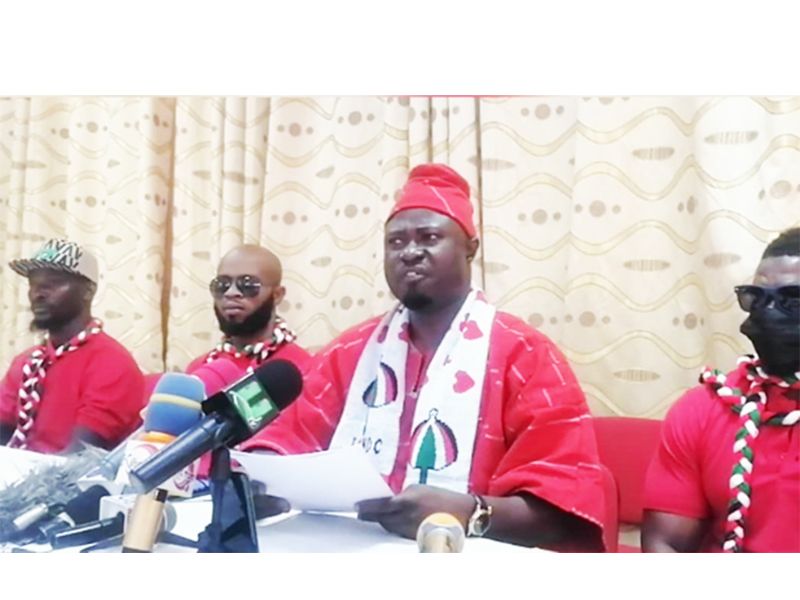
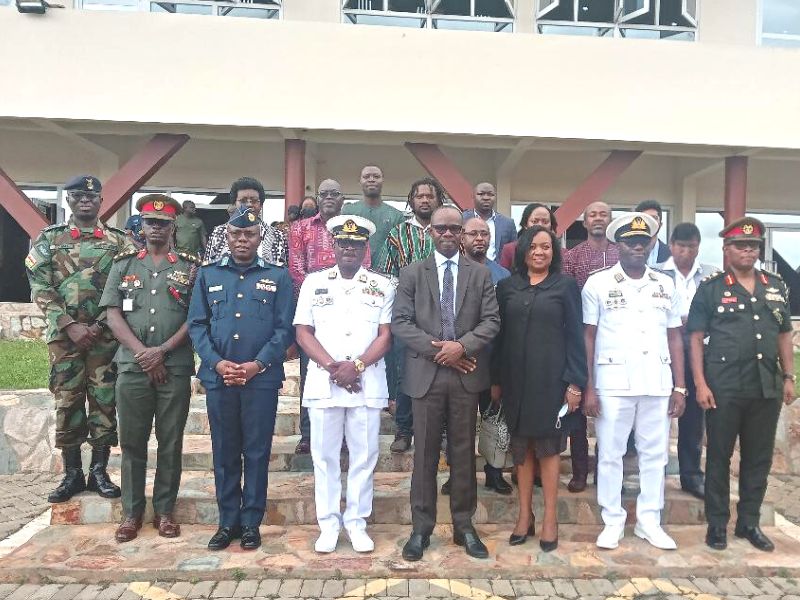
Patrick Winibood Ndego, convener of Eagle Eyesight addressing the media in Kumasi
Members and sympathisers of the National Democratic Congress (NDC) in the Subin constituency have called on Dr. Samuel Sarpong, chairman of the 7-member fact finding Committee, which investigated allegations against Ashanti regional executives of the party to come out andstate his position regarding the findings of the Committee.
Dr. Samuel Sarpong – Committee Chairman
The Spokesperson of concerned group of members of the party, Joseph Attivor, said Dr.Sarpong would need to publicly endorse the authenticity of the said report or state otherwise, since the said report has come to indict the integrity of the members of the Committee.
He said the Ashanti Council of Elders must prevail on the former KMA boss to make the report public for them to ascertain whether the regional executives were truly indicted in the face of the allegations leveled against them by Enoch Amoako-Nsiah or not.
The group said it should not be difficult for the chairman to state whether the report is true, genuine or valid, in order to safeguard his credibility.
“Dr.Sarpong’s silence is disturbing. His credibility as a leading member of the party, who is also aspiring to partner the flag bearer isat stake and he must disabuse the minds of party members who think he(Sarpong) is behind the Ashanti project against “aliens” (non-Asantes)vying for leadership positions in the region”, the group argued.
Mr. Enoch Amoako-Nsiah, a former Ashanti Regional Security Co-ordinator has alleged that some NDC Regional Executives compromised their positions to the detriment of their own party’s interest and that, thesaid Regional Executives might have sold out the fortunes of the party to their political opponents.
As a result, the Committee was appointed and went on to indict the Regional chairman and the Regional Secretary, saying the Regional Secretary’s conduct went to reinforce the perception of the public that he compromised his position, which the Committee saw as a betrayal of the party.
The committee also noted that there was no proper co-ordination among the Regional Executives and that “No teamwork and factions were created and as a result of that these factions operated to their own advantage,” and that “Generally, the Regional Chairman exhibited gross
incompetence”.
The Committee, however, made recommendations without any tangible evidence to establish the truth or otherwise of the allegations.
The committee finished its findings some five months ago but the unsigned report which is also not dated has been shelved until some members of the Committee leaked it out to the media.
The Committee was chaired by Dr. Samuel Sarpong, with Mr. Jonny Osei Kofi as the Secretary.
The other members are; Mr.Kwabena Bempong Marfo, Prof.Ohene Adjei, Ms. Juliet Abena Takyiwa, Mr.Kaakyire Oppong Kyekyeku and Mr.Kwadwo Adu Gyamfi.
Eagle Eyesight
In another development, the Eagle Eyesight, a pressure group in the opposition National Democratic Congress (NDC) has given 72 hours ultimatum to Mr. Augustus Andrews Nana Kwasi, Kwame Zu and Isham Alhassan, the Ashanti regional Chairman, Secretary, Organiser respectively to resign.
Failure to do so, the group threatens to call on the party hierarchy to suspend or remove them from office over bribery allegations said to have hit the party at the 2020 elections.
The group alleged that some National Executives are allegedly trying to water down revelations made by report of a Committee, hence their intervention.
At a press conference in Kumasi on Monday, this week, Patrick Winbood Ndego, the Convener of the Eagle Eyesight, threatened that the group would not hesitate to lock up the National Headquarters if the named regional executives are not suspended in the next 72 hours.
He hinted that the group would come after anyone who is found to be destroying the party.
Mr.Winbood Ndego explained that, the Eagle Eyesight takes the purported bribery allegations made against some of the Ashanti regional Executives serious and reported by a section of the media,which publications have traumatised the group, hence their decision to travel to Kumasi to ascertain the veracity of the case.
According to the convener, upon reaching Kumasi, they met with some Ashanti Regional Council of Elders who magnanimously gave the Eagle Eyesight a copy of the report.
He stated that the said report had made shocking and damming revelations against some of the executives and party elders.
He said they were very informed by the Council of Elders that copies of the report have been submitted to the National Executives Committee, National Council of Elders, Office of the former President John Dramani Mahama and other dignitaries of the party, yet no action
have been taken against the executives, allegedly contributed to the defeat of the party in the 2020 general elections by selling elections, to the governing New Patriotic Party (NPP) through negligence.
He stated that, the Executives failed to provide polling station agents to majority of the polling stations and could not provide almost 500 agents for the newly 540 polling stations that were created by the Electoral Commission (EC), prior to the elections, which were all left at the mercy of the NPP.
The Eagle Eyesight Convener said the report also revealed that the Executives did not send out over 1000 qualified and well-trained polling station agents whereas some polling stations had no agents at all.
From Sebastian R. Freiku & Ernest Best Anane, Kumasi
The Chief Executive (CE) of the National Petroleum Authority (NPA), Dr Mustapha Abdul-Hamid, has revealed that Liquefied Petroleum Gas (LPG) as main source of cooking fuel rose from 24.5 per cent in 2017 to 36.9 per cent in 2021.
According to him, the increase in adoption rate of gas as main source of cooking fuel is as a result of regulatory interventions focused on rural LPG promotions to distribute free cylinders, intensified public educations on safe usage of LPG, infrastructural development, improvement in supply and distribution and LPG pricing structure.
Speaking at the 3rd West Africa LPG Conference and Expo under the theme “Towards Making LPG The Clean Fuel of West Africa”, the NPA CE said the objective of government is to ensure at least 50 per cent penetration by 2050.
Dr Abdul-Hamid said even though Ghana had made gains in LPG consumption over the past five years, there were challenges, which have threatened the sustainability of the LPG market in Ghana
“… challenges such as slow uptake in particularly low-income areas, affordability, accessibility, non-adherence to safety requirements by some operators, old and unsafe cylinders, among others have threatened the sustainability of the LPG market in Ghana,
“To remedy the situation, the government of Ghana in October 2017 launched the National LPG Promotion Policy with the objective of ensuring that at least 50 per cent of Ghanaians have access to LPG for domestic, commercial, and industrial use by 2030. The Policy is to be driven by the new marketing and distribution model, the Cylinder Recirculation Model (CRM),” he emphasized
On his part, the Minister of Energy, Dr Matthew Opoku Prempeh, said the LPG industry presents an attractive solution to leverage the shift to cleaner energy sources while promoting Africa’s industrialisation agenda.
“And I believe it will take the collective efforts from academia, the industry and government to prudently push West Africa to maximise the economic gains across the entire LPG value chain,” he added
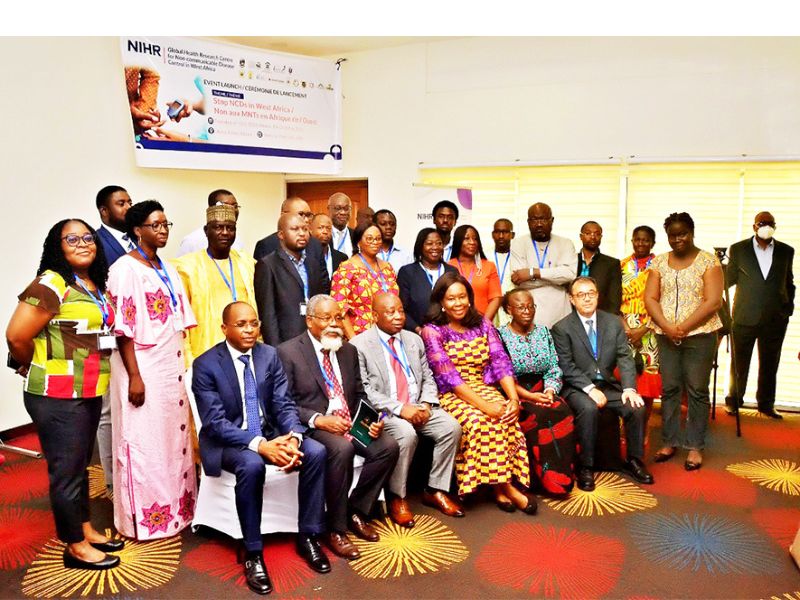
Ghana’s Minister for Health, Kwaku Agyeman-Manu (3rd from L) in a photograph with officials of NIHR and NIHR STOP NCDs implementing partners after the launch
The people of the United Kingdom (UK) are supporting the West African region to launch research into Non-Communicable Diseases (NCDs) for the next five years.
The research would be co-led by the London School of Hygiene and Tropical Medicine (LSHTM) and the Ghana College of Physicians and Surgeons (GCPS).
Other cluster institutions to join the research in the region are; the Catholic University of West Africa in Bobo-Dioulasso, Burkina Faso, LASDEL in Niamey, Niger, and Ashesi University in Brekusu, Ghana.
The project is under the Global Health Research programme, established under the National Institution for Health Research (NIHR) and Global Health Research Centre for Non-Communicable Diseases. The project was launched in Accra yesterday, under the theme: “Stop NCDs.”
Ghana’s Minister for Health, Kwaku Agyeman-Manu, giving a keynote address commended the initiative and stated that NCDs related illnesses and deaths are becoming prevalent across the globe.
He said the sub-region is having its fair share of the health challenge, due to modifiable risk factors which include tobacco use, unhealthy diet, physical inactivity, harmful use of alcohol and air pollution.
The Minister added that despite an increasing trend in NCD-related morbidity and mortality, implementation of global interventions such as WHO policy recommendations remains slow.
“For example, Africa was off track in achieving the WHO recommendations for tackling NCDs targets for the 2015 and 2016 deadlines. It appears that despite the initial achievements by African countries towards fulfilling the commitments in the 2011 UN Political Declaration and the 2014 outcome, Africa’s commitment to implementing the NCD policy responses has waned,” he lamented.
Professor Irene Agyepong (GCPS) and Professor Tolib Mirzoev (LSHTM), Research Centre Co-Directors, stated that the goal of the project is to contribute to improved health in West Africa through improving capacity for applied research to improve prevention, diagnosis and management of three connected NCDs -hypertension, diabetes and common mental disorders (anxiety and depression).
The Chief of Kwahu Nkwatia in the Kwahu East district of the Eastern region Nana Boamah Ayiripe III
Hon. John Lartey, Assemblyman for Odumase electoral area
The Chief of Kwahu-Nkwatia in the Kwahu East District of the Eastern Region, Nana Boamah Ayiripe III, has called on all settlers on Kwahu-Nkwatia lands to support the development of the area.
The Chief made the call when he toured 135 communities, which are in both Kwahu Afram Plains South and North, but fall within the traditional jurisdiction of the Kwahu-Nkwatia Stool.
The one week tour was firstly to introduce himself to all the settlers as the legitimate Chief of the area, as well as the traditional jurisdiction and lands.
The reception accorded the Chief and his entourage throughout the over 135 farming communities was highly impressive amidst various dance performances, depending on the ethnicity of the people.
Apart from a Grand Durbar held at Ekye Amanfrom in the Kwahu South District, there were mini durbars organised for the Chief and his entourage, where various issues of national and traditional development were raised.
Education
The Chief of Ekye Amanfrom, Nana Osei Yaw, appealed to the Member of Parliament (MP) for Abetifi Constituency, Bryan Acheampong, and the Nkwatiahene, Nana Boamah Ayiripe III, to help build a Senior High School (SHS) in the area.
The chief of Kwahu-Nkwatia in the Kwahu East District of the Eastern Region Nana Boamah Ayiripe III in a group picture with some members
According to him, Ekye Amanfrom was surrounded by a lot of Junior High Schools (JHS), but could not boast of an SHS, a situation that had negatively impacted on the education of the children after JHS.
He said most parents were not able to send their wards to SHS outside the area, because they were peasant farmers, hence, “It will be very easy if we have [an] SHS, which would be very easy to have our young children attain further education,” he added.
Telecommunication
John Lartey, Assembly Member for Odumase electoral area, lamented over the absence of a functioning telecommunication network, making it difficult to make calls.
He, therefore, made a passionate appeal to the government and telecommunication companies to, as a matter of urgency, extend their services to the area to pave way for development and improve upon the social and economic well-being of the people.
The Assembly Member disclosed that residents in the area had to climb trees and hills before getting access to the networks to be able to make calls and access information on the internet.
To this end, he appealed to the government to construct their roads, which were in deplorable states and impacting negatively on the local economy, as farmers and traders were stranded, and food crops left to rot on the farms.
Agriculture
Agriculture stands to be the mainstay of the Kwahu Afram Plains South District economy by virtue of its level of employment, which is 77.4% of the total labour force.
Agriculture is, however, divided into two major types- crop farming and animal husbandry. The combination of these two activities gives rise to the third option – mixed farming.
According to a government survey, crop farming is the dominant agricultural activity in the District. About 90.1% of the farmers are into crop production. The favourable climatic conditions and the geo-physical characteristics of the area support intensive crop farming.
These and other factors, such as the availability of arable land, account for the high crop production. Most of the food crops are grown mainly to be sold for income, and the rest to be consumed by the families. There is high potential for tree crops such as cashew and oil palm, but such crops are not being cultivated in the district.
Farming systems
There is also evidence of mixed farming, since most of the farmers growing food crops also rear livestock and poultry, either for domestic consumption or income.
Considering the farming systems, bush fallowing, which is a system whereby land is left for a period of time to regain its fertility, is being practiced by 48.5% of the farmers.
The length of the fallow period has been drastically reduced due to the growing population and the increasing demand for land for other uses. Continuous cropping is practiced by about 45.5% of the farmers.
This can result in the loss of soil fertility and adversely affect output levels if measures are not put in place to retain the soil fertility in the course of continuous cropping. The other 6% of the farmers practice crop rotation.
Addressing the issues raised, Nana Boamah Ayiripe III urged commuters to be united and follow the customs and traditions of the land in order to achieve their set targets.
He urged herdsmen to respect the rules and regulations in order to help farmers in the area as they rear their cattle, which helps them live harmoniously with commuters in the area.
“Farming is very difficult, hence, herdsmen should try to prevent their cattle from destroying other farmers produce,” he advised them.
He assured the settlers of his readiness and commitment to bring accelerated socio-economic development to every corner of all communities, as long as he remains Kwahu Nkwatiahene.
“I’m Kwahu Nkwatiahene currently; I do everything at [the] Nkwatia Palace; I do perform Akwasidae at the Palace as well,” he said.
He promised to collaborate with the leadership of the two districts and government to ensure that basic social amenities were provided to improve the lives of the people.
When Nana Addo Dankwa Akufo-Addo, Head of State of the Republic of Ghana, declared the newly-built Alisa Hotel in Tema open, just before mid-day on Friday September 30, 2022 the pronouncement was greeted with loud applause and rendition of sweet melodies from the Tema Youth Choir.
The thunderous ovation was not only meant to acknowledge the arrival of the latest addition to the hospitality industry at the centre of the earth. It was a grand celebration of the business acumen of the man who has succeeded in merging industrial zeal with hospitable tenacity.
Mr. Kwame Ofosu Bamfo is no ordinary businessman. He is a genius with a big human heart. He has touched every facet of life in this country.
THE MAN CALLED SIKKENS
The man affectionately called Sikkens, is an industrialist, a hospitality icon, a football administrator and above all one of the most accomplished philanthropists this land of our birth has ever seen.
Simply put, he is a man with the Midas touch. His addition to the hospitality enterprise in Ghana, speaks for itself, in terms of class.
Designed by renowned Ghanaian Architect, Augustus Richardson, the 50-room capacity Alisa Hotel-Tema, with 46 guest rooms and four Suites, was specially designed with both business and leisure travelers in mind, according to literature on the new addition to the hospitality industry in Ghana.
“The Alisa Hotel Group” says with pride that its Chief Executive “is one of the most trusted hospitality brands in Ghana. It is acclaimed for its conferencing and accommodation facilities.”
The new hotel is located in Community 12, barely eight kilometres from the Tema Harbour.
It offers luxury accommodation, 50 guest rooms and suites, all-day dining and restaurant, upstairs bar, pool bar, day spar, tennis court and gymnasium.
The new hotel adds up to the 14-room Alisa Hotel at Labone in Accra and the 278-room Alisa Hotel-North Ridge, Accra, with 14 conference and meeting facilities. In all, the three hotels employ 700 Ghanaian workers.
THE ICONIC MERIDIAN HOTEL
Bamson Company Limited
For those too young to experience events during the First Republican era of Osagyefo Dr. Kwame Nkrumah, first Prime Minister and President of the first black African nation to break free of the colonial yoke, the harbour city of Tema had a vibrant Hotel – Meridian, named after the Greenwich Meridian, on which the hotel was cited, directly South of London.
Meridian Hotel attracted the crème de la crème of national and international revelers. So iconic was the Meridian Hotel that the Wulomei Cultural Troupe popularised the praises of the hospitality centre.
The lyrics go like this:
Oblayoko, egye Sempe
Egbomotso feefew
Esumo mi wuobe
Mekaa shi miiwo
Ebaa kye mi
Ibii le ake, mini sane
Ekee mi ake, eye ooya
Oye oyae, nigbe oke mi yaaeee
Won ya Meridian ye Tema
Inke bo yaa ye
Inke bo yaa nu
Inke bo yaa djo
Literally translated as; “A man in love with a certain beautiful woman from Simpe, approaches her while she lays in bed, and asks her to hurry up and get up for them to go to Meridian Hotel at Tema, where they will eat, drink and dance together.”
Down South into the Gulf of Guinea, from Tema, the Greenwich Meridian (Longitude Zero), meets the Equator (Latitude Zero), making Tema and by inference Ghana, as situated right at the centre of the earth.
A TOUCH OF HISTORY
Side view of Alisa Hotel, Tema
In 2006, I was the Media Liaison Officer for the Ghana contingent to the Commonwealth Games in Melbourne, Australia. As part of my duties, I was invited to a radio studio to talk about my country, Ghana.
When I said my lovely country is situated right at the centre of the earth, listeners appeared skeptical with my story. To prove my case, I asked those skeptics to open the map of the world and tell me where the Greenwich Meridian meets the Equator.
After satisfying themselves that Ghana, indeed, is at the centre of the earth, many called into the programme, wanting to know whether any platform or structure has been raised at the spot as a form of tourist attraction. One enthusiastic caller said he would be too glad to hold his wedding at the centre of the earth.
It tells a lot about the importance of Ghana at the centre of the earth. We need to promote the idea big time and celebrate it.
THE ALISA HOTEL DREAM
In his speech at the opening of his latest enterprise at Tema, the Chairman and Chief Executive Officer told the gathering that the imposing building was constructed during the Covid 19 pandemic era, signifying the sacrifice that went into bringing the project to fruition.
“Some 35 years ago, I was ardent in my pursuit to impact my generation, as well as inspire the generation after. This led me to build the Bamson Group; Sikkens Paint, Glostal Aluminium and Alisa Hotels,” Mr. Bamfo said to wild applause.
President Akufo-Addo and CEO of Alisa Hotels Group, Kwame Ofosu Bamfo, exchanging pleasantries
Explaining why he branched from the industrial arena and ventured into the hospitality industry, this is what Mr. Bamfo told the audience at the opening ceremony: “During the early days of Sikkens, when my Principals from Holland visited Ghana to train local artisans in car spraying, housing them was a challenge.
“This is when the idea of the Alisa Hotel was conceived and the 14-room boutique hotel came on board at Labone. On completion, I deemed it appropriate to name it after my cherished mother-Alice Amanua.”
High demand for the kind of hospitality the Labone Hotel offered encouraged the entrepreneur to expand.
“Mr. President, within the last 20 years, the Alisa Hotels Group has grown into a trusted brand, offering maximum comfort at each of its unique locations, with Alisa Tema being the latest addition,” the industrial and hospitality guru explained at the Tema launch.
MY BUSINESS FOUNDATION WAS LAID IN TEMA
The significance of Tema in the business mogul’s journey was explained thus: “Tema is where my business foundation was laid. At a young age of 20, before bringing Sikkens into Ghana, I used to supply building materials such as iron rods, galvanised pipes, copper pipes, steel plates and bolts and nuts among others to the industrial hub of Tema.”
During those days, he told his audience, the now defunct Meridian Hotel was at its peak. It was where people got together to unwind after a hard day’s work.
“That provided the inspiration for what we are witnessing today. Tema, truly, have their lifestyle back,” he said to thunderous approval from the audience.
Mr. Bamfo assured the invited guests, including the Head of State that he and his hard-working team would not rest on their oars.
Glostal Aluminium Systems Limited
“There are plans for a dedicated 1,000 seating conference centre at the North Ridge branch and plans for additional rooms to complement the current Alisa Hotel, Tema.”
Many Ghanaians and visitors to this country have been touched by the industrial, hospitable and generous nature of the man many call ‘Sikkens’.
BIOGRAPHY
But who is the man making waves in many spheres of endeavor in this country? What has been his journey so far and what inspires him to believe in Ghana as an entity that can work?
The man we all address as Sikkens was christened George Kwame Ofosu Bamfo and was born to Madam Alice Serwaa Amanuah and Mr. Kwame Bamfo in 1955, two years before this nation threw off the colonial yoke. He was the second of eight children, two of whom are now deceased.
He began preparing for future life as a pupil of the Tease Roman Catholic Primary School in the Afram Plains in the Easter Region of Ghana. The young lad proceeded to the Local Authority (LA) Middle School also at Tease.
A very bright pupil, the boy with the future ahead of him had Distinction in the Middle School Leaving Certificate examination and was full of dreams as a person with future in academia.
He was offered admission to the Pope John Secondary School, a popular second cycle institution at Koforidua, the Eastern Regional capital.
Full of excitement, the young man’s hopes were dashed when his prospectus arrived from the school and was handed over to his father. The proud dad willed his child to move on in academia.
But with the financial muscle unavailable, the poor boy was virtually reduced to tears. Kwame decided to relocate to Accra in 1971 where he worked in an uncle’s shop. The shop was selling a number of building materials, including paints.
Front view of Alisa Hotel, Tema
Born with business acumen in his veins, the young man noticed that the Sikkens paints retailed in the uncle’s shop were moving faster than most items. One day, he was at Adabraka, Odawna, in Accra, where he accidentally came across a tin of used Sikkens paint.
“I wrote to Azko-Nobel Sikkens in Holland, manufacturers of Sikkens Paint, asking to be their representative in Ghana, in my own hand-writing. A reply came instructing me to deal with Ritz Company Limited, which was the accredited representatives of Sikkens in Ghana.”
According to the business guru, he dealt with Ritz for a while. But as fate would have it, Ritz stopped being the agent of Sikkens in 1985, and his company, Bamson Company Limited, named after his late father, was appointed the official agent of Sikkens in this country.
He moved his company from Kantamanto, where he had begun his personal enterprise, after leaving the employment of the uncle, and settled and opened his new office and workshop at Agbobloshie in 1993.
“To sustain the job, a number of training sessions were held for artisans in Accra and Kumasi in the 1990s. So far, as many as 15,000 artisans have been trained in the art of car spraying. 150 of them have benefitted from train9ng in Holland,” Mr. Bamfo told me in his office at Alisa Hotel-North Ridge.
Always willing to add to the industrial needs of this country, Mr. Kwame Ofosu Bamfo established the Glostal Aluminium System in Accra in 1995. The company produces Aluminium walls, window curtains and automatic doors among others.
PHILANTHROPIST EXTRAORDINAIRE
A philanthropist extraordinaire, Mr. Kwame Bamfo freely gives to the needy. He has got his company to refurbish the Tease Presbyterian Health Centre at a cost of GHC400,000.
The company also presented a 45KVA stand-by generator, 15 beds, with mattresses, bedside lockers, 20 rechargeable solar lamps and other hospital suppliers to the centre.
On the day of the hand-over at Tease, the Chief Executive Officer said the gesture was his idea of giving back to the society which nurtured him as a school boy.
He told his audience that Sikkens has also set up a health insurance foundation to cater for people who are 40 years and above in the community.
Mr. Ofosu Bamfo is also rehabilitating a four-bed Bungalow for the Tease Health Centre that has been abandoned at the construction stage for the past 20 years.
In recognition of his immense contribution to the development of Tease and its environs, the chiefs and people honoured him with a durbar. The Presbyterian Church of Ghana and the Kwahu Presbytery Health Services also honoured the industrialist, hospitality guru and a great philanthropist.
At the ceremony, Mr. Bamfo advised the youth to take their lessons seriously and pledged more support for the community.
“We have provided computers for the Presbyterian and Roman Catholic senior high schools at Tease. The Sikkens Education Trust Fund was established to support the needy,” he assured.
With such a heavy schedule one might think that the man who is making waves as an industrial and hospitality icon has little time on his hand for leisure.
SPORTS MAN
Far from that, Mr. Kwame Bamfo generates a lot of time to engage in sports, his Number One love. He has been for several years a key member of the Black Stars Management Committee as well as one of the players’ bank-rollers.
An ardent supporter of the Arsenal Football Club in London, Mr. Ofosu Bamfo is a god-father to most footballers and sportsmen and women in this country. When Okwahu United were winning honours and had their supporters screaming ‘Asaase Aban, Yente Gyae,’ Mr. Kwame Ofosu Bamfo was the executive chairman.
Man of the People and extra-ordinary adventurer in this nation’s bid to develop, the man universally called Sikkens has won several awards.
The Chartered Institute of Marketing Ghana (CIMG) honoured him when he was only 35 years as the Marketing Man of the year.
On Saturday, just a day after opening his latest hub in the hospitality industry, Emit honoured him for his drive and enterprise.
Former Editor of the Ghanaian Times, the late Kwame Gyawu-Kyem, once wrote a one-paragraph editorial; “When a man has done his very best, the angels above cannot do anymore.” In Fanti lexicon it translates into: “Okobran Twa Par, A Woma No Mbo.”
Let these lovely words continue to be said of Mr. George Kwame Ofosu Bamfo, universally acknowledged as one of the best things to happen to this land of our birth.
May the Sikkens brand and the man continue to be celebrated throughout the Republic of Ghana!
Our attention has been drawn to a number of publications on “how Ghana is losing revenue, as Chinese takes over local positions in the mining sector”.
In those publications, our company, Golden Star Wassa Limited (GSWL), is mentioned and we take the opportunity to debunk the falsehood contained in the publications.
Golden Star Resources (GSR) is a law-abiding external company into lawful mining operations through its 90% owned subsidiary company, Golden Star Wassa Limited (GSWL) incorporated under the laws of Ghana.
Chifeng Jilong (Chifeng), a mining company that is currently listed on the Shanghai stock exchange, controls GSWL. Chifeng is the largest non-state mining company in China. It is in the process of listing on the Hong Kong and Ghana stock exchanges. Utmost importance and urgency is placed on the processes required to complete these two listings.
In accordance with Section 43 of the Minerals and Mining Act 2006, Act 703, the Government of Ghana has ten percent free carried interest in GSWL and it is common knowledge that most Large-Scale Mining companies in Ghana that are compliant with the law have 90% interest or shareholding, while the government of Ghana has 10% interest or shareholding. Indeed GSR is not an exception.
Since its formal acquisition on January 28, 2022 to date, approximately 40 million USD CAPEX investment has been made into GSWL, this includes $9,742,353 million USD invested in equipment (Chifeng). The new controllers have also paid the severance package of all permanent employees to the tune of 34 million USD as promised before the acquisition.
In order to ease Chifeng, the new owners into the investment made into GSWL as part of an ongoing transition, expansion and investment process, Chifeng is represented by a team who are working closely and cordially with national team members. This is demonstrated in the type of permit the new owners hold in accordance with a plan to transition into a formal structure in line with Minerals and Mining Regulation Act (Local Content and Local Participation) LI2431.
This is common practice and not in breach of any mining laws in Ghana. Furthermore, Ghanaians continue to head the following departments; Health Safety Environment and Community (HSEC), Human Resources (HR), Mining, Metallurgy, Corporate Affairs as well as Legal and Compliance.
Chifeng has maintained MOUs detailing GSWL’s relationship with its host communities since the acquisition, a position that continues to be demonstrated through ongoing and expanded community-related activities.
To further demonstrate Chifeng’s compliance with the laws of Ghana, the Wassa mine has had two (2) visits from the Ghana Immigration Service and none of those visits has found GSWL to be in breach of Immigration laws. Furthermore, GSWL continues to engage with its regulators, the Minerals Commission and other regulatory bodies in the discharge of its operations without incident.
Regarding the expatriate mentioned in the publications, a Canadian of Chinese descent, he came into Ghana through legal channels, just like all expatriates GSWL engages, and has the required permits. At no point has he engaged in illegal mining in Ghana. To conclude, GSWL is a law-abiding corporate citizen owned by the largest non-state mining company in China. In addition, China is one of the biggest trading partners of Ghana.
To attempt to lump GSWL, a large-scale mining company in good standing, as one in breach of Ghanaian laws, and accuse its officers of practicing illegal mining (galamsey) is unfortunate and very misleading.
Especially as such publications have the tendency to incite the general public and other stakeholders against legitimate well-meaning Chinese businesses in Ghana. We entreat all our stakeholders and well-meaning persons to treat such publications with the contempt they deserve.
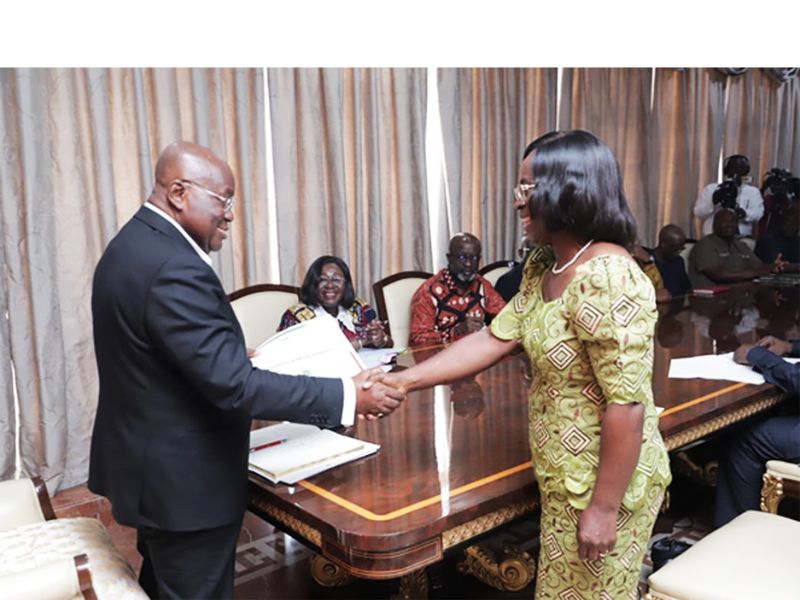
President Akufo-Addo shaking hands with Prof. Yaa Ntiamoa-Baidu, MiDA Board Chair, at Jubilee House yesterday
Compact II funded Air conditioner and Refrigerator Test Laboratory
The President, Nana Addo Dankwa Akufo-Addo, intends to initiate discussions with the Government of the United States of America for another Ghana Power Compact Program. His desire follows the successful completion of the program referred to as Compact II, which ended in June this year.
“The real issue now for me is COMPACT III. I am due to travel to America soon, and I intend to raise it at the highest levels…,” he remarked.
He expressed the thought on Tuesday, October 4, 2022, when the Board of the implementation agency, the Millenium Development Authority (MiDA), called on him at Jubilee House to present a formal report on the implementation of the programme.
Compact I and II sum up to about US$900 million; grants which had seen the nation benefit from infrastructure developments. The first compact was about US$547m, and the revised Compact II funding following the termination of the concession agreement was US$347m.
NEW COMPACT
The President congratulated the Board which took office in March 2017 and was charged with overseeing the implementation of the Compact II.
He said that the infrastructure projects that came out of the arrangement were those that were of immense benefit to the nation, particularly in the power sector.
The Compact II funded Pokuase Bulk Supply Point Substation at night
At a time when Ghana was looking at developing its aluminium and bauxite resources, lots of energy would be required, the President argued, adding that interventions like the compact were key.
President Akufo-Addo was happy to hear of the successful completion of the previous compact, a development he believed set the tone for discussion on a possible third one.
According to him, considering how the first compact, whose arrangement started under the presidency of Kufuor for Ghana, gave the country a good name and the just ended one, it would not be out of place to initiate a third deal.
“…I know we had this temporary glitch with the relations over ECG and PDS, but anyway, that is already behind us. We are hoping that the American administration will also understand that that is behind us and see the possibility of us sitting around the table to construct a new compact,” he noted.
The President opined that the various elements that constituted the requirements for the compact idea continued to be very present in Ghana.
He believes that there was every reason for Ghana to be interested if such an idea which was still on the table in Washington, particularly with the economic transformation agenda of the Akufo-Addo government.
MiDA
Briefing the President, the Chairperson of the Board of MiDA, Prof. Yaa Ntiamoa-Baidu, happily reported that the Authority had achieved a lot.
She said that by the end date, “all projects retained and prioritised for implementation had been completed, commissioned, and handed over to the beneficiaries, which included ECG, GRIDCo, Ghana Standards Authority, Energy Commission, PURC, Ministry of Education, Korle Bu Teaching Hospital, University of Ghana, KNUST, and University of Energy and Natural Resources, amongst others.”
PROJECTS UNDERTAKEN
Prof. Yaa Ntiamoa-Baidu informed the President that the projects undertaken under Compact II included the following: two bulk supply points at Pokuase and Kasoa; providing 1,015-mega volt amperes (MVA). There are two primary substations with interconnecting circuits at the 37 Military Hospital, the Greater Accra Regional Hospital, and the University of Ghana Medical Centre.
Also, a refrigerator and air conditioner testing laboratory for the Ghana Standard Authority; a low voltage bifurcation projects in six districts of ECG’s Accra East and West sections. In addition, ECG has been provided with a state-of-the-art metre management and geographic information system to support their efforts aimed at loss control and improve profitability.
Then there is the replacement of street lights, and refurbishment of 528km of selected streets in 20 MMDAs in Greater Accra. The was retrofitting of seven major government buildings in the ministries including interventions at Korle Bu and the University of Ghana.
She indicated that all the compact funds, including some US$31 million provided by the government of Ghana as counterpart funds, were fully utilized.
Yesterday was the last day of the contract, and so all MiDA staff contracts also ended, but MiDA has been approached by the finance ministry to take up the role as coordinator of one of the economic activities under the Ghana Cares Obaatan Pa programme, so a few staff have been maintained, and additional staff will be recruited.
ABOUT THE POWER COMPACT
It was designed to introduce reforms into Ghana’s power sector while providing some much-needed power infrastructure assets.
The four projects comprising the Compact Program are: ECG Financial and Operational Turnaround Project; Regulatory Strengthening and Capacity Building Project; Energy Efficiency and Demand Side Management Project; Access Project.
The CDS Vice Admiral Seth Amoama (3th left) & AG Director-General of CSA, Dr Albert Antwi Boasiako (m) in group photograph
In three months the Ghana Armed Forces (GAF) identified a total number of 28 cyber security incidents, much of which were perpetrated by scammers, recording eight cases on July, 10 in August, and another 10 in September.
According to the GAF, over the past five years, cyber incidents and grand statistics showed that fraud was the most commonly reported crime.
As a result, the Chief of Defence Staff, Vice Admiral Seth Amoama, said cyber security had emerged as the fifth domain of warfare alongside the traditional ones – land, sea, air, and space.
He said cyberspace had become a safe haven for terrorists, violent extremists, and other miscreants giving oxygen to their nefarious activities, including hacking, data leakages, social engineering schemes, and fraud.
Vice Admiral Amoama was speaking at the launch of the Ghana Armed Forces Cyber Security Awareness Month held under the theme: “Regulating cyber security in the public-private sector collaboration” in Accra last Friday.
The CDS advised that in addition to weaponising the military for protection of territorial integrity, cyber security should be generic in the operational efforts of any forces in the world.
In the light of this growing danger, he said: “As the Ghana Armed Forces take steps to protect its Critical Information Infrastructure (CII), I want to assure all that efforts are being made for every member of the GAF to understand the cyber threats, vulnerabilities and their impacts on mission readiness.”
He opined that protection of the Army’s cyberspace was necessary in reducing risk and making the personnel – all the ranks and file – understand the importance of cyber hygiene and the implication of social media on security.
Vice Admiral Amoama stressed that “as part of the measure being taken by GAF to enforce a cyber-culture change amongst its personnel and course participants in all GAF training schools to be introduced to the concept of cyber security and security implications of social media.”
The CDS asserted that it is becoming increasingly necessary for GAF to introduce these strategies because it does not want to be left out in the implementation of the paperless system, which requires cyber protection to guarantee system integrity, robustness, and resilience.
The Acting Director of the National Cyber Security Authority (CSA), Dr. Albert Antwi-Boasiako, mentioned that one of the most important components in the fight against cyber threats is keeping internal systems and networks intact.
According to him, unprotected cyberspace has the potential to cause destruction to the economic and social security of the country,
Dr. Antwi-Boasiako noted that such threats can best be handled through collective engagements and collaboration between the public and private sectors.
He thanked GAF for the collaboration and urged the other members of the Joint Cyber Security Committee (JCC) to come up with national cyber defence programmes to serve as a blueprint for the development of national cyber policies to protect and defend Ghana’s interest in cyberspace.
About the awareness
Cyber security awareness month is held every October and as part of this year’s activities, there would be workshops, lectures, demonstrations, training sessions, and the use of social media by all ranks.
There would also be education on the Cyber Security Act and another regulative mechanism.
In short videos shown at the launch, the personnel were urged to desist from sharing or leaking classified documents to the media, inserting their personal drives into GAF computers, and doing social media live while at work.
It was advised that all these practices would make GAF vulnerable and exposed to attacks.
Gbese Mantse Nii Ayi Bonte shaking hands with the clergy
The retired Bishop of the Koforidua Diocese of the Anglican Church and Archbishop Emeritus of the Church of the Province of West Africa, Most Reverend Dr. Robert Garshong Okine, has admonished members of the judiciary to be mindful and discreet in how they exercise the power invested in them by the Constitution, as the third arm of government.
According to the Archbishop, power had the tendency to corrupt, since it could determine an individual’s or a family’s fate in life, saying, “Power can build or destroy.”
He continued that unlimited power corrupts the conscience, hardens the heart, and confounds the understanding, which the judiciary must be wary of.
Most Rev. Dr. Okine gave these words of exhortation while preaching a sermon on “Improving access to justice in a pandemic through the use of technology,” at the Cathedral Church of the Most Holy Trinity in Accra, on Saturday, October 1, 2022.
The Archbishop was also addressing a special church service of the 65th Legal Year, which is held annually, and had in attendance the Chief Justice, Akwasi Anin Yeboah, and other members of the Association of Magistrates and Judges of Ghana (AMJG), the Minister of Justice and Attorney-General, Godfred Dame, and members of the Ghana Bar Association.
The Archbishop gave the legal congregation 10 proposals to pounder over while they start their New Year, as well as reflect on them in the future.
The legal eruditions were urged by the Most Rev. Dr. Okine not to sacrifice integrity for expediency, should be careful about people they associate with, and should be consistent in all utterances and actions, and comport themselves at all times.
He continued that they should avoid complacency in all their doings, be courageous, patriot, refrained from corrupt acts and influences, cultivate the right philosophies of life, and be thankful.
Most Rev. Dr. Okine said: “Love of commitment is one of the major hindrances to progress and development. As Christians, we do not only have to worship God and love our neighbor, but need also to be committed to mirroring God’s love to those around us, whether as individuals, families, Professionals Association like yours, or a nation as ours, we need to be totally committed if we want to succeed.”
He further said inconsistency was one of the problems Jesus had to deal with in handling his opponents – the Pharisees and Sadducees.
On the theme, he likened the COVID-19 pandemic to the Spanish flu, which struck the world some 100 years ago.
The Archbishop added that while the pandemic had exposed human vulnerabilities, technology had stepped in as a great benefactor of humankind, offering higher living standards through improved communications.
According to him: “… Just justice as you are aware is at the heart of human interactions and matters to everyone, hence access to it is a fundamental human right. It says the advancement of technology means that we do not have to be physically present to perform a task.
“We must embrace the power of technology to enhance access to justice. Thank God, access to technology is making life and things easier in our contemporary world and the justice system cannot be left behind.”
Chief Justice Yeboah read the 1st Bible reading, Ecclesiastes 3:1-9, the second was by Godfred Dame, 1 Thessalonians 5:12-18, and third by the President of the Ghana Association, Yaw Acheampong Boafo, Mathew 5:1-16.
Yesterday, we carried a story on our front page which said President Akufo-Addo is not happy with the 2021 Auditor-Generals (AG) report. It was reported that the President is apparently displeased with the numerous infractions linked to State-Owned Enterprises (SoEs) in the report and hence summoned the heads of these institutions to register his displeasure.
The President said these entities have been set up to promote public economic activities and contribute to Ghana’s GDP amongst others, but the AGs report clearly shows an increase in infractions and was very disheartened that the entities are doing the opposite of the very reason they exist.
We are informed the President has directed the Director General of State Interests and Governance and Authority and the AG to drill down to the causes of the infractions, identify the persons responsible, make the necessary recommendations as prescribed by law and submit a report to the Chief of Staff in four weeks.
The President also asked the Board Chairs of these entities to ponder over why SoEs or specified entities are not faring well in the same sectors in which their private sector counterparts are thriving and making profit.
We would have highly commended the President for this action he took by inviting them to register his displeasure if this was the first time the AG has cited state institutions for infractions in his report.
The Auditor General, whose mandate has been stipulated in articles 184, 187 and 286 of the 1992 constitution, has over the years audited and reported on the public accounts of all public offices, including the courts, the central and local government administration, universities and public institutions of like nature, public corporation and other bodies or organisations established by an Act of Parliament.
But over the years, what we have observed is that those who are usually found at the wrong side of the law are usually hauled before the Public Accounts Committee of Parliament, made to respond to the infractions and are usually asked pay for which ever amount that was siphoned from the institutions and left to go and sin no more.
We have also observed that many a time, the officers who committed the infractions are not even the ones who appear before the PAC to respond queries. We contend that the reasons these state entities continue to commit infractions is because the laws are not biting enough.
The Chronicle thinks that it is high time this country takes a second look at its laws. We are of the belief that if people are given custodial sentences and made to spend some time in jail for these infractions, it would serve as a deterrent to others.
We are very happy that the President took note of the fact that people in the private sector who are carrying out similar services are performing better than those in the state entities.
We would like to inform the President that the private man is out there to make profit and would not think twice to sack whoever plays with his job and if we are to apply a similar rule in the public sector, we believe people will sit up and work their socks off.
We are, therefore, calling on the President to take stringent measures against some of these heads of institutions and their staff who commit these infractions, if these entities are to rake in the needed revenue to support Ghana’s GDP.