Home Blog Page 2597

Buhari, Osinbajo absent as African leaders attend Investment Forum in Cote D’Ivoire

0
President Muhammadu Buhari and Vice President, Yemi Osinbajo

President Muhammadu Buhari and Vice President, Yemi Osinbajo are absent at the ongoing African Investment Forum in Abidjan, Cote D’Ivoire.


This is as the President of the African Development Bank, AFDB, Adewumi Adesina highlighted the gains of investing in the continent.


DAILY POST gathered that other African leaders, such as the Prime Minister of Cote d’Ivoire, Patrick Archi, and President of Ghana, Nana Akufo-Addo are present at the event.


Others are the President of Zimbabwe, Emmerson Mnagagwa, President of Ethiopia, Sahle-Work Zewde, Vice President of Liberia, Jewel Taylor.


The Forum is themed “Building Economic Resilience Through Sustainable Investments”, targeted at attracting investment to the African Continent.

In his remarks, PM Cote D’Ivoire, Archi said the country is doing everything within its power to scale up investment in young people.


“Purchasing power of our population is growing, so the most important market will be Africa’s market. 60% of this market will be young people…in terms of talent, in terms of capacity…it’s a huge potential to unlock”, he said.

Also, the Vice President of Liberia, Taylor called for women’s inclusion in Microcredit.


“We shouldn’t limit women to microcredit because it never helps us to actually grow and develop,” she remarks.

Meanwhile, the AFDB president, Adesina noted that Africa remains an investment frontier in the world.


He said, “Africa is the investment frontier in the world – today and in the future”, he stated. The AIF is a two-day event from 2nd to 4th November 2022.

Credit: dailypost.ng

UK PM makes U-turns on attending COP27 climate summit

0
UK Prime Minister Rishi Sunak

UK Prime Minister Rishi Sunak said Wednesday that he will be attending next week’s COP27 climate summit in Egypt, following widespread criticism of his previous decision not to.


“There is no long-term prosperity without action on climate change. There is no energy security without investing in renewables,” tweeted Sunak.


“That is why I will attend @COP27P next week: to deliver on Glasgow’s legacy of building a secure and sustainable future,” the post ends.


Last week a Downing Street spokesperson said that Sunak was not expected to attend the climate summit due to “other pressing commitments,” including preparations for the government’s autumn budget.


That decision drew strong criticism from politicians and climate campaigners. Leader of the opposition Labour Party Keir Starmer said on Twitter that it was “not an event to shun.”


Credit: cnn.com

Iranian police launch probe after video shows man beaten, shot

0
Iranian police launch probe

Police in Iran have launched an investigation after a video showed riot police repeatedly kicking and then shooting a man.

The two-minute clip was posted on social media on Tuesday, in the seventh week of the protests that erupted across Iran after the death of a young woman in custody.

It shows policemen walking in an alley at night and using their batons to beat a man lying on the ground. The man, whose lower body and feet are visible in the angle of the video, tries to protect his head and body from the hits and kicks.

The officers in riot gear then leave him on the ground but moments later, another police member arrives and starts beating him with a baton. The final moments of the video, which was shot on a mobile phone from an overlooking building, show a policeman shooting the man at point-blank range with what appears to be a pellet shotgun.

On Wednesday, the central command of the Iranian police said in a short statement carried by state media that it had launched an investigation to determine the exact time and place of the incident and identify violating officers.

Credit: Aljazeera.com

Xi Jinping assures Pakistan’s Sharif of China’s support

0
Chinese President Xi Jinping

President Xi Jinping has said China will continue to support Pakistan to help it stabilise its economy, as he hosted Pakistani Prime Minister Shehbaz Sharif for talks.

The leaders met at Beijing’s Great Hall of the People on Wednesday, the last day of Sharif’s two-day visit to China, his first since taking office in April.

Xi said the two neighbours should boost collaboration in the development of the China-Pakistan Economic Corridor (CPEC), a $60bn infrastructure project, as well as speed up work on building the Gwadar seaport in Pakistan’s Balochistan province, according to Chinese state media.

For his part, Sharif thanked Xi for China’s “invaluable assistance to Pakistan’s relief and rehabilitation work” in the aftermath of recent floods, which killed more than 1,700 people and affected some 33 million.

A statement released by his office said the leaders spoke about various projects of “strategic importance”, including work on the CPEC and the construction of a railway line.

Sharif said Pakistan drew inspiration from China’s socioeconomic development and national resolve for progress and prosperity, the statement added.

Credit: Aljazeera.com

Five lions escape exhibit at Sydney zoo

0
The lions pictured in August this year

Five lions have sparked a brief emergency at an Australian zoo after escaping from their enclosure.

The animals – one adult and four cubs – were spotted outside their exhibit at Sydney’s Taronga Zoo about 6:30 local time on Wednesday (22:30 GMT Tuesday).

The zoo was put in lockdown and one cub had to be tranquillised but all lions were secured within minutes, a spokesman said. No-one was injured.

An explanation for the escape has not been given.

But zoo executive director Simon Duffy called it a “significant incident” that would be investigated.

He told local media the lions had entered a small area “adjacent” to their exhibit – about 100m from where guests were staying at the zoo overnight. The main zoo was closed at the time.

“At no time did the lions exit that [adjacent] area or exit Taronga Zoo,” he said.

CCTV footage had shown that a keeper raised the alarm within 10 minutes of the escape, the zoo said.

Credit: bbc.com

South Korea hits back as North Korea fires most missiles in a day

0
North Korea fires missiles

North and South Korea have fired a number of missiles into waters near each other’s coasts in a marked escalation of hostilities. The North launched its most missiles in a single day – at least 23 – including one that landed less than 60km (37 miles) off the South’s city of Sokcho.

Seoul responded with warplanes firing three air-to-ground missiles over the disputed maritime demarcation line.

Later Pyongyang fired six more missiles and a barrage of 100 artillery shells.

The North says the launches are in response to large-scale military exercises current being held by South Korea and the United States, which it calls “aggressive and provocative”.

On Tuesday, Pyongyang warned they would pay “the most horrible price in history” if they continued their joint military drills, seen as a veiled threat to use nuclear weapons.

The North has tested a record number of missiles this year as tensions have risen. Wednesday’s exchanges began with missile launches by Pyongyang into waters close to South Korea, triggering air raid sirens on Ulleung, an island controlled by Seoul. Residents there were told to evacuate to underground shelters.

Credit: bbc.com

Russian U-turn allows grain deal to resume

0
Ships had continued using the Black Sea route despite Russia suspending its role in the deal

Days after Russia suspended support for grain exports through the Black Sea, it has agreed with Turkey to restart its participation in the agreement.

Russia accused Ukraine on Saturday of using a safety corridor for grain ships to attack its fleet in Crimea. However, the UN, Turkey and Ukraine continued sending ships even after Russia halted its support for the deal.

Now, Russia’s defence ministry says Kyiv has given written assurances not to use the route for military action. But Germany’s foreign minister said it showed what the international community could achieve if it refused to be blackmailed by Russia.

The deal was brokered by the UN and Turkey in July, bringing to an end a five-month Russian blockade of Ukrainian ports that trapped millions of tonnes of grain and sunflower oil and sent food prices soaring.

Under the agreement, ships are allowed to sail through a safe corridor before being inspected by a special co-ordination team in Turkey and then heading on through the Bosphorous Strait.

The deal ends on 19 November and those involved still have to agree extending it.

Credit: bbc.com

Separating the facts from the fiction about common cold

0

With Cold season now well and truly upon us, you’re probably seeking ways to dodge getting a sniffly nose.

Others might be reading this in desperation to getting rid of one.

Glugging down orange juice, taking multivitamins and avoiding going out with wet hair are some tips you will have heard about.

But do they really help you avoid coming down with a cold? Or are they just myths?

MailOnline spoke to experts to separate fact from fiction, and give you the best tips to avoid a bad bout of cold.

Multi-vitamins 

It is a multi-billion pound industry centered on claims that they will keep you healthy and prevent you from getting sick.

But experts say you shouldn’t rely on multi-vitamins.

In fact, there is nothing available that will prevent you from getting a cold — that is according to Cardiff University’s Professor Ron Eccles, who has spent decades researching the common cold.

He said: ‘There is a lot of hype on multi-vitamins, but none of them really abolish the cold otherwise we would know about them.’.

Orange juice  

Glugging down orange juice each morning won’t prevent you from catching a cold.

But the vitamin C it contains may speed up your recovery, experts believe.

Adults need roughly 40mg of vitamin C a day, half of the amount found in a standard glass of orange juice.

Professor Eccles, who has worked on numerous trials sponsored by pharmaceutical companies, said: ‘There is a possibility that taking very large doses of vitamin C will act as an antioxidant and dampen down the inflammation.

‘But the evidence is weak.’ But the NHS says there’s little evidence vitamin C prevents colds or speeds up recovery.

Wet hair and cold air 

If you find yourself needing to rush out with wet hair on a cold winter’s day, do not worry about getting ill.

The common folk story, told for over a century, is heavily disputed by experts.  

Respiratory viruses, such as the ones that cause colds, the flu and Covid, are passed on through bodily fluids like coughs and sneezes.

Despite your grandmothers’ warnings, wet hair does not make you more attractive to viral particles, and just having wet hair will not make you more vulnerable.

Professor Paul Hunter, an infectious diseases expert at the University of East Anglia, has worked on every major epidemiological outbreak over the past 30 years.

He said: ‘You will only catch a cold from being in contact with somebody else with a cold and that is the primary reason.

‘If you are outdoors, you don’t really catch respiratory infections because they are all just blown away in the wind.’

The real reason why we get colds in the winter is, according to experts, because we spend more time crammed inside poorly ventilated spaces close to other people — the perfect conditions for viruses to thrive.

Source: dailymail.co.uk

Feature: We Are Running Out of Time

0
Ayorkor Botchwey, Minister for Foreign Affairs and Regional Integration

I was told many years ago about a common refrain in newsrooms: “If it bleeds, it leads”.  In other words, the bloodier an event, the more prominent its place in the newspaper or bulletin.

I believe this axiom still holds true today.  It explains why the catastrophic sights and sounds – the bleeding – in Ukraine is top of mind for the world.  And justifiably so.

However, as Ghana assumes the Presidency of the United Nations Security Council in November, the world cannot afford to focus solely on events in Ukraine, its impact on the living conditions of people everywhere notwithstanding.

We cannot forget that before the invasion of Ukraine, COVID-19 had exposed the lack of resilience of the economies in which the majority of the global population live.  In fact, the war in Ukraine exacerbated the harsh effects of the downturn many countries were already experiencing, deepening poverty, unemployment and food insecurity.

We cannot forget either that the UN Security Council faced a leadership crisis in finding better ways to respond to threats to international peace and security, as the nature of those threats were, themselves, changing. Africa, for instance, has become the epicentre of terrorism.

Meanwhile, in the countries where the UN maintains its signature peacekeeping missions, some of the host countries have chosen, instead, to engage third parties, sometimes in conflict with the operations of UN peacekeepers.

It is clear that the ways in which the Security Council approaches the mandate for international peace and security ought to change, if we are to have sustainable peace, which is a prerequisite for achieving the sustainable development goals (SDGs) by 2030.

Right now we are running out of time in transforming the lives of people and saving our planet.

At the UN, Security Council reforms are often seen only in terms of expanding the permanent membership and power of veto to make the council more representative of all of the peoples of the world.  Those reforms are important and necessary.

But we believe that it is equally important to look at another area of reforms that would enable peace to serve the needs of ordinary people for resilience and a good quality of life.

In this we are inspired by the example of the second Secretary‐General of the UN, Dag Hammarskjold, who had an innovative approach to the possibilities of the UN and its Charter, and is credited with the introduction of peacekeeping.

The bold act of adopting a General Assembly Resolution on 7 November, 1956, which launched the first peacekeeping operation in history, the UN Emergency Force in the Middle East (UNEF), at a time when it was urgently needed, should inspire us in our time to act equally boldly because circumstances have changed.

Like Hammarskjold, we must recognize that “the purposes of the Charter (are)  fixed and binding, but the working methods of the Organization must be flexible and innovative”.

President Nana Addo Dankwa Akufo-Addo of Ghana and I are calling on the Council to consider that time has come for another departure from the norm as Hammarskjöld did when UNEF was established.

As my country, Ghana, prepares to preside over two high level debates of the Council, we want to focus, like a laser beam, on the security gap and the need for a new and innovative template for success.

That template should take into account the factors that make peace keeping operations almost permanent, and why individuals and communities become susceptible to radicalization and recruitment as terrorists, driving the new face of threats to international peace and security.

In the Sahel and coastal West Africa, the countries that were the most successful in reaching striking distance of the SDGs, especially on poverty reduction and education, now find themselves struggling, as poorer countries rather shoulder the worst impacts of the COVID-19 pandemic, Climate Change and conflict in Europe.

High fiscal deficits, escalating debt and downturns in economic activity are pushing us out of the bond markets at a time when inequality soars and unemployment and underemployment of millions is turning frustration into hopelessness.

Increasingly, even some among the middle classes in Africa and other developing countries are beginning to lose faith in the democratic systems they fought so hard  to establish.

The road back to robust growth, which Ghana and a number of African countries experienced successively in the years before COVID-19 struck, is currently a choice between the devil and the deep blue sea.

We have to either impose IMF-guided austerity, potentially leading to labour retrenchment and accompanying social instability, as witnessed in Argentina and elsewhere, or home-grown yet equally tough decisions to satisfy the markets and, hopefully, pave the way back to a functioning economy.

The harsh sacrifices required, themselves, have become a source of instability and an invitation to malign actors.

In the Sahel, climate-induced insecurity, poverty, high illiteracy rates and education that neither teaches skills nor a culture of peace and non-violence (SDG Target 4.7), youth unemployment and the absence of the State in large swathes of territory have created the environment in which terrorists thrive and undermine the effectiveness of the kinetic military operations to root them out.

It is clear that the critical need to fill the security gap brought on by economic and other root causes of conflict should be a priority for the promotion and maintenance of international peace and security.

Secretary-General Anonio Guterres has been insistent on the need for funding the entire peace continuum, including increasing resources for programmatic financing, and for a mechanism for fighting terrorism in Africa.

The Council can no longer turn a blind eye to the accumulating evidence before us.  That means ensuring that UN Security Council-mandated peace support missions or counter terrorism have a balanced approach to both the military and civil components, with as much resources devoted to building community resilience, access to good quality education and training, and mitigating climate impacts and reclaiming land and water bodies on which communities depend.

It means standing with other organs of the UN to advocate for a new model of development cooperation that reinforces the capacity of developing countries to deepen their development resilience.

I know that these may not make for easy headlines but we must bring attention to, and act on, them as a matter of preventive urgency.

It is time for bold thinking and bolder action or we shall simply run out for time, leaving us with neither peace nor development – except bloodier headlines.

By Shirley Ayorkor Botchwey, Minister for Foreign Affairs and Regional Integration

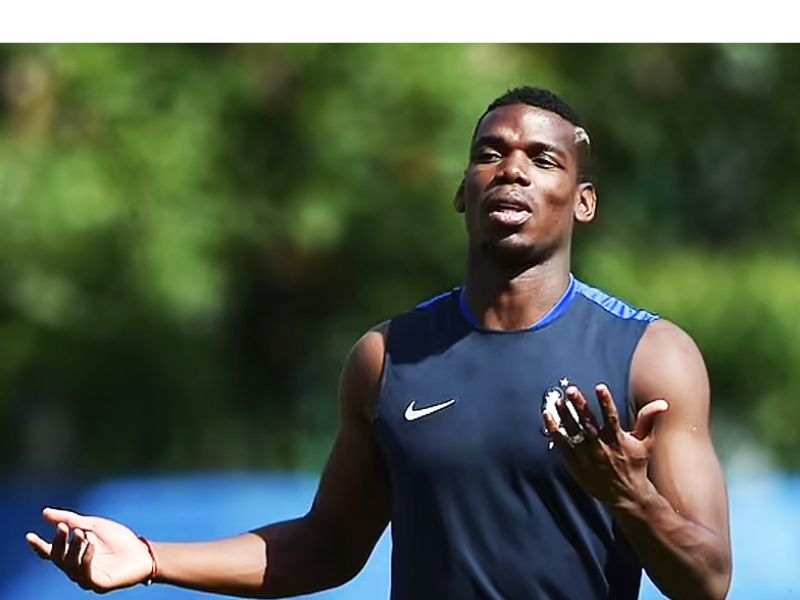
Juventus coach blames Paul Pogba for his own World Cup heartbreak

0
The Juventus star suffered an injury setback and was thus ruled out of the World Cup in Qatar

Juventus manager Massimiliano Allegri has appeared to blame Paul Pogba for the French midfielder being ruled out of the World Cup through injury after he chose not to undergo surgery in pre-season.

Pogba has been suffering from a fresh thigh problem which has put paid to his chances of being fit for the tournament in Qatar.

The latest setback has officially ruled him out of the World Cup as it will keep him on the sidelines for a further three weeks.

The ex-Manchester United midfielder, who has been out with a troubling meniscus injury since pre-season, has yet to feature for Juventus after re-joining the club on a free transfer this summer.

Pogba visited a specialist in August and was convinced not to undergo surgery in the hope of returning for Juventus by mid-September.

Allegri, who is under pressure at Juventus after their Champions League exit and uncharacteristically poor start to the Serie A campaign, admitted he has yet to speak with the 29-year-old since the latest injury setback.

‘Not yet,’ he said ahead of Juventus’ match against PSG on Wednesday. ‘I spoke to him earlier. It’s pointless repeating what has already been said.

‘Once the decision was made not to have surgery at the start of the season, it was normal that hopes that he could return with Juventus and France were slim.

‘He’s sorry for Juventus and the World Cup, it’s normal, we were penalised for not having him available.’

His agent, Rafaela Pimenta, confirmed he would miss the tournament earlier this week.

‘Paul would like to resume as soon as possible but he must be patient, work hard in these difficult times and give the best of himself to be back on the field for the fans and his team as soon as possible,’ Pimenta told Telefoot.

Pogba played a pivotal role during France’s World Cup triumph in 2018, scoring in the final against Croatia.

The reigning champions will be without both Pogba and N’Golo Kante in the engine room, as the Chelsea star was ruled out of the World Cup earlier this month with a hamstring injury.

France are also sweating on the fitness of United centre-back Raphael Varane, who appeared distraught as he was forced off with injury in his side’s 1-1 draw with Chelsea.

Credit: dailymail.co.uk

The Ghanaian Chronicle