Home Blog Page 2590

Nigerian university confirms arrest of student over ‘anti-Aisha Buhari tweet’

0
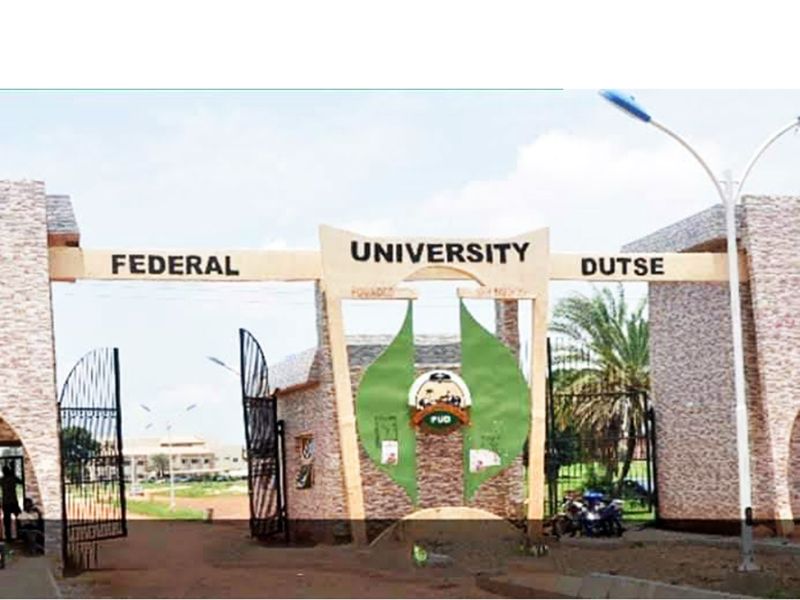
Federal University, Dutse

The management of the Federal University Dutse (FUD), Jigawa State, has confirmed the arrest of one of its students, Aminu Adamu, following a Twitter comment against the wife of the Nigerian President, Aisha Buhari.

On 9 June 2022, the student, Aminu Ádámù, tweeted a photo of Mrs Buhari with a caption in Hausa which translates to: “Mama is feeding fat on poor people’s money.”

The university’s spokesperson, Abdullahi Bello, said the university was not in session when the incident happened, thus, the student was not under the care of the university when he made the post on Twitter.

“The unfortunate incident involving Aminu Adamu who made a Twitter post happened during the break.

“He did the posting in his capacity as Aminu Adamu, not as a student of FUD.

“He was trailed to Dutse where he was arrested.

“The university authorities have spoken to the parent who has already engaged the services of a lawyer to handle the matter and they are hopeful for an amicable resolution soon,” the university said in a statement on Monday.

Mr Aminu from Azare, Bauchi State, is a final year student at the Department of Environmental Management of the university.

He was said to have been arrested by the secret police, SSS, which has since kept mum about the arrest despite criticisms by Nigerians.

The SSS reports directly to the Nigerian president and has in the past been accused of human rights violations including illegal detention of citizens.

Meanwhile, the police in Jigawa said they are not aware of the arrest.

The spokesperson, Lawan Adam, said any arrest by police officers out of the Jigawa command must be communicated to the police in Jigawa before it will take effect.

He said for this particular incident, the command is yet to be informed of any arrest by the police outside the state.

Credit: premiumtimesng.com

Nigeria has enough food to feed the nation – Agric Minister …Blames rising prices on inflation, Covid-19

0
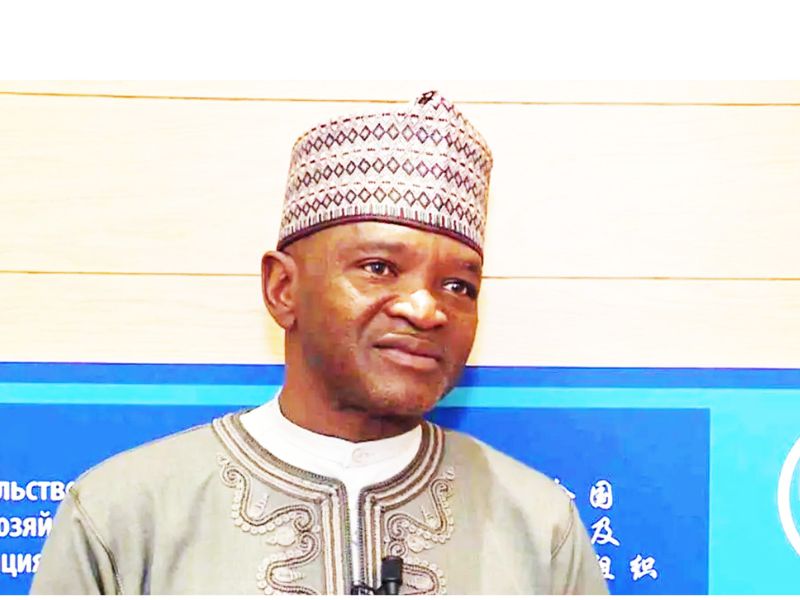
Minister of Agriculture and Rural Development, Dr Mohammad Abubakar

Despite rising food prices in the country, the Minister of Agriculture and Rural Development, Dr. Mohammad Abubakar, said on Monday that the country has enough food to feed all Nigerians.

Speaking in Abuja while presenting the ministry’s scorecard for 2015-2023, the minister however blamed the rising cost of basic food stuffs in the country on inflation and the aftermath of the Covid-19 pandemic that forced many countries including Nigeria to shut down key economic activities for many months.

The minister said that while it was not peculiar to Nigeria to import certain categories of foods, the federal ministry of agriculture would continue to produce food to take care of its large population in line with the mandate to do so and improve rural development.

The minister announced that in order to improve food stock in the country, the ministry is currently constructing ten large scale integrated rice mills with 320 metric tonnes capacity per day in Jigawa, Kano, Adamawa, Niger, Kaduna, Gombe, Ekiti, Ogun, Bayelsa and the Federal Capital Territory in addition to supporting the production and distribution of breeder, foundation and certified rice seeds for farmers.

In the same vein, the minister said that presidential fertilizer initiative, which was launched in 2016 has increased the number of fertilizer plants from eight to 200 and raised production from 300,000 metric tonnes to 7 million metric tonnes.

He also blamed the jerk in the prices of fertilizer on inflation and the inability of the producers of raw materials to do so due to the disruption caused by Covid-19.

“The minister said: “We have enough food to take care of Nigerians. We are producing food across the country and we will continue to do so to feed Nigerians in line with our mandate and expedite the transformation of the rural communities of Nigeria.

“The fact that some categories of food are imported by Nigeria is not an indication that we have food shortages. The high cost of food that we experience in the country is as a result of rising inflation, which is not peculiar to Nigeria but due to the Covid-19 pandemic that forced many sectors of economic production to be shut down for many months.

“As it is today, many parts of the world, including our own country are yet to fully recover from the negative effects of the pandemic, which has triggered inflation and high food costs across the world,” he said.

Credit: vanguardngr.com

30 tonnes of cocaine seized in raids against European ‘cartel’

0
Crackdown on the cocaine ‘super-cartel’

A “super-cartel” that controlled one-third of the cocaine trade in Europe has been taken down in six countries, police have said.

The EU police agency, Europol, announced that 49 suspects were arrested during the investigation, after raids in Europe and the United Arab Emirates targeting the cartel’s “command and control centre” and logistics network.

One of the suspects is a British national, who is thought to have led the cartel. The British suspect is described as having links to the Costa del Sol. He left Spain after an attempted kidnapping plot against him and fled to Dubai, where he continued to run the drugs operation, according to a statement from Spain’s Guardia Civil.

A Europol source told the AFP news agency that one of the Dutch suspects was an “extremely big fish”. A total of 14 arrests were made in the Netherlands in 2021, while two “high-value” Dutch suspects were arrested in Dubai. The Dutch suspects are allegedly linked to Ridouan Taghi, who was arrested in 2019 and is now on trial in the Netherlands.

Credit: theguardian.com

Landslide kills at least 14 attending funeral in Cameroon

0
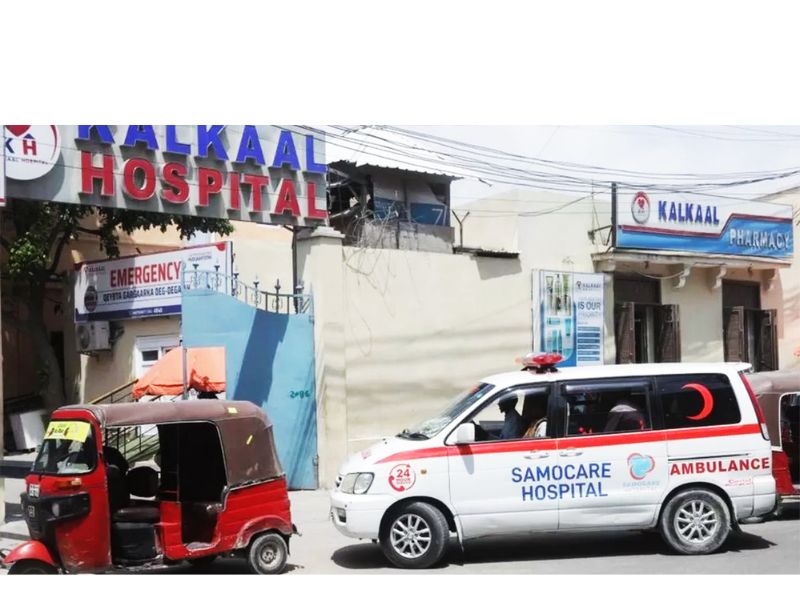
Ambulances have been taking the injured to hospital after the deadly attack

A landslide in Cameroon’s capital Yaounde on Sunday killed at least 14 people who were attending a funeral, the region’s governor said.

“We are carrying the corpses to the mortuary of the central hospital, while the search for other people, or corpses, is still ongoing,” Naseri Paul Bea, governor of Cameroon’s Centre region, told media at the scene.

Dozens of people were attending a funeral on a soccer pitch at the base of a 20-metre-high soil embankment, which collapsed on top of them, witnesses told Reuters.

Yaounde is one of the wettest cities in Africa and is made of dozens of steep, shack-lined hills. Heavy rains have triggered several devastating floods throughout the country this year, weakening infrastructure and displacing thousands.

In 2019, at least 42 people died in a landslide in Bamoungoum village near the regional city of Bafoussam, western Cameroon.

Four pregnant women and an 18-year-old girl were among those who died in the disaster.

Credit: cnn.com

World’s largest active volcano erupts in Hawaii

0
World's largest active volcano, Hawaii's Mauna Loa

The world’s largest active volcano, Hawaii’s Mauna Loa, is erupting for the first time in almost 40 years. An ashfall advisory is in effect for the surrounding area and emergency crews have been placed on alert. “Lava flows are contained within the summit area and are not threatening downslope communities,” officials said early on Monday.

But the notification from the US Geological Service (USGS) warned the situation could change rapidly. The volcano’s alert level has also been upgraded from an “advisory” to a “warning” – the highest classification.

The latest eruption began on Sunday night at Moku’āweoweo, the volcano’s summit caldera. Calderas are hollows that form beneath the summit at the end of an eruption.

It followed a series of warnings that an eruption was possible after a spate of recent earthquakes in the region, including more than a dozen reported tremors on Sunday. “Based on past events, the early stages of a Mauna Loa eruption can be very dynamic and the location and advance of lava flows can change rapidly,” the USGS said.

Credit: bbc.com

Gunmen storm Ecuador hospital in attempt to kill teen

0
The arrest of gang members who took hostages after storming a hospital in Ecuador

Police in Ecuador have arrested seven gunmen who stormed a hospital in an attempt to kill a teen being treated there.

Gang members took nurses hostage and exchanged fire with police before they were detained.

All hostages were freed and no one was injured, officials said.

The 17-year-old target of the attack, known as “Dirty Face”, is thought to be a rival gang member who is in intensive care recovering from bullet wounds.

The gunmen held five staff members hostage for more than an hour, one employee told local newspaper El Diario.

Video circulating on social media appears to show balaclava-clad men holding guns and briefly shoving a screaming woman through one of the hospital’s exit doors before dragging her back into the building.

Other hospital employees at the hospital in the town of Chone, in western Ecuador, said they had locked themselves in rooms while the gunmen broke down doors in search for the teenager.

“They didn’t know the hospital layout, it seems, and that’s why these delinquents were roaming through the entire hospital,” Homero Andrade, who represents employees at the hospital, told El Diario.

Credit: bbc.com

Somalia hotel siege ends leaving eight dead

0
Rescuers prepare to carry a body after a landslide killed several others

Somali forces have ended a more than 20-hour battle to regain control of a hotel seized by militants in Mogadishu on Sunday evening.

At least 15 people were killed, including eight civilians, during the siege, police say.

Militants from the al-Shabab group, which said it was behind the attack, had been holed up in one of the rooms in the Villa Rays hotel.

Witnesses told the BBC they heard explosions and gunshots at the hotel.

Somali police have said that 60 people were rescued from the hotel, which is near the presidential palace.

As well as the eight civilians who died during the siege, one soldier was killed as well as six al-Shabab fighters, police spokesperson Sadik Dodishe confirmed.

The Villa Rays hotel, which has also been referred to as Villa Rose, is popular with government officials and several ministers have confirmed being rescued.

At least one minister, Mohamed Ahmed, is reported to have been injured while another, Environment Minister Adam Aw Hirsi, told reporters he had survived the attack.

Credit: bbc.com

Russia-US nuclear disarmament talks postponed

0
Russia-US nuclear disarmament talks postponed

Nuclear disarmament talks between Russia and the United States set to take place this week have been postponed, according to Moscow’s foreign ministry and the US Embassy.


Officials from the two countries were due to meet in the Egyptian capital of Cairo from November 29 to December 6 to discuss resuming inspections under the New START nuclear arms reduction treaty, which had been suspended in March 2020 due to the COVID-19 pandemic.


“The previously scheduled session of the Bilateral Consultative Commission under the US-Russia New START Treaty in Cairo (November 29-December 6) will not take place on those dates,” the ministry said on Monday. “The event is postponed to a later date.”


It gave no reason, although the US Embassy was quoted by the Kommersant newspaper as saying the decision had been Russia’s.

Russian Deputy Foreign Minister Sergey Ryabkov had played down expectations of a breakthrough, although the talks were a sign that both sides at least wanted to maintain dialogue, even though relations are at their lowest level since the Cold War.


Credit: Aljazeera.com

Home remedies for gout

0
Gout

There is no cure for gout. However, a combination of medications and home remedies may help to keep gout in remission.

Gout is a form of inflammatory arthritis that causes pain and discomfort, often in the toes, ankles, and knees. Making dietary changes can help people reduce their purine levels and the likelihood of having a gout flare.

This article discusses several natural remedies for gout.

Causes of gout

Gout occurs when the body produces too much uric acid. This acid is a byproduct of when the body breaks down purines found in foods.

This excess uric acid forms crystals, which the body can deposit in all tissues. However, the crystals mainly build up in and around the joints, causing irritation, inflammation, and discomfort.

The crystals can also form growths around affected joints, known as tophi.

Natural remedies for gout

Home remedies for gout include:

  1. Drinking plenty of water

When a person has gout, they can experience significant swelling and inflammation. One of the ways to reduce symptoms is by drinking more water.

Increasing fluid consumption can kick-start a person’s kidneys to release excess fluid, reducing swelling in a person with gout.

Water is best. However, other clear fluids, such as broths and herbal teas, are also good choices. People should avoid alcohol and sodas, which are high in purines.

However, anyone with congestive heart failure or kidney disease should talk with their doctor before increasing their fluid intake.

Discover more benefits of drinking water here.

  1. Applying ice to affected joints

Applying a cloth-covered ice pack to the joint can help reduce gout-related inflammation.

Try applying an ice pack or other cold object wrapped in a thin towel for 20–30 minutes to help relieve pain.

Discover the best ways to make a cold compress here.

  1. Reducing stress

Heightened stress can worsen gout symptoms. While it is not always possible to eliminate all sources of stress, the following tips might help:

exercising if the pain does not limit movement

asking for time off from work

journaling or reading a favorite book

meditating

Getting enough rest can also help a person feel less stressed.

Discover the causes of stress and how it impacts the body here.

  1. Elevating the affected joints

Gout can cause pain and swelling, especially in the feet, hands, knees, and ankles.

One way to reduce swelling is by elevating the affected joints. This encourages blood and fluid to move away from the joint and back toward the heart.

A person can also use an ice pack with elevation to reduce their gout symptoms. These two remedies form part of the rest, ice, compression, and elevation (RICE) method.

Learn more about the RICE method here.

  1. Taking over-the-counter pain relievers

While over-the-counter (OTC) anti-inflammatory medications, such as ibuprofen (Advil) and naproxen sodium (Aleve), may not be “natural,” they are good options for treating pain and inflammation due to gout.

People should never take more than the recommended dose and always ask a doctor whether OTC medicines might interfere with their other medications.

If OTC pain relievers do not help, a person may wish to ask a doctor about stronger prescription medications.

  1. Drinking coffee

Some people believe drinking coffee may decrease the risk of experiencing gout.

A 2016 review and meta-analysis showed that those who drank more coffee were less likely to have gout. This may be because coffee can lower uric acid levels.

A further 2019 analysis reported that coffee consumption lowers gout risk, and may do this independently of lowering serum uric acid levels.

However, just because the study showed a correlation between higher coffee consumption and a lower risk of gout, this does not mean that coffee caused the lower risk.

Discover more potential health benefits of coffee here.

  1. Eating a balanced diet

A balanced diet containing a variety of nutrient-dense, minimally processed foods can help lower uric acid levels and reduce a person’s risk of gout flares.

Plant-based diets can be of particular benefit for people with gout. Many fruits and vegetables are rich in antioxidants that can help reduce inflammation.

Learn more about the best diet for gout here.

  1. Drinking lemon water

A 2015 study found that adding the juice of two freshly squeezed lemons to 2 liters of water each day reduced uric acid in people with gout.

The researchers concluded that lemon water helps neutralize uric acid in the body, thus helping to reduce levels.

Discover the benefits of drinking lemon water.

  1. Limiting alcohol intake

According to the Arthritis Foundation, drinking more than two liquor-based drinks or two beers per day increases a person’s risk of gout.

Beer is high in purines, so avoiding it can benefit a person with gout.

Learn more about the link between beer and gout here.

  1. Avoiding high-purine meats

Some meats contain high amounts of purines. Avoiding these might help to reduce a person’s gout symptoms.

Meats and fish that are high in purines include:

bacon

turkey

veal

venison

organ meats, such as liver

anchovies

sardines

mussels

herring

cod

haddock

trout

scallops

Source: www.medicalnewstoday.com

Feature: Ghana’s 2023 Budget: A missed opportunity

0
Finance Minister Ofori-Atta presenting the 2023-budget

The lead up to Ghana’s budget presentation was filled with political drama and outsized investor expectations.

On Thursday, the 24th of November, the much-anticipated event finally came off, in the shadow of a World Cup fixture between Ghana and Portugal.

The budget, as finally presented, has many twists and turns but on the essentials, it is a bit of a Frankenstein mash-up.

On the one hand, it contains the clearest yet admission by the government that the fiscal situation is dire, in ways that are not predominantly attributable to external factors like the Ukraine conflict and the COVID-19 pandemic, and therefore that significant waste-cutting is warranted.

It is a standard practice of Ghanaian budget speech drafting during economic downturns to frame the domestic crisis against the global picture.

The 2023 budget had its fair share of global scapegoating but not to an extent where all emphasis on domestic triggers of the crisis was totally neglected as has been the case in most policy statements of recent times.

Yet, on the other hand, the bulk of the numbers do not add up anywhere close to the much-speculated austerity package. In fact, this is one of the most expansionary budgets in the history of Ghana, at a time most investors and analysts expected a contractionary policy.

The government’s approach harks back to the failed fiscal consolidation approach in 1999.

Total Ghana government expenditure in 1998 was ¢4.38 trillion or $1.64 billion against nominal GDP of ¢16.59 trillion (or $6.3 billion at the then prevailing exchange rate) yielding an expenditure-to-GDP ratio of ~25%.

Faced with domestic and external headwinds, the economic managers of the time decided instead to increase spending to 28% of GDP as evidenced in the extracts below from the 2000 budget statement.

As everyone now knows the 1999-2000 fiscal consolidation effort, not surprisingly, failed completely and the succeeding government was forced to declare HIPC for concessional terms in the restructuring of Ghana’s debt.

A far better lesson for today’s economic managers should come from the crisis budget design of 1995, the Kumepreko year.

Against the 1994 outturn, government reversed back-to-back deficits and generated a fiscal surplus by spending 1.15 trillion Cedis/$800 million (from revenues of 1.26 trillion Cedis/$870 million) to result in an expenditure-to-GDP ratio of 16% (i.e. using a GDP figure of $5 billion at the prevailing exchange rate).

Against this historical background, one marvels at the government’s decision to project expenditure to GDP at more than 28% in 2023 (from ~25% in 2021) in the hopes of almost doubling revenue (from a likely outturn of ¢85 billion in 2022 to an expected 143 billion GHS in 2023).

To seek to grow government revenue by more than 68% in one year at a time of collapsing demand, imploding confidence and low economic growth is clearly wishful thinking.

That way of thinking is reminiscent of the government’s insistence on raising billions from its highly unpopular e-Levy despite widespread analyst sentiment against such projections. In the event, e-Levy could not even clock 6% of the original target by end of September 2022.

There is no evidence of government learning any lessons from this episode. Massive increases are projected in 2023 for VAT (an expected 65% increase in 2023 over the 2022 outturn), e-Levy (a near 500% increase on the likely 2022 outturn) and COVID-19 Health Levy (an expected doubling of the yield seen in 2022).

It is impossible to fathom why the government expects the COVID-19 levy (initially sold to the country as a temporary revenue measure) to grow at more than twice the rate of NHIL when the base for computing both taxes is the same. In fact, all these levies, under normal circumstances, should grow proportionately as VAT increases.

Such a lack of credible revenue estimation in a critical budget such as this, one which investors and analysts all over the world have been awaiting to use as a gauge of fiscal direction, is most worrying.

Equally bizarre is the decision to project an increase in expenditure from an estimated 137 billion GHS (cash basis) in 2022 to an estimated 227 billion GHS (a 66% increase).

It is evident from this budget design that the government is not keen on contractionary policy at this time.

Despite repeated demands from civil society and policy think tanks for it to commission a root and stem independent spending review to assist in jettisoning obligations of dubious value contracted by various government assigns and state-owned enterprises to benefit business cronies, the budget is instead replete with symbolic moves like banning the use of SUVs by Ministers for municipal commuting.

Civil Society Organisations (CSOs) and policy think tanks such as IMANI and ACEP have for many years and months now documented massive leakages in the energy sector and elsewhere amounting to billions of dollars. Yet, unconscionable public sector contracts like the Kelni GVG deal continue to subsist.

Even more alarmingly, the budget itself contains spending proposals that persist in the tradition of prioritising non-essential spending even in a time of serious crisis.

Why should a government confronted with such dire fiscal numbers authorise the medium-term spending of ~330 million GHS on a “national cathedral” or for continued consultancy spending on a so-called Petroleum Hub that has failed to attract any significant investor interest?

The price for sustaining the continued spending on non-essentials is the dangerous resort to pro-cyclical measures such as the increase in the broadest-based consumption tax (VAT) by a whopping 2.5% percentage points.

One shouldn’t be an uncritical devotee of Arthur Laffer to protest strongly against broad-based tax rises in a time of fast falling confidence in the economy and steadily collapsing demand.

This, in a country where the loss of investor confidence has reversed earlier debt management gains from the lengthening of maturity profiles back to the dark days of over reliance on short-term debt.

At the end of 2021, short-term securities constituted just 14.6% of total domestic debt. Today, the figure has climbed steadily to nearly 50%.

The shift to expensive short-term borrowing is reinforced by a growing reliance on the Central Bank for deficit financing.

The Central Bank’s accommodative stance towards fiscal expansion is now complete. In addition to sweetheart repo deals in the commercial banking sector to prop up artificial demand for government of Ghana domestic debt issuances, the Bank of Ghana has also allowed overdraft financing of the central government to violate every public financial management norm in existence.

Both trends – aggressive central bank financing of the deficit and a shift to expensive short-term debt securities – result from a complete inability to deliver on the promised fiscal contraction. 2022 expenditure has already hit 159 billion GHS on a commitment basis despite claims of cutting “discretionary spending” by 30%.

The nominal increase on 2021 spending levels of ¢113 billion is 39%, or 29% in real terms. In simple terms, despite bold promises of a significant reduction in spending (including repeated assertions of a “30% cut in discretionary spending”), fiscal expansion has been galloping at an uncontrollable pace.

Meanwhile, the inflationary and exchange rate depreciation spiral is set to continue, deepening the downturn cycle.

The government’s decision to continue budgeting hundreds of millions of GHS for non-essential spending like the cathedral and to support non-strategic defence spending, like the inexplicable decision to keep supporting the construction of some forward-operating bases, such as the one to protect the Bui Dam (well beyond the country’s well-acknowledged need for a shield against spillovers from the deteriorating Sahelian security environment), among others, is ample evidence of a lack of commitment to true crisis budgeting.

Whilst we continue to analyse the 2023 budget for deeper insights into the government’s fiscal prospects in 2023 and the quality of the planned IMF ECF program, our initial assessment is not encouraging.

Once again, the lack of meaningful prior consultation, even within the ruling party, has resulted in an underwhelming document unlikely to restore serious confidence in the economy.

By Bright Simons 

Source: myjoyonline.com

The Ghanaian Chronicle