Home Blog Page 2396

Embrace new technology to solve your problems –Buhari tells Nigerians

0
President Muhammadu Buhari

President Muhammad Buhari has advised Nigerians, especially industrialists and entrepreneurs to adopt the use of technology to complement governments’ efforts in solving problems facing industrial development in the country.

Buhari gave the advice on Tuesday while speaking at the unveiling of 50.3 metres d Tallest Flag in Africa at Malam Alu farm in Birnin Kudu local government, Jigawa State.

He said technology has now simplified everything that can be used to solve most of Nigeria’s problems, especially, in the area of agriculture to ensure massive food production and industrialization of the country.

“I am impressed with solar panels I saw all over in the farm this proved that we can take full advantage of technology to solve most of the economic, social and infrastructural challenges in Nigeria.”

Credit: dailypost.ng

Fuel Scarcity May Affect Election Logistics -INEC

0
INEC chairman, Mahmood Yakubu

The Independent National Electoral Commission (INEC) has said that the current fuel scarcity in the country might affect logistic arrangements for the February 25 and March 11 general elections.

INEC Chairman, Mahmood Yakubu, made this known on Tuesday in Abuja at a consultative meeting with the transport unions such as the Nigerian Association of Road Transport Owners (NARTO), and the National Union of Road Transport Workers (NURTW), amongst others.

The commission shares your concern about the fuel situation in the country and its impact on transportation on election day,” Yakubu told leaders of the unions.

“The truth is that our arrangement may be negatively affected by the non-availability of products.

“For this reason, the commission will this afternoon meet the Nigerian National Petroleum Company (NNPC) Limited to look into ways to ameliorate this situation.”

The electoral chief also urged the transporters to be neutral and non-partisan as they commute INEC staff to-and-from polling units.

He said inter-state trips won’t be allowed, saying all INEC and adhoc staffers must not be moved beyond their local government areas.

Credit: channelstv.com

Opportunities abound in the ‘Susu’ sector -BoG

0
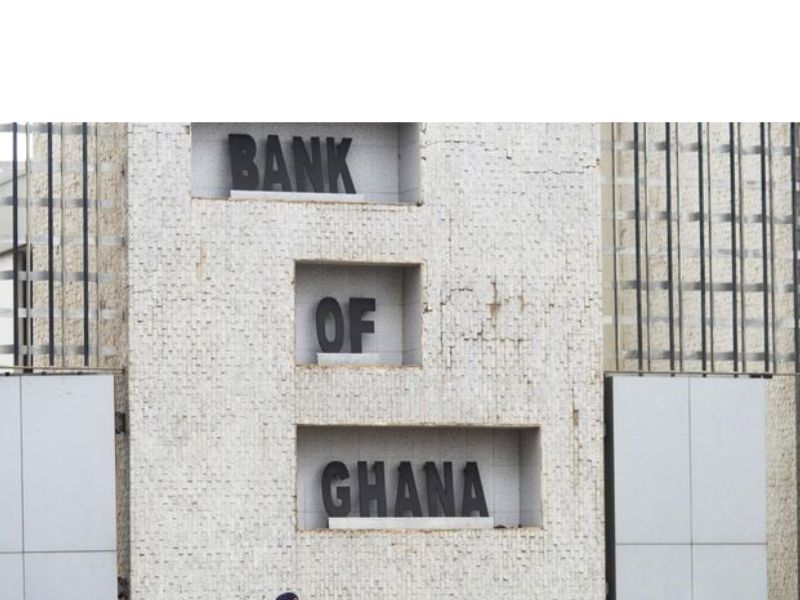
Bank of Ghana

The Bank of Ghana (BoG) has charged financial technology companies (Fintechs) to explore the enormous opportunities in the traditional financial services sector – “susu” operations.

In addition, the Central Bank, urged fintechs to invest in ventures that would capture the “technologically savvy youth” through tailor-made digitally enabled financial solutions to meet their needs.

Dr Ernest Addison, Governor of the Bank of Ghana, said this in a speech read on his behalf at the just ended second edition of the Ghana FinTech Awards, noting that this would increase financial inclusion and support economic stability.

He said Fintechs were playing an increasingly important role in the financial system by offering new and innovative ways for individuals and businesses to manage financial resources, make payments and access credit.

The Governor noted that such effort was contributing to financial inclusion, economic growth and societal well-being, and urged fintechs to do more through the provision of digital financial services in susu operations.

He said: “We must not ignore the low-hanging fruits. A case in point is the traditional susu model, which has a lot in common with crowd funding. With the Bank of Ghana’s crowdfunding policy, the enabling regulatory regime has been provided for Fintechs to explore and enhance this financial model familiar to Ghanaians.”

He noted that susu – a hybrid system of savings, investment and credit, had a strong appeal among the unbanked and underserved and could be a comprehensive solution to some of the country’s inclusion problems.

Dr Addison pledged that the Bank of Ghana would continue to work with fintechs to ensure that financial services were provided to all Ghanaians, regardless of their income or location by encouraging and providing a conducive regulatory environment.

Lauding fintechs for the contribution of the financial services sector and the Ghanaian economy, he said: “Prior to the emergence of fintechs, the unbanked and underserved were not profitable market segments for the traditional players in the financial service industry based on the branch model.”

He added that: “With the advent of fintechs and leveraging the extensive network of mobile telephony, savings, credit, insurance, investment, and pension products are now available across the length and breadth of the country, and even in geographically challenging locations.”

Players in the sector, during a panel discussion underscored the essence of the sector to economic growth, and called on the Government and other regulatory bodies to enhance the fintech ecosystem for increased growth.

On this issue, Mr Darryl Abraham Mawutor, Growth Director of Taptap Send, Africa, in an interview with the Ghana News Agency, said it was important for the Government to relax regulations and tax systems to support the sector.

He said: “When we relax regulation a bit, it will allow other fintech companies to get into the industry – the more regulations the Government and regulators put in the way, the less likely for fintech to grow.”

“For the government to help the fintech industry to grow, it must scrap something like e-levy which is a tax on an already struggling industry, e-levy, proportionally or disproportionally affects the industry than anything,” he emphasised.

Mr. Mawutor then called on the Government to strategize and restructure its tax policies within the e-commerce and fintech industry to focus more on corporations than individuals.

He also called for the synergy between education and the fintech industry to know the trends and development within the fintech industry for people to explore career options for themselves.

By Francis Ntow & Jibril Abdul Mumuni

Source: GNA

Ghana’s economy will rebound in 2024 – IMF

0
Mr. Daniel Leigh, Division Chief, Research Department at the IMF

The International Monetary Fund (IMF) says Ghana’s economy will see a rebound in 2024, supported by extractive activities in the country, despite a slow growth in 2023.

The Gross Domestic Product (GDP) for Ghana – the country’s total monetary value of goods and services produced for 2023 is projected at 2.8 per cent, with an increase to 3.9 per cent in 2024.

“On Ghana, we do expect growth to slow this year [2023] … But in 2024, we see a rebound in particular in the extractive activities and that is going to support Ghana in 2024.”

Mr. Daniel Leigh, a Division Chief, Research Department at the IMF, said when he responded to a question posed by the Ghana News Agency during the January World Economic Outlook update held simultaneously in Singapore and online.

The Extractive Industries Transparency Initiative (EITI) reporting data, showed that the sector accounted for 14 per cent of Gross Domestic Product (GDP), 18 per cent of revenue in 2018, and contributed two per cent to employment.

Ghana, which is the second largest gold producer in Africa and the ninth-largest diamond producer in the world, earned $731.94 million in petroleum receipts in the first half of 2022.

However, the Washington-based lender from whom Ghana is currently seeking a US$3 billion loan-support programme for economic recovery and resilience, said the country would see a slow growth in 2023.

The IMF attributed the slow growth, partly to global headwinds, with other factors contributing to it being the Russian-Ukraine war, global energy crisis, and the tightening of global financial conditions.

It was confident that the Fund support programme would help to restore macroeconomic stability, debt sustainability, and create the foundations for higher and inclusive growth over the medium-term.

Ghana has reached Staff Level Agreement with the IMF for a $3bn three-year arrangement under the Extended Credit Facility (ECF), with the hope of securing an Executive and Board Management approval by the end of March 2023.

Mr. Leigh said: “It’s a difficult time for the global economy that affects Ghana,” and quickly added that there were some domestic headwinds, particularly, inflation, which had increased significantly.

The rate of inflation touched a high of 54.1 per cent in December, spurred by food inflation, with the Bank of Ghana (BoG) increasing the Monetary Policy Rate (MPC) by a 100 basis points to 28 per cent to drive inflation downwards.

In relation to this, Mr. Leigh said: “The Central Bank is tightening monetary policy, but that is cooling the economy domestically. Plus, the fiscal policies are tightening to address the elevated debt. This is the cooling in 2023.”

Ghana’s condition is not so different from Sub-Saharan Africa, which is also expected to have a “difficult year,” – much affected by the external forces that are shaping the global outlook.

Growth in the region is projected to be around 3.8 per cent in 2023, which is a bit below the typical growth rates that the region experienced before the pandemic, but would increase to 4.1 per cent in 2024.

Meanwhile, global growth is expected to slow from 3.4 per cent in 2022, to 2.9 per cent in 2023, then rebound to 3.1 per cent in 2024.

“For advanced economies, the slowdown will be more pronounced, with a decline from 2.7 per cent last year, to 1.2 per cent this year. Nine out of ten advanced economies will see growth decelerate this year,” said, Mr. Pierre Olivier Gourinchas, Chief Economist and Director, Research Department, IMF.

By Francis Ntow

Source: GNA

UHAS gets human performance laboratory, fitness clinic 

0
The new Science Laboratory

The University of Health and Allied Sciences (UHAS) has handed over a human performance laboratory and a fitness clinic to its School of Sports and Exercise Medicine.

The facility, developed in collaboration with Chances Hotel, a hospitality company in Ho, would serve as a practical arena for studies for the School, which was established three years ago.

Prof. Lydia Aziato, Vice-Chancellor of the University, led stakeholders after a brief ceremony to commission and inspect an overstocked modern gym, Lecture Hall and fitness rooms at the hotel, refurbished and repurposed for the School, through a Memorandum of Understanding.

Streamlining training and holistic fitness, the facility for the health dedicated training and research institution is expected to support the development of the country sports and performance sectors.

The Vice Chancellor celebrated the collaboration and reiterated the premium on the sports and exercise medicine school, saying that its regularisation was expected to “hold the university together.”

She added that “It is my personal vision to see it as the highest IGF earner for the University. The era of sports is good.”

Prof. Aziato said the fledgling University “would need a state of the art sports facility to attract people to the Region and the University,” and that its students were taken off in some local and national competitions.

She charged the School to build upon the support to establish more collaboration with sporting establishments, including teams and franchises to enhance experience.

The VC said client service at the facility should be digitised to attract and better serve the present elitist environment, and also called for the incorporation of technology to provide telemedicine services.

Prof Harry Tagbor, Pro Vice Chancellor, said the facilities would receive the needed management attention to sustain efforts to enhance the hospitality experience in the Region and the nation as a whole.

The fitness clinic would provide weight stations, swimming pools and sauna baths, in addition to a wide variety of workout equipment.

It would also have a dietary prescriptions and counselling unit, and it has been prepared to take in referrals from health facilities for muscular and skeletal related conditions, among others that require fitness care.

Services would include exercise, stress test, executive stress tests, management and nutritional education and dietary planning.

There would also be hydro exercises, home-based geriatric management exercises and insomnia management with exercise, all available to the public and sports men and women, while also targeting corporate groups and event participants.

Prof Eric Ofori, Dean of the School of Sports and Exercise Medicine, said the facility would help train graduate sports and exercise scientists who should be able to provide treatment for people with health issues, and also train sports men and women to enhance their performance.

He said graduates should be able to manage pitch-side injuries and accidents and also sporting facilities and also undertake sports marketing among other related practices.

Mr Emmanuel Chance, owner of the hotel, said the collaboration was sure to affect tourism development in the Region, and also the outlook of his establishment.

Divine Bosson, Municipal Chief Executive for Ho, said the development had great support within the innovative oxygen city project the Region was being built upon and, therefore, the Assembly would add to efforts to provide a befitting sports complex for the University.

He said such support was in line with the Government’s policy to promote fitness as a barrier against ill-health, and would be prioritised. The MCE commended the hotel owner and said his support showed quality statesmanship.

From Samuel Akumatey, Ho

GNA 


Government to increase value of LEAP grant

0
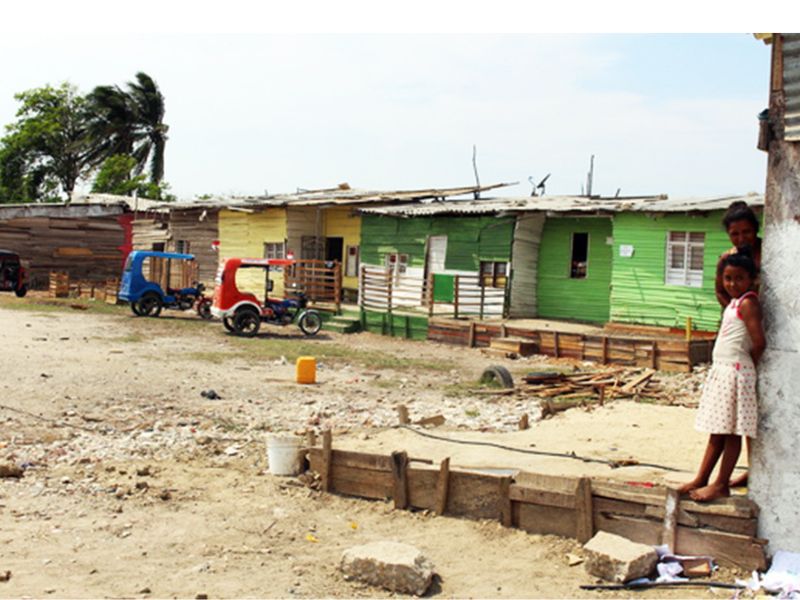
Poor homes - beneficiaries of LEAP

The Government is taking steps to increase the value of the Livelihood Empowerment Against Poverty (LEAP) grant per household. The increment is expected to improve the programme’s impact on beneficiary households.

Mr Colson Akanbasiam, Head of Communications, LEAP Management Secretariat, disclosed this in an interview with the Ghana News Agency on Monday, in Accra.

He said the value of the grant had been of major concern to both the Secretariat, partners and beneficiaries, because it was very low, had depreciated over time and so did not make any meaningful impact in the lives of beneficiaries.

He said the grants paid to the beneficiary households were in four categories. These are orphan and vulnerable children, the elderly-65 years and above without support, people with severe disability who cannot work, and extremely poor pregnant or lactating mothers with children under one year.

“If one category of them is identified in a household, it qualifies the household to receive                 GHc 64.00. If two categories are identified in one household, the household receives GHc 76.00. If three, the household qualifies to get GHc 88.00 and if there are four or above GHc 106.00.”

According to Mr Akanbasiam, the grant was less than 16 percent of the household consumption, though global standards required that for any cash transfer programme to be very effective, the grant should be contributing not less than 20 percent of the household consumption.

“But it is also a question of the fiscal space of Government of Ghana and donors. Commitments are very high, enough data has been provided to prove to the point that the value of the grant has depreciated in view of the economic situation, inflation and cost of living. And that is why all partners are committed to making sure that there would be an increase,” he said.

The current payment was increased in 2015.

Mr Akanbasiam said Government was working towards reassessing the beneficiary to determine their eligibility. “We have commenced piloting of the reassessment in the five regions of the north and in each of these regions, two districts have been selected to be reassessed and the outcome would inform the national rollout.”

The Head of Communications said the implementation of the programme commenced with slightly above 1600 beneficiary households across the country but had increased with time and currently covered about 350, 000 households in all districts but not in all communities in the districts.

“Until 2016, beneficiary households were identified and selected by LEAP through targeting. However, after 2016 the Ministry of Gender Children and Social Protection, established a Ghana National Household Registry, whose mandate is to collate the data, for identification and selection of households, ” he said.

On the issue of payment mechanism, Mr Akanbasiam noted that in the initial stages, payment was done through Ghana Post, however, over the years they had transformed to electronic payment through e-zwich, the GhIPSS’s platform, and the LEAP payment contract holders across the country.

He said some academic research findings and testimonies of beneficiaries had pointed to the fact that the programme had improved household consumption, food consumption, child education, and access to health care, among others.

“By the Health Insurance Act and MoU signed with the Ministry of Health, all beneficiaries on the Programme are eligible to access free health insurance registration and renewal.”

He said the programme had touched and changed many lives, with most beneficiaries now having a feel of belonging with improved social integration, having invested the monies into various productive ventures, especially agriculture and petty trading.

Mr Akanbasiam said the main challenges were depreciating value of the grants, perceived politicisation, delay in payment and inadequate recognition for cash grant and social protection.

He said payments, normally done bi-monthly, were usually delayed due to the fiscal space available to government.

“But one thing about cash grant is that it must be regular and consistent for beneficiaries to plan their lives.”

Mr Akanbasiam commended partners of the programme for the continued support, which he said was benefitting the poor and the vulnerable.

LEAP is a social protection intervention aimed at reducing poverty by smoothening consumption among extremely poor households through cash grant.

By Hafsa Obeng/ Muniratu Akweley Issah

GNA

British workers unite in largest strike action in a generation

0
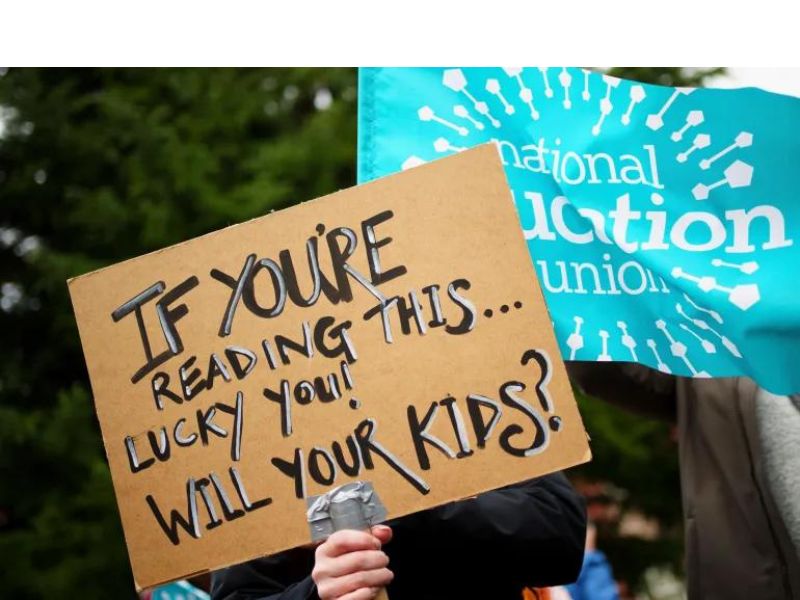
A sign held up by a striking teacher at a demonstration in Manchester, England

Up to half a million British teachers, civil servants, train drivers, and university lecturers have walked out over pay and conditions in the largest coordinated strike action in a generation, as wages fail to keep pace with soaring inflation.

About 300,000 on strike on Wednesday are teachers, according to the Trades Union Congress (TUC).

Across schools in England and Wales, teachers formed picket lines as they called for higher salaries in demonstrations which have divided public opinion.

Some locals in cars beeped their horns and raised a fist in solidarity as they drove past, while others walking by, who disagreed with the industrial action, questioned teachers on their motives.

Home-schooling and home-working reminiscent of COVID lockdowns returned to many households, as school gates remained closed and most trains were halted.

According to a YouGov poll late last year, 59 percent were in favour of the education sector striking.

The National Education Union said some 23,000 schools will be affected on Wednesday, with an estimated 85 percent fully or partially closed.

Former Labour leader Jeremy Corbyn, who crossed the picket lines to join striking workers in London, called for a “fairer taxation system”.

“This country cannot afford the levels of inequality we have,” Corbyn told Al Jazeera.

“There are more billionaires in Britain than ever before, many people, billionaires and millionaires, made a lot of money during COVID-19 they haven’t been taxed for it,” he added.

Source: aljazeera.com

Pope Francis in DR Congo: A million celebrate Kinshasa Mass

0
It has been nearly four decades since a pope visited DR Congo

Pope Francis has celebrated one of his biggest Masses, with around a million attendees in Democratic Republic of Congo’s capital, estimates say.

Huge crowds started to gather in Kinshasa well before dawn, including scores of schoolgirls dressed in white who danced along the Pope’s route.

A public holiday was declared, so as many people as possible could attend.

Around half of DR Congo’s population is Catholic – the largest Catholic community in Africa.

It is more than 37 years since a pope had visited the mineral-rich but conflict-ridden country.

A 700-person choir, that had been practising together long before the pontiff was originally due to visit last July, had been assembled specifically for the event. The Pope’s original visit had to be postponed because of poor health.

There had been some murmurings that the Pope has not been as critical of DR Congo’s political leadership as some had hoped, but the Mass at N’dole airport was a joyful event, and the pontiff did have a strong message of peace for those engaging in conflict in the country.

On the second of his six-day visit to Africa, he said warring sides should forgive one another and grant their opponents a “great amnesty of the heart”.

He went on to espouse the benefits of cleansing one’s heart of “anger and remorse, of every trace of resentment and hostility”.

Source: bbc.com

Suspects arrested in fatal Pakistan mosque suicide attack that left over 100 dead

0
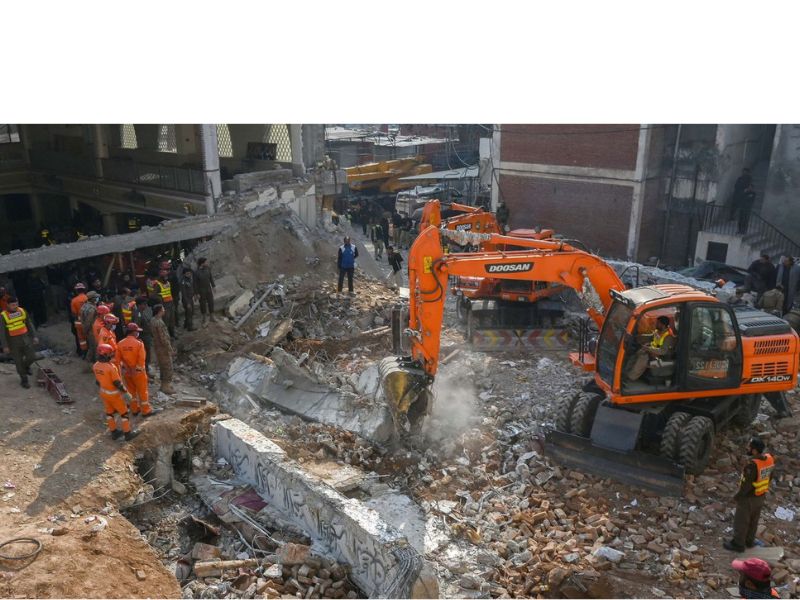
Security personnel and rescue workers search for victims after Monday's blast at a mosque in Peshawar, Pakistan

Several suspects have been arrested in connection with Monday’s suicide bomb blast in a mosque in Pakistan’s northern city of Peshawar that killed more than 100 people.

More arrests will take place following a major police investigation into the attack that injured another 217 people, Peshawar Police Chief Mohammad Aijaz Khan said.

Authorities are also investigating how the attacker entered the mosque, Khan added. Families that live in the police compound where the mosque is located are being interrogated as police cannot rule out that the attacker may have been helped by someone internally.

Police suspect that 12 kilograms (26.5 pounds) of explosives were used by a suicide bomber, Inspector General of Peshawar Police Moazim Jah Ansari said earlier.

Footage emerged of the destroyed walls of the mosque, with glass windows and paneling pummeled in the powerful explosion.

Emergency workers searched through the rubble to locate survivors in the aftermath of the explosion, but authorities said “mostly dead bodies” were being found.

The blast Monday is indicative of the deteriorating security situation in Peshawar, capital of the restive Khyber-Pakhtunkhwa province that borders Afghanistan and the site of frequent attacks by the Pakistani Taliban, known as Tehreek-e-Taliban (TTP).

Source: cnn.com

UK documents: Bush ordered CIA to find replacement for Arafat

0
Yasser Arafat, leader of the Palestinian Liberation Organization, won the Nobel Peace Prize in 1994 with Israeli leaders Yitzhak Rabin and Shimon Perez after they signed the Oslo Accords

Former United States President George W Bush ordered the CIA to search for a replacement for Palestinian leader Yasser Arafat after the escalation of the second Intifada in 2001, the BBC said, quoting recently released British documents.

The US effort came after the failure of the Camp David negotiations in 2000 between Arafat and then-Israeli Prime Minister Ehud Barak. The talks followed the escalation of violence in the occupied territories of the West Bank and Gaza Strip.

According to the BBC documents, Bush expected early on that Ariel Sharon, who succeeded Barak, would use the Gaza Strip to sow divisions among the Palestinians.

The documents deal with discussions that took place between the United Kingdom and the US a few months after Bush and his administration, which was dominated by neoconservatives, entered the White House.

When Bush was inaugurated in January 2001, the second Palestinian uprising was at its height. It had erupted in late September 2000 when Sharon entered the courtyards of Al Aqsa Mosque, an act widely seen by Palestinians as a provocation.

The Bush administration called on Arafat to stop the uprising to lay the groundwork for the start of security negotiations with Israel. It also vetoed a draft resolution in the United Nations Security Council, which proposed sending a UN observer force to protect Palestinian civilians from Israeli forces in the occupied territories.

Source: aljazeera.com

The Ghanaian Chronicle