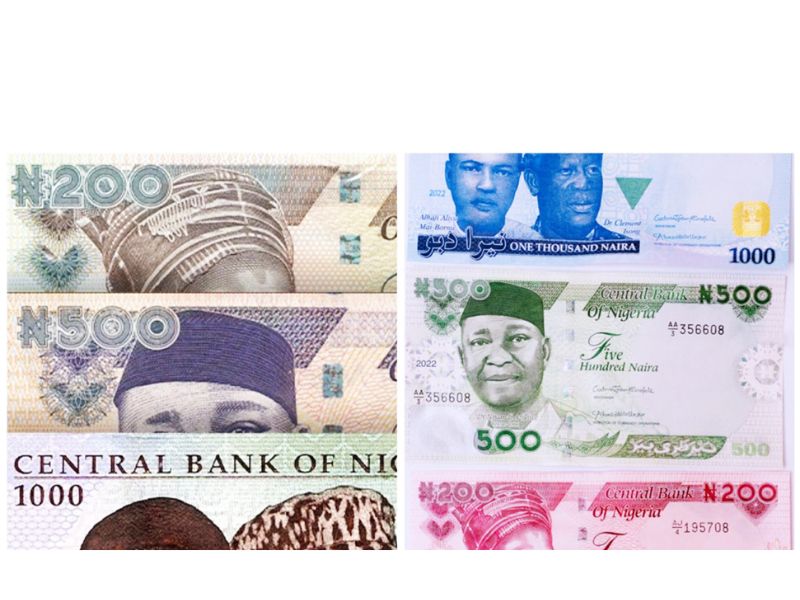
The Central Bank of Nigeria (CBN) on Thursday ordered commercial banks to begin the payment of the new naira notes to customers over the counter.
This was confirmed in a statement issued and signed by the Bank’s Director, Corporate Communications Osita Nwanisobi.
Nwanisobi said the maximum daily payout limit is N20,000 only.
“In line with this resolve, the Governor, Mr. Godwin Emefiele, has directed deposit money banks (DMBs) to commence the payment of the redesigned Naira notes over the counter, subject to a maximum daily payout limit of N20,000,” the statement added.
Nigerians have continued to lament cash scarcity and its attendant consequences on the Nigerian economy.
Checks by DAILY POST found that residents of the Federal Capital Territory, Lagos, Edo, Nasarawa, Niger, Anambra, Delta and major cities continue to decry frustration over the non-availability of cash.
Banks’ ATMs in Wuse 2, Wuse Market, Jabi, Ukato, Central Business District, and Maitama were crowded with customers.
DAILY POST went around the city centre to speak to some bank customers who appeared desperate to assess cash for their daily financial transactions.
Mr Benson Nweke who spoke to our correspondent said he had spent close to 5 hours at the ATM in Utako but he had been unable to withdraw.
“Honestly, the situation is frustrating; I have been here for more than 5 hours yet could not withdraw. I currently have no cash to return home”.
Esther Patrick said she has been going from one ATM to another around Wuse 2 looking for cash but has yet to be successful.
She disclosed that she reported to a POS agent who charged her N1,000 for N4,000.
“I can’t say much, my brother; you are in the country with me! I had been burning my fuel and going around ATMs looking for cash to withdraw; the worst thing was that I could not get even N5,000. Most ATMs around Maitama are not dispensing or are filled with massive crowds.
Outside Abuja, the story is not different. The situation is worse.
Angela Osasu, a resident of Uselu Benin in Benin city told DAILY POST on phone that most ATMs in her area need are not dispensing cash.
“Although there are massive crowds around some ATMs, many are not dispensing”.
Wola Adedotun, a resident of Ajah in Lagos State in anguish lamented that government must look into the situation urgently before it degenerates into a full-blown crisis.
“I have been in an ATM around Ajah since 7 am, yet there is no hope that I would get the cash; the government needs to devise practicable solutions; if not, the country would crash”.
In Awka, Anambra, Nasawara, Niger and other major cities, the cash scarcity has continued to impact negatively on the lives of ordinary Nigerians.
The ongoing currency crisis caused a shortage of new naira notes amid several challenges that Nigerians struggle with daily.
In addition to the cash scarcity, is also the current fuel crisis across Nigeria, many spend hours in queues for cash from ATMs and also queue for cash to buy the product as many stations have refused to accept cash transfers for payment.
Despite the Central Bank Governor announcing a 10-day extension to the deadline to phase out the old currency, the scarcity of the new naira notes persists.
While the Central Bank continues to claim it released more than enough new currencies to Deposit Money Banks, the reality on ground points to the opposite.
The Cedi gained against the dollar, trading at 12.05 from 12.50 at last week’s close after Ghana’s central bank raised interest rates by less than forecast amid expectations that an emergency $3bn IMF loan deal will be finalised by the end of this quarter.
The central bank hiked rates by 100 basis points to 28%, 75 basis points less than market participants had been anticipating. Ghana also this week extended a deadline for local bondholders to accept a debt-exchange deal as part of efforts to restructure its debt to unlock the IMF loan.
Ghana also sweetened the deal for investors by reducing the maturity of the new bonds to five years instead of 12. Retirees will also be eligible for a higher coupon rate. We expect the Cedi to stabilise around current levels as further progress is made on the debt swap programme.
What Nigeria’s election month means for the Naira
Naira
Nigerians head to the polls this month amid worsening economic turbulence. Moody’s downgraded the sovereign rating by one level to Caa1—signalling “high credit risk”—and causing a plunge in government bond markets this week.
A shortage of new Naira bills is crippling businesses reliant on cash for daily transactions, forcing the central bank to extend its Jan. 31 cut-off for tendering old Naira notes to Feb. 10.
Africa’s biggest oil exporting nation faces further waves of petrol shortages, this time the combined result of hoarding by retailers unwilling accept old Naira notes while expecting to sell above official subsidized rates viewed as unsustainable post-election.
Among the three candidates most likely to replace President Muhammadu Buhari, all are establishment men: two are former state governors – Bola Ahmed Tinubu and Peter Obi – and the other, Atiku Abubakar, is a former vice president.
But while Tinubu and Abubakar are positioning along traditional tribal lines, Obi is presenting himself as the most radically market-friendly candidate.
Obi has been vocal about eliminating the country’s multiple exchange rates and reducing fuel subsidies. Effectively, this would mean devaluation in the short term at least.
Realistically, the Naira looks set for depreciation whichever candidate wins, with potentially worse results in the event of any delay to the election through disruption or violence (voting was delayed by a week at the last election in 2019).
Even with a smooth election process, the economy will be in a state of limbo for several months, with Buhari’s replacement taking office about a month after the inauguration ceremony, which is slated for the end of May.
While the Naira has strengthened marginally over the past week, hitting 746 from 748 at last Friday’s close, this has been caused by the shortages of new notes temporarily limiting parallel market activity.
This effect can be expected hold the Naira stable around current levels until the new bills go into full circulation, after which we anticipate a return to gradual depreciation as normal demand for FX returns.
Rand slides amid looming state of emergency
Rand
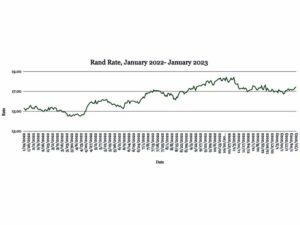
The Rand weakened against the dollar, trading at 17.43 from 17.20 at last week’s close as the country’s energy crisis continues.
South Africa’s government said it is seeking legal advice on declaring a national state of emergency, with ongoing power cuts hampering economic progress and crushing investor confidence. The central bank said the power cuts will likely reduce economic growth by 2 percentage points this year.
The government last imposed a state of emergency in 2020 during the Covid-19 pandemic. With the US Federal Reserve hiking rates this week by 25 basis points, in line with market expectations, we expect worsening domestic sentiment to be balanced by the broader global risk outlook in the week ahead.
Egypt Pound nears record low despite inflows
Egypt
The Pound depreciated against the dollar, trading at 30.20 from 29.89 at last week’s close, edging towards the record low 30.50 hit last month.
The country continues to struggle with high inflation rates—accelerating to 21.9% in December, well outside the central bank’s target range of 5-9%.
Egypt’s move to let its currency float more freely as part of conditions to secure an IMF loan deal has helped revive foreign inflows.
Net foreign assets increased for a second month, rising EGP47.28bn in December, though the balance remains a deficit of EGP494.3bn. With the central bank’s new hands-off approach, we expect gradual depreciation to continue in near term.
Record low for Kenyan Shilling as reserves sink
Kenya
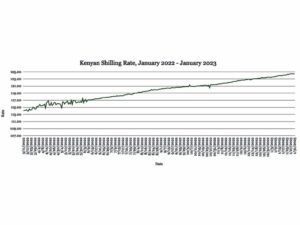
The Shilling dropped to a fresh low against the dollar, trading at 124.40/124.60 from 124.10/124.30 at last week’s close as FX demand continues to outstrip supply.
The central bank’s efforts to prevent a steeper decline has resulted in foreign currency reserves hitting the lowest level in more than seven years, at just over $7bn—enough for 3.92 months of import cover. The central bank kept interest rates on hold at 8.75% this week, expressing confidence that inflation will decline in the near term.
That follows government measures to allow duty-free imports of key food items such as maize, rice and sugar to tame rising prices. Inflation eased to 9% in January from 9.1% in December.
While the Shilling could see a boost later this year as Kenya is set to receive at least $700m in disbursements from the IMF and the World Bank by the end of June, in the more immediate term we expect further weakness for the currency.
Uganda inflation rise leaves Shilling under pressure
Uganda
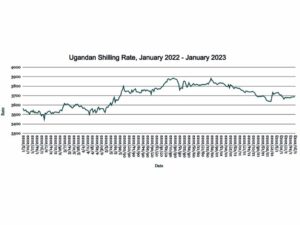
The Shilling was little changed against the dollar, trading marginally stronger at 3683 from 3686 at last week’s close. Uganda’s annual inflation rate increased in January to 10.4% compared to 10.2% a month earlier.
Food and non-alcoholic beverages continued to see the fastest price rises, though they accelerated at a slightly slower pace in January (22.9% compared to 23% in December).
Furnishings and household equipment also saw a slight easing, though they accounted for the second fastest price increases in January (13.4% compared to 14.3% in December). We expect these inflationary pressures to chip away at the Shilling in the weeks ahead.
Tanzanian exports surge led by Zanzibar
Tanza
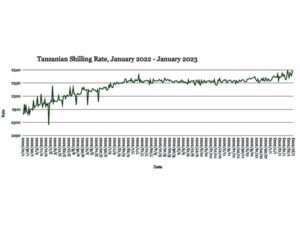
The Shilling was steady against the dollar, trading at 2338—in line with last week’s close.
Exports of manufactured goods increased by almost 16% from mainland Tanzania last year, with Zanzibar reporting a 36.6% increase, according to the Tanzanian Revenue Authority and the Bank of Tanzania.
President Samia Suluhu Hassan spent much of last month overseas seeking investment in the country’s agriculture value chain, including talks with Swiss agribusiness Syngenta Agro at the World Economic Forum in Davos.
Given the prospects of increased investment, we expect the Shilling to remain stable against the dollar in the week ahead.
I also notice coffee is revered in the Gambia. From careful observation, it appears coffee is next to attaya consumption in the Gambia.
Notwithstanding, coffee is one of the most consumed beverages globally. In Africa, many studies and research missions have found wild species of coffee growing off the coast of Côte d’Ivoire and in some areas of Sierra Leone.
On the global front, the top five coffee-producing countries: Brazil, Vietnam, Columbia, Indonesia, and Ethiopia, account for 75% of the world’s total coffee production.
Coffee
The International Coffee Organization, reports that a total of 169.6 million 60-kilogram bags of coffee were produced worldwide in 2020, with the top 10 biggest coffee-producing nations accounting for 87% of the commodity’s market share.
Coffee is the third most consumed beverage globally, after water and tea. The issue of whether coffee consumption is good for our health is the subject of this article and I examine this based on sound scientific evidence.
Coffee is loaded with caffeine, however, it is rich in antioxidants and contains a small amount of several micronutrients that your body needs as well. However, it’s also been linked to many different side effects, and health experts often advise that certain groups of people limit their intake to avoid adverse effects on health.
Coffee: nutrition
Arabica and robusta are the two most common types of coffee. Though they are limited in their content of vitamins and minerals, coffee is far better as compared to energy drinks, soda, and sweetened teas or juices. It contains no sugar or carbs and virtually no calories. According to the United State Department of Agriculture: One eight-ounce cup of regular coffee nutrition contains about;
2.4 calories
0.3 gram protein
0.2 milligrams riboflavin (11 percent DV)
0.6 milligram pantothenic acid (6 percent DV)
116 milligrams potassium (3 percent DV)
0.1 milligram manganese (3 percent DV)
7.1 milligrams magnesium (2 percent DV)
0.5 milligram niacin (2 percent DV)
The amount of caffeine in coffee depends on several factors such as the type of bean, manufacturer, and method used for making the coffee. For example, a standard cup from Starbucks has been found to contain more caffeine amount than the average medium-roast coffee at home.
According to the USDA, an average eight-ounce cup of brewed coffee from ground beans contains about 95 milligrams of caffeine. Meanwhile, the same size cup from Starbucks (which would be a “short”) has also been found to contain about 64 milligrams, and a cup of green tea has about 44 milligrams. That means drinking a cup of coffee from Starbucks provides more than three times the amount of caffeine as a green tea made using one tea bag.
Coffee Types
The following are some of the types cultivated around the world, and each differs based on the type of bean used, the brand, and the method used to brew it:
A review by Higdon and Frei B(2006) found that unfiltered coffee has high amounts of cafestol and kahweol antioxidants, diterpene compounds found to lower cholesterol levels. The review further found that frequent coffee consumption in large epidemiological studies reduced mortality, both for all-cause and cardiovascular deaths.
A subsequent study (Bhatti et al. 2013) also found that coffee consumption is linked with a lower risk of heart failure and stroke. The study further found that coffee consumption reduced the risk for heart arrhythmia, even though several people feel it raises their heartbeat and makes them feel “jittery.”
In another review, Rodríguez-Artalejo, and López-García(2018) found that drinking three to five cups of coffee per day is linked to a 15% decreased risk of heart disease.
In a recent study, Stevens et al.(2021) tracked over 21,000 people also found that increased coffee intake was associated with a significantly decreased risk of heart failure
This notwithstanding, some studies have linked coffee consumption to raising blood pressure. Hence, two studies: Rodríguez-Artalejo and López-García, 2018; Lopez-Garcia et al. 2016), warned that people with unmanaged blood pressure may need to limit or moderate their caffeine intake.
Longevity
In the first study, Poole et al. (2017) found that consuming one and four cups per day of coffee — irrespective of the type, or even lightly sugar-sweetened — may aid in protection against heart disease, liver disease, cancer and cognitive decline.
The second study on longevity and coffee consumption I found was by Kim et al.(2019). This study reviewed 40 studies and concluded that drinking two to four cups of coffee daily was linked with a lower risk of death, irrespective of factors like age, weight status, and alcohol consumption.
The third study, by Czachor et al. (2020) was a testtube and found that coffee was able to extend the life span of yeast by protecting against free radicals and DNA damage. This is so refreshing!
The fourth study was by Torres-Collado et al.(2021) examined 1,567 people and found that drinking caffeinated coffee is associated with a lower risk of death after 12 and 18 years of follow-up. Also, drinking at least one cup of coffee per day was also associated with a lower risk of death from cancer.
Finally, Liu et al. (2022) focused on the association between coffee intake and reduced risk for death (all-cause mortality).
This was one of the first and only studies to distinguish between the effects of consumption of sugar-sweetened, artificially sweetened, and unsweetened coffee.
In this study, the researchers examined over 171,000 adults with a mean age of 55 to keep track of their coffee habits for nine years (2009 to 2018). The good news is that the participants had no cardiovascular disease or cancer at the beginning of the study.
I present the main findings from the study:
Compared with those who didn’t consume any coffee, consumers of various amounts of unsweetened coffee (between 1 and 4.5+ cups per day) had lower risks for all-cause mortality. Drinking unsweetened coffee regularly in any amount led to a 16% to 21% lower risk of dying during the seven-year-long follow-up period.
Adults who consumed sugar-sweetened coffee also experienced increased protection against death. Drinking lightly sweetened coffee was even more protective than drinking unsweetened coffee drinks. Adults who drank moderate amounts of coffee sweetened with sugar (1.5 to 3.5 cups per day) were 29% to 31% less likely to die during the follow-up period.
There wasn’t any clear indication that people who regularly consumed artificially sweetened coffee had any greater protection against mortality. (Overall, the pattern was inconsistent.)
The bottom line?
Moderate consumption of unsweetened and sugar-sweetened coffee (only 1 teaspoon of sugar per serving) was associated with a lower risk of death. This was true for different types of coffee, including fresh brewed, instant, ground, and decaffeinated coffee.
“Moderate consumption” equates to drinking about one to four cups of coffee per day.
In simplicity, the study found that higher consumption of coffee can help protect against heart disease, cancer, and overall risk of death. Now, the issue is what could account for coffee extending your life? From sound data gathered so far, coffee’s antioxidants and caffeine are largely responsible for its health-promoting effects. This is the deal according to Jillian, L(2022) :
“Coffee gives you high levels of antioxidants, such as polyphenols, which can help defend against free radical damage that contributes to disease formation and signs of aging. Studies show that polyphenols and other compounds in coffee have antioxidant, anti-inflammatory, anti-cancer, anti-diabetes, and antihypertensive properties.
Caffeine, which is naturally found in coffee beans, also has several positive effects on health markers, especially for your brain and metabolism. Caffeine can help support a healthy metabolism and body weight by possibly burning more fat, blocking calorie absorption, reducing appetite, boosting willpower and motivation, and giving you more energy for physical activity”.
Liver Protection
Coffee consumption has been linked to protecting the liver. For instance, Freedmanet al.(2009) found that coffee improves circulation and can stimulate the liver. Also increased coffee consumption was associated with lower rates of liver disease progression in people with hepatitis C. The study noted that there was a 20 percent reduction in alcoholic liver syndrome for every cup of coffee a day participants drank.
A previous study by Klatsky et al.(2006) held the view that coffee could also protect against cirrhosis, including alcoholic cirrhosis.
Fastforward, Wadhawan and Anand(2016) found that drinking more than two cups of coffee per day was linked to lower rates of liver scarring and liver cancer in people with liver disease.
Another study, by Heath et al.(2017) shows that the more coffee people drank, the lower their risk of death from chronic liver disease. Drinking one cup of coffee per day was tied to a 15% lower risk while drinking four cups per day was linked to a 71% lower risk.
Finally, a recent study, by Niezen et al.(2022) found that coffee consumption was linked to reduced liver stiffness, which is a measure healthcare professionals use to assess fibrosis, the formation of scar tissue in the liver.
Improves athletic Performance
Jeffrey Levy (2008) notes that Coffee is mostly used as an ergogenic aid by athletes who want to improve performance and increase energy levels. An ergogenic aid is also called a performance enhancer.
Higgins et al.(2016) review of nine studies reported that drinking coffee before exercise enhanced people’s endurance and decreased their perceived exertion, compared with a control group.
In a recent study, Jyväkorpi et al. (2021) in 126 older adults found that drinking coffee was linked to enhanced physical performance and faster gait speed, even after the researchers adjusted for factors like age, belly fat, and physical activity levels.
In a previous large review study, Southward K, (2018) reported that moderate caffeine consumption may somewhat enhance power output and time-trial completion time.
In a previous study, Graham TE, (2001) reports that caffeine doesn’t improve maximal oxygen capacity directly but could help increase power and/or endurance for athletes. It has been shown to increase speed and power output in simulated race conditions and activities that last as little as 60 seconds or as long as two hours.
The caffeine in coffee, in particular, is often used as an ergogenic aid before and during prolonged exercise. This is one reason why many endurance athletes and fitness enthusiasts like to drink some coffee before hitting the gym or competing since it’s known to be a performance enhancer and contributor to higher concentration and stamina.
Finally, Hodgson et al.(2013) found that the power and athletic performance times were faster among adult men who drank caffeine drinks and coffee before exercising compared to placebo and decaf groups.
Coffee, depression, brain health
Lucas et al.(2014)study examined over 200,000 people and found that drinking coffee is associated with a lower risk of death by suicide.
Wang et al.(2015) review of seven studies, found that a daily cup of coffee drank is associated with an 8% lower risk of depression.
Navarro et al.(2018) found that drinking at least four cups of coffee daily is linked to a lower risk of depression, compared with drinking just one cup per day.
Also, Hong et al. (2020) review of 13 studies, found that caffeine consumers had a significantly lower risk of developing Parkinson’s disease. Apart from this, caffeine consumption also decreased the progression of Parkinson’s disease over time.
A previous study by Liu et al.(2016) of 11 observational studies in over 29,000 people also found that the more coffee people consumed, the lower their risk of Alzheimer’s disease.
Two other studies, (Zhang et al. 2021; Chen et al, 2020), found that moderate coffee consumption could be associated with a lower risk of dementia and cognitive decline.
Finally, one study examined coffee as a potential natural treatment for Alzheimer’s as well as other neurological conditions. For instance, Arendash and Cao(2010), an animal study conducted by the Florida Alzheimer’s Disease Research Center, mice given caffeine in their drinking water from young adulthood into older age demonstrated protection against memory impairment and lower brain levels of the abnormal protein (amyloid-beta or Abeta) thought to be central to Alzheimer’s development. “Aged,” cognitively impaired mice exhibited memory restoration and lower brain Abeta levels following only one to two months of caffeine treatment.
Coffee, Diabetes
Huxley et al.(2009) large review of 18 studies found that each cup of coffee consumed was linked to a 7 percent lower risk of developing type 2 diabetes. In a subsequent study, Meng et al.(2013) found chlorogenic acid, one of the main antioxidants in coffee, to decrease the absorption of glucose from sugary or high-carbohydrate foods. This could slow the release of sugar into the bloodstream after a meal.
Another, Carlström and Larsson’s (2018) review of 30 studies found that each cup of coffee drank per day is associated with a 6% lower risk of developing type 2 diabetes.
In a more recent study, Kolb et al. (2021) explained further how this is done: “This is due to coffee’s ability to preserve the function of the beta cells in the pancreas, which are responsible for producing insulin to regulate blood sugar levels.”
Finally, Akash et al. (2014) study found that due to the rich nature of the antioxidants of coffee, it could affect insulin sensitivity, inflammation, and metabolism —which are involved in the development of type 2 diabetes.
Weight Management
One old study, by Koot and Deurenberg(1995), also found that caffeine was able to boost metabolism by an average of 7 percent within three hours after consumption.
Sirotkin and Kolesárová(2021) study found that coffee could alter fat storage and support gut health, which are important in weight management. In a previous study, Lee et al.(2019) review of 12 studies concluded that higher coffee consumption may decrease body fat, especially in men.
Women were not left out, Cacao et al.(2020) study also found that increased coffee intake was linked to decreased body fat in women.
In a previous study, Torquati et al.(2018) found that coffee drinkers who drank one to two cups of coffee daily were 17% more likely to meet recommended physical activity levels, compared with those who drank less than one cup per day.
Coffee, Energy Levels
In a recent study, Evans et al.(2022) found that Coffee contains caffeine, a central nervous system stimulant that is known for its ability to fight fatigue and increase energy levels.
Two studies explained how this is done, Alasmari F, 2020; Meeusen, 2006):
“Caffeine blocks the receptors of a neurotransmitter called adenosine, and this increases levels of other neurotransmitters in the brain that regulate the energy levels, including dopamine.”
In one small study, Smirmaul et al. (2017) agree that consuming caffeine increased time to exhaustion during a cycling exercise by 12% and drastically decreased subjective levels of fatigue in participants.
Mumford et al.(2016) had similar findings and found that consuming caffeine before and during a round of golf improved performance, increased subjective energy levels, and reduced feelings of fatigue.
Antioxidants
Richelle et al.(2001)study found that an average cup of coffee could even contain more polyphenol antioxidants than cocoa, green tea, black tea, and herbal tea. Two of the key antioxidants that account for the majority of coffee benefits are chlorogenic acid and caffeic acid, both of which can help protect cells against damage and oxidative stress.
Wang et al. (2016) study also found that drinking coffee was associated with a lower risk of multiple kinds of cancer, including oral, pharyngeal, colon, liver, prostate, endometrial cancer, and melanoma.
Warning
Digestive issues
One study, Nwokediuko S(2009) found that caffeine can worsen symptoms of gastroesophageal reflux disease (GERD), a condition characterized by heartburn, nausea, and belching.
Boekema et al.(1999) also found nausea, vomiting, and diarrhea as some of the side effects associated with coffee consumption. This is due to the laxative effect of coffee, which is caused by the release of gastrin, a type of hormone that stimulates movement in the digestive tract.
Raised blood Pressure
Two studies: (Rodríguez-Artalejo and López-García, 2018; Lopez-Garcia et al. 2016), warned that people with unmanaged blood pressure may need to limit or moderate their caffeine intake.
Anxiety
One study by Ferré, S(2008) found that caffeine in coffee could impact hormones, neurotransmitters function, nerve signaling, and muscles especially if you have underlying health conditions. Because caffeine increases alertness and triggers the release of adrenaline, it may worsen feelings of anxiety and nervousness.
It is also not recommended for pregnant women and some categories of people (Morgan et al. 2013). Children, for example, have long been advised to avoid drinking coffee due to its potential effects on growth and development.
Recommendations
Pregnant women should also limit caffeine consumption to less than 200 milligrams per day to prevent adverse outcomes and birth defects.
A “moderate amount” for healthy adults maxes out at 500 milligrams of caffeine per day, which is about five cups of home-brewed regular coffee or a little more than one venti Starbucks coffee (which has about 410 milligrams).
Most health experts recommend drinking between one and two cups a day ideally.
NB:
Prof. Nyarkotey has strict sourcing guidelines and relies on peer-reviewed studies, academic research institutions, and medical associations to justify his write-ups. My articles are for educational purposes and do not serve as Medical advice for Treatment. I aim to educate the public about evidence-based scientific Naturopathic Therapies.
The writer is a Professor of Naturopathic Healthcare, a Medical Journalist,and a science writer. President, Nyarkotey University College of Holistic Medicine & Technology (NUCHMT), African Naturopathic Foundation, Ashaiman, Ghana. Currently BL Candidate at the Gambia Law School, Banjul, Gambia. E. mail: professor40naturopathy@gmail.com. For more information call +220 745 2652.
Celebrity and lifestyle blogger, Ameyaw Debrah has opened up on his professional relationship with award-winning dancehall star, Shatta Wale. According to Ameyaw Debrah, this started after he put up a story of Shatta Wale who was billed for a show with Samini some years ago.
Ameyaw Debrah said after he reported on the issue, he received a call from Shatta Wale’s camp and they accused him of being biased toward the ‘Ayoo’ hitmaker.
The celebrity blogger added that the conversation ended up with a threat after Shatta Wale told him to stop writing about him if he (Ameyaw Debrah) valued his life.
Ameyaw Debrah revealed that he never threatened Shatta Wale with what Shatta Wale said.
Shatta Wale once told me “If you value your life, do not write about me.” I then blacklisted him for 7 years or so. I mean if you don’t write about a particular artist and you still thrive in your business, then it means I don’t really care about you. I didn’t feel threatened when Shatta Wale told me if I value my life, I shouldn’t write about him
Ameyaw Debrah added that from then on, he decided to blacklist Shatta Wale and stopped writing about him.
He however added some of my employees are fans of Shatta Wale so they write about him. The blogger also added that it was never his plan to bring down Shatta Wale.
Although Beyonce performed in South Africa in 2018 at the Global Citizen Festival where she was joined by husband Jay Z on-stage, her fans wonder when again she is performing in Africa.
A source has told Metro UK that Beyonce is exploring whether it would be possible for her to bring Renaissance to the continent, specifically Ghana.
‘These dates only form part of the experience and there are talks to see if a more family friendly version of her show can be taken to Ghana,’ the insider said, explaining that the shows in Europe and North America will feature ‘mildly explicit’ content in light of some of the lyrics on the Renaissance album.
They continued: ‘Live Nation is eager for all of its acts to perform in new markets and would like Bey to spearhead it if they can find the right venue and partners on the ground. She is working closely with Ay Hollywood on choreography and has spent the last year producing the live arrangements for the show.’
If Beyonce does head over to Ghana later this year, she’ll likely be in good company as she collaborated with Ghanaian artist Shatta Wale on the popular track Already from The Lion King album.
Beyonce fans in Africa may not miss out on the Renaissance world tour entirely, as it’s claimed she’s in talks to bring the anticipated show to Ghana.
It comes more than a week after Beyonce, 41, performed an exclusive show in Dubai but left fans lingering as she didn’t perform any new tracks from the dance-infused album.
So far, the Renaissance tour will include cities such as London, Cardiff, Stockholm, Toronto, Las Vegas, Miami and Houston.
Singer Efya has shockingly revealed that she does not know who Blakk Rasta is, which has sparked controversy in the media.
Efya made this surprising revelation when she was recently interviewed on GhOne TV’s Rhythms show.
“Who is that? He’s a rapper; he’s a what? He’s a radio journalist?But journalists say what they want, they don’t care. I don’t think I know who he is. What does he do, radio?” Efya asked.
Efya’s comment comes after Blakk Rasta recently attacked Sarkodie and described how he performed on the remix of Bob Marley’s ‘Stir It Up’ as ‘wack’.
According to Efya, Blakk Rasta doesn’t have the authority to criticize the song, adding that his opinion won’t change anything.
“Your opinion right now, Mr Blakk, does not matter. The thing is, the boy has done something and it’s historic, be grateful and let’s honour our people. Let’s be happy for our people, you saying this, what does it do to it? Are they gonna go back to production and make the music what you want? What level has he gotten to criticize the song?” she quizzed.
After being given some clues by the host of the show, she admitted that she knows the Presenter cum Reggae Artiste who does funny music.
This has provoked response from Blakk Rasta who has used some distasteful words on the Songstress.
Blakk Rasta has decided to berate Efya and tell her to desist from the use and abuse of drugs, which could have clouded her knowledge of him.
In a quick rebuttal, Blakk Rasta wrote: “Sad what DRUGS can do to a beautiful soul. Be delivered and healed, in JESUS name!”
Award-winning highlife musician, Kwabena Kwabena has revealed that his hit song ‘Aso’ was inspired by a friend who had just experienced a severe heartbreak.
After the release of the song, a similar tragedy happened to him in real life, according to ‘Adult Music’ crooner.
Kwabena Kwabena explains that, ‘Aso’ is a very relatable song and not gender-specific, hence anyone could just experience the story behind it and feel the song even more.
“I now understand why people love the song because it looks like it has happened to a lot of people and I had my own fair share”, he indicated.
Kwabena Kwabena said that he never regretted writing that song even after experiencing it because life is about real situations and as far as reality is concerned, anything can happen at any time.
“It is what it is and what is real is real, if something happened yesterday, it can happen tomorrow, it can happen today so like you said everybody go chop breakfast,” Kwabena Kwabena said this on Prime Morning.
He mentioned that he has not had that experience again since the last one because he has been single for a while now.
The musician continued that currently, he wants to study and work on himself in order for his next potential lover to experience a better version of him.
Ukraine’s defence minister has said Russia is preparing a major new offensive, and warned that it could begin as soon as 24 February. Oleksii Reznikov said Moscow had amassed thousands of troops and could “try something” to mark the anniversary of the initial invasion last year.
The attack would also mark Russia’s Defender of the Fatherland Day on 23 February, which celebrates the army.
Meanwhile, three people have died in an attack on the city of Kramatorsk. Eight others were wounded in the city in Donetsk region after a Russian missile struck a residential building, the provincial governor said.
The toll is expected to rise as rescuers comb through the wreckage. “The only way to stop Russian terrorism is to defeat it,” Mr Zelensky wrote on social media about the attack. “By tanks. Fighter jets. Long-range missiles.”
Iran has blamed Israel for a drone attack on a military site in the central city of Isfahan on Saturday. Its ambassador to the UN said findings indicated Israel “was responsible for this attempted act of aggression”.
Iran, he said, reserves the right “to respond resolutely to any threats or wrongful actions” by Israel.
Israel has neither confirmed nor denied it was behind the attack, which Iran said caused minor damage, though this has not been independently verified.
The two countries are arch-foes and in recent years have been engaged in what has been described as a “shadow war” of unclaimed attacks on each other’s assets, infrastructure and nationals.
Israel is mostly known to have carried out strikes on what it says are Iranian weapons transfers to militants in Lebanon and is also believed to have sabotaged Iran’s nuclear sites and killed Iranian nuclear scientists.
In a letter to the UN secretary general, Iranian ambassador Amir Saeid Iravani accused Israel of “an attempt… to launch a terrorist attack against a workshop complex” belonging to Iran’s defence ministry. He did not specify what evidence Iran had for this.