Home Blog Page 2390

Pervez Musharraf, Pakistan’s ex-president, dies aged 79

0
General Pervez Musharraf

Pakistan’s former president General Pervez Musharraf, who seized power in a coup in 1999, has died aged 79.

The former leader – who was president between 2001 and 2008 – died in Dubai after a long illness, a statement from the country’s army said.

He had survived numerous assassination attempts, and found himself on the front line of the struggle between militant Islamists and the West.

He supported the US “war on terror” after 9/11 despite domestic opposition.

In 2008 he suffered defeat in the polls and left the country six months later.

When he returned in 2013 to try to contest the election, he was arrested and barred from standing. He was charged with high treason and was sentenced to death in absentia only for the decision to be overturned less than a month later.

He left Pakistan for Dubai in 2016 to seek medical treatment and had been living in exile in the country ever since.

Musharraf died in hospital on Sunday morning. His body will be flown back from the United Arab Emirates to Pakistan on a special flight after his family submitted an application to do so, local TV channel Geo News reports.

In the statement Pakistan’s military expressed its “heartfelt condolences” and added: “May Allah bless the departed soul and give strength to bereaved family.”

Pakistan’s President Arif Alvi prayed “for eternal rest of the departed soul and courage to the bereaved family to bear this loss.”

Pakistan’s Prime Minister Shehbaz Sharif also expressed his condolences, as did the country’s military leaders.

Source: bbc.com

10 Health Benefits of African Locust Bean (Dawadawa)

0
Dawadawa

The African Locust bean, commonly referred to as “Dawadawa” By Ghanaians is a local seasoning or condiment used in soups and stews. A very popular soup ingredient, globally, it is referred to as African locust bean with the botanical name as Parkia biglobosa.

It is rich in divers nutrients and has great health benefits to Africans who consume it.

Some of these health benefits we will be highlighting.

  1. Good vision

Due to the natural ingredients and nutrients found in African locust bean, it makes it therefore one of the best treatment of bad vision and eyes issue such as Myopia,Cataract and even minus eyes.

  1. It can treat stroke

Stroke is caused when the blood supply to the brain is suddenly obstructed by any substance which is fatal and dangerous to the health of individuals.

Research shows that consuming a good amount of African locust bean will definitely help you against such sickness.

  1. Reduces cholesterol

Cholesterol can cause blockage within the blood vessels thereby reducing the flow of blood to the heart which will definitely lead to heart issues. Eating locust beans can help your body burn the amount of cholesterol found in our bodies.

  1. Treat Diarrhea

Due to the amount of tannin found in African locust bean, it will heal diarrhea, which is a gastrointestinal disorder with the symptoms of frequent watery bowel movements. Consuming African locust beans will help you relive diarrhea.

  1. Treat hypertension

Hypertension also referred to as high blood pressure occurs when is a long-term medical condition in which the blood pressure in the arteries is persistently increasing above the normal level. Therefore consuming a good amount will help people with hypertension.

  1. Helps control blood sugar level

The human body requires sugar to produce enough energy but it should be stable otherwise if unstable of high will cause diabetes. Therefore consuming African locust bean will help you control blood sugar level.

  1. Improve digestion

Eating a good amount of African locust beans can improve digestion. Good digestion will give you a healthy body as the excretion process in the body will be facilitated which will prevent constipation.

  1. Healthy weight

Underweight is not healthy and vice-versa which is sometimes not easy to be normal weight or just gain weight for underweight. Eating African locust bean will help you gain weight in a natural way.

  1. Heal Wounds

As mentioned above it can be used to treat ulcer wounds internally by eating the beans as well as external wounds. The leaves when pounded can be applied on wounds and the bean can be paste on the wound to heal the wounds.

  1. Reduce Fever

Consuming a good amount of African locust bean can reduce fever. It was traditionally used to reduce high fever which is still practiced in some rural African communities and also send away evil spirits because of its unpleasant smell.

African locust beans is one of the best gift of God to Africans but sadly only a few sees this, it consist of many vital nutrients which are cherished by the body. Therefore regular consumption of healthy African locust beans will give you good health

Source: https://gh.opera.news

Feature: 58 years after the death of Dr. J.B. Danquah -His Legacy on constitutional growth & development of Ghana continues

0
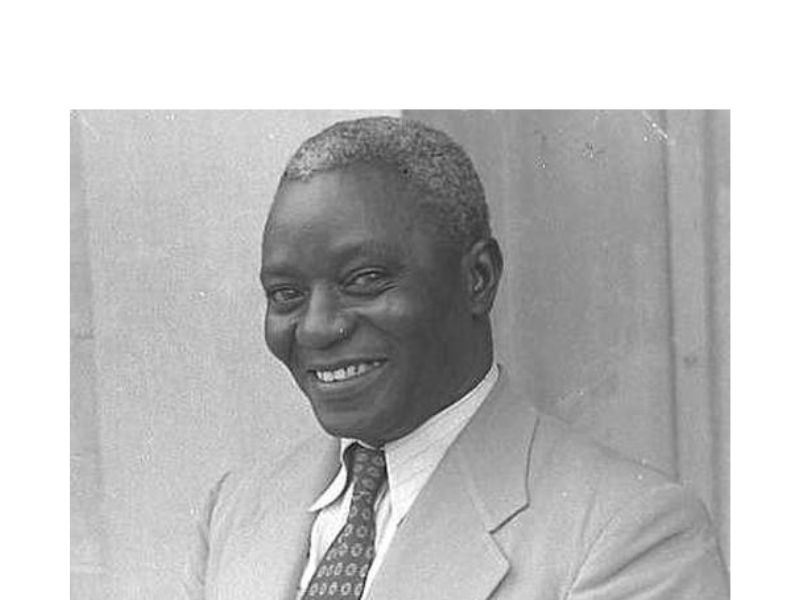
J. B. Danquah
Danquah Institute

At a time when newly independent Ghana was faced with the manifestation of dictatorial rule, one man stood tall in opposition to the “undemocratic” laws and policies that were being enacted and enforced with impunity by the Nkrumah regime.

Joseph Boakye Kyeretwie Danquah, affectionately known as JB Danquah, was that man who took on the excesses of the aforementioned regime. His advocacy for adherence to the rule of law and the guarantee and protection of fundamental human rights for all, at a time when these concepts seemed foreign in the lexicon of our politics and governance system, was truly visionary.

It is important to note that, even though the case of In Re Akoto and Seven Others [1961] GLR 44, has acquired a reputation of infamy since it was decided, JB Danquah’s submissions before the Supreme Court of Ghana in that case has become a must read text on constitutionalism and the constitutional history of Ghana. Such is the impact of JB Danquah, 58 years after his untimely death.

The case of In Re Akoto and Seven Others, centered on the arrest and detention of Baffour Osei Akoto (chief linguist to the then Asantehene) and seven other persons, under the Preventive Detention Act, which had been passed in 1958, by virtue of which one could be arrested and detained without trial, potentially ad infinitum, for so long as the government was satisfied that, inter alia, your future acts were deemed to be prejudicial to the security of the State!

JB Danquah, being who he was – a deep believer in the rule of law, fundamental human rights and justice, and as solicitor for the accused persons, filed a habeas corpus application on their behalf, for the government to show cause why the accused persons should remain in detention.

The High Court refused this application, and JB Danquah, not one for backing down in a legal fight on which he stood on the right side of the law, filed an appeal in the Supreme Court of Ghana against the decision of the High Court.

It was in the Supreme Court, that JB Danquah made his now famous submission, where he urged the apex court in Ghana to uphold the provisions of Article 13(1) of the 1960 Republican Constitution, which he argued constituted an enforceable Bill of Rights akin to the first ten amendments of the United States Constitution.

He argued that, the Preventive Detention Act of 1958 was made in excess of the powers conferred on Parliament by the Constitution and contravened Article 13 of the 1960 Constitution of Ghana.

Essentially, JB Danquah was arguing for the entrenchment of constitutionalism and thus calling on the Supeme Court to do what has now been normalized in our contemporary times i.e. strike down an Act of Parliament for being unconstitutional.

Unfortunately, the Supreme Court held otherwise by stating that the provisions of Article 13 of the 1960 Constitution was similar to the Coronation Oath of the British Monarch and hence legally unenforceable.

According to the court, Article 13 of the 1960 Constitution, which set out a number of principles and guarantee of fundamental human rights that the President upon assumption of office was required to solemnly declare his adherence to, did not constitute a Bill of Rights in the sense of the concept of the Bill of Rights under the American Constitution (the first ten amendments), and thereby created no legal obligations that could be enforced by a court of law.

The above notwithstanding, JB Danquah’s advocacy on the issues of constitutionalism, the rule of law and human rights, have been vindicated. We now take provisions on fundamental human rights and freedoms for granted because we know they’re enforceable rights, and not left to whims and caprices of any individual regardless of their position in our political system.

We also take for granted our right to challenge the constitutionality of Acts of Parliament in the Supreme Court, because we know that Parliament is not sacrosanct and the Supreme Court is empowered by our Constitution to strike down laws enacted by Parliament for reason of unconstitutionality.

That has been the impact of JB Danquah to the constitutional growth and development of Ghana.

By Danquah Institute

Feature: We remember 4th February 1965, at the Nsawam prisons 

0
Feature

Joseph Kwame Kyeretwie Boakye Danquah was born on December 1895 at Bempong and died on 4th February 1965 at the Nsawam Maximum Prisons. He was a lawyer and a politician. In 1929, he helped J. E. Casely Hayford found the Gold Coast Youth Conference (GCYC) and was Secretary General from 1937 to 1947. In 1931, he served as secretary of a delegation to the British Colonial Office.

Danquah founded a newspaper, the “Times of West Africa” and actively sought constitutional reforms in the early 1940s and became a member of the Legislative Council in 1946.

He helped to found the United Gold Coast Convention (UGCC), with the policy “to liberate the energies of the people for the growth of a property owning democracy” in Ghana. The UGCC demanded self-government. Danquah was elected to the Legislative Assembly in 1951 but failed to be re-elected in 1954 and 1956.

In 1960, he run for President against Nkrumah and lost. He was imprisoned in 1961 under the Preventive Detention Act, released in 1962 and was again imprisoned early in 1964 and died a year later, February 4 1965.

Joseph Boakye Danguah was betrayed and killed by a friend who preached, “the cause is greater than personalities”. A good slogan under which to betray friends, and the damnable thing is we continue to do it today.

Being a politician has always been a most treacherous job in Ghana, and never more so in today’s highly polarised country. The masses face threats from highly motivated ‘bad guys’, greedy manifesto writers, fanatical partisans and sophisticated demagogues, seeking political power.

Today, we are reminded of his ideas on the power of freedom and liberty, the influence of a voice, and the meaning of a sacrificial life. We are reminded of his bold faith in the energies of the people in the creation of wealth and his belief in the sanctity of private property. His words and actions have left a lasting mark on Ghana politics, with a powerful legacy that is as undeniable as it is inspiring.

Only those of a seasoned age are likely to remember that the basic issue between Danquah and Nkrumah was two principles: Individualism and Collectivism. The role of the state — the government. The one to contract and the other to enlarge the powers of the government to the utmost.

The ideas represent two opposite principles and are the roots of two opposite social systems. In a country where virtually every family owns land, Danquah wanted recognition of productive property rights across the populace, while Nkrumah wanted the state to appropriate and allow productive property in the hands of the state in the ‘interest’ of the individual.

Danquah believed in the ability of the individual to create wealth in an open decentralised competitive market economy. Individualism holds that man has inalienable rights, which cannot be taken away from him by any other man, nor by any number, group or collective of other men. Therefore, each man exists by his own God-given right and for his own sake, not for the sake of the group.

Not so Nkrumah! Nkrumah’s thinking and belief was that individuals have no rights; that their work, their body and their personality belong to the state; that the state can do with them as it pleases, in any manner, it pleases.

Throughout his rule, he worked towards the gradual and incremental extensions of government control and direction of economic affairs and social change.

Several years after Nkrumah, and with a total public debt stock of nearly GH 600 billion cedis, the story is that Ghana is not working. Nothing is going to get fixed – really fixed – until we come clean about this basic, sad and distressing fact.

Our abysmal centrally controlled economy has strayed from the basic principles upon which all free nations are founded. This has created unhappy people who have lost confidence in their leaders.

In such unhappiness, people on both sides of the political aisle too often accept “solutions” that still grant the government more control of our lives, even though that control is usually the source of the problem.

The political decay, alongside the looting, irresponsibility, a disengaged citizens and a corrupt leadership cult presiding over an ever-intrusive ‘bourgeois socialist’ or ‘crony capitalist’ state do not define a free independent nation.

Under the fourth Republic Constitution, the drift towards political oligarchy continues unabated as nearly all-economic activity is facilitated through taxation and borrowing. We forget government spending does not multiply the economic power of money; it rather diminishes growth and innovation.

The factual truth is Ghanaian socialist democracy has not work out for the majority of the citizens because the system is not based on democratic principles of ownership and personal responsibility. It is based on government dependence.

Very often bad and failed ideas do not die. They simply reappear in slightly different intellectual garb, and offer “solutions” that merely help to bring about some of the very types of crises for which they once again claim to have the answers.

The sad thing is the political class and their intelligentsia still turn up their noses at the concept of property owning democracy, and the masses who have bought the lie that property is greed, will not even listen.

When our politicians and their intelligentsia invoke democracy today, they mean specifically voting. This should not be the case.  What Danquah meant by property owning democracy was less about voting and appointing government officials and more about the ‘right government’.

A government that restrain leaders from harming each other and people coming together to overcome the challenges of life together. He interpreted democracy as a grassroots phenomenon, with people governing their own affairs.

Indeed, the years after Nkrumah’s one party totalitarian system, Ghana is still filled with corruption, “hypocrisy and lies,” in which silence and the lack of free expression is claimed to be the highest form of loyalty and patriotism. Our poverty is the results of a rigged political system.

Unfortunately, we the people, in spite of everything, continue to believe this dependent system,” filled with “hypocrisy and lies. Our acceptance of bad leaders and governance confirm the system, fulfil the system, and make the system. We have become the system.

Now the ‘new few’ do not want economic growth. They want an oligarchy that keeps the gravy train rolling for partisans while the majority suffer. As grave as this message is, the past several years of independence have taken us far away from the bedrock philosophy that the free market works for all ideal of Danquah to the ideology of the masses, government spending. Nkrumah did his job well.

Our experiences so far, should tell us that socialism, in all its mutations, is now long passé. The embarrassing experience of “socialism-in-practice” in the form advocated by Nkrumah, and put on steroids by his successors in this country, will not fly anymore. The real question is whether the ideas of Danquah are really so distant?

The current state of the economy and failure of government policies and rising debt is enough for a departure from the past. Danquah classical liberals should stop mimicking Nkrumahist reliance on government solutions and abandoning principles that will grow the economy.

We have to get back to the basic principles Danquah advocated and build upon them, and add to those the questions of corruption, education and, of course, inflation.

By Kwadwo Afari

Liverpool lose third successive away match against Wolves

0
Craig Dawson scored on his debut following his January move from West Ham

Wolves boss Julen Lopetegui said his side have not achieved anything yet despite boosting their Premier League survival hopes with victory over Liverpool, whose own torrid season continued at Molineux.

The Reds were aiming to avoid losing a third successive Premier League away match for the first time since 2012, but fell behind after just five minutes when Hwang Hee-chan’s cross deflected off Joel Matip into the Liverpool net.

It got worse for Jurgen Klopp’s side just seven minutes later as poor defending allowed Craig Dawson to mark his debut with a goal, driving in from close range.

Liverpool managed just one shot on target in a dreadful first-half display, but came out with more fight after the break.

Andy Robertson had a goalbound shot blocked and Mohamed Salah clipped a decent effort just wide of the post, before Darwin Nunez drove straight at Jose Sa as Wolves dropped further back.

Credit: bbc.com

Everton new manager enjoy dream start after stunning leaders Arsenal

0
Everton beat Arsenal

New manager Sean Dyche enjoyed a dream start as a much-improved Everton side stunned Premier League leaders Arsenal at a raucous Goodison Park.

Dyche was appointed last Monday following the departure of Frank Lampard, who was sacked with the team in the relegation zone.

And the hosts picked up their first victory in 11 games in all competitions. Centre-half James Tarkowski rose at the far post to power home a header from Dwight McNeil’s corner to spark the sort of joyous scenes that have been witnessed rarely at Goodison this term.

Everton had enjoyed much the better chances in the opening period too. Arsenal were outfought for large periods and failed to find any rhythm, although January signing Leandro Trossard forced Jordan Pickford into a sharp save late on.

The Gunners were unable to find the leveller till the referee blew his final whistle.

Credit: bbc.com

10-man Manchester United defeat Crystal Palace 

0
Bruno Fernandes put Manchester United ahead from the penalty spot

Marcus Rashford continued his post-World Cup scoring streak as a Manchester United side reduced to 10 men survived late Crystal Palace pressure to secure Premier League victory at Old Trafford. Bruno Fernandes opened the scoring from the penalty spot after the video assistant referee spotted a Will Hughes handball and United seemed to be cruising when Rashford turned home Luke Shaw’s cross 17 minutes into the second half for his 11th goal since returning from Qatar.

But the contest turned dramatically when, amid a confrontation that resulted in both Antony and Jeffrey Schlupp being booked, VAR spotted Casemiro with his hands round Hughes’ neck. After a pitchside review, referee Andre Marriner sent the influential Brazilian off for violent conduct.

Schlupp halved the deficit almost immediately. United ended the game with four central defenders protecting their goal as Harry Maguire and Victor Lindelof were added to starting pair Lisandro Martinez and Raphael Varane.

Credit: bbc.com

Real Madrid shocked at Mallorca, miss penalty

0
Real Madrid shocked at Mallorca

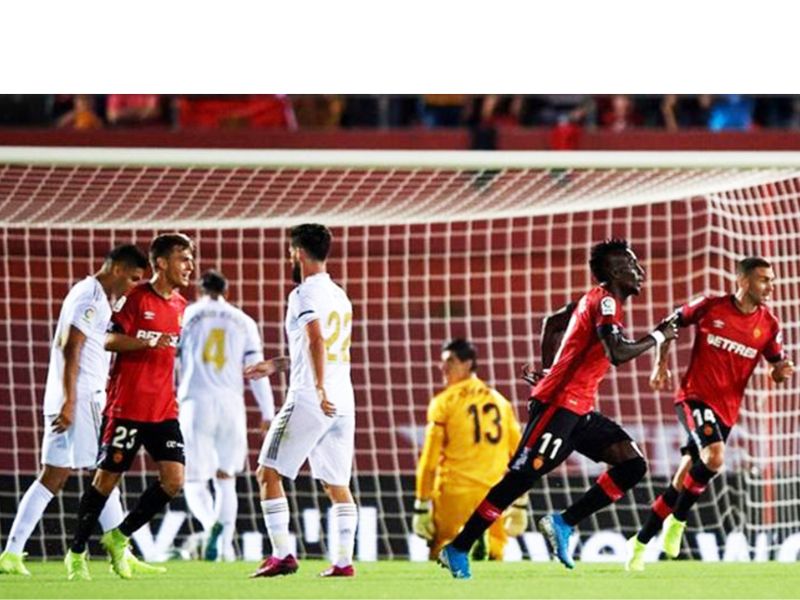
Real Madrid were stunned 1-0 at Mallorca in La Liga with midfielder Marco Asensio missing a penalty against his former club. Vedat Muriqi’s header deflected in off Real Madrid defender Nacho to put the hosts ahead in the 13th minute at Estadi Mallorca Son Moix.

The champions were given a 59th-minute penalty when home goalkeeper Predrag Rajkovic brought down Vinicius Junior.

But Rajkovic kept out Asensio’s spot-kick, diving to his left to save well.

The defeat left Real Madrid second in La Liga, five points behind Barcelona who host Sevilla later on Sunday.

Mallorca’s win over Los Blancos was their first since 2019 and only their second victory against the Spanish giants in 14 matches.

Los Piratas, who have also beaten Atletico Madrid 1-0 at home this season, stayed 10th, nine points clear of the relegation zone.

Credit: bbc.com

Messi scores as PSG fight back to beat Toulouse

0
Messi scores against Toulouse

A fine Lionel Messi strike earned Paris St-Germain a comeback win over Toulouse.  Mid-table Toulouse took a surprise lead in Paris, Branco van den Boomen scoring a free-kick after 20 minutes. Achraf Hakimi drew PSG level before half-time, and after the break Messi curled home expertly from 25 yards.

PSG were missing Kylian Mbappe and Neymar because of injuries, and surprisingly fell behind to a set-piece by Dutch midfielder Van den Boomen.

Hakimi made it 1-1 with a curling effort, before Messi took centre stage just before the hour mark with a left-footed bending first-time strike low into the corner of the net.

It was Messi’s 10th Ligue 1 goal of the season and his 15th overall.

Marseille, second in Ligue 1, will host PSG in the Coupe de France last 16 next week.

Mbappe will miss that game and the Champions League last-16 first leg against Bayern Munich on 14 February after being ruled out for three weeks with a thigh injury suffered in the 3-1 win at Montpellier last Wednesday.

Credit: bbc.com

Alan Cash Is Our Own … says Techiman Traditional Council 

0
Mr. Alan Kwadwo Kyerematen

The Techiman Traditional Council has welcomed New Patriotic Party (NPP) presidential candidate hopeful, Mr. Alan Kwadwo Kyerematen, who they consider as their own.

Techiman, in the Bono East region, has deeper connections with Alan’s family at Ejisu, Patase and links with the Abenase stool at the Manhyia Palace.

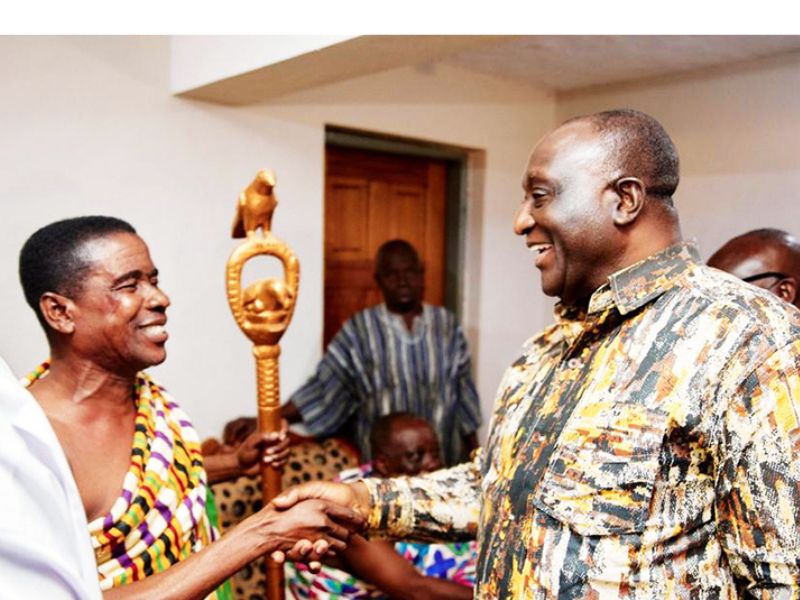
The Akwamuhene of Techiman, Nana Owusu Gyare II, who represented Nana Oseadeeye Akumfi Ameyaw IV, the Paramount chief of Techiman Traditional area, at the meeting of chiefs of the Techiman Traditional Council affirmed that Alan Kyerematen is one of their own and pledged the support of Nananom and the people for his candidature. He called for decent campaign messages.

Nana Apenten Fosu Gyeabour, Chief of Hansua and Baamuhene of Techiman also advised Mr. Kyerematen to avoid campaign of insults since the race involved the same party men.

The former Trade and Industry Minister, who called on the chiefs of the Techiman Traditional Council on Wednesday, thanked them for their warm welcome.

Mr. Kyerematen corroborated the claim of the chiefs that he is directly linked to the Techiman stool and, therefore, a royal and not a stranger of the land.

He narrated how his father, the late Dr. A. A.Y. Kyerematen was connected to the Techiman Traditional Council, culminating in the settling of the Queen mother of Techiman in Patase and subsequently the creation of the Abenase stool at the Manhyia Palace.

He outlined his vision for seeking to be president to the chiefs and people of the area, which he described as ‘home’ to him.

Mr. Kyerematen mentioned that he delivered well on his mandate as Minister for Trade and Industry under the Akufo-Addo government and pointed out to the 1D1F, aimed at creating jobs for the people, as one of the policies he championed.

Out of the 296 factories established across the country under the 1D1F project, 10 were sited in the Bono East Region. Six of them were under construction while the remaining four were already in operation.

The presidential candidate hopeful also disclosed that 67 Business Resource Centres had been created across the country with three in Techiman, Atebubu, and Kintampo, all in the Bono East region to encourage and promote private sector development.

According to the former Trade and Industry Minister, about 47 Technology Solution Centres had also been established to assist in the promotion of the ideals of the various Business Resource Centres.

He, therefore, pleaded with Nananom to support him to realise the objectives of the programme and policies created in his former ministry towards jobs for the youth to prevent them from drifting to the rural areas for non-existent jobs.



Mr. Kyerematen also had fruitful engagements with political and religious leaders, as well as the media and the public in the area, during his visit to the Techiman Traditional area.

The Ghanaian Chronicle