Home Blog Page 2370

World’s oldest person dies aged 118yrs

0
118yrs old Sister André, a French nun

The world’s oldest person, French nun Lucile Randon, has died aged 118.

Ms Randon – who assumed the name Sister André when she became a nun in 1944 – died in her sleep at her nursing home in Toulon, France.

Born in 1904 in southern France, she lived through two world wars and dedicated much of her life to Catholicism.

“Only the good Lord knows” the secret of her longevity, she told reporters.

Born when Tour de France had only been staged once, Sister André also saw 27 French heads of state.

A spokesman from her nursing home, David Tavella, shared news of her death with reporters on Tuesday.

Sister André was said to have a close relationship with her brothers. She once told reporters one of her fondest memories was their safe return from fighting at the end of World War One.

Despite being blind and reliant on a wheelchair, Sister André cared for other elderly people – some of whom were much younger than herself.

Credit: bbc.com

Millionaires back Oxfam’s call to redistribute wealth by taxing them

0
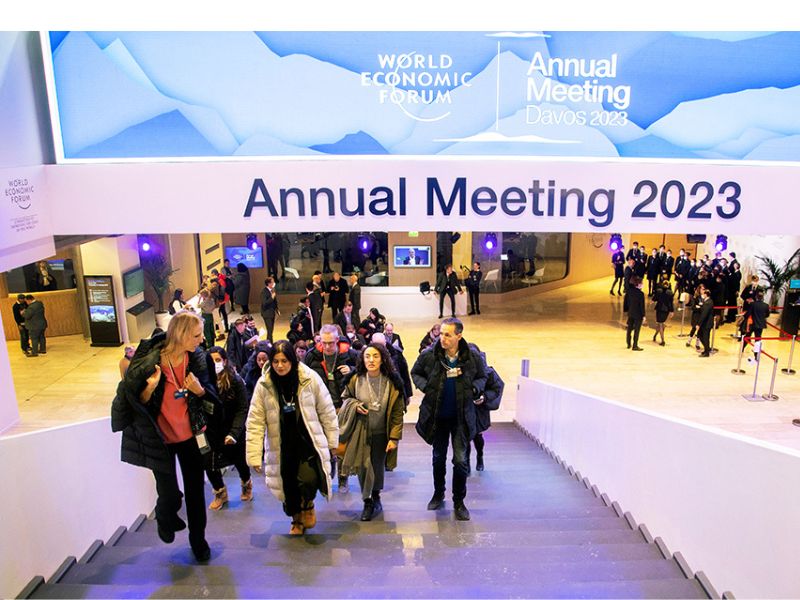
World Economic Forum in Davos

As the rich, famous and influential meet at the annual World Economic Forum in Davos, Switzerland, aid agency Oxfam says billionaires should be made obsolete. And 200 millionaires agree. In an open letter addressed to world leaders, they say they want to pay more tax “for the common good”.

The number of billionaires should be halved by 2030 through higher taxes and other policies to make the world a fairer place, Oxfam said at the opening of the Davos summit on Monday.

In response to this call, more than 200 millionaires from 13 different countries have written an open letter to world leaders, saying they want tax increases.

Over the past decade, according to Oxfam, the richest 10 percent of the world’s population have seen their wealth increase by 50 percent.

“You, our world leaders, should tax us, the super-rich,” the letter reads. “And you should start doing it now. We as millionaires want to make that investment.”

In its latest report entitled “Survival of the Richest”, Oxfam says the very wealthy have grown richer thanks to the cost-of-living crisis which was sparked by the Covid pandemic and soaring food and energy prices following Russia’s invasion of Ukraine.

Since 2020, billionaire wealth has surged by $2.7 billion a day even as inflation outpaced the wages of at least 1.7 billion workers worldwide.

Credit: rfi


Biden, Dutch PM discuss China, Ukraine at White House

0
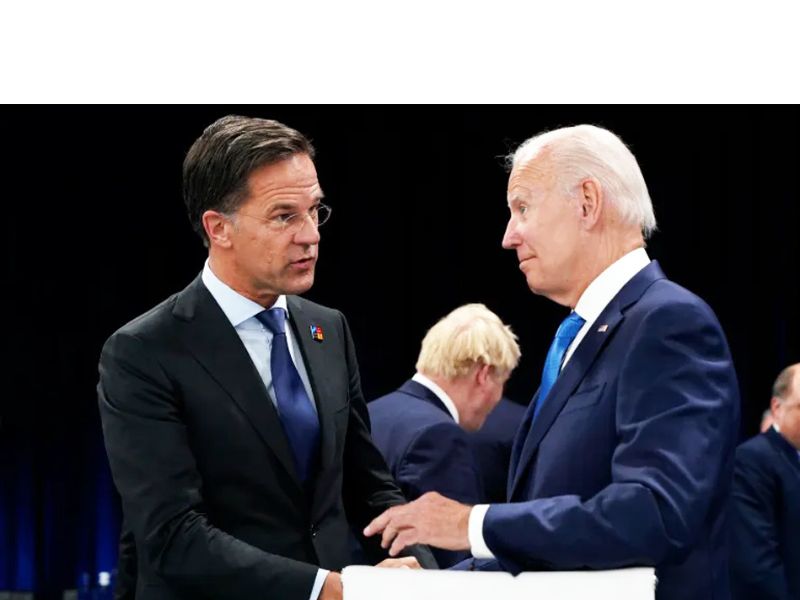
Dutch Prime Minister Mark Rutte, left, is to meet with US President Joe Biden

United States President Joe Biden and Dutch Prime Minister Mark Rutte have concluded a meeting at the White House, with the Russian invasion of Ukraine, protections of supply chains, and an upcoming Summit for Democracy – hosted by the two countries along with Costa Rica, South Korea and Zambia – topping the agenda.

The wide-ranging meeting on Tuesday was also planned as the US has sought to shore up allies’ support for restrictions that aim to limit China’s ability to access advanced computing chips, develop and maintain supercomputers, and make advanced semiconductors.

The Netherlands’ largest company is ASML Holding, a key supplier to semiconductor equipment makers. China has been a major client of the company.

In a statement following the meeting, the White House did not directly reference the issue, but said the two leaders discussed “the importance of secure supply chains and critical technologies to our national security and economic prosperity”.

In a series of tweets, Rutte also did not refer to discussions of export restrictions, instead focusing on the war in Ukraine.

Credit: Aljazeera.com

Feature Ghana’s ‘divide and conquer’ debt strategy hits roadblock

0
Feature

Friday, 13th January 2023. Jubilee House, Ghana’s presidential palace. In attendance: the movers and shakers of public and commercial finance in the country.

Arrayed on one side was the government, led by the Vice President, in his capacity as “Head of the Economic Management Team” (EMT). On the other side was a motley crew of finance industry representatives, from the insurance, securities, banking and related industries. The agenda: Ghana’s tottering domestic debt restructuring exercise.

Five and a half weeks since the Finance Minister announced a move to default on Ghana’s domestic debt by persuading creditors to exchange their current bonds for new, significantly lower-value, versions, the program seemed hopelessly stuck. The EMT’s goal for the meeting was thus to break the logjam. Why, though, is the program stuck?

In an earlier essay, we catalogued a list of defects in Ghana’s debt restructuring/exchange model, but the focus was mainly on broad strategic issues. At the Friday meeting in Jubilee House, tactical considerations took center-stage.

When on 5th December the government announced its offer to domestic creditors to turn in their current bonds and come for new ones guaranteed to lose them billions of Ghana Cedis (GHS), it gave them two weeks to comply.

No serious prior negotiations had taken place. Nothing had been agreed in principle, not to talk of anything approaching even the most high-level consensus among the biggest creditors on general terms.

Near as we can tell, no government on Earth has succeeded in pulling off such a fast turnaround as Ghana tried to achieve last December. Even the fastest restructurings, such as those of Ecuador and Argentina, have in recent decades typically taken between four and five months of consultations before the formal launch of the actual exchange process, which is then treated as a formality.

Ghana’s style is more reminiscent of Argentina’s 2020 default, which initially consisted of a series of unilateral offers and amendments in a take it or leave it fashion. At every round, bondholders rejected the offer and subsequent amendment. Not even the intervention of Pope Francis made a difference until the right set of concessions allowed the main bondholder groups to consent.

Seeing as Ghana’s main advisor, Lazard Freres, has advised Ecuador too, the likelihood of a protracted stalemate in the absence of concessions should have been clear to the government side from the outset, so why have things panned out like Argentina’s?

It would appear that Ghana’s Finance Ministry has been counting on a “divide and conquer” strategy. It has so far been nonchalant about calls to support the formation of a joint creditors’ negotiating group.

Given the costs involved in obtaining top-notch legal and financial modelling advice, creditor coordination has long been a daunting prospect in sovereign debt restructurings.

The government apparently believes in keeping the creditor front fragmented and uncoordinated as a way of minimising resistance. Unfortunately, such “divide and conquer” strategies are only effective if the government could also make differentiated offers to different creditor groups or engage in selective defaults of specific classes of bonds.

Neither option is open to the government in Ghana’s context, thus rendering a divide-and-conquer approach a complete waste of everyone’s time.

That fact was amply evident on Friday when the different industry groups converged to confer with the EMT. It soon became apparent to everyone in the room that the government, as of that morning, had zero concrete commitment from any major creditor group to the debt exchange.

The securities industry representatives (the folks running the mutual funds, independent brokerages and various collective investment schemes) said they were willing to step up and accept the latest amended offer if the government will countersign on a covenant promising to upgrade their settlement to match any better terms eventually given to any other group.

A point which illustrates the futility of the divide-and-conquer strategy: you get an assortment of contingent proposals from every creditor group playing a “wait and see” game.

The game theory analogue is the famous stag and rabbit/hare hunt where agents attempt to balance the benefits of individual moves with the higher payoffs of social cooperation.

Attempts by the Finance Ministry to solicit respect for the January 16th deadline went nowhere. Obviously, different creditor groups with their separate sets of concerns can obviously not resolve them at such a meeting when no prior efforts had been made to coordinate their claims and issues into a uniform negotiating position.

Said differently, it is pointless for the government to encourage separate negotiations and yet when faced with a time crunch try and push for a quick joint resolution in a common forum.

Unsurprisingly, therefore, the Finance Minister’s offer for the creditor groups to accept the finality of the 16th January deadline and be granted a few additional days to tidy up the paperwork failed to persuade them.

What is fascinating about all this is how respectful the creditor groups have been despite the casual treatment they have received to date.

As anticipated from the outset, banks and “savings & loans” companies are the most susceptible to the quiet force of the government’s enormous regulatory power.

So, at this point, all that separates the banks and the government from a deal are five relatively surmountable blocks:

  • The banks want the government to get concrete on the “regulatory forbearance” it has been promising so far by agreeing to a discount rate for valuing bonds as part of the capital determination. The banks want a lower discount rate to reduce the valuation gap between the new and old bonds. They are inclining towards 7.5% (contingent on further engagement with the Institute of Chartered Accountants in Ghana). The Bank of Ghana insists on 12%. The choice of discount rate or factor will establish the present value of the bonds the government is tendering to replace the old bonds.
  • Linked to the above are disagreements over the “expected credit losses” from the impairment of bank assets (in the form of government securities in this case, not loans or advances) being occasioned by the proposed debt exchange.
  • Obviously, until the government and the banks can agree on how to quantify losses as a result of the exchange they cannot move on to settle the issue of tangible effects on the bank’s income statements and balance sheets. As far as the banks are concerned, the expected financial impacts are: pretax losses of $1.2 billion, liquidity shortfalls of $1.6 billion, and a capital shortfall of $1.3 billion (using the retail exchange rate). Essentially, massive hits to the bottom line with troubling implications for their capacity to keep issuing credit, maintaining jobs and investing in financial infrastructure. Worst-hit financial institutions may have to let 40% of their workers go. 17 of the 23 licensed “deposit money banks” will see their capital adequacy ratio fall below the regulatory minimum. And 9 of them will experience negative equity. In short, the government is refusing to acknowledge the full impact of the debt exchange on the financial sector; yet, without convergence on this point, countermeasures cannot be agreed.
  • The banks cannot countenance the stepped-up coupon (interest rate) model for the new bonds with its zero payment (and no deferral) payout structure for 2023. The banks require a simple uniform structure of equal payments across the life of each instrument. Furthermore, this uniform rate is, in their view, best set around 12.5% per annum.
  • Government’s new bond offering comes with a well-known Trojan Horse: legal clauses that would make it easier for it to vary the terms of the bonds in the future. The banks want these clauses expunged.

Beyond these 5 main demands, there are a number of other areas where confusion still prevails. One such is the treatment of the bonds denominated in US dollars, whose status remains uncertain. The second is the vaunted “Financial Stability Fund” (FSF).

The government has tried to bloviate around these matters and made many vague assurances of monies committed by the World Bank to cover 30% of the $1 billion fund size. Sources at the World Bank suggest various contingencies must first be met before any such disbursement will happen.

Meanwhile, the other claimed sources of the rest of the money: the Germans (KfW), the Paris Club of rich western nations, and the African Development Bank have so far not commenced any formal negotiation of any agreement to offer any cash to this facility.

Pressed to the wall, Ministers responded airily that the debt exchange cannot be held hostage by such matters and that banks should first sign up before being told even basic things such as what interest rate borrowing from the facility would attract. The industry pushed back on eligibility criteria.

Source: myjoyonline

GBA set to expand boxing league to Ashanti, Northern and Volta regions

0
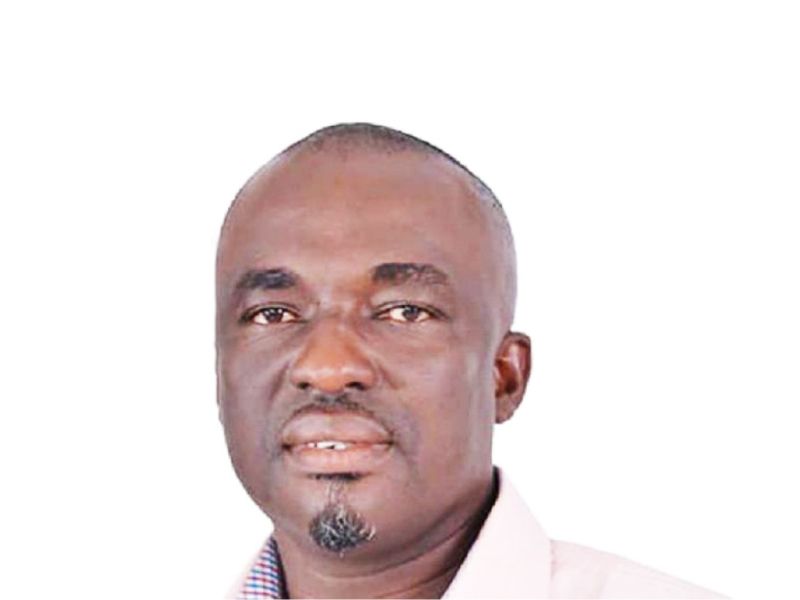
President of the GBA, Abraham Neequaye

President of the Ghana Boxing Authority (GBA), Abraham Neequaye has revealed plans to expand the boxing league from Greater Accra to three other regions.

According to him, the success of the league, which is held at the Bukom Boxing Arena, has compelled the GBA to explore its viability in the Ashanti, Northern, and Volta Regions.

He told Citi Sports:

“We centered the whole thing in Accra now we are going to the regions. That tells you that there is an improvement

We did 20 events. Now, we’re looking at 30 events and put some ten out there in the various regions.

In my discussion with the minister, we looked at the Ashanti Region and the Northern region as well.

Volta Region is doing well.

“So we want to add the two to the Volta Region”

Abraham Neequaye also highlighted strategies to foster strong bonds with the Ghana Amateur Boxing Federation and other relevant stakeholders.

“With the Amateur, Juvenile and professional [boxing federation], we combined them so we do what we do as a family.

So we’re building the family and the good thing this time round is we try to have meetings with all our stakeholders

Some of the things we did the last year that is not in the right direction we’re looking this time sit down with everybody before we start the league so that tells you the future of Ghana Boxing”.

Credit: citisportsonline.com

Sevilla submit €2 million bid to sign Alexander Djiku

0
Alexander Djiku

Sevilla have reportedly launched an offer to secure the services of the tough-minded defender in the ongoing winter transfer window.

Spanish La Liga Santander club Sevilla has submitted a €2 million bid to sign Ghana international Alexander Djiku from RC Strasbourg this month.

Djiku, whose contract with RC Strasbourg expires in June 2023 has been a long-term target of the Spanish club following his explosive performance in the French Ligue 1.

According to French newspaper L’Équipe, the €2 million offer for the 28-year-old guardsman includes bonuses which are easily reached, as well as a potential cut of a future sale.

It is believed that RC Strasbourg are ready for the exit of their vice captain to free up space on the wage bill as they continue to battle for survival in the French top-tier league.

Sevilla are among the three bottom clubs in the Spanish La Liga which has forced them to enter the transfer market this month to strengthen their squad for relegation escape.

The French-born of Ghanaian descent was on the verge of completing a switch to German Bundesliga outfit TSG Hoffenheim last summer but the deal hit snag despite passing a medical examination.

Djiku has been pivotal in the defense of RC Strasbourg in the ongoing season with 18 appearances in the Ligue 1, scoring one goal and provided two assists.

Djiku made two appearances for the senior national team of Ghana at the 2022 World Cup in Qatar.

Credit: kickgh.com

Asante Kotoko sign mercurial midfielder Rashid Nortey

0
Asante Kotoko sign Rashid Nortey

Ghanaian giants Asante Kotoko have completed the signing of mercurial midfielder Rashid Nortey with official club announcement very imminent.

Nortey is joining the Porcupine Warriors after ending his long six year stay with Medeama SC and will sign a two and half year deal after passing his medicals, per reports

The Porcupine Warriors despite having one of the best midfield department are working thoroughly to get the service of the 27-year-old who is without any club at the moment.

Nortey is expected to bring in stability and a healthy competition in the midfield that already comprises of two of his former teammates Justice Blay and captain Richard Boadu

Coach Seydou Zerbo’s men haven’t been impressive recently, having drawn their last four matches, and are currently found 3rd on the league log with 20 points

They will host Kotoku Royals on Sunday night at the Baba Yara Stadium in the next round of matches.

Credit: kickgh.com

Chadian referee to officiate Ghana, Sudan clash

0
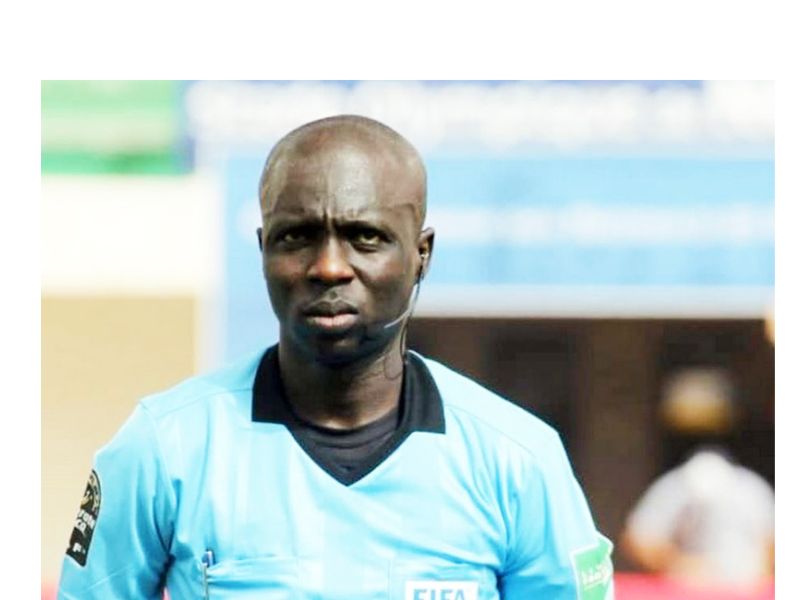
Chadian referee Alhadji Allaou Mahamat

Chadian Alhadji Allaou Mahamat has been chosen as the centre referee for African Nations Championship (CHAN) group clash between Ghana and Sudan o Thursday.

He will be assisted by Algerian duo Abbes Akram Zerhouni (Assistant I), Brahim El Hamlaoui Sid Ali (Assistant II).

The Fourth Official will be Celso Armindo Alvação from Mozambique

Pedro Alogo Ondo Abeku from Equatorial Guinea – who served as Match Commissioner in the opening defeat to Madagascar – retains his role.

Mauritanian Beida Dahane is the VAR official.

After a 2-1 loss to Madagascar in their first game, the Black Galaxies must win against Sudan on Thursday evening.

Despite receiving three points and three goals as a result of Morocco’s withdrawal from the tournament, Ghana find themselves in a difficult situation ahead of the Sudan match. Anything less than three points may mean the end of the two-time finalists in Algeria.

Credit: ghanasoccernet.com

Ten Chinese players face match-fixing charges

0
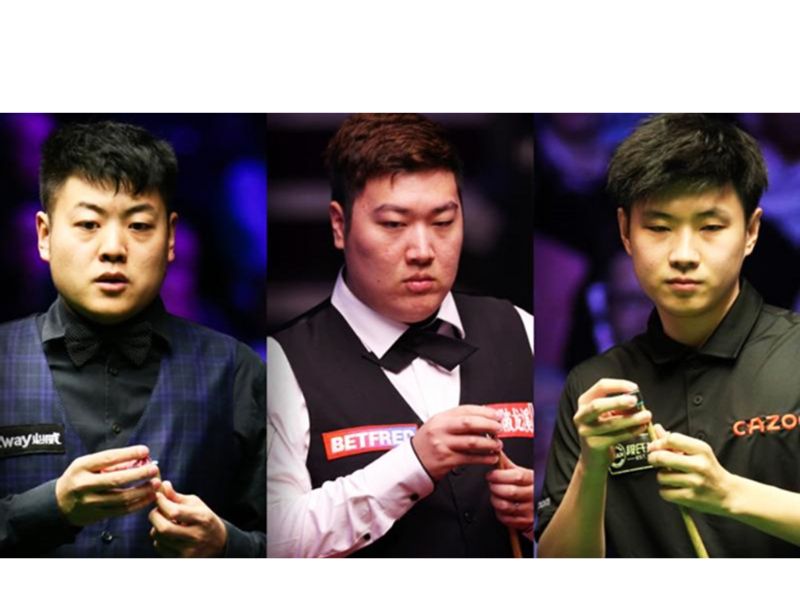
Liang Wenbo, Yan Bingtao and Zhao Xintong

Ten Chinese players face match-fixing charges as snooker’s governing body investigates the sport’s biggest corruption scandal.

The allegations include manipulating games, approaching players to cheat, betting on snooker and fixing a match.

In October, Liang Wenbo was suspended by the World Professional Billiards and Snooker Association (WPBSA).

Nine others followed, including 2021 Masters champion Yan Bingtao and UK Championship winner Zhao Xintong.

Both players were barred from competing in last week’s Masters.

Players found guilty of the charges against them will face a lengthy ban from the sport.

Most of the players have not commented publicly on the allegations, although Wenbo has reportedly denied match-fixing.

An independent hearing will now be convened to consider the evidence.

There is not a separate police investigation at this stage.

“These players are from China. At some point, if found guilty, they will return to their home country and it is still possible that criminal prosecution could take place outside of the sport in China,” WPBSA chairman Jason Ferguson told BBC Sport.

Shaun Murphy, the 2005 world champion, said it would feel like a “complete betrayal” if players had cheated.

Credit: bbc.com

Injured Nadal kicked out of Australian Open

0
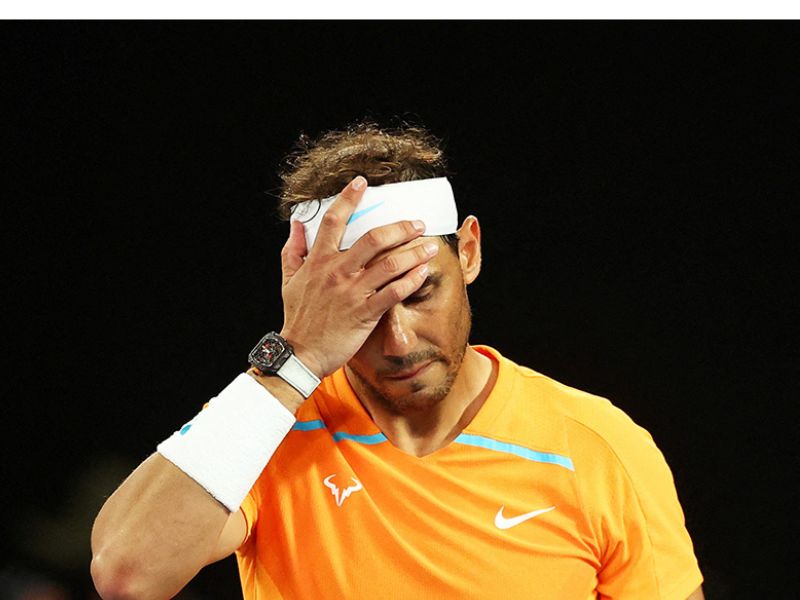
Nadal out of Australian Open

Rafael Nadal’s Australian Open title defence is over after a second-round defeat by American Mackenzie McDonald in which he struggled with an injury.

The Spaniard, 36, was trailing by a set and a break when he pulled up with what appeared to be a hip problem.

He took a medical timeout towards the end of the second set and continued with the match, but ultimately slipped to a 6-4 6-3 7-5 defeat.

It is Nadal’s earliest exit at the Australian Open since 2016.

It was a cruel end for Nadal after his stunning 2022, where he came back from two sets down to beat Daniil Medvedev in last year’s final in Melbourne and won a record-extending 14th French Open crown in June.

However, a typically battling display in the Wimbledon quarter-finals led to him picking up an abdominal injury that hampered him for the rest of the season.

He arrived in Melbourne having lost his only two singles matches of the season and never looked fully comfortable before he seemed to jar his hip against McDonald.

Nadal’s wife was left in tears and his support team also looked emotional in the player box as the two-time champion struggled to move on Rod Laver Arena.

After seeing the match through to the end he left to a standing ovation from the crowd, with top seed Nadal turning to wave to each corner before exiting the stadium.

Credit: bbc.com

The Ghanaian Chronicle