Home Blog Page 225

Police Crack Down on Unauthorised Private Security Uniforms

0
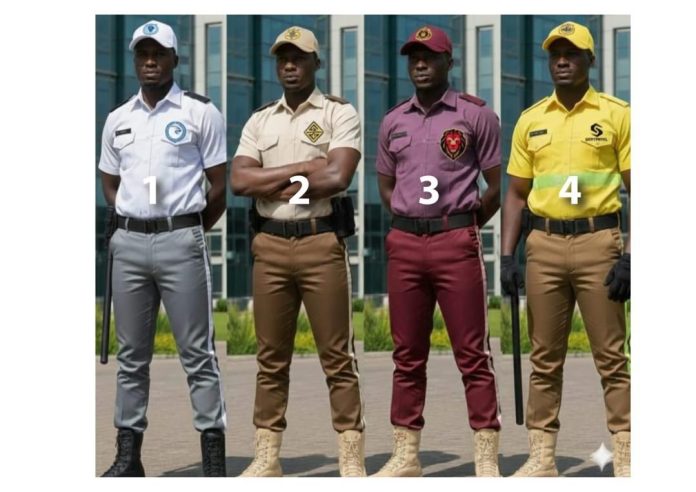
Specimens of uniforms approved by the Ghana Police Service.

The Ghana Police Service has warned private security operators and in-house security personnel against the use of unauthorised uniforms, particularly those that resemble the attire of state security agencies.

In a public notice issued by the Director-General of Private Security Organisations, the Police said the directive is in accordance with Regulation 12 of the Police Service (Private Security Organizations) Regulations, 1992 (LI 1571).

The Police outlined the approved uniform turnouts for private security personnel as follows: a white long or short-sleeved shirt worn over ash khaki trousers with white stripes on both sides; a cream long or short-sleeved shirt worn over brown khaki trousers with cream stripes on both sides; and a mauve long or short-sleeved shirt worn over maroon trousers with mauve stripes on both sides.

For personnel operating in mines and oil fields, the approved uniform is a yellow shirt with ash or grey reflective strips across the front and back, worn over brown khaki trousers.

The statement stressed that any other uniform, colour combination, design or turnout not listed — especially those resembling the uniforms of state security agencies — is deemed unauthorised.

“All private security operators are required to comply strictly with the approved uniform specifications,” the Police cautioned, adding that in-house security units must also desist from wearing outfits that resemble those of state security agencies.

Offenders, the statement warned, will be sanctioned in accordance with the law.

The Police further urged members of the public to take note of the approved uniforms and report any suspected violations to the appropriate authorities.

The notice was signed by the Director-General of Private Security Organisations.


For more news, join The Chronicle Newspaper channel on WhatsApp: https://whatsapp.com/channel/0029VbBSs55E50UqNPvSOm2z

Afenyo Markin Yells: Mahama’s Government Has Betrayed Voltarians … Over Attempt To Rename Kotoka Airport

0
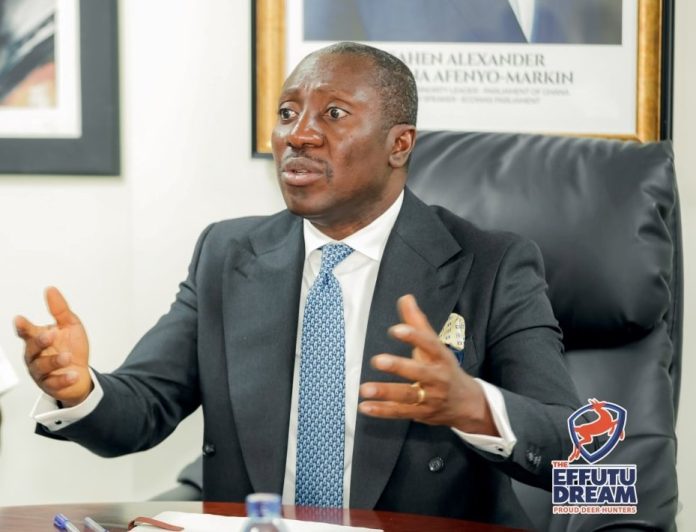
Osahen Alexander Kwamena Afenyo-Markin

The Minority Leader in Parliament, Osahen Alexander Afenyo-Markin, has strongly criticised government’s plan to rename Kotoka International Airport as Accra International Airport, describing the move as a betrayal of trust, particularly to the people of the Volta Region.

Bernard Ahiafor – is he mute?

Reacting to the announcement from Jubilee House, the Efutu MP questioned whether the decision was taken after broad consultation, especially with stakeholders from the Volta Region, where the late General Emmanuel Kwasi Kotoka hailed from.

“I do not know whether the people of the Volta Region were consulted. General Kotoka is from the Volta Region and many Voltarians have contributed significantly to national development,” Osahen said in an interview with the media.

He said he would be deeply shocked if the name of the only Voltarian honoured with a major national asset was suddenly removed without engagement with traditional authorities and opinion leaders from the region.

“I am a Voltarian myself. I do not believe the chiefs or prominent elders in the Volta Region were consulted and I doubt they will be happy with this decision,” he noted.

Osahen argued that very few Voltarians have been recognised nationally, despite their contributions to Ghana’s development, making the proposed name change even more unfair.

“If you look around the country, how many national monuments or assets carry the names of prominent Voltarians. This airport is one of the few symbols of national recognition for the Volta Region and even that is being taken away.”

Okudzeto Ablakwa – is he mute?

He also questioned the silence of senior government officials from the Volta Region, including cabinet members and parliamentary leaders.

“Honourable Kwame Agbodza is from Volta region and sits in cabinet. Honourable Okudzeto Ablakwa is also in cabinet. Honourable Fifi Kwetey is the NDC General Secretary. Honourable Ahiafor is the First Deputy Speaker. Honourable Kwame Etse Dafeamekpor is the Majority Chief Whip. They are all watching while a Voltarian’s name is removed from a national asset,” he said.

According to Osahen, this is happening at a time when Voltarians hold influential positions in government, yet appear unable or unwilling to protect what he described as the region’s pride.

“It is unfortunate that, in this day and age, people from the Volta Region are in government and watching their own lose this symbol of recognition,” he added.

The Minority Leader described the government’s direction as misguided and disappointing.

The proposal was announced on Tuesday by Majority Leader Mahama Ayariga at a press conference in Parliament ahead of the second session of the Ninth Parliament.

He revealed that government intends to table a bill to rename Ghana’s premier international airport as part of its legislative agenda.

Osahen questioned the rationale behind the move, noting that the airport’s current name already reflects its location.

“All these years, we have called it Kotoka International Airport, Accra,” he said. “Accra is already part of the name. I honestly do not see why Kotoka’s name must be removed.”

Asked whether he had an alternative name to propose, Osahen said he was not advocating for a replacement.

“I am not suggesting any new name. I am simply saying that Kotoka International Airport, Accra, already serves its purpose. There is no need to take Kotoka’s name out,” he clarified.

Nelson Dafeamekpor – is he mute?

Lieutenant-General Emmanuel Kwasi Kotoka, born at Alakple in the Volta Region, was a senior military officer and a key figure in Ghana’s political and military history.

He rose through the ranks of the Ghana Army, distinguished himself during the United Nations mission in the Congo, and was awarded the Ghana Service Order for Exceptional Bravery.

He was the soldier who led the coup which overthrew the administration of President Osagyefo Kwame Nkrumah of Ghana on February 24, 1966 and became a member of the National Liberation Council.

He was serving as General Officer Commanding the Ghana Armed Forces when he was killed during a failed counter-coup attempt in April 1967.


For more news, join The Chronicle Newspaper channel on WhatsApp: https://whatsapp.com/channel/0029VbBSs55E50UqNPvSOm2z

Reset Agenda Must Prioritise Ghanaian-Led Value Addition –Dwomoh Sarpong

0
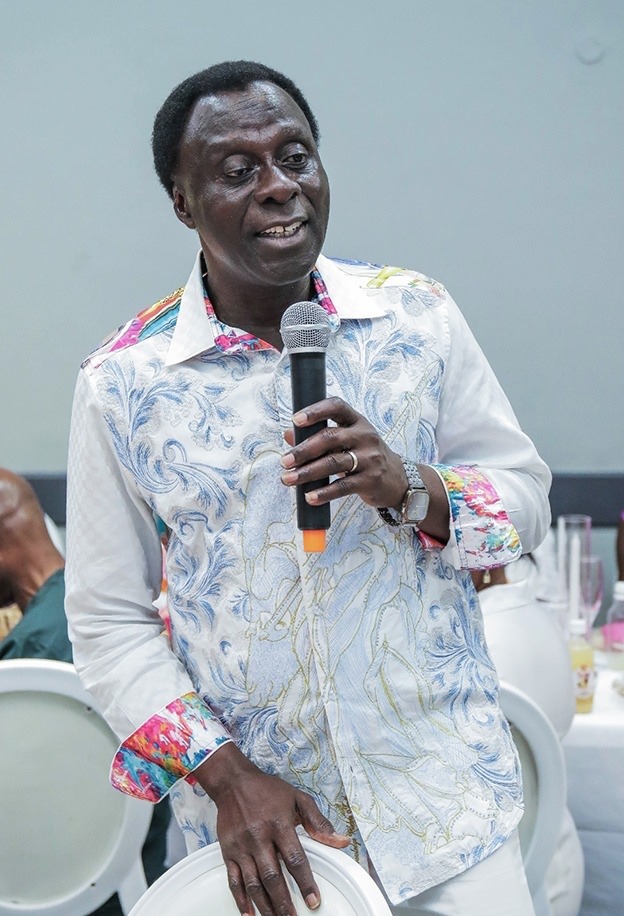
Nana Dwomoh Sarpong

As the government advances its reset agenda to reposition Ghana’s economy for resilience and sustainable growth, prominent public commentator and environmental advocate, Nana Dwomoh Sarpong, has added his voice in strong support of the initiative, urging that its implementation places deliberate emphasis on Ghanaian-led value addition.

Speaking in an interview, Nana Sarpong described the reset agenda as timely and visionary, noting that its long-term success will depend on how effectively it empowers Ghanaians to move beyond primary production into processing, manufacturing and export of finished goods.

“The reset offers Ghana a historic opportunity to deepen economic transformation by ensuring that Ghanaians are not only suppliers of raw materials, but owners and leaders across the value chain,” he said.

According to him, value addition remains central to reducing import dependency, strengthening the cedi, creating jobs and ensuring that economic growth translates into broad-based prosperity.

Nana Sarpong identified agriculture as a critical sector through which the objectives of the reset agenda can be rapidly advanced.

He observed that with targeted investment, coordinated policy support and strong private sector participation, agricultural value addition could significantly reduce food imports, minimise post-harvest losses and generate employment, particularly for the youth.

History

Drawing from Ghana’s own history, he cited the Operation Feed Yourself programme of the Acheampong government in the 1970s as a compelling example of how state-enabled mobilisation, aligned with citizen enterprise, can drive food security and national confidence.

“Operation Feed Yourself showed what is possible when government provides direction and Ghanaians respond with enterprise and commitment,” he said, adding “A modern, value-addition-driven version of that approach can strongly support the reset agenda.”

He explained that reviving this spirit adapted to today’s industrial, technological and export realities would accelerate agro-processing, strengthen rural economies and position Ghana as a competitive player in regional and global food value chains.

Nana Sarpong further emphasised the importance of policies that strengthen indigenous enterprise, noting that a vibrant domestic private sector is indispensable to achieving the goals of the reset agenda.

“A reset that empowers Ghanaian businesses strengthens national resilience. When local enterprises grow, jobs are created, innovation increases and wealth circulates within the economy.”

He encouraged continued efforts to improve the business environment, expand access to finance and align taxation and industrial policy to support competitiveness and long-term growth.

Developing economic champions

As part of the reset agenda’s long-term vision, Nana Sarpong advocated the deliberate nurturing of strong Ghanaian-owned companies capable of competing regionally and globally.

Such enterprises, he noted, would serve as anchors for industrialisation, technology transfer and export expansion.

“Every successful economy is built around strong indigenous economic champions. Ghana’s reset should intentionally produce such champions to drive growth and reduce poverty.”

He stressed that building globally competitive Ghanaian businesses is not merely an economic aspiration, but a strategic necessity for sustainable development.

Empowered and resilient Ghana

Nana Sarpong concluded that the fundamental aim of the reset agenda must be to empower the Ghanaian, reduce dependency and foster a sense of ownership in national development.

“This reset must inspire confidence in Ghanaian capability. By prioritising Ghanaian-led value addition, the reset agenda can transition the nation from dependency to ownership, securing a more resilient, self-reliant and prosperous future.”


For more news, join The Chronicle Newspaper channel on WhatsApp: https://whatsapp.com/channel/0029VbBSs55E50UqNPvSOm2z

Pay Cocoa Farmers Now -Minority

0
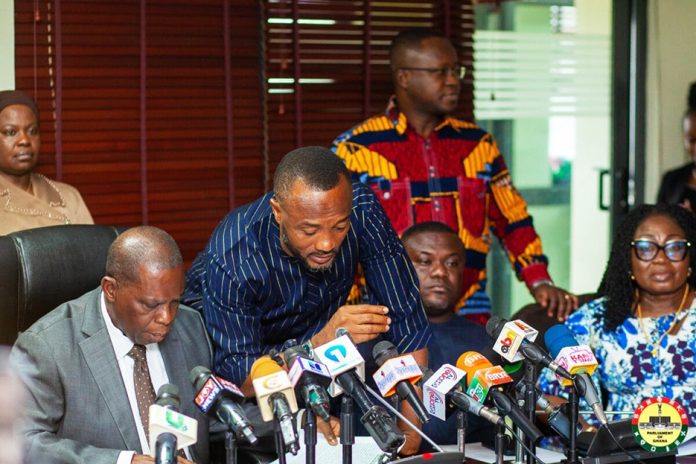
Dr Yaw Isaac Opoku addressing the press

The Minority Caucus in Parliament has mounted strong pressure on the government and the Ghana Cocoa Board (COCOBOD) to immediately pay cocoa farmers for beans sold since November 2025, warning that the continued delay is inflicting severe hardship on farming communities and threatening the stability of Ghana’s cocoa industry.

Addressing a news conference in Accra yesterday, Dr Yaw Isaac Opoku, the Ranking member    described the situation as dire and unacceptable, revealing that Licensed Buying Companies (LBCs) have been unable to pay farmers because funds used to pre-finance cocoa purchases have not been reimbursed by COCOBOD.

According to the Caucus, COCOBOD currently owes LBCs over GH¢10 billion for cocoa already purchased and taken over.

The Minority stressed that the LBCs cannot be blamed for the non-payment, explaining that they had borrowed heavily from banks and off-taker traders to finance the harvest, but are now constrained because their capital remains locked up.

“As a result, farmers are being forced to sell their cocoa on credit, at discounted prices, or return home with unsold produce,” the Minority said, cautioning that the situation could have far-reaching consequences for the national economy, given cocoa’s importance as a major foreign exchange earner.

The Caucus squarely blamed government and COCOBOD for what it termed a gross failure of responsibility, arguing that continuing cocoa purchases under the current circumstances would only lead to the piling up of cocoa taken-over receipts (CTORs) and deepen COCOBOD’s indebtedness to LBCs.

Rejecting claims by COCOBOD that sufficient funds had been released to buying companies, the Minority described such assertions as misleading.

“The reality on the ground is that cocoa farmers have not been paid for their produce for more than three months,” the Caucus stated, adding that the hardship facing farmers who depend solely on cocoa for survival has become unbearable.

The Minority recounted heart-breaking stories from cocoa-growing communities, including farmers who cannot afford medication, feed their families, or pay school fees. One farmer, they said, sold 100 bags of cocoa but could not buy blood pressure medication, while another was unable to purchase drugs for his critically ill wife due to the non-payment.

“For the first time in Ghana’s history, cocoa farmers had to postpone Christmas celebrations because they had not been paid for their produce,” the Minority noted.

Addressing explanations given by the Chief Executive of COCOBOD, the Minority dismissed claims that Ghana defaulted on the repayment of the 2023/2024 syndicated loan, insisting that since the introduction of the facility in 1993, Ghana has never defaulted. They challenged COCOBOD to provide evidence of any such default.

The Caucus also rejected arguments that falling international cocoa prices were responsible for the crisis, pointing out that previous governments had successfully cushioned farmers during periods of price decline.

They accused the current administration of mismanaging cocoa sales by reversing the forward-sales policy, under which about 70% of cocoa was sold in advance to protect farmers against price volatility. Under the current arrangement, they claimed, only about 30% of projected output was sold forward for the 2025/2026 season.

The Caucus also accused the government of betraying campaign promises made to cocoa farmers, recalling pledges to pay between GH¢6,000 and GH¢7,000 per bag.

Currently, the farmgate price stands at GH¢3,625 per 64kg bag, with fears that government may reduce it further to finance payments.

“Cocoa farmers are not beggars, they must be paid on time and treated with dignity,” the Minority stressed.


For more news, join The Chronicle Newspaper channel on WhatsApp: https://whatsapp.com/channel/0029VbBSs55E50UqNPvSOm2z

Majority, Minority Split Over 24-Hr Economy

0
Mahama Ayariga majority leader and Afnyo Markin minority leader

The flagship policy of the running National Democratic Congress (NDC), the 24-hour economy, has split Parliament into two. Whereas the majority insists it is the game changer for the economic progress of the country, the minority thinks otherwise.

During proceedings on Thursday, February 5, 2026 the Bill to establish a 24-hour economy authority was read the second time. The second reading paved the way for debates on the policy document as laid before Parliament.

Typical of such processes when a government policy requires parliamentary backing, both sides stood their grounds.

The minority termed the creation of the Authority as duplication, but the majority held that it was to help in the co-ordination of the policy.

MAJORITY 

The Chairman of the Finance Committee, Isaac Adongo, argued that there were different variants of the policy. He said it was not compulsory for businesses to operate a strict three-shift system but could do two. “But that doesn’t mean that it is still not a 24-hour economy,” he added.

He argued that schools were being built already in the country, but the Ghana Education Trust Fund (GETFund) was also set up.

“Was it because we were not building schools? We were in this country when our district assemblies were developing our communities, but we came here and set up development authorities,” he added.

The Member for Adaklu, Governs Kwame Agbodza, also argued that there was no duplication. He said that “the same people who found it necessary, despite the fact that we had the Ghana Education Trust Fund and the Ministry of Education, and yet set up development authorities to build a six-unit classroom” could not fault the creation of the authority.

The Majority Leader, who concluded the debate, said that the 24-hour economy and the authority are not the vehicles that will create a 24-hour economy.

He said, “It is a Coordinating Secretariat that will coordinate the activities of all the other sectors, who, when they function and function properly, will deliver a very productive sector and will deliver employment.

“There is a Secretariat, but the reason why we want to invest with the Authority status is because this is a Secretariat that is going to superintend and work with ministers and sector ministries.

“So, you cannot have a simple Secretary of a Secretariat trying to superintend over ministers. That’s why it is being invested with the authority of an Authority. That is the whole idea.”

MINORITY

A member of the Finance Committee, Dr Stephen Amoah, urged politicians and the House to deal with what he called “policy clichés”, which he said has not helped the country. He claimed that the government had not thought through the policy.

He read the object of the bill, which is to establish the 24-hour economy authority to ensure the integrated sustainable transformation of national systems for economic production, supply chain, marketing and labour power development and to provide for related matters.

According to him, the country was already practising what the policy seeks to do. “When it comes to the public service, security and health, we are already running a 24-hour economy. We are running a shift. So their emphasis was on the economic development.”

However, he claimed that the government had not done anything to achieve the second leg of the policy of “building factories, manufacturing factories that will employ thousands of Ghanaians and running eight-hour shifts three times a day or three phases.

“What have they done so far to attain that goal? Mr Speaker, this is a strategic drift. It is impossible. It’s just a fallacy. It’s not going to work anyway,” he opined.

The Member of Parliament for Damongo, Samuel Abu Jinapor, hammered on the emphasis of the policy – one job, three people, three shifts.

Citing that institutions like the DVLA, Customs and others already operate 24 hours, the MP said the government did not need an authority for their promise.

“Mr Speaker, with the greatest of respect,  I want to submit that you do not need an authority to fulfil your promise of ensuring that DVLA, Customs, Ports and Harbours, the Passport office and all these public institutions, which were enlisted in their own manifesto operate 24 hours in three shifts of eight hours. You could have done that within 100 days of assuming office, because they exist.

“Mr Speaker, let me conclude by indicating that it has taken them one whole year to put together a policy document. Mr Speaker and indeed, when they themselves committed 7% of the 400 million USD required to operationalise a 24-hour economy, even the 7%, they have not fulfilled it.”

The Member for Ofoase-Ayirebi, Kojo Oppong Nkrumah, on his part indicated that the 24-hour economy authority “is just going to be a ‘jobs for the boys’. It’s just going to be an authority where we’ll have another CEO, three deputy CEOs and a Corporate Affairs Manager.”

He stressed that, “if that was all about the policy, then the minority has concluded that the 1D1F programme was a whole lot better than this 24-hour economy bill, which they have brought before us.”

He continued that, “What we are going to do is create this bureaucracy, pay all this money and now wait for the private sector to come. Then, Mr Speaker, we are doing ourselves a big disservice.

“ It is their policy. They have decided this is how they want to implement it. We caution them in good faith that if this is what they hope will deliver a 24-hour economy, it is time to reconsider and come up with something that can deliver.”

Meanwhile, at the time of filing this report last evening, the House was dealing with the over 70 proposed amendments to the bill.

BoG Mops Up GH¢16.2bn in 14-Day Bill Auction

0
Dr Johnson Asiamah — BoG Governor

The Bank of Ghana (BoG) has recorded a strong uptake at its latest short-term securities auction, selling a total of GH¢16.22 billion worth of 14-day BoG bills at Tender 847 held on February 4, 2026.

According to the central bank’s official notice to banks and the general public, bids tendered for the 14-day instrument were fully allotted within a bid rate range of 11.8800 per cent to 11.9450 per cent per annum. All bids submitted within this range were accepted in full, reflecting continued appetite by investors for short-term government securities.

The auction closed with a weighted average discount rate of 11.9412 per cent, translating into a weighted average interest rate of 11.9963 per cent for the period covering February 4 to February 6, 2026.

These rates remain broadly stable, suggesting sustained confidence in the central bank’s liquidity management operations.

The BoG bills, issued under the ISIN GHCBAGH00738, form part of the Central Bank’s ongoing open market operations aimed at mopping up excess liquidity in the financial system and supporting its broader monetary policy objectives .

The full allotment of bids also points to steady demand at prevailing rates, even as the central bank continues to balance inflation control with the need to maintain adequate liquidity in the banking system.

The results were signed by Ms. Aimee Vyda Quashie, Acting Secretary of the Bank of Ghana, and officially dated February 4, 2026.

The BoG has indicated that it will continue to use short-term instruments such as its bills to fine-tune liquidity conditions, especially as financial markets respond to evolving macro-economic developments.

Over-Eulogizing Our First President Dr. Kwame Nkrumah- A Misplaced Perspective?

0
Opinion

The commencement of hardship in Ghana and Africa dated back to our Republican status attainment struggle lead by Dr. Kwame Nkrumah, Ghana’s first President, who successfully wrestled power from our colonial masters and perfectly usurp supreme totalitarian power to himself by leading gorgeous European life-style.

Big cars were imported for ministers who lived in huge mansions. Dr. Kwame Nkrumah himself rode Rolls Royce and Cadillac imported from the UK and US respectively. These were cars leaders of the developed world at that time could hardly afford. This gorgeous behavior of our premier politicians was bulbous whilst the commoners were living in primitivism. Therefore, displaying such luxurious characteristics of Nkrumah at his mausoleum only shows our insensitivity to the outside world.

The Kulungugu bomb assassination attempt on Nkrumah’s life revealed that there was long convoy of several luxurious cars in his retinue. This arrogant poster of politicians in Ghana permeated throughout the behavioral pattern of other African leaders who replicated Republican attainment style from Ghana. There was no simplicity among African leaders albeit leaving in impoverished continent to commensurate the poor living habit of their citizens. There existed scramble for wealth among African politicians that eventually bread extreme corruption to the deprivable existence of their followers. This behaviour nurtured lack of minimalism among African leaders.

The despotic and authoritarian style of rule employed by Nkrumah led to monocracy generating discontent among Ghanaians. Unfortunately, other African leaders who tried to replicate Nkrumah’s style of one party system coupled with life President Ideology failed woefully because Africa’s traditional system of governance was based on democratic principles. Infuriating

The introduction of Young Pioneer movement in schools empowered school children to report their teachers, parents and elderly they found exasperating to authorities for punitive actions brought about hooliganism, disrespect for the elderly and the breakdown of Law and order. The authoritarian practice by Nkrumah blossomed Favoritism and nepotism by giving jobs to Young pioneers and CPP party members.

Nkrumah’s hard handedness led him to the abolishment of the reading of certain books he thought were detrimental to his course in schools. Two of such books were The ‘Animal Farm’ and ‘The African Child’. Those caught reading those books were arrested and penalized. Such despotic leaders were succeeded by their offsprings after death as experienced by other countries ruled by dictators in Africa.

Apparently, Kwame Nkrumah cherished titles and was ecstatic with the Akan title ‘Osagyefo’ meaning the redeemer. He was also jubilant of the use of the literary title ‘Doctor’ that was conferred on him by his Alma matter but not through studious attainment.

At the tail end of his rule Ghanaians massively jubilated more than the celebration of Independence. Those celebrating Nkrumah today are those who are benefitting from his inaccuracies. Those he spent our resources on in fighting liberation wars when we had more serious problems back home never reciprocated Ghana’s gesture in time of our tribulation.

No black leader on earth has redeemed his people from poverty by deviating to Eastern ideologies. This was Nkrumah’s undoing that led to poverty and want in Ghana culminating in his downfall. The introduction of public sector economy in Ghana/Africa is illogical because most advanced economies depend on private sector development. Great economies are energized by democracy/capitalism and not socialism.

Independence was a necessity but the Republican status was unnecessary that created rudimentary problems. Our Republican status bred extreme corruption where Nkumah’s appointees started looting our coffers because Ghana stopped dealing with our colonial master that served as the watchdog to control excessiveness.

As Ghanaians think flamboyantly about Nkrumah not many Africans regard him as such except few beneficiaries. Whilst Nkrumah was busy fighting vainly for African unity, the rest were grabbing International Institutions that beautified their countries. The declaration of African unity was a mere pomposity that ended in time wasting and illusion. African unity can only materialize if Africa was re-demarcated on tribal affiliations by abrogating the partitioning done incongruously by our colonial masters that benefit them by keeping Africa in conflict for million years. Disunited countries can never be united. We are amalgamated across borders but internally disjointed.

Our Republican status ended our search for equality, fair play and personal justice that has compounded our corruption silhouette and plundering of the masses by a few. We hypocritically engage in praise singing for our leaders sweeping under carpet their wrong doings. In effect, we highlight the saying that the good that men do lives after them. This is a direct inversion of Shakespeare’s quotation; ‘the evil that men do lives after them.’

Africa needs scientifically and patriotically motivated leaders in order to develop.

By Dr. Albert O. A. Tsolu. An Ethnomusicologist.

Email: ghansainvest@yahoo.com        


Editor’s note: Views expressed in this article do not represent that of The Chronicle


For more news, join The Chronicle Newspaper channel on WhatsApp: https://whatsapp.com/channel/0029VbBSs55E50UqNPvSOm2z

Editorial: Renaming Kotoka: When A Nation Chooses Amnesia Over Truth

0
Editorial

The announcement by the Majority Leader, Mahama Ayariga, that the Jubilee House intends to rename Kotoka International Airport to Accra International Airport is not a routine administrative decision. It is a profound political statement that exposes how casually this nation is prepared to tamper with its own history.

Ghana is not merely debating the name of an airport. We are debating whether history should be judged through honest context or partisan nostalgia.

Lt. Gen. Emmanuel Kwasi Kotoka was not a footnote in Ghana’s story. Born at Alakple in the Keta District of the Volta Region, Kotoka was a decorated military officer long before 1966. His bravery in the Congo earned him the Ghana Service Order for Exceptional Bravery in 1963, bestowed by the very state that now appears eager to diminish his legacy.

The current agitation to strip his name from the airport stems largely from an emotional and revisionist push to sanctify Kwame Nkrumah, while demonising those who removed him from power. That approach is intellectually lazy and historically dishonest.

Yes, Kwame Nkrumah was Ghana’s first president. But history does not confer sainthood. By the mid-1960s Ghana was in deep economic distress – crippling debt, runaway inflation, shortages of essential goods and widespread corruption driven by reckless state expansion and mismanaged industrialisation.

Politically, Ghana had ceased to be a democracy. The 1964 declaration of a one-party state, the Preventive Detention Act and the incarceration and death of opponents like J.B. Danquah marked the descent into authoritarian rule. Nkrumah had become what many Ghanaians feared most: a tin god.

Within the military, resentment simmered. Senior officers were humiliated, forced into retirement, while the president built a personal guard loyal not to the state but to himself. Ghana was on a collision course with instability.

It was under these conditions that the February 24, 1966 intervention occurred. The coup –Operation Cold Chop – led by Emmanuel Kotoka, Akwasi Afrifa, J.W.K. Harlley and J.A. Ankrah, removed Nkrumah while he was on a state visit to Hanoi. Kotoka himself announced the overthrow from the Ghana Broadcasting Corporation.

What is often deliberately omitted in today’s debate is the circumstance under which Accra International Airport was named after Kotoka. On April 17, 1967 Kotoka was murdered at the Accra Airport during an abortive counter-coup by junior officers loyal to the deposed regime. He was then serving as Chief of the Defence Staff. The airport became the site of his assassination, a defining moment in Ghana’s turbulent post-independence history.

Let us be clear: The Chronicle does not glorify coups. But neither do we accept the dangerous lie that the 1966 intervention was an unprovoked act of villainy. It was a reaction – right or wrong – to a system that had collapsed under its own excesses.

President John Mahama is a student of history. That makes this proposed renaming baffling. History is not a wardrobe to be rearranged depending on who occupies Jubilee House. It is a record of triumphs and failures, courage and mistakes, all of which must be confronted honestly.

Removing Kotoka’s name does not strengthen Ghana’s democracy. It weakens it. It teaches future generations that political power can rewrite memory, that today’s hero can become tomorrow’s embarrassment if the politics change.

Former President J.A. Kufuor once argued that Kotoka was regarded as a hero in his time. This was when pressure was brought to bear on his government to remove Kotoka’s name. That truth still stands.

If Ghana cannot fully honour the men who shaped its difficult path, the least it can do is not disgrace them after death. Whether we like it or not, we are beneficiaries of the choices – good and bad – made by these actors in history.

The Chronicle believes renaming Kotoka International Airport will not heal Ghana. It will deepen division, encourage historical dishonesty and signal that national monuments are no longer sacred, only political.

A nation that erases its heroes is a nation unsure of itself and a nation unsure of itself has no business lecturing its citizens about patriotism. Let history stand. Let truth prevail. And let Ghana stop fighting ghosts while ignoring the lessons they left behind.


For more news, join The Chronicle Newspaper channel on WhatsApp: https://whatsapp.com/channel/0029VbBSs55E50UqNPvSOm2z


Non performing MMDCEs to be sacked -Local Government Minister 

0
Ahmed Ibrahim, Minister for Local Government, Chieftaincy, and Religious Affairs

Mr. Ahmed Ibrahim, the Minister for Local Government, Chieftaincy, and Religious Affairs, has lauded President John Dramani Mahama for championing accountability and transparency.

Speaking at the Bono Regional House of Chiefs secretariat on Monday, (February 2), Ahmed Ibrahim revealed that the President has directed all appointees, including MMDCEs, to account for their stewardship after one year in office.

According to him, all Metropolitan, Municipal and District Chief Executives are to present Performance Reports to the Social Accountability Committee (SAC) on March 31, enabling the President to assess and rate their performance.

The local government minister announced that the President directives aim to ensure accountability in revenue utilization at the various Assemblies.

He reveals that other sectorial ministers will also present their performance reports to that effect and that MMDCEs’ fate will hinge on their performance.

He stressed that accounting to the people was key in building trust and ensuring transparency.

He warned various District and Municipal Chief Executives against sitting on the job, stressing the need for them to perform their roles by enforcing the government’s policies to support the President’s resetting agenda.

Mr. Ibrahim urged MMDCEs to utilise available resources to execute projects, warning that non-performance may lead to dismissal.

He disclosed that the government has released four quarters of the District Assembly Common Fund, which are GH¢987m for the first quarter, GH¢1.46b for the second quarter and GH¢1.8b for the third quarter.

The Banda MP said the fourth quarter payment was being processed, with PWDs fund paid.

Mr. Ahmed Ibrahim also appealed to the Chiefs to release suitable land for the proposed 24-hour economy market, which will feature a restaurant, guest house, kindergarten, warehouse and other facilities in supporting the government’s economic policy.


For more news, join The Chronicle Newspaper channel on WhatsApp: https://whatsapp.com/channel/0029VbBSs55E50UqNPvSOm2z

Pass Law on Alcohol consumption regulation -Doctor petitions Parliament

0
Dr. Brown Nana Bottah - CEO, Nadbrown's Hope Clinic

The Chief Executive Officer of Nadbrown’s Hope Clinic at Takoradi, Dr. Brown Nana Bottah is advocating for the promulgation and swift implementation of an Alcohol Consumption Law in Ghana to avert the damaging effect of alcohol on human health.

Speaking on Samreboi-based Green Gold FM, Dr. Brown called on Ghanaian law makers to pass such law under a certificate of urgency.

Latest research indicates that about 13 percent of adolescents in the country consume alcohol excessively, resulting in high liver, kidney and other diseases among adolescents.

Dr Brown highlighted on the negative impact of alcohol Consumption on public health, which contribute to increased health issues and social problems.

He said it also results in increased risk of liver disease, certain cancers, cardiovascular diseases and mental health disorders, among others.

The WHO says alcohol is a factor in 1 in 4 injuries and 1 in 6 deaths globally.

Speaking on the topic, Dr. Ebenezer Agyeman, Founder of Ebenage Herbal Production and Consult in Kumasi, stressed on the need for concerted national public education drives on the negative effects of alcohol Consumption.

He recommended limiting alcohol intake to minimise risks, with guidelines as the way forward.

From Richmond Antwi Boasiako, Samreboi -WR


For more news, join The Chronicle Newspaper channel on WhatsApp: https://whatsapp.com/channel/0029VbBSs55E50UqNPvSOm2z

The Ghanaian Chronicle