Home Blog Page 2040

Feature: Empowering the Future: Promoting Computer Literacy among young girls in rural Ghana

0
Promoting Computer Literacy among young girls in rural Ghana

Computer literacy is the ability of individuals to effectively use and navigate computers and related technologies. It encompasses a basic understanding of computer hardware, software applications, and digital tools.

A computer-literate individual can perform fundamental tasks such as operating a computer, using word processing software, browsing the internet, sending emails and managing files and folders.

In today’s digital age, computer literacy has become an essential skill for people of all ages and across various professions. It enables individuals to access information, communicate efficiently, and participate actively in the digital world.

Moreover, computer literacy fosters critical thinking, problem-solving, and creativity, empowering individuals to adapt to technological advancements and leverage digital tools to enhance productivity and knowledge.

In the vibrant landscapes of rural Ghana, where traditions and culture have stood the test of time, a new wave of empowerment is emerging. Computer literacy, once considered a privilege exclusive to urban areas, is now reaching the young girls of rural communities, igniting hope and potential for a brighter future.

For a while now, Ghanaian rural children have not received practical ICT education. The government’s ICT curriculum makes it clear that these students must acquire this knowledge as soon as possible because it is a fundamental tool that every child in Ghana needs.

The majority of kids, however, do not appear to enjoy this opportunity. On the fourth Thursday in April, International Girls in ICT Day is observed to highlight the   value of girls in I.C.T. and to encourage more girls and young women to pursue STEM fields of study.

By bridging the digital divide and fostering equal opportunities, initiatives aimed at promoting computer literacy among young girls are paving the way for their inclusion in the global digital age.

The Digital Divide and Gender Disparities

Access to technology and digital resources has been a persistent challenge in rural Ghana. Limited infrastructures, lack of awareness and economic constraints have contributed to the digital divide, disproportionately affecting young girls. Traditionally, girls in these communities are expected to focus on household chores and agricultural activities, which hinder their ability to access education, let alone computer literacy.

According to Maxwell Peprah’s research, 96.1 percent of pupils lacked access to ICT labs for hands-on instruction in the Ashanti Region of Ghana in 2016. The majority of children lacked adequate access to literature, computers and the internet. Major obstacles to ICT expansion in rural regions included a lack of electricity and internet connection.

Because they lacked the necessary practical expertise of technology, 65 percent of students found it challenging to comprehend the course.

In Ghana, men are more likely than women to own phones with Internet access, with 63 percent of men having one compared to 49 percent of women, according to data provided by Afro Barometer, a pan-African, non-partisan, non-profit survey research network that offers trustworthy data on Africans’ experiences and evaluations of democracy, governance, and quality of life.

In contrast, only 40% of people who live in rural areas have mobile phones with internet access. 66 percent of metropolitan residents have.

The information also suggests that there is very limited access to computers. 20% of Ghanaians, or 2 out of 10 people, own computers. Comparatively fewer men (26%) and urban (27%) and younger (24%) people (24%) own computers. In comparison to 83 to 90% of women in the same time period, between 2019 and 2022, between 92 and 95 percent of men had a mobile phone.

Inadequate Digital Access in Rural Ghana

Between 2019 and 2022, only 34 to 40 percent of people in rural Ghana have access to internet connectivity, compared to 59 to 66 percent of people living in urban regions. Only 10 percent of people in rural communities possess computers, compared to 24 percent of people in urban areas.

Only 18% of Ghanaians had completed their secondary school as of 2022, while only 54% had completed their post-secondary education. Connectivity alone is insufficient to teach the general public how to use technology; we also need literacy in this area.

More so than anybody else, women and girls require unrestricted connectivity and online safety. It might be argued that investing in girls’ education will help most of these rural communities achieve their goal of long-term poverty eradication.

Reasons behind the Digital Gender Division challenges Faced by Young Girls in accessing computer education;

Socio-cultural norms: Deep-rooted gender norms often dictate that education and technological pursuits are better suited for boys, reinforcing gender inequality.

Lack of role models: The absence of female tech role models and mentors can hinder girls from envisioning a future in technology-related fields.

Limited resources: Schools in rural areas often lack adequate facilities, qualified teachers, and the necessary equipment to impart computer education effectively.

Initiatives Promoting Computer Literacy:

Establishing Community Computer Centers: NGOs and government agencies are setting up community computer centers in rural areas, which are providing access to computers, internet connectivity, computer literacy programs. These centers are designed to be safe spaces where girls can explore technology without judgment or discrimination.

Encouraging Female Tech Instructors: Training and employing female instructors and facilitators are essential to create a welcoming environment that supports and motivates young girls to learn computer skills.

Introducing Technology Clubs: Introducing technology clubs in schools encourages girls to participate in fun and interactive activities related to computers. These clubs also serve as platforms for building confidence and camaraderie among participants.

Mobile Computer Labs: Mobile computer labs that travel to different rural communities are an effective way to reach girls who may face travel barriers or lack access to nearby educational facilities.

Online Learning Resources: Curating online learning resources and video tutorials in local languages makes learning more accessible and engaging for young girls.

Impact and Benefits

The impact of promoting computer literacy among young girls in rural Ghana is multi-faceted: Increased Opportunities: Computer literacy equips young girls with essential skills for the modern job market, opening up opportunities beyond traditional gender roles.

Empowerment and Confidence: As girls gain proficiency in technology, they develop confidence in their abilities, breaking free from societal constraints.

Gender Equality: By empowering girls with digital skills, communities challenge gender norms and contribute to fostering a more inclusive and equitable society.

Community Development: Digitally literate girls can contribute to community development through information sharing, online entrepreneurship, and knowledge dissemination.

Promoting computer literacy among young girls in rural Ghana is an investment in the future of the nation. By empowering these girls with essential skills, we can break down barriers, foster gender equality, and drive progress in the digital age.

Through collaborative efforts from government, NGOs and local communities we can ensure that no girl is left behind, and every young mind has the opportunity to shape their own destiny in the digital world.


Latest Transfer Rumours & Done Deals 

0

Mane admits Bayern exit ‘hurts’

Sadio Mane has admitted that he wishes things could have gone differently for him at Bayern Munich as he closes in on a move to Al-Nassr.

Mane has arrived in Dubai to undergo the first part of his medical ahead of signing a contract with the Saudi Arabian side that will run until 2027.

The winger is set to join Al-Nassr in a £34million deal and will earn £650,000-a-week. Mane joined Bayern from Liverpool last year and, although he won the Bundesliga title, the move didn’t go entirely to plan.

Mane told Sky Sports: ‘Leaving FC Bayern hurts me. I would have wished for a different ending. I know that I could have helped the team this season. I wanted to prove it to everyone this season. Nevertheless, I only wish the club and the fans the best for the future.’

PSG to report Real Madrid over Mbappe pursuit

Paris Saint-Germain are reportedly ready to escalate tensions with Real Madrid as they consider making a formal complaint to FIFA over their pursuit of Kylian Mbappe.

Kylian Mbappe

Real Madrid have long made no secret of their desire to make Mbappe the new jewel in their attack.  Mbappe is at war with PSG as he refuses to take up the option of a contract extension, meaning he is set to be a free agent at the end of this season.

But now the Telegraph are reporting that the French club are considering whether Real Madrid’s conduct – PSG are said to be convinced that their player already has an agreement in place to join them – merits a formal complaint to FIFA.

Crucially, were Real Madrid and Mbappe to have already ironed out an agreement, that would fall foul of FIFA’s rules.


Rasmus Hojlund undergoes Man United medical 

Rasmus Hojlund traveled to England on Tuesday to undergo his medical at Manchester United ahead of his move to the club, according to reports.

Rasmus Hojlund

United agreed a £72million deal with Hojlund’s current employer Atalanta on Sunday following numerous back and forth discussions between the two clubs.

The 20-year-old has been chased by the Premier League giant as United boss Erik ten Hag made Hojlund his top transfer target in a bid to solve the team’s lack of goals.

The Danish international was desperate to make the switch to Old Trafford and will undergo his medical on Tuesday once he has arrived at the club’s Carrington training complex.

Chelsea re-open talks with Juve over Lukaku

Chelsea have re-opened talks with Juventus over the sale of Romelu Lukaku in a move that could see Dusan Vlahovic come to Stamford Bridge.

Romelu Lukaku

Juventus had been waiting for Paris St Germain to sign Vlahovic to fund an improved bid for Lukaku but the French champions are now targeting Randal Kolo Muani from Eintracht Frankfurt and Barcelona‘s Ousmane Dembele.

Juventus have floated the idea of Chelsea buying Vlahovic for a fee plus Lukaku and the Blues are keen on the proposition.

There is believed to be no definitive agreement in place on how much Chelsea should pay, with both clubs still negotiating.

Al Hilal submit £120.3M for Osimhen

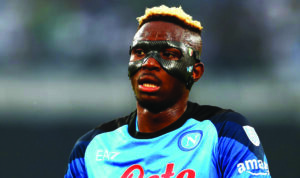
Saudi Arabian side Al Hilal have reportedly made an astonishing £120.3million offer to Napoli for their star striker Victor Osimhen.

Victor Osimhen

The Saudi Pro League side are continuing in their pursuit to bring the world’s biggest talents to the Middle East and have apparently submitted the huge bid to the Serie A champions for Osimhen.

The proposal highlights Saudi Arabia’s commitment to attracting top talents and comes days after Kylian Mbappe rejected a move to the club worth a potential £700m-a-year.

In addition to the triple-digit offer, Al Hilal have also tried to tempt Osimhen into agreeing personal terms with a £1million-per-week wage, according to Sky Sports.

Bayern make record £85m offer for Harry Kane

Bayern Munich are ready to smash their transfer record and bid £85million for Harry Kane.

Club executives Jan-Christian Dreesen and Marco Neppe flew into London for talks with Tottenham chairman Daniel Levy on Monday.

Harry Kane

And while a deal was not agreed, Mail Sport understands Bayern are preparing a third bid that eclipses the £68m they paid for Lucas Hernandez in 2019.

The striker is open to a move to Germany and while Levy wants at least £100m for his star man, it is believed an offer in the region of £90m would tempt him.

Bayern are set to give the England captain a four-year deal so he can join Thomas Tuchel’s squad ahead of his first full season in charge.


Inter join race for Gianluca Scamacca

West Ham striker Gianluca Scamacca has emerged as a target for Inter Milan.

The Italians are proposing around £17m which is likely to be rejected.

Gianluca Scamacca

Inter had been speaking to Arsenal about striker Folarin Balogun but the asking price of around £50m is too high.

Scamacca joined the Hammers last summer for £35.5m but had a disappointing first season which was disrupted by injuries.

The forward ended up making just 11 starts in the Premier League and scored just three times across a campaign where he struggled with problems in his knee and meniscus.

As a result, he has been linked with an immediate return to Italy with Roma said to be leading the race.

Ofori-Atta says: Economy Responding To Treatment … But Minority thinks otherwise

0
Ken Ofori-Atta, Minister for Finance and Economic Planning

The Minister for Finance, Ken Ofori-Atta, has told Parliament that the economy is responding to treatment.

According to the minister, the government has made significant progress on restoring macro-economic stability and thus the narrative about the once-ailing Ghanaian economy is changing.

“As I have indicated, we have made significant progress on restoring macro-economic stability and the narrative is changing. The economy is showing signs of recovery,” he said.

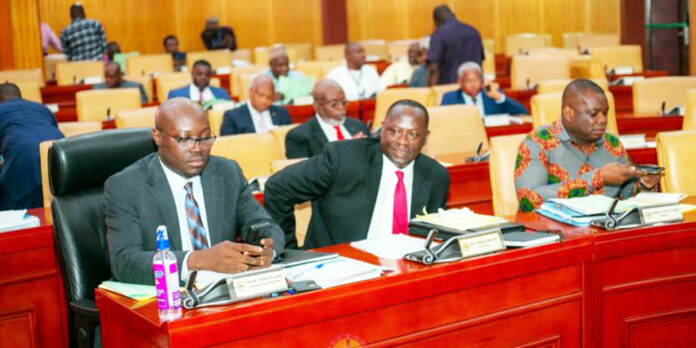
The Minister for Finance made this known on the floor of Parliament on Monday, July 31, 2023 when he presented the fiscal review of the 2023 budget, in fulfillment of Section 28 of the Public Financial Management Act (Act 921).

Briefing the House on the status of the economy, the Minister for Finance cited that the exchange rate has stabilised, inflation has softened and interest rates have declined since December 2022.

He explained that these out-turns were the result of the focused implementation of all the measures presented in the 2023 budget and the positive sentiments arising from the progress with the IMF Programme,

However, he added that despite the positive signs of recovery, there was a need to revise the 2023 macro-fiscal framework to align with this year’s budget.

He explained that the framework of the budget, anchored on the Post-Covid-19 Programme for Economic Growth (PC-PEG) supported by the $3 billion International Monetary Fund facility was guided by the September 2022 data that underpinned the 2023 Budget in November 2022.

KEY TARGETS

In the 2023 budget, the Minister for Finance sought the approval of Parliament for the government to set out to achieve some key macroeconomic targets.

The target included a 2.8% overall real GDP growth, a 3.0% non-oil real GDP growth, an 18.9% end-December inflation rate, a 5.9% overall budget deficit on commitment and a 7.7 percent cash basis.

The rest were 0.7% primary balance on a (commitment basis), surplus of GDP and a deficit of 1.1% of GDP on a cash basis, and Gross International Reserves to cover not less than 3.3 months of imports.

Stressing that the government was making significant progress, the Minister attributed this to the implementation of the Post-Covid programme being supported by the IMF.

REVISIONS

In the mid-year budget review, the government revised the target for the overall real GDP growth rate of 1.5% down from 2.8%; the non-oil real GDP growth rate of 1.5% is now down from 3.0%.

Also, the end-period headline inflation has been revised from 18.9% to 31.3 percent; the primary balance on a commitment basis of a deficit of 0.5 percent of GDP compared to a surplus of 0.7 percent of GDP, aligning with the IMF-supported PC-PEG target Primary balance.

The gross international reserves projected to cover 3.3 months of imports have been revised to cover at least 0.8 months of imports of goods and services by 2023.

DEBT RESTRUCTURING

The Minister reminded the House that the 2023 budget would introduce the Domestic Debt Exchange Programme (DDEP), which he said was critical to the implementation of the IMF-supported PC-PEG Programme.

He told Parliament yesterday that after three months of negotiations with the different bondholders, the government raised GH¢126,978.5 million in total outstanding bonds at the settlement.

Out of the amount GH¢29,286.2 million were held by Pension Funds, bringing the total eligible bonds to GH¢97,749.6 million.

The ministry received a final participation of GH¢82,994.5 million, representing 84.9 percent of total eligible bonds.

However, the minister indicated that the government was mindful of the impact of the debt exchange programme on individuals and was working hard towards a faster economic recovery to ameliorate the impact on their welfare.

NO SUPPLEMENTARY

The finance minister did not ask for a supplementary budget because the appropriation has been revised from GH₡227.7 billion as approved in November 2022 to GH₡206.0 billion.

He explained that it had been revised because oil revenues have fallen short of expectations due to changes in global prices. Also, there is a lower domestic interest payment and amortization as a result of the DDEP and the reduction in foreign-financed CAPEX.

“Mr. Speaker, we will, therefore, not require a supplementary budget,” he said.

Ofori-Atta has deepened our woes -Minority

0
Minority leadership

The Minority in Parliament has scornfully criticised the Minister for Finance, Ken Ofori-Atta, saying that he has deepened the economic woes of the nation.

According to the minority, the facts and numbers speak from an opposing point of view, to that of the minister on the realities of the economy, which they claim is comatose.

The Minority Leader, Dr. Cassiel Ato Forson, launched a scathing criticism of the government’s performance on the economy, concluding that no positive outcome had been achieved.

His stern criticism was a reaction to the presentation of the review of the 2023 budget that took place on Monday, July 31, 2023 on the floor of the House by the Finance Minister.

In his presentation, the Minister of Finance expressed optimism about Ghana’s economic recovery.

Ken Ofori-Atta highlighted the progress made in the economy since seeking the $3 billion bailout from the International Monetary Fund (IMF) to support the government’s Post-Covid-19 Programme for Economic Growth (PC-PEG).

Referring to the progress chalked in the implementation of the PC-PEG, the Minister for Finance asserted that Ghana had “turned the corner” and was committed to continuing on that path, but the minority disagreed with that stance.

In a sharp rebuttal, Dr. Ato Forson criticised the Minister’s claims, classifying them as not being supported by facts and numbers.

He pointed out a number of reasons to refute the assertion by Ken Ofori-Addo, including the depreciation of the Ghanaian cedi, which he said was due to the government’s default in paying external interest and principal.

The Minority Leader said that: “I say this because he has said to us today that he’s revising economic growth from 2.8% of GDP to 1.5% of GDP. Again, he said to us here and now that he has borrowed 5.5 billion Ghana cedis from January to June from the T-Bill market.

“Mr. Speaker, not long ago, this same Minister informed us that he will not borrow at all in the year 2023. And that going into the remaining parts of the year, he is going to borrow another 41 billion Ghana cedis.

“Aside from that, the Cedi depreciation we are seeing so far is largely because we have defaulted in the payment of external interest and principal. That is why the cedi has depreciated.”

The Minority Leader also said that despite promising not to borrow, the government had borrowed 5.5 billion Ghana cedis from the T-Bill market in the first half of the year, with plans to borrow an additional 41 billion cedis later next year.

“He (Ofori-Atta) said that the performance so far shows that we have turned the corner. Unfortunately, the evidence and the numbers before us show us that he has rather deepened our woes,” the Ajumako-Enyan-Essiam Legislator said.

The Majority Leader, who was present, did not counter the argument of his colleague on the other side.

However, the actual debate of the statement is scheduled to take place today and tomorrow, as the House prepares to adjourn sine die on Thursday.

Ghana, UK launch new program to fight against galamsey

0
Minister Jinapor and the UK officials speaking to the media

The Minister for Lands and Natural Resources, Samuel A. Jinapor, on Monday, August 31, 2023, joined the United Kingdom’s Secretary of State for Foreign, Commonwealth and Development Affairs, Rt. Hon. James Cleverly, Member of Parliament (MP), to launch a new programme to support the government’s fight against illegal mining.

The programme, dubbed UK-Ghana Gold Mining Programme, seeks to eliminate illegalities associated with the small scale mining sector, by increasing community resilience, promoting regulatory reform, and supporting law enforcement. It will be implemented in the Ashanti, Savannah and Western Region.

Mr Jinapor (m) with Rt. Hon. James Cleverly (L)

At a short ceremony to launch the programme at the Kotoka International Airport, the Minister said the relationship between Ghana and the United Kingdom is historic, and the two countries have been collaborating to execute socio-economic policies and initiatives that have significant impact and benefit for their respective citizens, and that the gold mining program is yet another avenue where the two nations will join forces on a worthy cause.

He said the initiative will complement others being implemented by Government to fight illegal mining, including the National Alternative Employment and Livelihood Programme (NAELP), the Community Mining Schemes, and other law enforcement measures.

Mr. Jinapor noted that the small scale mining sector is a strategic sector in the economic development of the country and that thee several interventions being made by Government are aimed at purging the sector of its excesses and promote sustainable and eco-friendly small-scale mining sector.

“The relationship between Ghana and the UK has been long-standing. The Ghanaian government has taken the issue of illegal mining seriously because apart from the impact o on our economy, its impact on the environment is dire. The government has taken some very bold steps like NALEP, Community Mining Scheme to ensure that we have community miners who adhere to be highest level of operational measures,” he said.

He commended the UK Government for the initiative, describing it as a ‘huge impetus’ and boost to the fight waged by Government against illegal mining. He assured the preparedness of his Ministry to work effectively with the UK team to deliver in the programme.

On his part, the UK Secretary Of State For Foreign, Common Wealth and Development Affairs commended the government of Ghana for the crackdown on illegal mining, opining that the fight is a bold step by government to do good with Ghanaians and protect them from the negative environmental impact of illegal mining.

He said the UK government is proud to associate itself with the battle by the Ghanaian government and will commit resources and personnel to ensure it works.

The new illegal gold-mining program will see the UK and Ghanaian government work together to increase community resilience, promote regulatory reform and support law enforcement.

The three-year initiative will see the UK government commit 3.9 million pounds to complement Ghana’s fight against illegal gold-mining in the Western, Ashanti and Savannah Regions.

Experts and officials from the UK government will work with a Technical Team at the Ministry of Lands and Natural Resources to ensure the workability and effectiveness of the programme.

KEEA NPP needs a unifier to beat NDC -Kofi Dentu

0
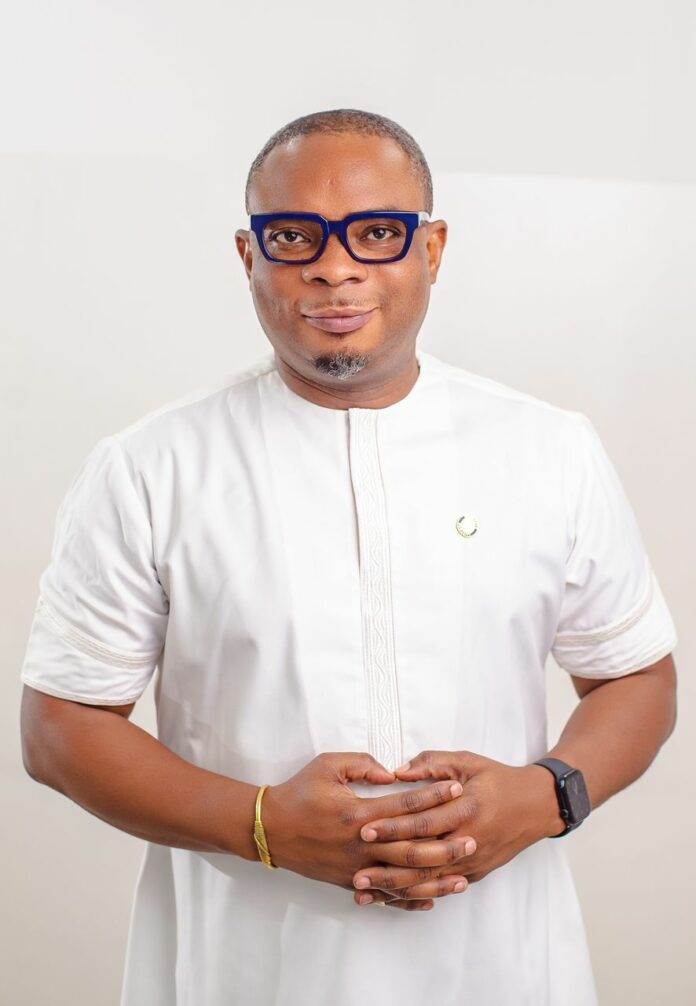
Samuel Kofi Dentu

A parliamentary aspirant of the New Patriotic Party (NPP) in the Komenda-Edina-Eguafo-Abrem Constituency, Mr. Samuel Kofi Dentu, says the party’s quest to win the parliamentary seat from the National Democratic Congress (NDC) would be in vain unless a unifier was elected as its candidate.

A unifier, he explained, would be able to unite all the seeming factions and camps within the rank and file of the party, so that the NPP would present a unified front that would be able to overturn the dominance of the NDC in the constituency.

Mr. Dentu made this known to The Chronicle in an exclusive interview when he affirmed his decision to contest the upcoming primaries by officially submitting his nomination forms at the constituency party office in Elmina over the weekend.

According to him, he was loved, appreciated, and accepted by the constituents, who see him as a unifier with the magic wand to break the NDC’s continuous dominance and win the seat for the NPP for the second time.
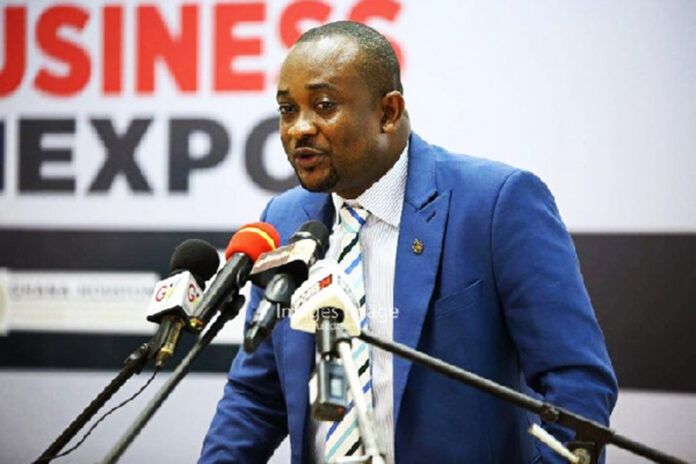
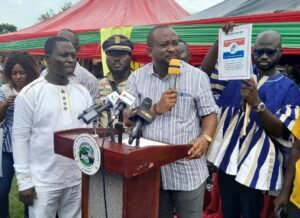
He said: “By God’s grace, I have acquired a lot of knowledge on how to bridge the leadership gap and bring about initiatives that would better the lot of the people and ameliorate their plights.”

Call to serve

The aspirant added that with the wealth of experience he had gained over the years as a grassroots person, who understood the dynamics of the constituency, it would be a great disservice to his people, and the constituency at large, if he did not contest.

“I think that I will do my people a very big disservice if I don’t come to contest, because I see that there is a leadership gap in the constituency, and I believe that I have what it takes to fill the gap, and so this is a service to my people,” he said.

Mr. Dentu stated that he had built a strong network over the years, which would enable him to change the narratives of the constituency and improve the economy of the area if he leads the party and get elected as the Member of Parliament.

Surmounting NDC’s dominance in Komenda

Mr. Dentu, who is the deputy Chief Executive Officer of the Ghana Export Promotion Authority, indicated that, votes from Komenda town and its enclaves mostly helped the NDC to win both the presidential and parliamentary elections.

As a native of Komenda, he indicated that his strong link with the local people would enable him to secure more votes for the NPP, which would go a long way to break the dominance of the opposition NDC in the constituency.

Campaign manager’s remarks

On his part, the manager of Mr. Dentu’s campaign, Mr. Robert Amoah explained that the governing party has given the constituency its fair share of the national cake in terms of development.

This, he said, must be capitalised on by the party to improve its electoral fortunes in the constituency to win both the presidential and parliamentary elections which have mostly been won by the NDC all the time.

However, Mr. Amoah added that notwithstanding the level of development the constituency has witnessed under the government, the party would need no other person than Mr. Dentu as the parliamentary candidate to achieve its dreams.

“Those who claim to be so popular and must be allowed to lead are the same people whose actions and inactions have deteriorated the party and made it less attractive to most of the voters for which reason we always lost,” he added.

He described Mr. Dentu as a unifier who would be able to mend all cracks within the party, make it more attractive to even those who are not sympathetic to the NPP to enable the party to win more votes in the constituency to “break the 8”.

Fans pick forms for Pius Hadzide to contest Asuogyaman primary

0
Mr Pius Hadzide

Party followers, including delegates, in the Asuogyaman Constituency in the Eastern Region have picked nomination forms for the Chief Executive Officer (CEO) for the National Youth Authority (NYA), Pius Enam Hadzide, to contest in the upcoming primary.

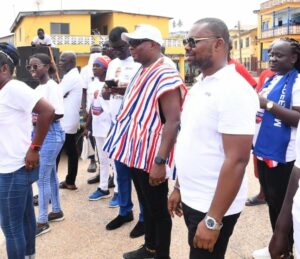
The CEO, a native of Asuogyaman, who has lived and worked as a teacher in the constituency, was performing a sod-cutting ceremony at Senchi for the construction of an Astroturf park when the supporters went to the party office to pick up the forms on his blindside and presented them to him at the ceremony.

According to the party members, identified as “Friends of Pius”, they were calling on him to help secure the seat, which the New Patriotic Party (NPP) lost to the opposition National Democratic Congress (NDC) in the 2020 elections, adding that Pius was vibrant and could win the seat back for the party in the 2024 General Elections.

Mr. Hadzide, after receiving the forms, thanked the youth for calling upon him to contest the seat.

Pius Enam Hadzide addressing his supporters

Addressing the crowd and the chiefs of the area, he expressed his vision to “transform the community and empower my people.”

He also pledged to attract businesses to the area to enhance the overall quality of life for its residents.

Pius Enam Hadzide was born on 14 June 1979. He attended Bishop Herman College at Kpando, where he earned his West African Senior School Certificate Examination (WASSCE) certificate. After that, he attended Accra Technical University, then Accra Polytechnic, and later the University of Cape Coast.

Hadzide is also an alumnus of the Theodor Heuss Academy of Leadership in Gummersbach, Germany. He is currently studying for an LLB from the University of London.

He worked with the President’s Special Initiative on Distance Learning (PSI-DL) as Subject Co-ordinator for Science before moving on to become Business Development Manager for the advertising and media buying giant, Akroma Limited.

He also worked as the General Manager of Ideas Advertising Limited before venturing into politics and public service.

In 2012, Hadzide was the New Patriotic Party parliamentary candidate for Ketu North in the Volta Region.

He served briefly as a Deputy Communications Director for the NPP, before being appointed Campaign Aide to the then flagbearer and now President, Nana Addo Dankwa Akufo-Addo, in 2015.

In 2017, Pius Hadzide was named Deputy Minister of Youth and Sports. In November 2018, he was reassigned and became Deputy Information Minister.

Who are Politicians?

0
Opinion

Politics is the set of activities that are associated with making decisions in groups or other forms of power relations among individuals such as the distribution of resources or status. In summary, it can be said that politics is the management of people, goods and services.

By this definition, anyone, who heads or manages people, goods and services, is a politician.  In this day and age, politicians are only said to be those who belong to political parties and called partisan politics.

Lately, everyone is blaming this group of politicians for short-comings in society. They are tagged as greedy, corrupt and incompetent.

Some nurses in Aflao Central Hospital, could fraudulently demand eight times the legal fee from a dying patient and stood by and watched till the patient died. Nothing much is now said about these nurses who manage patients so in effect they are politicians.

However, should any partisan politician do wrong, much less than the Aflao nurses, the roof will be brought down. In my opinion today, I will dwell on the partisan politicians.

The condemnation of politicians in these times is at dizzy heights. But then one may ask, where do politicians come from? Politicians do not belong to royal gates which will automatically make anyone born in such homes, a politician at birth. So, where from they?

Politicians come from any home, whether in homes of the high and mighty or the homes of the wretched poor. So, how did they get there? It is the community who got them there.

Here is a scenario: two boys grew up in the same community and they both had different characters. One led a very good life that his parents were always proud to call him “son.” The other always topped the list of bad boys and he defied all rules and regulations.

The calm one got through to the university and later became a lecturer. The rascal, disappeared from town, much to the delight of everyone, for at last peace, has come.

The lecturer visited home very often and through his connection, a few developmental projects were done. He was admitted to the Council of Elders.

One day, the rascal came home in the most expensive car and with goodies for almost everyone. He was fully loaded with cash and started buying lands, which he quickly developed. He had not really changed but this time with his money been splashed around, the community including the chiefs and elders accepted him and even tolerate his bad manners.

At meetings of elders to deliberate matters concerning the community, the rascal’s word is taken over the well-thought-out word of the lecturer. Money talks!

Soon he joined a political party and was elected a Member of Parliament (MP). Fortunately, or unfortunately, his party won power and he got a ministerial appointment.

One fine day, the community woke up to find out that three-quarters of their lands were gone. At least, a dozen of the young ladies had been impregnated by the MP and those he sent to school abroad were actually working there like slaves, with the ladies made sexslaves.

The Lecturer was called by the Council of Elders, to help find the way forward. And it was then that they realised that all the times he opposed the rascal’s proposals during meetings, was for a good reason.

If only they had listened to him, instead of chasing money. At that moment, there was nothing he could do, since the chief and elders had duly signed documents, giving away the go-ahead to sell the land and none of them was given any money out of the sales. Their plea that they did not know what they signed cannot restore the lands.

Readers, to the best of my knowledge this story did not happened.It is just to illustrate that the community gets carried away to elect someone they know was not a good chap from childhood.

Every four years, Ghanaians are given the opportunity to choose who should lead them in the constituency and in the nation. Before that, the parties elect parliamentary and presidential aspirant during primaries, and here too, some people sell their votes.

Delegates go in for the highest bidder and not the one who can naturally do the job and do it well. They present a bad product to society, and because of money, society picks that product as its choice.

An average politician may spend over GH¢8 million in a parliamentary race. All this money goes to individuals in society. He eventually wins and becomes MP and later maybe a minister. Certainly, his first option is to make up for the money spent. This he can achieve through very fair means, especially where he could broker deals, or he can use foul means as well.

It is very wrong for the electorate to demand money before voting, because in the end, hardship visits the land.

Today, politicians are called foul names, but who created the politician? If society has the opportunity to pick a good person from the lot, but due to greed and love of money, it picks the wrong one, then who is corrupt?

It certainly cannot be the politician, but the ones who made the ordinary Ghanaian become a corrupt politician. A politician is created by society, so society must take the blame, if that politician is corrupt.

Hon. Daniel Dugan

The views expressed in this article are the author’s own and do not necessarily reflect The Chronicle’s stance.

Editorial: Let’s uncap GETFund to its original status

0
Editorial

Former President John Dramani Mahama has described the current financial constraint of the Ghana Education Trust Fund (GETFund) as worrisome, adding that the situation was negatively affecting education outcomes.

Mr. Mahama, who is also the flagbearer of the opposition National Democratic Congress (NDC), was addressing the Second Graduation Ceremony of the Academic City University College (ACUC) in the Ga East Municipality in the Greater Accra Region last Saturday.

The former President said, as a catalyst for sustainable development, education must be tackled holistically to enable the country to derive maximum benefit. He added that, as much as access to education was important, it was equally vital for the quality to be enhanced to produce graduates who would be well equipped to meet the challenges of modern times.

The Chronicle agrees that there is the need to resource the GETFund in order for it to carry out its mandate of providing funds to supplement the provision of educational infrastructure at all levels.

The GETFund is supposed to sponsor a lot of the infrastructural projects in our educational institutions, from the basic to tertiary level. In addition to infrastructural development, the GETFund also provides funding to support the procurement of educational equipment and promotion of staff development and research, especially at the tertiary level.

The GETFund is the only hope for infrastructure financing in the education sector, and we must all be worried about the damage that the capping introduced by the government is doing.

Whilst most Ghanaians are clamouring for the GETFund to be resourced, the introduction of capping of the funds is to the detriment of the education sector. There has been a decline in the funding of education as a result of the capping of the Fund.

There have also been complains about the inability of the GETFund to support the Student Loan Trust Fund (SLTF), the Scholarship Secretariat, and lots of uncompleted GETFund projects, in terms of infrastructure from the basic schools to the tertiary level.

Just recently, the National Union of Ghana Students (NUGS) presented a petition to the Education Committee of Parliament to reject the 2023 proposed formula for the disbursement of the GETFund.

The student body said this had negatively affected the allocation of funds to the Student Loan Trust Fund and other educational agencies. NUGS contended that there had been a decline in the funding of education as a result of the capping of the GETFund.

It has been agreed by most stakeholders in education that the GETFund capping method obviously deviates from the GETFund Law 2020, (Act 581) and the Earmarked Funds Capping and Realignment Law 2017 (Act 947).

The GETFund was created by a statute — GETFund Act, 2000 (Act 581) – with the primary objective of providing funds to supplement the provision of educational infrastructure at all levels.

The GETFund plays a critical role in financing educational infrastructure and projects in Ghana. However, when the Fund is under-resourced, several negative effects can arise, impacting negatively on the education sector and hindering its progress. One of the significant consequences of not having adequate GETFund resources is the lack of proper infrastructure in schools. Insufficient funds means that educational institutions might struggle to maintain or build new classrooms, libraries, laboratories, and other essential facilities. This can lead to overcrowded classrooms, poor learning environments hinder the overall quality of education.

The resourcing of the GETFund is essential to promote a robust and inclusive education system in Ghana. By providing financial support for infrastructure development, scholarships, teacher training, research, and technology integration, the GETFund contributes significantly to the overall growth and progress of the country.

The Chronicle holds the view that the government must start listening to all the different voices on the need to revert the GETFund to its original status to fully operationalise according to its mandate.

Assembly Member rewards 102 teachers

0
Samuel Asare-Brew presenting a cash prize to one of the best BECE excelling students in the community

The Assembly Member for Manso Suntreso electoral area in Amansie West of the Ashanti Region, Mr. Samuel Asare-Brew, has donated television sets among other item to 102 teachers, with a call on parents and guardians to accord respect them.

According to Asare-Brew, there were many parents who do not respect teachers.

Samuel Asare-Brew speaking to the media

He has subsequently urged Ghanaians to respect teachers, adding that if parents and guardians treat them well, they would give their all and teach the students well.

“A teacher can make and unmake our children; if we do not treat them well, a time will come that our children could go wayward.”

Asare-Brew also implored parents to take the education of their wards seriously, by assisting them with their assignments and provision of learning materials.

Samuel Asare-Brew made these calls when he expressed his appreciation to teachers in his electoral area.

Among the categories of those who received these presents were 102 teachers in the area who were given Liquefied Petroleum Gas (LPG) cylinder and a certificate of appreciation for their service to the community.

He also donated 32-inches television sets to the three longest serving teachers in Manso Suntreso, and presented cash award to the best performing students in his electoral area.

Rev Fr. Alex Opoku Derby , presenting a present to one of the teachers

Also, he expressed appreciation to the Best Senior High School (SHS), Primary headmasters and Best Kindergarten Teacher who received television sets each.

An Information Centre Operative and District Education Director were also given television sets.

Moreover, the District Health Director and Police Command were equally awarded.

Addressing the media, Samuel Asare-Brew explained that his appreciation came on the heels of the sterling Basic Education Certificate Examination (BECE) results his electoral area recorded.

This BECE record, he indicated, came at a time when he had engaged the teachers to give out their best for education to be improved upon in the area, a development which reflected in last year’s sterling performance.

This feat, he told the media, encouraged him to honour the teachers.

“This is my widow’s mite to encourage the teachers to do their best.”

Asked about infrastructure challenges which were confronting the educational sector, Mr. Asare-Brew responded in the affirmative, emphasising that the teachers had requested for living quarters, a plea which was being worked on, adding that the schools were in dire need of classrooms renovations.

Nana Kwame Amanfo II, Chief of Manso Suntreso, praised Asare-Brew for honouring the teachers, adding that it was a step in the right direction.

The Chief of Manso-Suntreso , Nana Kwame Amanfo II, donating a present to one of the teachers

According to Nana Amanfo II, the community had made strides in the education sector.

The traditional leader underscored that they had a challenge in their education sector, expressing worry about the school dropout phenomenon, adding that it should not happen in an era where education was the best legacy for children.

Georgina Owusu-Sekeyere , a teacher at the Suntreso D/A Primary School, expressed appreciation to Mr. Samuel Asare-Brew for the presents.

She, however, pleaded with the government t to come to their aid in addressing the challenges in their schools.

According to her, they are confronted with inadequate teaching, learning materials and infrastructure challenges.

The Ghanaian Chronicle