Home Blog Page 2025

I was a mechanic apprentice before venturing into music –Lasmid

0
Lasmid

Singer and songwriter Lasmid has revealed on Onua FM his profession before entering full time music.

The ‘Friday Night’ hitmaker said he was undergoing training as a mechanic before venturing into music full-time.

The passion for music kept driving him hence he had to quit to pursue his dream.

“I was a mechanic, “Fita” apprentice (auto electronics) but I was unable to complete it. I was trained for a period between three to six months but I realized that my destiny was in music so I had to stop. The errands too were a lot,”

Although he quit halfway through the training, he still has some expertise in the field should he be guided by a pro.

“I learned a lot of things so I can determine a fault in that regard but would have to get someone to do the fixing after I have identified the problem,” he stated.

“I wasn’t forced to learn the job but I wasn’t willing to do so. It was more like I was at home doing nothing. No one forced me. After a lot of thinking, I realized I had done a lot of difficult tasks before so this was no different; it was normal. I learned the trade at Takoradi”Lasmid added.

Lasmid has said he has no regret for quitting his training to pursue music because it has been worth it.

Could El Salvador’s gang crackdown spread across Latin America?

0
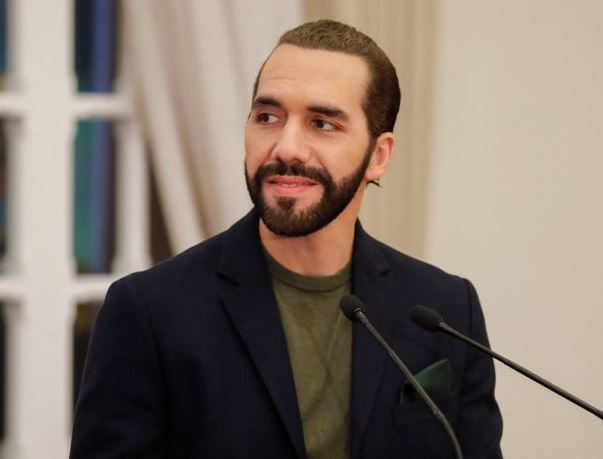
Salvadoran President Nayib Bukele is credited with inspiring similar tough-on-crime measures in neighbouring Honduras

For more than a year, Latin American countries have watched as El Salvador swept more than 70,000 people into its prison system, with little semblance of due process, in a bid to eliminate the criminal gangs that have plagued the country for years. And many seem to like what they see.

Despite the suspension of civil liberties and allegations of abuse in El Salvador, politicians in neighbouring countries like Honduras and Guatemala have praised President Nayib Bukele as a model worth emulating.

That admiration is not confined to one end of the political spectrum. In Honduras, left-wing President Xiomara Castro announced her own crackdown on gangs that drew comparisons to El Salvador’s. And in Guatemala, former right-wing presidential contender Zury Rios called El Salvador a “model for reference”.

But while some in Latin America view Bukele in a positive light, others question if his policies can be replicated without eroding democratic safeguards and causing further violence. Since 2022, El Salvador has been under a state of exception, limiting constitutional rights in order to take swift action against alleged crime.

Video Duration 25 minutes 00 seconds 25:00

El Salvador’s Prison State | Fault Lines

“When massive rights violations become commonplace, it’s very rare for this to result in lasting peace,” said Noah Bullock, executive director of the Salvadoran rights group Cristosal, which has monitored rights violations under the state of exception.

Source: Aljazeera.com

German man arrested in France after wife allegedly held captive for 12 years

0
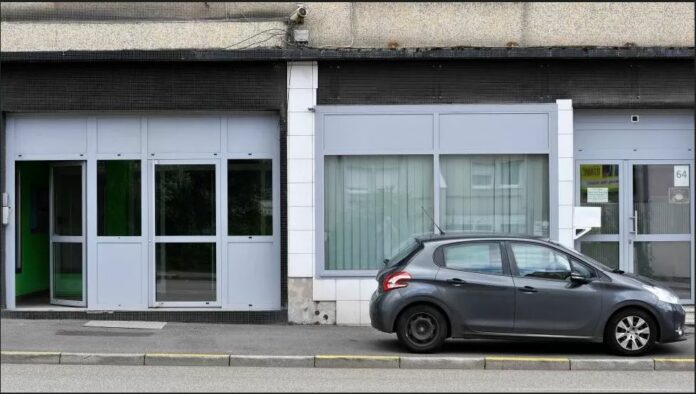
The entrance of the door of the building where the couple lived in Forbach, near France's border with Germany

A German man has been arrested after his wife was discovered after 12 years of captivity at their home in France.

The woman, also German, was semi-naked with her head shaved when they found her in a bedroom in the apartment, a French police source told AFP.

Police said the bedroom where the woman was found was closed off with metal wire at the residence in Forbach, eastern France, on the German border.

The 55-year-old man is being held on suspicion of kidnap and other offences.

The woman, who is 53, was believed to have gained access to a phone and called police in Germany, who alerted their French colleagues, the police source said.

The man, who is also facing allegations of aggravated rape and torture, is being held in the eastern French city of Metz, broadcaster BFMTV said.

Germany’s Bild newspaper interviewed neighbours, who said the suspect told them his wife had cancer and was “screaming in pain because of her illness”.

French media reports also said police found a diary-type notebook in the flat, in which it was believed the man kept a record of his actions, including the times he gave his wife food.

Source: bbc.com

Asylum-seekers arrive on controversial UK barge, as public health experts warn of disease outbreak risk

0
Public health experts warned that the cramped living conditions of the barge increase the risk of respiratory infections spreading

The controversy over the transfer of asylum-seekers onto a barge moored in southern England deepened on Monday, when public health experts warned of the possible risk of infection in living conditions that campaigners branded as inhumane.

The first group of migrants has arrived on board the boat, named Bibby Stockholm, which is docked in Portland, on the Dorset coast of southwest England, PA Media news agency reported. More people are expected to embark later on Monday.

Plans announced by the UK government in April to house around 500 single adult men on the vessel struck a political nerve in Britain, where the Home Office has ramped up hostile policies towards refugees in a bid to reduce the number of small boat crossings in the face of the European migrant crisis.

Medical practitioners flagged safety concerns over the Bibby Stockholm, after it was called a “death trap” by the UK’s Fire Brigades Union (FBU) on Wednesday.

Prof. Jenny Harries, the chief executive of the UK Health Security Agency, said respiratory infections were more likely to spread in cramped spaces with narrow corridors and doorways.

“Generally respiratory infections, as we’ve all learnt through the pandemic … are at higher risk in confined settings with poorer ventilation, so the sorts of things we look at is what the ventilation is like,” she told BBC Radio 4’s “Today” show on Monday.

The agency will visit the barge to assess the “infection prevention control” once migrants are on board, Harries said, adding: “We know that the accommodation complies with marine standards, which is what has been agreed is correct for that particular accommodation.”

Source: cnn.com

Thousands of US troops arrive in Red Sea amid ratcheting Iran tensions

0
USS BATAAN

More than 3,000 US military personnel have arrived in the Red Sea on board two warships, part of a beefed-up response from the United States after alleged seizures of several civilian ships by Iran, the US Navy said.

The US sailors and marines entered the Red Sea on Sunday after transiting through the Suez Canal in a preannounced deployment, the US Fifth Fleet said in a statement on Monday.

The deployment adds to a growing US military buildup in tense Gulf waterways vital to the global oil trade and led Tehran on Monday to accuse Washington of inflaming regional instability.

The US military says Iran has either seized or attempted to take control of nearly 20 internationally-flagged ships in the region over the past two years.

They arrived on board the USS Bataan and USS Carter Hall warships, providing “greater flexibility and maritime capability” to the Fifth Fleet, the statement from the Bahrain-based command added.

The deployment adds to efforts “to deter destabilising activity and de-escalate regional tensions caused by Iran’s harassment and seizures of merchant vessels,” Fifth Fleet spokesperson Commander Tim Hawkins told the AFP news agency.

USS Bataan is an amphibious assault ship that can carry fixed-wing and rotary aircraft as well as landing craft. The USS Carter Hall, a dock landing ship, transports Marines and their gear and lands them ashore.

Source: Aljazeera.com

Niger coup: Junta shuts airspace citing military intervention threat

0
West Africa

Niger’s coup leaders have closed the country’s airspace until further notice, citing the threat of military intervention from their neighbours.

It comes after the Ecowas group of West African states demanded President Mohamed Bazoum be reinstated by Sunday.

Ecowas had warned that the junta could face military action and will now meet on Thursday to discuss next steps.

Meanwhile Mali and Burkina Faso, both also ruled by juntas, said they would send officials to Niger in solidarity.

Flightradar24 showed a transport plane had flown from Ouagadougou, the capital of Burkina Faso, and landed in Niger hours after airspace was closed.

The growing instability in the region compelled former colonial power France on Monday to warn its citizens against travelling to the Sahel region, and for those still there to be cautious due to anti-France sentiment.

“It is essential to limit travel, to stay away from any gatherings and to keep themselves regularly informed of the situation,” read a statement from the foreign ministry.

The junta in Niger on Sunday said it had information that “a foreign power” was preparing to attack the country, after military chiefs from Ecowas, a bloc of 15 countries including Nigeria, Senegal, Togo and Ghana, drew up a detailed plan for use of force.

It had issued a 23:00 GMT Sunday deadline to Niger’s junta leaders to stand down and restore the elected president.

Source: bbc.com

Civil Servant charged for sharing ex-girlfriend’s nude pictures

0
Court hammer

A 47-year-old Civil Servant, Teddy Tom Thompson, has been dragged to court for allegedly threading and sharing nude videos of a woman (name withheld) he dated for less than three months.

Thompson, who works with the Controller and Accountant General’s Department in Accra, allegedly recorded the woman in question without her knowledge. The Civil Servant allegedly took advantage of the woman, who also works in one of the government hospitals in Kumasi, during a phone sex act.

Thompson was put before an Accra Circuit Court, presided over by Mr. Samuel Bright Acquah, yesterday on the charge of threat to distribute prohibited intimate image or visual recording and non-consensual sharing of intimate image.

The charges are contrary to Section 67 and 68 of the Cyber Security Act 2020 (Act 1038), but he pleaded not guilty.

Mr. Acquah has been granted bail in the sum of GH¢20,000.00 with one surety, who is to deposit his or her Ghana Card with the court registry.

Background

The prosecuting officer, Inspector Genevieve Ankamah, told the court that the complainant was a nurse in one of the government hospitals in Kumasi.

She narrated that the complainant and accused began their relationship in June this year, but due to some misunderstanding they fell apart.

The court heard that while having a WhatsApp video call, the accused engaged the complainant in phone sex, but recorded it without the latter’s knowledge.

After the break up, the accused then threatened to share the complainant’s nudity to disgrace her.

True to his word, the accused went ahead to share the nude recordings of the complainant to her friends, including witnesses in this case.

The complainant reported the matter to the police and the accused was arrested to assist in investigations.

Investigations confirmed that SIM number, 0277545956, which was used to distribute the nude pictures, was registered in the name of Teddy Tom Thompson.

Screen shots of the video and chats from the complainant’s friends were also obtained. The accused was, therefore, charged with the offences and brought before court.

Businessman battles McDan over East Legon property

0
Dr. Daniel McKorley

An Accra High Court has slapped a businessman, Dr. Daniel McKorley, Chairman and Chief Executive Officer (CEO) of McDan Group, with cost of GH¢6,000 in a trespassing on land at East Legon suit instituted by Magnus A.L. De Souza.

The court, presided over by Justice Rita Abena Abrokwa Doko, fined the businessman (2nd defendant) for filing applications late and attempting to delay proceedings.

The fine followed an oral application by Nii Akwei Bruce-Thompson, counsel for Mr. De Souza (plaintiff), for delaying the court.

This was after the lawyers for the defendants, Daniel McKorley, and Joseph Nii Mensah Ashong, failed to show up in court on July 4, 2023, being the date set for Mr. De Souza to give his evidence-in-chief, as well as be cross-examined.

Mr. De Souza was allowed to present his evidence-in-chief and which was adopted by the court.

Nevertheless, the Judge ordered that the proceedings should be served on the lawyer for the defendants, and adjourned the next hearing to July 20, 2023.

On July 20, 2023, counsel for the defendants, Theophilus Donkor, filed an application at 8am to cross-examine Mr. De Souza.

The judge then adjourned the case to July 31, 2023, to allow the defendants’ counsel to proceed with the cross-examination of the plaintiff.

Mr. Donkor, at the last adjourned date, told the court that his staff wrongly entered the time for the hearing on the July 4, 2023, and objected to being marked absent. The court also maintained that for the fact that they were served with the date and time of the hearing, and were not present, they were absent.

On this basis, Mr. Bruce-Thompson prayed the court for a cost of GH¢50,000.00, because Mr. De Souza comes from outside to attend the hearings.

He argued that since the case was filed in the year 2018, the defendants had never showed up in court, but continued to file numerous vexatious applications to derail and delay the hearing and conclusion of the matter. Furthermore, the lawyers for the defendant had been absent at several hearings.

Lawyer Claudia Obeng, holding Mr. Donkor’s brief, prayed the court to reduce the cost to GH¢5,000. That was after Mr. Donkor had promised the court that his clients would show up in subsequent hearings. The court subsequently awarded GH¢6,000 against the defendants.

Background

Mr. De Souza accused the defendants of deploying land guards on the land in question to enable them develop it.

“The defendants, without my consent, have trespassed onto the land, with Ashong wrongfully claiming ownership and selling same to Mckorley, who, with the use of land guards, has forcibly dug a foundation trench and is building on my land,” the witness said.

Mr. De Souza, in his evidence before the court, said Ashong had sold the land in contention to Mr. Mckorley.

However, the first defendant – Ashong – in his defence refuted the claim of the plaintiff, insisting that his late father acquired the disputed land in 1974 from the Nii Odoi Atsem Family of La, and went into immediate possession after the acquisition.

The plaintiff contended that he acquired the property from one Professor David Kpakpo Acquaye with title deed assigned to him, dated November 8, 1995.

He further added that he started developing the land somewhere in 2000, but later decided to pull the structure down to begin the current construction, because of financial support from his partner.

The 1st defendant challenged the claim that “Neither the plaintiff nor his grantor has possessed the land in dispute, or entered or done anything on the disputed land for these years that they claim to have acquired the land. If the plaintiff or his grantor did have any interest in the disputed land that cannot be the reality now, as for the past 10 years they have not developed or exercised any act of possession on the land.”

Cross-examination

During cross-examination, Mr. Donkor suggested to the plaintiff that he did not have evidence that Mr. Ashong had sold the land to Mr. Mckorley. In his response, Mr. De Souza said: “To a certain extent I do, because Nii Ashong gave a police statement when he was arrested, after I reported the encroachment on my land to the police, stating that he gave the land to Mr. Daniel McKorley.

“The police report clearly says that Ashong said in his statement that he gave the land to Mr. Daniel Mckorley. The police report has been the basis of my suing Ashong and Mckorley.  Furthermore, when on occasion I have visited the land, and that is even after the injunction was issued, I have met McDan’s staff on the land as recently as 20th July, 2023,” he said.

Mr. Souza also stated that the initial defence was a Deed of Assignment, purported to have been issued, by the Lands Commission. He said that his lawyer wrote to the Lands Commission for verification of the Deeds that had been submitted in court by the lawyer for the defendant. The Lands Commission replied that the said Deeds did not emanate from the Lands Commission.

Mr. Souza further stated that a simple search at the Lands Commission would have confirmed that he was the legitimate and registered owner of the land. He stated that his lawyer commissioned his own search before accepting his case, as all good lawyers would.

The Judge asked the Mr. De Souza’s lawyer if he wished to re-examine him, but he declined.

Justice Rita Abena Abrokwa Doko adjourned the case to 3rd November 2023.

9 Emerging Benefits and Uses of Sage Tea

0
Sage Tea

Sage tea is an aromatic infusion made from the leaves of common sage (Salvia officinalis), an herb in the same family as mint.

Commonly used as a spice, sage also has a long history of use in alternative and traditional medicine. Notably, its tea is packed with potential health benefits — although scientific research on this drink is still in its preliminary stages.

Here are 9 emerging benefits and uses of sage tea.

  1. Rich in anti-inflammatory and antioxidant compounds

Sage tea contains a variety of powerful plant compounds.

In particular, its antioxidants work to neutralize harmful compounds called free radicals. When these accumulate in your body, they can lead to chronic diseases like type 2 diabetes and certain cancers.

Sage tea is particularly high in rosmarinic acid. Animal and test-tube studies have shown that this antioxidant provides numerous benefits, such as decreased inflammation and blood sugar levels.

While inflammation is a natural bodily response, chronic inflammation can increase your risk of illness.

Sage likewise provides a fair amount of vitamin K, which is essential for bone health, circulation, and proper blood clotting.

What’s more, this tea boasts several other health-promoting compounds, including carnosol and camphor.

In a mouse study, sage extract significantly increased the levels of anti-inflammatory compounds circulating in the blood while decreasing the levels of inflammatory compounds.

Sage tea’s anti-inflammatory and antioxidant effects may be responsible for many of its purported benefits, but more human research is necessary.

  1. May promote healthy skin and wound healing

Sage is a common ingredient in cosmetics that are applied topically as a natural skin care remedy.

It’s possible that drinking its tea provides some of the same benefits.

In a test-tube study on mouse skin cells, camphor — one of sage’s key compounds — was found to promote healthy skin-cell growth, slow signs of aging, and decrease wrinkle formation.

In addition, an animal study associated this herb’s carnosol and carnosic acid with helping treat sun-related skin damage and other inflammatory skin problems.

Other animal studies show that sage extract helps heal cold sores and speeds wound healing.

Moreover, test-tube studies have demonstrated that its extract killed certain harmful bacteria and fungi that could damage your skin.

  1. Promotes oral health

Sage is one of the most popular herbs in dentistry, as it targets pain, inflammation, and bad breath, as well as exerts antibacterial and wound-healing properties.

In fact, gargling sage tea is often recommended as a remedy for mouth wounds and sore throats.

These oral benefits are often attributed to the powerful antioxidant rosmarinic acid.

Furthermore, sage is added to some mouthwashes because of its antibacterial and anti-inflammatory activity.

  1. May have anticancer properties

There is some evidence that sage tea may help fight cancer cells.

It contains several anticancer compounds, including carnosol, camphor, and rosmarinic acid. In particular, animal and test-tube studies reveal that carnosol can kill several types of cancer cells without affecting healthy cells.

In a study in over 500 people, sage and chamomile teas were linked to a decreased risk of thyroid cancer.

Meanwhile, in a test-tube study, sage tea helped prevent genetic changes that cause colon cancer cell formation.

Although these results are promising, more human research is necessary.

  1. Improves blood sugar control

Sage, which is a frequent ingredient in alternative blood sugar medications, may help improve blood sugar levels and prevent or treat type 2 diabetes.

A 2-month study in 105 adults with type 2 diabetes found supplementing with 500 mg of sage extract 3 times daily improved fasting blood sugar, post-meal blood sugar, and hemoglobin A1c — a measure of average blood sugar levels over the previous 3 months.

Meanwhile, a mouse study determined that replacing water with sage tea reduced fasting blood sugar levels.

Furthermore, a test-tube study suggested that sage behaves similarly to insulin — a hormone that helps manage blood sugar levels — by moving sugar in your blood into your cells for storage, thus lowering levels of this marker.

  1. May promote brain health and improve mood

Sage is widely used in alternative medicine to boost mood, improve memory, and help prevent brain-related disorders like Alzheimer’s. Scientific research backs many of these uses.

Alzheimer’s progresses due to amyloid plaques that form in the brain. Several test-tube and animal studies indicate that sage and rosmarinic acid may help prevent the formation of these plaques.

In addition, multiple human studies note that sage extracts improve memory, brain function, mood, and focus.

One study in 135 adults found that simply smelling the aroma of this herb boosted memory and mood, compared with a control group.

Sage may relieve pain as well, but more research is needed on its effects on the brain and nervous system.

  1. May support women’s health

Sage may also provide some unique benefits for women.

In the Middle East, pregnant women commonly use sage to treat digestive symptoms like nausea, a common problem early in pregnancy.

Historically, sage has also been utilized as a natural way to reduce breast milk production in women who are weaning or have an overabundant supply.

However, there is little research to support either of these traditional uses.

Yet, research demonstrates that sage helps reduce hot flashes. An 8-week study in 71 menopausal women found that taking a daily tablet containing fresh sage reduced the severity and frequency of hot flashes by 64%.

  1. May boost heart health

Some research indicates that sage may help improve cholesterol and triglyceride levels, potentially decreasing your risk of heart disease.

In a small, 4-week study in 6 women, drinking 10 ounces (300 ml) of sage tea twice daily resulted in 16% lower total cholesterol, 20% lower LDL (bad) cholesterol, and 38% higher HDL (good) cholesterol.

A 2-month study in 105 people with type 2 diabetes on cholesterol-lowering drugs found that those who took 500 mg of sage extract 3 times daily had healthier levels of triglycerides and all cholesterol markers, compared with those in the control group.

All the same, more research is needed.

  1. Easy to add to your diet

Sage tea is easy to add to your diet, as you can purchase tea bags online or at most grocery stores.

You can also make this aromatic beverage at home with the following ingredients:

1 tablespoon (15 grams) of fresh or 1 teaspoon (4 grams) of dried sage

1 cup (240 ml) of water

sweetener to taste

fresh lemon juice (optional)

Simply bring the water to a boil, then add the sage and steep for about 5 minutes. Strain to remove the leaves before adding your preferred sweetener and lemon juice to taste.

This drink is enjoyable hot or cold.

Source: www.healthline.com

Feature: Again, A Bizarre Joke in Niger Speaks French

0
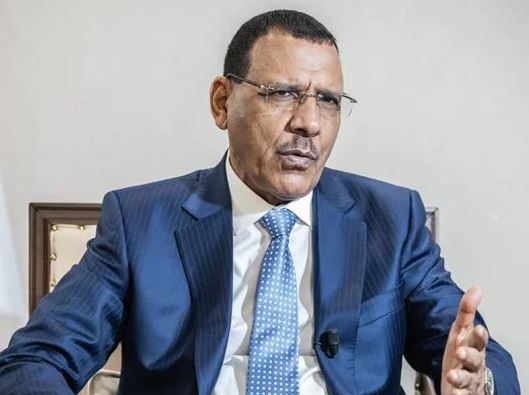
President Mohamed Bazoum

Not only are military coups becoming frighteningly frequent in West and Central Africa, virtually all of them, it appears, also speak French. For the fifth time in three years in West Africa, soldiers struck again in Niger, Nigeria’s Northern neighbour, where former President Muhammadu Buhari had teasingly longed for refuge from Nigeria’s hostile press.

With the recent turn of events, however, it appears that Buhari’s speed train to Maradi, Niger’s ancient city, may have to find another destination.

It’s the fifth successful military coup in that country since 1960. Apart from the worn-out reasons of “deteriorating security and poor economic and social governance” given by the coup plotters, other familiar reasons have ranged from jihadist insurgencies to corruption and poverty; and from high birth rate to desertification.

As Nigeria’s president and new chairman of the regional Economic Community of West African States (ECOWAS), Bola Ahmed Tinubu, rallies the subregion to confront what is now called “Africa’s coup belt”, he would find that the problem in the region’s largest landlocked country, which shares the longest land border with Nigeria, is far more complicated than it appears.

It is heartening that the UN and the AU have condemned the coup and that the US and France have also lent their voices to the call for the soldiers in Niamey to return to the barracks.

Tinubu would find, however, that beneath the veneer of foreign concern lies a web of vested interests and powerplay involving the US, but particularly France and China, that make other well-known complications in Niger look like small potatoes.

Once upon a time – and that was about one and a half decades ago – it was widely assumed that after multi-party democracy was introduced in that country in 2010 following the coup that removed President Mamadou Tanja, Niger would finally have a chance to reset.

In fact, the man who took office after the brief spell of military takeover, Mahamadou Issoufou, acquitted himself so well after two terms in office that he received the Mo Ibrahim Prize for good governance. President Mohamed Bazoum, widely expected to build on Issoufou’s fragile record, had only been in office two years before soldiers removed him on July 26.

However tempting it is to resist the trope of looking for foreign scapegoats, it’s fair to say that the snake of Niger’s problem has its hand buried in the womb of the unfinished problems of Tanja’s confrontation with France.

That confrontation, which finally left Tanja in bed with the Chinese over Niger’s uranium and mineral deposits and, in fact, also produced a refinery built by the Chinese, became compounded by other factors, a number of which were, sadly, self-inflicted, over the years.

Tanja, a former colonel, was on the verge of serving out his constitutional two-term limit of five years each, when he instigated an extension. When the process appeared doomed to fail, he not only scrapped the constitutional court that ruled that his attempt was illegal, but also scrapped the parliament. But that’s only part of the story.

The other important part was Tanja’s confrontation with French state-owned atomic energy group, Areva, which had enjoyed a de facto monopoly of the country’s rich uranium, a strategic resource for France’s nuclear power. Areva’s profit from uranium is twice Niger’s GDP.

In a multi-million-dollar deal with China in which Tanja did not mind cutting Niger’s nose to spite the face of France, he pulled the plug on Francophone Africa’s most significant player, making the French play second fiddle to the new Chinese bride. When the tables turned following Tanja’s ouster, Paris was more than happy to dance on his political grave. But the story did not end there.

According to Tom Burgis in his no-holds-barred book, The Looting Machine, Niger spent $47 million from the proceeds of the uranium deal on arms to suppress the Tuareg rebels; and when a further $300 million came later from signature payment by China National Petroleum Corporation, to develop an oil block, the question was no longer whether Tanja could afford to make trouble, but how much.

“The military coup against Tanja,” Burgis wrote, “deepens fears in Africa that China’s competition with the old powers for the continent’s resources was giving rise to a new and ruinous rivalry like that of the Cold War which had allowed dictators to play Communist and capitalist suitors against one another.”

It was in these circumstances that after the unravelling of Libya, jihadist insurgents found willing recruits among Tuaregs. With the avalanche of light arms flowing out of the broken North African country, it was not too difficult for power hungry soldiers in Niger to topple Tanja’s corrupt government in 2010, ushering in a brief spell of military rule.

Deposed President Bazoum, who was elected only two years ago, steered Niger back to warm relations with Paris which, obviously, is one of the main grouses of the soldiers.

In a viral statement credited to coup leader, Major General Abdurrahman Tchiani, he accused the president of taking orders from France before deciding what to do with terrorists, without regard for the lives of Nigerien soldiers “falling at the fronts.” And added, for good measure, that regional leaders with dubious electoral records had no moral right to challenge the coup.

The coup is a huge embarrassment for ECOWAS, yet from its record, the likely failure of the one-week ultimatum to the soldiers in Niamey would only compound the misery of the regional body. Already, the military governments of Burkina Faso, Mali and Guinea, have lined up behind Niger, threatening to quit any regional group that enforces sanctions against Niger.

Apart from Sao Tome and Principe, Sierra Leone and perhaps also in The Gambia, not once in the last nearly 30 years or so has ECOWAS been able to reverse a military takeover in any country.

And sadly, for the region, the Niger coup is coming at a time when its chairman and president of the regional powerhouse, Tinubu, is facing a perfect storm at home: protests by Labour and widespread economic discontent as the president struggles to fix the country.

It does not help also that while ECOWAS is tightening its noose around Niger, the Wagner mercenaries, that French nightmare with Russian roots, is expanding its footprint on the continent, lurking in the shadows and hoping to do for the Nigerien coup plotters what it did for their Malian cousins.

Of course, ECOWAS must do what is necessary to prevent the contagion of military coups, reminiscent of the 1980s and 1990s. But the coup in Niger also highlights the increasing failure of periodic elections and Western-style democracy to deliver value for the swathes of citizens chafing under flawed elections and corrupt governments.

The swift response of the regional body is commendable as it is a clear message that it would not be business as usual for soldiers. Yet, with foreign interests prowling the region and waiting to pounce, it is improbable that the soldiers in Niamey would trade off what appears to be fairly widespread support and return to the barracks with their tail between their legs.

French legacy of namby-pamby in Francophone West Africa well past its usefulness, except for France, appears to have come back to haunt Mère France with a fury. ECOWAS may have to review its ultimatum and adopt a negotiated exit, with former President Olusegun Obasanjo’s example in Sao Tome in 2003, as guide.

Since ECOWAS was founded in 1975, only one country, Mauritania, has left. Tinubu cannot afford to be the president that lost three ECOWAS countries in two months. If the regional body manages to chase away the Nigerien soldier kites, it might also have to return to warn the numerous straying democracy chicks across the region, to mend their catastrophically prodigal ways.

Azu Ishiekwene

Ishiekwene is the Editor-In-Chief of LEADERSHIP

The Ghanaian Chronicle