Home Blog Page 1983

GRA arrests more business owners for tax evasion

0
Rev Ammishaddai Owusu-Amoah, GRA boss

The Ghana Revenue Authority (GRA) has arrested more business owners in Accra for tax evasion. The latest of these companies arrested by the GRA are Dorley Company Limited, Aqua Scape, 69 Bridge Enterprise, Aqua Professionals and Rozy’s Collections.

They were arrested yesterday by the GRA Accra Central Area Enforcement Team at East Legon, yesterday.

The Head of Accra Central Enforcement Unit of the GRA, Assistant Commissioner Joseph Annan, said the arrests was part of the Authority’s special enforcement effort to ensure voluntary tax compliance by businesses and eligible taxpayers,

He told journalists that the GRA was using enforcement as a tool to leave no escape route for taxpayers in the country.

According to him, the commonest offences businesses indulged in were non-tax registration, selective issuance of tax invoices, and non-issuance of tax invoices.

Mr. Annan added that the Authority had a remedy to these offences by conducting a pre-empt assessment from the period the tax offenders were supposed to register, declare and make payment to the GRA.

He explained that the pre-emptive assessment was to serve as a basis for future payout, and the infractions would also come with a cost to the business owner.

“The law talks about going back to when they were supposed to have been registered. So if they were supposed to have registered like three years ago and they failed to do so. Then once we register them, we will go back to when they were supposed to have registered and we will assess them from that time to date,” he stressed.

Representatives of the errand companies were also picked up by the taskforce and it was expected that the CID would take them to their office to take their statements, after which they would be registered and assessed bt the pre-emptive unit.

The deputy Commissioner also informed the public about the rolling out of other programmes that would complement the special enforcement exercise, and this includes invoice invigilation and night market compliance checks.

He said the programmes were to make sure that taxpayers complied with the laws.

Pfizer creates awareness on antibiotic abuse

0
Pfizer

Prof. Kwame Ohene Buabeng, a Clinical Pharmacologist and a Professor of Pharmacy Practice at the Faculty of Pharmacy and Pharmaceutical Sciences, College of Health Sciences, Kwame Nkrumah University of Science and Technology (KNUST), has called for critical action against the use of antibiotics.

He said the abuse of antibiotics has given rise to public health concern in Ghana and other parts of the African continent.

Prof Buabeng indicated at a round table media discussion on Antimicrobial Resistance and Stewardship orgainsed by Pfizer on Zoom yesterday, that the patients are currently not responding to treatment because their bodies have developed resistance to the medication.

He added that this trend has been attributed to drug abuse, over dosage, wrong pescriptions and noncompeting medication course.

According to him, the challenge is not limited to public health but the agriculture sector where livestock, poultry and fishes are given cocktail of antibiotics, which are passed on to their human consumers.

Therefore, a combined effect of being exposed these animal products and factors mentioned above will cost patients more on treatment, and longer admission at the hospital as well as recovery or even death.

He noted with worry that Artesunate-amodiaquine may no longer treat malaria like Chloroquine because of these very reasons, “it is a shame the first and second generation (of antibiotics) is no longer effective.”

Prof Buabeng added that Ghana needs to adopt a policy to address this as emergency public health concern, especially when it lacks the capacity to develop new or more potent antibiotics.

He said the development need massive public awareness, education and policy to cause change the country’s health ecosystem.

“Antimicrobial resistance (AMR) is a serious threat to global public health. It increases morbidity and mortality, and is associated with high economic costs due to its health care burden. Infections with multidrug-resistant (MDR) bacteria also have substantial implications on clinical and economic outcomes.

Moreover, increased indiscriminate use of antibiotics during the COVID-19 pandemic will heighten bacterial resistance and ultimately lead to more deaths. This review highlights AMR’s scale and consequences, the importance, and implications of an antimicrobial stewardship program (ASP) to fight resistance and protect global health. Antimicrobial stewardship (AMS), an organizational or system-wide health-care strategy, is designed to promote, improve, monitor, and evaluate the rational use of antimicrobials to preserve their future effectiveness, along with the promotion and protection of public health. ASP has been very successful in promoting antimicrobials’ appropriate use by implementing evidence-based interventions.

“The “One Health” approach, a holistic and multisectoral approach, is also needed to address AMR’s rising threat. AMS practices, principles, and interventions are critical steps towards containing and mitigating AMR. Evidence-based policies must guide the “One Health” approach, vaccination protocols, health professionals’ education, and the public’s awareness about AMR.”

Dr. Yaw Ampem Amoakoa, Senior Lecturer at the School of Medicine and Dentistry at the KNUST, Consultant Infectious Diseases Physician and Research Scientist at Kumasi Centre for Collaborative Research in Tropical Medicine (KCCR), assessed the economic impact of Antimicrobial Resistance on the country.

According to him, 60 per cent of outpatient people do not need antibiotics but the challenge can be address through public awareness and education, as well as multi-sectoral and multi-discipline approach.

He explained that medication is not administered in a vacuum but upon a thorough examination that it may not result in other health complications.

Dr. Amoako emphasized on the importance of antimicrobial stewardship programmes, which improve patient outcomes, reduce AMR and health-care-associated infections, and save health-care costs amongst others.

“With rates of AMR increasing worldwide, and very few new antibiotics being developed, existing antibiotics are becoming a limited resource. It is therefore essential that antibiotics only be prescribed – and that last-resort antibiotics (AWaRe RESERVE group) be reserved – for patients who truly need them. Hence, AMS and its defined set of actions for optimizing antibiotic use are of paramount importance.”

Dr. Kodjo Soroh, Medical Director West Africa Pfizer explained that AMR occurs when bacteria, viruses, fungi and parasites change over time and no longer respond to medicines, making infections harder to treat and increasing the risk of disease spread, severe illness and death.

He said AMR is one of the biggest threats to global health today and can affect anyone, of any age, in any country and if it continues to rise unchecked, minor infections could become life- threatening, serious infections could become impossible to treat, and many routine medical procedures could become too risky to perform.

Without action by governments, industry, and society, AMR is expected to cause 10 million deaths each year by 2050.

Make or break for the New Patriotic Party 

0
Stephen Ayensu-Ntim, National Chairman, NPP

Tomorrow is the day the ten presidential aspirant hopefuls justify their inclusion in the selection for the final race slated for November 4, 2023. It is a tough moment for the ruling New Patriotic Party (NPP), which has a history of dividing the party, to the extent of costing them the 2008 presidential election after 17 candidates contested to lead the party.

The NPP could not patch all the cracks created after 2008, which led to – then candidate Nana Akufo-Addo – losing to the late Prof. John Evans Atta Mills of the National Democratic Congress (NDC).

President Kufuor had managed to build a solid economic foundation after taking over from the Rawlings administration. When President Kufuor, aka Gentle Giant, took over, Ghana was in a dire economic situation and a Highly Indebted Poor Country (HIPC), forcing him to access the International Monetary Fund (IMF) and the World Bank initiative of HIPC, aimed at reducing the debt burden for heavily indebted poor countries.

The new administration also had to travel to Nigeria to plead for crude because the Obsanjo government had cut supplies to Ghana, due to non-payment and accumulation of debts by the then NDC regime. After signing an undertaking at the instance of Obasanjo, in the presence of his cabinet, that Ghana would not default again, Nigeria restored supply with 30,000 barrels of crude per day on credit for the entire eight-year period.

The Gentle Giant had to redenominate the Ghanaian currency, together with other initiatives, thereby ending his tenure with a growth rate of 6.3% from an abysmal 3.7%.

The NPP had gained the goodwill of the masses, until the flag-bearer contest for Kufuor’s replacement shattered all hopes to break the eight in 2008. Not even the promise by then-candidate Akufo-Addo to introduce a free senior high school could save the party.

Considering the events of the 2008 presidential primaries, the party amended its constitution on August 22, 2009 to ensure that no more than five people competed for the slot at the National Delegates Congress.

Article 12 (5) (b) of the NPP constitution, as amended in 2009, reads: “Where there are more than five contestants for nomination as the party’s presidential candidate, a special electoral college shall cast their votes by secret ballot for the first five contestants to be short-listed.”

The Stephen Ayensu Ntim-led national executives have assured that they will work to bind the party together before, during, and after the crucial primaries to strengthen the NPP even more ahead of 2024.

In the last few months of active campaigning, the aspirants have been carrying the message of their competence in transforming the NPP and the nation at large.

The campaigns have not been without religious and ethnic attacks, as well as discrediting the government, compelling the party to issue several warnings to candidates and their supporters to be decorous.

The events leading to the mode of election and venue selection, which had nine of the aspirants, except the Vice President, Dr. Bawumia, petitioning the party leadership, could be a warning on the wall.

We think it is grievous for aspirants to speak ill of the performance of the government in a subtle move to discredit a particular candidate. None of the aspirants can absorb themselves, since after the primaries they cannot but campaign in 2024 on the records and achievements of the current government.

We think that in the arena of politics, discrediting the government formed out of the party you are spending resources to lead, is like freely arming your opponent to punch you harder.

The opposition would do well to urge you on till you win the primaries, and they would replay your own statements and clips to disarm you in the general elections.

Already, the government is not in the good books of the masses owing to the painful implementation of IMF conditions. The least the aspirants can do is to concentrate on their competence and plan for the country instead of roping in the government.

If the NPP really wants to break the eight in the face of the economic hardship, how it comes out more united after the August 26 and November 4, 2023polls would be the starting point.

Opinion: NPP Electoral College and Super Delegates Congress

0
NPP

In 2007, the NPP conducted Presidential Primaries with 2,285 out of an estimated 2,326 delegates, voting to elect the flag bearer. The party administration at that time, later felt the need to expand the Electoral College, because of the perception that such a number of people can be bought by any aspirant who is loaded with cash to spray about.

In 2007, the Electoral College was made up of ten delegates from each constituency that came up to 2,300, considering the 230 constituencies at that time.

The idea of expanding the Electoral College was very good, since it would spread the democratic tendencies of the NPP. So, from 2008, all five executives of the polling stations in every constituency became delegates. In the event that there were 30,000 polling stations in the country, the grassroot base in the NPP will be 150,000 delegates. That was such good news.

Then the National Executive Council came out with an elite group of electorates, to be called Super Delegates who will prune down the number of aspirants, if they exceeded five, which was now the acceptable limit for the Presidential Primaries.

And here is what does not add up. During the 2014 Super Delegates Conference, 787 people, made up of constituency chairpersons, national executive committee members, funding members and members of the Council of Elders, formed the Super Delegates Electoral College. These people were mandated to prune down the number of aspirants from seven to five, which they did.

Now assuming, as was said that 2,500 people can easily be bought by any filthy rich aspirant, then what cannot be done with barely 800 delegates? The fear here is that any aspirant with the backing of the National Executive Committee can be given a list of those to make sure they make it to the Presidential Primaries. With this, is it not likely that the very popular aspirants, who can win over the Ghanaian electorates but are not in the good books of the powers that be, can be conveniently removed, democratically?

Tomorrow, Saturday August 26, 2023 would be the second of such Super Delegates Conference of the NPP and less than 900 delegates will make up the Electoral College. I am told they are 891. The main congress for the Presidential Primaries, slated for November this year, has about 190,000 delegates coming from the grassroot base, the polling stations alone. And 891 people are going to indicate to them which set of five aspirants they are to choose the flag bearer from.

To me, this Super Delegates concept should be scrapped because it is not democratic enough. How can the elite decide for the masses, in a democracy, who have got equal votes as they have, on the day that matters most, the General Elections Day.

If NPP is to showcase its unchallenged democratic tendencies as liberal democrats, then it should come out with a selection process that will involve all who matter in the Party. To begin with, loyal people who had once served in government and in Parliament, talking about former MPs, ministers, deputy ministers, CEOs, etc. etc., are exempted from selecting a flag bearer, except they serve in areas like polling station, constituency, regional and national executive committees. This is not respectful and democratic enough.

I will suggest that the race to the flag bearer slot must begin with all aspirants trekking to the constituencies and to get elected. At the end of the 276 trips, the top three will be made to contest at the Presidential Primaries. What should happen here is that only the constituency and polling station executives should be allowed to vote to select the three to contest in the Presidential Primaries.

With this concept, the majority will decide who and who should go into the primaries. And during the primaries, everyone who has once served in an NPP government or was an MP before must be included among the delegates.

One thing about the electoral trip to the constituencies is that, those who have the wish to lead the Party will have to start working at the grassroot base, where the votes actually come from. They must be seen in the trenches, doing all they can to be familiar with the people and the environment there. This is very important, for as it will show respect for those who make the votes possible, it will also prepare whoever wins the primaries to go into the General Election Campaign fully prepared and very much used to the ground. For the truth is every polling station is unique.

As the Super Delegates are going to the polls tomorrow, I pray that they are guided by the Holy Spirit to cast votes based on their conscience and select only those who if the win the Presidential Primaries, can easily break the eight.

A victory which is not laced with buying of votes is what the NPP wants, so that it can continue to exhibit to the whole world that it is a true democratic party, where people are respected and not used and abused.

May the Triune God, sent forth His angels to camped at all the electoral centres on Saturday and ensure that only what is Godly is made manifest.

Hon. Daniel Dugan

NPP selects five for flag bearership race tomorrow

0
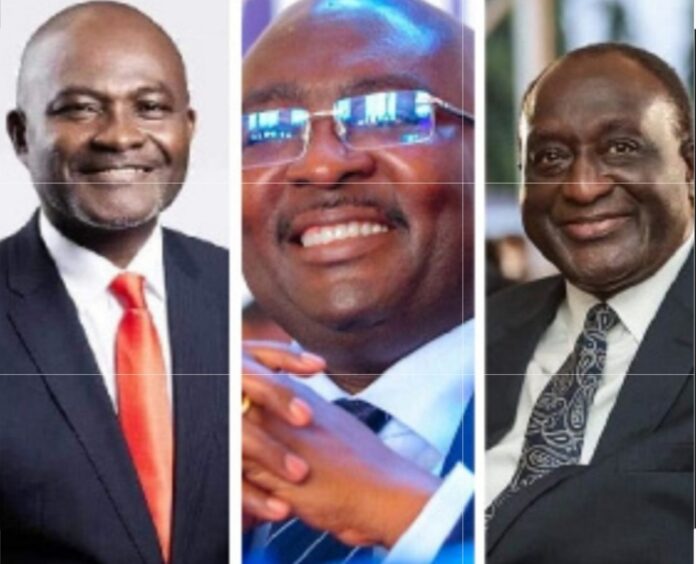
The leading contestants from left - Kennedy Ohene Agyapong, Dr. Mahamudu Bawumia and Alan Kwadwo Kyerematen

Barring any unforeseen challenges and last minutes changes, a total of 955 delegates, constituting a Special Electoral College, will, on Saturday August 26, 2023, converge at the various polling centres across the 16 regions and the New Patriotic Party (NPP) Headquarters to select five candidates for the flagbearership race in November.

The August 26 Super Delegates Conference will reduce the number of aspirants down to five to make way for the presidential primary on November 4 to select a presidential candidate towards the 2024 General Elections.

The Special Delegates include seven ministers, 33 National Executives Committee, 38 Past National Executives and nine delegates from the Special Wing.

Eighty delegates will vote from the external branch of the party.

The Ashanti Region, which has a total of 118 delegates, including 42 Members of Parliament, has 8 proxy slots.

Delegates from other regions are Ahafo 30; Bono 38; Bono East 34; Central 54; Eastern 81; Greater Accra 72; North East 29; Northern 50; Oti 30 and Savanna 30.

The rest are Upper East 35; Upper West 32; Volta 41, Western 46 and Western North 33.

The delegates will choose five from Alan Kwadwo Kyerematen, former Trade Minister, Mr. Kwadwo Poku, an energy expert, Dr. Mahamudu Bawumia, Vice President, Boakye Kyerematen Agyarko, former Energy Minister, Kwabena Agyei Agyapong, former General Secretary, Kennedy Ohene Agyapong, Member of Parliament (MP ) for Assin Central, Dr. Kofi Konadu Apraku, former Minister in the Kufuor administration, Dr. Owusu Akoto Afriyie, former Minister of Agriculture, Joe Ghartey, former Minister of Justice, and Francis Addai-Nimoh, former MP for  Mampong, who have all been cleared by the NPP Vetting Committee to qualify for the Super Delegates Congress.

Meanwhile, the New Patriotic Party (NPP) Presidential Elections Committee says it will deliver a free, fair and transparent election on Saturday, August 26.

The NPP says it has put in place adequate measures to ensure that the election is successful.

Professor Michael Oquaye, Chairman of the NPP Presidential Elections Committee, says the outcome of the election would be acceptable to all, due to the measures put in place to ensure the transparency of the polls.

Ofosu Nkansah engages Asante Akyem Central teachers

0
Ofosu Nkansah (middle) in a picture with other dignitaries

The Chief Executive Officer (CEO) of the National and Entrepreneurial Innovation Programme Presidential (NEIP), Mr. Kofi Ofosu Nkansah, over the weekend had an engagement with over 500 teachers in the Asante Akyem Central Constituency in the Ashanti Region.

Mr. Ofosu Nkansah, since his tenure in office in 2022, has led the NEIP to undertake various initiatives that are aimed at providing integrated national support for startups and small businesses.

He also ensures that his outfit provides direct and indirect funding support to third party institutions, such as tech-hubs, incubators, accelerators, and other business development service providers, which provide business support for innovation-based start-ups.

His engagement with the teachers in Asante Akyem Central Constituency was intended to support their efforts and encourage excellent academic standards in the region where he was from by giving them scholarships and honours.

Addressing the gathering at the event, Mr. Ofosu Nkansah emphasised that since teachers were an integral element of economic advancement, it was necessary to provide them with the resources they required for success.

The NEIP CEO explained that the engagement with the stakeholders in the area would enable teachers to be highly motivated and conscientious, and contribute effectively to the Ministry of Education

Mr. Ofosu Nkansah indicated that the programme would enable them to further their education, reduce stress, and improve their mood, self-esteem and happiness.

He further explained that it would serve as a systematic and integrated policy initiative by the NEIP to empower and support teachers with many opportunities, adding that his outfit had provided integrated national support for teachers to enable them contribute significantly to economic growth.

He added that his outfit would continue to serve as a special-purpose vehicle for skills training, and the provision of scholarships and awards to beneficiaries. According to him, his outfit would continue to serve as a special-purpose vehicle for skills training, and the provision of scholarships and awards to beneficiaries.

He continued that he was focused on building an industry-driven economy capable of providing decent jobs that were suitable and sustainable for development to the constituents, where he wanted to become a future Member of Parliament to serve them.

Mr. Ofosu Nkansah affirmed that he was committed to backing teachers for their contributions towards the quality of school education and improving the lives of teachers.

The event was graced by Lectures from the University of Education, University of Cape Coast, Scholarship Secretariats, teachers and other relevant stakeholders, who came to share their knowledge to uplift the state of teachers in the Municipality.

Assembly Member, 5 others remanded for illegal timber logging

0
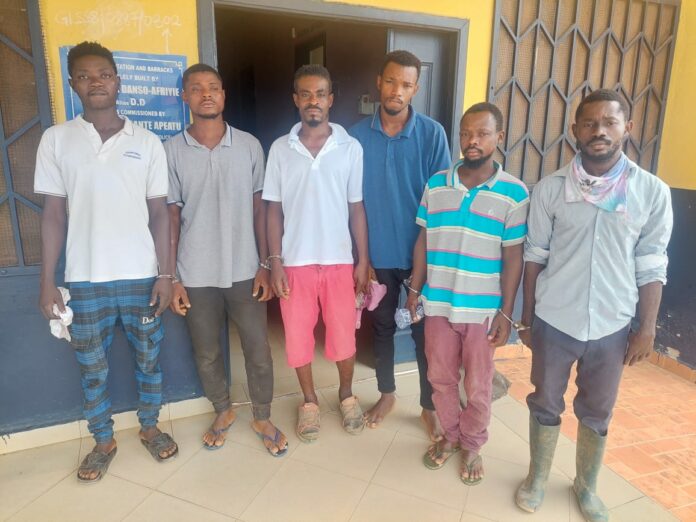
The six suspects

The Assembly Member for Akutereso Electoral Area in the Adansi South District of the Ashanti Region, Seth Koli, and five others have been remanded into prison custody by the Bekwai Circuit Court for timber logging in the Dampayaw Forest Reserve of the Akrofuom District.

The five other suspects are Baba Ben, Narteh Moses, Inusah Akosom, Kwadwo Akwah and Joshua Ahiable.

The suspects, who pleaded not guilty to the charge of entering a forest reserve without authority to fell trees among other charges, will reappear in court on September 4, 2023.

The prosecution officer, Detective Inspector Eric Okyere, told the court, presided over by His Honour Isaac Apeatu, that on August 15, 2023, the six suspects entered the Dampayaw Forest to cut timber. A Range Manager of the Forestry Services Division saw them and reported to the Bekwai Forestry Commission leading to their arrest.

Items retrieved from the suspects included a tractor, one chainsaw machine and three cutlasses, the prosecutor told the court.

From Frederick Danso Abeam, Bekwai

Baptist church members holding positions are not corrupt –GBC Prez

0
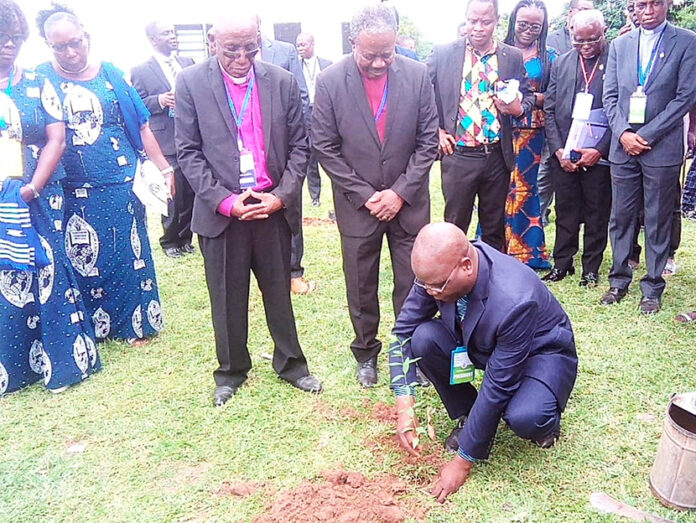
Dr. Nii Narh Thompson, Executive President of GBC planting Eucalyptus tree

The Executive President of Ghana Baptist Convention, Rev. Dr. Nii Narh Thompson,

has vouched for members of the church working in both public and private sectors of the national economy, saying they are not corrupt and do not also embezzle funds entrusted into their care by their employers.

Speaking at the 60th Convention of the Church at the Baptist Women’s Retreat Centre at Ejura, in Ashanti region recently, Rev. Dr. Thompson said the church is proud of its members because of the orientation they have given.

The Chronicle understands that Mr Kofi Nti, the immediate past Commissioner General of the Ghana Revenue Authority (GRA) and Mr Christian Sottie, a former Accountant General, are all members of the church, who held public office without any blemish.

Rev. Dr. Nii Narh Thompson further noted that the Ghana Baptist Convention was focused on the creation of human capital, health and education towards improving the living standard of the people, as the church’s quota towards the socio economic development.

He revealed that the church had helped members to work in both public and the private sectors, with the orientation that makes them useful.

He further told his audience (mainly pastors), who gathered at the celebration of the 60th anniversary of the establishment of the church in Ghana, that the church has also oriented members against sexual abuse and gender confusion.

The church members, he continued, have been taught the original design and purpose of God for men to marry women and women to marry men.

The Executive President of Ghana Baptist Convention entreated Ghanaians, especially Christians, to remain men of truth, no matter the situation and to uphold fairness and respect for fellow humans.

He tasked Christians to always pray for the country in the face of political and economic challenges.

Rev. Dr. Thompson urged political leaders in Africa to make right decisions in order not to complicate matters in Niger in the name of restoring democracy.

He is of the view that, the church cannot take decision on governance of a state, but can offer counsel for those running affairs in terms of good governance and therefore would not interfere in matters of governance.

The church marked the 60th Convention with a tree planting exercise towards their quest to plant 100,000 trees to complement government’s Green Ghana project.

Automation of Supply, Distribution of Premix Fuel Ready

0
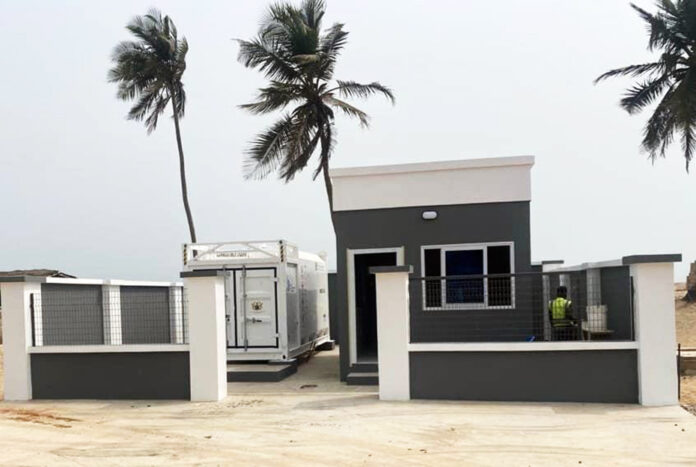
The automated office

The Ministry of Fisheries and Aquaculture Development (MOFAD), in collaboration with Fuel Automation Ghana Limited and its technical partner, Universal Engineering & Consultancy Services Limited, as well as its local and foreign funding partners will on August 29, 2023 officially commission the Automation of Premix Fuel Distribution System at Elmina, in the Central Region.

This laudable and innovative project will be commissioned by Vice President Dr. Mahamudu Bawumia.

The full Automation of the supply and distribution of Premix Fuel has been on the table of previous Governments, but largely due to financial constraints it was difficult achieving it.

The supply and distribution of Premix Fuel in the Fishing Industry was introduced in 1994 with the sole objective of powering outboard engines and helping Artisanal Fishermen to increase their catch.

This laudable initiative raised the living standards of the fishing communities as well as increased the supply and demand for fish stock in Ghana. The decision to subsidize Premix Fuel eventually made the product affordable and available to the fishing communities.

Under the current Government, the full Digitalization of the supply and distribution of Premix Fuel started with a Public-Private Partnership with Fuel Automation Ghana Limited.

Challenges Associated with the Premix Fuel since 1994

Smuggling, Diversion, Hoarding, Shortages and Politicization have been the major setbacks for the supply and distribution of Premix Fuel in Ghana since 1994.

Statistics from the National Petroleum Authority (NPA) indicate the following Premix Consumption between 2018 and 2022(Consumption in millions);

2018       -73

2019       -72

2020       -101

2021       -104

2022       -39

Between 2018 and 2022, a total of 392 million litres of premix fuel was supplied to 300 landing beaches across the country.

However, despite efforts to supply Premix Fuel to the fishing communities, available data indicate that the following quantities of Premix Fuel were diverted in 2017 alone;

  1. 148, 000 litres in January
  2. 54, 000 litres in February
  3. 297, 000 litres in April
  4. 364, 000 litres in May
  5. 270, 000 litres in June
  6. 459, 000 litres in July
  7. 648, 000 litres in August
  8. 1, 107, 000 litres in October

The worrying trends of Premix Fuel diversion, smuggling, hoarding and politicization always lead to shortages of the product in the market. Hence the best solution to address these challenges was to fully automate the supply and distribution of the product.

However, financing was the major setback for previous governments to undertake the full automation of the Premix Fuel Distribution System in Ghana.

Novelty Intervention by Fuel Automation Ghana Limited

Fuel Automation Ghana Limited together with their technical partners identified the bottlenecks in the value chain of premix fuel supply and distribution and proposed technological solutions to the problems associated with the Premix Fuel ecosystem and a proposal was submitted to the Ministry of Fisheries and Aquaculture Development.

The Ministry of Fisheries and Aquaculture Development after due process under the Procurement Act, engaged the services of Fuel Automation Ghana Limited and its technical partner to develop and build Landing Beach Fuel Outlets and Automation Solutions for 300 Landing Beaches across the Country under a Public-Private Partnership of Design, Build, Operate and Transfer (DBOT).

Financing of the Project

The financing of the Project is exclusively done by Fuel Automation Ghana Limited and its local and foreign funding partners.

The financing of national projects could be successfully done by the Private sector as Fuel Automation Ghana Limited has shown the way.

This approach of Private Financing reduces the unnecessary financial burdens on the Government of Ghana and it is something that future Governments should emulate for national development.

About Fuel Automation Ghana Limited

Fuel Automation Ghana Limited is a 360-technology award winning company with 27001 ISO Certification. Fuel Automation Ghana Limited is a member of the KGL Group.

BoG must be lauded instead of condemned –Duncan

0
Mr Kwamena Duncan

The former Central Regional Minister, Kwamena Duncan, has come to the defence of the Governor and Deputies of the Bank of Ghana (BoG) in the wake of a reported GH¢60 billion loss in 2022.

In a recent appearance on Peace FM’s Krokrokoo programme, Mr. Duncan lauded the Central Bank’s management record and highlighted that the global economic challenges had contributed to the unusual loss.

“You will recall that many people doubted if the economy was in crisis, because they did not hear about interest payment on bonds were not being paid in early 2022. They did not see queues at the pumps for petrol and diesel. There were no shortages for essential items on the market and they did not hear that public sector workers, including Civil Servants, the Police and the Military were not being paid their salaries. The reason was that the Bank of Ghana had provided the needed support to keep the economy going.

He noted that prior to 2022; the BoG had consistently registered profits. However, the positive streak was disrupted by the impact of global economic conditions that affected not only Ghana but also economies across the world.

The former Regional Minister underscored the gravity of the situation, which demanded comprehensive public policy initiatives to safeguard lives and livelihoods.

He said protecting lives and livelihoods at all costs required exceptional financing which the BoG had no option but to extend financial support to government to manage the situation.

He bemoaned the limited external funding available at the time to government and the necessity for BoG’s intervention as the lender of last resort.

Mr. Duncan noted that the BoG’s prudent management had equipped it with policy buffers and policy space, enabling the bank to trigger the emergency financing exception under Section 30(6) of the Bank of Ghana Act.

This exceptional measure, he said, involved the purchase of GHC10 billion of the Government’s Covid-19 bonds, bridging the financing gap.

Thus, he praised the BoG’s resilience and its fulfilment of the role in salvaging the economy from collapse.

The Ghanaian Chronicle