Home Blog Page 1938

Sudan’s armed rivals fight on another front, international legitimacy

0
A Chadian cart owner transports the belongings of Sudanese people who fled the conflict in Sudan’s Darfur region while crossing the border between Sudan and Chad in Adre, Chad

US sanctions have thrust RSF into a legitimacy crisis, as its bid for political respectability is now in jeopardy; the army reassesses its own prospects.

Sudan

The US imposes sanctions on RSF deputy commander Abdelrahim Hamdan Dagalo for acts of violence and human rights abuse by his troops in their months-long conflict with Sudan’s army

Abdelrahim Hamdan Dagalo – brother of Sudan’s Rapid Support Forces (RSF) commander Mohamed Hamdan “Hemedti” Dagalo and his deputy – has had his assets frozen in the United States, while Abdul Rahman Juma, an RSF commander in West Darfur, was hit with a visa ban.

With that, the paramilitary force has lost hope of acquiring political legitimacy after the duo were sanctioned on September 6, according to analysts and activists.

Both were sanctioned over human rights abuses, specifically atrocities in Sudan’s West Darfur province. US Secretary of State Antony Blinken said Juma was sanctioned for ordering the June 15 assassination of West Darfur’s Governor Khamis Abdallah Abakar.

“The sanctions really are a blow to the personal brand of the Dagalo family,”  said Kholood Kair, a Sudanese expert and founding director of Confluence Advisory.

In 2019, the RSF started an extensive, and expensive, effort to rehabilitate its image from a violent militia responsible for numerous atrocities in the Darfur region to a benevolent force defending calls for democracy.

Source: Aljazeera.com

Governing Councils play critical role in education development -Prof. Jinapor

0

The Deputy Director General for the Ghana Tertiary Education Commission (G-TEC), Prof. Ahmed Jinapor, has described the roles played by members of Colleges of Education Governing Councils as very crucial, and, therefore, urged them to work hard to impact positively on the educational development of the country.

He said there was the need for them, therefore, to focus on their mandate and ensure that their Colleges become centres of excellence in the training of teachers.

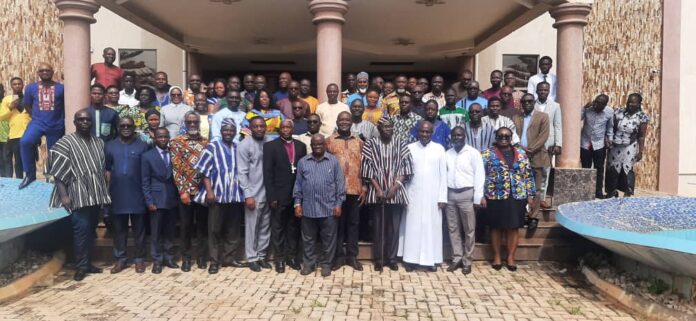
Prof. Jinapor announced this in his welcome address on Friday, during the opening of a 3-day training programme for the Sunyani zone of the Governing Councils of Colleges of Education.

The training, organised by the G-TEC, in collaboration with T-TEL, was aimed at orienting the council members on what was expected of them, and also help them to know their relationship with the GTEC.

In attendance were Governing Councils of Al-Faruk College of Education, Atebubu College of Education, St Ambrose College of Education, St Joseph’s College of Education, Wiaso College of Education, Brekum College of Education and Bia Lamplighter College of education.

Presentations were made on the establishment of the G-TEC-Education Regulatory Bodies Act, 2020, Act 1023, The Ghana Tertiary Education Policy, The College of Education Act, 2012 Act 847, understanding the Business of Councils, understanding the harmonized documents of the COEs, Quality Assurance management practices at the COE, Financial management resource mobilization at the COE’s, creating a budget and tertiary education improvement programme for COE expansion project.

Collaboration

Prof. Jinapor reminded the Council Members to see G-TEC as their collaborator in the course of their operations and not their rival since they were both working towards getting the right results for the transformation of the nation through education.

He stated that plans are underway to control the running of distance courses especially those that operate in churches, Junior High and Senior High Schools because they do not render quality teaching and learning as they do not have the requisite infrastructure and tutors.

Prof. Jinapor was upbeat that the various measures being put in place by the G-TEC were not to sanction any institution but to sanitize the tertiary education space in the country to ensure that graduates get the best training for the job market.

Rev. Dr Joseph Nkyi Asamoah, Vice President, Conference of Principals of College of Education (PRINCOF), lauded G-TEC and T-TEL for the training which would go a long way towards enhancing the cordiality between the Council Members and management of the Colleges.

He appealed to all stakeholders to do their best to ensure that the nation’s education becomes the first port of call in Africa due to its quality and relevance to the needs of the country and the rest of the world.

Background

The relationship between Governing Councils and Principals of Colleges of Education and other management staff which is supposed to be that of cordiality at all times sometimes looks different as some see the other as enemies due to lack of understanding of the roles and responsibilities of one another.

The training seeks to help throw more light on the roles and responsibilities of the various stakeholders towards the attainment of the right results for the Colleges and the nation as a whole.

By Felix Baidoo 

NIA commemorates International Identity Day 2023

0
Prof. Kenneth Agyemang Attafuah, Executive Secretary, NIA

The National Identification Authority (NIA) joins the 48-member countries of the ID4Africa Movement to commemorate International Identity Day – a global initiative aimed at promoting the importance of legal identity in alignment with the Sustainable Development Goal (SDG) Target 16.9 of the United Nations.

A statement issued by the NIA in Accra over the weekend said the day serves as a reminder of the critical role identity plays in ensuring inclusive societies, protecting human rights, and enabling access to essential services and opportunities for all.  The following is the full statement.

The National Identification Authority (NIA) joins the 48- member countries of the ID4Africa Movement to commemorate International Identity Day – a global initiative aimed at promoting the importance of legal identity in alignment with the Sustainable Development Goal (SDG) Target 16.9 of the United Nations.

This day – 16th September – serves as a reminder of the critical role identity plays in ensuring inclusive societies, protecting human rights, and enabling access to essential services and opportunities for all.

This is a momentous day for us to pause and reflect on three fundamentals of identity: Inclusion, Protection, and Utility. 1. Inclusion: Legal identity is a fundamental human right. Ensuring that every individual has a legal identity is essential for their inclusion in society. International Identity Day calls on governments, organisations, and individuals to work together to ensure that no one is left behind.

Inclusive identity systems help address issues such as statelessness, discrimination, and social exclusion.  Protection: Legal identity is a shield against various forms of exploitation and abuse. It safeguards individuals’ rights and provides them with a voice. International Identity Day emphasizes the importance of protecting vulnerable populations, including children, refugees and marginalized communities by ensuring they have access to legal identity documents.

Utility: “ID Day is also an opportunity for those who have proof of identity, to check if they are reaping the highest returns on their identity by asking how well their identity can be used to empower them and simplify their daily lives. It is the ideal occasion to call on service providers to adopt identity-enabled service delivery.”

Legal identity such as the Ghana Card is not just a piece of plastic; it is a gateway to accessing essential services and opportunities. It enables individuals to open bank accounts, access education and healthcare, and participate in economic activities.

International Identity Day advocates for the utility of legal identity as a tool for socio-economic development, poverty reduction, and building resilient communities. This year, as the NIA joins the global community in celebrating International Identity Day, we invite all persons living in Ghana who have questions and/or suggestions about the ID4Africa Movement as well as any enquiries about any of NIA’s registration services to visit NIA’s Head Office or Northern or Ashanti Regional Offices on Monday, 18th September 2023.

This celebration is aimed at raising awareness and driving action on crucial identity issues. We also urge all persons living in Ghana who have not yet registered for their Ghana card to do so and enjoy all the benefits it comes with. Together, we can make a difference by ensuring that legal identity is accessible to all, fostering inclusive societies, protecting the most vulnerable, and unlocking the full potential of individuals and communities.

11 natural ways to get rid of belly fat

0
Belly fat

Losing fat from around the belly is a common fitness goal. However, a person cannot focus fat loss on a specific body part. Overall weight management lifestyle and diet changes are the best way to lose fat.

Manufacturers of many specialty pills, drinks, and supplements claim that their products can lead to quick weight loss, eliminate stomach fat, or both.

However, there is a lack of scientific evidence to confirm that these products are safe or effective.

Meanwhile, a person can lose weight and reduce fat through proven natural methods, including changing the diet and getting specific types of exercise.

This article looks at some natural ways to lose belly fat. We also describe the factors that contribute to a buildup of fat in this area, and how this buildup can harm health.

What makes belly fat different?

Cardiovascular exercise is a good way to burn calories.

Visceral fat — also known as abdominal, stomach, or belly fat — is a potentially harmful type that surrounds organs in the abdomen. Reducing the amount of abdominal fat can have significant health benefits for some people.

Visceral fat releases hormones that can lead to type 2 diabetes, heart conditions, and other health problems. It is sometimes called “active fat” because of its active role in producing various hormones.

This type of fat is less visible than subcutaneous fat, which sits just below the skin. However, a tangible increase in waist circumference can indicate can increase in visceral fat.

Visceral fat is highly responsive to what a person eats. Making key dietary changes and doing the right kinds of exercise can reduce levels of this type of fat.

The following sections look at specific ways to help get rid of belly fat.

  1. Focus on low calorie foods

One of the most effective ways to lose body fat is to eat fewer calories than the body burns. This leads to fat loss throughout the body, including the abdomen.

Eating fewer calories than the body uses up creates a caloric deficit. This can help burn both visceral fat and excess subcutaneous fat.

Also, low calorie foods are often more nutritious than high calorie foods.

Eating fewer foods that are high in calories and low in nutrition — for example, processed foods, baked goods, and french fries — is a beneficial way to create a caloric deficit and improve health.

Try replacing these foods with nutritious, low calorie options, such as fruits, vegetables, pulses, and whole grain foods.

  1. Eliminate sugary drinks

Taking in excess sugar seems to be a main driver of weight gain, especially in the abdominal area.

A high sugar intake may increase levels of visceral fat by promoting insulin resistance and spurring inflammation throughout the body.

It can be easy to consume high levels of sugar in drinks without realizing it. Check the sugar contents of beverages such as soda and sweetened tea and coffee.

For many people, reducing the amount of sugar in hot drinks and eliminating soda can remove excess sugar from their diets.

  1. Eat fewer refined carbs

Refined carbohydrates are low in nutritional value but high in calories. These carbs are in white bread, refined grains, and sugary foods and drinks.

Research has also linked refined carbs to the development of abdominal fat.

Try replacing refined carbohydrates with complex carbohydrates. These exist in fruits, vegetables, and whole grain foods.

  1. Eat more fruits and vegetables

Fruits and vegetables can provide complex carbohydrates, which are a healthful, low calorie alternative to refined carbohydrates.

Fruits and vegetables also add fiber to the diet. Research suggests that fiber can reduce the risk of type 2 diabetes — a condition linked with visceral fat accumulation and overweight — and help regulate blood sugar.

  1. Go for lean proteins

Lean protein sources include nuts, legumes, and lean meats. Adding these to the diet can help encourage feelings of fullness after eating and reduce cravings for sugary snacks.

At the same time, it can help to reduce or eliminate the consumption of fatty meats, including beef and processed meats.

  1. Choose healthful fats

Some dietary fat is necessary in a healthful diet, but not all fat sources are equally beneficial.

Saturated fats and trans fats can harm the heart, increasing the risk of heart disease and stroke. They can also lead to weight gain and are closely linked with the development of visceral fat.

Consuming healthful fats instead can help reduce overall body fat and have a range of benefits.

Healthful high fat foods include:

avocados

chia seeds

eggs

fatty fish

nuts and nut butters

olives

Read more about healthful high fat foods here.

  1. Develop a workout

Exercise can lead to weight loss throughout the body, including around the belly.

It is not possible to reduce fat in certain areas only. This means that targeted exercises — such as crunches and sit-ups — will not necessarily burn abdominal fat better than other exercises.

However, these exercises can strengthen and tone the abdominal muscles, making them appear more defined.

  1. Boost overall activity

Making a point of increasing activity levels throughout the day helps burn calories. Moving more can also strengthen the muscles and elevate the mood.

Tips for increasing daily activity levels include:

taking regular stretching breaks when sitting for long periods

taking the stairs instead of the elevator

walking or cycling instead of driving or taking public transit

parking further from a destination

using a standing desk

  1. Try cardio

Cardiovascular exercise, or cardio, gets the heart pumping. It also burns calories, helping reduce body fat and tone muscles.

Some cardio exercises include:

walking

running

using an exercise bike

swimming

  1. Try high intensity interval training

High intensity interval training (HIIT) pairs bouts of intense exercise with periods of less intense activity to burn calories.

For instance, HIIT might involve a cycle of walking for 3 minutes, then running for 30 seconds.

Research from 2011 suggests that HIIT may reduce body fat more effectively than other types of exercise.

Because of the short periods involved, HIIT may also be a good way to ease into an exercise routine.

  1. Try strength training

Strength training can reduce body weight because it focuses on building muscle mass, and muscle burns more calories than fat does.

Strength training can also improve bone and joint health. This is because stronger muscles are better able to support the body, which reduces strain on the bones and joints.

The Centers for Disease Control and Prevention (CDC) recommend doing strength training 2 days per week.

Source: www.medicalnewstoday.com

Five-star Barcelona crush Real Betis 

0
Barcelona crush Real Betis

Barcelona thrashed Real Betis 5-0 on Saturday. Barca were sluggish in the opening minutes and the visitors had the first clear-cut opening when Luis Henrique fired just wide after being cleverly played in by Isco.

Barca eventually clicked into gear and Felix put them ahead after 25 minutes. They then moved through the gears and doubled the lead just after the hour as Lewandowski claimed his first league goal of the season.

Felix thought he had claimed his side’s third just before the hour only for his effort to be ruled out for offside.

The champions did not have to wait much longer, however, as Torres curled in a superb free-kick after 62 minutes.

Victory was then made absolutely certain four minutes later as Raphinha, who had replaced Torres after the third goal, scored with his first contribution. Cancelo wrapped up the scoring with his first Barca goal nine minutes from time.

Credit: sportsmax.tv

Kane scores as Bayern and Leverkusen draw in thriller

0
Harry Kane on target

Harry Kane scored his 300th career club goal as Bayern Munich and Bayer Leverkusen drew a Bundesliga thriller.

Kane headed in for his fourth goal in four Bundesliga games before Alex Grimaldo levelled with a brilliant free-kick into the top corner.

Leon Goretzka scored what looked like a Bayern winner with four minutes to go from Mathys Tel’s cutback.

But Exequiel Palacios netted a penalty, awarded by the video assistant referee, in injury time to rescue Leverkusen.

Dayot Upamecano thought he had scored Bayern’s winner with almost the last kick but it was ruled out for offside.

Kane’s close-range opener made him the first Bayern player to score four goals in his first four Bundesliga games since Miroslav Klose in 2007.

It brought his club career total to 300, with 280 for Tottenham, nine for Millwall, five for Leyton Orient, four for Bayern and two for Leicester.

Bayern and Leverkusen both lose their 100% starts to the season but maintain their unbeaten records.

Credit: bbc.com

Inter put five past Milan to maintain perfect start

0
Inter players celebrate win

Inter Milan continued their perfect start to the Serie A season as they thrashed AC Milan.

Henrikh Mkhitaryan hit two, having opened the scoring before the clock had reached five minutes.

Marcus Thuram doubled Inter’s lead before the break when he thundered home a spectacular long-range effort. Rafael Leao pulled one back for AC Milan but Mkhitaryan, Hakan Calhanoglu and Davide Frattesi put the game to rest.

Calhanoglu slotted home from the penalty spot when Lautaro Martinez was fouled by Theo Hernandez while substitute Frattesi tapped home a Mkhitaryan ball to add the fifth in injury time.

Inter are top of Serie A with 12 points from four games. Milan are third with nine points.

Juventus, second with 10 points, extended their unbeaten run with a 3-1 victory over Lazio earlier on Saturday.

Thuram was Inter’s brightest attacking spark and regularly produced chances for his side in the first half, tormenting Theo Hernandez and Malick Thiaw on the left flank.

Inter held just 40% of the possession but were dominant at San Siro, crowding out their rivals and overwhelming them with pressure on the break.

Credit: bbc.com

Liverpool fight back from a goal down to beat Wolves

0
Liverpool win from a goal down

Jurgen Klopp bemoaned a sluggish first-half display from Liverpool against Wolves but praised the resilience of his side as they fought back from a goal down to win for the third time in five Premier League matches.

Wolves dominated the first half and deservedly opened the scoring when Hwang Hee-chan fired home at the far post after some excellent wing play by Pedro Neto.

The Reds were much improved after the break and drew level when Cody Gakpo converted Mohamed Salah’s fizzing cross-shot.

Andy Robertson then marked his 200th Premier League appearance by putting the Reds ahead for the first time on 85 minutes, before substitute Harvey Elliott’s shot deflected off Hugo Bueno for an own goal to seal the victory in stoppage time.

The win moves Klopp’s side up to second in the Premier League, two points behind leaders Manchester City.

Credit: bbc.com

Brighton thump Manchester United at Old Trafford

0
Brighton are third in the Premier

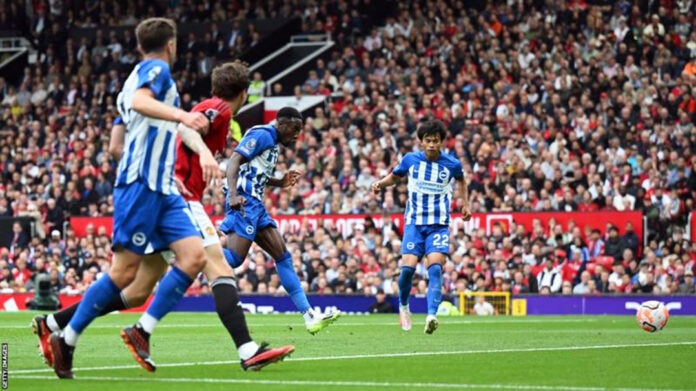
Manchester United were beaten 3-1 by Brighton at Old Trafford as the home crowd turned on manager Erik ten Hag.

Ten Hag has enjoyed the overwhelming backing of United fans since his arrival last summer and the majority have supported the Dutchman in his current dispute with winger Jadon Sancho.

But they let Ten Hag know they did not agree with his decision to replace new signing Rasmus Hojlund with Anthony Martial 19 minutes into the second period in no uncertain manner, as a cacophony of boos rang round the stadium before the Dane was applauded off.

The change didn’t make much difference for United, who were behind thanks to a first-half goal from one-time home favourite Danny Welbeck, which was followed up after the interval by efforts from Pascal Gross and substitute Joao Pedro, who were both given far too much space around the United penalty box.

Hannibal Mejbri’s first United goal gave the hosts some hope, but in a frenetic finish it was the visitors who came closest to finding the net again as Andre Onana made four excellent saves, the best of which came in injury-time to deny on-loan Barcelona man Ansu Fati a debut goal.

Credit: bbc.com


Man City come from behind to beat West Ham

0
Bernardo Silva scored his first goal of the season to preserve Manchester City's winning start

Second-half goals from Jeremy Doku, Bernardo Silva and Erling Haaland helped Manchester City come from behind to beat in-form West Ham and continue their winning start to the Premier League season.

James Ward-Prowse’s diving header gave the Hammers the lead against the run of play, but Doku’s first City goal restored parity 43 seconds after the interval.

Silva then collected Julian Alvarez’s looping ball over the top of the West Ham defence before calmly prodding past the onrushing Alphonse Areola.

Haaland, who had squandered several earlier opportunities, completed the scoring at London Stadium with a trademark finish.

“All game we were fantastic, even when we were losing at half-time against an incredible side,” City manager Pep Guardiola told BBC Sport. “We were efficient and patient in the second half.

“It was a big win after the international break. The team showed good spirit to survive.”

City maintain their two-point lead over Tottenham and Liverpool at the top of the table, while West Ham drop to sixth thanks to their first defeat of the campaign.

Credit: bbc.com

The Ghanaian Chronicle