Home Blog Page 1922

Manhunt for gang boss who controlled luxury jail in Venezuela

0
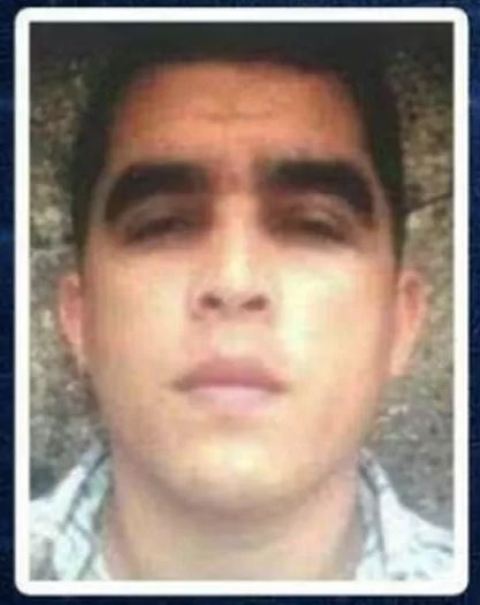
The Venezuelan authorities have issued a wanted poster for the fugitive

Police across South America are searching for the leader of a Venezuelan gang who escaped from the luxurious prison which he controlled, shortly before it was raided.

When 11,000 soldiers and police entered the inmate-run Tocorón jail in Venezuela on Wednesday, Héctor Guerrero Flores was nowhere to be found.

Under Guerrero Flores’s rule, Tocorón came to resemble a luxury resort.

The jail boasted a small zoo, a nightclub and a swimming pool.

The 39-year-old from Aragua state in Venezuela has been in and out of Tocorón prison for more than a decade.

In 2012, the leader of the Tren de Aragua transnational crime gang managed to escape from the jail by bribing the guards.

After his re-arrest in 2013, he was returned to the same prison, but it appears his power inside the jail – and over those tasked with guarding him – only grew.

Not only did he turn Tocorón into the nerve centre of the Tren de Aragua criminal enterprise, but under his rule, the jail was equipped with all the trappings of a luxury hotel.

Families of inmates moved into the compound. Inmates had access to a makeshift bank, a betting shop, a restaurant and a baseball diamond, while their children could marvel at flamingos and ostriches in the animal enclosure.

Source: bbc.com

What is Black Fungus, and does it have Benefits?

0
Black mushrooms

Black fungus (Auricularia polytricha) is an edible wild mushroom sometimes known as tree ear or cloud ear fungus, given its dark, ear-like shape.

While predominantly found in China, it also thrives in tropical climates like the Pacific Islands, Nigeria, Hawaii, and India. It grows on tree trunks and fallen logs in the wild but can be cultivated as well.

Known for its jelly-like consistency and distinct chewiness, black fungus is a popular culinary ingredient across a range of Asian dishes. It has likewise been used in traditional Chinese medicine for hundreds of years.

This article reviews the uses, nutrients, and benefits of black fungus, as well as any precautions you may need to take.

How is black fungus used?

Black fungus is usually sold in dried form. Before you eat it, it needs to be reconstituted in warm water for at least 1 hour.

While soaking, the mushrooms expand 3–4 times in size. Keep this in mind when you’re cooking, as small amounts can go a long way.

While black fungus is marketed under several names, it’s technically different than the wood ear mushroom (Auricularia auricula-judae), its botanical cousin. Nonetheless, these fungi boast similar nutrient profiles and culinary uses and are sometimes referred to interchangeably.

Black fungus is a popular ingredient in Malaysian, Chinese, and Maori cuisine.

It’s a bit coarser than the wood ear mushroom and frequently used in soups. As it has a fairly neutral taste, it’s even added to Cantonese desserts. Like tofu, it absorbs the flavors of the dish it’s a part of.

Since the 19th century, black fungus has been used in traditional Chinese medicine to alleviate symptoms of several conditions, including jaundice and sore throats.

As you can see, this mushroom is low in fat and calories but particularly high in fiber.

The same serving size offers small amounts of potassium, calcium, phosphorus, folate, and magnesium. These vitamins and minerals are vital to heart, brain, and bone health.

Potential benefits of black fungus

Despite the multiple uses of black fungus in traditional Chinese medicine, scientific research on it is still in the beginning stages.

All the same, this mushroom has been noted for its potential immune-enhancing and antimicrobial properties.

Just keep in mind that human research is limited, and further studies are needed.

Packs powerful antioxidants

Mushrooms, including Auricularia species, are generally high in antioxidants.

These beneficial plant compounds help combat oxidative stress in your body, which has been linked to inflammation and a range of diseases.

What’s more, mushrooms often contain powerful polyphenol antioxidants. A diet high in polyphenols is associated with a lower risk of cancer and chronic conditions, including heart disease.

May promote gut and immune health

Similarly to various other mushrooms, black fungus boasts prebiotics — mainly in the form of beta glucan.

Prebiotics are a type of fiber that feeds your gut microbiome, or the friendly bacteria in your gut. These promote digestive health and maintain bowel regularity.

Interestingly, the gut microbiome is closely linked to immune health. Prebiotics like those in black fungus are thought to enhance your immune response to unfriendly pathogens that might otherwise make you sick.

May lower your cholesterol

The polyphenols in mushrooms may help lower LDL (bad) cholesterol.

In turn, lower LDL cholesterol may decrease your risk of heart disease.

One study in rabbits given wood ear mushrooms found that both total and LDL (bad) cholesterol decreased significantly.

Still, researchers weren’t sure exactly how the fungi exerted this effect, and a single animal study in wood ears doesn’t necessarily apply to people eating black fungus.

Mushrooms are thought to preserve healthy brain function.

One test-tube study revealed that wood ear mushrooms and other fungi inhibited the activity of beta secretase, an enzyme that releases beta amyloid proteins.

These proteins are toxic to the brain and have been linked to degenerative diseases, such as Alzheimer’s.

While these findings are promising, human research is needed.

May protect your liver

Black fungus may safeguard your liver from harm by certain substances.

In a rat study, a solution of water and powdered black fungus helped reverse and protect the liver from damage caused by an overdose of acetaminophen, which is often marketed as Tylenol in the United States.

Researchers linked this effect to the mushroom’s potent antioxidant properties.

Precautions for use

Black fungus purchased from commercial suppliers is associated with few — if any — side effects.

Yet, as most black fungus is sold dried, it’s important to always soak it before use due to its density and brittleness.

Furthermore, it should always be cooked thoroughly to kill bacteria and remove residue. Studies show that boiling may even increase its antioxidant activity.

However, foraging for black fungus is not generally recommended given the risk of misidentification or contamination. Not only do wild fungi absorb pollutants from their environment, but eating the wrong mushroom can be poisonous or even fatal.

Instead, you should look for this unique mushroom at your local specialty store or online.

The bottom line

Black fungus is an edible mushroom that’s a popular ingredient in Chinese cuisine.

It’s typically sold dry under various names, such as cloud ear or tree ear fungus. It should be soaked and cooked thoroughly before consuming it.

Emerging research indicates that black fungus offers many benefits, such as protecting your liver, lowering cholesterol, and boosting gut health. It’s also packed with fiber and antioxidants.

While this fungus has also been used in traditional Chinese medicine, more studies are needed to assess its effects.

Mushrooms come in lots of different shapes, sizes, and colors. The ones that aren’t toxic are quite healthy and tasty, containing many important vitamins and minerals.

For many years they’ve been used for their unique ability to add flavor in lots of different cultures’ cuisines. Although they’re actually fungi, mushrooms are lumped in the vegetable category for cooking purposes. Mushrooms allow you to add extra taste without sodium or fat.

Poisonous mushrooms can be hard to identify in the wild, so you should always buy from a reliable grocery store or market. The most common types found in grocery stores are:

shiitake

portobello

crimini

button or white mushroom

oyster

enoki

beech

maitake

They each have a unique look and taste.

When choosing your mushrooms, make sure they feel firm, aren’t moist to the touch, and are mold-free. They can be stored in a paper bag inside the fridge for about five days. Brush the dirt off and rinse them lightly when you’re ready to use them.

Nutritional benefits of eating mushrooms

You can’t go wrong with mushrooms. They’re fat-free, low-sodium, low-calorie, and cholesterol-free. They’re also packed with fiber, vitamins, and minerals. Nutritional benefits vary depending on the type of mushroom. But overall, they are a good source of the following nutrients.

Antioxidants

Antioxidants help protect the body from damaging free radicals that can cause conditions like heart disease and cancer. They also protect you against damage from aging and boost your immune system. Mushrooms are rich in the antioxidant called selenium. In fact, they are the best source of the mineral in the produce aisle.

Beta glucan

Beta glucan is a form of soluble dietary fiber that’s been strongly linked to improving cholesterol and boosting heart health. It can also help your body regulate blood sugar, reducing the risk of type 2 diabetes. Oyster and shiitake mushrooms are believed to have the most effective beta glucans.

B vitamins

Mushrooms are rich in the B vitamins: riboflavin, niacin, and pantothenic acid. The combination helps protect heart health. Riboflavin is good for red blood cells. Niacin is good for the digestive system and for maintaining healthy skin. Pantothenic acid is good for the nervous system and helps the body make the hormones it needs.

Copper

Copper helps your body make red blood cells, which are used to deliver oxygen all over the body. The mineral is also important to other processes in the body, like maintaining healthy bones and nerves. Even after being cooked, a 1-cup serving of mushrooms can provide about one-third of the daily recommended amount of copper.

Potassium

Potassium is extremely important when it comes to heart, muscle, and nerve function. There’s about as much potassium in 2/3 cup of cooked Portobello mushroom as there is in a medium-sized banana.

Source: www.healthline.com

Feature: OwulaMangortey writes to the Rt. Hon. Speaker of Parliament… Have you experienced the positive impact of IGP’s policing methods/tactics

0
Speaker of Parliament, Alban Bagbin

Mr. Speaker, I wish to respectfully ask whether you have experienced the positive impact of IGP AKUFO-DAMPARE’s policing methods/tactics in the Upper East Region from August, 2021 to August, 2023.

Mr. Speaker, I don’t really mind whether IGP AKUFO-DAMPARE is NPP or NDC or PWD. I will speak up for him in this writeup as a citizen from Dodowa working in Bawku and other parts of the Upper East Region!

Since the end of August 2021, I have been observing, monitoring and reporting on community participation in border management activities – to counter and deter terrorists attacks in the Upper East Region. Whilst in the region, I used the opportunity to monitor and report on conflicts at Manyoro-Natugnia, Doba-Kandiga, Bolgatanga and Bawku.

Mr. Speaker, as I travelled across the region, I noticed the challenges/gaps in Police Operations, and the efforts to improve the situation since IGP AKUFO-DAMPARE took office on 1st August, 2021.

Security situation in the region

The Upper East Region shares borders with Burkina Faso, Togo, Upper West and North East Regions. I noted that the region faced and continues to face peculiar security challenges,  including the following: Terrorist threats, influx of persons escaping jihadist attacks in neighbouring countries, armed robbery, motorcycles-snatching, smuggling (fuel, fertilisers, etc.), targeted assassinations, hoarding of caches of arms, chieftaincy and land disputes, illegal mining, etc.

Policing situation in Region

When I arrived in the region, I noted and started writing articles on some of the challenges/gaps in operations of the following Police formations:

(1). Regional Headquarters (RHQ) – composed of Regional Headquarters, Regional Special Weapons and Tactics (SWAT), Regional Counter-Terrorism (CTU), Regional Criminal Investigations Department (CID), Regional Domestic Violence and Victim Support Unit (DOVVSU), Regional Band, Regional Courts, Regional Clinic and Police Training School.

(2). Divisions – Three (3) Divisions namely, Bolgatanga, Bawku and Navrongo.

(3). Districts – 12 Districts.

(4). Thirty (30) Police stations including new stations at Widana, Avondago,Maga and Woriyanga.

Policing challenges/gaps in the region

(1) Vehicles

I noted a general shortage of vehicles and reliance on old, over-used vehicles in the region.

In the Bawku general area, I noted a Wrinkle Arrmoured Vehicle, a Light Armoured Patrol Vehicle, a bullion truck used as prisoner carrying vehicle from Bolgatanga to Bawku. I noted patrol vehicles (Pickup + Trooper), and a bus.

I noted that the Bawku West District had only an old Toyota Landcruiser! It was being used 24/7 on patrols in a very difficult terrain. The Police could not afford to use the vehicle to transport men to Snap Check Points and when they were expected at armed robbery prone areas of Widnaba and Sapeliga! A broken-down Nissan Navara pickup was repaired for them, but it continued to frequently break down

Suddenly, I began to note that IGP Akufo-Dampare began to intervene with delivery of new Isuzu and Toyota pickup vehicles to the region.

(2) Motorcycles

The Police did not have motorcycles – the jungle types – for patrols, especially in Bolgatanga, Bawku Central and Bawku West. On 24th November, 2021, I wrote an article acknowledging that the new IGP Dr. Akufo-Dampare had allocated twenty-five (25) motorcycles to the Upper East Region Police. Unconfirmed reports at the time indicated that “this was the first time in the history of the Police Service that a Police Administration has allocated such a relatively large consignment of motorcycles to the Upper East Region Police.”

Mr. Speaker, I can report that the region has been allocated more Visibility Police motorbikes which can be seen in use all over the region, and can even be seen at a remote station like Maga in the Navrongo Police Division.

(3) Communication Gadgets

When I arrived in the region, I noted that the Police did not have gadgets for effective communication for their operations.

The Bawku crisis demonstrated that swift communication within Police deployments: Patrol Teams, Check Points and Static Posts including Police Stations was key to their success! Although the Police had communication systems, they still had some gaps with the apparatus to communicate!

IGP Akufo-Dampare swiftly   delivered communication gadgets which made the Police undertake hourly security checks across all formations.

(4) Armoured vehicles

On 26th January, 2023, I wrote an article on the Police Wrinkle Armoured Vehicle which was being pushed to spark on the road in front of the Bawku Central market

Within five days of my report, I noted increased armoured capability for the Police! Two Maverick Armoured Vehicles were delivered from Accra.

As I write, I can report of the presence of three (3) Maverick Armoured Vehicles from the Police FPU, and two (2) Marauder Armoured Vehicles from the Police CTU operating in the region – with a particular focus on the Bawku general area.

(5) Metal detectors

The Police did not have metal detectors for checking arms being smuggled into the region – especially into the Bawku general area. On 25th August, 2023, I run into a Police Team searching vehicles at the White Volta River bridge at Bazua upon a tip-off they a cargo truck was transporting arms to Bawku. I noted that the Police were not using metal detectors.

(6) Market women/truck escorts

There were instances of market women being robbed, especially in the Bawku West, Binduri, and Builsa Districts.

In an article I wrote on 17th October, 2021, titled, ” if I were in charge of State Security,” I indicated how I had noted the Police providing market women with security during and after their trading activities. Such market escorts were useful from Binaba to Tilli, Sapeliga to Kobore, Atuba to Binduri,  Pulimakom/Widana to Missiga, Fumbisi/Sandema to Navrongo.

The Bawku and  Doba-Kandiga conflicts increased insecurity for cargo trucks on the Paga – Bolgatanga highway, as well as on the roads from  Pulimakom and Kulungu to Bolgatanga; and from Bolgatanga to Walewale.

Positive impact of  IGP AKUFO-DAMPARE’s Policing methods/tactics in the region

Mr Speaker,  I can report on the following positive impact of IGP AKUFO-DAMPARE’s policing methods/tactics in the region:

(1). The operational plan for the escort of buses and cargo trucks through the Upper East, North East and Northern Regions Road corridor (that is Bawku-Walewale-Tamale). This has for the last three months stopped or minimised the armed attacks on buses which avail themselves to be escorted by the Police.

(2). The introduction of more armoured vehicles, drones, etc., has made it possible for personnel to go to the firing lines and stop irascible gunmen anytime they started sporadic firing in Bawku.
This was not possible before, since the Police had only soft body vehicles.

(3). The introduction of motorbikes makes it easier for Police personnel to move quickly when duty calls. Police Visibility has been enhanced by the introduction of more motorcycles into the region.

(4). Two Regional FPU bases have been established in Bawku which have increased the manpower needs.

(5). The saturation of Bawku with personnel and equipment has noticeably made it difficult for the combatants to operate in the Bawku general area. It can be observed that in recent times the armed attacks are rather taking place on the outskirts of Bawku (recent reported cases at Bazua, Binduri, Gumyoko, Nayoko No. 2, Adamongsaan, etc.).

(6). There is on-going rehabilitation of Police stations and construction of new ones. Maga, Avondago, Woriyanga, Widana, Pelungu are some of the communities in which new stations have been constructed.

The Bawku Police station used to be an open place which provided easy access to gunmen to run through to kill their targeted victims.  The Police have completed a fence wall around the Divisional/District Headquarters. Currently ongoing are fixing of CCTV cameras, building of observation posts, rehabilitation of the barracks for personnel, etc.

(7). The Bawku Police undertake community engagements in the Bawku township and environs. This action has brought policing to the doorsteps of the locals. Recently, the Police had interactions with school children and donated footballs to the kids.

(8). Due to fantastic security outlay, the Samanpid celebration of 2022, in the words of some Bawku Elders was the best in recent years.

(9). Celebration of the Ramadan was so massive due to the enhanced security provided by the Bawku Police.  Attendance was so massive that locals could not believe their eyes.

(10). The stabilisation of the Garu-Nakpanduri road by way of the use of an anti-robbery squad has brought relief to commuters traveling between the North East and the Upper East Regions.

(11). President Akufo Addo enjoyed  and benefitted from IGP Dampare’s Policing methods/tactics in the region

For a region facing peculiar security challenges,  it is noteworthy that President Akufo-Addo has been in the region on three occasions in less two years – to address the Ghana Bar Association Conference, to commission a Tono water project, and to celebrate May Day.

If IGP AKUFO-DAMPARE was not on top of his job, and the Police were not cooperating with other Security Agencies, President Akufo Addo could not have  comfortably come to the region – and even to be so relaxed on one occasion, to celebrate the birthday of Road Minister Amoako-Attah at the Bolgatanga Akayet Hotel?

Mr. Speaker, in view of the remarkable positive impact of his policing methods/tactics in the Upper East Region, I will speak up any day, anywhere  in support of IGP AKUFO-DAMPARE whether he is NPP or NDC or PWD.

I shall return.

By OwulaMangortey

Rapinoe ends international career with USA win over South Africa

0
Megan Rapinoe

Megan Rapinoe brought down the curtain on her international career as the USA beat South Africa 2-0 in Chicago.

Prior to the 2023 World Cup, the forward said she planned to retire when the National Women’s Soccer League (NWSL) season ends.

Rapinoe, 38, made her USA debut in 2006 and won 203 caps, scoring 63 goals, and winning the World Cup in 2015 and 2019.

“So overwhelming. It has been amazing,” Rapinoe said of the reception she received at Sunday’s friendly.

“It has been really wonderful, to hear all the nice things, to have a closure moment, to play in front of a big crowd again.

“I’ll miss it forever. I don’t think I’ll ever be at a moment where it will feel perfect but this is pretty close.”

Rapinoe started the game at Soldier Field and received a standing ovation as the game was paused when she was withdrawn after 54 minutes.

The 2019 Ballon d’Or winner represented the USA at four World Cups and also helped her country win gold at the 2012 Olympics in London, although she was one of three players to miss a penalty when they exited the 2023 World Cup against Sweden in the last 16.

After Sunday’s win, Rapinoe tried to fight back tears as she gave a speech, thanking fans for their support over the past 17 years.

“I feel like I’ve been able to grow up in front of all of you,” Rapinoe said.

“It has been such an honour to be able to wear this shirt and play with all these amazing players and to just live out my childhood dream, casually, just like in front of the world,” Rapinoe said.

“We fought so hard off the field to continue to create more space for ourselves to be who we are but hopefully in turn more space for you guys to be who you are.

“I’m not going to go away forever. Don’t worry. I’m one of you guys now.”

Rapinoe is scheduled to retire from professional football on 15 October when NWSL side OL Reign play their final game of the season at Chicago Red Stars.

Credit: bbc.com

Lewis Hamilton criticises Mercedes strategy at Japanese Grand Prix

0
Lewis Hamilton

Lewis Hamilton has criticised the Mercedes strategy that almost derailed his race at the Japanese Grand Prix.

Hamilton was told by team-mate George Russell to marginally slow down in the dying laps of the race, to give Russell DRS and hold off Carlos Sainz‘s challenge behind him.

However, the move proved to be ill-advised as the Ferrari driver ended up overtaking Russell and then piled pressure on Hamilton during the closing stages of the race.

Following the breakdown in tactics, Hamilton was critical of the decision and claimed it made no sense for his team to make that call.

‘When they suggested it to me, I knew that they obviously thought of it from the last race but it made no sense.’ Hamilton said.

‘I needed to get as far clear as possible. I was on my way, around two seconds ahead and they asked me to give George DRS and I had to come off the gas down the straight.

‘Then he got overtaken by Sainz. He then got past George and he was right on my tail which was not ideal.’

Hamilton finished the race in 5th place, with Sainz failing to overtake him in the end in 6th, Russell a further place back in 7th.

The comments come after a difficult race for Hamilton and his team, after the two British drivers  clashed over the radio following two near collisions with each other in the early stages of the grand prix.

Credit: dailymail.co.uk

PSG responds to Messi: We could not have a party for him because Argentina defeated France

0
PSG president Nasser Al Khelaifi and Messi in good times

The Messi-PSG relationship continues to be the talk of the town months after his departure. The Argentine aimed another dig at the Parisian club a few days ago when he complained that he had been “the only player who had not been recognized, apart from my 25 other players” after returning from winning the World Cup in Qatar.

A few days later, PSG president Nasser Al Khelaifi responded to the Argentine in statements to French media ahead of Sunday’s derby against Marseille. “Outside there is a lot of talk, I don’t know what he did or what he didn’t say. As everyone saw we even published a video, we congratulated Messi in training, and also in private, but with respect we are a French club,” the president stated bluntly.

The PSG chief explained that they could not have a big party out of respect “for the country he defeated, for his French teammates in the team and for our supporters,” he said. “It was delicate to have the party in the stadium.”

Al Khelaifi also spoke about the current relationship with Kylian Mbappe after such an eventful summer in which the player was even left out of the squad without traveling to the pre-season tour of Japan. “The problems we have had stay in the family and Kylian is part of the family. I am proud of what he is doing and what the whole team is doing,” he said.

He also called for the Ballon d’Or for the young Parisian, whom he described as “the best player in the world”.

Credit: marca.com

Ronaldo, 47, weds for the third time as he marries fiancé in a romantic ceremony

0
Brazilian football star Ronaldo has married his model partner Celina Locks

Brazilian football star Ronaldo has married his model partner Celina Locks.

The newlyweds, who got engaged in January during a Caribbean getaway, married at a church in Ibiza on Monday afternoon.

They were married in the in the small village of es Cubells in the southwest of the island, near to where the retired soccer star owns a home.

Celina, 33, who started dating the former Real Madrid and Inter Milan striker seven years ago, posted footage of their happy day on her social media.

The model and her new husband, 47, said in matching Instagram posts: ‘Today we brought our families together for an intimate religious celebration and thus marked the beginning of a week of many celebrations.’

The bride looked stunning in a slinky ivory dress, which she wore off the shoulder, highlighting her incredible toned physique.

Brazilian native Celina wore her bright blonde locks in soft waves and added a light coverage of make-up to her pretty features.

Ronaldo, who looked dapper in a cream linen suit, proudly held his new wife’s hand as they left the church together, which had been adorned with white flowers.

The guests included Ronaldo’s former Real Madrid teammate Julio Baptista.

Ronaldo, now president of Spanish second division side Real Valladolid, posed for selfies with fans before entering the church.

Credit: dailymail.co.uk

Editorial: Tanker Owners Union has a genuine case

0
Editorial

The Executive Secretary of the Tanker Owners Union, Ignatius Koku Doe, has raised concerns over the influx of tanker trucks owned by Chinese companies. According to him, their checks have revealed that about 300 tanker trucks have so far been imported into the country.

In a story we carried on Friday, last week, Mr. Doe alleged that, the Union had informed the National Petroleum Authority (NPA), which is the regulatory body, but no concrete step had been taken so far.

“We discovered these tankers have been allegedly brought in by Sentuo Refinery, which is about to start the production of oil and gas. Already, the Union members own about 5,000 trucks, and bringing in new ones to do the same job as ours will only create unhealthy competition,” he lamented in an interview he granted Adom FM.

Mr. Doe appealed to the government to intervene in the issue, warning that if the regulatory body failed to act, they would take matters into their own hands and resist the operation of these foreign tankers.

Though the reported importation of 300 tanker trucks into the country by the foreigners, as alleged by the Tanker Owners Union, is an investment that must be applauded, The Chronicle still thinks the issue is dicey and must, therefore, be reviewed.

The promise made when Ghana started production of crude oil in commercial quantities was that the downstream sector would be handled by Ghanaians only. The local content and local participation policy and legislation in Ghana’s oil and gas industry has not been strictly implemented.

Though Ghanaians are happy about the discovery of oil in commercial quantities, it is important that the government ensures that the discovery contributes significantly to the growth of the economy and helps accelerate development and industrialisation. 

The tanker owners, therefore, have every right to protest against the alleged invasion of the sector by foreigners.

According to the Union, even all the branded oil tankers roaming our roads are owned by individual Ghanaians and not the foreign-owned Oil Marketing Companies. If this is indeed the case, why then should we license the foreign-owned oil tankers to operate in the country now?  The development doesn’t make sense to The Chronicle, and we call on the NPA, the regulator of the sector, to intervene.

Investors who are coming to invest in the country will, at the end of the day, repatriate their profits back to their country of origin, but the profits made by local investors will stay in the economy.

This is the reason why we must always protect the indigenous businesses instead of opening the floodgates for these so-called foreign investors to kick them out of business. We hope the authorities concerned are reading and will act appropriately in the interest of the country.

Begging for a seat at the table

0
Opinion

After India, I have been amused by the debate about whether or not Nigeria should be more than a guest again at the next G-20 meeting in Rio, Brazil. If South Africa is a member, why not Nigeria?

How do you offer Africa’s largest economy only a complimentary ticket every time to such an important global event, leaving it with the rather humiliating option of begging for a place?

I thought that we had outgrown thinking that respect is earned by size or by simply hanging out with the right crowd, regardless of performance. If it’s not just another boost for the testosterone of a few African leaders who attend such meetings, it’s difficult to understand why they cannot see that they would have to put their house in order first to earn respect outside.

I don’t know what President Cyril Ramaphosa’s membership is doing for South Africa or what the AU membership of the G-20 is doing for the continent. Nigeria’s President Bola Ahmed Tinubu obviously feels that if Ramaphosa can be on the stage at this pageant of global powers, then so can he also.

But I frankly think that both of them and others on the continent have barely paid enough attention to the opportunities that come with building truly vibrant regional and continental institutions. African leaders must pay attention to what is happening back home, in their own backyard. It’s the sheer force of their record of performance that would compel the world to notice and take them seriously.

The EU, one of the world’s most prosperous trading blocs today, started as a trading community of six European countries with a combined population of 170m at the time. Today, it has grown to 27 members with an economy of approximately 16 trillion euros.

Apart from the EU’s institutional membership of the G-20, three EU countries – Germany, France and Italy – are also members of the group, because of the sheer size of their economies. They didn’t have to beg for membership.

Consider, for example, how shabbily Africa has so far treated the African Continental Free Trade Agreement (AfCFTA), perhaps its single biggest opportunity in decades to remove trade barriers amongst members, lift millions out of poverty and earn a good spot on the world stage.

Five years into AfCFTA, the continent still pays lip service to free movement of people, with Africans requiring visas to travel to at least 60 percent of the 54 countries, never mind the monumental obstacles to free trade.

Compared to India, for example, where only three compulsory documents are required for import-export processing, Nigeria’s Customs requires nearly 12 to process intra-African goods and services, and you’re just getting started.

Whereas Africa’s population has doubled Europe’s, intra-African trade accounts for about 11 percent or $170 billion, which is merely five percent of intra-European trade. Intra-African trade also lags intra-Asian trade.

Nigeria is not even among the eight countries currently participating in AfCFTA’s Guided Trade Initiative (GTI), a platform that is supposed to boost the region’s trade policy framework. How can Nigeria, which ought to be in the forefront of turning this state of affairs around, but which is sadly one of the laggards in AfCFTA commitments, covet a table at the G-20? And on what terms when, like most of the continent, Nigeria is still largely a market for primary commodities with their inherent disadvantages?

According to Tom Burgis in The Looting Machine, “In Africa, the outflows (as of 2011) amounted to five to seven percent of GDP, the highest proportion in any region and growing at a rate of 20 percent a year. African losses from trade mispricing alone are roughly the equivalent to the continent’s income from aid.”

To add insult to injury, Nigeria, Ghana and Chad were listed by Burgis as first, sixth and ninth respectively among the countries that suffered the worst illicit outflows from 2005. This sounds more like a continent that needs to look after itself than one whose leaders should be hankering for a courtesy ticket for a front-row seat outside.

If you add the current state of political turmoil across a number of countries in the continent, especially the so-called coup belt, the situation becomes even more deserving of serious homework and introspection.

Whereas the OAU of those days challenged apartheid and fought against minority rule and oppression in Zimbabwe and Namibia while supporting more African states to attain political independence, its successor the AU is sleep-walking through multiple conflicts, content to make only perfunctory noises.

Meanwhile, the new crop of military rulers from Chad to Mali, and from Burkina Faso to Gabon, continue to dig in, sparking a dangerous wave of copycats and self-doubt about the value and use of democratic rule.

Africa’s 1.3 billion population is perennially a source of cheap labour for developed and middle-income countries in a manner reminiscent of the slave trade; while its landmass of 30 million square kilometres has remained a booty for external forces to exploit, loot and cart away as the continent slumbers.

Instead of trying to cross seven seas to join the G-20, Nigeria should be more worried that even though it was also a guest to the BRICS meeting in Johannesburg in August, it was not among the six countries that would get membership from January 2024, with the two new spots in Africa going to Ethiopia and Egypt.

What’s more? In an increasingly multipolar world, the unspoken message by absent Chinese President Xi Jinping to the last G-20, was that his country was no longer happy to play second fiddle to US hegemony. Rather than coveting that same company Nigeria and other African countries should do more to chart their own course. And they can without holding out the begging bowl.

Ambition to play in the big league is not a bad thing in itself. A spot on the big stage, however, requires more than a large ego, more than an extravagant claim of untapped potential, and certainly, much more than a sense of entitlement.

For a start, since Nigeria’s president obviously loved what he saw at the G-20 in Delhi he should have asked Indian Prime Minister, Narendra Modi, to share the story of India’s journey to the G-20 with him. As of 2005/2006, more than 640 million people across India were in multidimensional poverty.

A 2019 UNDP report on multidimensional poverty however found that in about six years, the number of multidimensionally poor had fallen from 640 to 365 million. And in just nine years of Modi, access to electricity has increased from 70 percent to 93 percent, while states with basic sanitation coverage across India are over 90 percent.

That is the sort of record that makes a country both an eligible and inevitable member of the G-20 or any other respectable global platform; not covetousness, begging or a sense of entitlement.

Azu Ishiekwene

Ishiekwene is Editor-In-Chief of LEADERSHIP

The views expressed in this article are the author’s own and do not necessarily reflect The Chronicle’s stance.

Drivers protest over Bekwai, Manso bad roads

0
Protesters burned tires at the entrance to the Amansie West District Assembly to protest over their bad roads

Commuters on the Manso-Bekwai road were left stranded, following a demonstration by drivers who ply their trade on that stretch.

Mr.Yaw Frimpong, Chairman of the Manso Nkwanta GPRTU speaking to the media

The drivers, who numbered about two hundred, were protesting over the state of the 28 kilometres Anwiankwanta-Manso Atwedea road.

The impact was so serious that businesses and other activities were largely affected by the protest which lingered for hours.

Wearing red attires and bands around their necks and hands, the irate drivers, who were joined by sections of the masses, blocked the roads. They held placards which bore inscriptions such as “Manso Nkwanta too deserves asphalt”, “Manso too is part of Ghana”, and “So Manso has leaders?”

Drivers of commercial vehicles were stopped, while passengers were also evicted from cars. Some drivers who were conversant with the Manso road resorted to different routes in an attempt to eke out a living.

Vehicles Parked on the deplorable road of Manso, after the demonstrators blocked the roads

The protest, which started at Kwabena Nkwanta amidst police protection, was also replicated at Yaahemekrom, Antoakrom and the Manso Nkwanta District Assembly.

Presenting their petition to the Amansie West District Assembly, Mr. Yaw Frimpong, Chairman of the Manso Nkwanta Ghana Private Road Transport Union (GPRTU), expressed worry to the Assembly about the deplorable nature of the Anwiankwanta-Manso Abore stretch.

According to Frimpong, as drivers and residents of Manso, it was their duty to bring to the attention of the authorities the horrible nature of their roads which were causing ‘great inconvenience’ to the district.

This challenge, according to them, did not only pose risks to the residents, passengers and drivers, but also hampered the overall development of the Amansie West District.

The Manso Nkwanta GPRTU authority further explained that the poor condition of the road had led to an increase in road accidents and rampant armed robbery in the communities dotted the roads.

“Lack of proper drainage systems has resulted in water logging during rainy seasons causing further damage to the roads and inconvenience to drivers and passengers.”

Demonstrators blocking the Manso-Kwabena Nkwanta stretch

He bemoaned that Manso roads had been in a terrible state for decades, with many areas completely eroded.

“Drivers are suffering severely due to high cost of maintenance, which deprives us from rendering our sales weekly to our vehicle owners; because of these deplorable roads pregnant women are losing their lives during delivery.”

In an interaction with some passengers at Kwabena Nkwanta Adwoa Agyei, a resident of the area lamented that their road was bad and as such, drivers did not work on the road from five o’clock in the evening.

According to Adwoa, the Kwabena Nkwanta stretch punished the Vice President of the Republic, Alhaji Dr. Mahamudu Bawumia, when his vehicle stuck in a muddy road when he campaigned at Manso, ahead of the Super Delegates Conference.

She indicated that armed robbers had taken advantage of the bad nature of the road to rob them.

Adwoa Agyei, therefore, pleaded with Jubilee House to come and get their road fixed.

Demonstrators welding placards to register their displeasure to state

In an interaction with another lady, who spoke on condition of anonymity, she expressed worry over what she described as neglect, accusing the Member of Parliament for Bekwai of misleading Ghanaians that Amansie roads under his reign had been  fixed.

According her, she was disappointed in the political leadership in the Amansie enclave, stressing that the Kwabena Nkwanta stretch, which was part of Bekwai Constituency, had been neglected by the authorities.

The Ghanaian Chronicle